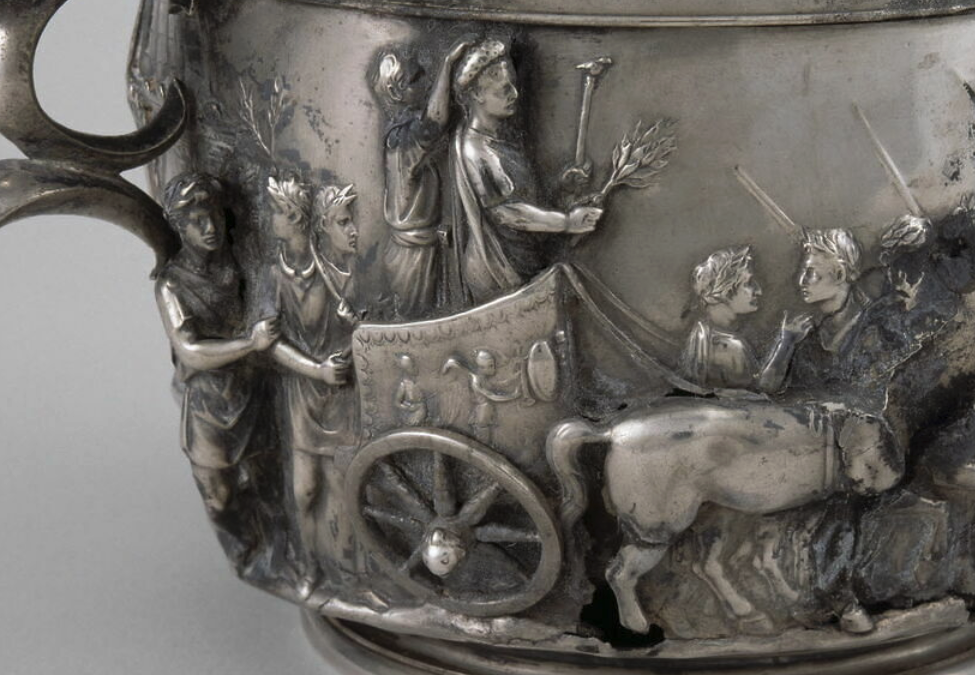
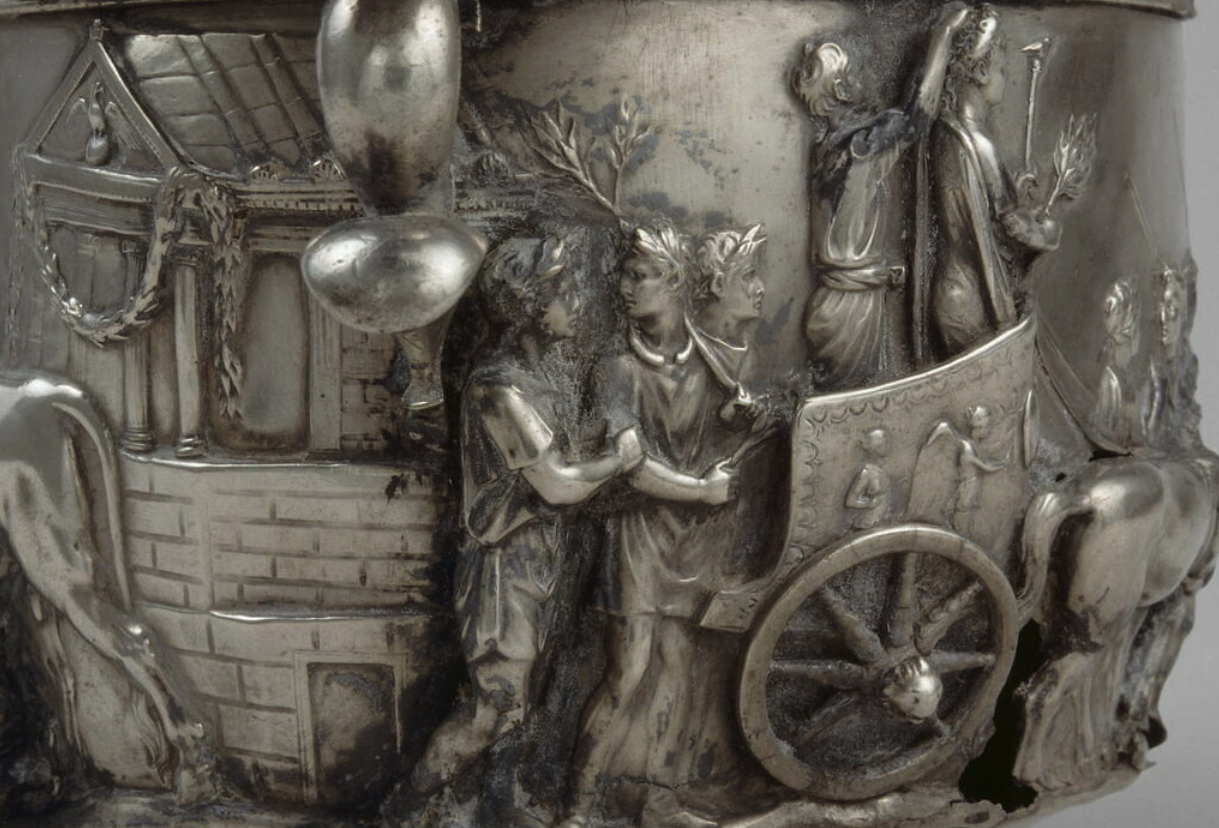
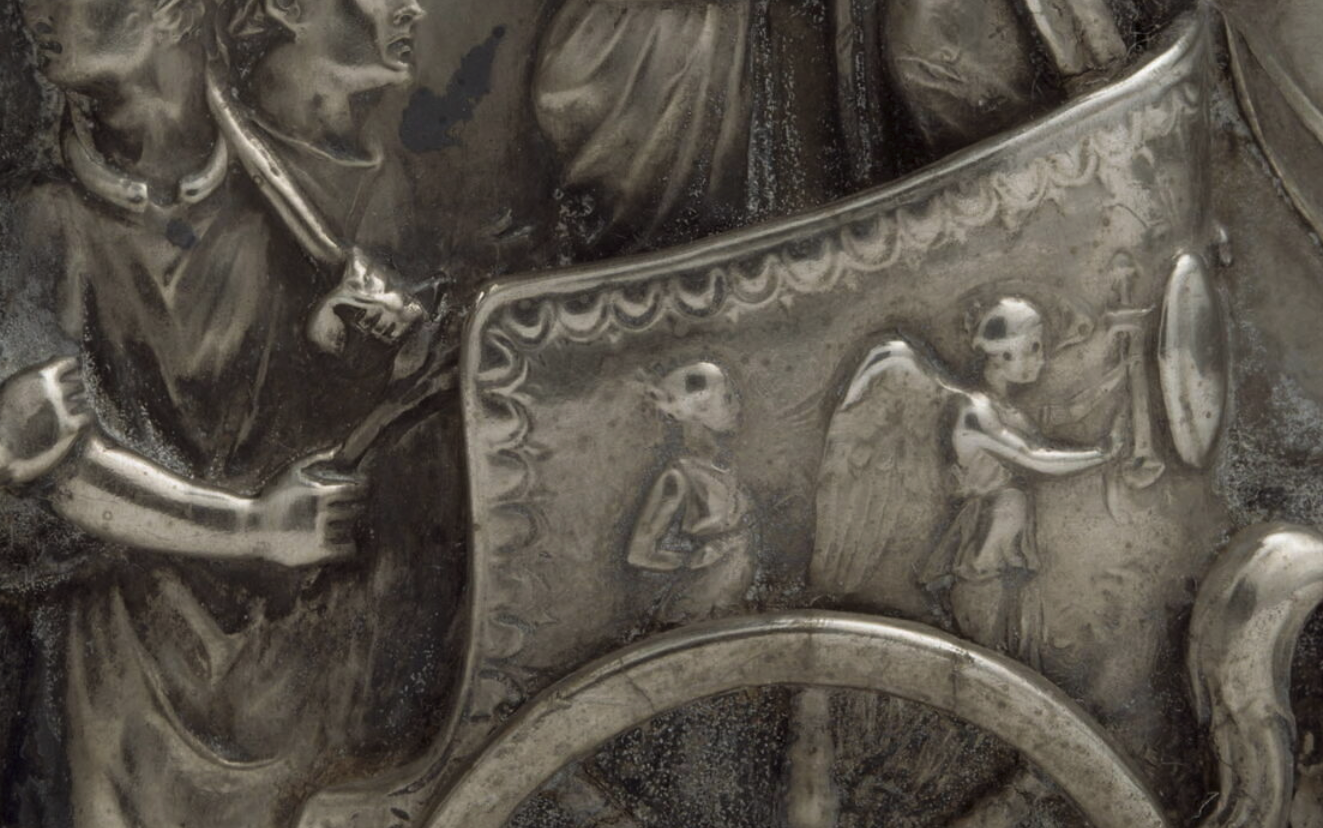
Tabernae in the Forum

Full image
Appian BC 1.54 (links to other accounts)

The topography of A. Sempronius Asellio‘s death (89 BCE) confused me. Where were the shops between the temple of Castor and the Vestals? The distance is very short, 50 meters or so and there was the lacus Juturna there. Could the text mean that he turned and ran all the way back to the tabernae veteres in front of the Basilica Sempronia? Would not going up into the temple of Castor have been a better place to seek sanctuary? But the course of action need not be logical. There have been many excavations in and around the Temple of Castor in recent years. I wonder if they might shed light on where Asellio might have fled. I also wonder if the mob that attacked him might not have been bankers and money changers working in the same area who made an opportunistic attack when the Praetor was in their vicinity.

I’m recalling also the work of Kondratieff on the topography of this region. I must check if he discusses this passage.

Kondratieff, Eric. “Finding Libo: numismatic, epigraphic and topographic evidence for the « cursus honorum » of L. Scribonius L. f. Libo, cos. 34 B.C.E.” Historia 64, no. 4 (2015): 428-466.

Kondratieff, Eric John. “The urban praetor’s tribunal in the Roman republic.” In Spaces of justice in the Roman world, Edited by De Angelis, Francesco. Columbia Studies in the Classical Tradition; 35, 89-126. Leiden: Brill, 2010

Kondratieff, Eric John. “Reading Rome’s evolving civic landscape in context: tribunes of the plebs and the praetor’s tribunal.” Phoenix 63, no. 3-4 (2009): 322-360.

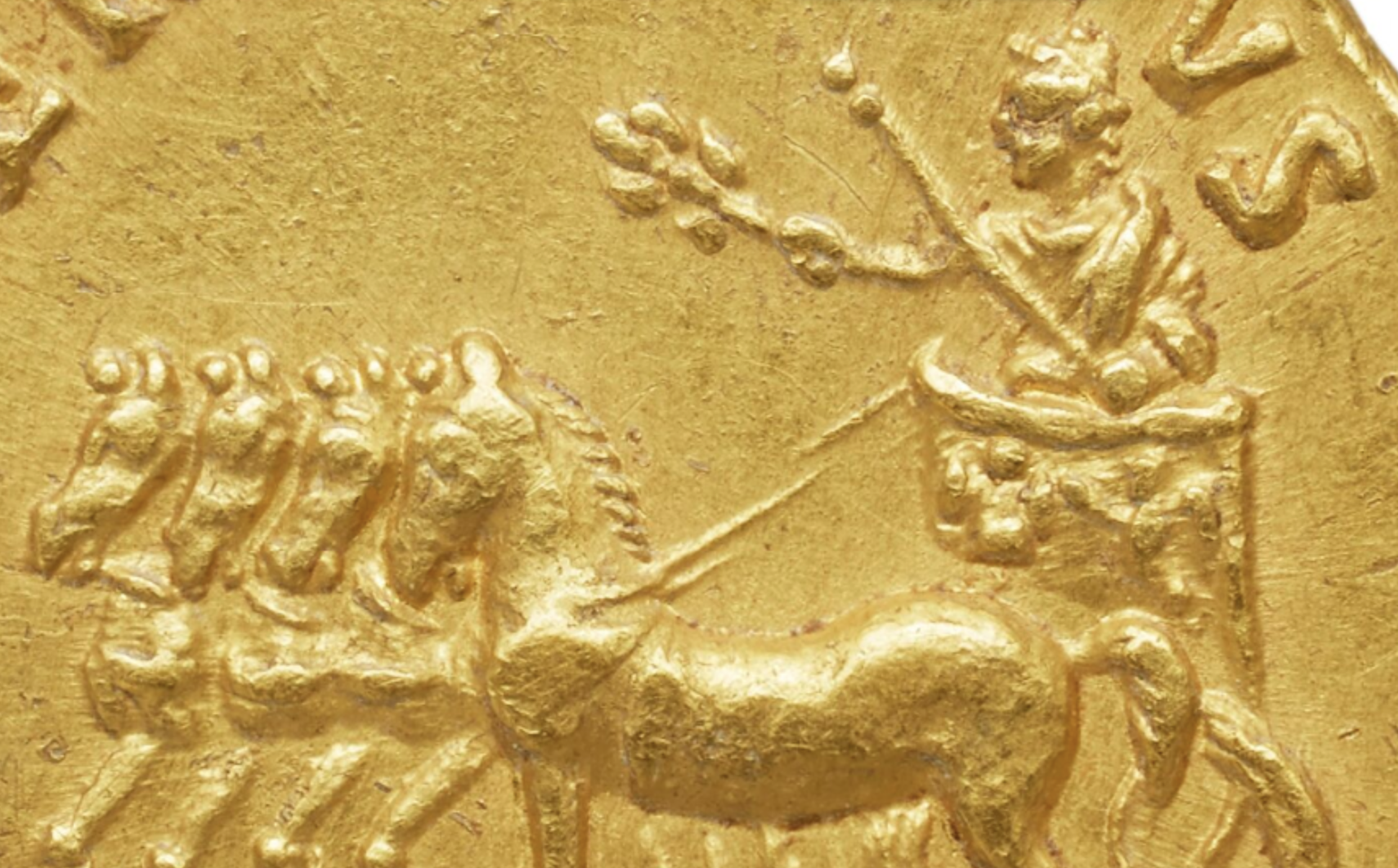
Cf. RRC 416 and RRC 417

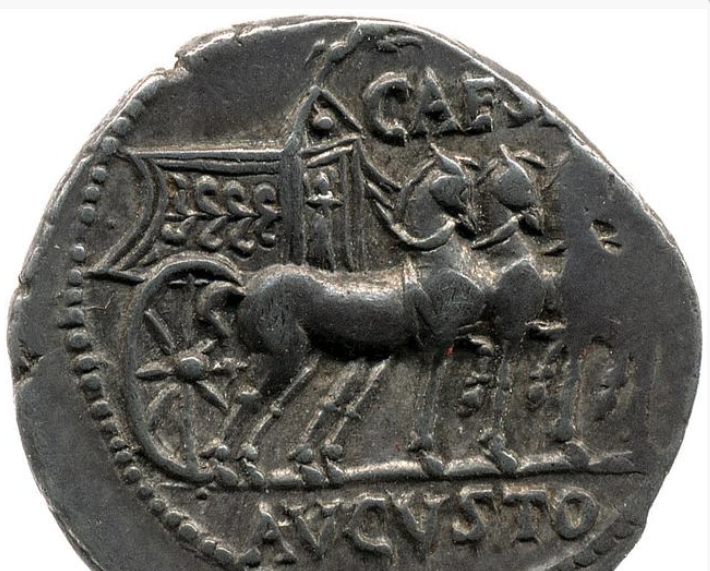
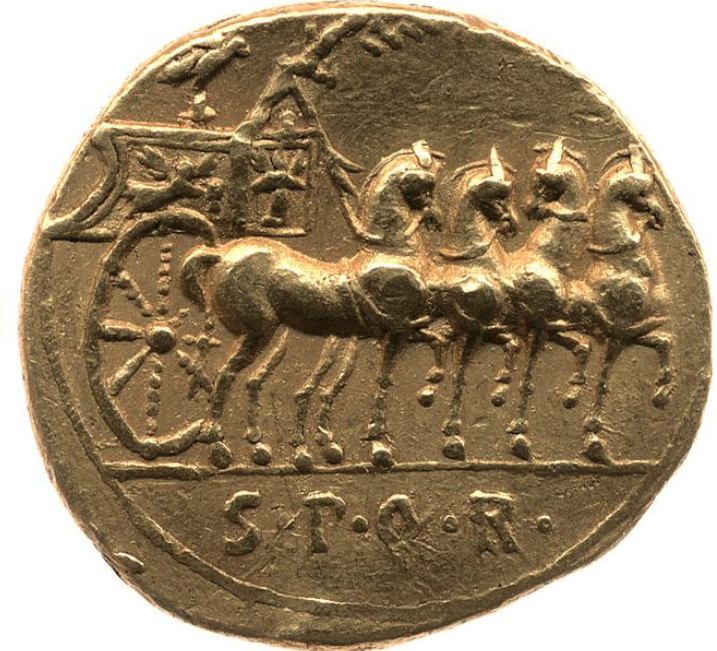
93 of 234 days: Liberalitas and the gens Thoria

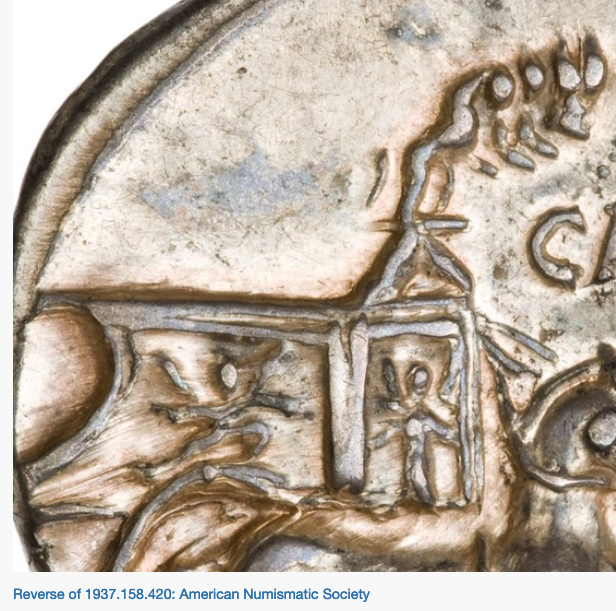
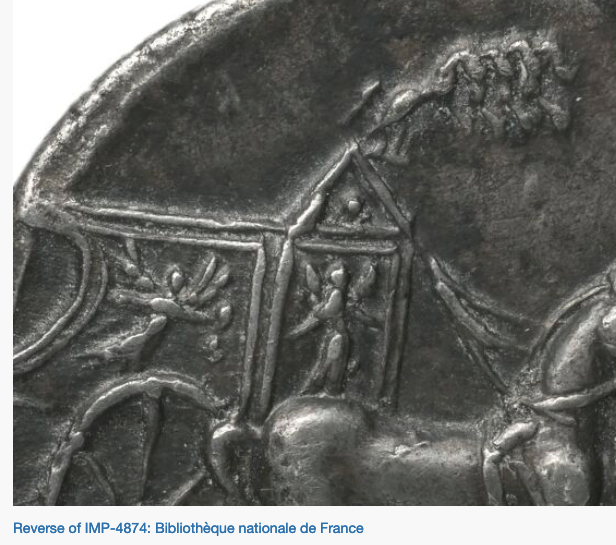
Detail of BM specimen

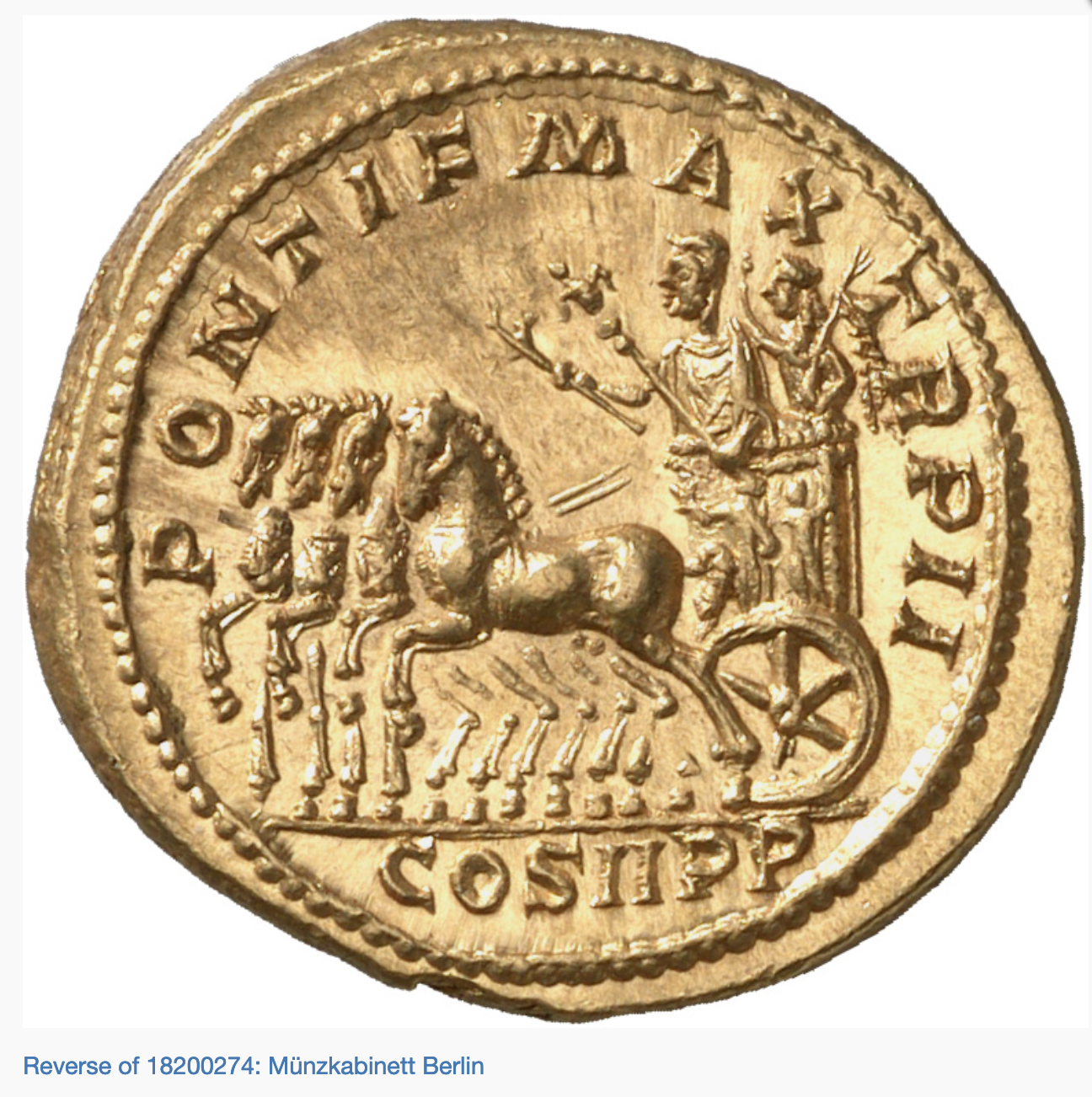
My favorite detail of the attributes of Liberalitas is her money shovel. Sometimes its called an abacus (wrong) or accounting board (a plausible, but potentially misleading term). This tool was used to ensure each individual got the same number of coins in distributions of imperial largesse. On the Arch of Constantine you can see the tool in action on a larger scale than on the coins. Notice the coin board has 9 recesses and the coins from it are being dumped into the outstretched toga of the man below it.

“Constantine and his attendants distributing largess to the Roman people (largitio). Relief of the frieze on the eastern side (Constantinian frieze). Marble. 312—315 CE.” © 2017. Photo: Ilya Shurygin. (Source)

This blog post is just to remind myself to try to squeeze the lex Thoria in with the other meager data points on the gens Thoria should I ever circle back to them. And to think about the logistics of the distribution of money to the poor in the Republic, albeit short lived. I wonder how much of the ritual and symbolism of Liberalitas from the empire could be transposed back onto the late second century experiment in state pay outs. (more images below)

This passage was what got me thinking in this direction this morning…

…a law was enacted to permit the holders to sell the land about which they had quarrelled; for even this had been forbidden by the law of the elder Gracchus. At once the rich began to buy the allotments of the poor, or found pretexts​ for seizing them by force. So the condition of the poor became even worse than it was before, until Spurius Thorius, a tribune of the people, brought in a law providing that the work of distributing the public domain should no longer be continued, but that the land should belong to those in possession of it, who should pay rent for it to the people, and that the money so received should be distributed; and this distribution was a kind of solace to the poor, but it did not help to increase the population. By these devices the law of Gracchus — a most excellent and useful one, if it could have been carried out — was once for all frustrated, and a little later the rent itself was abolished at the instance of another tribune. So the plebeians lost everything …

Appian BC 1.27

The only mention of this earlier on this blog was on the grain supply time line post. I have thought and read more about it and wrote some notes about the same time I made that timeline, they should be in the drafts file of the first version of my coin book, but I won’t go dig those out now.

But what I really want to do is point out that this Spurius Thorius may be a near relation to Lucius Thorius, a moneyer just over a decade later. Spurius’ legislation seems ‘popular’ in character, but Lucius died fighting Sertorius under Metellus Pius.

A Thorius Flaccus was Proconsul in the early to mid 20s BCE and issued bronze coins in both Nicaea and Nicomedia including some with his own portrait.

I’ve blogged about the Lanuvium connection of the Thorii before because of their use of Juno Sospita imagery, and I’ve written about Lucius Thorius as an issuer of small change (1st post, 2nd post). I mention in both instances, Lucius’ reputation as an Epicurean and tried to reconcile Cicero’s characterization with his clear engagement in public affairs, even to the extent of dying in a civil war.

Round up of some typical distribution scenes on imperial coinage all but one include the money shovel:

ANS Specimen: “CONG I DAT POP S C – Nero, bare-headed and togate, seated right, on platform, left; official seated right on another platform extending congiarium to citizen with small boy behind him; Minerva, head left, holding owl and spear, and Liberalitas on right, holding tessera”
Wein Specimen: “Trajan, togate, seated left on platform on right, on lower platform in front of him, an officer is inscribing a tessera to give to citizen on left, holding out fold of toga to receive it; in the background, a tripod and Liberalitas, standing left, holding up an abacus”
RIC 3 Ant 74b: no money shovel: the coins flow from the cornucopia!
RIC 3 Ant. 75c

non coin portion.

I’m working a half day today. Kiddos turn 8 tomorrow and beloved needs some help pulling off three days of festivities. Coins can wait. I have between now and noon to give more attention to the money and moneyers of the 80s BCE. I also have a convo with a colleague to talk about career stuff. It’s good on sabbatical to step back and think about what work I want to do long term. I need to get on UK logistics and even a little Rome logistics.

92 of 234: More Gratidianus Notes

Primary Texts and Translations

Cic. Off. 3.80: Even our kinsman Gratidianus failed on one occasion to perform what would be a good man’s duty: in his praetor­ship the tribunes of the people summoned the college of praetors to council, in order to adopt by joint resolution a standard of value for our currency; for at that time the value of money was so fluctuating that no one could tell how much he was worth. In joint session they drafted an ordinance, defining the penalty and the method of procedure in cases of violation of the ordinance, and agreed that they should all appear together upon the rostra in the afternoon to publish it. And while all the rest withdrew, some in one direction, some in another, Marius (Gratidianus) went straight from the council-chamber to the rostra and published individually what had been drawn up by all together. And that coup, if you care to know, brought him vast honour; in every street statues of him were erected; before these incense and candles burned. In a word, no one ever enjoyed greater popularity with the masses. (Loeb trans.)

ut res nummaria de communi sententia constitueretur; iactabatur enim temporibus illis nummus sic, ut nemo posset scire, quid haberet.

…in order that a joint opinion on money matters be established; for in those times coin was so tumultuous (or, such a fraught issue) that no one could tell what he had. (my trans)

Dyck 1996: 600 notes in his commentary that this is the ONLY use of iactari to refer to money matters and that if the metaphor of a tumultuous sea was not so obvious from its regular uses to discuss the state politics he might have expected a modifying quasi or ut ita dicam. Perhaps the best translation might be to say it was fraught or political topic. We cannot say it means the literal value of individual coins fluctuated based on a strange metaphoric verb.

Cic. Leg. 3.36: “And indeed our grandfather, as long as he lived, with singular virtue resisted Marcus Gratidius, whose sister, our grandmother, he had as wife. Gratidius was proposing a law of ballots in this town [Arpinum]. Gratidius, as it is said, stirred up a flood in a ladle, which later his son Marius stirred up the Aegean Sea. And indeed with our [grandfather] * * * when the matter was referred to Marcus Scaurus the consul he said “If only Marcus Cicero, you had preferred to employ that mind and virtue of yours with us in the highest republic rather than in that of your town”

Et avus quidem noster singulari virtute in hoc municipio quoad vixit restitit M.Gratidio cuius in matrimonio sororem aviam nostram habebat, ferenti legem tabellariam. Excitabat enim fluctus in simpulo ut dicitur Gratidius, quos post filius eius Marius in Aegaeo excitavit mari. Ac nostro quidem avo, cum res esset ad se delata, M. Scaurus consul: ‘Utinam’ inquit ‘M. Cicero isto animo atque virtute in summa re publica nobiscum versari quam in municipali maluisses!’

The reference to the Aegean is not clear to me–is it literal? his acts had impact in the Greek East? or is it metaphoric a big sea versus a little ladle? The passage does lay out that Gratidianus was the cousin of Cicero: the son of his great uncle and that the two families had close, if fractious, dealings across the political divide. legem tabellariam should be taken to mean regarding the introduction of the secret ballot in local government.

Pliny NH 33.132: The triumvir Antonius alloyed the silver denarius with iron, and forgers put an alloy of copper in silver coins, while others also reduce the weight, the proper coinage being 84 denarii from a pound of silver. Consequently a method was devised of assaying the denarius, under a law that was so popular that the common people unanimously district by district voted statues to Marius Gratidianus. And it is a remarkable thing that in this alone among arts spurious methods are objects of study, and a sample of a forged denarius is carefully examined and the adulterated coin is bought for more than genuine ones. (Loeb trans)

Miscuit denario triumvir Antonius ferrum, miscent aera falsae monetae, alii e<t> ponder<i> subtrahunt, cum sit iustum LXXXIIII e libris signari. igitur ars facta denarios probare, tam iucunda plebei lege, ut Mario Gratidiano vicatim totas statuas dicaverit. mirumque, in hac artium sola vitia discuntur et falsi denarii spectatur exemplar pluribusque veris denariis adulterinus emitur.

Antonius the triumvir mixed [something] with the denarius, fake money is mixed with bronze, others reduce the weight, when it should be struck is 84 from a pound. Therefore means were created to authenticate denarii, so pleasing was the law to the plebs that throughout the neighborhoods so many statues were dedicated to Marius Gratidianus. … [my translation]

Plin. NH 34.27: “At Rome also the tribes in all the districts set up statues to Marius Gratidianus, as we have stated, and likewise threw them down again at the entrance of Sulla.”

Val. Max. 9.2.1: How cruelly did he conduct himself toward M. Marius the praetor, who was dragged in the sight of the people to the tomb of the Lutatian family, where he did not put him to death, till he had gauged out his eyes, and broken the limbs of that unfortunate man! I am relating things that hardly seem credible. And yet because M. Plaetorius grew faint upon seeing the execution of Marius, he promptly slew him. Here was a novel punisher of pity, for whom to behold wickedness with distaste, was to commit a crime. (on this see violence see Marshall 1985)

Cic. De Orat. 2.262: From the ironical use of words: as when Crassus spoke for Aculeo before Marcus Perperna as judge, and Lucius Aelius Lamia appeared for Gratidianus against Aculeo, and Lamia, who was deformed, as you know, offered impertinent interruptions, Crassus said, ‘Let us hear this beautiful youth.’ When a laugh followed, ‘I could not form my own shape,’ said Lamia, ‘but I could form my understanding.’   ‘Then,’ said Crassus, ‘let us hear this able orator;’ when a greater laugh than before ensued. Such jests are agreeable as well in grave as in humorous speeches.

Cic. De Orat. 1.178: When I myself lately defended the case of Sergius Orata, on a private suit against our friend Antonius, did not my whole defence turn upon a point of law? For when Marius Gratidianus had sold a house to Orata, and had not specified, in the deed of sale, that any part of the building owed service, we argued, that for whatever encumbrance attended the thing sold, if the seller knew of it, and did not make it known, he ought to indemnify the purchaser.

Cic. Off. 3.67: Marcus Marius Gratidianus, a kinsman of ours, sold back to Gaius Sergius Orata the house which he himself had bought a few years before from that same Orata. It was subject to an encumbrance, but Marius had said nothing about this fact in stating the terms of sale. The case was carried to the courts. Crassus was counsel for Orata; Antonius was retained by Gratidianus. Crassus pleaded the letter of the law that “the vendor was bound to make good the defect, for he had not declared it, although he was aware of it”; Antonius laid stress upon the equity of the case, leading that, “inasmuch as the defect in question had not been unknown to Sergius (for it was the same house that he had sold to Marius), no declaration of it was needed, and in purchasing it back he had not been imposed upon, for he knew to what legal liability his purchase was subject.

Cic. Brut. 3.223: I have also remarked, that Cn. Carbo, M. Marius, and several others of the same stamp, who would not have merited the attention of an audience that had any taste for elegance, were extremely well suited to address a tumultuous crowd.

Cic. Brut. 2.168: Q. Rubrius Varro, who with C. Marius, was declared an enemy by the Senate, was likewise a warm, and a very spirited prosecutor. My relation, M. Gratidius, was a plausible speaker of the same kind, well versed in the Greek literature, formed by nature for the profession of eloquence, and an intimate acquaintance of M. Antonius: he commanded under him in Cilicia, where he lost his life: and he once commenced a prosecution against C. Fimbria–[this Gratidius was] the father of M. Marius Gratidianus.

Ascon. Cic. Tog. Cand. 84C (75): Catilina had also cut off the head of M. Marius Gratidianus, a man in great favor with the people, who on this account was twice praetor, and had carried it through the city in his own hand–a charge which he hurls at him several times through out this speech. To be sure this Gratidianus had been linked by close family ties with Cicero.
Ascon. Cic. Tog. Cand. 89C-90C (80): [quoting from Cicero’s original speech] “From the plebs? To whom your brutality presented a spectacle such that no one can set eyes upon you without a groan and a remembrance of sorrow?” [end quote] He cast in his teeth the reproach of having brandished the head of that same Marius Gratidianus.

[ps.?] Q. Cic. Comm. Petit. 10.2

Only because Antonius is afraid of his own shadow, whereas Catiline does not even fear the law. Born in his father’s beggary, bred in debauchery with his sister, grown up in civil slaughter, his first entry into public life was a massacre of Roman Knights (for Sulla had put Catiline in sole charge of those Gauls we remember, who kept mowing off the heads of Titinius and Nanneius and Tanusius and all). Among them he killed with his own hands his sister’s husband, the excellent Quintus Caucilius, a Roman Knight, a neutral in politics, a man always inoffensive by nature and by that time also through advancing age. Need I go on? He to be running for the consulship with you—he who scourged Marcus Marius, the Roman People’s darling, all around the town before the Roman People’s eyes, drove him to the tomb, mangled him there with every torture, and with a sword in his right hand, holding his head of hair in his left, severed the man’s neck as he barely lived and breathed and carried the head in his hand, while rills of blood flowed between his fingers! And then he lived with actors and gladiators as his accomplices, the former in lust, the latter in crime—he who could not enter any place…

Sen. de Ira 18: Marcus Marius, to whom the people erected statues in every street, whom they worshipped with offerings of frankincense and wine—this man by the command of Lucius Sulla had his ankles broken, his eyes gouged out, his tongue and his hands cut off, and little by little and limb by limb Sulla tore him to pieces, just as if he could make him die as many times as he could maim him. And who was it who executed this command? Who but Catiline, already training his hands to every sort of crime? He hacked him to pieces before the tomb of Quintus Catulus, doing violence to the ashes of that gentlest of men, above which a hero—of evil influence, no doubt, yet popular and loved not so much undeservedly as to excess—shed his blood drop by drop. It was meet that a Marius should suffer these things, that a Sulla should give the orders, and that a Catiline should execute them, but it was not meet that the state should receive in her breast the swords of her enemies and her protectors alike.

Incomplete, to be continued

Mentions in recent Scholarship

From SCHWEI, DAVID. “Exchange Rates, Neronian Silver Standards, and a Long-Term Plan to Unify the Empire’s Mints.” The Numismatic Chronicle (1966-) 177 (2017): 107–34. http://www.jstor.org/stable/26637374.

Bransbourg, Gilles. “Fides et Pecunia Numerata Part II: The Currencies of the Roman Republic.” American Journal of Numismatics (1989-) 25 (2013): 179–242. http://www.jstor.org/stable/43580629

P.216

P. 218

Early blog posts have discussed: Heinrichs, Johannes. “Währungstechnische Regelungen Im Amtsjahr Des Prätors M. Marius Gratidianus (85/4 v. Chr.).” Zeitschrift Für Papyrologie Und Epigraphik 166 (2008): 261–67. http://www.jstor.org/stable/20476537.

Simply put he sees the substance of Gratidianus’ decree being about accepting coin unless objectively fake, i.e. the terms attributed to a lex Cornelia in the Sent. Paul.

“The norm of 84 denarii per libra was not fundamentally abandoned, but remained (ideally) valid until the late Roman period. However, certain fluctuation margins could have been decreed, and more important: the compulsion to accept coins as soon as they were declared authentic. This was not a general decoupling of weight and value, but a step in this direction. Since Gratidianus’ edict, the Roman coin was essentially something different from what it had been up to then.”
[A human modified machine translation of his final paragraph]

I am very sympathetic to Heinrichs’ view.

Debernardi Pierluigi. Plated coins, false coins?. In: Revue numismatique, 6e série – Tome 166, année 2010 pp. 337-381. DOI : https://doi.org/10.3406/numi.2010.2941

P. 350:

Encyclopedia Entry Round Up

“At the end of the 80s he was legate to Sulla (Sall. Hist. 1,46) [2. 110ff.]. He probably did not murder his brother [3. 1688], but he probably killed M. Marius Gratidianus (Q. Cic. comm. pet. 10; Ascon. 84; 90C), the brother of his wife Gratidia (Schol. Bern. in Luc. 2,173; Sall. Hist. 1,45) [2. 105f.]”

from: von Ungern-Sternberg, Jürgen (Basle), “Catilina”, in: Brill’s New Pauly

OCD3 entry, painfully terse on primary evidence, but the acknowledgement we don’t know his plan is sound.

Numishare to Google Earth

How to make fun maps about coins!

Find a numishare website to suit your taste (CRRO, OCRE, HRO, CHRR, IGCH, IRIS, Tokens…)

Search something you find interesting My question here is: What mints used Heracles iconography before Alexander the Great?

Take a quick look through your results to make sure they make sense and then look in the upper right hand corner and click under Geographic where it says KML. If you are in a database with both Findspots and Mints be sure to click the one you will find meaningful for your query.

Now you need to know where your computer hides downloaded files. Mine always puts them in … wait for it… the downloads file. Anyway, sorry about that. Yours might put it somewhere different.

Open Google earth in a new tab. Click on the icon that looks like a pointer on a flat surface, for me it is the fifth icon down on the left hand side. What you need is to get it to open up to give you that new project button.

One you have option click Import KML file from computer.

Select your file and click open

Instantaneously you will have your map and be able to select and edit the data and add more to suit your needs:

Once you save this project you can even import more KML files to the same projects from other search results.

87 of 234: Speaking Engagements

If you are an ANS member (or could be convinced to become one) you could join me live today.

This is a recap of my Rome presentation back in February.

YouTube link. (added 4-3-23)

Next week I’m at Lafayette College (Easton, PA). I don’t think this one is live streamed or recorded but it is Public. I’m hoping that I can share PDFs of the final panels from the installation of the exhibit next week. I’m just so proud of the student work to make this exhibit.


Self Accountability Section

No smelting for me this weekend. I didn’t get on the logistics early enough in the week. Avoidance has consequences (just ask Jonah!). I’m making progress on my prosopographical work as you may have noticed on the blog here (Norbanus, Censorinus, Lentulus), but I want to circle back to Gratidianus, and there are a few other characters from the time period that need attention. I also need to figure out if I’m doing more with the hoards or not (that involves asking another human for something, which I am noticing is not always my strong suit). I might play with some metrological data on the denarii of the 80s later today. That type of spreadsheet and data visualization work always makes me happy and it would be useful for a colleague. I like being useful to others. Maybe I should assume others feel the same when I ask stuff?! I said yes to a conference in October, big pros include great line up and no need to get on an airplane, only con is pre-ciculated papers, a very productive format but one the involves much more work up front. I need to work on UK logistics and means probably scrounging up more money and that also involves ask other humans for things, clearly again a point of avoidance. Gotta notice those patterns and keep pushing myself to grow.

I learned to write by holding myself accountable on this blog last sabbatical, maybe I can learn some other useful professional skills via this blog again this sabbatical.

Cn. Lentulus (RRC 345)

RRC 345/1

I can’t say I’ve ever thought much about this type or its moneyer before, except perhaps in terms of the representation of Mars (earlier post). The fashion for showing the obverse deity seen from behind started with RRC 294/4, RRC 297/1 (I would have reverse the issue numbers of Ti. Q. and Blasio to make the Bronze come after the Silver but that’s just me.), and RRC 298/1. The are all assumed to be a single college of moneyers which Crawford put c. 112-111 BCE and Mattingly might nudge down to 109 BCE. About 10 years later a Lentulus Marcellinus (presumed identity; RRC 329/1) revived the seen from behind bust but made it face the other way. Then another 10 years and we get our Lentulus, different god, same view point. It occurs just two more times after that.

The moneyer of RRC 329 is connected with this passage:

M. Marcellus, the father of Aeserninus, though not reckoned a professed pleader, was a prompt, and, in some degree, a practised speaker; as was also his son P. Lentulus.

Cic. Brut. 136

If this is right it is hard to find any close family connect to the moneyer of RRC 345 even as they are both apparently adopted into the Cornelii Lentuli, but different branches.

It is typically assumed that the Moneyer of 88 BCE is also the Consul of 72 and the same man who served on Pompeius Strabo’s concilium at Asculum the year before.

Bronze tablet on which are engraved two decrees by Gnaeus Pompeius Strabo; in the first, Roman citizenship is granted to several Iberian equestrians. 89 BCE (or a copy from the reign of Vespasian, 69—79 CE). Photo of Copy in MRC. Photo: Olga Lyubimova (CC BY-SA 4.0). CIL I2 709 = CIL VI 37045 = ILS 8888. Inv. No. MCR 149.

If true this makes the moneyer a life-long supporter of Pompey through a connection with his father. There are however other identifications of the “Cn. Cornelius Cn. f. (trib.) Pal.” in the inscription. It would, however, be a very neat connection because the Consuls of 72 BCE carried bills to validate grants of citizenship by Pompey in Spain (Cic. Balb. 19 and 32-33, cf. 38), which were not unlike the action of Pompey’s own father at Asculum documented in the above inscription!

Just two years after being consul (70 BCE), he became Censor, and the very first censorship held since Sulla’s dicatorship, and thus the first to enroll the new Italian citizens. This was also the year of Pompey’s first consulship. Should we imagine them campaigning together? I think we perhaps should. By 67 BCE Lentulus (cos. 72) was rewarded by Pompey with the role of Legatus pro Praetore under Pompey’s command (imperium maius) against the Pirates and probably stayed with Pompey through the war against Mithridates but this isn’t certain.

It is hard to retroject these later allegiances earlier, but it does seem highly unlikely a Marian or Cinnan partisan would have been so trusted by Pompey. We might say that if we are right to put RRC 345/1 in 88BCE and put Lentulus and Censorinus in the same college, that they represent the polar opposites of the factional politics of the day. We must imagine Lentulus looking to the consuls Sulla and Pompeius Rufus (cf. RRC 434), not the Marians for leadership in this dangerous political moment.

Finally I’ll note that Victory in a Biga, a conservative, even old fashioned reverse choice, had been used by two huge and recent issues RRC 337 and RRC 344/3.

Inscribed Bullets

Social War

There are numerous slingshot bullets from Pompeius Strabo’s attack on Asculum during the Social War. That’s Pompey “the Great” ‘s dad. (ILLRP 1092, CIL 9.6086).

Example from the Naples Museum
This variation has been interpreted as “Bring Greetings to Pompeius! Bring [it]!” Fer Sal(utem) Pom(peio) Fer

The case of Pompeius on the others is disputed and in the past some of the POMP legends have been read ROMA but this looks like an error.

T. Lafrenius was known to have been one of the 12 commanders of the Italici in this war (App. BC 1.40, 47)
Mommsen was tempted to read this as short for “‘ferì Pic(entes, glans, quae venis) a
[R]om(anis)”
This also has mixed readings but the general gist is unmistakable: I wish evil upon you.

Servile War

The L. Piso f. L. COS is the consul of 133 BCE

Perugia, Museo Archeologico Nazionale dell’Umbria, collezione Rossi Scotti, inv. com. 397/32, photo by Lucio BENEDETTI (source)

Antiquarianism and glandes

Benedetti, Lucio. Glandes Perusinae : Revisione E Aggiornamenti / Di Lucio Benedetti. Roma: Quasar, 2012. Print. Opuscula Epigraphica ; 13.


Earlier Post on glans, glandes (slingshot bullets) of Sertorius, Prusine War, and one of either Pompey himself or his son.

— Update 1-22-24 —

BnF


Update 9-11-25

Undated Bullet from Athens:

BM drawing

86 of 234: On Avoidance

Louvre MND 1404 ; Ma 3503

Long before I had this blog I enjoyed the Jonah story and its diverse ancient iconography. I like how Jonah under the vine echoes both Endymion and Adriane. Jonah awaits his God. He thinks he is sulking but he has done his work even if it didn’t go quite as he wanted. But the artist rendering with its allusions to other ancient narratives lets us see that it is in this moment he is closest to the divine. He does not know but we know and can anticipate the eminent approach of the divine.

Louvre ED 1712 ; S 2053

We are more used to focusing on Jonah in the “whale” as a prefiguration of Christ in the tomb in most contemporary retellings. Of course it is no whale, just a beast of the deep and he only ends up in that strange limbo because he tries to avoid his necessary task. He is a reluctant prophet. When told to go to East, he tries to head West. He imagines how badly the task will go and wants no part of the future he anticipates.

He needs a monstrous conveyance just to bring him back to face the unfinished task. The beast is a second chance not some torture or trial in itself. Jonah must go to Nineveh in spite of his own self sabotage and best laid plans to avoid it. The job must be done, even if he chooses to do it the hardest way possible after great delay and rigmarole.

And then, Lo!, when he finally delivers his message. It works. The people of Nineveh, contrary to his expectations, correct what needs correcting and get on with their own work immediately. Jonah is resentful and sullen. How could it all be so anticlimactic? How could they just face the matter and get on with their lives, while he Jonah, who had the moral high ground to begin with, had to go through so much self induced suffering just to deliver the message? Where are the fireworks and drama?

So Jonah gets a nap and a bit of shade. He put himself through hell for that nap. Let him sleep and let’s hope he might do a little better next time.


Today I started my work day by asked myself what was I avoiding. I don’t procrastinate as much as avoid. Usually things involving human interaction and asking others to do something. It is the anticipation of an unknown negative outcome that is the worst part of the process, and yes delaying only makes it all worse. I’ve dealt with one of the tasks on my things I’m avoiding list. On to the others.

85 of 234: Norbanus

This post is a prosopographical pre writing exercise ahead of my conference presentation later this month as part of the RACOM event at the BSR.

We assume the moneyer of 83 BCE is the son of the Consul of the same year (RRC 357/1), BUT we don’t actually have any proof to that regard. We could suggest that the consul issued the coins himself, but then we might expect to see some indication of his office, such as we find for the Praetor of this time Q. Antonius Balbus (RRC 364/1).

There is plenty of epigraphic evidence of imperial era members of the gens Norbana but no real evidence that I can see about whether those lines descend in any way from the consul of 83 BCE. Hinard 1985 even went so far as to assume that the moneyer the putative son of the consul was (a) a senator and (b) proscribed. I can’t substantiate these assumptions beyond saying they seem vaguely logical. The most famous later member of the gens is the consul of 38 BCE who issued coins in 43 BCE, RRC 491 as praetor. He was a partisan of the future Augustus from an early date and was generally allied with the Caesarians in the early period of the civil wars. I see no evidence he was related or un related to the consul of 83 BCE, but I’d have to dig more to be confident. He may have been borne c. 85 BCE according to Rüpke 2005.

The gens Norbana has a variety of cognomina associated with it, we know the consul of 38 BCE was a Flaccus (e.g. CIL 06, 02014) and the consul of 19 BCE (as Lucius not a Gaius) used Balbus (e.g. AE 2016, 55), but we don’t know what if any cognomen the moneyer and/or consul of 83 BCE used. At Capua in the first half of the first cent CE we have a soldier of the tribus Falerna using the cognomen Faustus (CIL 10, 03891 cf. this female memorial from the city of Rome), but this soldier may well be the son of a freedman (cf. CIL 6 35931). That the Flacci and the Balbi were really one family is illustrated by monument of “Chrestus, dispensator, Norbanorum Flacci et Balbi”. A dispensator was a household manager or accountant, the guy who was authorized to make payments and keep accounts for the family (cf. also this monument).

My guess but it is only a guess is that these later consular Norbani are related to the cos of 83 BCE and our moneyer (if they are separate people). I’d guess that the consul of 83 BCE went into exile with his son and perhaps his baby grandson and then that grandson was restored along with the rest of the children of the proscribed by one of the first acts of Julius Caesar as Dictator. This was a brilliant move by Caesar to ensure a loyal group of senators and elected officials and for Norbani it paid off and carried the family well into the principate.

From Rotondi 1912: Dio 41.18, 44.47*, Plut, Caes; Suet, Caes., Vell. Pat. 2.43: none of these refs attribute the law to Antony, so I’m confused how it got that name.

Norbanus (cos. 83) first shows up in the historical record with his prosecution as tribune of the plebs of Caepio for the lost of his army in 105 BCE and then his own subsequent prosecution for the violence that resulted. This matters because this Caepio is the maternal great-grandfather of Brutus, and his son is the quaestor of 100 BCE (RRC 330/1) and enemy of Saturninus and Marius. Fall out from the patrician Caepio’s refusal to cooperate with Cn. Mallius Maximus the new man and consul of 105 BCE has direct bearing down through the second triumvirate and arguable beyond.

The arguments on both sides of the case were of interest in Latin rhetorical handbooks as early as the 80s BCE, other accounts like Valerius Maximus are only interested in Caepio not Norbanus.

[Norbanus] did not commit treason in proceeding to violent measures in respect to Caepio ; for it was the first indignation of the Roman people that prompted that violent conduct, and not the conduct of the tribune : and the majesty, since it is identical with the greatness of the Roman people, was rather increased than diminished by retaining that man in power and office.” And when the reply is, ” Majesty consists of the dignity of the empire and name of the Roman people, which that man impairs, who excites sedition by appealing to the violent passions of the multitude;” then comes the dispute, ” Whether his conduct was calculated to impair that majesty, who acted upon the inclinations of the Roman people, so as to do a thing which was both just and acceptable to them by means of violence.”

Cicero, de Partitionibus Oratoriae 104-105, cf. Rhet. Her. 1.24 for briefer much earlier but similar use; as well as Cic. Or. 2.124, 197, and most esp. the long exposition on the nature of legal case at 199-204;

The dates of the court cases are disputed but not the events themselves. Generally the prosecution is of Caepio is place in 104 and and the retaliatory prosecution of Norbanus in 95 or 94 BCE, but I have no strong views on the chronology. All that particularly matters is that Norbanus was dedicated to attacking patrician privilege and had in turn been viciously attacked. (More text sources on this). Cicero’s primary interest seems to be the strategies of both defense and prosecution, until the De Officiis when he calls Norbanus, a seditious and dangerous citizen (2.49).

M. Aemilius Scaurus, princeps senatus, prosecuted C. Memmius for extortion, with strong evidence. As a witness he attacked C. Flavius, accused by the same law, with the same fierceness; he openly endeavoured to ruin C. Norbanus, who was brought to trial for treason. Yet neither by his authority, which was very great, nor by his piety, which no man doubted, could he inflict damage on any of them.

Val. Max. 8.5.2

This prosecution did not stop him earning the praetorship and it is likely in this role he held his social war command. Some time after Sulla’s departure for the East Norbanus was in charge of Syracuse and Sicily with an army, c. 88? 87?:

But when Sulla was engaged in the war in Asia against Mithridates, and Rome was filled with slaughters and internal strife, Marcus Lamponius and Tiberius Cleptius, and also Pompeius, the generals of those Italians who were left remaining in Bruttium, attempted to capture the strong city of Isiae. After they had lain before the city for a long time, they left part of their army to maintain the siege, and fiercely assaulted Rhegium, in the expectation, that if they gained this place, they might with ease transport their army into Sicily, and so become masters of the richest island under the sun. But Gaius Norbanus, the governor of Sicily, so overawed the Italians with the greatness of his army and his vast preparations, that they drew off from the siege; and so the Rhegians were freed from danger.

Diod. 37.2.13-14

Therefore, while these were the established regulations of the province, Caius Norbanus, a man neither very active nor very valiant, was at perfect ease, at the very moment that all Italy was raging with the servile war. For at that time Sicily easily took care of itself, so that no war could possibly arise there.

Cic. Verr. 2.5.8 cf. 2.3.117 (70 BCE)
CIL 01, 02951 = ILSicilia 00056 = Engfer-2017, 00412 = AE 1989, 00342a From Syracuse.

Norbanus sought refuge at Rhodes when proscribed by Sulla (Liv. Per. 89; Oros. 5.21.3) and based on this some want to have him be familiar with the island from his days as a quaestor but I don’t think we need to go that far.

Appian gives a brief account of his success levy of troops in 83 with his co consul and the consul of the previous year, saying that they generally had popular support but also held greater responsibility for what had happened in Sulla’s absence. During the events of the war he was for a time at Capua and refused to engage with messengers sent by Sulla (App. BC 1.84 & 86).

And a little while before he crossed over from Greece, there were seen on Mount Tifatum in Campania, in the day time, two great he-goats fighting together, and doing everything that men do when they fight a battle. But it proved to be an apparition, and gradually rising from earth it dispersed itself generally in the air, like vague phantoms, and then vanished from sight. And not long after,​ in this very place, when Marius the younger and Norbanus the consul led large forces up against him, Sulla, without either giving out an order of battle or forming his own army in companies, but taking advantage of a vigorous general alacrity and a transport of courage in them, routed the enemy and shut up Norbanus in the city of Capua, after slaying seven thousand of his men. It was on account of this success, he says, that his soldiers did not disperse into their several cities, but held together and despised their opponents, though these were many times more numerous.

Plut. Sulla 27

Diana Tifatina is a favorite of mine on this blog. And is often connected to the Diana imagery on Faustus’ coins. RRC 426

“It was while Sulla was ascending Mount Tifata that he had encountered Gaius Norbanus. After his victory over him he paid a vow of gratitude to Diana, to whom that region is sacred, and consecrated to the goddess the waters renowned for their salubrity and water to heal, as well as all the lands in the vicinity. The record of this pleasing act of piety is witnessed to this day by an inscription on the door of the temple, and a bronze tablet within the edifice.”

Vel. Pat. 2.25

[Albinovanus] invited Norbanus and his lieutenants, Gaius Antipater and Flavius Fimbria (brother of the one who committed suicide in Asia), together with such of Carbo’s lieutenants as were then present, to a feast. When they had all assembled except Norbanus (he was the only one who did not come), he murdered them all at the banquet and then fled to Sulla. Norbanus, having learned that, in consequence of this disaster, Ariminum and many other camps in the vicinity were going over to Sulla, and being unable to rely on the good faith and firm support of many of his friends on the spot, now that he found himself in adversity, took passage on a private ship, and sailed to Rhodes. When, at a later period, Sulla demanded his surrender, and while the Rhodians were deliberating on it, he killed himself in the middle of the market-place.

App. BC 1.91, cf. Livy Per. 89.8

The Hand of the Engraver

Roman republican coin engravers certainly had distinctive hands and styles. This is well known, but hard to quantify or even get into meaningful qualitative descriptive terms. I found myself thinking about this as I reviewed the plates from a hoard publication that came in through ILL today. The images aren’t really sharp enough: I’ll have to re-scan at the ANS one day soon, but at least for now I have an idea of the content and the text.

M. Corrente et al, “La paga del soldato? Studio e interpretazione di un tesoretto repubblicano da Masseria Battaglino” The journal of archaeological numismatics 10 (2020), 67-85.

The plates do however let us readily see stylistic similarities especially in the rendering of obverses, so for instance below compare specimen 115 (RRC 407/2) and 124 (RRC 409/1), or even 126 (RRC 410/3) and 145 (RRC 423/1).

Here compare the flat faces of 51 (RRC 341/1) and 67 (RRC 344/3), and the bunchy beard on 67 and 72 (RRC 346/1).

Stylistic similarities or “hands” are notoriously hard to identify and I’m not trying to do so here, but rather simply say something about how comparisons can be made and the utility at looking at issues not singularly but side by side, esp. how the circulated.

Another side of this conversation might look at the small neck phase of the RR mint in the late 2nd century, e.g. RRC 291/1 and RRC 296/1.