120 and 121 out of 410 days: Very Punny Names

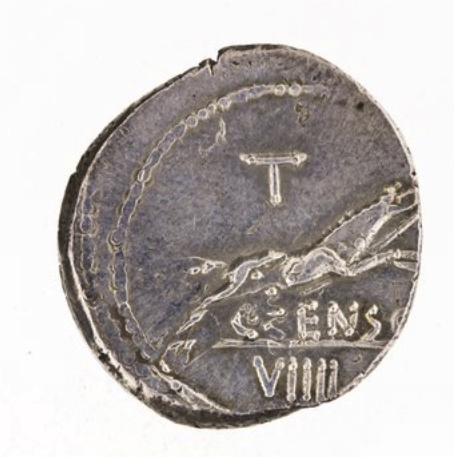
Reverse of RRC 141/1. 1944.100.235


Crawford says of this coin:

Image


This type of logic permeates RRC.  Given enough time with the series one starts to think that this type of symbolic language must have been pervasive at Rome.  But is this actually how people thought?  Are the name plays obscure or obvious to their audience? Is it a Roman phenomenon or something much wider?

Yesterday (because of the book review I’m diligently working at), I was thinking about the legacy of Pythagoras.  Not a figure I can say I’ve cared much about in the past, beside mentioning the legendary connection to Numa in some of my classes or this rather fun video. Of course, he shows up on some provincial coins of Samos.  But I was surprised to learn that May thought there might be a fifth century portrait on a coin from Abdera.

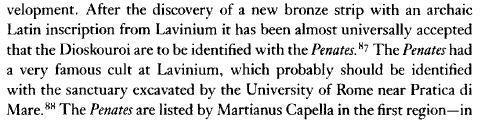
Here is what Burkert, Lore and Science in Ancient Pythagoreanism, 1972, p. 110 says:


Image


I’ve singularly failed to find you an image of this coin.  And after ‘wasting’ a hour and a half plus looking for it (and in the mean time getting rather visually acquainted with the mint of Abdera — what a great series!), I decided that it had nothing to do with the review or the book and so I’d better drop it.  The only tangential connection is this use of visual puns on the moneyer’s name.  Take for instance this beauty:

The moneyer, Dionysas, has the head of Dionysus.  And here’s Python and his tripod:

Silver coin.The British Museum has their whole (?) collection of Abdera coins up with photos.  It’s a great shame its not searchable by inscription and May number.  [The ANS has the May numbers, but few images and the legends are not transcribed.]  A look through the BM collection suggests straight off that not all images are naming puns, even if some certainly are.

Did real people think like this or was this a coin designers’ game?  Enter, Timeaus (via the anonymous author of On the Sublime):

Observe, too, his language on the Athenians taken in Sicily. “They paid the penalty for their impious outrage on Hermes in mutilating his statues; and the chief agent in their destruction was one who was descended on his father’s side from the injured deity—Hermocrates, son of Hermon.”

Or Timeaus via Plutarch:

Indeed, he often lapses unawares into the manner of Xenarchus, as, for instance, when he says he thinks it was a bad omen for the Athenians that Nicias, whose name was derived from victory, declined at first to head their expedition; also that, by the mutilation of the “Hermae,” Heaven indicated to them in advance that by the hands of Hermocrates the son of Hermon they were to suffer most of their reverses during the war; 

This is prophetic, symbolic thinking, not iconography, but nonetheless I detect a similar type of name=symbol association as we find on the coins.  Perhaps we could marshal Timeaus as part of an argument for decode-ability of the logic behind our numismatic symbols.   And perhaps Abdera + Timeaus = some background to just what exactly the Roman moneyers thought they were communicating with their symbolic language.

Update 5/19/14:  An old piece of scholarship that does a fine job of surveying the use of visual puns in media other than coins.


118 and 119 out of 410 days: Pyrrhus and Thetis

Yesterday late afternoon whilst reading about sources for the Pyrrhic Wars for this book review (It’s a really good book thus far! But slow going because I want to look everything up and enjoy the fun along with the author.) I became obsessed with the image of Thetis on the hippocamp. Below is a rather beautiful specimen in trade (cf. ANS Specimen):

capture.jpg

This is often attributed to the Locrian mint in Italy c. 279-274 B.C. The obverse is identified as Achilles (Pyrrhus’ ancestor) and the “portrait” is sometimes thought to be assimilated to Alexander or maybe even Pyrrhus himself. Perhaps the best thing to read on Pyrrhus’ use of the Trojan War narrative is Erskine, Troy Between Greece and Rome, p. 157-161. It’s basically a take down of the idea that Pausanias 1.12 can be taken as actual evidence that Pyrrhus used ‘anti-Trojan’ type propaganda against the Romans. The interesting thing is the relationship of Pyrrhus’ coin type to that of Larissa in Thessaly:

capture.jpg

There are also an number of illustrated specimens in the ANS collection. Note how on this specimen below the obverse head has the “whale spout” hair style so often associated with Alexander and also the AX monogram on the reverse shield standing for “Achilles”.

capture.jpg

What does Pyrrhus have to do with Thessaly? Well it was his next stop after Italy. So Pausanias, and with references at Plutarch, and Diodorus, and the dedicatory inscription he set up is in the Greek Anthology attributed to Leonidas (6.130). Some discussion of his memorable dedication and his choice of sanctuary can be found in Graninger’s Cult and Koinon in Hellenistic Thessaly. The dedicatory inscription in fact emphasizes his decent from Achilles:

Image

Image

Of course, the image was generally popular, a popularity often ascribed to a lost statue group of Scopas thought to be referenced in Pliny. An Attic Red-Figure Bell Krater c. 350 BC in the BM show the basic image. And, the iconography is also known on Italic ceramics as well:

Black glazed pottery askos with a ribbed body and in relief on the top, Thetis or a Nereid on a hippocamp to the left with Achilles spear in right hand and in left a shield, the hippocamp has a fimbriated fish's tail.

Just to make things more confused there are some little understood finds said to be from Thessaly near Larissa including this:

Image

There is a decent discussion here about this comparative evidence as it relates to Thessalian jewelry and gems.

I guess I’ll just have to mug up on the literature on Larissa and Thessalian numismatics starting with:

C. C. Lorber, Thessalian hoards and the coinage of Larissa, In: American journal of numismatics second series, vol. 20, 2008, p. 119-142, pl. 41-46.

Other literature of interest: Lücke, S. 1995. ‘Überlegungen zur Münzpropaganda des Pyrrhos’. In Brodersen, K., and Schubert, C. (eds.). 1995. Rom und der griechische Osten: Festschrift für Hatto H. Schmitt: 171–3. Stuttgart. As well as, Franke, P. R. 1989. ‘Pyrrhus’. CAH2 7.2: 456–85.

Italic Horserider Imagery

Capture.JPG

Note To Self: When considering the issue of L. Manlius Torquatus below (111 BC according to Mattingly), don’t forget that there are earlier Italic precedents for the reverse design, such as the AE quinrunx of Larinum above, dated by HN Italy to c. 210-175 BC.

You will want to order from ILL the relevant literature on Larinum (listed in HN Italy) and look for other similar Italic imagery.

Notice how the Torquatus coin even places all three elements of the legend in a similar location to that of the Larinum coin. His name for the ethnic, EXSC for the five pellets, and then, most strikingly, the Q for the V behind the riders head. [See three images down for a specimen of the quinrunx showing the V.]

The obverse of the above Larinum specimen looks more like a Minerva than an Ares in the Corinthian helmet. HN Italy queries lists as “Mars(?)”. Other specimens are more ambiguous or masculine:

But then see these long necked specimens (1) and (2)… The four specimens in the ANS seem very masculine indeed, especially the ‘fat necked’ SNGANS.1.131 and SNGANS.1.132.

Update 26/11/2013: Just adding this glass paste for comparison. It is dated by the Thorvaldsens Museum to the republican period.  This rider doesn’t have the same helmet but otherwise shares many design elements right down to the the shield details.

Rytter med spyd og skjold. Romersk republikansk paste

They also given this a republican date:

Kriger til hest. Romersk republikansk paste

Second update 27 February 2014: The coinage of Tarentum (Taras) also needs to brought into discussion (esp. HN Italy 1013):

Most of the rider imagery from Tarentum has the shield behind the rider, making this type stand out.  Even here, the horse is rendered differently from above imagery, but it is certainly in the same visual repertoire.

Also see this newer post for comparative evidence.

Update 19 Jan 2024:

Louvre Gy 3555 = Florence : Musée archéologique – N° inv. 14820.
Intaille – Sardonyx, ex Medici

112 thru 117: A “Loyal” Return

Image

The ‘intensive’ Turkish language class and bureaucracy have occupied much of the last week, but now as the Kurban Bayrami festivities begin our lives are settling down a bit.  The language class is certainly part of my professional goals for this sabbatical, but as it doesn’t touch on my research and writing directly I don’t find I have much to say about it. I set a simple goal of reading two chapters a day of a book I’m reviewing and writing notes there on in order to have a draft of the review by next Sunday.  This should allow plenty of time for flash cards and grammar exercises and perhaps even some more bureaucracy, if any offices are open.  It should also let me blog here a bit about the material, like the inscription above.  Here’s a recent translation:

ImageImage


Here’s the link to the translation source and here’s an even more recent discussion.  There is controversy over the date: Late Empire? Late Republic? The latter is more favored at the moment.  The passage is often discussed regarding the role of the historian in society and how histories would have been experienced by contemporary audiences, i.e. reception in antiquity.  What caught my eye was the list of things that cause problems in societies, the understanding of which will be beneficial to the audience of the history:

  • popular politics
  • greed
  • infighting
  • AND loss of trust (pistis)

It’s the last rhetorical point that resonates with numismatic imagery and more.  In the passage infighting (staties emphulioi), i.e. conflict between kinsmen, those who should be ‘natural allies’, is juxtaposed against the idea of a loosening loyalties (pistion katalusies), implying, perhaps, that the latter refers to external treaties or agreements, interstate affairs.  The first pair similarly contrasts poor and rich.  The poor should be stirred up to want undo societal influence, but equally the rich should not seek to become richer still. Harmony within a community, perhaps, depends on these two precepts (homonoia, the rhetorical opposite of statis).  

This started me thinking about how Homonoia (= concordia) and Fides (= pistis) have a strong overlapping iconography, most obviously the joined right hands. 


The joining of the right hand is so much a part of the iconography of each abstract ideal that when unlabelled we should perhaps read both ideas instead of just one alone:


The question of course becomes how far back should we read the development of this overlapping and sophisticated icongraphic rhetoric:


102 thru 111: The Great Hiatus

Image

In preparing to relocate continents it seems sensible to do the rounds of one’s healthcare providers.  It is NOT sensible to let your dentist drill into your teeth 24 hours before your flight.  A school girl error really.  I’m not that experienced with matters of the teeth having never needed any serious prior work.  A week on we’re settling into Turkey but my jaw still aches.

The jet lag is the worst that I’ve experienced, but the house is lovely and I sent off the chapter to my editor yesterday.  It was basically no different than the draft as it stood before the drilling but I didn’t trust myself to let it go.   We began intensive Turkish Friday.  Four hours every afternoon for 20 sessions.  Being an elementary student again will certain inform my teaching next fall.

More anon.

A travel blog by both of us is in the works.  This will remain primarily about work.

99, 100, 101 out of 410 days: The first Imperator, or ‘EMBRATUR’

Obverse Image

Back on 14 August 2013 I was rambling on about Sulla’s numismatic peers especially in relation to the use of the self-identifier IMPERATOR.  I’ve always been a little uncomfortable with the first instance of this honorific on coins being attributed to Fimbria.  Not that after murdering his commander and taking his army and sacking Troy I thought he wasn’t an arrogant enough @$$hole to do so.  [I really dislike Fimbria: he’s my least favorite Roman and they were generally a bad lot.]  It’s just he didn’t strike me as very creative or trend-setting.  Why would Sulla be copying him?  Did they really come up with it each independently?  Well, turns out we have C. Papius C. f. Mutilus to thank for this innovation.  Yup.  That’s right.  One of the most notable of the Social War generals.   A Samnite enemy of Rome eventually defeated by Sulla.  His coinage is pretty famous too:

So it doesn’t really say Imperator as that’s Latin.  It says, reading right to left, EMBRATUR, in Oscan, but the title has the same meaning in a  very closely related language and cultural milieu.

The coins struck in Mutilus’ name use the same types as those used by the Marsic confederation and are clearly part of the same series, but Mutilus’ ability to use the coinage for the promotion of his own standing and especially his honorific title clearly had a lasting impact.

[A. Burnett raises the possibility of Mutilus inspiring Sulla briefly in general terms on p. 170 of his ‘The coinage of the Social War’ In Coins of Macedonia and Rome: Essays in Honor of Charles Hersh, edited by A. Burnett, U. Wartenberg, and R. Witschonke, 165-172. London: Spink)]

***

I’m rushing to finish a chapter prior to leaving for Turkey and am generally frantic, but this observation was so fun I couldn’t not share!

97, 98 out of 410 days: Unknown Proverbs

Nicolo gem engraved with an elephant emerging from a snail-shell.

This isn’t the gem I wanted to post. There is another type. I took notes on it when working through the German gem publications, but can’t seem to find an image to share here. It has a stork (or a crane) holding a set of scales in its beak. The scales hold an elephant and a mouse, but the balance is tipped heavily towards the mouse, not the elephant. It feels like it must represent a parable or proverb, something familiar and funny and prosaic, just out of grasp.

I did find a stork with scales, but those balance pans are empty.

Like the much more common elephant-coming-out-of-a-snail-shell motif, the out-of-balance-scale motif seems both to derive its humor from the unexpected and also to convey a message about proportions:

  • good things come is small packages
  • don’t make a mountain of of a molehill

Then there are sayings about specks and logs if we want slide into Jesus sayings.

Human misperception of proportions is a site of collective and individual anxiety. We know yesterday we misjudged the relative size of some matter in our lives and know that today we are just as likely to be doing the same, just as obliviously.

And sometimes even when all reasonable measurements (the scales) and the testimony of trusted outside observers (the stork), we still want to insist the ‘elephant’ in the room MUST be weightier than that damn mouse.

Reflecting last night on the past few days and my skewed perceptions of reality over that same time frame, I felt a bit like a wobbly stork who by shifting from leg to leg can upset the reading of the balance pans. One moment publication deadlines seem like the most important thing in the world, the next its a social and bureaucratic minutia of leaving the country for 10 months.

Friday I took a day away from writing and went to the Herodotus conference at Columbia and got to be a historiographer for a day. Fabulous conversations. No fisticuffs, as the inimitable Tom Harrison entreated at the opening. But hugely enjoyable cross theatre debate on whether Herodotus is lying at 2.143.

Friday Night/Saturday Morning we hosted dear friends and helped them book their tickets to see us for the passover break. If this were only a food blog, I could tell you about the menu. Alas.

Saturday I wrote late into the evening.

Sunday we went cycling with Turkish friends and then to PA for a huge family send off.

Monday we spent more time with SDA’s family and friends as I started to twitch from lack of academic engagement and an impending sense of doom. Not my finest moment.

From this precise moment I have six hours of uninterrupted work time until we must begin a hideous afternoon of travel shots, medical consultations, bank branch visits and other horrors. I can do something with six hours. Time for the stork to switch legs.

***

What does the Elephant in the Snail Shell mean? I’ve no idea. Maybe a mash up of

  • Don’t judge a book by its cover.

and

  • Mighty oaks from little acorns grow

I ILL-ed M. Henig, “The Elephant and the Sea-shell”, Oxford Journal of Archaeology 3 (1984), 243-247 out of pure curiosity. There are however other things crawling out of snail shells on antique gems besides elephants, including sea monsters, and humans:

Image

This image reminds of all the hilarious Diogenes the cynic gems.

Anyway. Enough fun. Just one final proverb for today:

Worry often gives a small thing a big shadow.

Update 27 February 2014: see also newer post on similar iconography.

95, 96 out of 410 days: Divine Abstractions

There is a good deal of concern and attention paid to the divine honors given to the personification of abstract concepts.   The habit has it origins in the Hellenistic period.  Think of the Nikes we’ve seen, not to mention much more famous examples:

Victory of Samothrace

All of these turn the idea of ‘winning’ into a goddess who can not only be represented in art but also given cult honors, from temples to sacrifices to prayers and hymns.  The Romans took this practice to great heights.  Click on that link “care and attention” above for discussion.   Of course they did not have a monopoly, but we usually think of them influencing their neighbors.  We’ve seen the Locrians representing Pistis (= Fides = Loyalty) crowning Roma before.  Strangely that coin isn’t usually discussed in context of the coin above also minted at Locri.  It represents (and labels as such) the goddess Eirene (= Peace).  The style of the reverse is modified from the coin of a neighboring town:

Reverse Image

Yes that’s a Nike on this AR Stater, Terina, Bruttium, 400 BC-356 BC.  The bird is a rather different attribute. Something to chase up another time…

What the Eirene coin does is contextualize the Pistos / Roma coin by letting us know that the Locrians are already well versed in thinking about abstract divinities: they don’t need the Romans to help with that.

Pax won’t show up on Roman coins until 82/81 BC at the earliest:

The identification of the obverse here is far from certain.  The first secure appearance isn’t until 44 BC and the is a very rare coin indeed:

Pax may not have had a cult site in Rome until the Ara Pacis!

Odysseus Alone

Carnelian ring stone

There are many iconographic representations Odysseus/Ulysses with other characters or indications of setting that link him to a specific narrative: Sirens, Argos, Diomedes and Dolon, the Palladion, etc… However, it seems on gems that if you’re going to have just Odysseus/Ulysses all by himself, there are two main ways he can be represented (three if we count just a bust, but I’m leaving those aside today). One is with a walking stick and legs crossed. A rather upright example is given above (Cf. A glass paste in Munich no. 1375). Most of these cross legged Odysseus’ are more bent over and their staffs tend to be more crooked.

Gem of glass paste imitating sard, engraved with Odysseus as a beggar, with a pointed cap, chiton and crooked staff, standing to the right with his legs crossed.

Another example with an image on-line here, and also here (also cf. Munich 488 and 1374). Often the cross-legged Odysseus is described as ‘in the guise of a beggar’ this seems fairly apt, esp. when the figure is hunched over and the staff is crooked. I’m not sure, however, that the top image is ‘as a beggar’ it may just be Odysseus as traveler… that is if the traveler iconography can actually be distinguished from the beggar iconography.

The other solo Odysseus is with a cup. A LARGE cup.

Gem of glass paste imitating sard, engraved with Odysseus bending forward to the right, holding out a cup; he wears a pileus, short chiton and a sword at his side.

Another online image here (Cf. Munich 1369-1371). I’m under the impression that this might be a wee bit more common on glass pastes that on precious stones, i.e. “faux” gems of lower cost. Whereas the traveller/beggar Odysseus certainly appears on both. Why is he holding out the cup? Is this a begging action? Or might it be related to the comic Odysseus of the stage:

Or the wiley Odysseus who tricks Polyphemus with drink:

Post Script. I note that in the Wyndham Cook Collection no. 160 depicts a solo Odysseus as Archer with a legend resolved in the Catalog as ‘Nicander’.

92, 93, 94 out of 410 days: Fight or Flight

I’m trying to tamp down the panic of leaving the country for ten months.  I no longer wake up with coins in my mind: its all logistics and I’ve not slept straight through the night for days.  I wake up with the ‘what ifs’ and ‘must remembers’ and cold sweats.  

Monday I finished section two of the current chapter by moving two large epigraphic-ish topics (1,200 words plus) into an appendix to keep my narrative flow smooth.  

Tuesday morning I realized I really should have ordered images of gems for section three from other museum collections, oh say two months ago.  They both went out Wednesday. No word back.

Yesterday, I fought with HSBC over my lost 720 dollar wire transfer and tried two other wire transfer services both of which went better than HSBC but resulted in prohibitive fees on the Turkish bank end.

I when to the doctors (at long last, I hate doctors, not unlike Cato) and scheduled even more check-up, preventive medicine type things.  I researched the cost of out of pocket medical care in Turkey.  (Totally affordable from an American perspective, no surprise.)

I finalized a going away party.  I went running.  I cooked.  Apparently, I cook when stressed.  

I dealt with messy little bits of college matters that reared their hydra-like heads even on sabbatical.

I felt guilty for ignoring my blog.