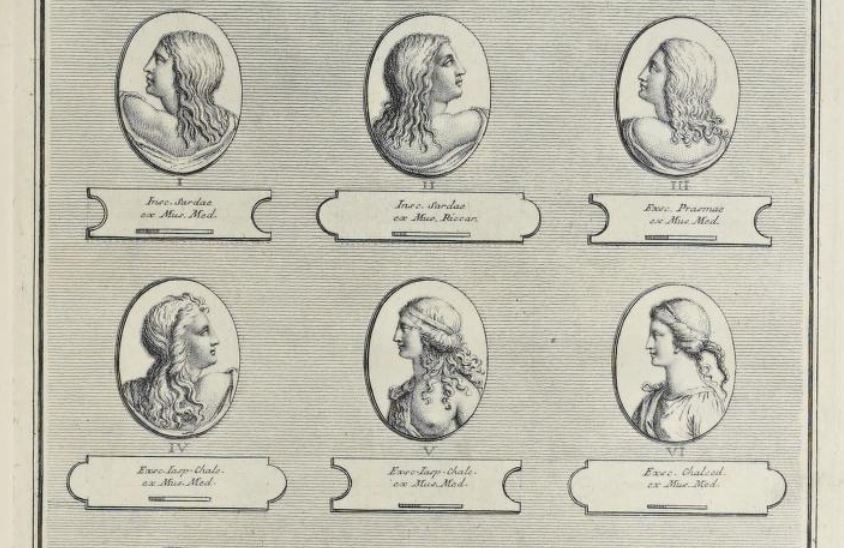
Still Gori. Earlier post for context.
And another plate as well.
Update 19 Jan 24:

Intaille – Cornaline.

Intaille – Cornaline.
adventures in my head
Still Gori. Earlier post for context.
And another plate as well.
Update 19 Jan 24:
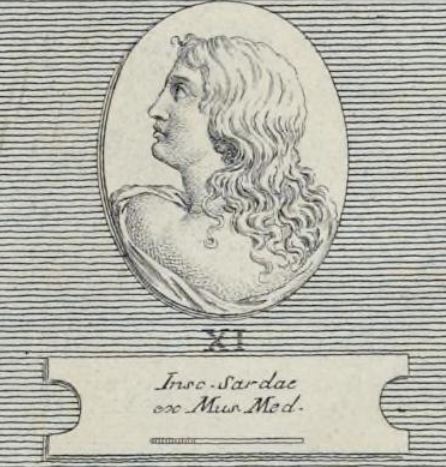
Another bit of Gori:

and another from the same with a great mash-up of popular iconography, much rarely elsewhere combined with the wolf and twins:

Are those scorpion claws as horns for that male diety?!
Update 2/8/18:

Also see this more recent post.
—
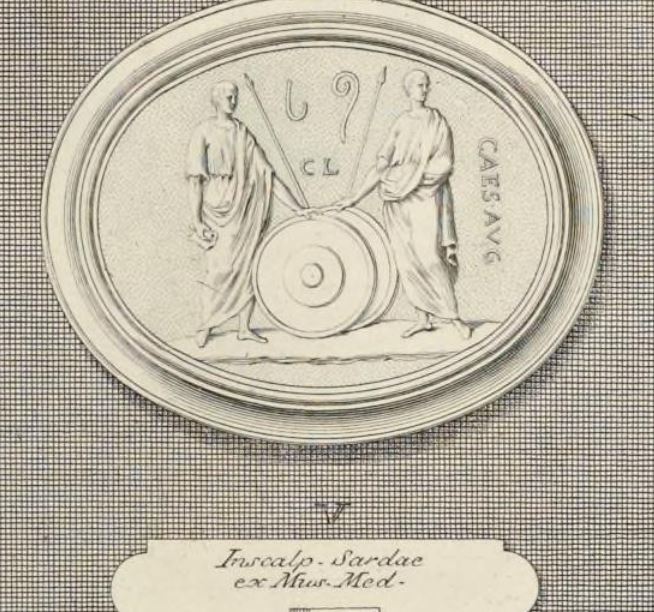
This double sided gem makes the visual claim that the two Julio-Claudian princes are the ‘new’ Romulus and Remus:

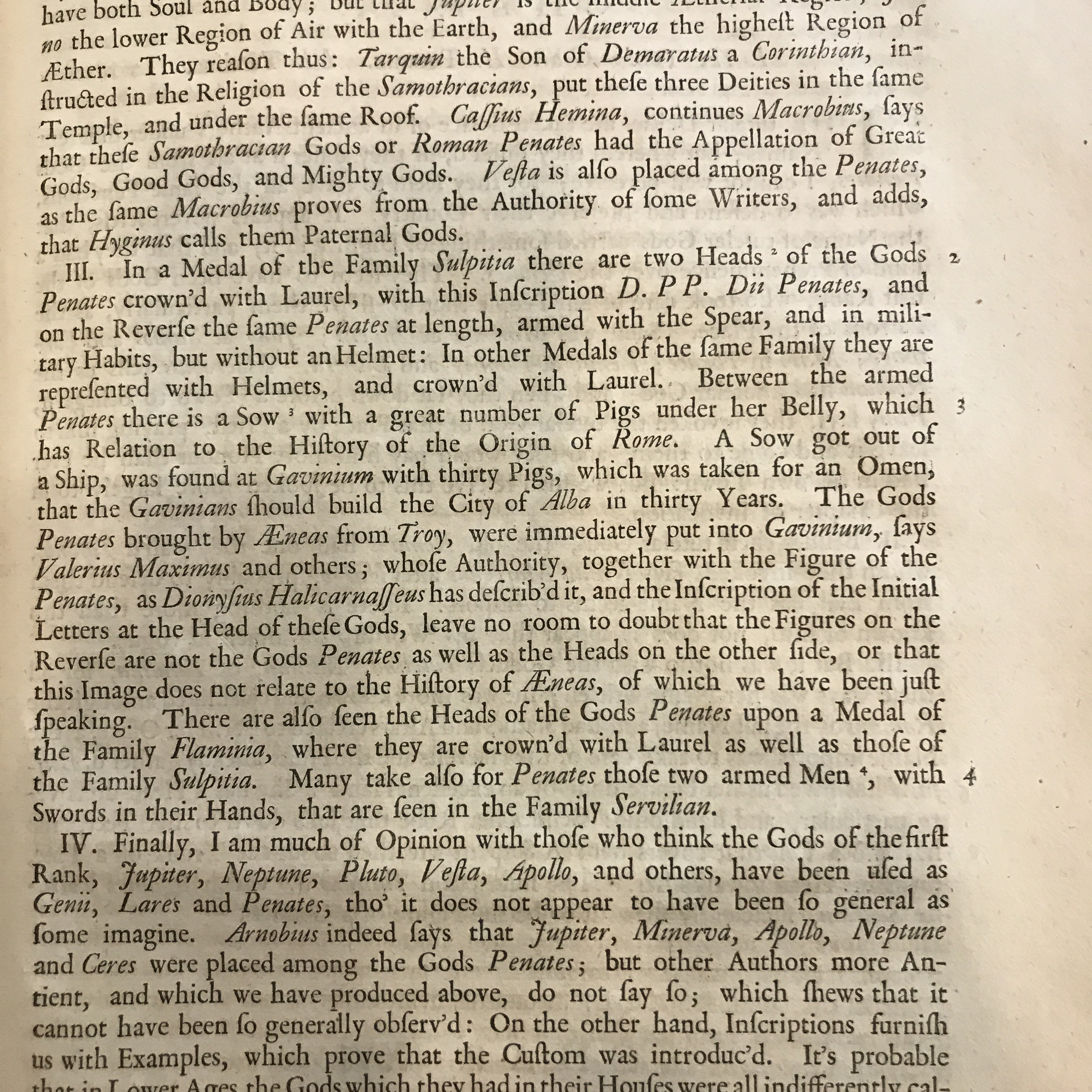
Still reading 18th century books from Matthew Boulton’s library (or rather copies of books he owned, not the very books themselves…)
This image got me thinking.

Un-illustrated entries in OCRE.
Which led me to this:

And also these rather interesting types with variations on the wolf and twins imagery from late antiquity:
http://numismatics.org/ocre/id/ric.6.rom.189
(The female figure grasping Mars’ hand is clearly Venus)

I don’t really need any more examples given that the article on the Minucii is not only finished but published, but well… had I found this earlier I would have stuck it in the footnotes!


A term used by the early 18th century at latest. Crawford 2009 saw it as a 19th century creation


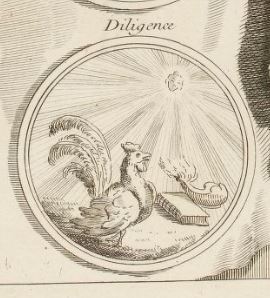
A nice example of the use of sun/light/rays imagery used in conjunction with the theme of freedom in a non-racialized context. I particularly like the cock (rooster) used to as a symbol (I believe) of the ‘dawn’ of a new era’ Also rather fun classical reception generally. Product of Boulton’s mint.
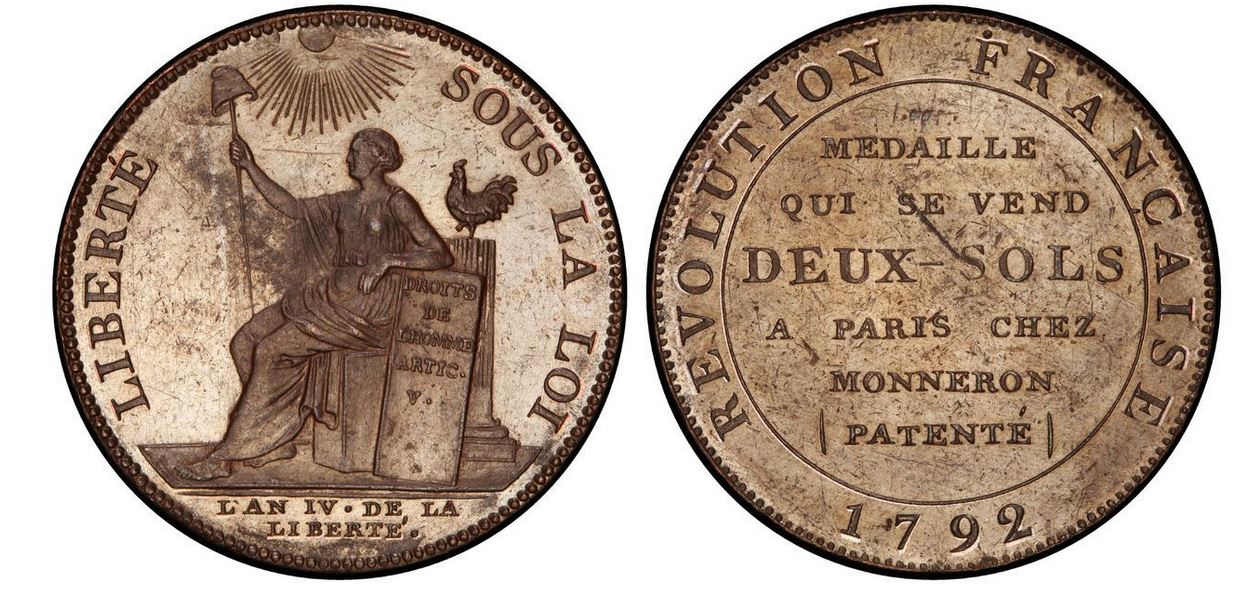
Illustrated type in trade, but for academic reference specimen in BMAG (1885 N 1536.97) discussed Mason 2009:92-93.
Great online exhibition on images of liberty on early American coinage:
http://rbsc.princeton.edu/capping-liberty/
—
French Neo Classical explanation of the iconography, Thanks Delafosse!

Notice Mercury and Lara AND Mars and Ilia (Rhea Silvia) are featured along size the wolf and twins.
In the Fasti, why does he make up the goddess Muta as a name for Lara in book 2 on the Feralia? The Romans already had a goddess of silence and she already had her own place on the calendar!
The Divalia of Angerona:
Pliny NH 3.36: It seems pertinent to add at this point an instance of old religion established especially to inculcate this silence: the goddess Angerona, to whom sacrifice is offered on December 21, is represented in her statue with a sealed bandage over her mouth.
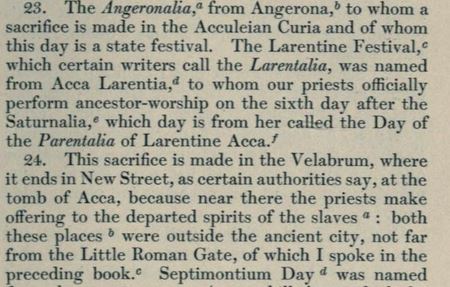
[C XII Di]va(lia) n(efas) p(iaculum) feriae diva[e Angeronae quae ab anginae morbo] / appell[atur quod remedia eius quondam] / prae[cepit statuerunt eam ore obligato] / in ar[a Volupiae ut moneret ne quis nomen] / occul[tum urbis enuntiaret 3] / [3]m aiunt ob an[3] / [3]m / [D XI c(omitialis) Laribus Perm]arinis in porti[cu Mi]nucia / [E X La]r(entalia) n(efas) p(iaculum) [fer]iae Iovi Accae Larentin[ae Parentalia fiunt] / hanc alii Remi et Rom[uli nutricem alii] / meretricem Herculis scortum [fuisse dic]unt / Parentari ei publice quod p(opulum) R(omanum) he[redem fece]rit / magnae pecuniae quam accepe[rat testame]nto / Tarutili amatoris sui / F [VIIII c(omitialis)]
Is he playing around with the identity of the Mother of the Lares and her connection with Acca Larentia? I’m thinking about Coarelli 2003: 12-13 and how he builds on Wiseman 1995.