
I’m super excited to start my conference with a paper by Prof. Accettola on Nabataeans and Greek and Roman sources and these peoples own self presentation. . My excitement comes from her publication on one of my favorite topics.
Accettola, Anna. “To Whom Does the King Kneel? The Absent Supplicandus in First-Century Republican Coinage.” American Journal of Numismatics (1989-) 36 (2024): 15–38. https://www.jstor.org/stable/27352948.
I have not yet read the above. Expect a blog post on it in time. I discuss the topic in my Tree and Sunset paper of 2018.She’s discussing how Greeks self identify but how Nabataeans did. Specifically how tribal identifiers many not be legible to Greek audiences especially at greater geographical distance. Nabataean is a more of catch all, perhaps even a political concept more than an ethic. External audiences recognize the term and the fame of the kingdom even if the the individual so identifying might not have a strong attachment to the term.
First case study, Tenos, 2nd cent BCE, Salamenes son of Edemon proxenos, good man, and the Nabataean. Paternal name is completely unknown in Nabataean prosopography, this leads some to suspect there may be a mistranslation of how the man himself identified. Perhaps he was of Edom.
Second case study, from Capitoline, 1st century BCE, bilingual, Latin, Greek, and specifically casts Nabataea and their ‘king’ as below Roman authority, something the speaker says she’s not at all confident the Nabataeans themselves would have considered accurate at this time.
King of Nabataeans not a term used in Nabataea until 9 BCE! Then two case studies of personal religion dedications in the Greek world, aramaic and Greek bilingual at Miletus again late 1st cent BCE. Super interesting as the dedicator seems to concern himself more with his divine audience not the local audience. Similar one from Delos, perhaps dedicated by the same man, perhaps a marker of his journey through the Mediterranean from his homeland to Rome. King is used but not a King OF the Nabataeans, just King.
Super great paper cannot wait to read the final version.
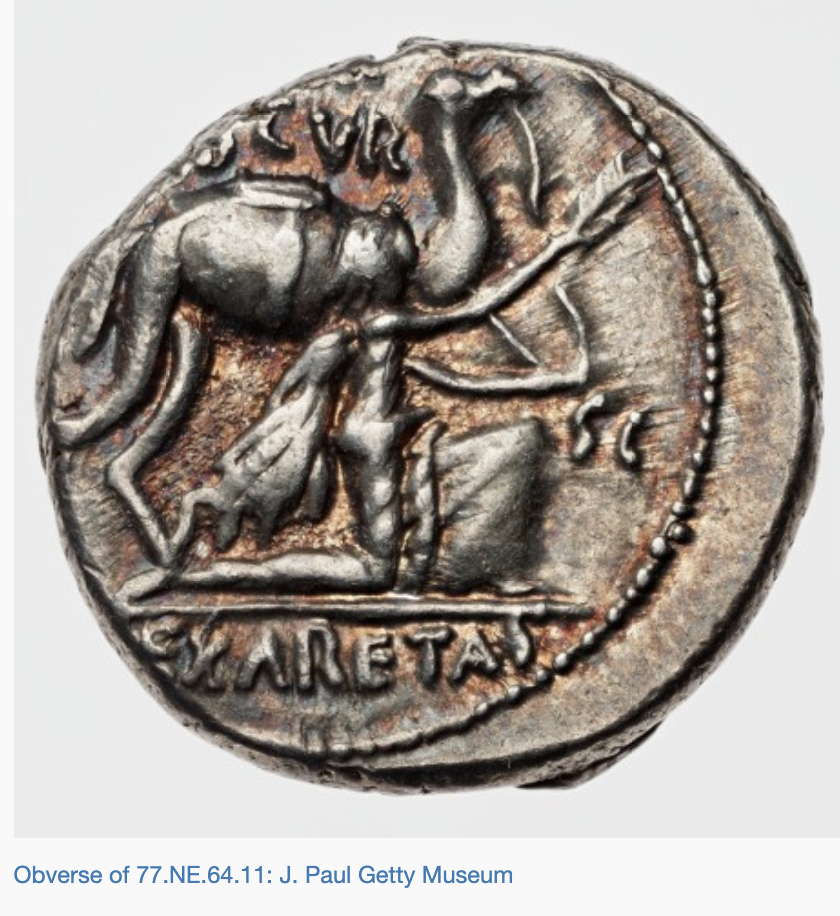
Here’s a coin just to give this post an image.

 Liv Mariah Yarrow