
Things are not good. Perhaps we can just all agree on that.
The title of this post is not a giving up, but rather yet another sincere effort to push myself to engage, to write, to know why I do what I do. I’ve been writing but all my blog posts end up in the drafts file this past month. An alternate post title might be: What am I NOT writing today?
I’ve got 2/3s of a banger of a post on disciplinarity. Yes, once again I’m wrestling with what the heck is Classics and where does it belong in the 21st century academy. That post is most certainly inspired and necessitated by my own struggles as a chair of a shrinking department. And, yet discretion is often called for in delicate moments. I write to know my mind and sometimes its best not to share. I know. I know. That is radically different than the very premise of this blog and my own general philosophy of being. I want to be an open book.
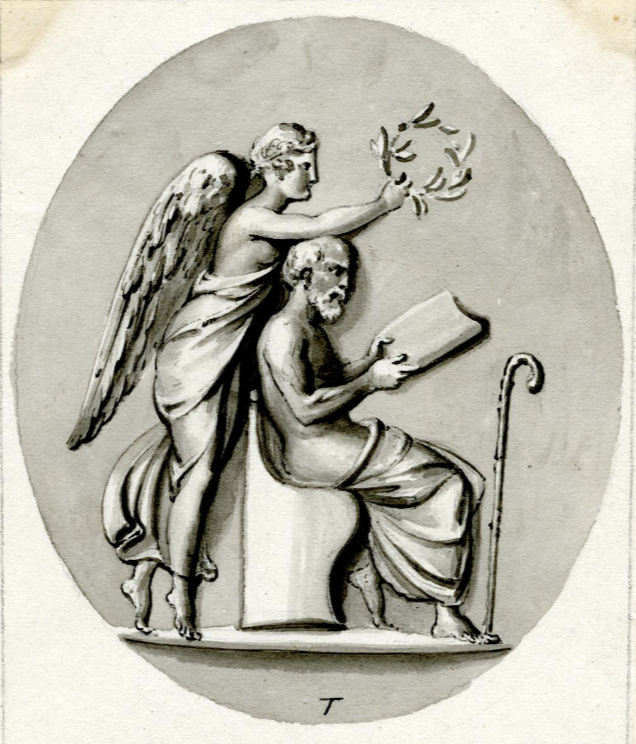
I’ve got another draft of a massive numismatic-themed post about a gorgeous 18th century series of drawings of coins, the vast majority of which don’t exist but are directly inspired by identifiable types. It feels a rather a significant step forward in my emerging work on fantasy pieces. I think I may actually have something original and necessary to say on the topic given some more time and data collection. After 12 years of blogging my research process, I know how slow it is to go from post to completed article. My first post on elephants and pigs appeared 2014 and the article didn’t appear in a PR journal until 2021. I like complex puzzles and pulling ALL the threads together. I’d publish more, I think ,if I turned more of my one-off ideas into articles or notes.
Today, I have time to write and I’m in the mood to return to either of those two pieces. But I’m not doing so. And, in fact, I stopped working on both because of other professional commitments.
I have also not started any new blog posts. I have an incredible itch to write about necro-classics, a concept introduced to me in conversation with Kyle Khellaf, a visiting scholar, I hosted earlier this week for a campus lecture. If I’ve captured the idea he himself adapted from other scholars of more contemporary periods, necro-classics is when an ancient society marks certain humans as unworthy of life and/or where their death is without any significance or meaning. Humans so marked then experience being in essence the living dead. If you want a quick conceptualization just think of Cicero’s state of mind after Clodius manages to have him exiled. Or the proscribed under Sulla. We know and discuss these historical examples because in fact whether those lives mattered were disputed by the Romans themselves. By contrast, there were whole peoples the Romans were happy to exterminate that barely blip on our historical radar. In this conversation, I then raised the concepts of social death and natal alienation as the defining characteristics of enslavement as theorized by Orlando Patterson. Who were the scholars influencing Khellaf on this? I’d write and ask, but the answer might just be another distraction.
So here we have already three things that I’m NOT writing about (that I want to write about!) and looming over me (with SO many shades of guilt) is the need to draft some sort of introduction for the conference volume for the AAR-RRDP conference last April. There I said it. Confession is good. Even a little bit of public shaming of myself.
I keep telling myself that I have no inspiration, that it doesn’t move me, that I don’t know what to say, that I wish to be back in Rome in the gardens of the Academy bouncing ideas off my fellow conference attendees and contributors. I tell myself I’m bored with the topic. That there is nothing left to say. Or, that none of it matters–what’s the point?! On the flip side, the conference was awesome and I want the papers published and I want to say why six years of RRDP matters and why I bothered to give that project so much time and why I think there is still work to be done.
On Monday, after Khellaf’s brilliant lecture on the PostClassical Magreb, I had a conversation with Joel Christensen about writing at the reception. He was talking to a student when I joined in. Christensen was extolling the virtues of writing (only?) when one has something to say, giving it a little time (rather than hours, days, weeks of sitting with the work), and letting one’s brain continue to work on the topic even as one engages in all the other aspects of academic life. There is truth in all this. When I know what I want to say, even what I need to say, the words just come. Setting work down and coming back to it always makes it stronger. Writing is an iterative process. And, when I’m in a writing project it is easy to return to it, I even feel compelled to do so. Such is very much the case with the post on disciplinarity or the one on fantasy pieces sitting in my drafts folder.
Yet, as I said to Christensen, sometimes we can also write just to start. To know that our fingers will move. That we can control our brains and take the noise and chaos and put it to a problem in a linear fashion. Herein is the essence of my blogging. It started as an exercise and meditation on how to write. It evolved into a repository of ideas. A workspace for connecting disparate pieces of primary evidence. And, now when I find being simultaneously a scholar and petty bureaucrat so hard, it is again an exercise and meditation on writing.
989 words. In less than an hour.
I can make myself write. I will make myself write.
I can explain why my work matters, even in the face of fascism. I will not despair.
To be a humanist of esoteric things is to resist despair.
It is not selfish, but rather a small gift I can give future generations.

 Liv Mariah Yarrow
thanks for the vulnerability, Liv. it gives a boost.