

This blog post is a spin out of my notes on Sertorian bibliography. It came to have a life of its own. It started because of a toss away comment by Crawford on RRC 366. I am in that other post working though everything Crawford says about Sertorius in RRC.

This is classic Crawford. Declare something impossible and erase all other speculation on the topic from our memory of this coin type. Babelon thought it was Anna Perenna and was followed in this interpretation by Grueber, Sydenham and Zehnacker. It is nonsense. Crawford is correct about that, but he could have told us that he was rejecting an established interpretation. Babelon says the same goddess appears on the coins of Turpilianus, but that is Feronia, turreted and labelled as such..There is a stylistic similarity to which I will return. Babelon completely ignored the attributes. He just wants the gens Annia to have patron goddess. Complete fantasy. Smyth in 1856 (p. 9) emphasized the scales and decided it must be Juno Moneta. Also I think unlikely. I find after writing most everything below and deciding to title this piece as I did, that I agree with Ekhel‘s first guess: “Caput anticae propter adstitutam plerumque bilancem vel Aequitatis est, vel Monetae.”. How I came to this conclusion is much of the rest of this blog post. According to Riccio the switch from Ekhel’s (v sensible guesses) to Anna Perenna started with Cavedoni, while Riccio is unreliable in some matters, I appreciate his willingness to confront the contradictions and make them transparent in this case to his reader. What I have not yet found is where Cavedoni said this. The following isn’t yet digitized as far as I can see:
The styles of RRC 366 vary intensely between types 1-4, but the main bust stays the same and I think few would dispute they are all supposed to be the same goddess. The main differences between them are as follows:
1 – Caduceus behind, Scales before, Fabius Q
2 – No attributes, Bead and Reel border, Fabius Q
3 – Just Scales, Fabius Q
4 – Just Scales, Tarquitius Q
From this I take the scales to be the most important attribute of the goddess.

Note there are just 10 coin types in all of RRC with a bead and reel border.
Full busts that show the shoulder of the deity are also pretty unusual on the republican series, Besides RRC 366, I’d note Diana on RRC 372/1 and Libertas on RRC 392/1 and the composite goddess on RRC 409/1. Notably the last two also have a bead and reel borders. To my mind this type of bust reminds me of Italic terracotta busts but this may be a stylistic stretch (cf. much earlier post). It will however perhaps be uncontroversial to say the greater bust on the coin isn’t very Greek or Hellenistic.
There are not many scales on the republican series and I’d not like to draw parallels with any of the coins form the 40s.
There are 947 types in OCRE (from RIC) that have scales of which 287 have some version of AEQVITAS as a legend. The legend begins under Galba and is attested as late as 260 CE. From the age of Domitian onward the same imagery but usually with cornucopia instead of scepter is used with some version of MONETA as the legend (384 types). If there is no identifying legend the RIC catalogues tend to call a figure with scales Aequitas-Moneta. There are just 21 types in all of OCRE that have scales but where the catalogue does not include Aequitas or Moneta in the description. Pescennius Niger uses the scales for Iustitia, Philip I Concordia, Carausius Pax, etc… These and more are too late to be useful to us.
In RPC the figure with the scales is called δικαιοσύνη dikaiosýnē and typically considered the parallel of aequitas. These figures don’t tend to be labelled so the catalogue is bring modern interpretations to the imagery. Some times the scales attribute is combined with two ears of grain.
So is the goddess of RRC 366 Aequitas? I think it highly likely. We believe that Aequitas has cult in Latium from the first third of the third century BCE based on a tomb find at Vulci with an early Latin inscription. We know again from epigraphic evidence she was worshiped at Urbs Salvia by the end of the first century BCE and that might go back to the second century foundation of the colony, but that is only speculation. By the end of the first century a C. Marius, son of Marius, was improving the goddess’ cult in the north African colony of Uthina. Cicero doesn’t invoke the goddess, but as an abstract virtue it is all over his writing. A rhetorical handbook of c. 80 BCE makes a point to define it:
Iustitia est aequitas ius uni cuique rei tribuens pro dignitate cuiusque.
Justice is Equinimity in judgement so that each has their portion according to their dignity.
There are depictions of a goddesses with scales all over the glass pastes and I believe these are best identified with Aequitas.
The root word is self however is interesting because in a civic and military context it can connote leveling, as in leveling (to) the ground.
Notes supporting last paragraph of above.
Anna Clark’s Divine Qualities (OUP 2007) the go to on this topic has no entry in the index for this goddess. Not a good sign. BUT, my memory paid off and I check Dan-el Padilla Peralta’s Divine Institutions (PUP 2020) and got to p. 206 where a Pocola (ritual cup) with a possible reference to Aequitas is mentioned. [This is why I buy books, but also why I blog — it would have been much easier to find again if I’d made post about these objects and the abstractions they mention. When in doubt, blog!]. Dan-el cites:
Miano, Daniele. “14 Spreading Virtues in Republican Italy.” In Processes of Cultural Change and Integration in the Roman World, 382:253–77, 2015. https://doi.org/10.1163/9789004294554_016. [accessed via paywalled digital copy in my college library].
This is a great update to Clark! I’m super excited to read it. There is a real emphasis on emergence through out greater Italy in the 3rd Century BCE and then growth down through 1st cent.
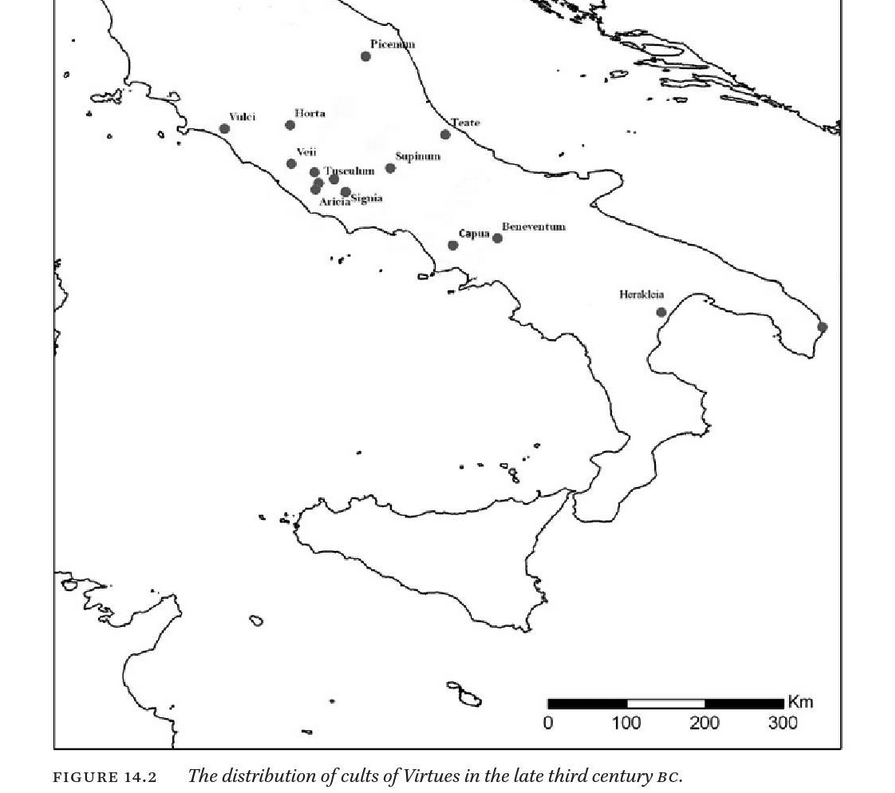


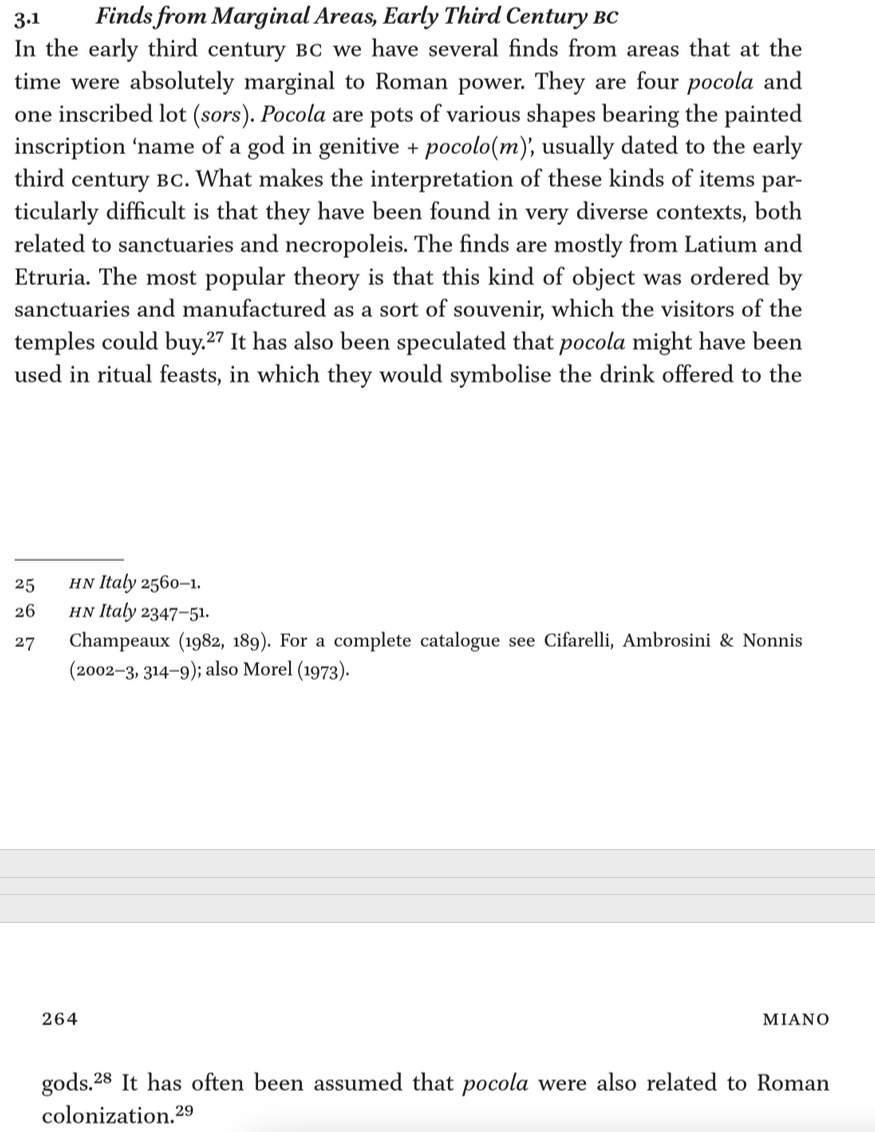
P. 264
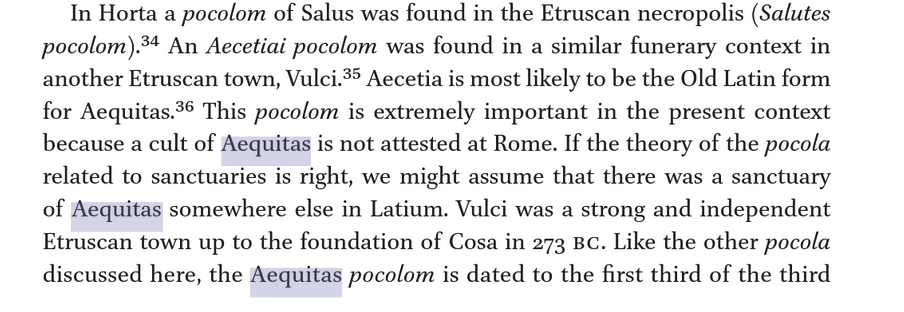
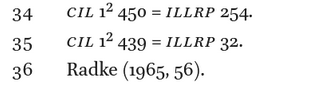

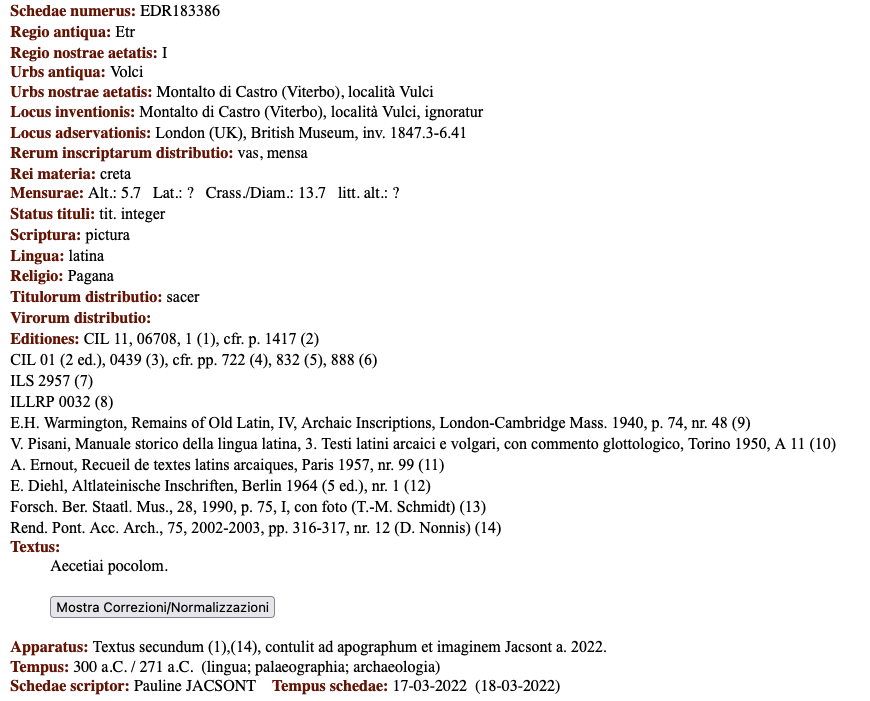

What is a poculum or pocula you ask? Miano gives a very clear summary:



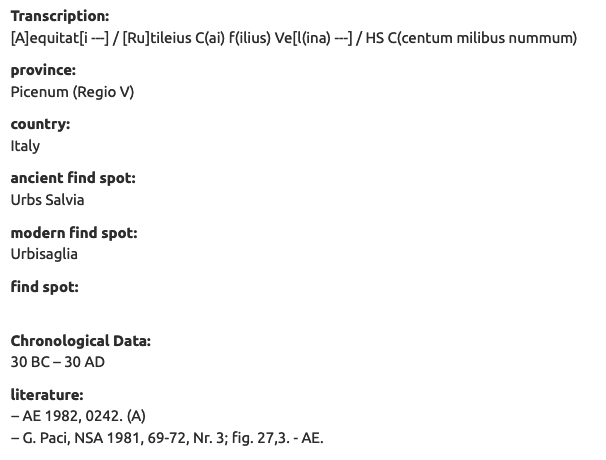
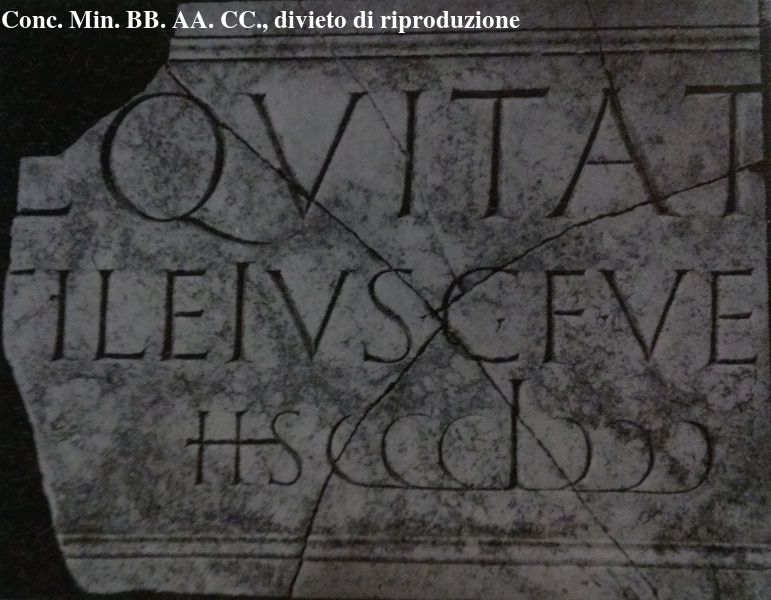
Fonte dell’immagine: L’evergetismo nella regio V (Picenum) (Picus, Suppl. VIII), Tivoli 2001, p. 117, fig. 23
glass pastes:

Cicero love the abstract concept of aequitas, but never seems to discuss it as divine; it is every where in his corpus. Both to praise individual morals and characterize public actions. Here he tries to define it: (De Partitione Oratoria 129-131):
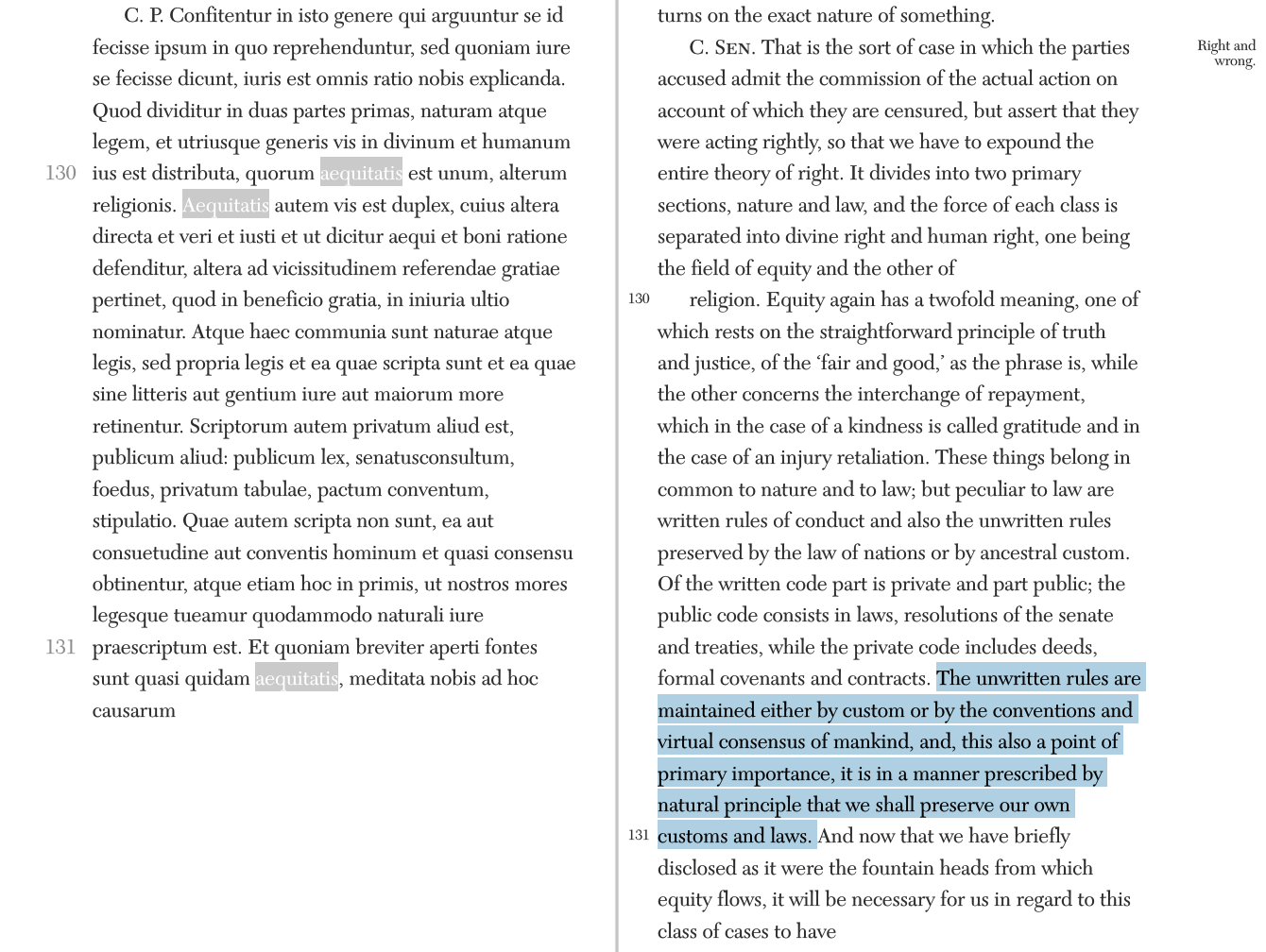
Quocirca bene praecipiunt, qui vetant quicquam agere, quod dubites aequum sit an iniquum. Aequitas enim lucet ipsa per se, dubitatio cogitationem significat iniuriae.
It is, therefore, an excellent rule that they give who bid us not to do a thing, when there is a doubt whether it be right or wrong; for righteousness shines with a brilliance of its own, but doubt is a sign that we are thinking of a possible wrong. Cic. Off. 1.30
Honesta res dividitur in rectum et laudabile. Rectum est quod cum virtute et officio fit. Id dividitur in prudentiam, iustitiam, fortitudinem, modestiam. Prudentia est calliditas quae ratione quadam potest dilectum habere bonorum et malorum. Dicitur item prudentia scientia cuiusdam artificii; item appellatur prudentia rerum multarum memoria et usus conplurium negotiorum. Iustitia est aequitas ius uni cuique rei tribuens pro dignitate cuiusque. Fortitudo est rerum magnarum appetitio et rerum humilium contemptio et laboris cum utilitatis ratione perpessio. Modestia est in animo continens moderatio cupiditatem.
The Honourable is divided into the Right and the Praiseworthy. The Right is that which is done in accord with Virtue and Duty. Subheads under the Right are Wisdom, Justice, Courage, and Temperance. Wisdom is intelligence capable, by a certain judicious method, of distinguishing good and bad; likewise the knowledge of an art is called Wisdom; and again, a well-furnished memory, or experience in diverse matters, is termed Wisdom. Justice is equity, giving to each thing what it is entitled to in proportion to its worth. Courage is the reaching for great things and contempt for what is mean; also the endurance of hardship in expectation of profit. Temperance is self-control that moderates our desires.
[Anon.] ad Her. 3.3, c. 80 BCE

 Liv Mariah Yarrow
4 thoughts on “Aequitas, the Leveler”