Generally when I see something as from Museo Kircheriano (cf. Marchi catalogue), I assume it ended up in the Museo Nazionale in Rome but we also know some stuff was dispersed. New to me today is that much of the material I find so fascinating from this collection seems to have sold in 1914 in the Hirsch Sale.
Secondina Lorenza Cesano in AMIIN 2, Roma 1915 pp. 49-180

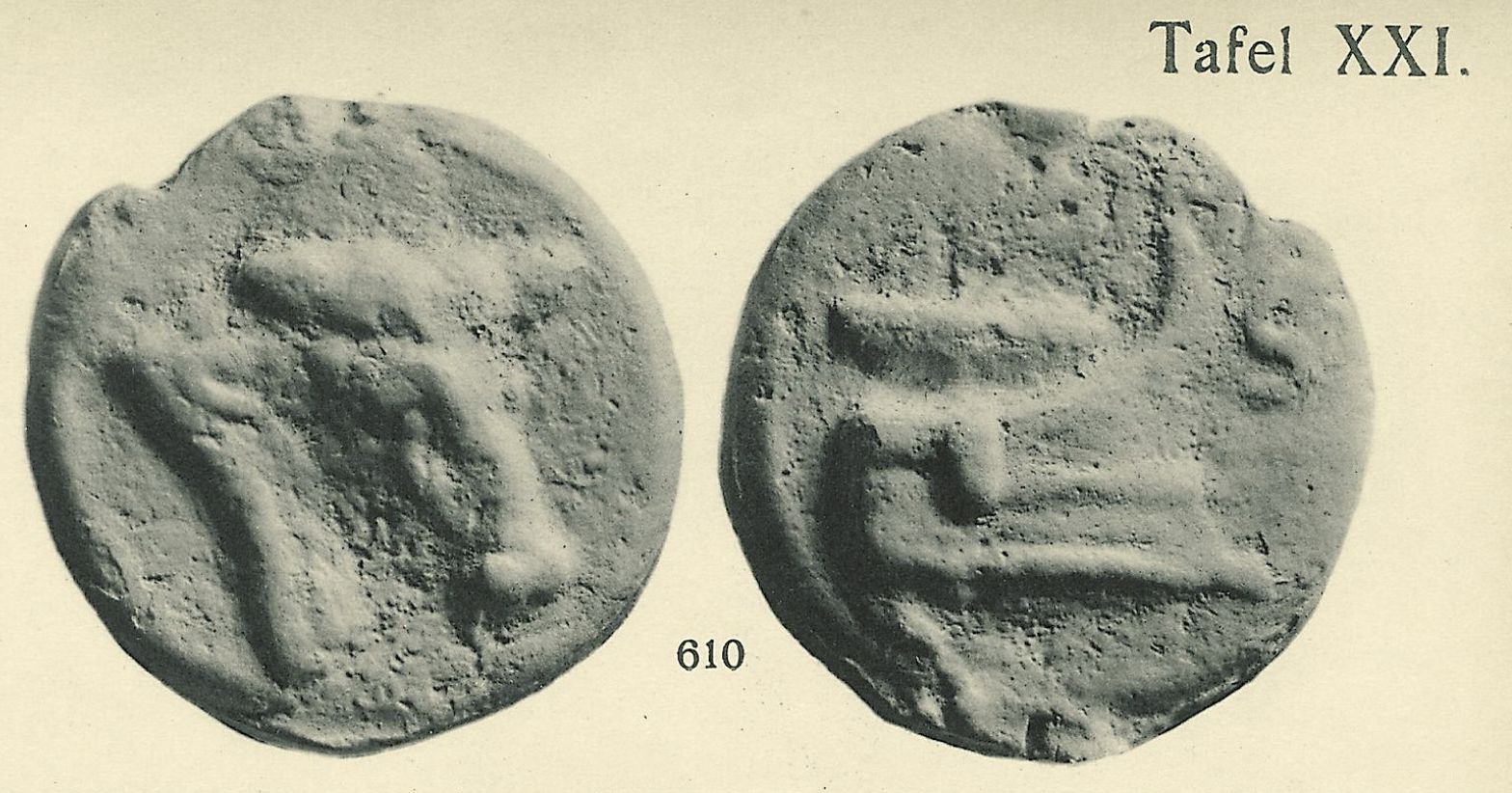
G. is an abbreviation for Garrucci.

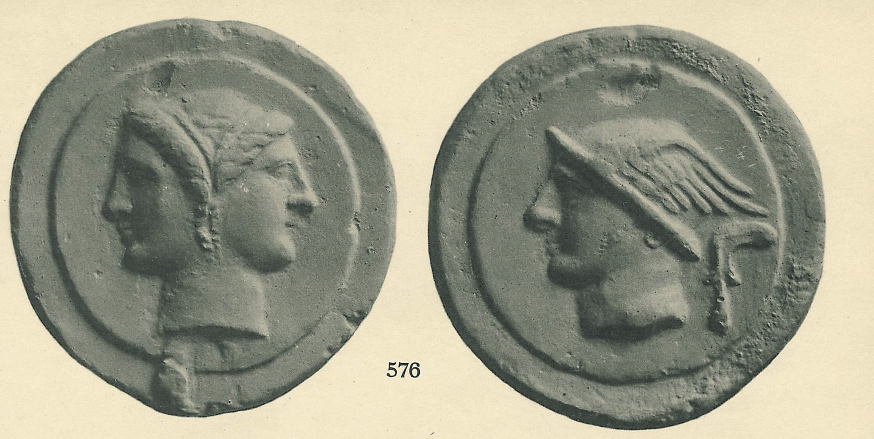
Notice how the damage at the top of the reverse is very similar. The same specimen was also known to Marchi in 1839.
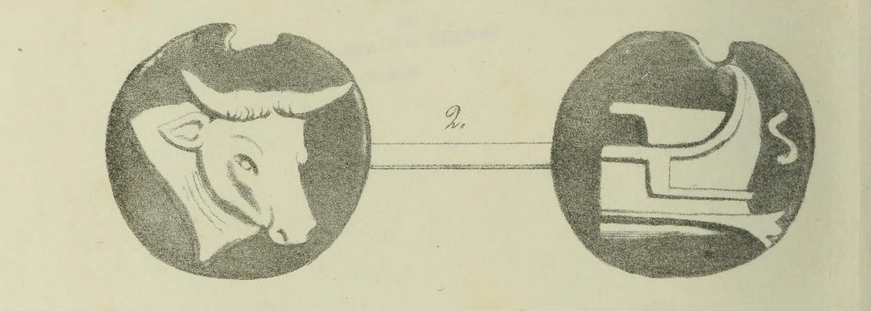
I should have realized it when I’d blogged about this same auction here. At least I leave myself footprints to follow back. Here’s where I was first reading Garrucci I didn’t notice it was the same specimen as he only had a terrible drawing. So file this post under bull prow Praeneste,
All Dies Exemplar will need to be cross checked with Garrucci, but even some where it does not say this or give other provenience hint Kirchner may be the original source:

This look like the bad drawing in Marchi. Notice the flattened top and bottom. Interestingly this type was apparently unknown in 1767 to Passeri.
Earlier posts on Ariminum aes grave.
BUT

For the record this might be nonsense or it might be old news, but to me today it was an interesting distraction.
I got here because I’m thinking about RRC 25/1, so I was worrying about the origins of this specimen

Here’s Garrucci:


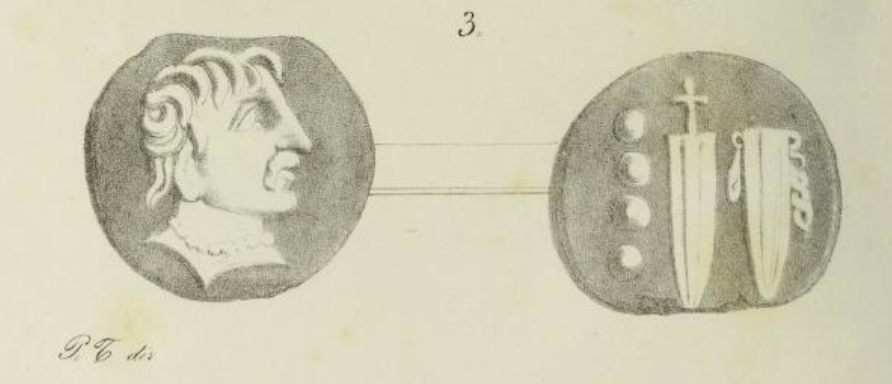
Notice in the drawing (however simple) that the flaws near the bottom sprue and void above Janus head are still obvious. The drawing appears better than one might expect.
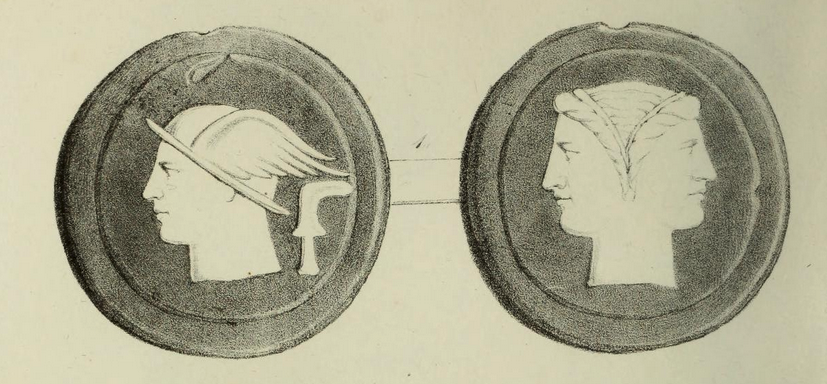
This is Marchi’s illustration of the same coin from 1839. It marks the tell tale void above Mercury’s head and the unique shape of the wing on the helmet. Also on the Janus side the nick at the top and then the cut on the right side of inner rim also match. Although Marchi’s catalogue is officially of specimens from the Kircher collection, we know that some of the specimens he illustrates were later found in other museums, cf. the Ariminum coin discussed above and also from that same series the whole unit, known to Garrucci to be in Pesaro and also found there and documented by cast and photography by Haeberlin, and already known in 1767 in the collection of Passerii.
The coin was ostensibly still in Rome when Haeberlin says he saw it, BUT his cast doesn’t look anything like Garrucci’s plate, it is clearly a different specimen. He says the one he saw was from Sabina like Garrucci’s. What happened?!!



 Liv Mariah Yarrow
P. S.
See am earlier more complete version of the Kircher collection history:
N.B. The collection in the Hirsch 34, 1914 sale I know is from the *Garrucci * collection. The citations to Kircher by Garrucci in his 1885 catalogue do not necessarily mean that they were from the Kircher collection, but that there was a similar example or were similar examples in the Kircher collection. E.g. Hirsch lot 610 is from the Garrucci collection, but this is not the Kircher piece which is now still in MNR (Cesano # 1375 = Haeberlin pl. 66, 9). All very confusing! Regards, iv
Very useful context.