
After 168 BCE probably before 130s BCE:
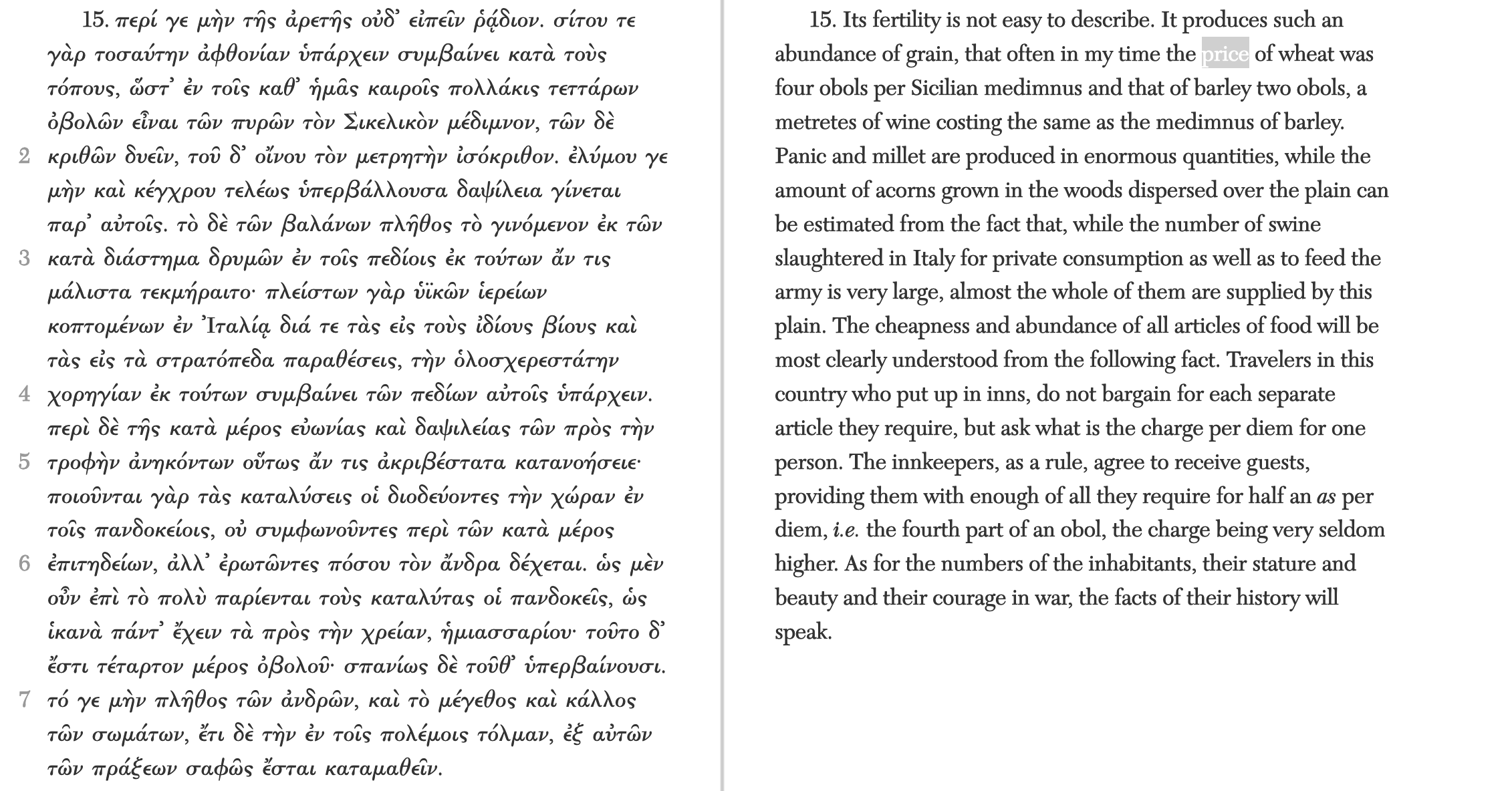
He expects you to think that the all inclusive cost of staying at an inn for a SEMIS for a day to be shockingly low.
Using his conversion 16 asses would buy some where in the ball park of 37 kilograms of wheat. I’m using round numbers here 52 liters to approximate a medimnus and assuming wheat weights 710 grams per liter. That medimnus contains about 130k calories. Or a 52 day supply of 2500 calories per day. This works out to be about QUADRANS a good days ration of grain. But again that is bulk prices and we’re supposed to think it is shockingly low. (Earlier posts on calories and Romans, post 1, post 2, post 3)
Now you’re right to question my assumption that I know an assarion is equivalent to an AS in this period or in Polybius’ mind, but it seems close enough for this sort of ball parking.
An as for modius of wheat was always considered giving it away, even 4 asses a low price. A modius is 9 days at 2500 calories. At one as that works out to be approximately and UNCIA or SEXTANS for a days nourishment as far lower than typical. With a TRIENS to a SEMIS still being a pretty low daily cost for food.

By 70 BCE the sestertius was worth 4 asses. So Cicero in the following passage is talking about Medimnii at 60 asses or 84 asses compared to the shockingly low 16 as price of Polybius. Equally, the legal price of a modius was 14 asses and the lowest price 8 asses. So about an as plus a semis to an as a day for basic nutrition.
For you got 15 sesterces a medimnus, that being then the local price, and you kept 21 sesterces a medimnus, that being the price fixed by law to be paid for Sicilian corn. What is the difference between doing this and, instead of rejecting, passing and taking over the Sicilian corn and then keeping all the public money and never paying any of the cities anything ? For the price fixed by law was a price that at any other time ought to have satisfied the Sicilians, and while you were their governor ought to have delighted them: the legal price was 3½ sesterces a modius, and actually, while you were governor, the price got was 2 sesterces, as you yourself boasted in a number of letters written to your friends. However, let us say that the actual price was 2½ sesterces, since you exacted that amount per modius from the cities.
Cicero, Verr 2.3.173
Not directly related but interesting.
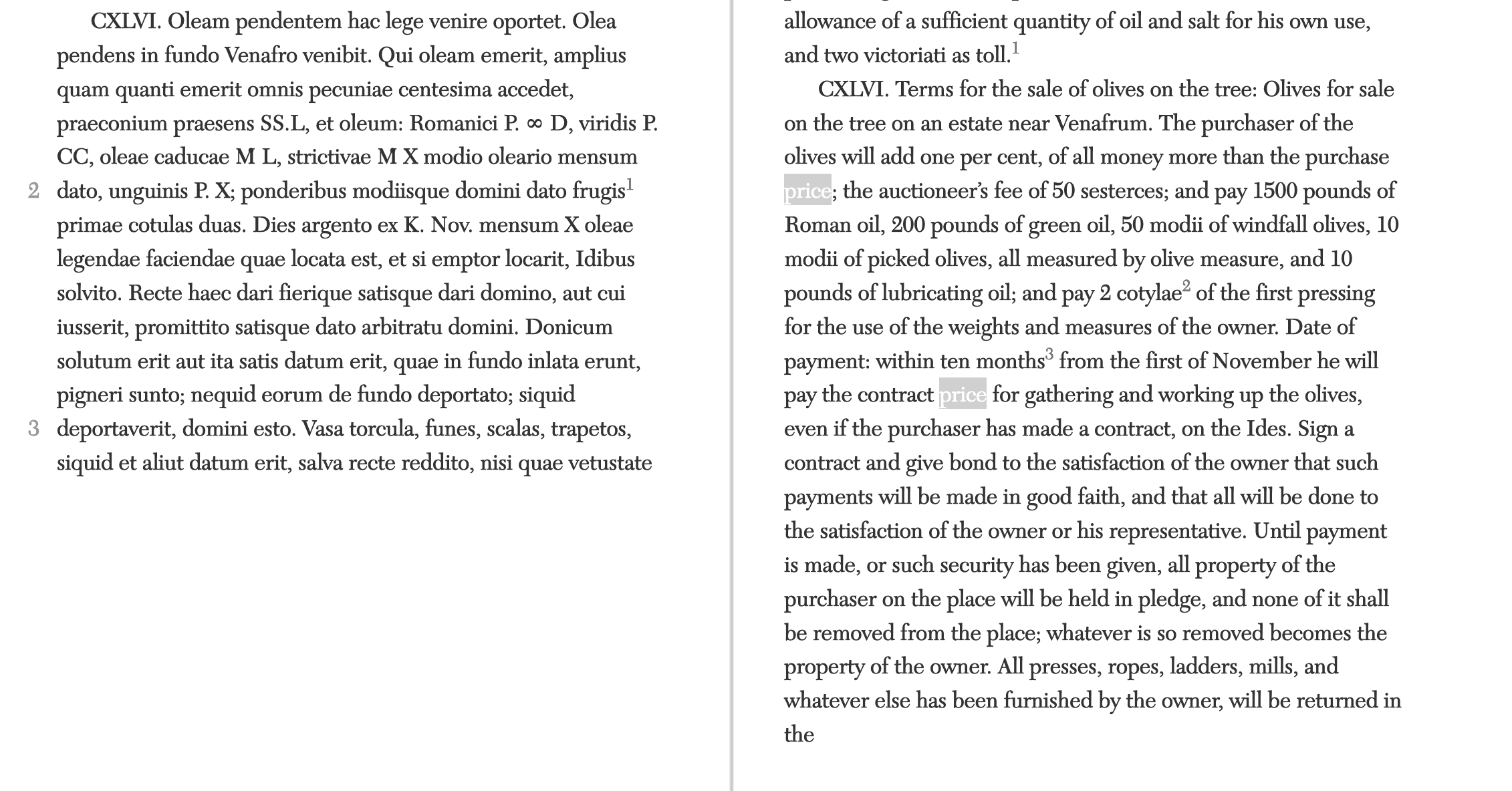
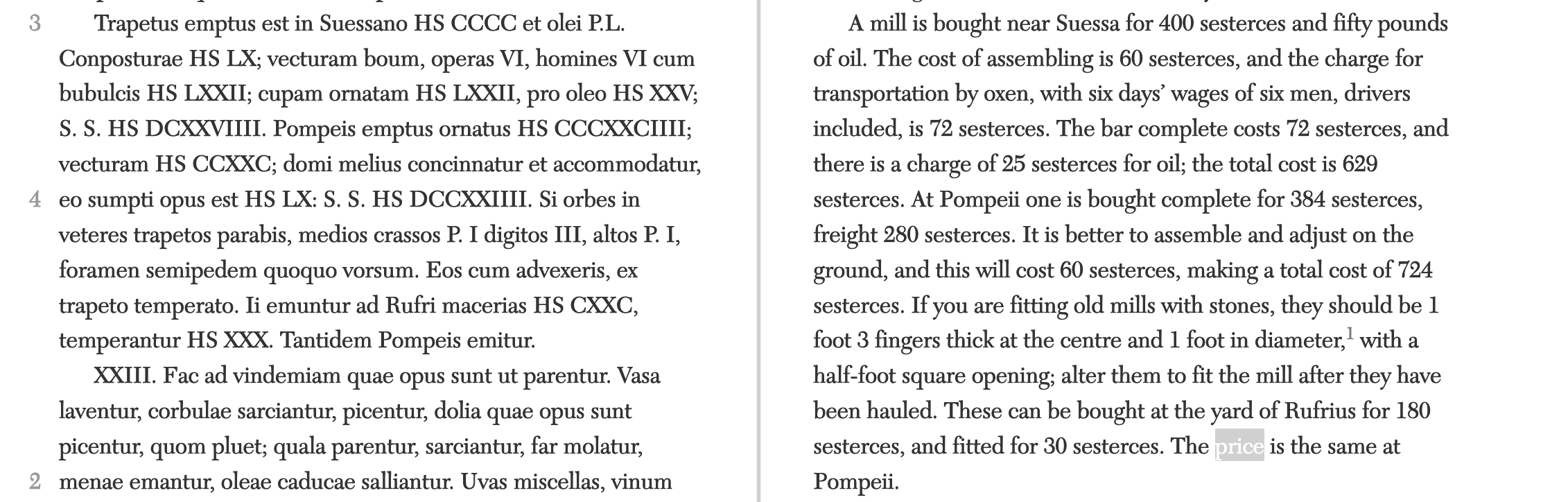
Note that the manuscript gives SS as the until for what the auctioneer will be paid 50 of. This translator renders that sestertii, but this text must be before 149 BCE. A period in which we tend to think of the unit of account being asses. The passage below is more clear using the more standard HS but in one place with SS. Something to think about another day.

 Liv Mariah Yarrow