
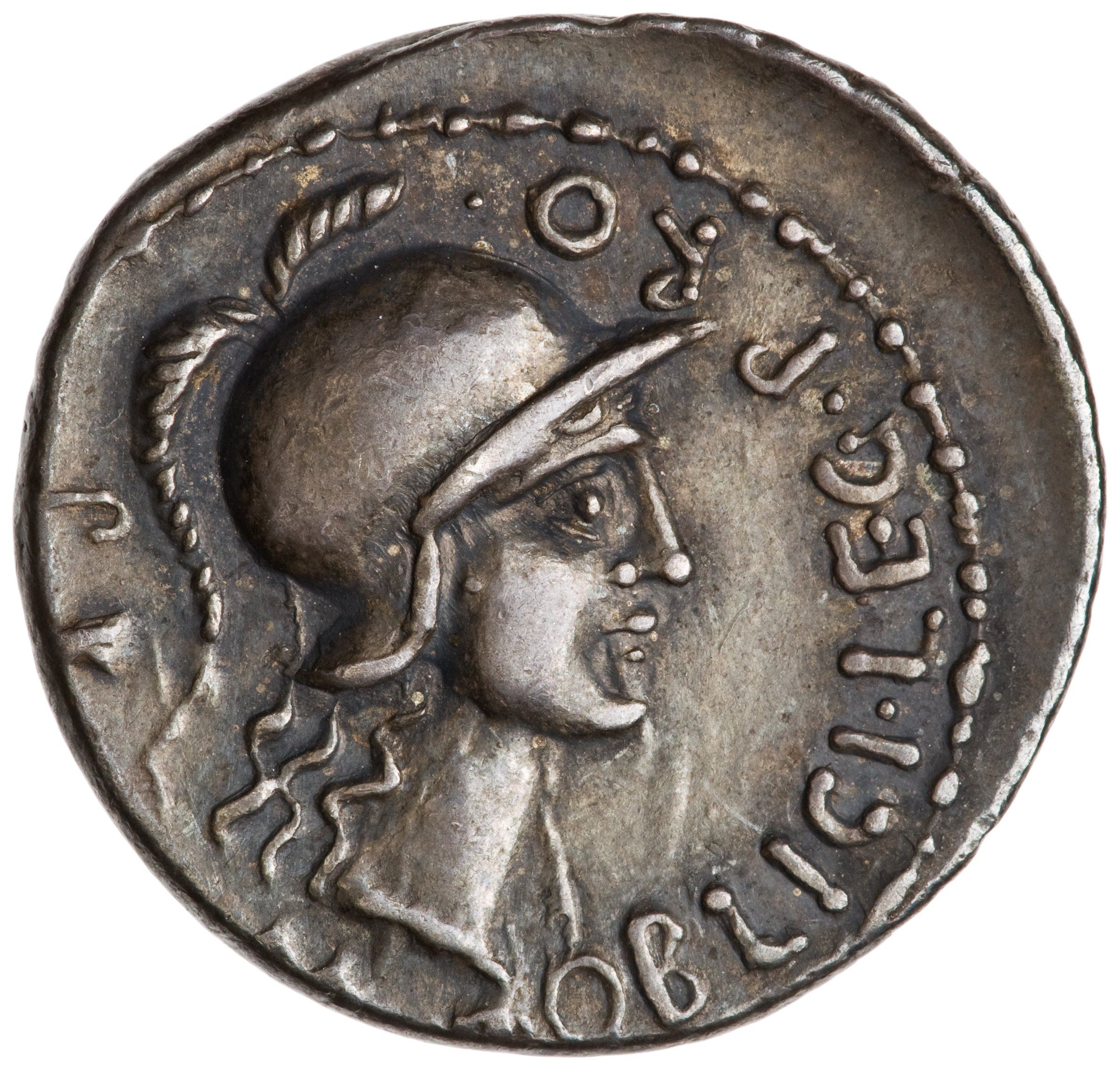
I was looking up Mars in the index of Woytek’s Arma and Numma to make sure I hadn’t missed something on the reverse of 494/16. (I was tweeting about this latter type yesterday, wondering if it’s Mars was at all related to the testimony of the vowing of a temple to Mars Ultor on the eve of the battle of Philippi, Suet. Aug. 29.2; Ov. Fast. V.569‑578). What I found instead was his ID of the above obverse as Mars not Roma, and I could not agree more.
Mars not Roma was blind spot for Crawford. I’ve blogged about other misidentified types and Woytek’s conclusion only strengthens my views.
Relevant types
RRC 388/1 – Blog post with comparative iconography
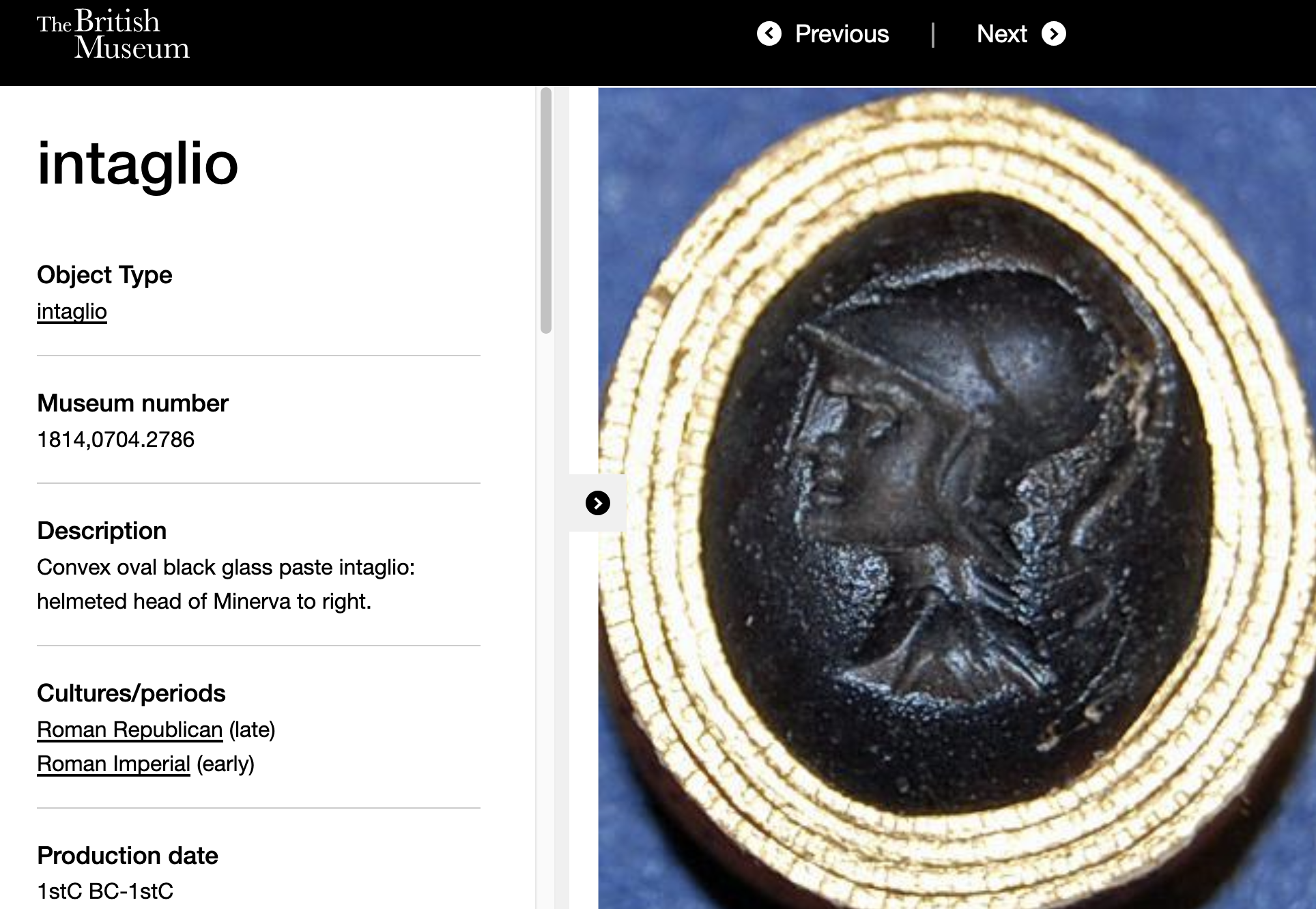
RRC 14/2 – Blog post (here Crawford saw Minerva, rather than Mars (or Roma).
Update 3-9-23:
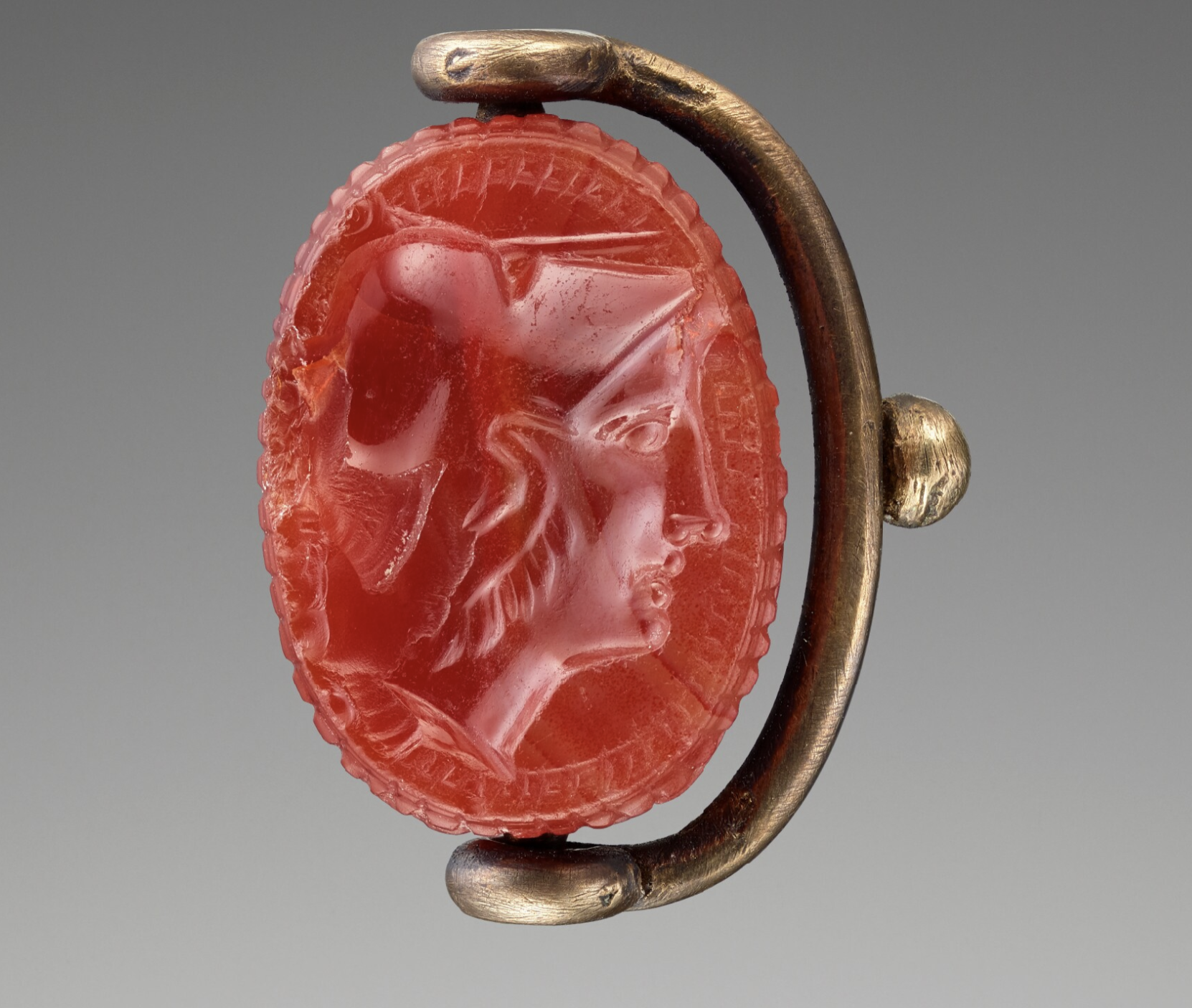
The same type of question also arises in other iconographic contexts (link).
5-5-23 update:
update 2/26/24:
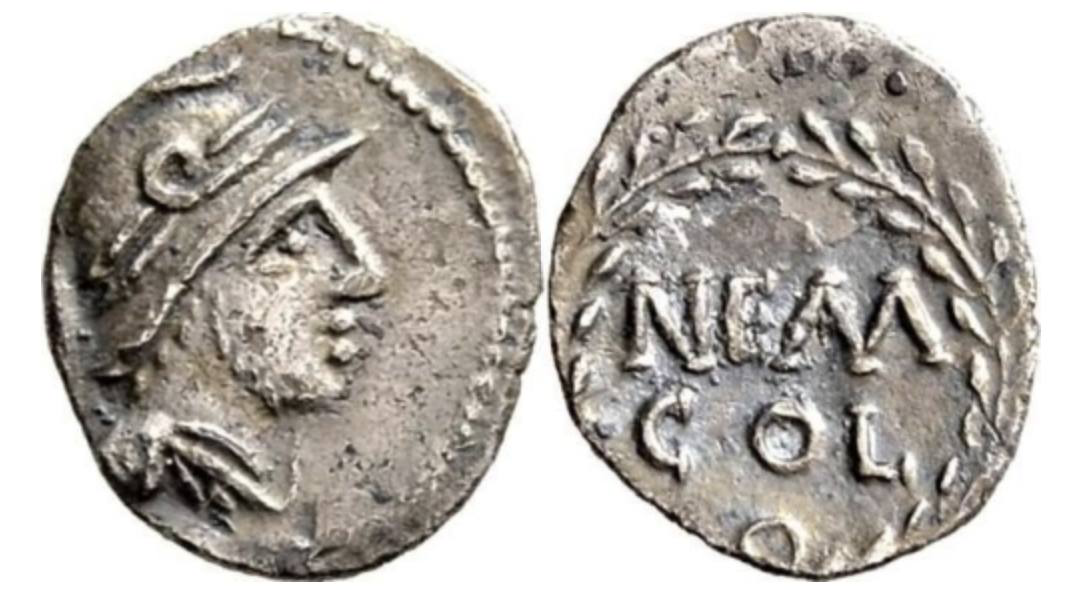
Look at this lovely teeny tiny coin! 11 mm and weighing on average just .38 grams! It was made c. 40 BCE in the Roman colony at what is now Nimes, France. What I love in particular is how the obverse reminds me of young Mars on republican coins and the wreath plus inscription of the small late uncia struck at Rome and other wreathed reverses from Sicilian bronzes struck by Romans https://rpc.ashmus.ox.ac.uk/coins/1/519. RPC 520 and 521 have the same head on the obverse.

 Liv Mariah Yarrow
Do you have any thoughts on the Mars vs. Minerva question for the obverse of Crawford 389/1, the denarius of L. Rustius with a ram on the reverse? Here is my description, without further elaboration on the issue except to note which sources identify the obverse as Mars and which as Minerva:
Roman Republic, L. Rustius, AR Denarius, 76 [or 74 or 72] BCE, Rome Mint. Obv. Head of Minerva or young Mars right, wearing crested helmet, S•C downwards behind helmet; beneath chin, * [= XVI; mark of value] / Rev. Ram standing to right; L•RVSTI in exergue. Crawford 389/1 [Minerva]; RSC Rustia 1 (ill. p. 85) [young Mars]; BMCRR I Rome 3271 [young Mars]; Sear RCV I 320 (ill. p. 132) [young Mars]; RBW Collection 1423 (ill. p. 293) [Minerva]; Harlan, RRM I Ch. 17 at pp. 104-108 [Minerva] [Michael Harlan, Roman Republican Moneyers and their Coins, 81 BCE-64 BCE (Vol. I) (2012)]; Farney pp. 284-285 [Minerva] [Gary D. Farney, Ethnic Identity and Aristocratic Competition in Republican Rome (Cambridge U. Press, 2007) (cited pp. available on Google Books)]. 18 mm., 3.87 g., 5 h. Purchased from Roma Numismatics Ltd, Auction XXV, 22 Sep 2022, Lot 706 [obv. identified as Mars], ex Tauler & Fau, Auction 95, 2 Nov 2021, Lot 194 [obv. identified as Mars] (Poinssot sale).
A photo of my specimen, from Tauler & Fau (a more realistic rendition than the Roma Numismatics photo!) can be seen at https://www.acsearch.info/image.html?id=8708163 or at https://www.acsearch.info/search.html?id=8708163.
Personally, I go back and forth on which seems correct to me, based on the different arguments (although I never give credence to sources’ opinions on whether a portrait looks more “masculine” or “feminine”)! I was leaning towards Mars, but then read Farney’s arguments for Minerva and thought they were more persuasive than Harlan’s, which seemed a bit convoluted.
100% I see Mars. The hair is too short to be Minerva.