RRC 279 and 276 are likely struck by the brothers of cos. 120 who killed himself in 119 when convicted because of his actions on the land commission. Given how the dating of these two issues is approximate 122-119 ish AND the drama around their brother it seems worth some further thought.
See:
Beness, J. Lea. “Carbo’s tribunate of 129 and the associated dicta Scipionis.” Phoenix 63, no. 1-2 (2009): 60-72.
You don’t need to read this post. You just need to read:
Colonna, Giovanni. “Gli scudi bilobati dell’Italia centrale e l’ancile dei Salii.” Archeologia classica 43 (1991): 55-122. It is gloriously illustrated. JSTOR link
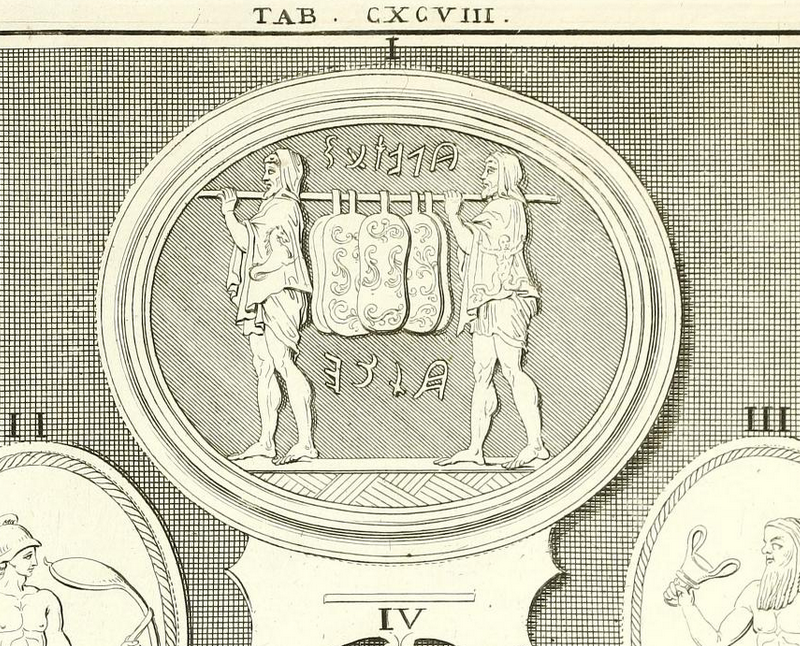
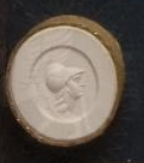
There I learned that the first intaglio (impression) above derives from a coin of Pius. He doesn’t seem to know the above specimen but the reset of this post and FAR More he covers v well.
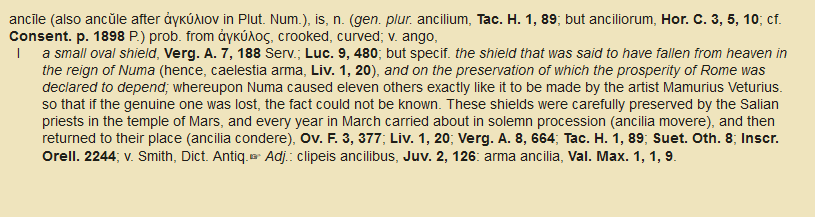
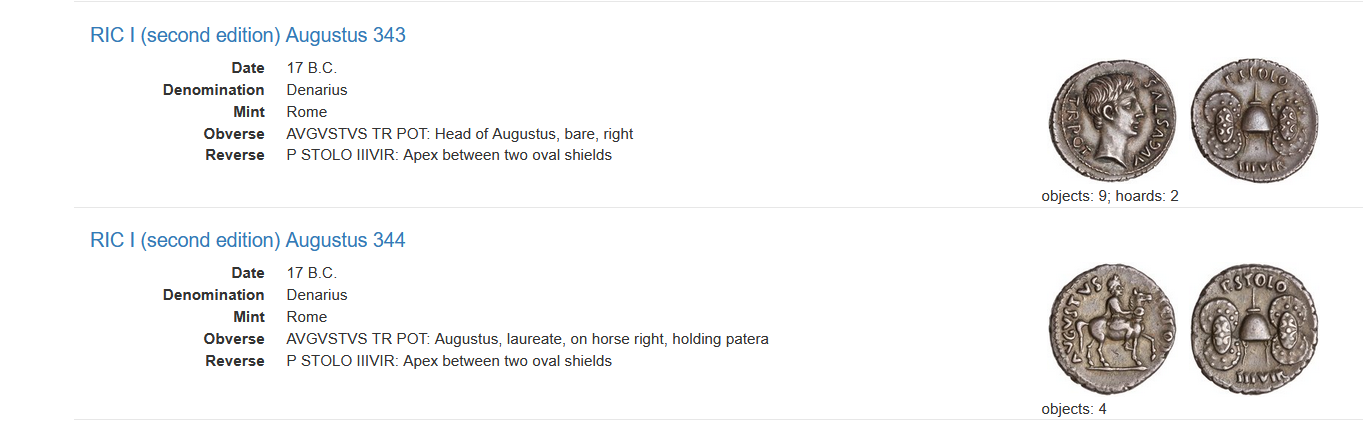
Now I know why those shields were tickling my numismatic brain:
Update 1-25-22:
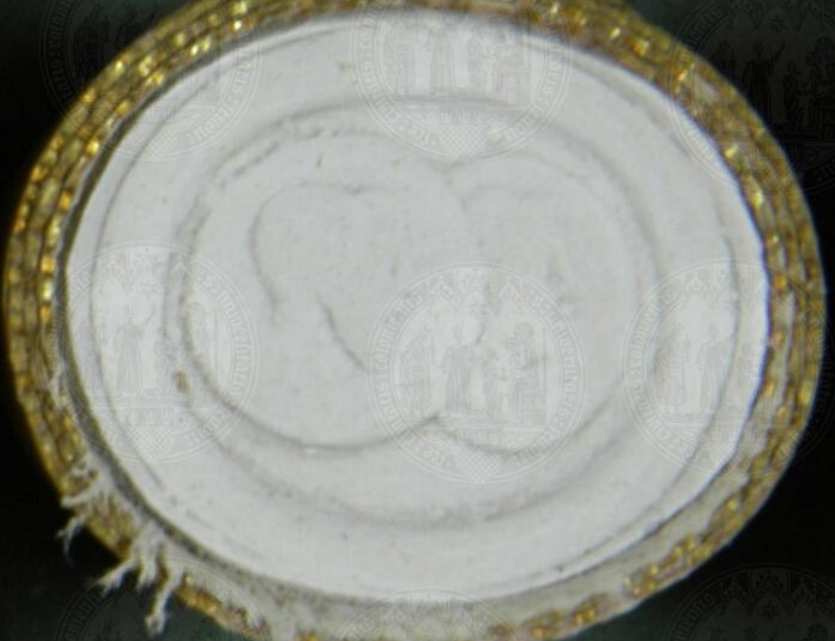
Same gem as above. I wonder if inscription is legible on actual artifact. Winckelmann says there were letters. Source.Source
Ferri, Giorgio. “I Salii e gli « ancilia ».” In Apex : studi storico-religiosi in onore di Enrico Montanari, Edited by Casadio, Giovanni, Mastrocinque, Attilio and Santi, Claudia., 87-95. Roma: Quasar, 2016. Ordered from ILL 27 June 2023
A. Furtwängler, Beschreibung der geschnittenen Steine im Antiquarium, Königliche Museen Berlin (1896), Kat.Nr. 9515 ZenonJ. J. Winckelmann, Description des pierres gravées du feu Baron de Stosch, dédiée à son Eminence Monseigneur le Cardinal Alexandre Albani (1760), Kat.Nr. II,285 Zenon
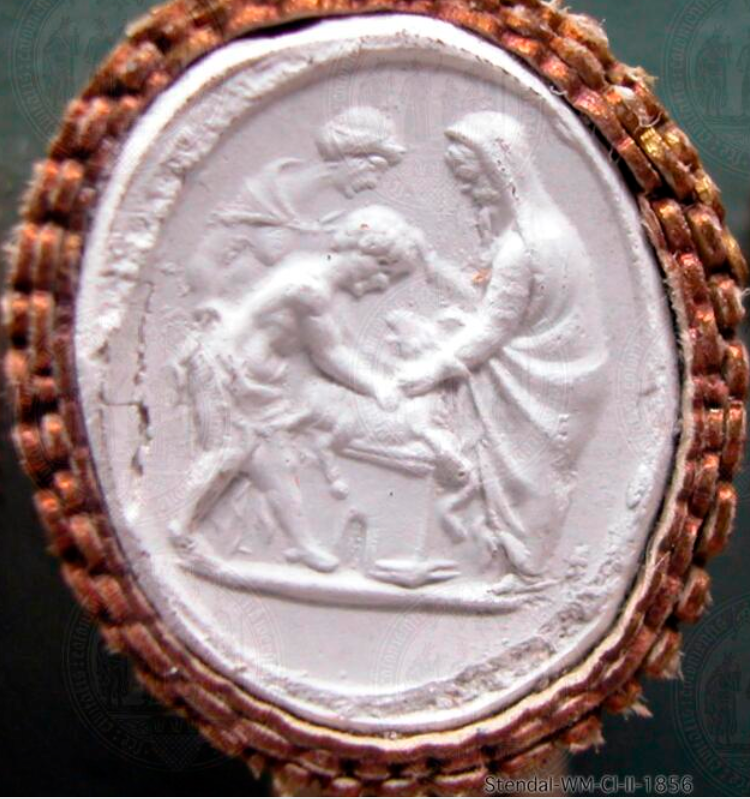
Glasspaste. A scene of animal sacrifice, but appears to be a domestic context. Notice it seems plausibly a mother father ans sun. about to slay the goat. What is on the ground near to the father’s feet in front of the altar. J. J. Winckelmann, Description des pierres gravées du feu Baron de Stosch, dédiée à son Eminence Monseigneur le Cardinal Alexandre Albani (1760), 307, Kat.Nr. II,1856 Zenon Sammlung Stosch, W Cl II 1856 Arachne entry for plaster cast.
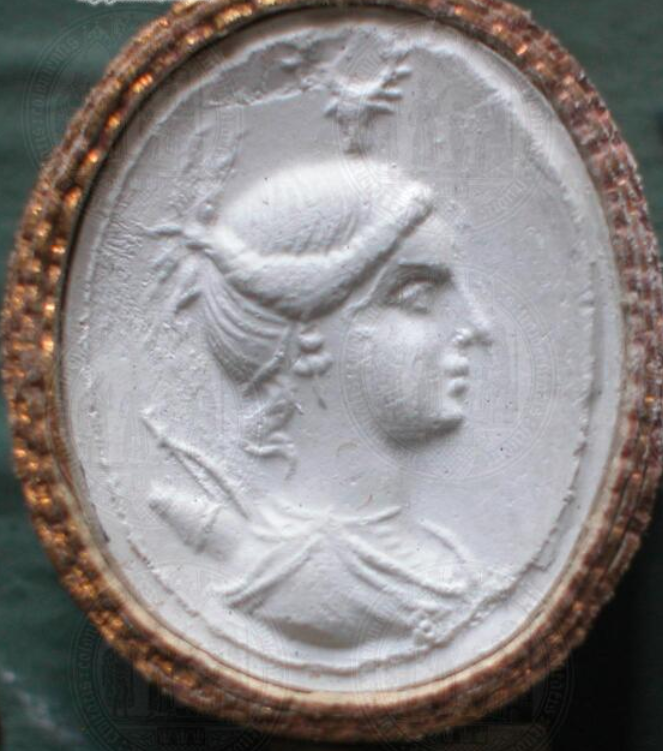
I’m supposed to be grading and prepping for some serious meetings but I needed to start my day by just looking at some beautiful iconography and reminding myself I’m more than a bureaucrat in a large bean counting public institution.
I see imagery/attributes associated with Isis and Athena and Victory but cannot quite make out what is in her hand. Can you?
Update 5/16/22: I think it might be the top of a bow such as Artemis/Diana would have.
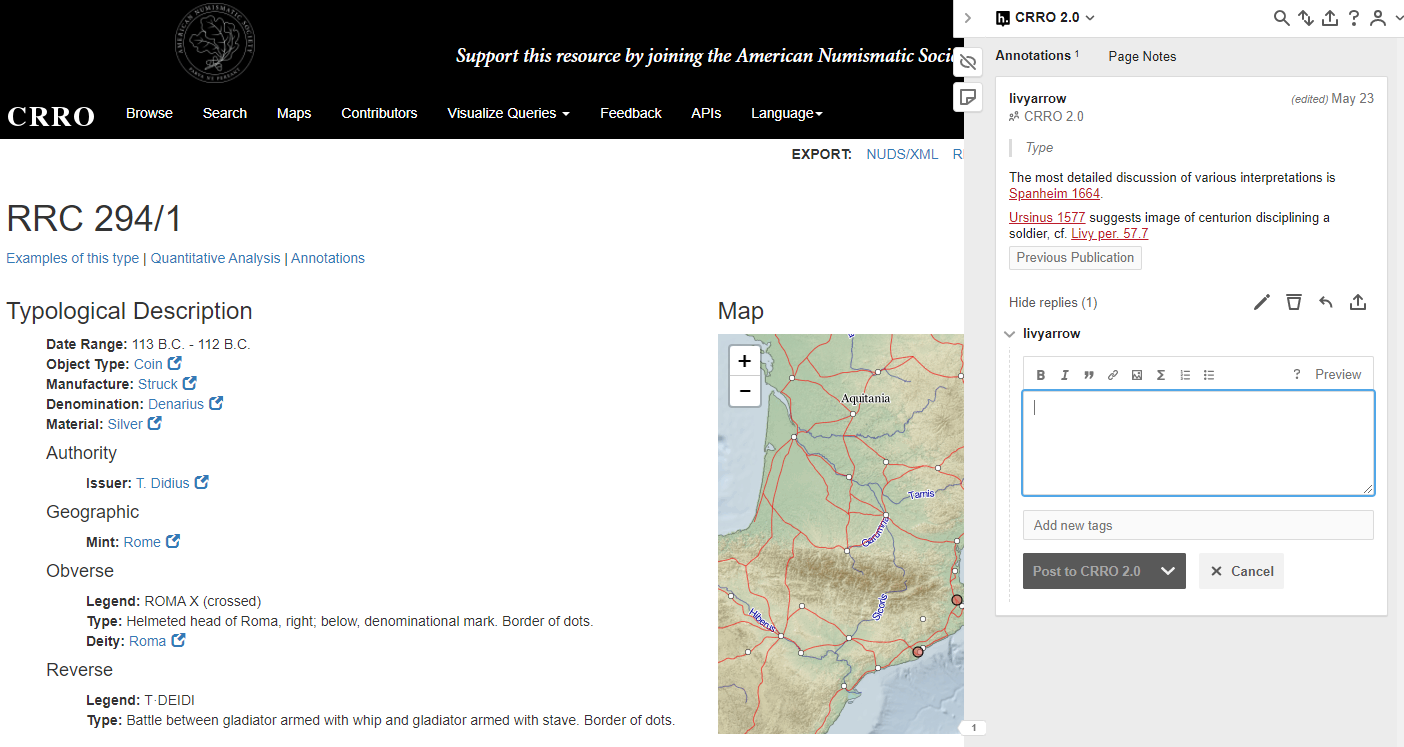
This talk shifted from slides to discussion of this twitter thread as an example of how online platforms (social media, including message boards) can be places where serious knowledge sharing and expertise takes place. I also demonstrated hypothes.is and how it could be used to collaboratively annotate and connect CRRO to past and present scholarship, either publicly or in dedicated working groups. This could mimic and expand the personal marginalia many of us already have added to our personal copies of RRC. I pointed out that this works for existing typology but has limited functionality for integrating new types.
Screenshot of demo annotation in a private group using Chrome hypothes.is plug in.
I’ve been reading and thinking with this book a great deal.
This talk was unscripted and very informal in delivery; not even a work in progress but rather a thinking piece. It was recorded but has not (yet?) been released publicly. If you have a keen interest in seeing it do let me know.
This is a great article particularly for thinking about shifts in arms and armor in the Republic. I’m sure I’ll come back to it many times. Three initial thoughts below.
Michael J. Taylor. “Etruscan Identity and Service in the Roman Army: 300–100 B.C.E.” American Journal of Archaeology 121, no. 2 (2017): 275-92. doi:10.3764/aja.121.2.0275.
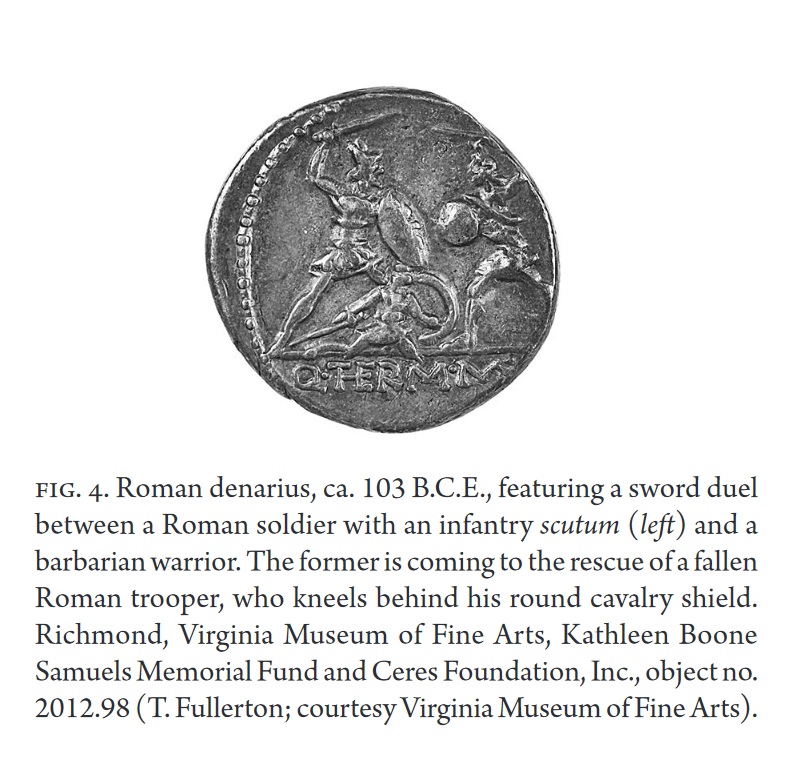
P. 282-3: “The kneeling fighter on the Minucius Thermus denarius (see fig. 4) carries a round shield and thus seems to be a fallen cavalryman awaiting rescue from the infantryman with the scutum.”
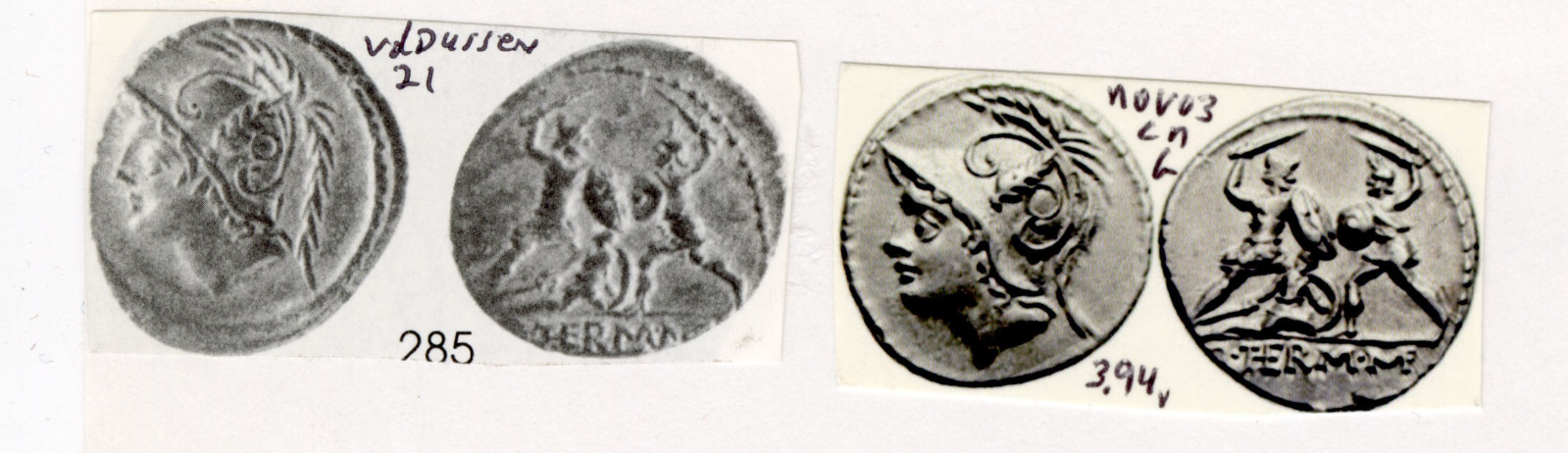
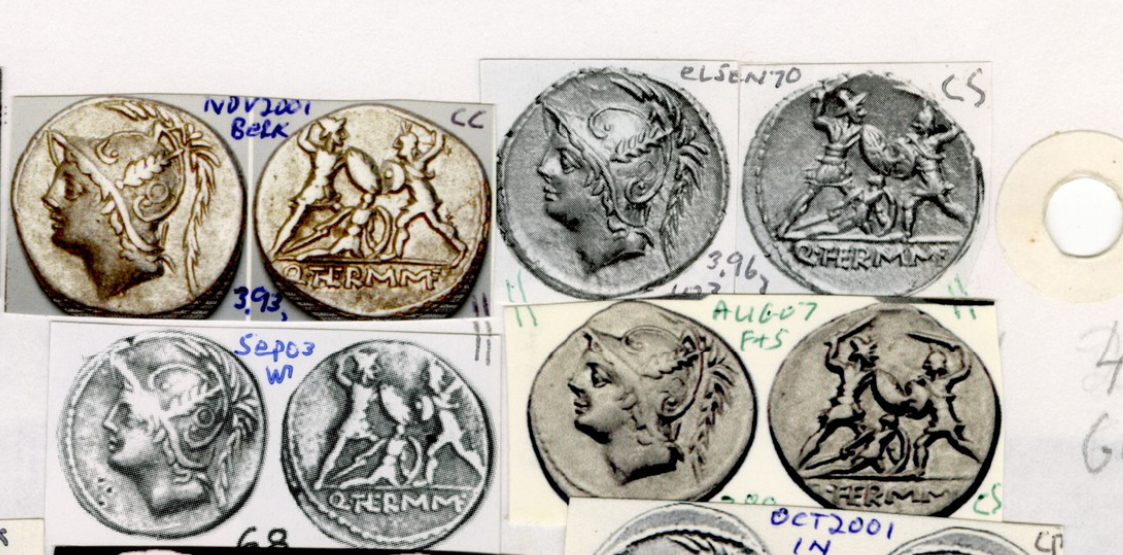
I want the figure on the ground to have a round shield and on many dies it looks that way but I’m not so sure its consistent enough cross the known dies to really be an intentional distinction to help us identify the figures and their ranks:
From Schaefer Archive left could be oval where as right specimen clearly round.
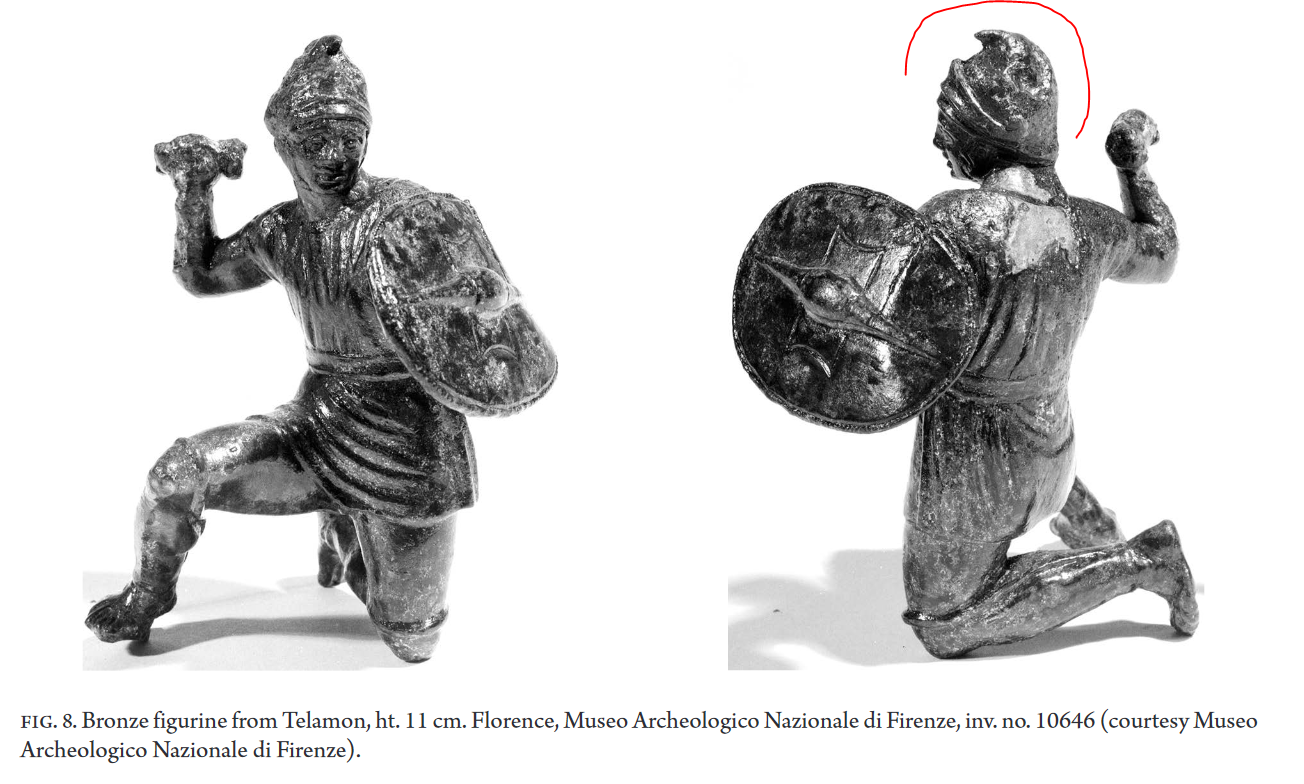
P. 285: “Otherwise equipped as a Roman soldier, the Telamon soldier wears a hellenizing Attic-Phrygian helmet (characterized by the prominent brow protector and low hemispherical dome that rises to a Phrygian peak).71 Similar helmets, a common enough Greek style, are well attested in pre-Roman Etruscan art.72“
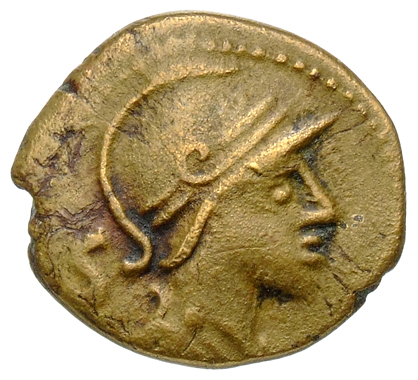
The Phrygian helmet (often with wings) of course is common on numismatic depictions of Roma but one type is VERY close to this figurine’s helmet.
p. 290: “The use of Greek myth on the urn is confident, even play-ful, with the front of the urn featuring centaurs and nymphs in apposition to the cavalryman, his warhorse, and his wife, proof of the wealthy patron’s studied Hellenism. The inscriptions are in Etruscan. A Volt-erran noble at the end of the Roman Republic could serve (and perhaps die) as a Roman eques and still go to the afterlife as an Etruscan aristocrat.”
This is a twitter convo that started because of one of Dr. Crom’s #ACOTD posts, morphed into consensus over obverse Muses (i.e. not Apollo on 410/2-10) and then turned to letter formation–weird long stroke on the first line of the V of MVSA on the reverses. There was also some discussion over the prevalence of banker’s marks (test punch marks) on the series. Anyway good bibliographical suggestions (Borghesi Ouevres and possible unpublished dissertation) and images so wanted to archive thread here. RRC 410













 Liv Mariah Yarrow