An amusement

If you asked a Roman to answer the question, ‘why do you have coins?’.  The answer is likely to have to have been some variation of ‘to pay for stuff’.  Such an imaginary conversation between a time traveling researcher (T.T.R.) with a per chance for the Socratic method might continue:

T.T.R. – Where did you get the coins?

Imaginary Roman – It’s none of your business, but it happens that these particular ones were a gift from my friend Memmius.

T.T.R. – Was he using them to pay for something?  Was he buying you?

Imaginary Roman – Don’t be rude.  He’s my friend.  I help him; he helps me.  He just happens to be a bit better off.  He knows the price of grain is up this season.

T.T.R. – Ok. Ok.  Where did he get the coins do you suppose?

Imaginary Roman – He’s got lots of state contracts for roads and supplying the army and stuff.  I sometimes do him a favor and go check on these projects for him when he’s really busy in the law courts and similar stuff.   He’s a good friend to have.

T.T.R. – So the state bought some roads off your friend.  Where did the state get them?

Imaginary Roman – It’s more complicated than that.  These arrangements aren’t all about money you know.  The magistrates take all aspects of these projects very seriously and the contractors are very patriotic.  The auspices need to be right and the character of the individual and the source of the materials. Why do you care so much about the coins anyway?  It isn’t like the really big payments are even made with coins.  The bankers and creditors and treasury have other ways and means.  We’re not some backward place without resources you know.  This is ROME.

T.T.R. – Let’s say my interest is more historical.  I want to understand what makes Roman coins special.  Can you tell me how coins are made?

Imaginary Roman – – a pause – I’ve never seen a coin made, but I assume it’s a bunch of slaves owned by the state or a state contractor.

T.T.R. – So slaves.  You all get you coins from slaves.

Imaginary Roman – You remind me of that crappy Greek play about the guy thinking about bugs and clouds and other ridiculous stuff.  Did Memmius set you up to this?  Or Gradius?  Or Lucretius?  It’s just his style.

T.T.R. – Ok. Right.  No, no joke. Forget I mentioned the slaves.  Why does the state make new coins are the old ones not good enough?  Surely you could just use ones already used by other people?

Imaginary Roman – I’m no expert, but I can’t imagine there are enough coins for all the things we’re doing.  The army gets bigger each year.  More and more people in the city means more and more money is needed for grain.  Didn’t you see all the construction?

T.T.R. – So that’s it: a practical magistrate would just spend any old coin if they could, even one from Carthage.

Imaginary Roman – Ha! Get outta town.  Pay our soldiers with their coins after we showed them the whatfore with Scipio!  My father’s father saw all their gear come in.  I bet they melted it all down and I bet most if it is still in the treasury.  Some of those carts were piled nearly three stories high with candelabras and dishes and statues and stuff.  That man even send Phalarus’ Bull back to Akragas!  That made them lazy Greeks sit up and take notice.  I saw it the last time I was down checking out one of Memmius’ grain contracts.  Total truth.  If there was a Scipio worth the name alive today, we’d have less headaches out East and better discipline right here at home.

T.T.R. – Got it.  Slightly different question.  Why does each coin seem to have different picture on it? Isn’t that confusing?

Imaginary Roman – What would they be confused with? A denarius is a denarius is a denarius.  From Gades to Syria and back.  Everyone knows what Roman coins are and what their worth.

T.T.R. – So the pictures…

Imaginary Roman – Oh these? It’s like decorations everywhere in the city.  We honor the gods as they have honored us and continue to honor us–Jupiter, Sol and Salus all be praised.  It’s good to be respectful.  Rome didn’t get where it is today without divine blessing.

T.T.R. – This one has a guy in a toga next to a trophy on it, is that a god too…

Imaginary Roman – For someone interested in history you can’t even seem to read.  That says Paullus, it must be Aemillius Paullus destroyer of the Macedonian Kingdom.

T.T.R. – Is he a god? Are you worshipping him by putting him on a coin?

Imaginary Roman – No, he’s an ancestor. The pious man knows to honor our ancestors along side the gods.  We Romans could teach the world a thing or two about fidelity.  If you’re not faithful you get nowhere in this world…

Pigs and Fides

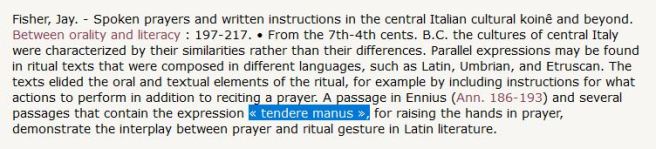
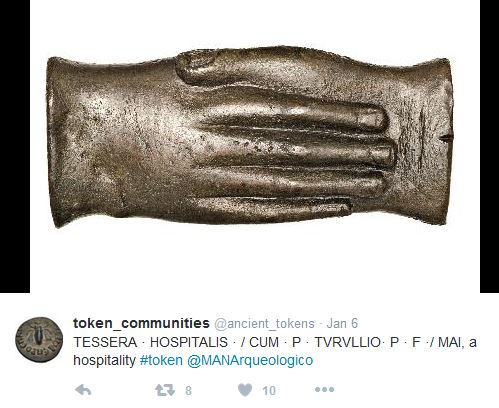
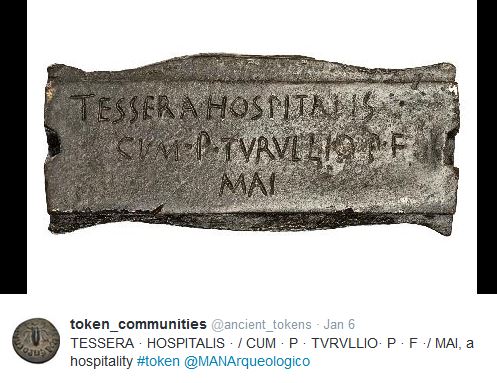
This is an idea that grew out of my last post which spiraled into tessera hospitalis, tokens of friendshipIt makes good sense that we have ones in the shape of joined hands.  The dextrarum iunctio was a common symbol of concordia and fides.  But what is up with all the half animals?  I think that it is likely to represent the animal sacrificed in the creation of the union.  I would also hypothesize that pigs are popular in this private domestic context for the same reason that we see pigs being used to seal a foedus.

Allow me to remind you of some famous numismatic pigs:

Capture.JPG

And sows:

Capture.JPG

capture

Image result for social war oath

Numismatics and Social Media

I have been taking a FaceBook break.  Just not loving the time suck and the lack of posts I care about from people I love.  I am however wondering if for professional reasons I shouldn’t perhaps pay a hair more attention to twitter.  I was doing more image research and came across the fabulous account (out of Warwick of course):

capture

And then this post that I just love:

Capture1.JPG
Capture.JPG

It made me think immediately of this one:

(Great photos in Il Tesoro del Lago 2001, p. 152-153)

And finding this image above led me to a how lovely set of images:

Image result for tessera hospitalis trasacco
Related image
Related image
Image result for tessera hospitalis trasacco
Related image
capture
Related image
Image result for tessera hospitalis trasacco
Related image

update 1.28.22:

source
source

Evidence for the weight of the Roman Pound

Capture.JPG

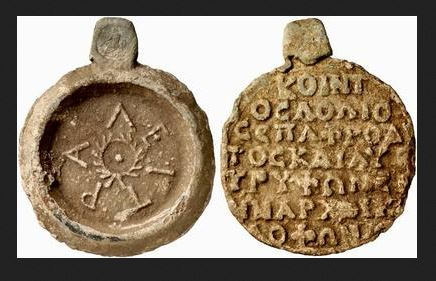
A database just spit out this result from my using a search term looking for something quite different.  I have such mixed emotions.  This should be in a museum, not a private collection.  I’ve been to Kolophon.  I’ve seen the holes created by speculative digging among the ruins.  I’ve seen the primarily subsistence level agriculture of the current community.  I know why this is on the collector’s market.  It just doesn’t belong to any one of us; it belongs to all of us.  It is not a mass produced object.

Anyway.  I’m still glad that we have photos and details regarding its weight and other features and that I get to see it.

Ho hum.

The catalogue say: “Here, ΛΕΙΤΡΑ is the Greek translation for LIBRA in Latin and with a weight of 348 g, it corresponds fairly well to the Roman pound of 327 g. Approx.

I would point out that oxidation can effect the weight of lead objects in particular, especially when were just talking a matter of grams.

Here’s another earlier post on the weight of the Roman pound.

Here is newer bibliography: Butcher and Ponting 2015: 206-208.

Hercules’ Lion Pelt

capture
Andrew McCabe’s Image

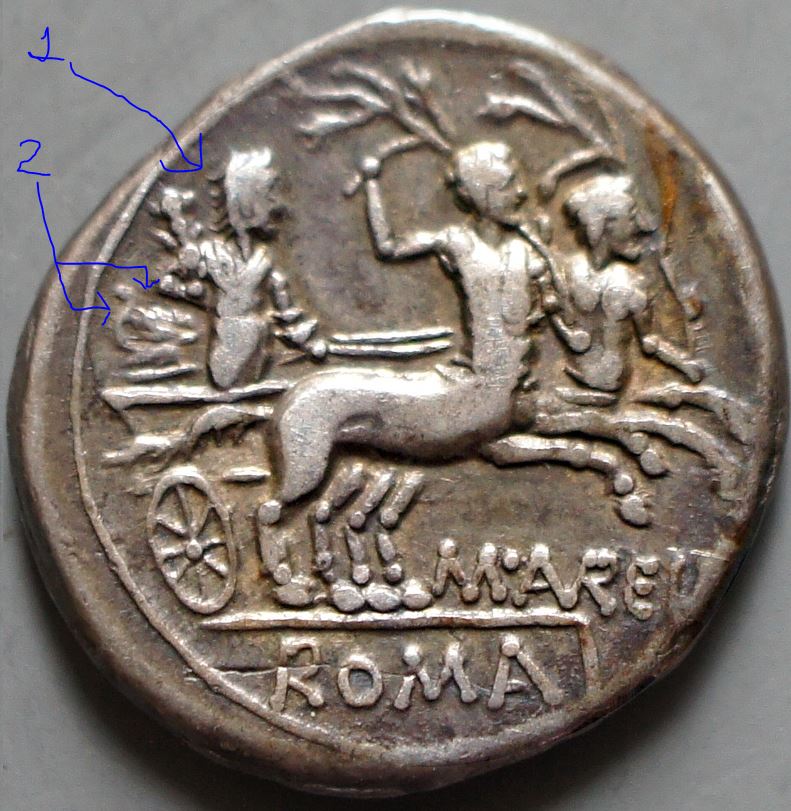
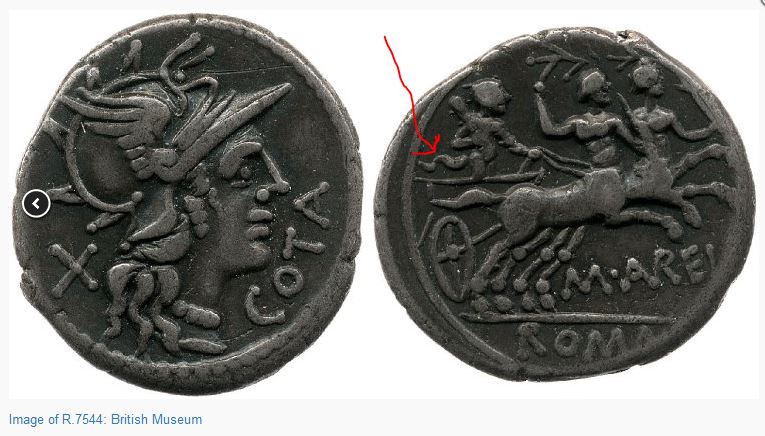
I’m working on illustrations for the book and hence have been looking at a good number of specimens.  One of the fun things I noticed about some, but not all, specimens of RRC 229 is that they take the time to represent bottom half of Hercules’ lion pelt.  No. 1 on the image above shows the care taken to represent the fur of the lion scalp, but look a no. 2!  that a tail and more furry pelt flying out behind the god.  Fun.   By contrast other dies reduce the pelt to just a little squiggle of flying drapery, as in the image below.capture

A little crankiness: So CRRO seems to have made up a new RRC number, 229/2, this seems to be just a data entry error, but could cause much confusion.  Also, it gives RRC 229/1a and 1b separate dates.  Again a typo, but potentially problematic.  I used to send these errors in for correction, but they don’t seem to have a fixed procedure for cleaning up the data yet, and thus my emails were just a nuisance.   Ho Hum.  One day.  Still a great resource.

3.6.26 some typos fixed and I’ve confirmed the RRC 229/2 error persists. It is populated by one BM specimen and I see nothing that makes this specimen need its own type number. I think it is just a really persistent typo from the data from the BM the ANS used to create CRRO in the first place.

British Museum: 1843,0116.217

Romulus and Mars

So I’m waiting to hear back from the peer-reviewers, but I’m hoping you’ll be able to read an article by me in the AJN this year entitled, ‘Romulus’ Apotheosis (RRC 392)’.  I’m pretty excited about it.  I send it off last September or thereabouts.  It’s all about this type:

Capture1.JPG
CNG 103, lot 637

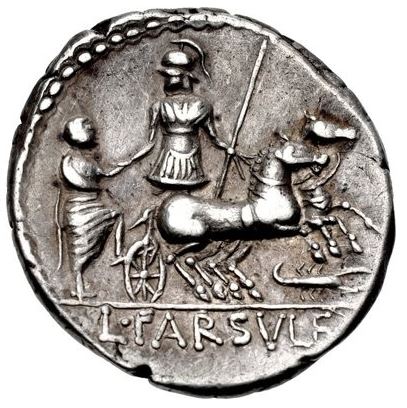
You’ll have to wait to read it.  The main point of this post is that I found myself looking again at a much earlier republican coin type (RRC 232/1)  in light of my work on the one above and now I’m thinking I need to add a note to that article.

Capture.JPG
image from acsearch.info

I’m pretty confident in my identification of RRC 392.  I have lots of literary and visual parallels to back me up.  So my big questions are about the attributes of the figure standing next to Mars in this chariot on RRC 232.  Is that a toga?  I think it may well be.  Although it isn’t as well rendered as on other types.  If it is a toga, than I’d be very comfortable calling this an apotheosis scene, celebrating Rome’s divine foundation and continuing divine protection.

If you can tell me why it can’t be a toga, I’d love to hear from you in the comments!

There is certainly hierarchy of scale used to distinguish the rear figure from Mars, but I have a hard time agreeing with Crawford that the figure is in any way represented as a captive.  The body position is not humbled; the drapery is not tattered or distressed; there is no restraint; and care has been taken to represent the figure’s right arm as free.

Addendum later the same day.

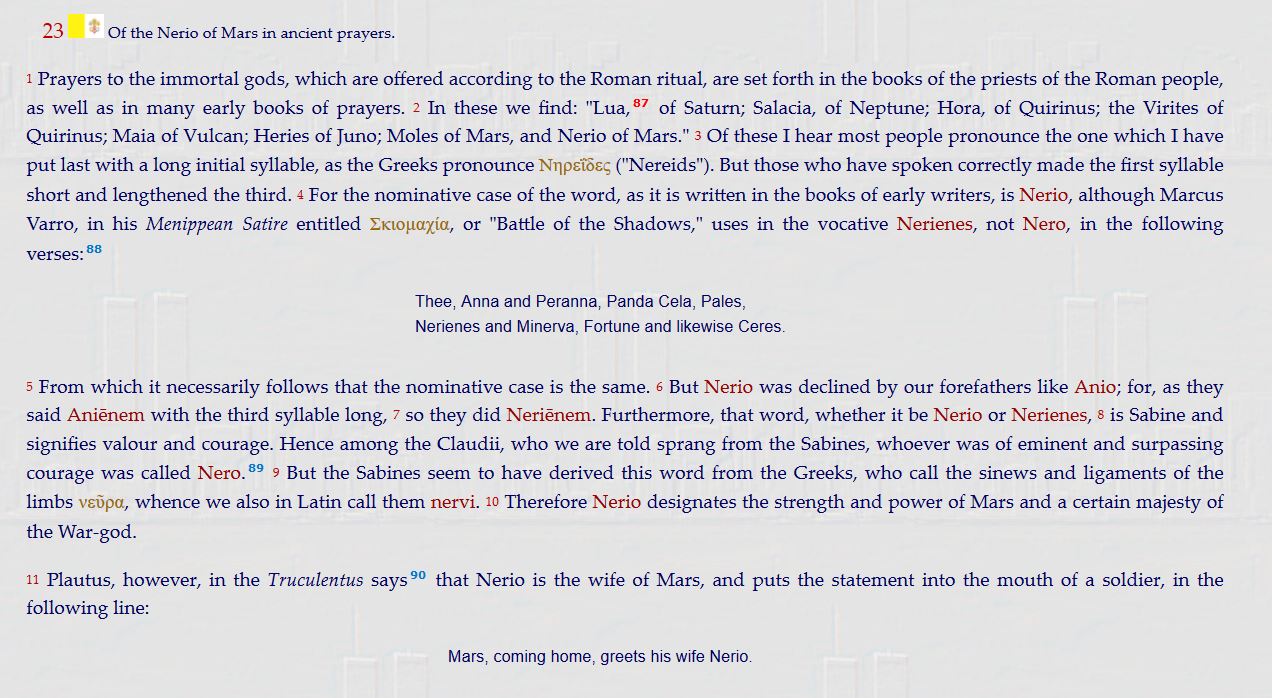
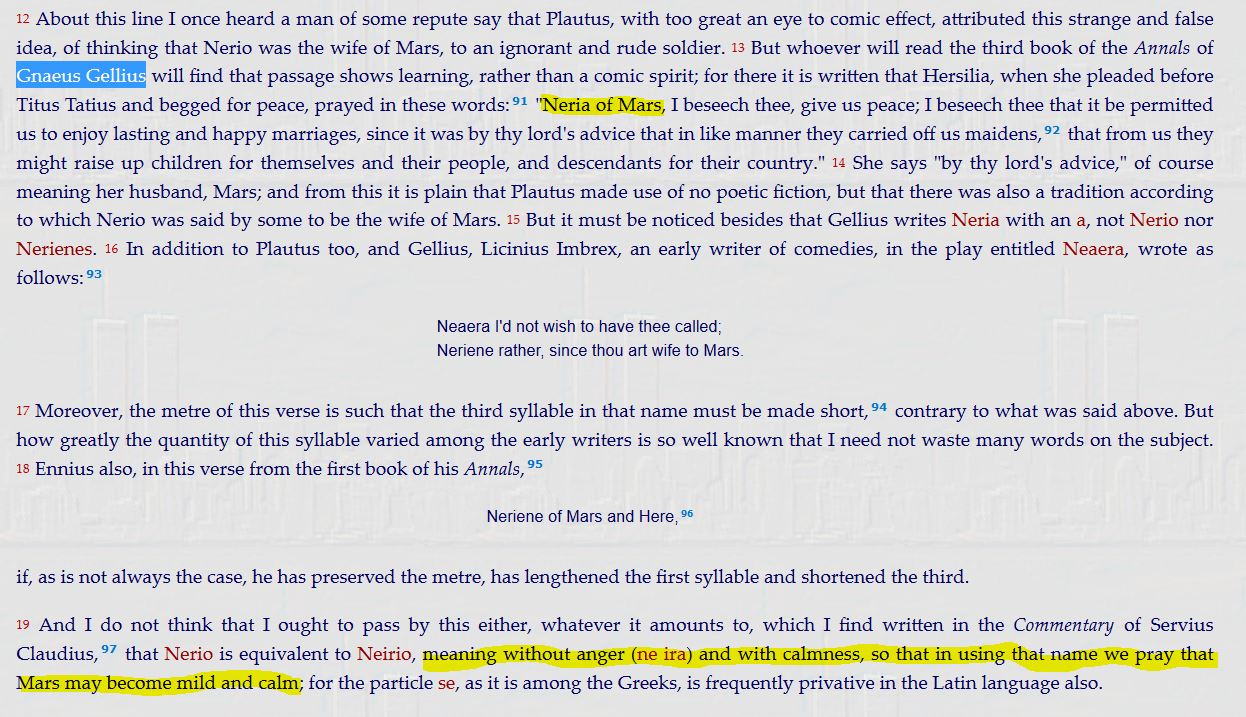
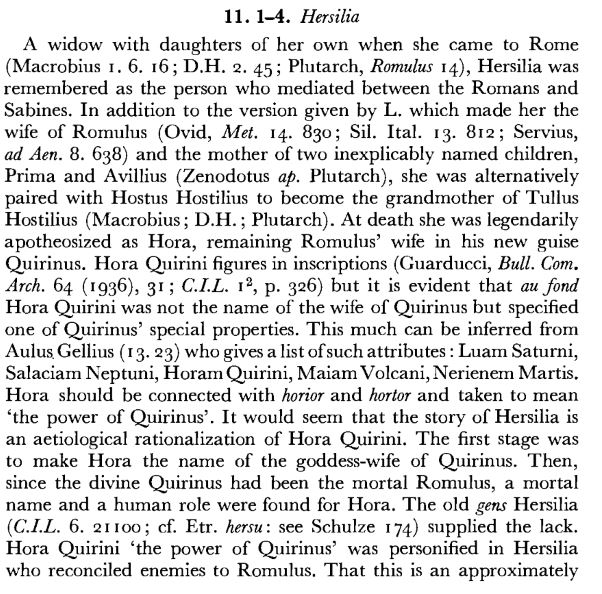
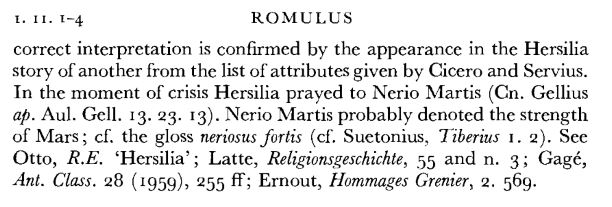
So as I thought more about the above ideas and how they might make me adjust/tweak the AJN submission, I decided to have a good read through the fragments of Gn. Gellius in new Fragments of the Roman Historians. ( It is widely accepted that the historian and the moneyer are likely to be the same individual.) This has not really clarified my opinion, but rather made me wonder at why Crawford dismissed the Nerio/Neria idea.  It also made me once again think about that drapery.  Is it feminine dress?!  Or is it a toga?  I can’t quite decide.  This is the relevant material from Aulus Gellius Attic Nights 13:

capture

Capture1.JPG

I find myself wondering how this religious conception of the divine intersects with the Divine Qualities discussed in Anna Clark’s book.   I was also surprised the Myles McDonnell didn’t discuss the passage given the reference to the Virites of Quirinus.  Maybe this will be a little conference paper one day…

Ogilvie on Livy:

Capture.JPG

Capture1.JPG

The Sestos Inscription

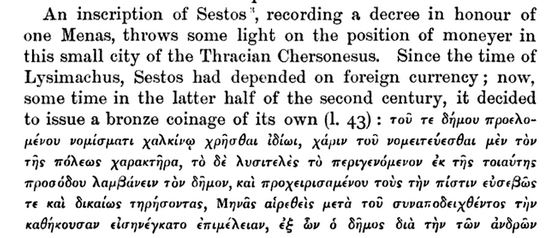
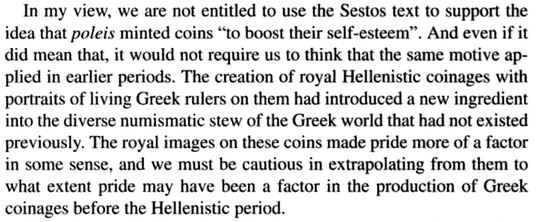
Why do cities mint coins?  One of the only written pieces of evidence we have from the ancient world is the ‘famous’ Sestos Inscription (OGIS 339).

From Hill 1899:

Capture.JPGCapture1.JPG

It is well discussed in a modern context by Katsari 2011 with up to date bibliography in footnote 22, missing only Le Rider 2001: 242-244.

Lines 43-51, translated by J. R. Melville-Jones in Testimonia Numaria, Greek and Latin Texts concerning Ancient Greek Coinage, Vol. I (1993), no. 377:

… and when the people had decided to use its own bronze coinage, in order that the city’s type (charakter) might have currency, and the city might receive the profit which would accrue from a revenue of such a kind, and had selected those who would preserve this position of trust piously and justly, Menas, chosen together with his colleague, discharged the appropriate responsibilities, as a result of which the people, through the righteousness and love of honour of these men, has the use of its own coinage.  And in the other offices and liturgies for which the people has selected him, he has presented himself as impartial and righteous …

Martin 1995:

Capture.JPG

I am officially back at work on my coin book project.  I’m editing my draft of chapter 1 right now and realized I needed to expand what I had to say about this inscription, hence the post.

Curule Chair and Accompanying Objects

primaryImage
Ny Carlesberg Glyptotek inv. no. 1465

I’m looking for the inventory number of a piece in the Glyptotek I need to footnote in this article I’m trying to send off.  Hence, I’m trying to find just the right word to get the Danish National Database of Museum holdings to spit out the right information.  Given that the database only functions in Danish (not one of my languages!), I keep getting distracted by my interesting, but incorrect search results.  Thus, this flurry of posts.

Anyway, I wanted to keep a record of this image from the high empire because of how it juxtaposes the scepter with the chair and crown.  I also want to think more about the barbarians as leg supports and how this may have evolved out of the ‘creative’ feet on some of the curule chairs in republican iconography.  I’m thinking the lion feet on the chair of the P. Fourius Crassipes on his issue as curule aedile (RRC 356/1).