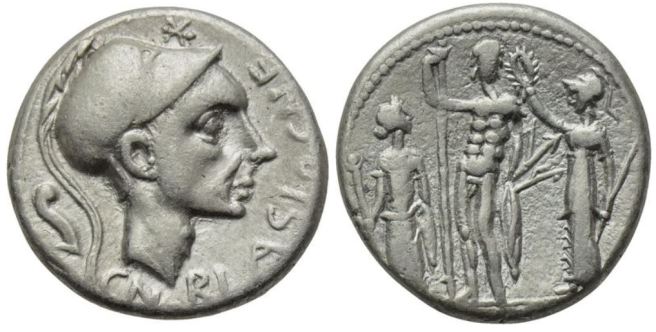
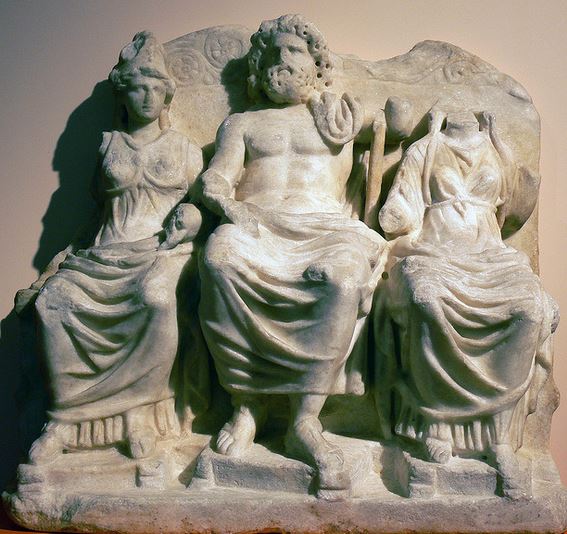
I never realized how odd this early representation of the Capitoline Triad is (CRRO entries). I can’t think of another instance where Minerva is crowning Jupiter. This type of crowning we’ve talked about elsewhere on this blog. It has a very specific Hellenistic iconography. And then just look at Jupiter! He’s hunky. A perfect six pack. Not to mention the nice slinky S curve of his contraposto pose and and 3/4 profile head with a crown of hair worthy of Helios and not a hint of beard. This is certainly not what the cult statues on the Capitoline actually looked like. And not at all what we get in most other representations of the Triad.
(Also notice below how much more often Minerva is on the left not the right.)
Palestrina:
Trier:
Lamp:
Rome:
Severan Coin:
Benevento:
The Bonn Altar might actually be the closest, but still no crowning imagery:
Still on my supplications kick. The cars of (triumphal?) quadriga are often decorated. Republican numismatists will recall the controversial interpretations of the series RRC348/1, 348/2, and 348/3. We see victory with a crown on imperial triumphal cars (example 1, example 2, example 3). And some times there seem to be depictions of uncertain gods (example). But this above is a brilliant example of the clement emperor accepting supplication. It’s too bad catalogues don’t often note these designs on the cars of the quadrigas.
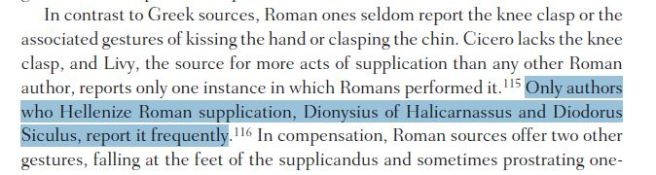
I was delighted to find I actually already own a digital copy of Naiden, Ancient Supplication (OUP 2006). For a second I thought I might have to walk over to the library and risk fresh air and exercise.
I love this highlighted sentence (p.50). As a historiographer, I’m always concerned with how we can actually measure and document the degree of authorial intervention or cultural influence. Here we have a nice tidy example by a scholar more interested in the details than the presentation, that indeed Diodorus and Dionysius both recreate Roman rituals along the lines of cultural practices from their own backgrounds!
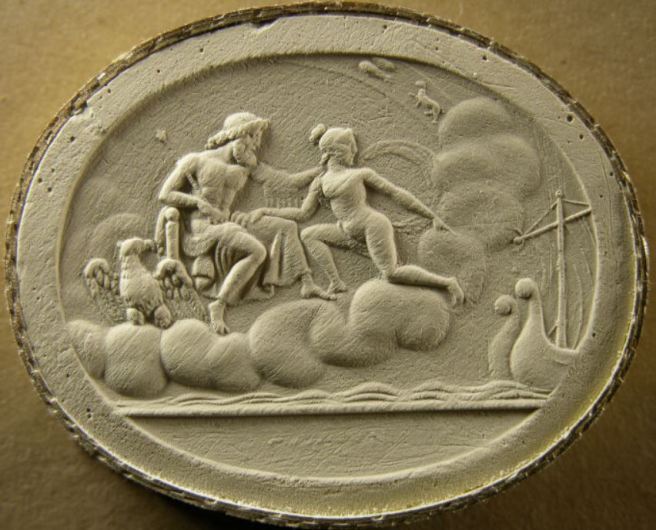
I love teaching the prophecy of Jupiter in book 1 of Vergil’s Aeneid in my general education classes, but I’m not working on that right now. Instead, I’m thinking about the iconography of supplication. Hence, I stumbled on this gem above. The detail that’s blog worthy is this:
That’s a little bit of the zodiac in the sky! Namely Pisces and Ares, end and the beginning of the cycle. A perfect symbolic moment for the revelation of the coming greatness of Rome! It’s not a detail I remember from Vergil. Perhaps I’ll find the reference one day.
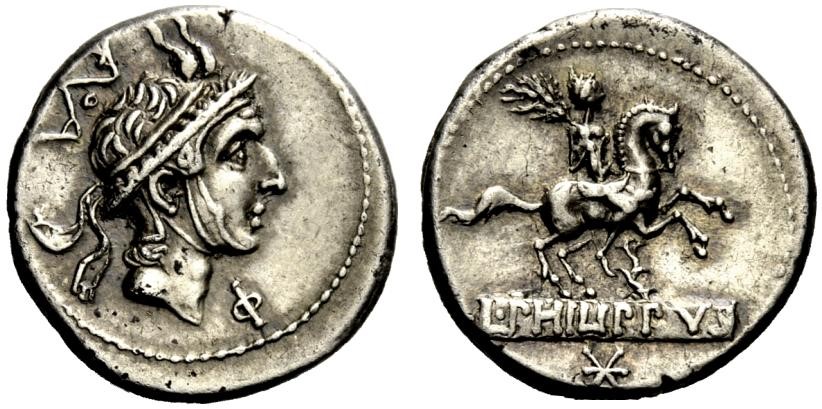
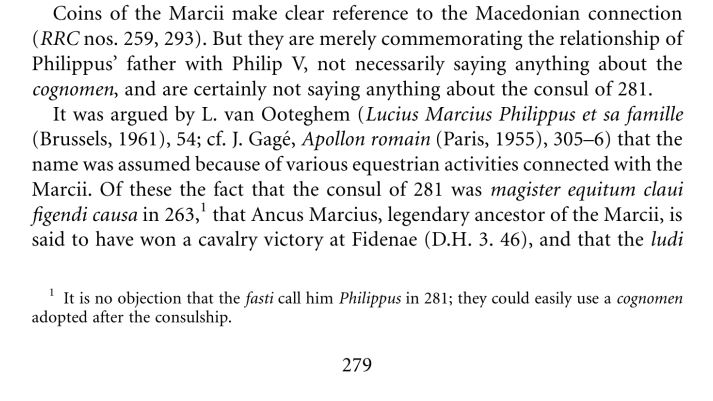
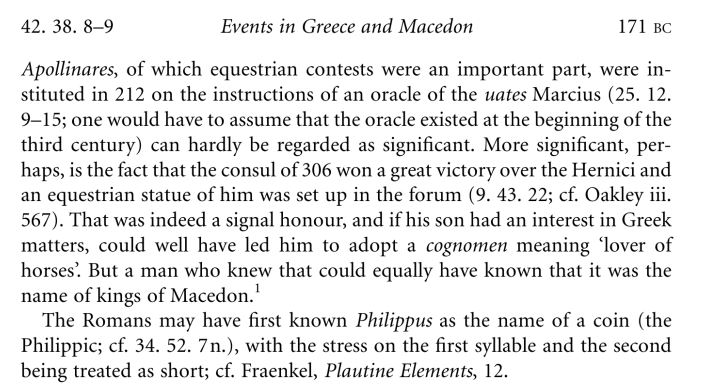
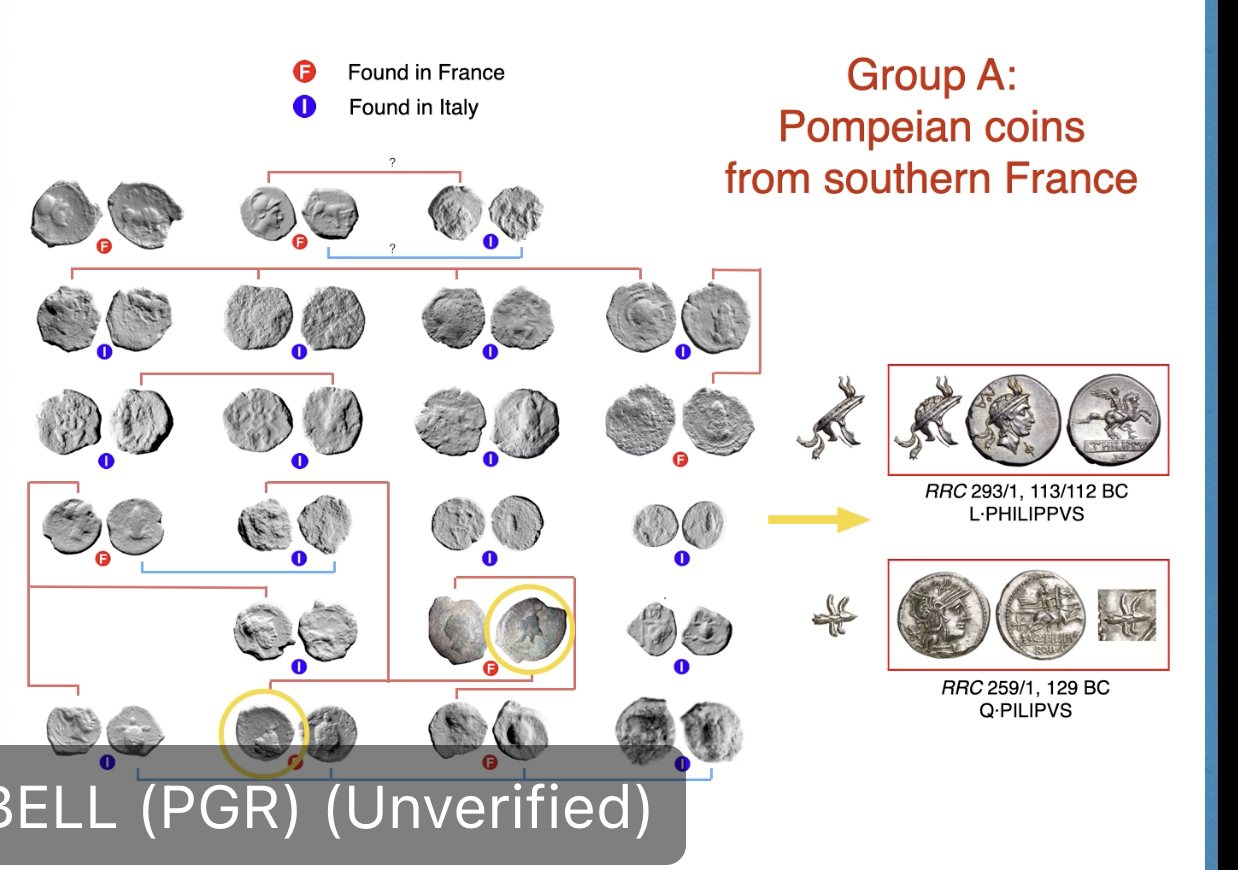
I went looking for my notes on this subject and searched and searched the blog and couldn’t find the post I wanted. Only to realize that my notes were pre-blog! So for future easier searching here’s a collection of factoids related to RRC 293/1 (c. 113-2 BCE).
Links to acsearch.info entry
The most important coin type for understanding this type is the earlier RRC 259/1 which uses the same style helmet as a reverse symbol by a moneyer, Q.PILIPVS (c. 129BCE).
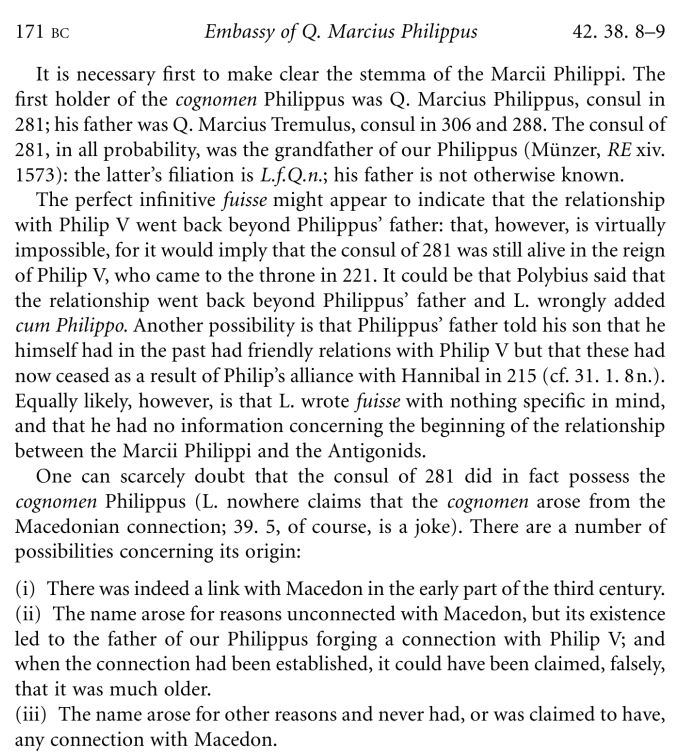
Textual evidence is clear that this helmet is associated with Macedonian Kings:
Livy 27.33: [2] The report was current that Philip had been killed; the rumour was due to the fact that in the encounter with the plundering parties from the Roman fleet at Sicyon, his horse flung him against a tree and one of the horns of his helmet was broken off by a projecting branch. [3] This was afterwards picked up by an Aetolian and taken to Scerdilaedus, who recognised it. Hence the rumour.
And not just for Philip V:
Plut. Pyrrh. 11.5: the greater part of the army was all excitement, and went about looking for Pyrrhus; for it chanced that he had taken off his helmet, and he was not recognised until he bethought himself and put it on again, when its towering crest and its goat’s horns made him known to all.
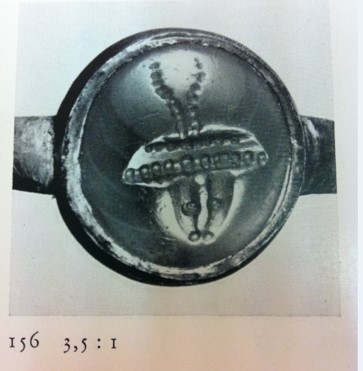
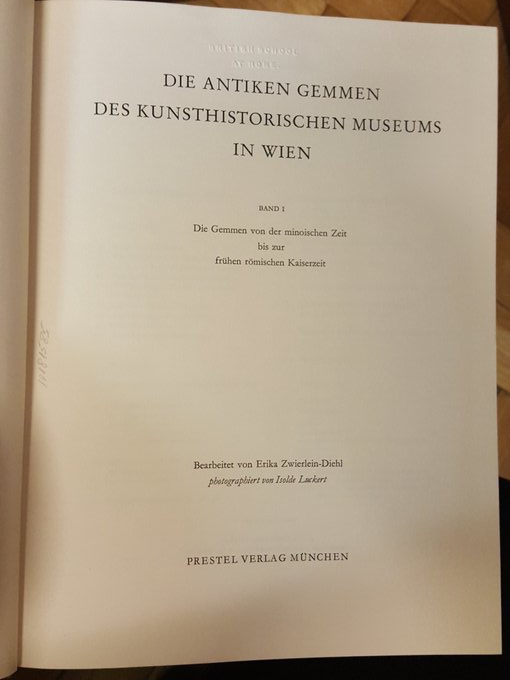
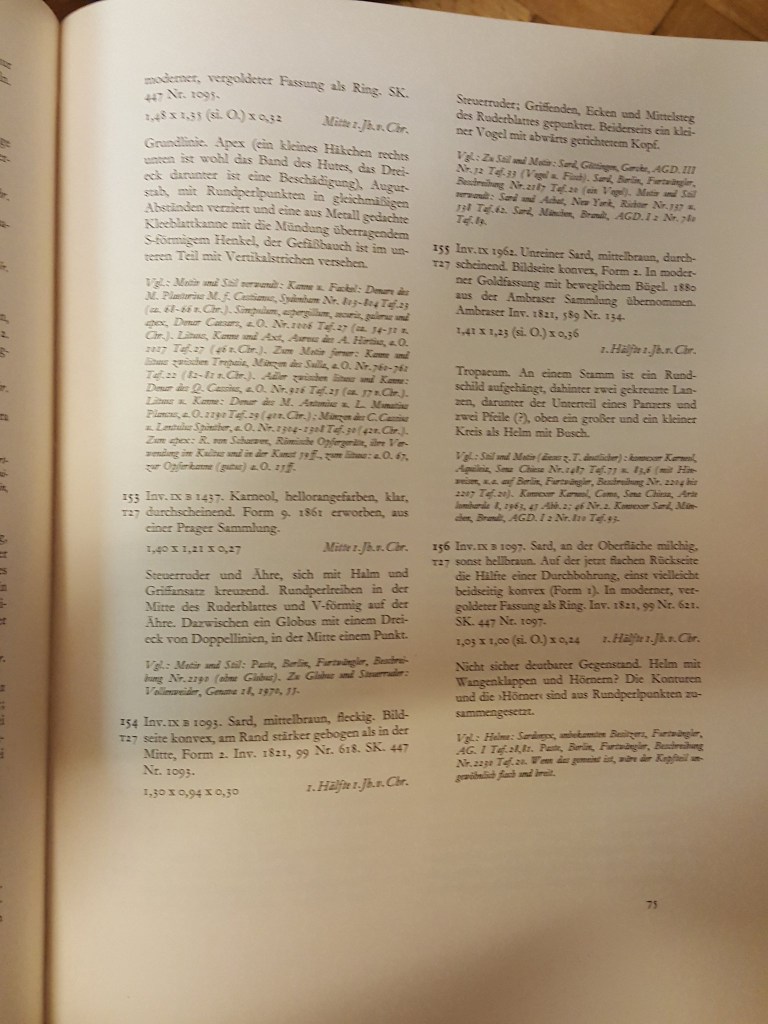
I’d even argue based on these two coins that this gem (in Vienna) was originally created for a Roman with the cognomen Philippus.
Of course the weird thing is how little this intersects with Philip V’s own self representation or really that of any of the Diadochi.
One can point to ibex horns on Seleucid helmets, but visually these are not strong parallels.
It’s also very different than the standard numismatic representation of a Macedonian helmet:
The thing the Roman representation looks most like are the horns on the head of Pan on obverse of Antigonus I Gonatas’ tetradrachms:
Is the helmet emblem of the Roman Philippi derived from one big iconographic misunderstanding?!
It has been suggested that the head of Pan may be intended to be a portrait:
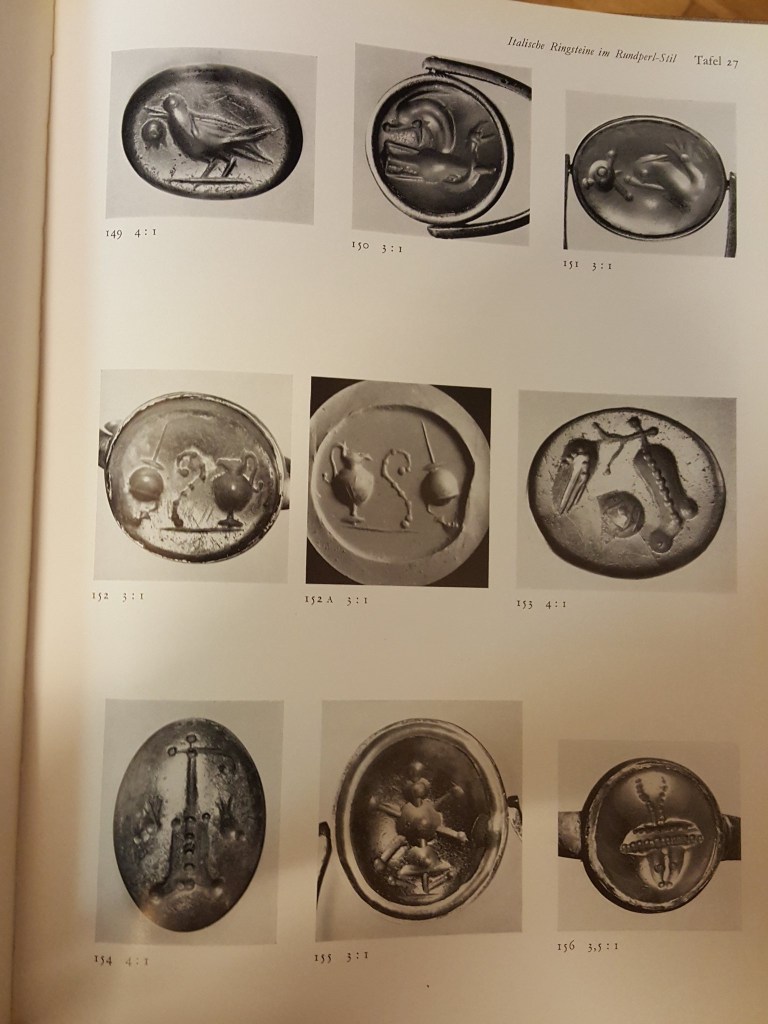
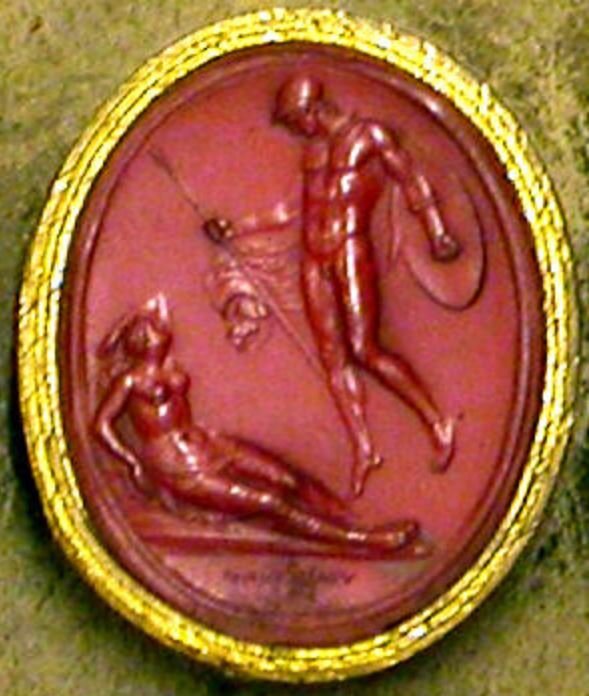
So this iconography is almost always identified as being Rhea Silvia (Ilia) and Mars and being an allusion to the foundation of Rome. Classic examples are the mosaic from Ostia and or the coins of Antoninus Pius. And yet this same iconography is on gems identified as Ares and Aphrodite…(another example) Do the Rhea Silvia representations derive from an earlier prototype or is this just a error in cataloguing the gems? My knee-jerk reaction is the latter, but one needs to keep an open mind.
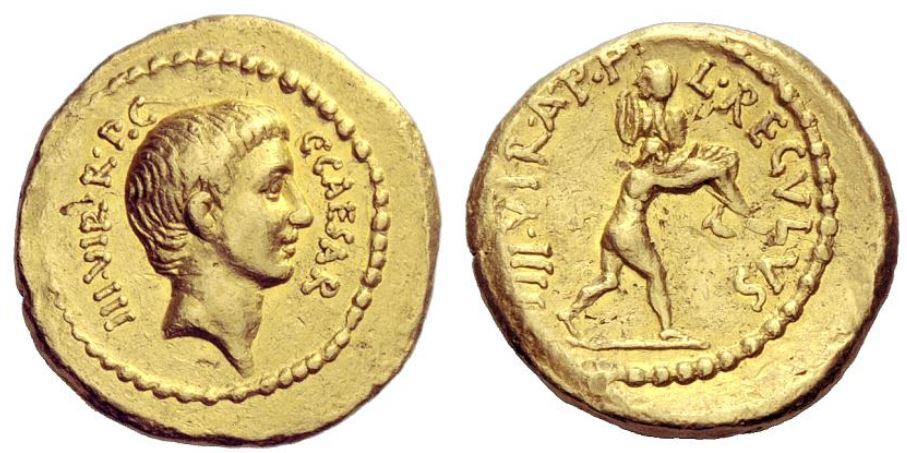
The reverse is without a doubt modeled on RRC 308/1. And, in this series the moneyer connects each member of the triumvirate with their divine ancestry (Lepidus = Mars, Antony = Hercules). Thus by extension, this design in this context must represent Aeneas and Anchises and be alluding to the young Caesar’s connection to Venus via his adoption.
Does this mean Herennius certainly meant to represent Aeneas, and not one of the Catanaean brothers? No, not certainly. It is, however, another nail in the coffin of that identification. (See earlier post linked above for more “nails”.)
I’m intrigued that Regulus did not used Julius Caesar’s own Aeneas type (RRC 458/1). I’d argue that this rendering may have been chosen because it emphasizes filial piety, over divine piety, and thus is more appropriate for the young Caesar in 42BCE.
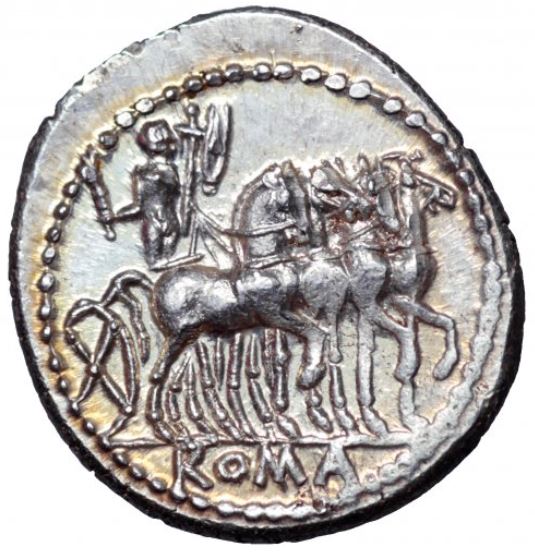
I’ve found this type (RRC 255/1) rather confusing for some time. It shows Hercules in a slow quadriga (associated with a triumphal procession) holding a trophy (a sign of martial victory) and a club (how we know which god is being represented). I just came across this entry in Pliny’s NH 34.16 and it seems to help connect some mental dots:
That the art of statuary was familiar to Italian Italy also and of long standing there is indicated by the statue of Hercules in the Cattle Market said to have been dedicated by Evander, which is called ‘Hercules Triumphant,’ and on the occasion of triumphal processions is arrayed in triumphal vestments;
To be clear, I don’t think the coin represents the statue, just that the statue helps suggest why this divinity might be represented in this type of chariot.
See Burnett 1986: 72 and passim for the assertion that Hercules at Rome is a god of victory.
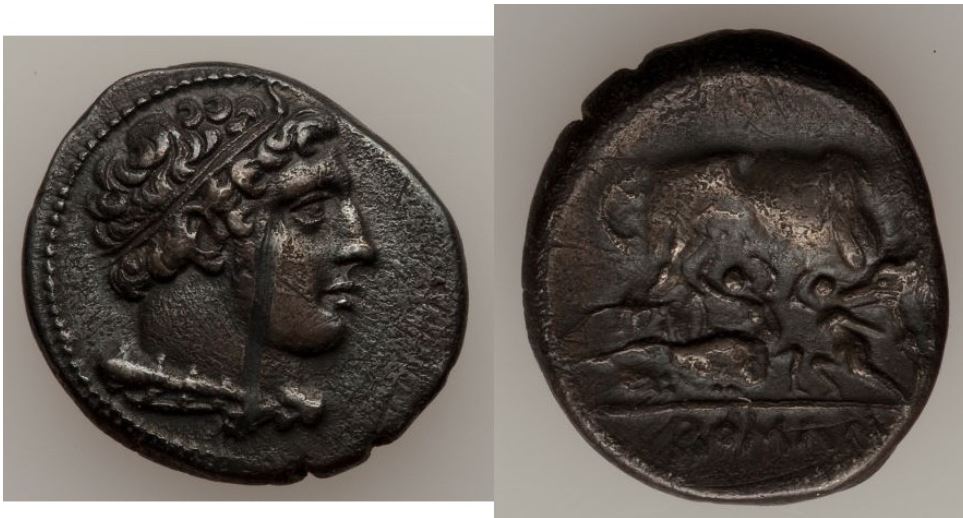
This is a particularly ugly specimen that’s poorly photographed, but what caught my eye was the evidence of failure of the reverse die: notice the large crack and crater in relief above the exergue line and to the left of the twin. Cracked dies are useful for two purposes: (1) they suggest something of the intensity of the minting operation, that production was valued over aesthetic considerations; and (2) they can help with the sequencing of a die study.
Notice also that some one has gouged the front of the coin, likely to check for plating.













 Liv Mariah Yarrow