ὦ ἀγαθέ, or the creeping of the philosophical into historiography

δὲ Βροῦτος αὐτῷ πάλιν παραστὰς, “Ἴθι, ἀγαθὲ,” ἔφη, “τοῖς λήροις τούτων χαίρειν φράσας…”

and Brutus was standing with him again saying, “Go my good friend, be done with the non-sense of these people…” (Nic. Aug. 87; Toher trans.)

I read the above and started to fret a little over the vocative ἀγαθὲ.  It felt unfamiliar and maybe an odd translation.   Nope. Totally standard translation according to the LSJ:

ὦ ἀγαθέ, my good friend, as a term of gentle remonstrance, Pl.Prt.311a, etc.

Huh, I thought, maybe this is a philosophical thing?  Ya sure you betcha!  One use in Isaeus.  But then lots of Plato and always with Socrates teasing and guiding the other interlocutors to the ‘right’ conclusion away from some ‘preposterous’ one (Republic, Phaedrus, Crito).

Where else does it show up?  Well in the mock philosophic dialogue of Athenaeus!

[Bye-the-bye, it’s also all over early Christian writers and has some antecedents in the NT, probably a philosophical influence but not really my area, so I leave it be]

So what I like about this all is that Nicolaus the Peripatetic is bring his vocabulary of Philosophic dialogue into his life of Augustus.  BUT, of course, we know that Brutus is deceiving Caesar at this moment!  So is Nicolaus constructing ὦ ἀγαθέ as a bit of sophistry?   Is Plato playing with sophistic rhetoric when he uses it in his Socratic dialogues?

Interestingly, Appian uses ὦ ἀγαθέ in moralizing discussions between friends deliberating correct action:

στενῆςδὲτῆςἐξόδουπάμπανοὔσηςΒλάτιοςἔφητῷΔασίῳ, τοὺςἄλλουςλαθών·
οὐσώσεις, ἀγαθέ, τὴνπατρίδα;δὲκαὶτοῦτ’εὐθὺςἐκβοήσαςἐμήνυεν. …

As they were going out by a very narrow passage Blatius said to Dasius in a low tone, “Are you not willing to save your country, good sir?” The latter immediately repeated the words in a loud voice… (App. Hann. 45, White trans.)

ἐπανερομένουδὲτοῦΚασσίου· “τίδ’, ἂνἡμᾶςκαλῶσινὡςστρατηγούς, τίποιήσομεν, ἀγαθὲΒροῦτε; “ἀμυνῶτῇπατρίδι,ἔφη, “μέχριθανάτου.

Then Cassius asked him further, “What if we are summoned there as praetors, what shall we do then, my good Brutus?” “I will defend my country to the death,” he replied. (App. BC 2.113, White trans)

These instances are so similar that they feel like Appian must have a common model for both.  His usage feels much more platonic, that Nicolaus’ sophistic tongue and cheek usage.

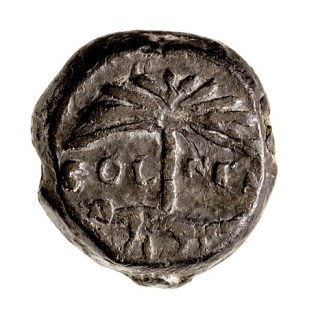
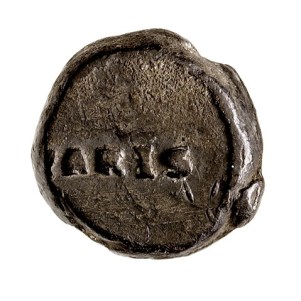
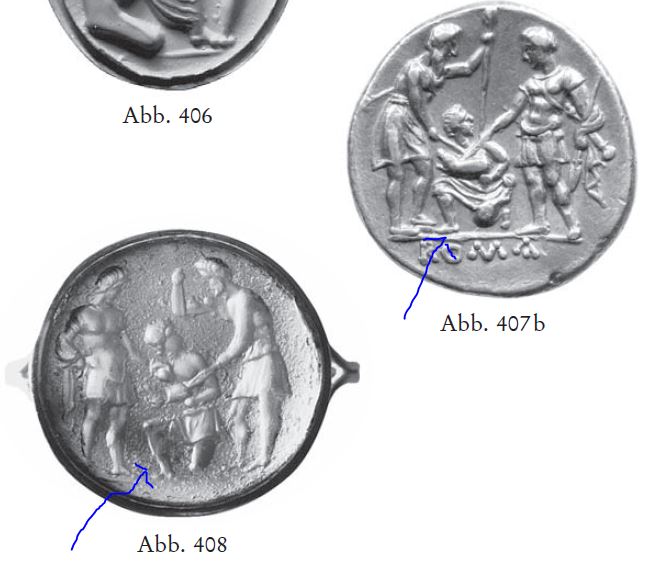
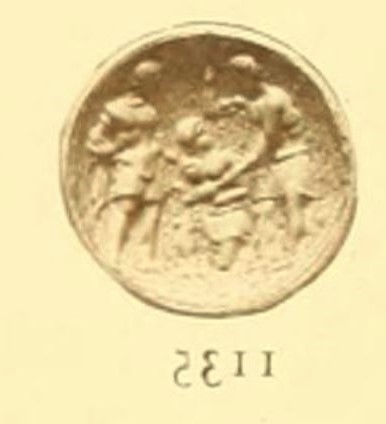
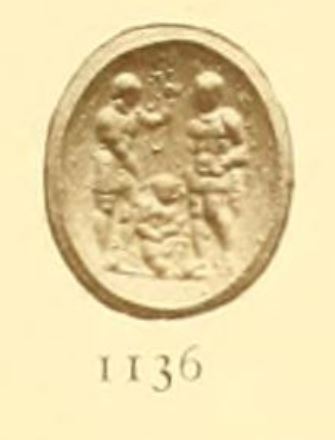
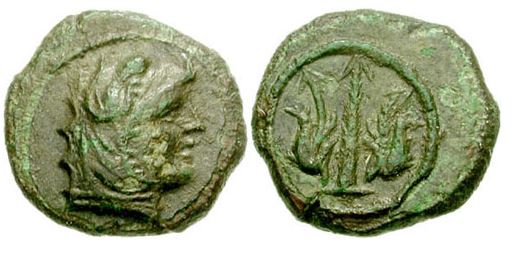
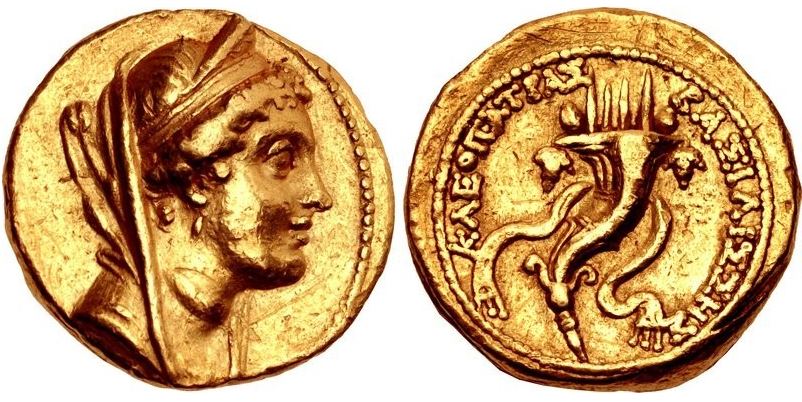
Forger’s inspiration or fantastic alternate history?

Capture.JPG
Links to acsearch.info entry

I’m thinking about Eunus (a.k.a. King Antiochus of Sicily) today and that led me back to this unique coin.  Unique coins are a problem.  And this one has a friend.  Another unique coin.  Another problem.  They are listed as Enna 15, 16 by Campana.Capture.JPG

I don’t want to repeat Morton 2009.  Other than to emphasize this opinion:

“Andrew Burnett and Keith Rutter, on the other hand, regard both coins as fakes. (Personal Comment, July 2008).”

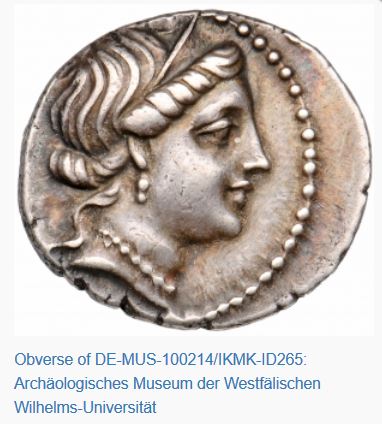
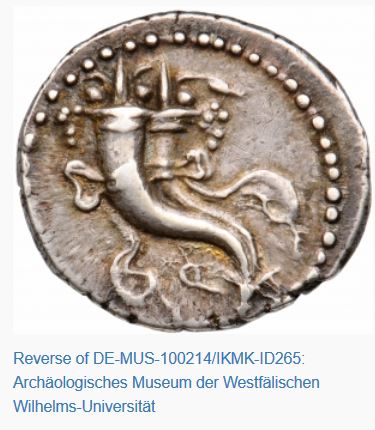
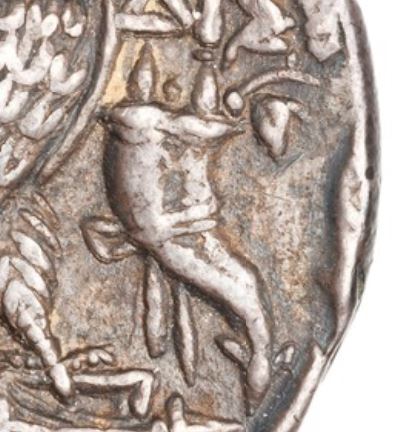
All I have to add is what I think the likely inspiration of both coins may be.  RRC 335/1 or 2 (late 90s Crawford, 91 BCE Mattingly).

Capture.JPG

This same reverse was resurrected in 59 BCE by RRC 421/1.


Doliola, yet again

Capture

In the past, I have been so interested in why Crawford’s 1971 interpretation of RRC 290/1 was wrong that until today I think I missed all that was right and interesting about his argument after one throws out the iconography portions.

I think he’s really on to something to link the traditions around the two Doliola especially as reported by Plutarch to the Dioscuri and their amphorae in Italic and Spartan imagery.  This is a very smart and convincing hypothesis.

Here’s a basic run down:

More examples of the iconographic link between amphorae and Dioscuri:


Republican Money ‘slang’

Capture

I got interested in rauduscul* because of its appearance in Varro, LL:

CaptureCapture1

I’d be quite keen to know who Varro is quoting in this context and if the sale in question might be a manumission…

Anyway, all the uses by Cicero are exceptionally casual and dismissive, not at all in same level of solemnity that Varro seems to be describing.


Doliola: No Spitting!

Varro, L.L. 5.157

Picture1

Livy 5.40 (Gallic Sack of Rome): While all this was going on [sc. evacuation of the city], the Flamen of Quirinus and the Vestal virgins, without giving a thought to their own property, were deliberating as to which of the sacred things they ought to take with them, and which to leave behind, since they had not strength enough to carry all, and also what place would be the safest for their custody. They thought best to conceal what they could not take in earthen jars (doliolis) and bury them under the chapel next to the Flamen’s house, where spitting is now forbidden. The rest they divided amongst them and carried off, taking the road which leads by the Pons Sublicius to the Janiculum. Whilst ascending that hill they were seen by L. Albinius, a Roman plebeian who with the rest of the crowd who were unfit for war was leaving the City. Even in that critical hour the distinction between sacred and profane was not forgotten. He had his wife and children with him in a wagon, and it seemed to him an act of impiety for him and his family to be seen in a vehicle whilst the national priests should be trudging along on foot, bearing the sacred vessels (publicas sacra) of Rome. He ordered his wife and children to get down, put the virgins and their sacred burden in the wagon, and drove them to Caere, their destination.

Festus, s.v. doliolathe place of Rome so named, because at the time when the Gauls invaded the city, the sacred objects were placed in this place, and enclosed in barrels. For this reason, it was forbidden even to spit in this place.

Venus Cloacina


Capture.JPG
L. Mussidius Longus. 42 BC. AR Denarius (18mm, 3.96 g, 11h). Rome mint. Shrine of Venus Cloacina: Circular platform surmounted by two statues of the goddess, each resting right hand on cippus, the platform inscribed CLOACIN and ornamented with trellis-pattern balustrade, flight of steps and portico on left; L • MVSSIDIVS • LONGVS around above. Crawford 494/43a

Pliny 15.119: At the time of the foundation of Rome myrtles grew on the present site of the city, as tradition says that the Romans and Sabines, after having wanted to fight a battle because of the carrying off of the maidens, laid down their arms and purified themselves with sprigs of myrtle, at the place now occupied by the statues (signa) of Venus Cluacina, cluere being the old word meaning ‘to cleanse.’ And a kind of incense for fumigation is also contained in this tree, which was selected for the purpose on the occasion referred to because Venus the guardian spirit of the tree also presides over unions, and I rather think that it was actually the first of all trees to be planted in public places at Rome… (Latin)

Capture.JPG

Nice images of remains and reconstruction on Wikipedia.

I rather think the left hand statue looked something like the reverse image of Caesar’s coinage:

reverse

In just a few specimens you can actually see the wings of Victory

Capture.JPG

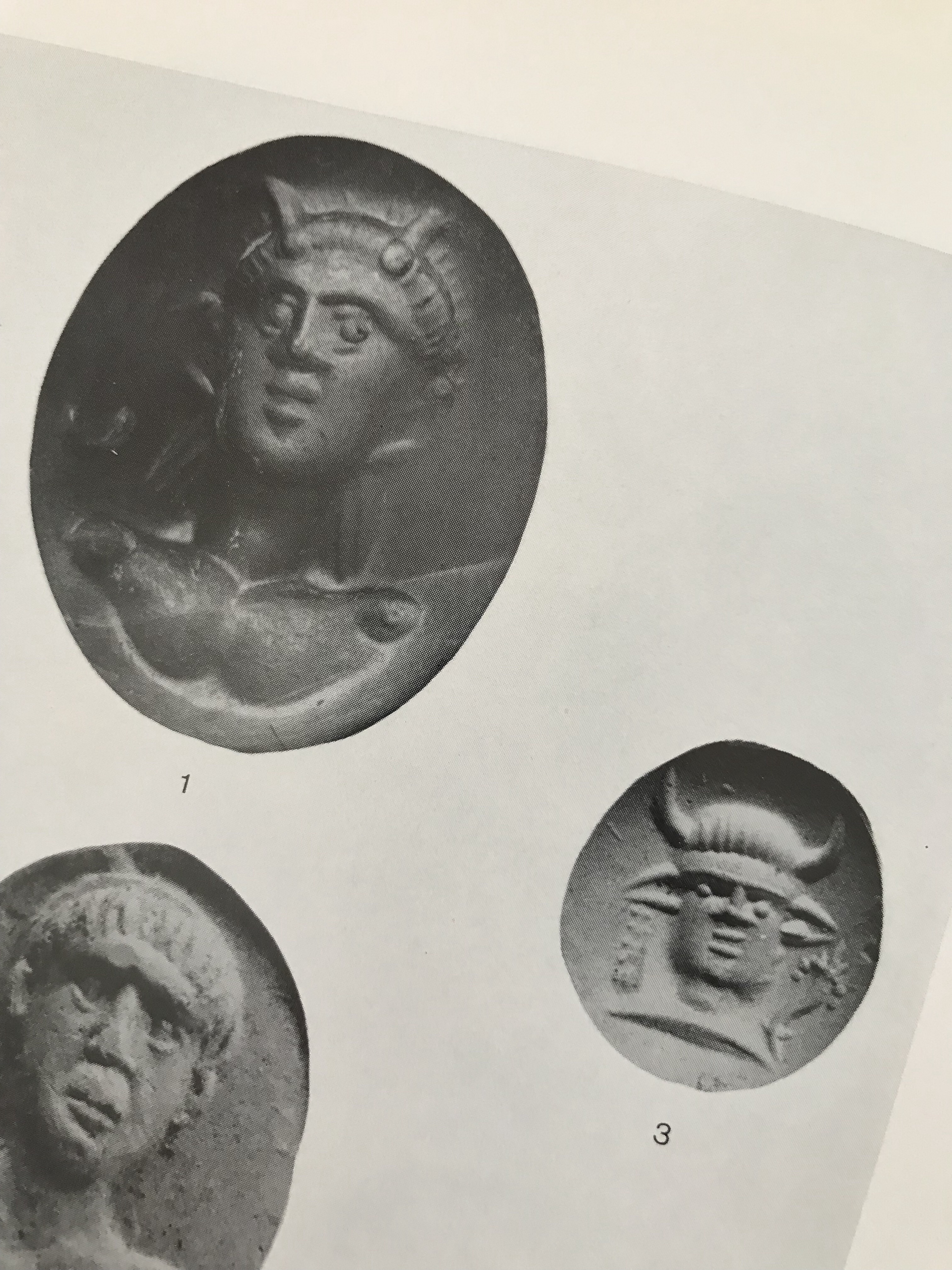
Symbolic Uses of the Pileus

I’ve ended up talking to my former PhD student about the pileus quite a bit over the past year.  I’m creating this post to have place to store references.

Livy 38.55; 187BCE: Ser. Sulpicius next consulted the senate as to who was to conduct the inquiry, and they fixed upon Q. Terentius Culleo. There are some writers who assert that this praetor was so attached to the family of the Cornelii that at the funeral – they say he died and was buried in Rome – he preceded the bier wearing a cap of liberty, just as though he were marching in a triumphal procession, and at the Porta Capena he distributed wine sweetened with honey to those who followed the body, because amongst the other captives in Africa he had been delivered by Scipio.

Plutarch, Numa 7.5: Now before this time the Romans called their priests “flamines,” from the close-fitting “piloi,” or caps, which they wear upon their heads, and which have the longer name of “pilamenai,” as we are told, there being more Greek words mingled with the Latin at that time than now.

Speeches as Historical Evidence

Livy 38.56: There are many other details in which writers differ, especially as regards his closing years, his impeachment, his death, his funeral, and his tomb, so that I cannot decide what traditions or documents to follow. There is no agreement as to the prosecutors. . Some say that M. Naevius, others that the Petillii, initiated the proceedings; nor as to the date when they began, nor the year in which he died, nor where he was buried. Some say that he died and was buried in Rome; others say in Liternum. In both places his monument and statues are shown. At Liternum there was a monument surmounted by a statue which we have seen lately, and which was overthrown by a storm. At Rome there are three statues above the monument of the Scipios; two are said to be those of Publius and Lucius; the third that of the poet Q. Ennius.

Nor is it only the chroniclers who differ; even the speeches, if they are really those of the men whose they are said to be, viz., P. Scipio and Tiberius Gracchus, cannot be brought into agreement. The title of Scipio’s speech gives the prosecutor’s name as M. Naevius; in the speech itself the name does not appear; sometimes he describes him as a knave, sometimes as a trifler. Even the speech of Gracchus makes no mention of the Petillii as the prosecutors of Africanus, nor of the actual proceedings.