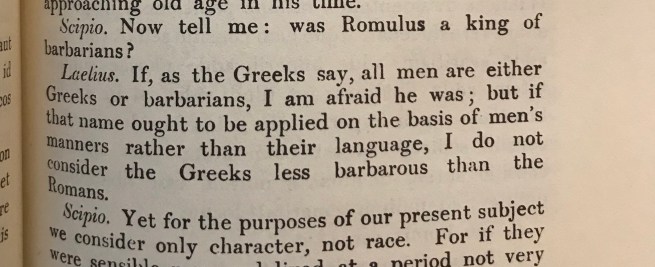
Cic. de re pub
adventures in my head

Cic. de re pub
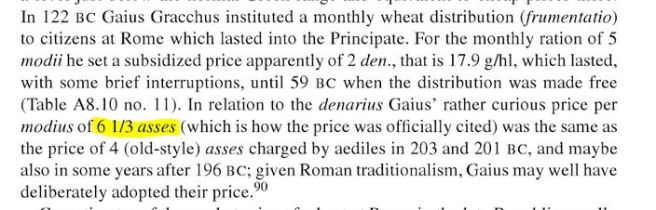
By ‘old-style’ what Rathbone and von Reden mean here is what 1/5 of two denarii would have been before the retariffing of the denarius from 10 asses to 16 asses. This is a simple and brilliant explanation of Gaius Gracchus’ otherwise bonkers pricing structure. And the first good illustration I’ve seen of how Romans reacted to the retariffing.
This is just fun.
C. 101 (Mattingly) or 104 (Crawford) this novus homo makes a VERY conservative coin (RRC 318/1) (gorgeous specimen though!):
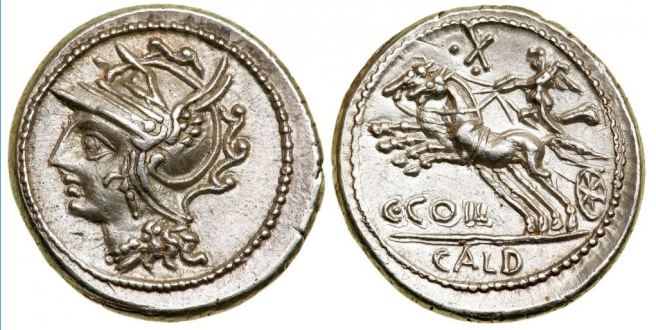
By 94 he’s consul. And Cicero’s brother is using him as a positive exempla by the late 60s:

Then his son (so Crawford, I think perhaps grandson — we don’t know the moneyer’s filiation I don’t think, but I need to go through Cicero’s letters again to double check) in 51 BCE puts his portrait on a coin (RRC 437):
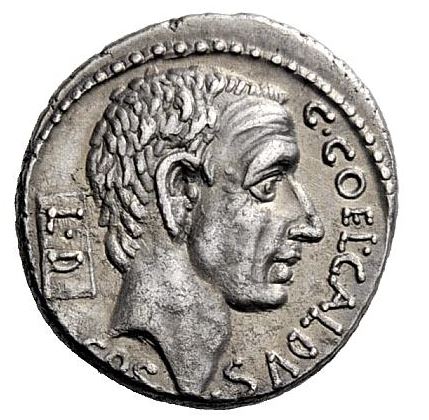
I don’t think we have any other portraits of moneyers except Brutus… And none where the portrait is from the regular coin series. That’s your trivial detail for the day.
I guess I had good instincts on the grandson thing… I’ve ordered this via ILL and will update blog as I read more:
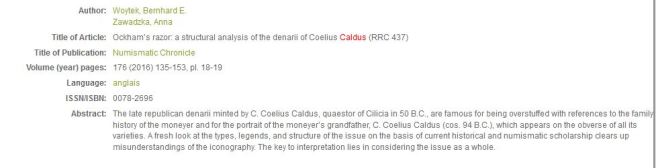
Woytek, Bernhard E. and Zawadzka, Anna. “Ockham’s razor: a structural analysis of the denarii of Coelius Caldus (RRC 437).” Numismatic Chronicle 176 (2016): 135-153.
Responding to all this:
Ryan, Francis Xavier. “Die Legende IMP.AV.X auf den Denaren des Triumvirn Caldus.” Schweizer Münzblätter = Gazette Numismatique Suisse 56, no. 222 (2006): 39-42. Doi: 10.5169/seals-171948
Badian, Ernst. “Two numismatic phantoms: the false priest and the spurious son.” Arctos 32 (1998): 45-60.
Evans, Richard J.. “The denarius issue of CALDVS IIIVIR and associated problems.” The Ancient History Bulletin V (1991): 129-134.

Dammit. I hate when I think I agree with Crawford and then start scratching the surface… This is RRC 294/1 (Dated 113/112 Crawford, 110 Mattingly).
The problem: gladiators don’t fight with whips. Or if they do I cannot find a textual reference (and I’m pretty good at that). Also, , the man with a whip is clearly dominant and also armed with a sheathed sword.
Crawford is in agreement with Smith 1875. But the Tertullian (de Spec. 21.4) cited by Smith is useless as it just has the gladiators made to fight by attendants with whips, and that is also in Seneca. Whips are how you control slaves.
The alternate view is that the type depicts a scene of slave suppression (Numismatic Circular 11; Crawford also attributes this ‘fantastic explanation’ to Babelon; so also Grueber in BMCRR).
Lots of these sources make the senior T. Didius (father of cos. 98) a praetor in 138 BCE fighting slaves in Sicily. And it is true we don’t know who was fighting slaves in Sicily that year and there is gap in our known Praetors that would accommodate Didius, but we’ve got no other testimony beyond this coin it seems (Here I’m following MRR who does not include Didius Sr. in any rank above Tr. Pl.).
I have an itch in the back of my brain that the scene of former enslavers cowing the self-liberating enslaved by laying down arms and picking up the whip. This is a scene from a Massinger play set in Sicily during the Roman slave revolt. But I swear that is not where I have it from. I know my ancient texts better than my early modern dramas….
AND YES! I found it … (OR rather Edwards 1964 did) its from Herodotus or Trogus:
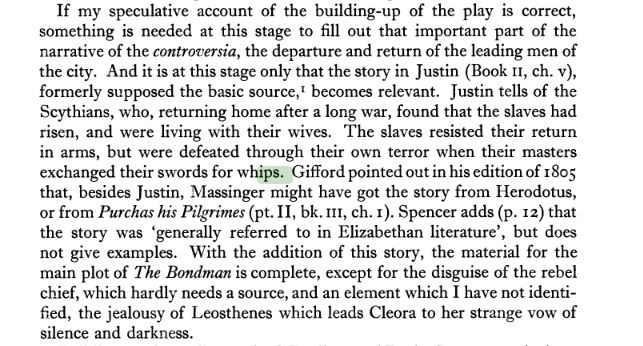
So Crawford is right that it isn’t attested in the Sicilian Slave War but it is an ancient historical trope! I hate changing my mind but I really can’t see this as a gladiatorial combat scene.
“Men of Scythia, see what we are about! We are fighting our own slaves; they slay us, and we grow fewer; we slay them, and thereafter shall have fewer slaves. Now therefore my counsel is that we drop our spears and bows, and go to meet them each with his horsewhip in hand. As long as they saw us armed, they thought themselves to be our peers and the sons of our peers; let them see us with whips and no weapons of war, and they will perceive that they are our slaves; and taking this to heart they will not abide our attack.”
My husband and I enjoy falling asleep to Herodotus which is why this is so familiar
(Or Gryphon. Spelling variations make searching for coins on my blog a pain.)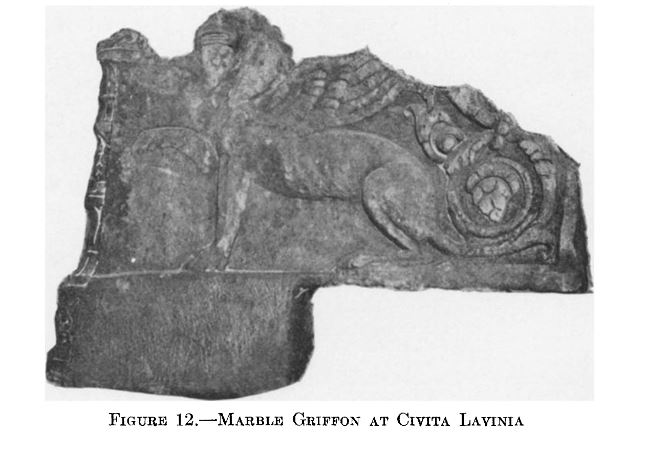
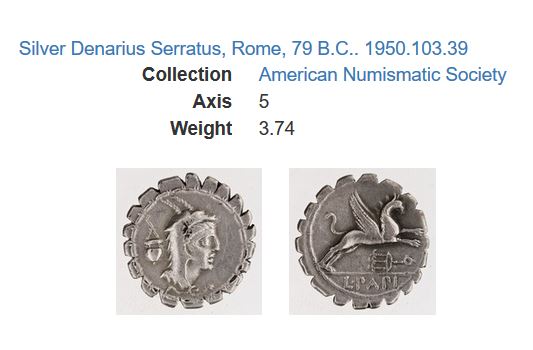
Update 1-20-23:
This post should have had Lanuvium, Lavinium, Juno, and Papius as key words.
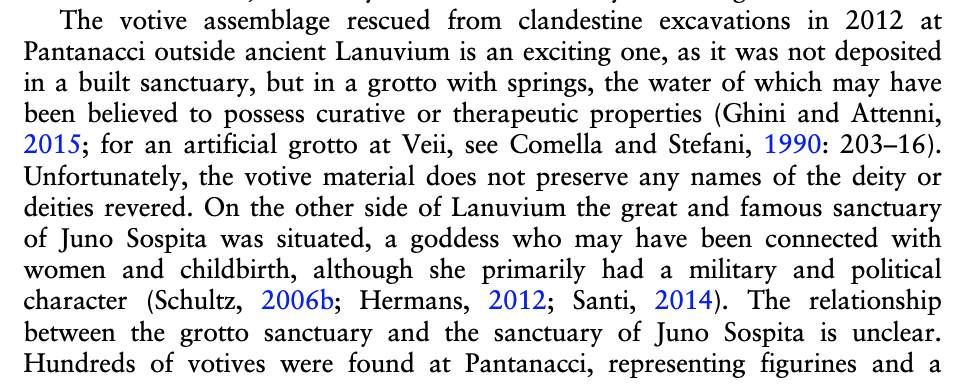

I must read more about the Pantanacci finds.
Carroll, Maureen. 2019. “MATER MATUTA, ‘FERTILITY CULTS’ AND THE INTEGRATION OF WOMEN IN RELIGIOUS LIFE IN ITALY IN THE FOURTH TO FIRST CENTURIES BC.” Papers of the British School at Rome 87 (10): 1-45. doi:https://doi.org/10.1017/S0068246218000399.
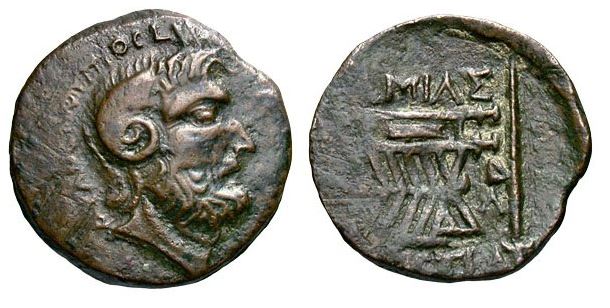
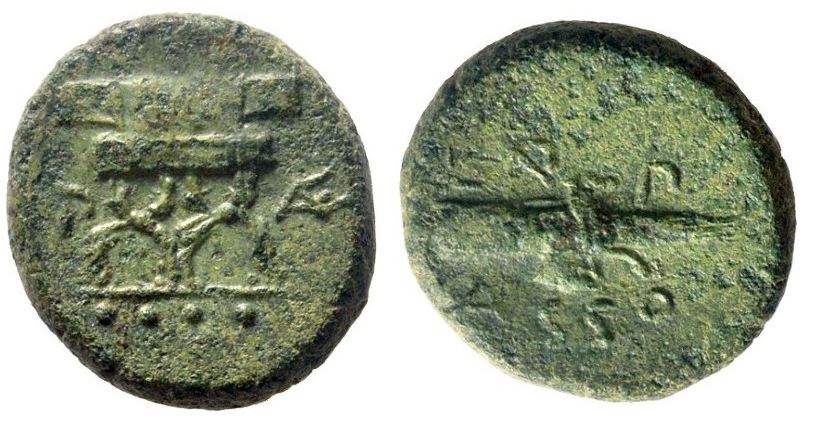
So I was thinking about the second of these coin above, the one from Paestum, and that got me looking at this older post. The implication of Cicero’s passage seems to be that magistrates in the provinces have lictors but they carry staffs not fasces. If so, what are these fasces doing on the Paestum coin? Surely Cicero must be wrong, cf. Tomb of Cartilius Poplicola.
My other concern about the Paestum fasces feels more serious. How would a magistrate at Paestum have axes?! A symbol of military authority outside the city of Rome…
The top coin is just bonus.
How is it possible I could be letting so much precious writing time slip by obsessing about the coins of Paestum while trying to just find a few decent images for this last chapter?!
How is it possible I don’t have a copy of RPC vol 1 to hand? Do you? Do you want to tell me if this coin from Paris is listed there?
It comes up on image searches for Paestum in their database but is not in Crawford or HN Italy. It certainly looks like Paestum …
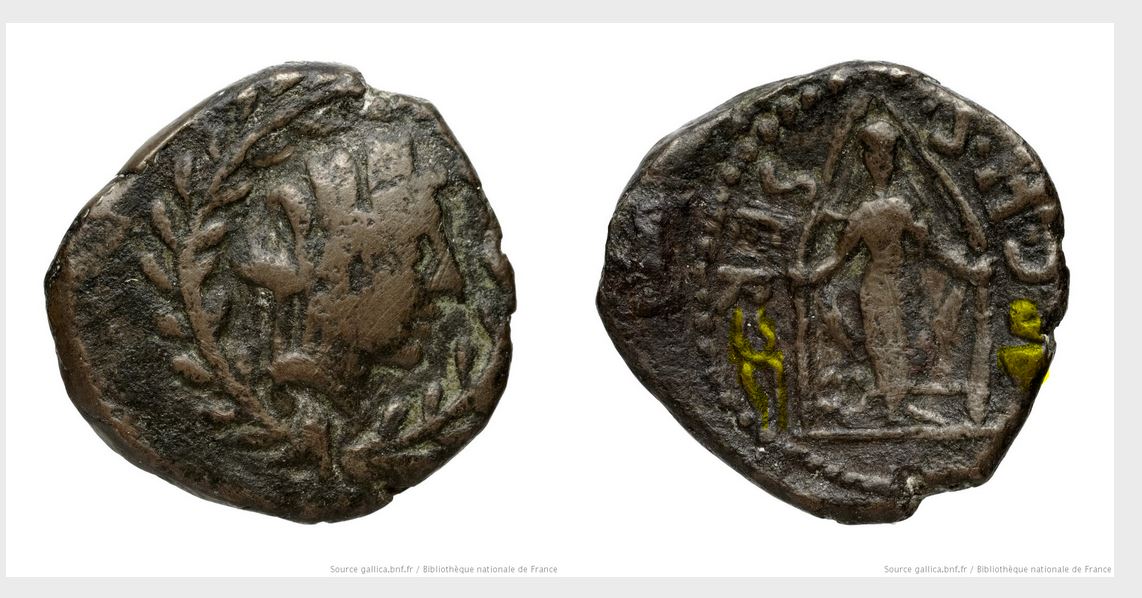
The rendering of Cybele reminds me of her look on RRC 332/1.

Also notice the highlighted tongs and anvil which may well refer to the office of the moneyership, cf. RRC 464/2:
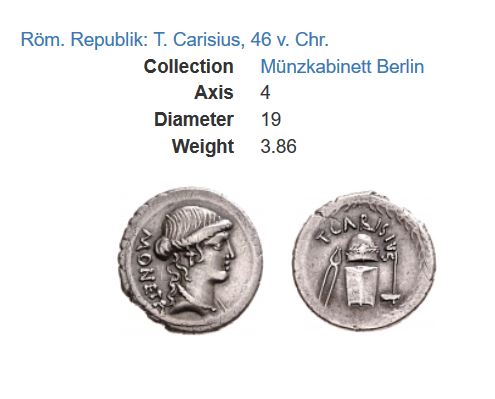
There are other Paestum coins that refer to striking. I’ve come to think that coin (after jump) is likely inspired by the Caepio Piso issue, RRC 330/1.
The figure on the reverse is clearly a mistress of the beasts type representation, maybe Artemis of Ephesus, but perhaps a manifestation of Cybele herself?
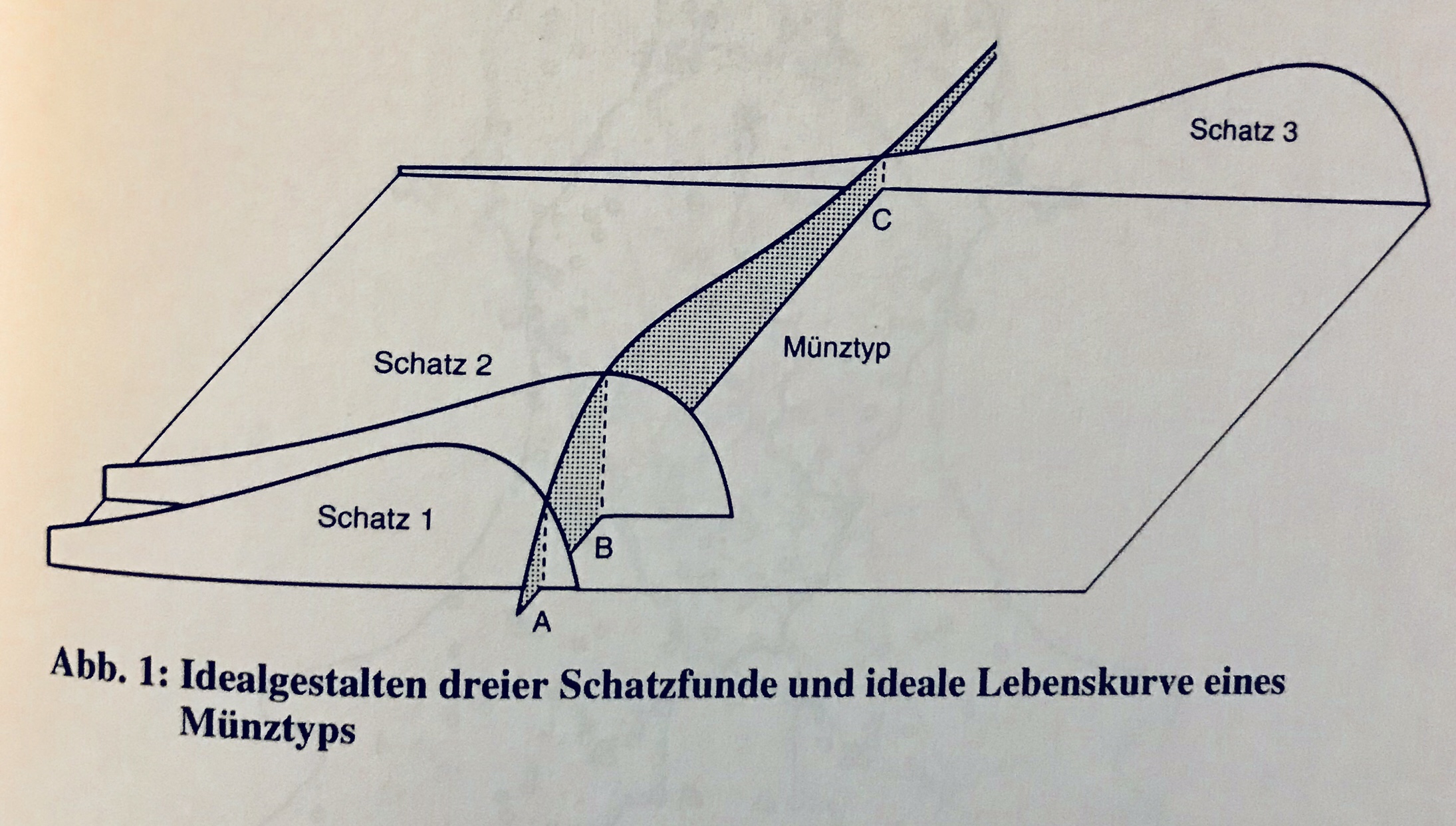
I really admire this visual from Brackendorf 1998: 491 as a means of explaining how we assume coin types will be represented in hoards over time.
See Comments for Fuller Refs.
Tellus Stabilis is a goddess from the coinage from age of Hadrian onwards. Notice she is not holding a rake as the catalogues say, that’s a yoke.
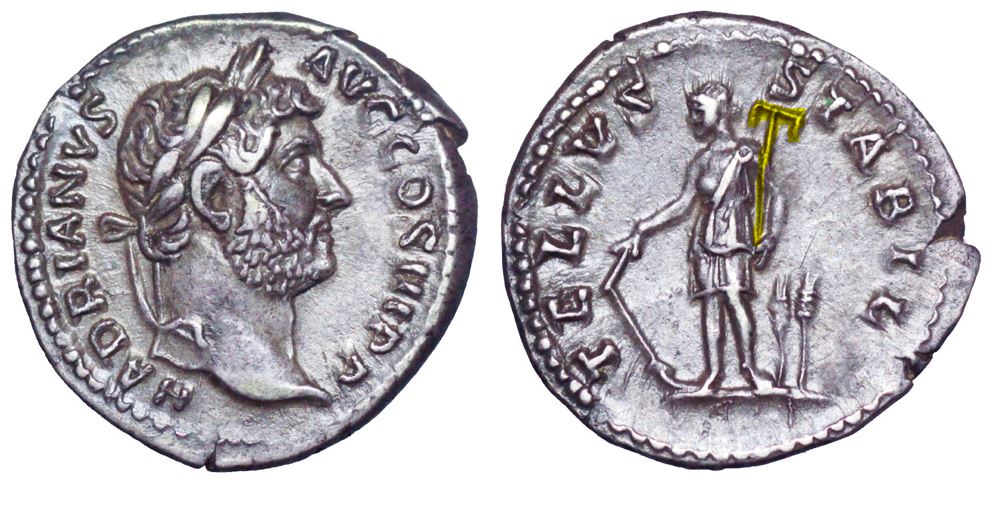
The other attributes are the short tunic of the farmer, the plow and two ears of grain.
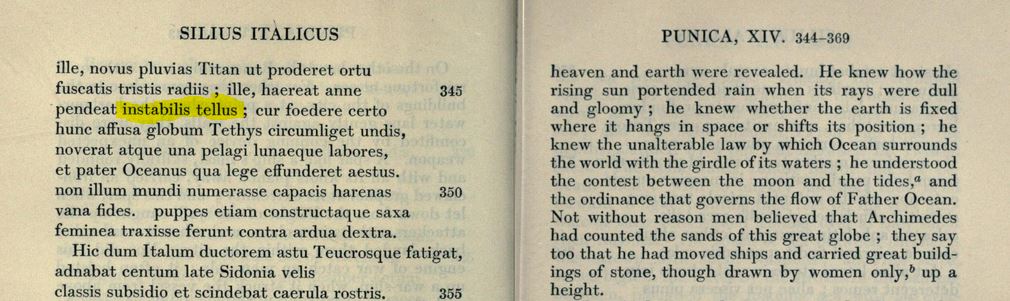
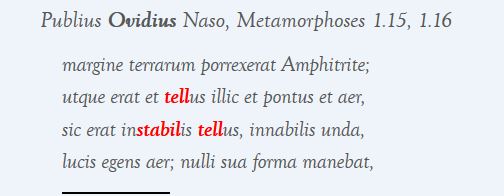
This adjective and noun combination don’t appear in the extant corpus of classical literary Latin or the corpus of published inscriptions. What does appear in epic poetry is the instabilis tellus! Both Silus Italicus’ Punica and Ovid’s Metamorphoses, both in cosmological scenes.




 Liv Mariah Yarrow