
From CAH.
More info:


ILL article by Torelli 2017 on order.
adventures in my head

In the Sackler having a leisurely browse of new scholarship. This is where I will track refs and points of interest.
Sent this article to Vallerie…
Therefore with the common people Marcellus won more favour because he adorned the city with objects that had Hellenic grace and charm and fidelity; but with the elder citizens Fabius Maximus was more popular. For he neither disturbed nor brought away anything of the sort from Tarentum, when that city was taken, but while he carried off the money and the other valuables, he suffered the statues to remain in their places, adding the well-known saying: “Let us leave these gods in their anger for the Tarentines.” And they blamed Marcellus, first, because he made the city odious, in that not only men, but even gods were led about in her triumphal processions like captives; and again, because, when the people was accustomed only to war or agriculture, and was inexperienced in luxury and ease, but, like the Heracles of Euripides, was
“Plain, unadorned, in a great crisis brave and true,”
he made them idle and full of glib talk about art and artists, so that they spent a great part of the day in such clever disputation. Notwithstanding such censure, Marcellus spoke of this with pride even to the Greeks, declaring that he had taught the ignorant Romans to admire and honour the wonderful and beautiful productions of Greece
While everything else was carried off as plunder, it is said that the accountant asked Fabius what his orders were concerning the gods, for so he called the pictures and statues; and that Fabius answered: “Let us leave their angered gods for the Tarentines.” However, he removed the colossal statue of Heracles from Tarentum, and set it up on the Capitol, and near it an equestrian statue of himself, in bronze. He thus appeared far more eccentric in these matters than Marcellus, nay rather, the mild and humane conduct of Marcellus was thus made to seem altogether admirable by contrast, as has been written in his Life.
Cf Strabo 6.3.1
Among this booty is the Heracles in the Capitol, a colossal bronze statue, the work of Lysippus, dedicated by Maximus Fabius, who captured the city.
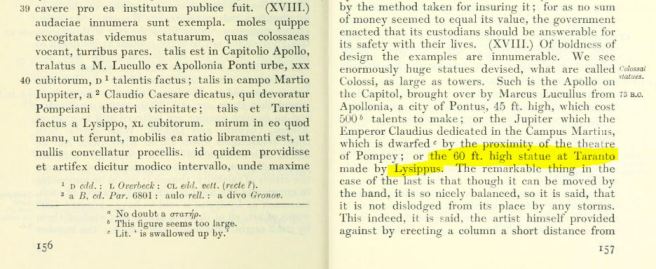

LIMC entry.
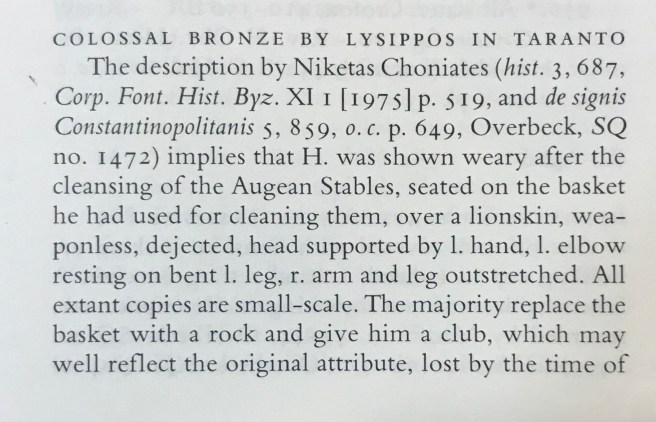
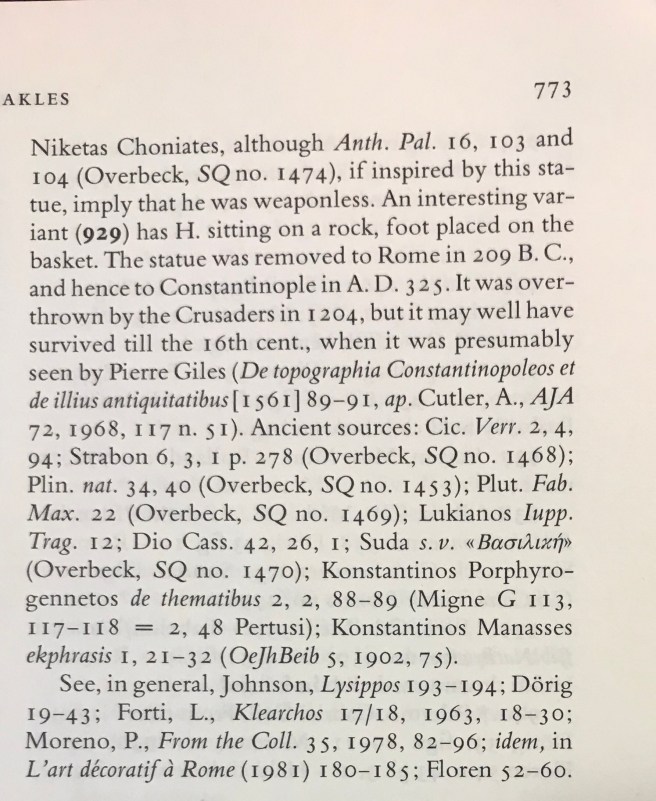
Illustrated in article with miniature statue and coin. Cf. LIMC no. 927-949.
Perhaps gens Fabia connection relevant for representation at house of M. Fabius Rufus at Pompeii


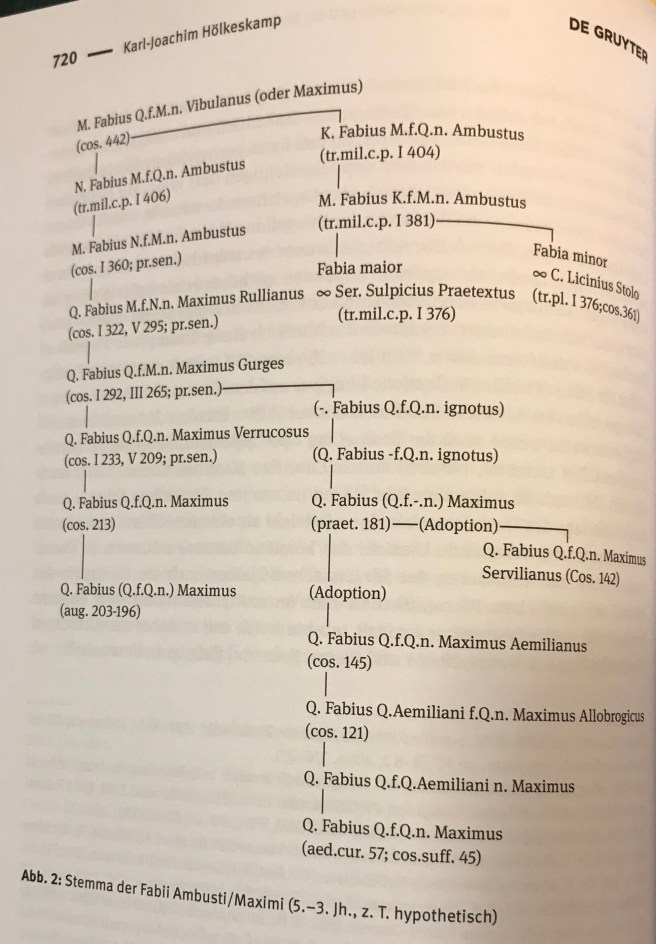
UPDATE 2/4/22: see now, Sánchez 2021 (related blog post).
One day “in my copious free time” I want to write up a history of the public image of the quaestorship as presented on coinage. Here are are bunch of images that I’m not going to write up properly now because of how long today’s to do list is…
Ideas I want to think more about:
Calorie estimates might be just as disputed as die estimates, maybe even more. And they are clearly just as important to any estimates about the Roman economy, state finances. I was struck reading this book review (by accident as I end up reading most interesting things) was how different these numbers are than discussion of feeding the city of Rome. I’m also curious when reading about the Roman grain supply that I didn’t come across this work then. As RRDP takes off, thinking about how the data can help us think about the economy will often come back to grain supply issues. So, I’m just flagging this for follow up:
From Goldsworthy’s BMCR review:
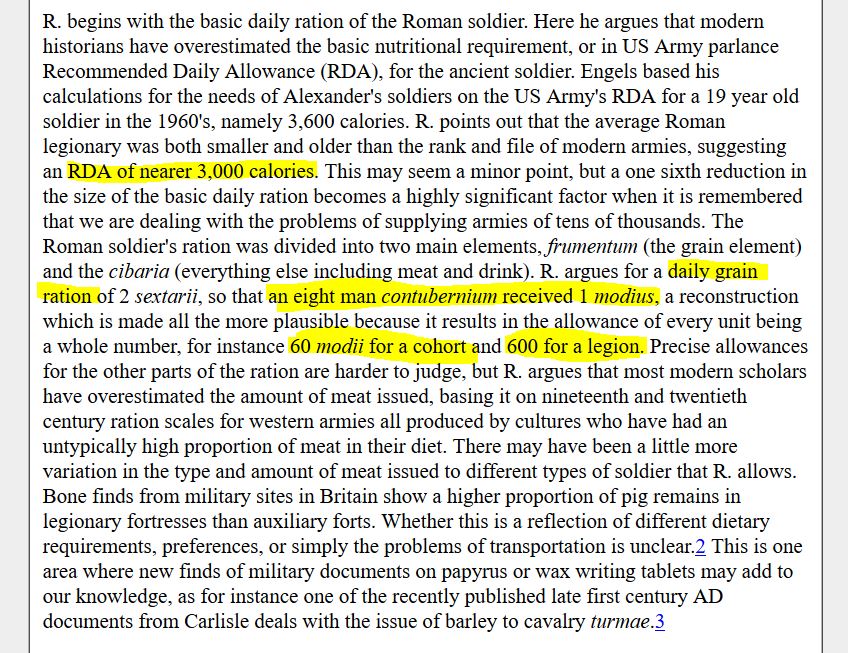
Goldsworthy goes on to talk about Roth’s discussion of the economic repercussions of grain distribution in a raw, not prepared state. Another key issue also for the urban grain supply.
Parrish Wright and Nic Terrenato – Italian descent in mid republican Roman magistrates: the flip side of conquest
Consular Lists – unparalleled as evidence in of history, although just names, no other data
Importance of Munzer work: grew out of writing individual RE entries and recognition of patterns. Not Parties, but Factions. Parties have opposing goals, Factions have the same goal = Power
Foreign Princes who become Roman Citizens important chapter
Research Question: How big was the influx of new families and where did they come from?
Two historical processes: horizonal mobility vs. vertical mobility, integration of outside elite vs. rising status of Roman
Mouritsen work building on Broughton (look up!)
Graph of number of consulships by gens
Chart with five catagories: Established, Pre-376 Horizontal, Horizontal, Vertical and Unknown
Reproduction as Bourdin 2012 chart on origins of patrician families: local cultural discourse on the openness of Roman society
Ambiguities between Established andPre-376 Horizontal, cf. Mamilii and Licinii Etruscan epigraphic evidence
Horizontal category nearly all from Latium, exception Ogulnii Etruria
Vertical movement less common than Horizontal movement, but Established still have far and away the most consulships (great chart!)
Ogulnian and Licinian laws should be thought about in light of their familial origins outside Rome and an interest in Roman openness.
Cornell: Schultz very speculative on Etruscan origins
Lomas: Etruscan epigraph has depth for families that have actual Etruscan noble origins
Peralta: Some families
Bernard: Important chestnut the lack of vertical mobility at consular level, speculates that more may be their at lower magistracies
Smith: no data on failure: laws allow but system blocks, lets look at other things like priesthoods too… Uncomfortable with XY axis
Terranto: not a tension between old and new money (old land vs new cash), but a tension about how new expanding state will be run
Christopher Smith on “Becoming Political”
Oakley on Livy very comforting us by erasing doubt, but many scholars still harbor doubts and see retrojection in the fasti
Under statements about disagreements about archaic Rome and how to reconstruct, some would have long dark fifth and long bright third with a negligibly short 4th century.
Twelve Tables: Humbert and Corsi moving us beyond Watson
Frier summarizing Watson in book review: “…449 BCE… a grim world…crude code…little innovation…restricting vision to private law…”
Highly substractional process to find a ‘original text’
Humbert and Corsi: the XII put the Magistrates under rules, under whose power is the magistrate put? The Populus?!
de capite civis iniussu populi ne roganto (Pomponius)
de capite civis, nisi per maximus comitiatum ne ferunto (Cicero)
Side step to Greek world, following Emily Mackil in Ando and Richardson ed. vol.: the juridical formulation of property is required for establishment of state, quoted: “The concern for property….lend the state autonomous power” Mackil is working primarily with reference to Gortyn Code
Praises Mignone’s work on lex Acilia, how did the plebiscite work?
Leave Locke aside, property NOT natural, but created contested category.
References how this intersects with Bernhard on 3rd Century Debt
commercium: Humbert and Corsi don’t take on Roselaar’s 2012 and 2013 articles on this as conubium.
Livy 8.14.10. – does this miss describe relationship by reading Latin colony rights onto an earlier period?
Is this all an elite game?
All community restrictions on Elite behavior.
What is the legal mechanism by which someone can stand for office in Rome? If we follow Roselaar and Broadhead by seeing a bigger gap between Romans and Latins…
civitias sine suffragio
Romans read back their later history, and we also need to think about reading forward…
Q&A
Terranto: Elites are coming to Rome with agenda. Believes sortition (assignment of consular provinces by lot) manipulated.
Rosenstein: Are we back as Scullard?
Terranto: can’t throw baby out with bathwater, familial agendas don’t hold up over long periods of time but do exist on shorter time span
Cornell: Candidates not running against each other, but for the Plebeian and Patrician slot, thus running in tandem
Peralta: Let’s think about failure, would it be better strategy for aiming to lower magistrates
Bernard: C. Naevius is the classic example
Smith: Don’t believe the binary of plebeian/patrician as Livy gives us; picture much more complicated on social groupings
Feldherr: Annalistic tradition works against picture both papers are talking about, esp. division between domestic and foreign affairs
Tan: Geltzer doesn’t even believe his own line about mobilizing clients…Livy really doesn’t want to talk about popular sovereignty… How does causation work with matching war and consul?
Terranto: believes in smoke filled rooms where politics stitched up, but also real military threats and necessary defense.
Smith: worrying about who can play with sortition…this is a problem for the smoke filled room theory, the deal that is struck and must legitimated and there are consequences if it goes wrong…
Rosenstein: the prize is glory, sortition manipulation quite unusual, both consuls want the same thing that’s the purpose of sortition, Laelius and Scipiones
Bernhard: is the definition provincia fixed in this period?
Rosenstein, Paying for Conquest
Tributum and Citizen without the Vote
Military challenges of this period would require more material resources: campaigns are longer, evidence: Dates of celebrations on the Fasti Triumphales
excellent scattershot chart of days on campain based on Fasti
Assumptions:
Fasti reliable source, also assuming calendar is running normal, and that starting point of campaign is about the same most years (perhaps varying up to 30 days either way), NOT grappling with start of consular year
Impressionistic chart with trend line, not a claim about any specific campaign
Also limited by the fact that not all campaigns end in triumph, but assuming most
distance from Rome: longer marches
But lots of part of campaigning that doesn’t just include battle includes trying to force opponent into a strategic position, devastation of lands, diplomacy
leaving aside coinage and instead focusing on food
4500 soldiers and food requirement: ration 800g. per person per day = only 70% of caloric need
15 days, 57 tons, 34 days, 130 tons, 138 days, 528 tons
tributum must increase to fund this
long campaign takes more money, BUT does not necessarily or even likely increase spoils
spoils in 2nd century were NOT sufficient to repay tributum (stipendium), we can assume same picture in 4th-3rd Century.
The strategy of imposing citizenship without the vote is usually is interpreted as increasing manpower=>doubling of number of legions marshalled every year, but was this the AIM?
NO.
Dion. Hal. RA 21.4-5 (Ref seems off?!)
Before 2nd Punic war few Campanians citizens without vote used in legions
Suggests Language barrier not a reason not to enroll them in legions, but perhaps just bad infantry soldiers (uses 2nd Punic war performance as support for this)
Citizens without the vote are the TAX BASE
integration like this regularizes and prolongs financial benefit derived from conquest, more valuable than spoils or war indemnities.
Lower tax burden for citizens with vote may have allowed greater investment in land improvements, points to Tymon’s paper from yesterday.
Scheidel on building up Slaveries
very speculative views on Italian development of slavery
Summarizes a Finley-esque view of slow development
BUT Slavery Appears early: in XII tables, manumission tax and abolition of nexum (debt bondage) in 4th century
Can’t trust Livy, but lots of war and also lots of people being taking captive
Captives don’t always transfer into stable slavery population in Italy: ransom, export
Western Greeks like slaves, keep them, raids to be capture Italians of slaves; highly developed slavery in Carthage, but mostly anecdotal evidence
Maybe we don’t need commercial slavery, and we can think about familial model of slavery
Not mutually exclusive models, points back Tymon’s paper again and how this enslavement would support what we see in archaeological
Sub-Saharan Africa as comparison
Most enslavers buy slaves, but SSAfrica and Rome enslavers are also those who capture the slaves themselves
Sudan region, Senegal to Lake Chad (not country)
Slaves traded for north horses and then horses used to enslave more people
Songhai Empire intensifies this effort
In Sudan most slaves exported north to other Islamic societies and retained locally, very very rarely shipped south
Sokoto Caliphate emergence explained. Stated intention to end enslavement of Muslims, but then rationalized that those who resist caliphate are bad Muslims and may be enslaved. Slavery intensifies. Great local demand little selling to Europeans. Many many captured slaves given as gifts to Fulani elite by caliphates. Fulani elite completely supported by slaves.
Similarities with Rome
Religious motivations for war
War is a steady state, assumed necessary every year
political advancement dependent on attainment of military success
network of fortified outposts
familial style slavery
plantations similar to those described by Cato with slave overseers
peculium, systems for incorporating freed slaves,
Does Rome also have the distribution of slaves by gifts on battle field? Perhaps much more important that allowed to date. Cf. model of land distribution
We may need to give more emphasis to non-market distribution. Slavery need not correlated with cash economy
100,000s of slaves need not produce more economic growth for export
Comparison don’t answer questions but help us ask better questions and also suggest what is plausible.
Q&A
Cornell: Reflects on how these two papers work together
Brennan: Brings in Prorogation to support Rosenstein
Terranto and DeHaas: disagree about whether archaeological evidence can be seen as large estates with intensifications
Bernard: Brings in amphora production
Smith: More sites seen
Rosenstein: Indemnities/tribute only work when victims have surplus
Rosenstein: reads back on to this period publicani who hold state contracts, like Polybius says in book 6
Terranto: what is the evidence that citizenship is an imposition?
Tan: because you don’t do it to people who are nice to you, the alternative is killing them, paraphrases Cornell, << if Germans had enfranchised the French (e.g. in WWII) no one would have any allusions about what was going on….>>
Scheidel: big difference between Sokoto Caliphate and Rome is the keeping of female slaves for sex/reproduction as marker of elite status.
Live tweeting of this conference by others can be found here.
Palombi on Urbanism in Transition
paper read by Mignone
In literature portrayal changes from an Etruscan city to that of a Greek city, portrayal accepted by Romans
De-etruscanization closes with taking of Volsinii and desolving of Etruscan decopolis; Greekness affirmed by admission to Isthmian games
Invention of tradition
Sparse archaeology supplemented by records in literary sources, buildings listed on slide by century (but not sources): “IV cent 7 temples, III 40 temples, II 20 temples, I seven temples” (but excludes temple of Diana Plancia!?!)
Interventions of the fourth century in comitia, square to circular shift. New name Graecostatis
“explosion of the sacred” in the 3rd century
lacking confirmation of archaeology
“masochistic tendency to down date the use of Roman concrete”
Colonies “cities of great modernity” urban planning
Urban models used by Rome in 3rd and 4th century based on Latin models
“Rome did not Romanize Latium, but rather Latinized Italy”
“City of Tuff vs City of Limestone”
City walls restored through out Latium with gates (usually with arches) and bastions in 4th/3rd century
Extension to include new Road system, cf. Praeneste, Ariccia
Cora extension of terraces
Tusculum’s forum also shaped in this period because of terrace construction
Tusculum’s forum has a true Greek style portico already in 3rd Century
Cosa, Alba Fucens – colonies draw on models from Magna Graecia, cf. Paestum, Argigento for civic meeting spaces.
Wide spread use of votive offering found in Latium does not seem to have a parallel in Rome itself
Imposing terraces as defining characteristic of Latin cities, defining space, even before contact with Hellenistic building practices
Latin experimentation with urban planning is distinctive: a combination of substructures and hippodamian long blocks
Regularity valued in outlay of terraces in relationship to forums and sacred spaces: Cf. Gabbi and Norba
Monumentalizing of the main functional feature of city
Must reject Romanocentric view and respect the separate history of Latium and its relationship with other communities, esp. Greek communities and its resistence of Roman hegemony. Consider the network of Myths that connect Latin communities with the Greeks.
Roselaar – Land Tenure as Spoils of War
Begins by summarizing ideas of James Tan: Rome most interested in widing tax base, citizenship is not a reward, a mechanism of subjugation, tributum institution 406? Land regularly distributed. Allies supplied troops, but did not pay taxes, better off than citizens!
Latin war watershed in how land taken was treated, viritane distribution less common
Creations of new tribes resisted by elites to limit power of colleagues through creation of client base of the sponsoring member of the elite
Colonies become alternative to viritane distribution
Colonies must be independent from Rome to serve effectively as military outposts
Colonists exchanged citizenship for land, but retained ius commercii, ius conubii, ius migrationis (the last did NOT apply to their sons though, to ensure colony remained intact and functioned as military outposts)
Non-Romans Non-Latin allies not admitted to colonies at least not in 4th Century.
Ager Publicus present but not fully utilized or well controlled by State. What was function of this land that was NOT distributed in colonization? Some sold to fund war efforts in 2nd Punic War–> thus earlier the state had not distribute all the land available to it!
Ager Publicus known to be such would have been valued lower and not developed by private individuals because of insecurity of possession; it would be a bad investment.
2nd century period of fast economic growth, can it be a model for understanding late 4th century boom as discussed by De Haas in morning session.
Luceria’s position determined by its ability to control surrounding area.
Latin colonists have larger land grants, enough to provide for themselves and families (Roman colonies are different story).
Fregellae had big economic opportunities: wool and leather –> attracted greater population
Italian allies had been working ager publicus as if it was their private land.
Summary: New system of land tenure after Latin War: civitas sine suffragio and Latin colonies; The system ends when disputes over remain ager publicus comes to a head with Gracchi and in following period…
Varia from Question Period:
Bernard/Davies: 268 BCE = Temple of Tellus gets map of Italy
Roselaar: Does not believe Rome collects rents on ager publicus…
Terrenato: disagrees, why take land not to do anything with it?
Tan: Different ‘theys’ one generation thinks confiscation and rent collection a good idea, next gen may see advantages in NOT doing so…
Mignone: Dion. Hal. reports land confiscations and compensation on Aventine. Historical? Compares Lex Thoria (suggesting date of 111 BCE).
Smith: Fretting about whether there is such a thing as a Latin Colony, worry stems from Dutch research, and Roselaar’s own research, and Terrenato’s new book–> foundations at the same time as these colonies that are not colonies.
Roselaar: colonies special for rights of individual colonists, but not necessarily economically different from other foundations, communities.
Ager Publicus is in areas where colonies are absent.
Audience member (?): in agrarian society land ownership is most important thing: more than symbolic. People take chances to be able to ‘own’, opportunism
Tan: 330s different treatment of upland and low land places. Changes based on function of place. Qualitative different in types of ager publicus, arable lands vs. pasture lands.
Roselaar: land close to Rome is key and is what is likely that sold in 2nd Punic War.
De Haas: asks about how we can validate picture through archaeological evidence… Settlement density? Centuriation as a signal of the sale of ager publicus?
Smith: are there mutually beneficial relationships that mean binary ours/ theirs model is not valid. (echoing Tan sentiments?)
Tan: ager publicus needed to make surrounding small plots actually self-suffient: shared resources.
De Angelis – Rome’s Visual Culture
338-241 BCE is his ‘fourth century’
Plut. Marc. 2.1-3 – bringing spoils from Syracuse, but before this all war trophies
Stereotype of warlike middle republic is used as counterpoint to more sophisticated late republic
Date of shift to luxury varies by author/rhetorical need
Anti-primitive middle Rome lead by Coarelli starting from Medio Repubblicana exhibition and publication
Most now believe that Rome was a major cultural center in the 4th century.
338 – equestrian statues in forum, a hundred years after previous datable reference to an honorific statue.
Capitoline ‘Brutus’ contrasted with Etruscan funeral portaits
It’s too good, fits too well with literary stereotypes. Some even think it is a retrospective piece of early imperial period.
Cf. Mirrors, Cistae, Red Figure, Sarcophagi,
Rome plates:
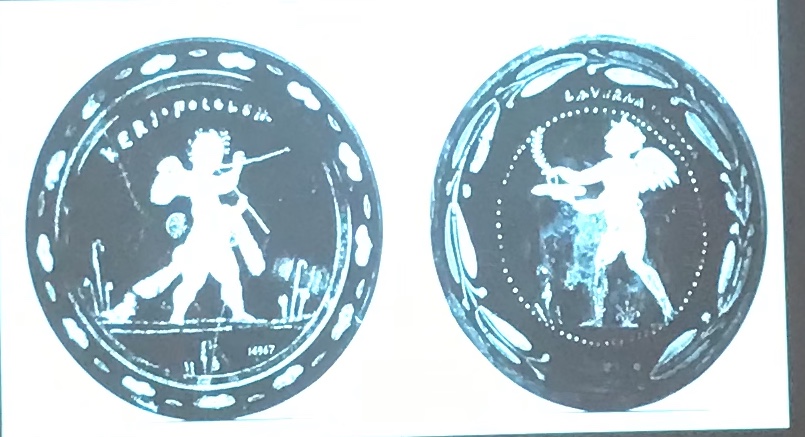
Paucity of Rome evidence, leads to looking towards visual cultures of surrounding Latin communities. But do we then lose local specificity
Calenos LAMPS [!!!!learn more about these and their epigraphy!!!}
Ficoroni Cista
NOVIOS PLAVTIOS MED ROMAI FECID …..
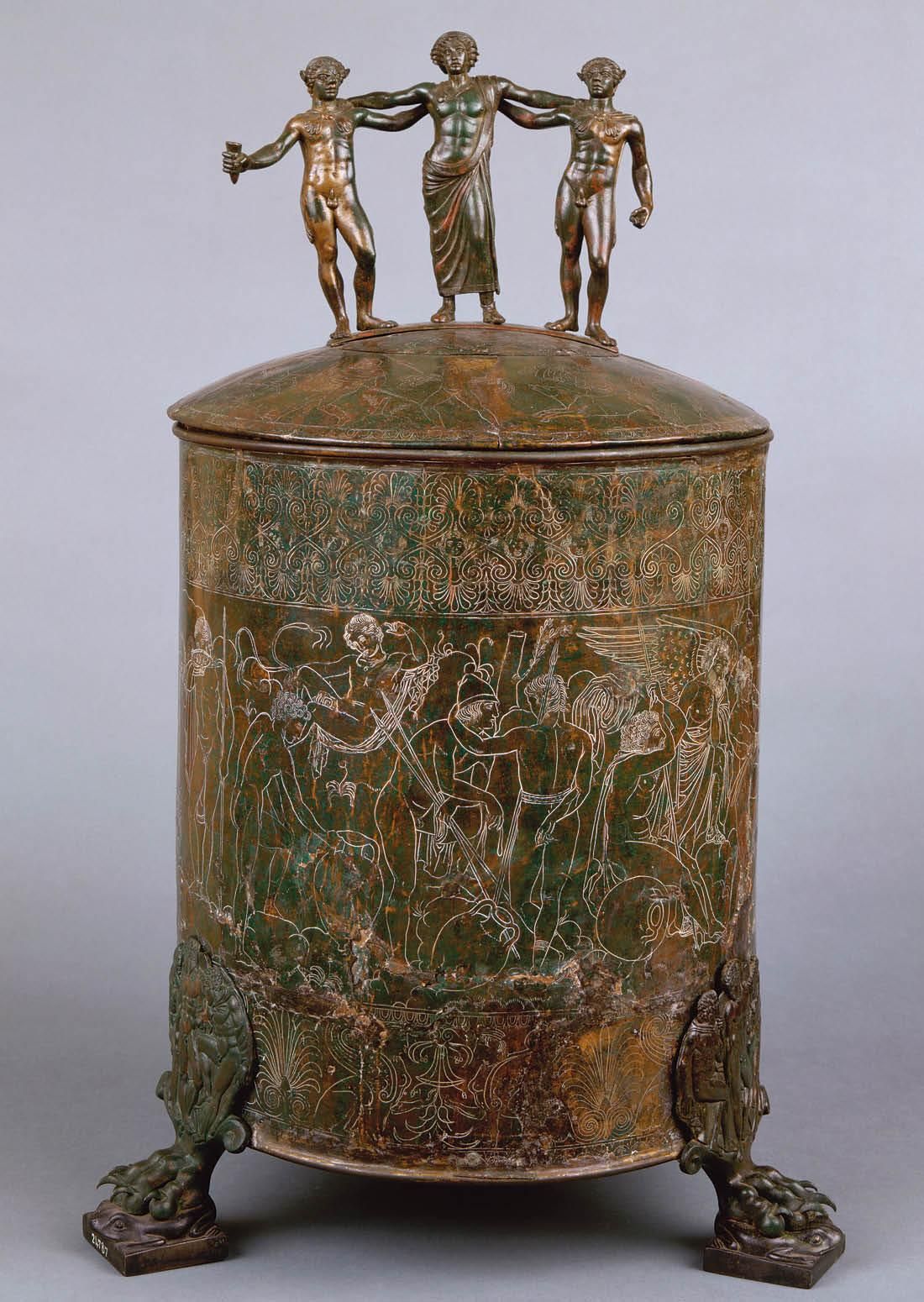
This object is not an exceptional object: conforms with cista styles and quality of Praeneste and theme is known in other media both from Etruria and S. Italy.
The identity of Cneve Tarchunies as Roman is far less important than the way in which the whole tomb celebrates the bonds between brothers against various adversaries!

Davies – architecture’s agency
Summarizes Flower on periodization based on governance, not warfare
Ideas of Agency, what can be an an actor
Concept of Object-Scapes and human acculturation
We cannot be too reductionist, humans are still required
Entanglements –> ‘Chicken/Egg’ –> must not underestimate either human or object agency
Monuments primary communicators of history in this period
Discussion of temple style and slide with maps from her recent book
348 – massive walls
Veii brings new material and thus specialization of labor (cites Bernard); but most labor still corvée labor
308 – Butchers give way to Bankers spaces with Samnite shields of dedication
305 – Temple of Victoria, first lateral columns in 100 years, elongated, and stone entablature, maybe IONIC order
ROmans of 4th Century experience different object-scapes, middle of century stable, but then vast changes. Contracting, now replaces corveé labor. So more of a service of the state rather than a burden on the citizens.
Things were NOW changable! Object-scape allows new ways of thinking about permeability, accessibility, and expansiveness.
Shields, rosta embody foreign states
A new aesthetic in Rome representative of alterity
Plans underplay the radicalness of the shift, better seen in reconstructions of elevations
Then and NOW
Object agency is what she’s proposing
Cf. Her reading of Caesar’s Forum against Pompey’s theater complex: stark/all-business vs. luxury.
The past becomes more limited, austere, harder, unified, rigid, domineering, inward looking by CONTRAST by newer styles.
Did Romans perceive this shift? Possibly.
E.g. Updating of Temple of Castor (GREAT RECONSTRUCTIONS side by side)
Sulla’s on reconstructions focus nearly exclusively on regal and very earliest republic. He is using the 4th century and before to signal conservative agenda.
Architecture more than index, but historical agent, by creating contrasts between present and past.
Bernard and Davies sidebar: ALL about how much of early temples Ionic
Question period
Feeney: underscores Rostra and evocation of Sea and Antium
Audience Member: what was recognizable?
Davies: foreignness readable even if origins specifically are not.
Bernard: comments on who the craftspeople are and that these people are coming from ‘everywhere’
Peralta: Human agency is beside the point…
De Angelis: would not be so radical… raises issue of Caleno artists identifying place or origin on the black-glaze ware…
Smith: Points back to Palombi paper and asks if these papers undermines the idea of Latin agency; Context makes the object, and the context defines the people as well, creates capacity to imagine oneself as different, but what is the ‘DIFFERENT’? This is a period of great militarism, as well as artistic revolution. What sort of new citizen is being created?
Davies: Not so much an issue of foreign policy, but who has access to power… How they conceive power relations among themselves. New types of sponsors of architecture, new funding streams, different people are speaking in the language of architecture, the most authoritative language that is available.
Smith: Palombi paper…
Davies: I’m deliberately not answering that (laughing)
De Angelis: I wish Palombi was here I don’t fully understand… To what extent does knowledge of Etruscan temples effect these developments?
Davies: I’m most interested in how building in Rome effect Romans…
Rosenstein: Who are these Romans you expect to be influenced by this architecture? De-centralized population… Urban population doesn’t exceed 10% of whole…
Davies: That’s my point, its limited
Rosenstein: Hierarchy of Romanness…
[I said stuff about Minucian Column here]
Feeney: reviews how many people were seeing this building, esp. in social-religious contexts, not just citizens, but non-citizens as well.
Cornell: We many not be able to call anything Etruscan, but rather just old style… Much of this stuff is being produced by Plebeians…A new ruling class is coming into being.
Davies: The architecture is propelling this new class.
Tan: Gaius Maenius may be key. All following him.
Davies: Yeah, I wrote that in my book.
For actual live-tweeting by others, esp. Sarah Johnson, see here.
Recommended Reading: Terrenato, Nicola. 2019. The Early Roman Expansion into Italy: Elite Negotiation and Family Agendas. Cambridge: Cambridge University Press. doi:10.1017/9781108525190.
Are all centuries long? What does the longness matter?
Where are the silences? Following Michel-Rolph Trouillot line of thinking. What more can we do?
Session #1:
Elliot – Cato, Origines
Did historical cultural practices as evinced by masks, epigraphy etc… provide influence on Cato’s self conception?
Written in retrospect by an old man reflecting on his struggle as a ‘new man’ – a self commemoration
Compare Or. 2-3 and Caes. BJ on ethnographic perspective – see Chassignet
Earning imagines versus inheriting them – later new men emphasize
Flower: active verbs associated with imagines, they are ACTORS
actions more important than status – Cf. Cato removing names of commanders but recording those of officers, the do-ers.
Cato like other Roman rhetoricians emphasize physicality of relevant individuals to oration: Cato thus emphasizes his own old age. (seems to be constructing a kind of living imagines?)
Notice all the use of first person and second person in the Rhodian oration. (Underlined on handout)
Quoted words of the past are treated as a form of authentic preservation. (Cf. # 12) Goes against (?!) other historians avoidance (?!) of quotation and transcription.
Bernard, S., C. Damon and C. Grey, 2014. ‘Rhetorics of land and power in the Polla inscription (C/L 12 638)’, Mnemosyne 67, 953- 85.
First person of Cato shares much with the first person of certain epigraphical use of First person:
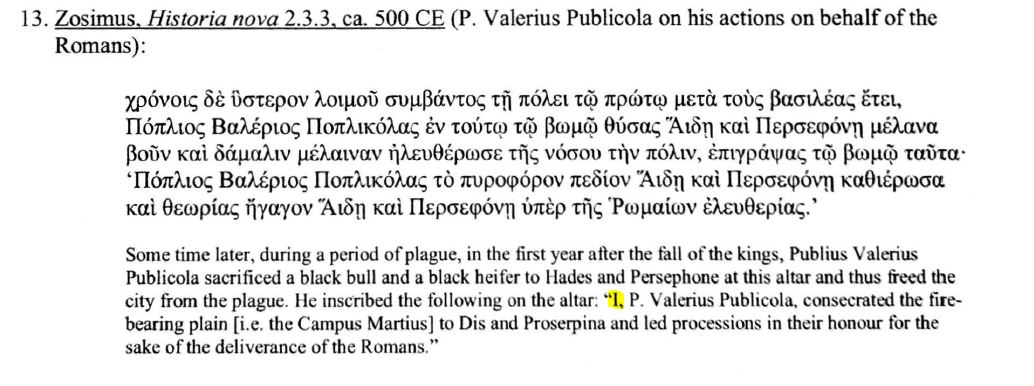
Cornell – Timaeus
Life covers most of the 4th century, said to have live 96 years, exiled by Agathocles, 50 years in exile mostly in Athens.
Tyrants not called tyrants when heroicized
Reviewing extensively what we can and cannot know about his dates/life experience.
Accepts Polybius 12.25h.1 as proof that his exile started very early in life because of lack of military/political experience.
Suggests 240s for likely death date.
Work covers earliest times to death of Agathocles.
Seems to accept Jacoby’s reconstruction of the stucture of the work (what about Baron’s problematization of this view?!)
Emphasizes how Timaeus creates a Hellenized view of non Greek people and the integration of local myths with traditional Greek mythical structure. Western Greek just as GREEK as mainland (and Aegean? Greeks).
Cornell’s Timaeus seems to have the same programmatic goals as Dionysius of Halicarnassus book 1. Is this correct? Or are we clouded in our interpretation by relying on Dionysius…
Gelon presented as a Hero, as was Dion and Timoleon. (Is our view influenced by Plutarch transmission?!?)
The work on Pyrrhus put Rome at the center (inferred from Dionysius representation and Aulus Gellius passage).
Suggests Timaeus may have viewed all of Italy as Rome’s domain.
Is Timaeus reflecting something the ROMANS themselves said about the October Horse and its relationship to the fall of Troy? Cornell thinks so.
Archaeological remains of “Heroon of Aeneas” believed to have been discovered at Lavinium (Practica di Mare)
How does Timaeus visiting and asking questions influence the creation and structuring of Romans’ own self reporting? a both/and explanation of how narrative is created
On foundation date in Timaeus and Romans see Feeney. Possible Timaeus used Punic sources (really?! evidence?)
Sychronizing of the two cities’ foundations (Carthage and Rome) puts them on the same footing and suggests a shared destiny. What this means depends on dating of writing?
Are they twin enemies of the western Greeks? – Mazzarino
Or is Timaeus foreshadowing the great clash between the two? – Vattuone
Polybius’ is jealous of Timaeus, because Romans considered him ‘one of their own’, and the influence of his account on Roman accounts of their own origins esp. Fabius Pictor etc…
336-240 suggested as dates and thus allows for influence of first Punic War on his perspective.
Why wait to come home? Why extend exile? Baron suggests not much to go back to.
Tindarion invitation to Pyrrhus may have been factor in Timaeus’ reluctance to return. Whereas Heiron (and Romans) created the conditions that allowed his return.
Romans anti Tyrant and instead favored and promoted ‘timocratic’ rule, i.e. rule by property classes. This aligns with Timaeus own views/priorities.
—
Question session:
(not a complete record – like rest, just what I’m hearing and thinking about)
Bernard: What sorts of societies promote these types of commemoration? Points to the passage of the Origines on Lacedamonian commemoration of war commanders and how Cato lists things we might think of as Roman but makes them Greek and then rejects them, prioritizing his writing as the memorial.
Elliott: Cato is so good at having it both ways. After reports of his statue and inscriptions, account also goes on to his rejection of a desire for statues.
Flower: Can we separate the speeches from the orations of Cato?
Elliott: Short answer: no. Points to Cicero testimony. Methodologically problems with using Gellius. But, evidence seems to point to origines giving speeches in direct speech. Cicero’s count of so many Cato speeches may be just flourish not actual ‘fact’, a rhetorical show. Must be read in context of Brutus Dialogue in which Atticus interlocutor undercuts idea of Cato as rhetorical model. Cicero’s interest in Cato is very much later life when he’s doing ‘historical research’.
Audience member: But the Scipio inscription couldn’t be seen…
Elliott: No one singular model, but instead this is the TYPE of voice of commemoration.
Audience member: Are really old Roman inscriptions legible to later audiences?
Elliott: Yes, texts become readily inaccessible.
Cornell: Example of Lapis Niger and Dion. Hal. beliefs that it is a res gestae of Romulus
Rosenstein: points to Polybius on difficulty but success! on reading early treaties with Carthage
Elliott responding to Mignone: Cato as influence on Cicero as a master of self representation.
Feeney: brings up as support fragment where he orders slave to recite his own early speech – he creates his own canon.
Cornell: points out account of Cato in Spain could derive from his own defense of his actions when brought up on charges. Did his histories just use speeches as a pre-writing. Gellius is defending Cato from Tullius Tiro’s criticism. See passage 3 on Elliott’s handout.
Flower and Elliott: Livy’s assumption of accessibility of Cato to contemporary readers.
Smith/Cornell: [Follow up separately on Cornell’s views of Servius] Cornell believes Timaeus may be the favorable view of Servius and his timocratic constitution: cf. Miano, D. (2013), “Tychai of Timoleon and Servius Tullius. A hypothesis on the sources”,
ASNP class.lett., ser. V, 4.2: 365-378. Cornell’s Student. Servius Rex NOT Servius Tullius
Smith: a Greek trying to figure out what a rex might be…
De Haas on Rural transformations
Great maps on slides
Focus on Suburbium, S. Etruria, Pontine region project –> Data integration as The Rome Hinterland Project
N. Suburbium: Charts with settlement data, 1st half 4th many farms abandoned, increased numbers of ‘villas’ or elite holdings. (Carafa and Cappana 2019)
Villa known in 5th but much more in later 4th
S. Eturia: peak in settlement in 6th, drop off in 5th, increase in 4th and 3rd.
really great graphs
Sabina: similar pattern abandonment in 5th and early 4th and then increased settlement in later 4th and 3rd
S. Latium: increased settlement in later 4th and 3rd but in regions already earlier enhabited but now denser
movement from foothills to upland sites, increased use of terracing: wine possible, but more likely olive oil production. Commercial levels of production on this platform sites of the late 4th/3rd century.
Pontine Marsh: infamous as marginal and harsh landscape, via Appia major intrusion, perhaps taken from Priverium and given to Roman citizens. Forum Appii 4th-3rd so also ad Media, central places for rural sites, NOT just traveller stop offs. Rural sites have genucilia and petites estampiles.
Marsh lands needed to be reclaimed. Centuriation in this region can be dated more firmly in this area than elsewhere. Ecology used to dating. Smaller ditches and canals. Ditch fills can be dated by radio carbon. Pollen etc point to grain cultivation: Emmer wheat.
Some local trajectories, but three main patterns:
Decline in 5th/4th, followed by recovery in 4th/3rd and more large estates ‘villas’, intensive use of landscapes not previously seen as desirable: uplands, marshes etc…
More complex rural settlement hierarchies
Population growth –> greater food demands
towns as hubs also grow and monumentalize
economic growth, inspired by state investment, private investments also exist (terraces for commercial levels of production targeting urban areas)
Growth creates manpower and resource surpluses thus fueling Roman ability for further expansion and militarism.
How do settlement patterns relate to land ownership?
Is centuriation a sign of allotments or commercial selling of lands?
What are the impact on landscape? were there sustained explotiation strategies? ecological research needed
Killgrove on Bioarchaelogy of Republican Italy
similar to forensic anthropology, but longer time scales and more interested in groups rather individuals
interdisciplinary but also housed in the us under anthropology within the ancient
Sex/age at death/height basic questions of Osteology
v nice chart of demography: Gabii, Casal Beertone, Castellaccio Europarco and Oplontis
Paleo-Pathology examples: healed broken nose from Gabii, calcified plaque on teeth says so much about diet!
metopic suture (skull plates not all the way fused) can tell us about population interaction and migration as inherited trait
Chemical analysis can tell us about diet, migration, familial relationships, and diseases.
—
Imperial Rome case study
neither history nor archaeology can answer all questions: great diagram of research model: ask for permission to include!
Chose a cemetery with burial style variation and more than one language in epigraphic record to hope find heterogeneous population, likely migrants.
Only 8 out of 100 tested people clearly migrants, not a lot but at least some.
how do we make sense of scatter plots?
Where are the skeletons from mid-Republican period?!
Imperial burials easier to date, partly because more grave goods, and better preserved, and just many more.
Very little on republican skeletons, but where to look:
FastiOnline – not so useful for this BUT VERY IMPORTANT DIGITAL RESOURCE!
So Killgrove used Castellaccio Europarco
4th-3rd – 28 inhumations
2nd-1st – 16 cremations
…16 other sites… missed publication ref on slide….
108 burials from the Republic found
IsoArch – Another really awesome database resource.
People ate wheat…maybe barley… and some sort of terrestrial protein.
MUCH more data from Apollonia Pontika, sites in Greece, and Gasfabrik from same era that could be used for comparison as new Italian data appears.
Research on cremations at being done at Pompeii
Every ancient cremation usually under 1000C – allows some information on Migration, Strontium survives [in teeth and connects to where individual was drinking water]
More can be done with collagen if temps under 300C
DNA not possible with Cremation
[What is Grey Literature?]
Questions that could be answered as more data emerges:
Change through time starting to be seen in ancient diet, case study of Gabii: More seafood, more millet appear (not yet published research, in collaboration with MA student)
Currently working on Oplontis… Find her work in a variety of locations: Forbes Column, twitter, facebook, and personal website.
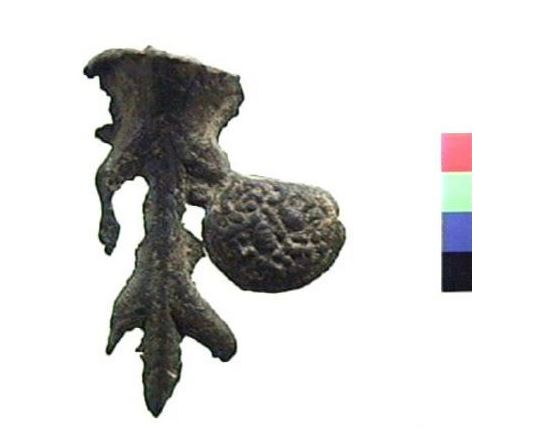
This is in Bologna Museum and was known to Haeberlin (pl. 52). (Link to English translation of Museum Page). No find locale is listed. No attribution of ‘mint’ is listed. I’m on a plane coming back from Iceland so I can’t check Vecchi 2014 and other likely places… I’m intrigued. Do you know about other aes grave with spues attached?
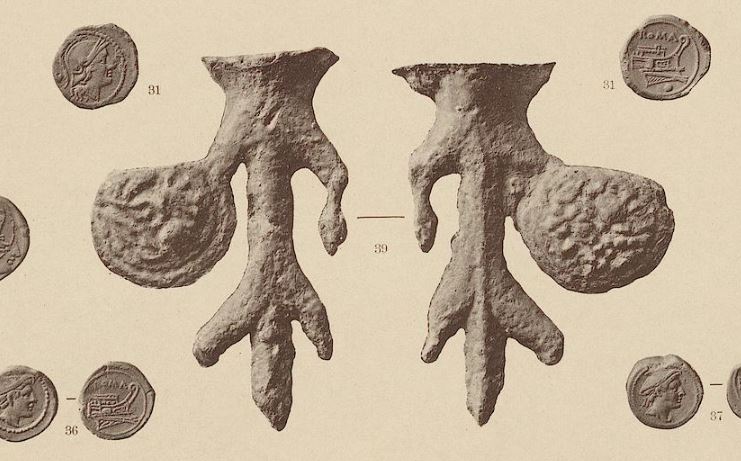
Follow up on SEG 42:1065 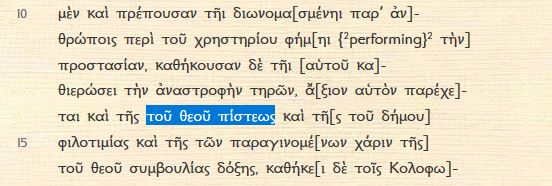
Thoughts on T. Morgan AAH lecture:
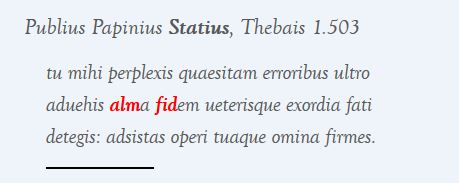
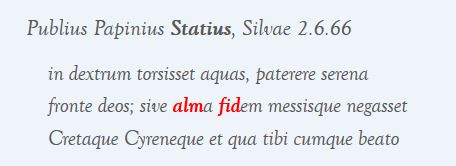
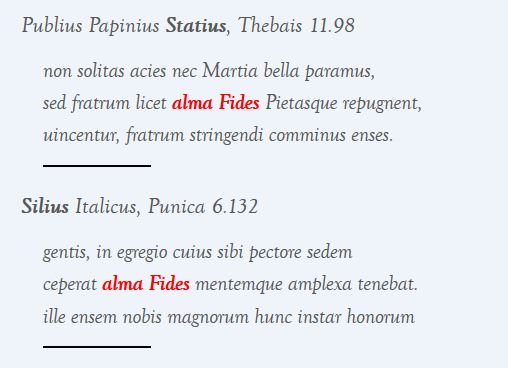
Si non molestum est hospes consiste et lege / navibus velivolis magnum mare saepe cucurri / accessi terras conplures terminus hic{c} est / quem mihi nascenti quondam Parcae cecinere hic meas deposui / curas omnesque labores / sidera non timeo hic nec nimbos nec mare saev<u=O>m / nec metuo sumptus ni quaestum vincere possit / alma Fides tibi ago grates sanctiss<i=U>ma diva / fortuna infracta ter me fessum recreasti / tu digna es quam mortales optent sibi cuncti / hospes vive vale in sumptum superet tibi semper / qua non sprevisti hunc lapidem dignumq(ue) dicasti
 Liv Mariah Yarrow