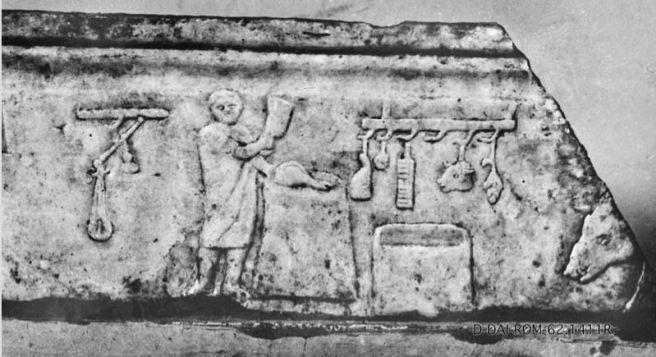
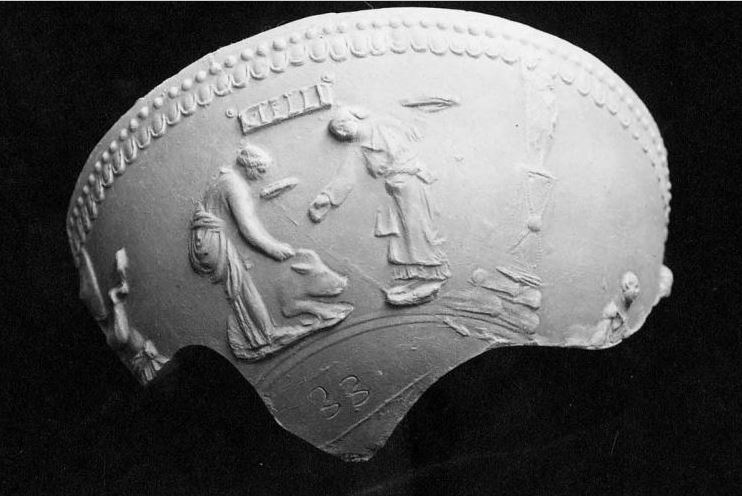
Just a little different from the one that is usually illustrated.
adventures in my head
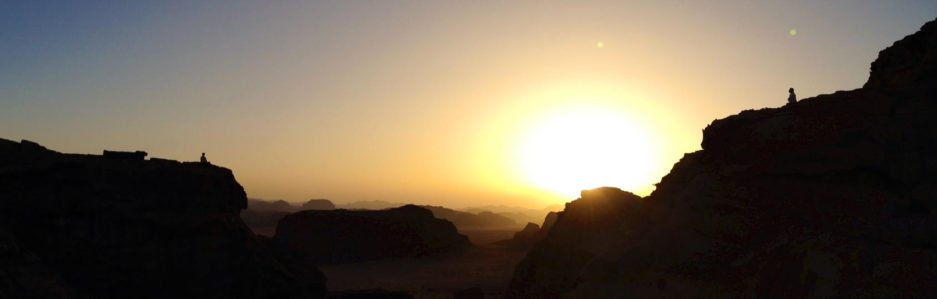
Just a little different from the one that is usually illustrated.
key words: pig, knife, aspergillum, Nymphs, Augustus, Genius, etc.

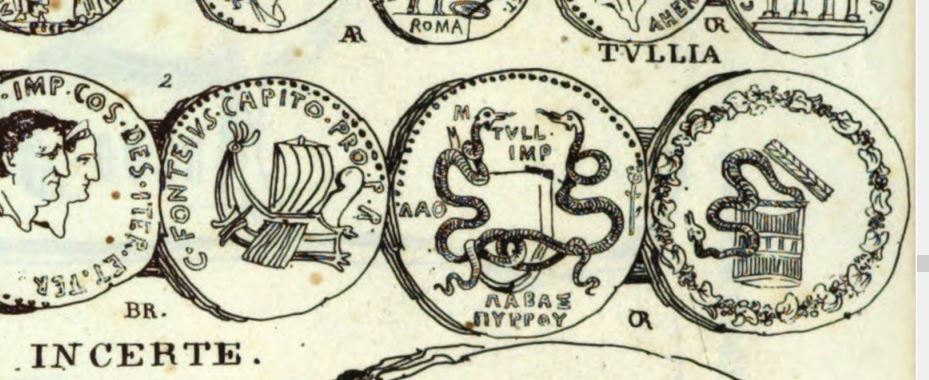
I was check a reference to the another image on this plate and this caught my eye. I think its fascinating that the Cicero’s coins were known in Italy so early (1836). But it’s odd that it’s labelled as a gold coin. Perhaps an error? Or could it be a copy in gold to fetch a higher price from a collector who knew no better? Mostly I love the idea that it might have been found in Italy and perhaps even brought back from Cilicia by Cicero himself as a souvenir. …
More on type in an earlier post.
Update 2/2/22:


Early I’ve posted about the importance of what is likely to be the earliest hoard of Roman Currency Bars.
One of the big questions to my mind is where did these four nearly pristine bars end up and why were they not unearthed by Haeberlin vel sim. My original thought was that perhaps they were not published and only the water colors circulated to potential buyers, but they were published and quite quickly:
Pierre François d’Hancarville, Recherches sur I’Origine, I’Espirit et les Progrès des Arts de la Grècè, Vol.I, (1785), pl. II-IV.
The relationship of the plates to the Townley watercolors now in the BM are unclear. d’Hancarville says that the bars are in Rome and they were faithfully copied there and were the property of a “Mr. Bayers” (p. 424), BUT Townley wrote an introduction for this volume so he may have have also made the water colors available.


These illustrations a relatively good for the date, BUT the ones in the posthumously published in James Byres, Hypogaei, or, Sepulchral caverns of Tarquinia, the capital of antient Etruria, part five, pl.V are spectacular. Plates drawn by Franciszek Smuglewicz and etched by the author’s brother-in-law, Christopher Norton. Byres tried to sell enough subscriptions to have this work published in 1767; it was, however, published in London in 1842 with plates drawn by Franciszek Smuglewicz and etched by the author’s brother-in-law, edited by Frank Howard.Christopher Norton. Cf. Dictionary of British and Irish travellers in Italy, 1760-1800, p. 170. Shield and Cock/Rostra Plate; Bull Plate


Howard the editor and publisher says two exceptionally interesting things:
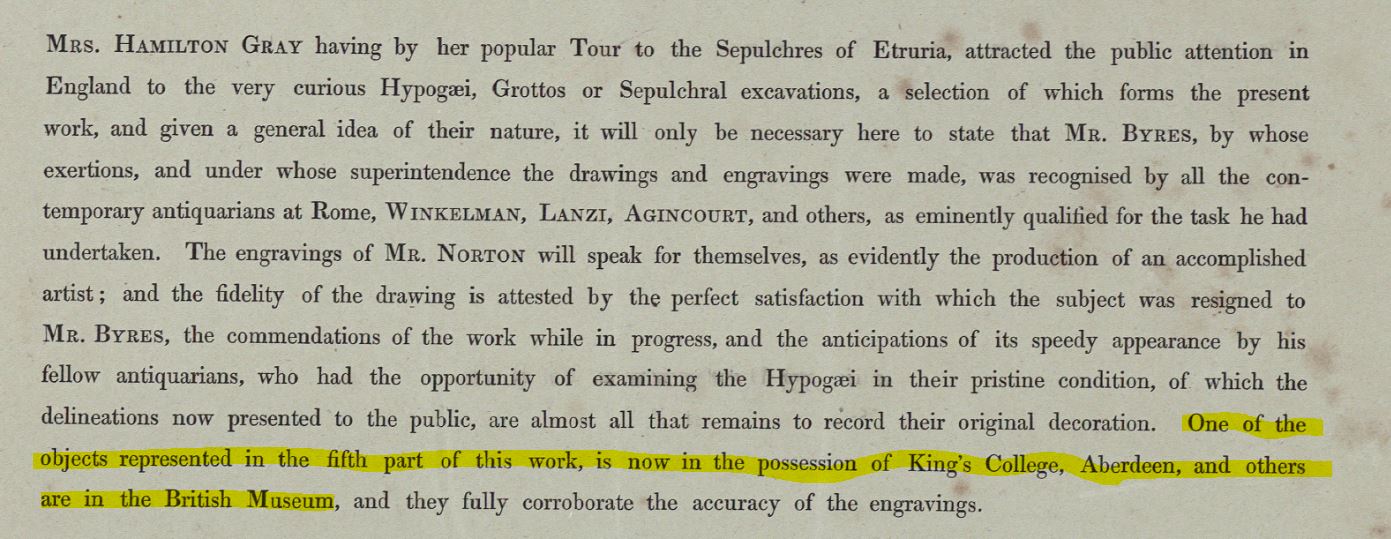
Could these bars really be lost in a drawer somewhere in the British Museum or the Aberdeen university collections?!
The other claim is this:
Did this octavo ever appear?! Might it contain something anything about where Byres said these things were found?!
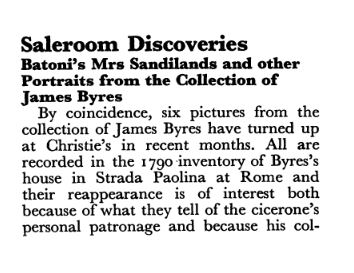
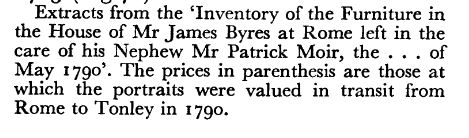
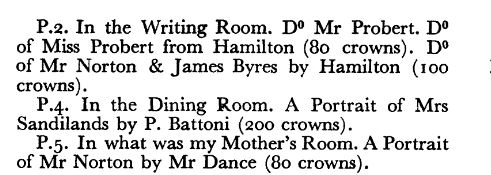
Next on the to-do list find the 1790 inventory of Byres’ property mentioned in this article. If the bars are included on the list we will know to continue the hunt for the trail in earnest in Scotland and Ireland:
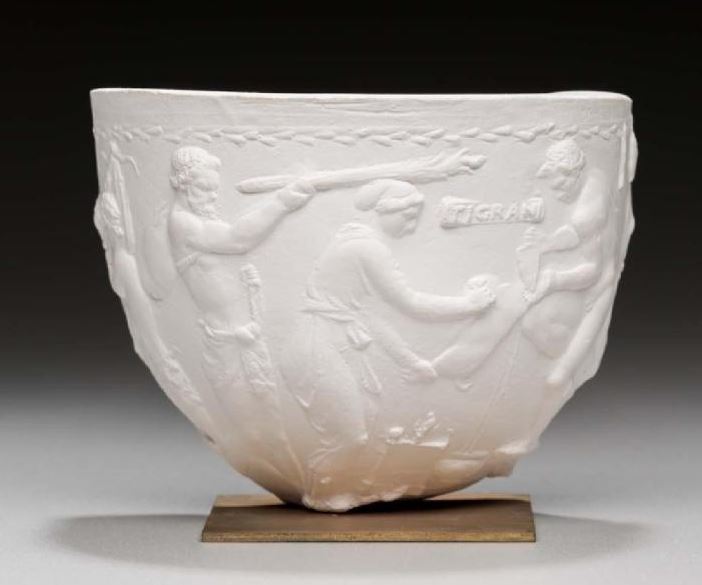
And second mold nearly identical, same collection:

Cf. similar scene but with patera from same collection
File under there are really no new ideas.
Comparette saw what I see on RRC 12/1 a century ago. It’s kind of relieving to know one’s views might seem obvious to others. I don’t think I’m able to really believe the connection to Pliny’s observations or that line of interpretation, but maybe… just maybe, that norunt sidera!

Link to museum catalogue entry: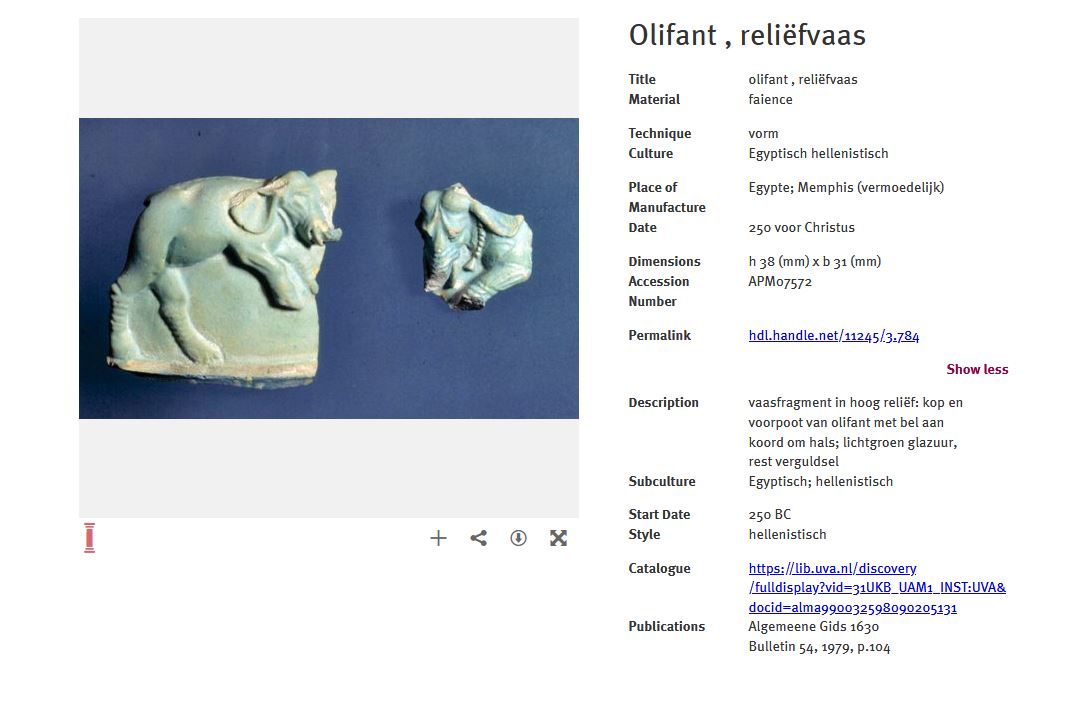
This object/image does not return in museum search results, but here is the source of the image.

This is clearly a related object BUT no elephant in the fragment:
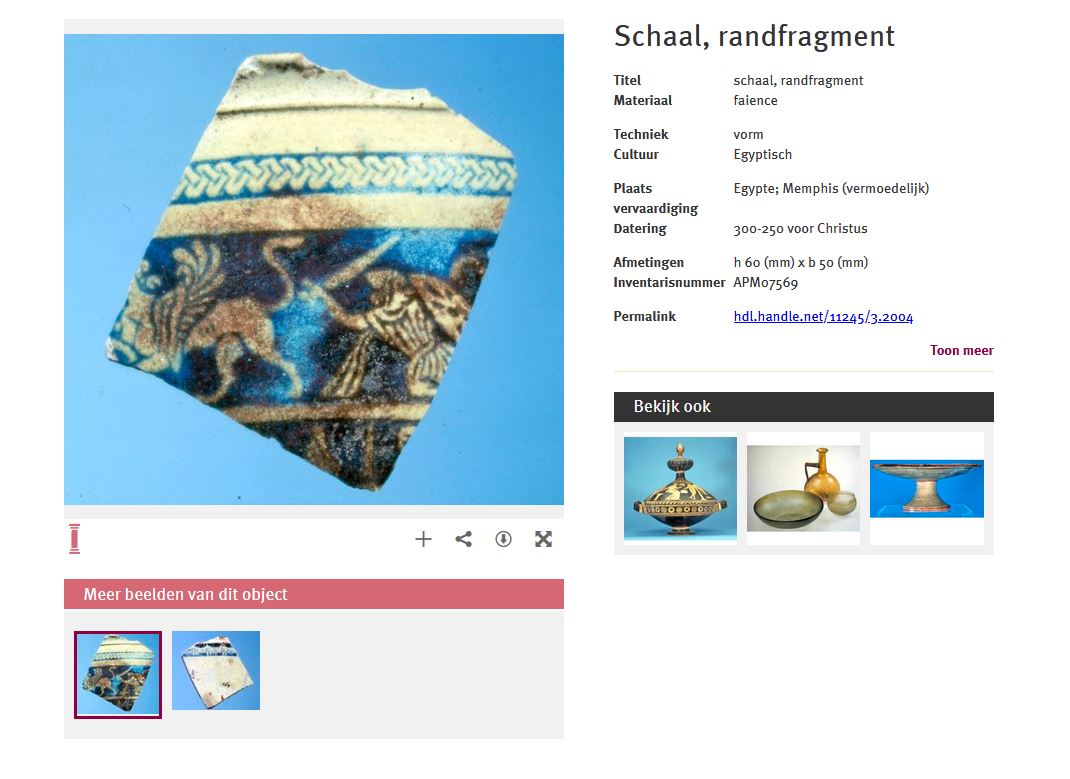
Later same day, I found a photo and confirmation of source in a peer-reviewed open source journal!

Lanzi’s [died 1810] comment in Saggio, II. Ed. 1824, Vol. 2, P. 101, No. 2 must also be corrected; there he mentions two other copies besides the Guadagnian one: one in Florence, the other acquired from Baron Stosch and then moved to England. Fontana (Descr. Di una serie consolare, p. 3) has already refuted the information regarding the first copy; therefore it was not a specimen of the elephant / pig bar, but a bad forgery with a bull / pig; Nor is anything else reported about another specimen of the elephant bar that came to England.
fragments:
The following two fragments come from the Mazin finds, 1896, and are in the Agram Museum:
2. 903.10. from the middle of the ingot; the body of both animals without the heads and parts of the legs. – Brunsmid in Vjesnik Vol. II 1896/97, special impression p. 19, no. VIII, with illustration Tav. III, Bahrfeldt 1st cit. P. 8. No. 6 Plate 61, 6.
3. 184.50. Small fragment with part of the heads of both animals. – Brunümid and Bahrfeldt at the specified locations. Plate 61, 7.
Another fragment of 119.50 gr. Is in the Belgrade Museum Brunsmid in Vjesnik N. S. Vol. VIII, 1905, special reprint S. 2 published and illustrated; I also owe him a cast of this fragment; after this casting, the question of whether the same is in fact to be attributed to the ingot here must be left open.
[Source]
b) Barren auf den Sieg über Pyrrhus,
zum Triumphe des Jahres 273 v. Chr.
Tafel 59, 2 und Tafel 61, 6 u. 7.
Elefant ssuchtartig davontrottend nach rechts / Sau nach links gewandt steht grunzend am Platze.
Ganzstück:
1. 1746,49. London; 26952 grains, vorzüglich; Cat. S. 62/63 mit Abbildung daselbst; lang 157, breit 89, dick 13 bis 32 mm.; auch in Hills Rom. Hist. Coins PI. VII und VIII; Fundort unbekannt; aus Sammlung Guadagni, Florenz, erworben 1867. — Garrucci S. 11 mit Abbildung Tav. XXII; nicht gut bei Carelli Tab. XXXVIII; Mommsen, S. 230 ohne Gewichtsangabe; vgl. auch Milani, Aes rüde etc. S. 56 f. mit irriger Gewichtsangabe nach Garrucci 1681 gr. (statt dessen auf S. 91: 1691,6 gr.); Bahrfeldt, der Münzfund von Mazin S. 24, Nr. 6. — Meine Systematik S. 54f, — Auf Riccio’s höchst nachlässiger verkleinerter Abbildung, Mon. delle fam., II. Ausg. 1843, Tafel LXVII, stehen die Thiere nach verkehrter Richtung; auch ist Riccio’s Angabe S. 249 unrichtig, wo es von diesem Barren heisst „esistente nel real Museo Borbonico di Napoli ed in altri privati del regno“. — Auch Lanzi’s Bemerkung im Saggio, II. Ausg. 1824, Bd. 2, S. 101, Nr. 2 ist zu berichtigen; er erwähnt daselbst ausser dem Guadagnischen noch zwei weitere Exemplare, das eine befinde sich in Florenz, das andere von Baron Stosch erworben, sei nach England gekommen. Die Angabe bezüglich des ersteren Exemplars hat schon Fontana (Descr. di una serie consolare, S. 3) widerlegt; darnach handelte es sich hierbei nicht um ein Exemplar des Barren Elefant/Schwein, sondern um eine as-artige Fälschung eines gewissen Weher, Stier/Schwein; auch ist über ein weiteres nach England gekommenes Exemplar des Elefantenbarren nirgends sonst etwas verlautet.
Fragmente:
Die beiden folgenden Fragmente stammen aus dem Funde von Mazin, 1896, und befinden sich im Museum zu Agram:
2. 903,10. aus dem Mittelstück des Barren; der Leib beider Thiere ohne die Köpfe und Theile der Beine. — Brunsmid im Vjesnik Bd. II 1896/97, Sonderabdruck S. 19, Nr. VIII, mit Abbildung Tav. III, Bahrfeldt 1. cit. S. 8. Nr. 6 Tafel 61, 6.
3. 184,50. Kleines Fragment mit einem Teil der Köpfe beider Thiere. — Brunümid und Bahrfeldt an den angegebenen Stellen. Tafel 61, 7.
Im Belgrader Museum befindet sich noch ein weiteres Fragment von 119,50 gr., das
Brunsmid im Vjesnik [Hrvatskoga Drustva] N. S. Bd. VIII, 1905, Sonderabdruck S. 2 publicirte und abbildete; ausserdem verdanke ich ihm einen Abguss dieses Fragments; nach diesem Abguss muss die Frage, ob dasselbe in der That dem hier vorliegenden Barren zuzutheilen sei, dahingestellt bleiben.

If you’re only a fraction as fascinated as I am by the Egadi Rams, you still should watch this amazing presentation. I saw a version at the SCS-AIA and cannot stop thinking about it:
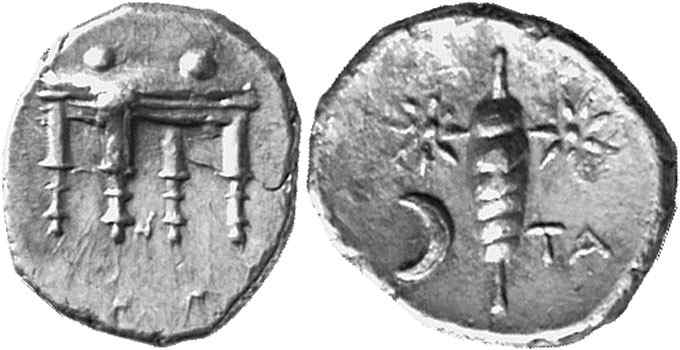
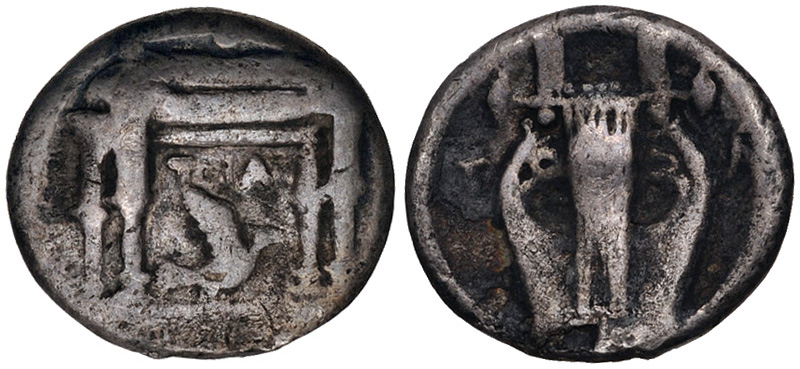
When thinking about the subsellium (quaestor or tribune’s bench) and sella curulis (curule chair) on Roman coins in future, I want to remember these coins from Tarentum (HN Italy 854-6, latter two illustrated below, first is illustrated by Rutter). The stool is commonly called a diphros.
 Liv Mariah Yarrow