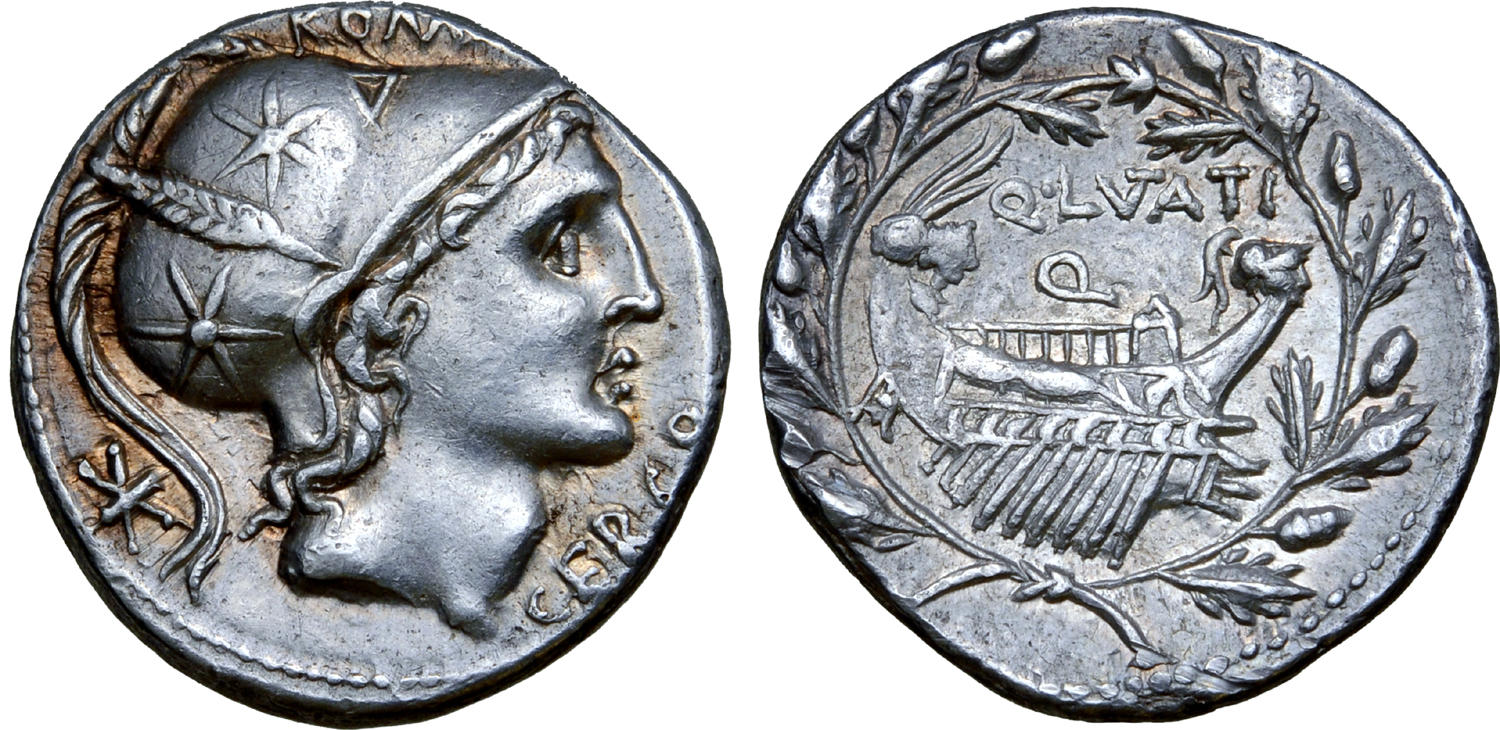
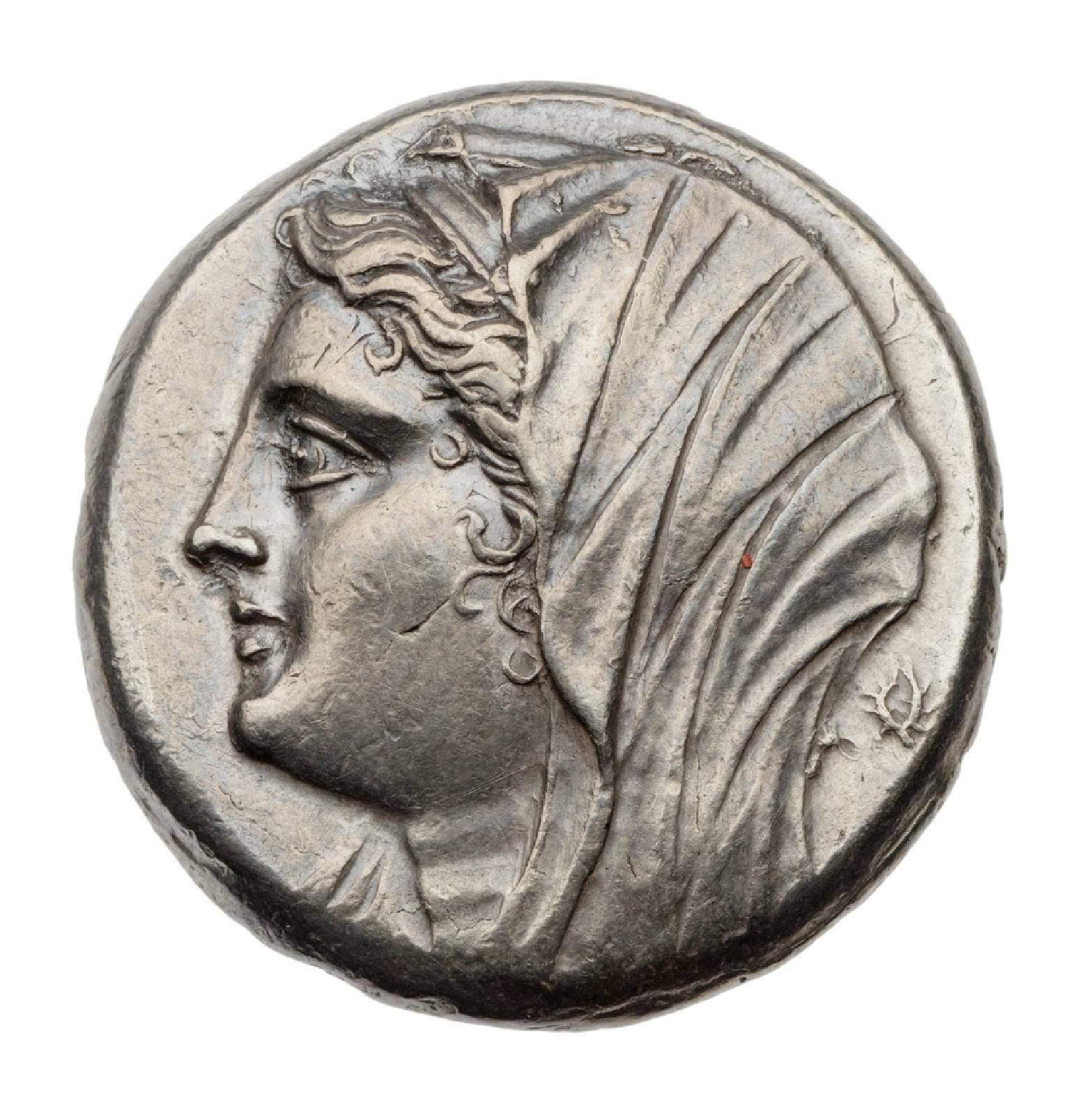
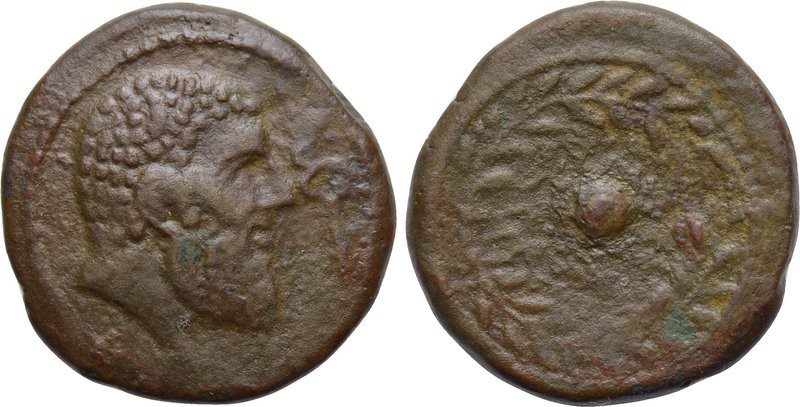
This funny happened in my mind. It made me think of a mash up of two RR coin types, 385/4 which I’m working on with a research assistant and 305/1 which came into the conversation about small change last week. The observation isn’t profound, or even very interesting, but the coins are nice. I wanted there to be a connection where there isn’t one because I want to know what deity is on the obverse of 385/4, or at least have satisfying speculation. BUT should I ever actually write my commentary on Memnon, the type above must be included!
I know I know this but as the blog is my external mind to help me remember things and I cannot seem to find a post to add this too as a note…. Here goes.
As the catalogue notes, Burnett 1983, p. 11 believes this type with an African Elephant was made in Sicily c. 213-210 by the Carthagianians for the Hannibalic War. This corrects the views of Robinson.
Also note that the specimen appears lightly double struck. See second nose under proper nose of final strike.
“Hiero had observed that the dispatch of a Syracusan army on an expedition under the command of the supreme magistrates invariably resulted in quarrels among the leaders and the outbreaks of revolutionary activity of some kind. He also knew that of all his fellow Syracusans it was a certain Leptines who commanded most supporters and the highest prestige and was particularly popular with the masses. He therefore made a family alliance with Leptines by marrying his daughter, so that whenever he had to go away on active service he could count on leaving Leptines behind as the guardian of his interests at home.”
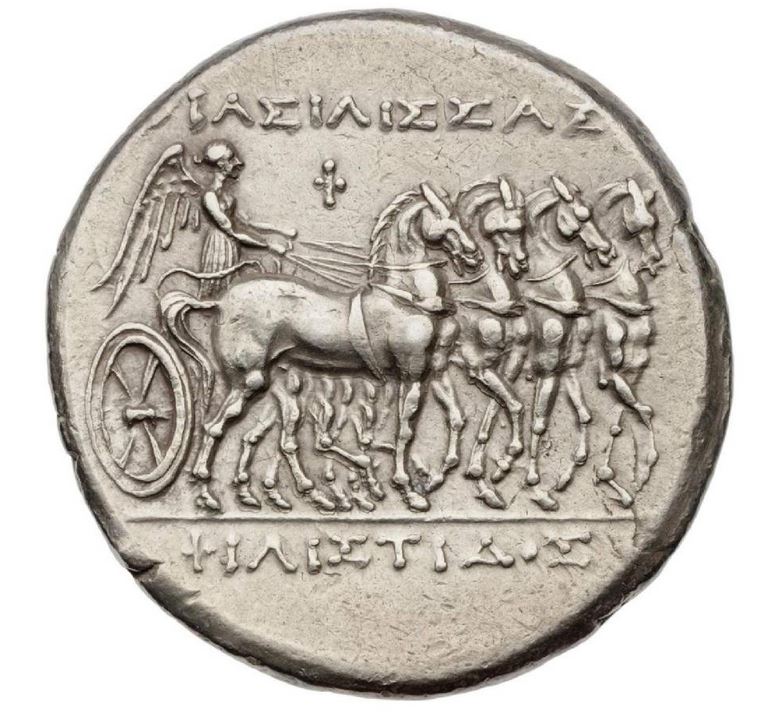
And if that is correct then she is likely the mother of Hiero’s daughters, Damarata and Heraclia, known for Livy 24.26. We don’t think Neireis is her daughter as Justin 28.3 would suggest, but I’ve not investigated enough to be 100% confident.
Her coinage is extensive and beautiful and yet there is so little trace of her in the written records…
Bibliography to learn more down the road…
Storaci, Ermelinda and Manenti, Angela Maria. “Un nuovo ripostiglio di Filistide a Siracusa.” Annali dell’Istituto Italiano di Numismatica 59 (2013): 217-223.
Dimartino, Alessia. “Ierone II, Filistide e il teatro greco di Taormina: note in margine a IG XIV, 437.” In Immagine e immagini della Sicilia e di altre isole del Mediterraneo antico, Edited by Ampolo, Carmine. Seminari e Convegni / Scuola Normale Superiore di Pisa; 22, 721-726. Pisa: Ed. della Normale, 2009.
Caccamo Caltabiano, Maria, Carroccio, Benedetto and Oteri, Emilia. “Il sistema monetale ieroniano: cronologia e problemi.” Atti della Accademia Peloritana dei Pericolanti, Classe di Lettere, Filosofia e Belle Arti 69 Suppl. 1 (1993): 195-280.
Caccamo Caltabiano, Maria and Oteri, Emilia. “Cronologia e sistemi di produzione e di controlla delle monete dei «Siracusani di Gelone».” Numismatica e Antichità Classiche 22 (1993): 91-110.
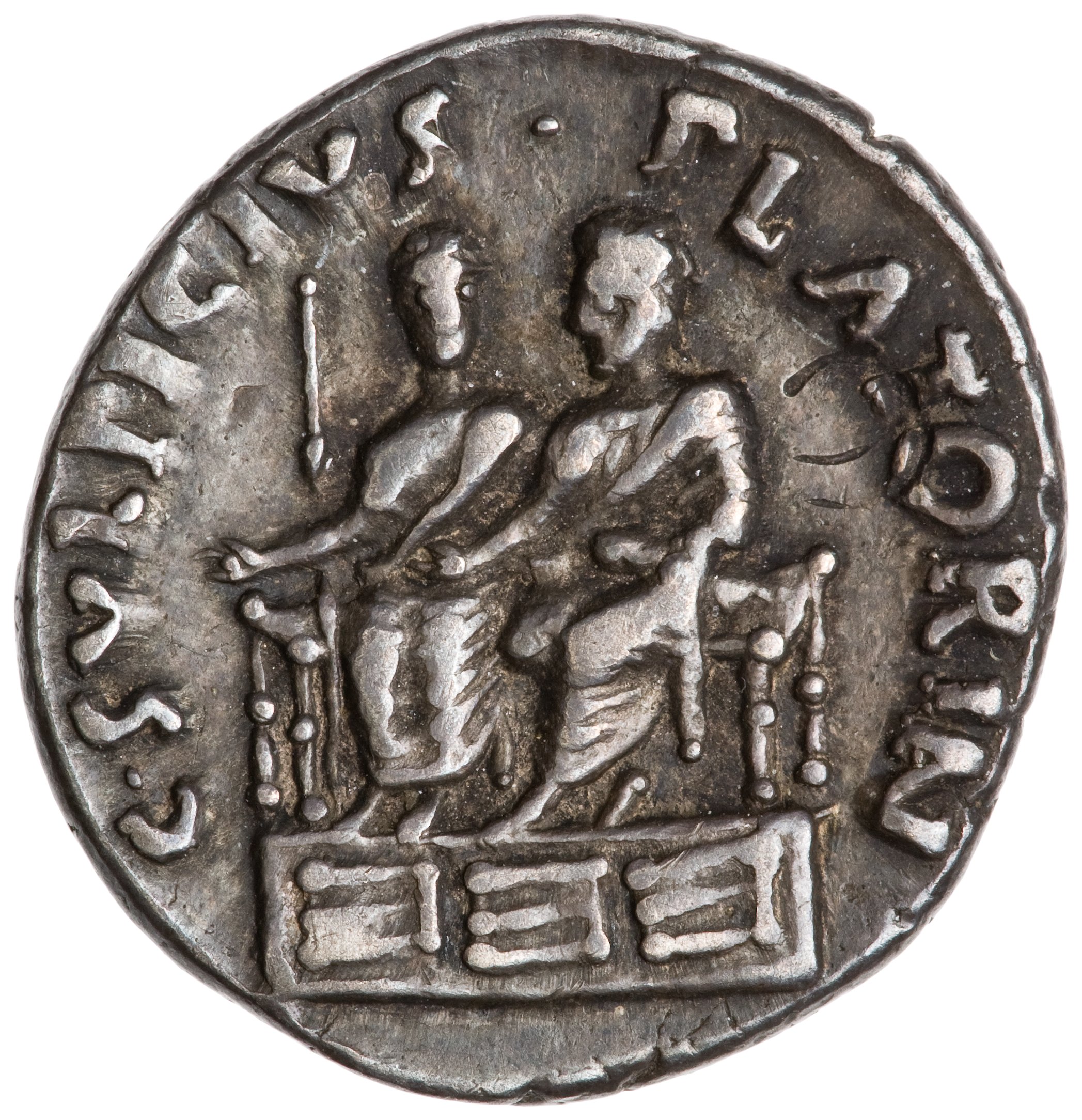
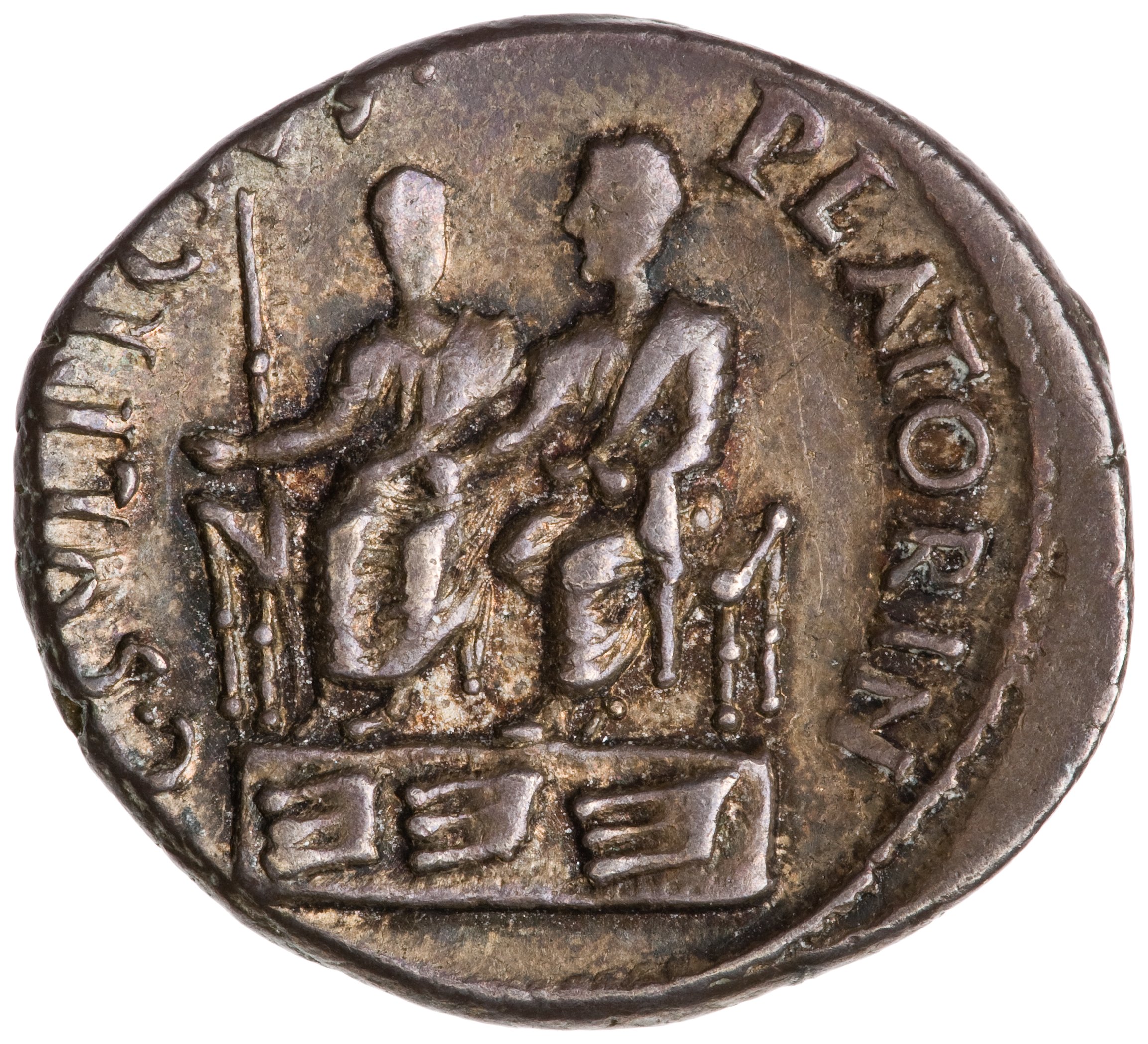
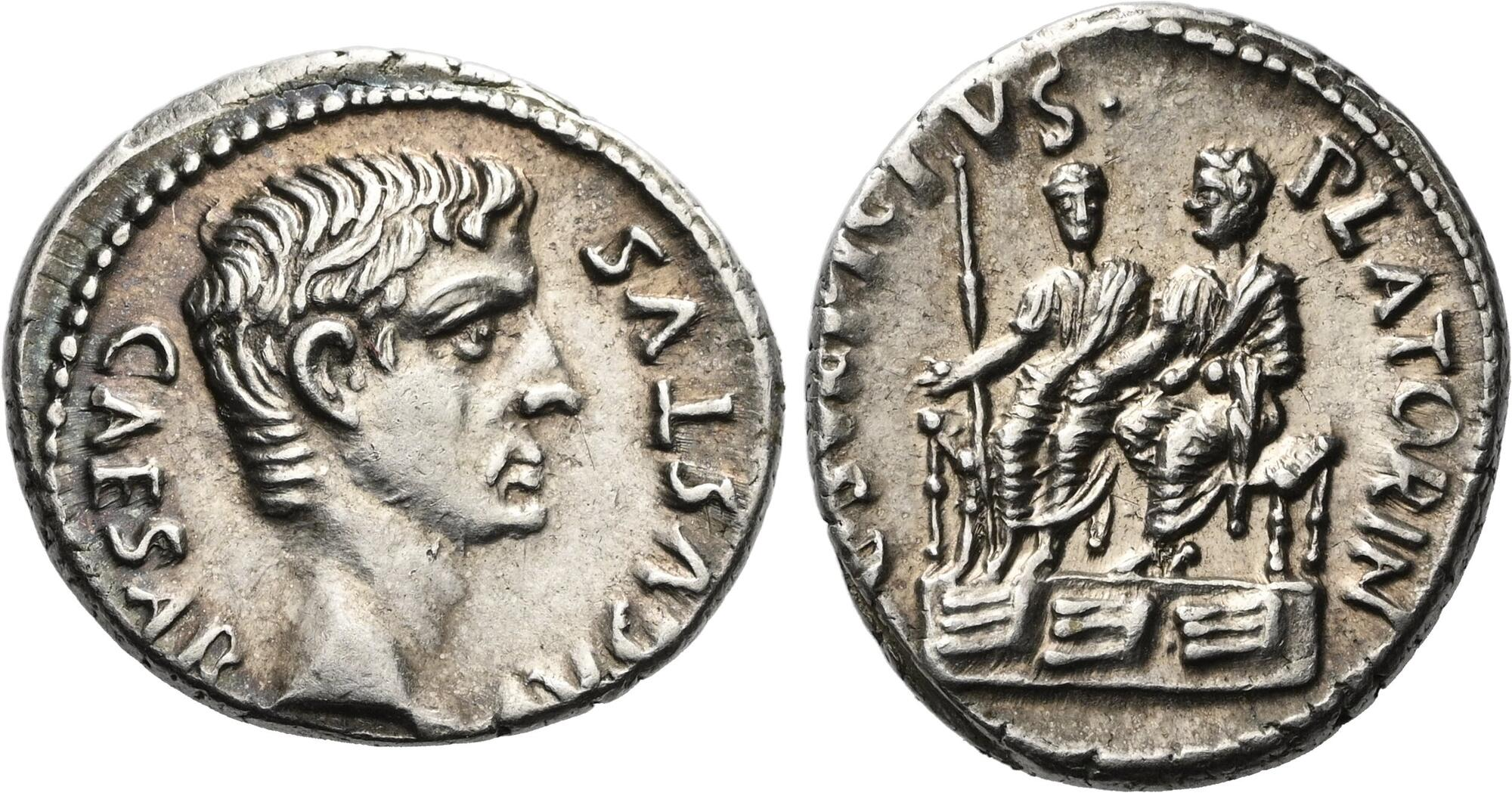
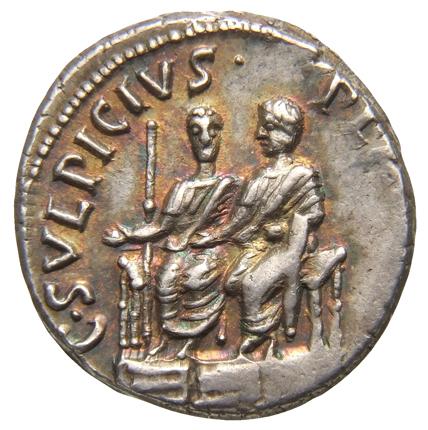
I ended up on this old post this AM and stopped to fix the broken images and then started noticing not the similarity but the difference. Besides the clear indication the scene is on the rostra (itself significant for creating as setting) we also have a the staff next to only one of the figures. WHAT is the staff!?! The subsellium is for magistrates without imperium (quaestors, aediles, tribunes of the plebs). BUT the staff has a bulge it that seems no die engraving accident. That made me wonder if it was supposed to be a bundle of fasces, but I don’t like that interpretation. Too narrow (very unlike other iconography), magistrates don’t hold their own fasces. It isn’t a scepter there is not decorative top. So what is it?!
Also un related notice the attempt as creating depth through angling the bench seat edges but the engraver did not get the angles right for the desired effect.
I swore I had a post on this topic back from like 2013 when the blog was still anonymous. Can’t find it, so am throwing some info up for future reference.
Now you’re thinking to yourself: why, why did she skip Herennius? Cast your mind back, dear reader, to the semunciae post. As detailed there, Herennius likely comes later in the series, so we have to treat Sulpicius first!RRC 312
Are you reminded of the dog (who was a very good boy, of course!)? I am reminded of that dog too (RRC 293/3)! And that goatish, horsish quadruped?! Yes! exactly! That too (RRC 292/5 new)! But wait. Those were reverses, here its an obverse. The reverse is our moneyer’s name in a wreath! We’ve seen that too in just the last post for 305/2 and also on two of the three semunciae and will see it on later unciae (links to come).
So what’s with this? It feels like no one can decide what small change SHOULD look like or at least the idea of what it should look like is in flux. As I mentioned in the semunciae post, the wreaths with inscription in it are well known on various regional coins (including those of Cossura!).
A round of the sort of coins I’m thinking of (ignoring Augustan era ones):
Pegasus is rare on the republican series, but not so rare we should make too much of it. I suppose it had some significance to the moneyer… No particular relation as far as I can make out to symbols on rest of RRC 312 series.
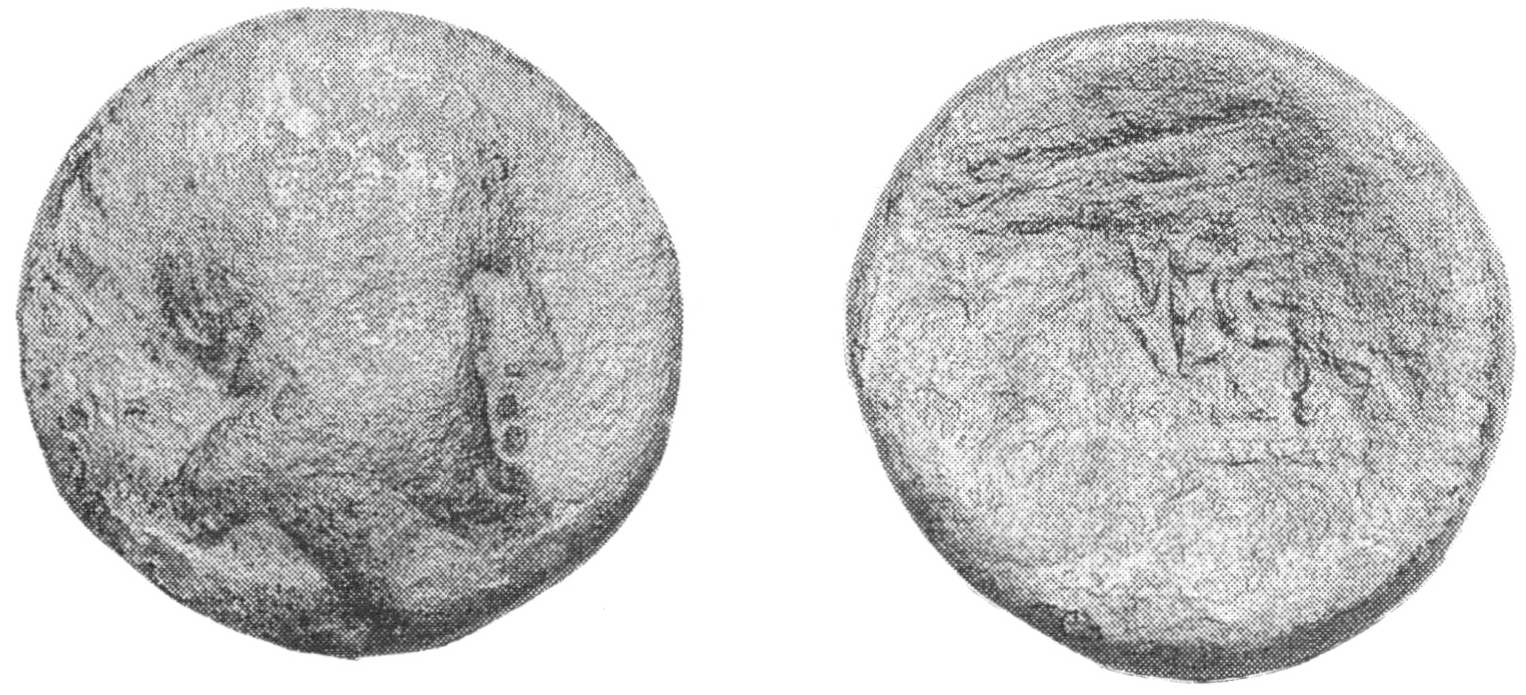
Schaefer binder image detail (image of coin)from same but image of cast from Crawford’s plates
Crawford knew two specimens of RRC 305/2: Copenhagen illustrated above and in Crawford’s own plates and F. Capranesi in D. D. Müller, Memorie, 56. Tracking down the latter is on the to do list. Irritatingly, no weight for either specimen.
Schaefer was concerned that this Copenhagen specimen might be an altered RRC 315/1. I don’t think so but that is primarily based on the obverse. The obverse of this Copenhagen specimen has a bump on its nose, a recessed chin and and a helmet with a side feather and maybe some stars. The rendering of the Roma on the obverse of 315/1 is far more traditional and stylized.
These CRRO specimen of 305/1 show similar features. The reverse of the denarius has an oak wreath as does the uncia. There is also a passing similarity to the obverse of RRC 296/1.











 Liv Mariah Yarrow