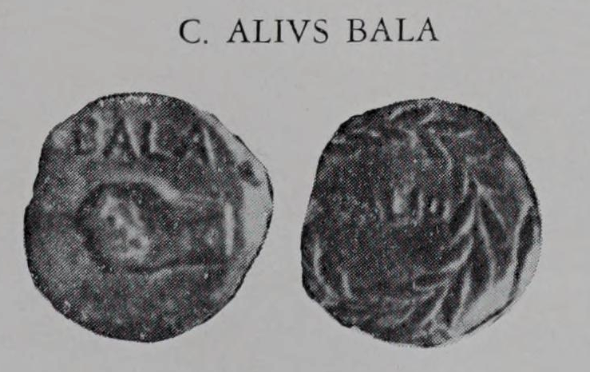
I assume someone between 1945 and now has decided this type was not part of C. Alius Bala’s work as a moneyer (cf. RRC 336), I’m guess Suzanne or Clive could tell me where it goes in the landscape of small Italian/Sicilian/Western Med bronzes, but mostly I don’t want to forget that it exists. And who doesn’t like a fist anyway.
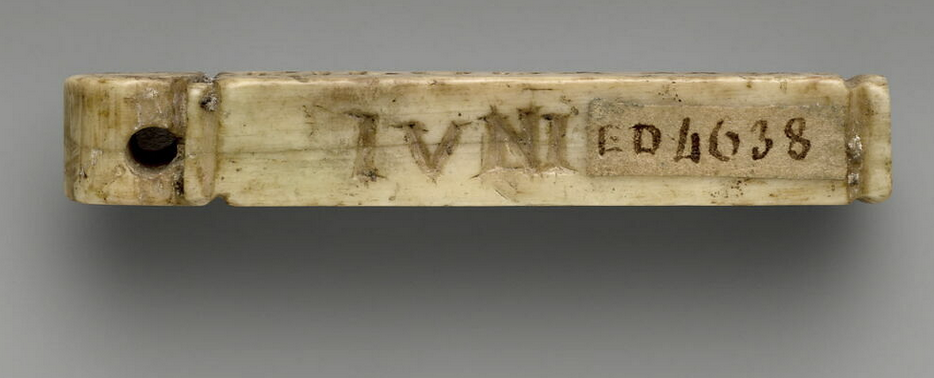
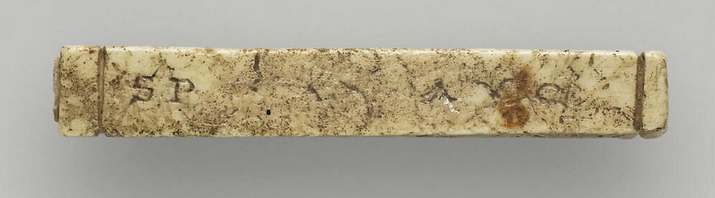
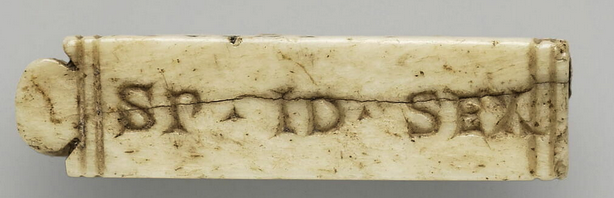
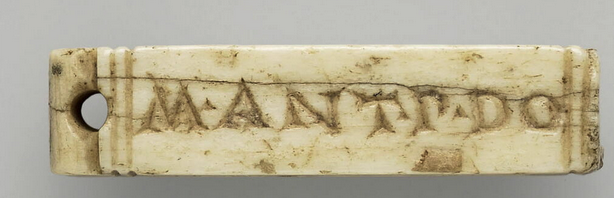
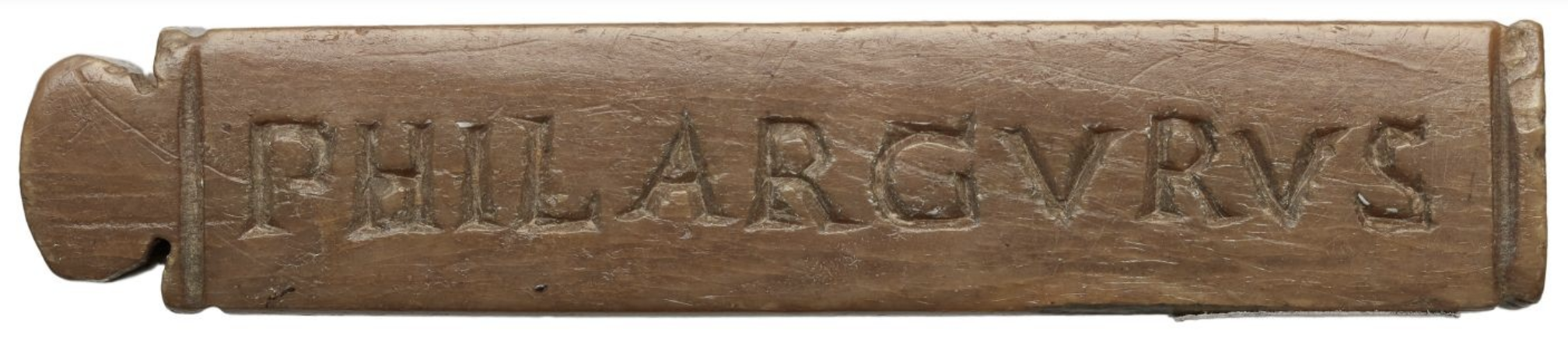
I’m cheating on my extensive administrative responsibilities and teaching duties because my brain is obsessed with these tessera nummularia(see previous post to watch the development of my interest from a few random specimens in the louvre to an all out compulsion)
In many ways this is the most important one:
“Anchialus, enslaved by Lucius Sirtus, inspected the coins [for] the month of February, in the consulship of Marcus Tullius [Cicero!] and Gaius Antonius”
This is the only one out of the whole corpus to mention what is being inspected but it confirms the current predominant scholarly interpretation today that these objects were used to regulate coins in some way.
I decided to dump the data and clean it up in a proper spreadsheet. I have 151 where the date is present and legible.
While it is possible for a tag to represent almost any day in the year it is far more likely that either a fixed point of the kalends, nones, or ides will be mentioned. And by far the most common is for the payment to be made on the first of the month, and then the ides (13th or 15th of the month, an ostensible mid point).
If we look a the break down by month of surviving specimens with “kalends” as the inspection date we see January as an outlier, followed closely by April and then July.
I think we’re seeing peaks on the quarters. I’d be more confident if there was a peak at October but I’d suggest this is more an accident of survival. I also suggest January may have been the preferred date for annual payments.
Ides payments seem to be fairly evenly distributed allowing for the accidents of survival with possibly a summer ‘bump’
Stranger to me and perhaps a warning not to look too hard for patterns are all the other dates (including nones with the ‘randoms’):
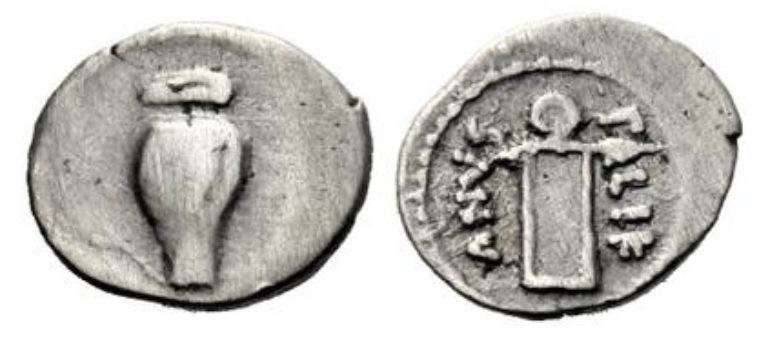
Some suggest that we might have representations of this type of tag on the RR coin series
If these are illustrations of such tags used to validate payments is the bench associated with some sort of financial office? maybe a banker? Is the Olla the type of vessel used to transport or contain these payments?
I’m agnostic about the iconography for now…
More thoughts and observations from the next day:
In the 172 cases where we can read the name of the person inspecting, enslaved or otherwise, not a single inspector name repeats. Even when the name is the same the gens of the enslaved is different.
The only possible exception is as follows but I believe it to be a doublet:
When one considers the gens and other names in the genitive, the enslaver(s) of the inspectors or rarely possibly an employer, the thing that really sticks out is the great diversity. There is more repetition but not much more. 107(!) names appear only once in the genitive, typically in the masculine singular, typically the gens, but sometimes the cognomen, and sometimes with a praenomen abbreviation as well.
The only family names to appear in the plural are Bibulorum and Curtiorum. Here we may assume that the enslaved individual was owned by more than one family member.
We also have likely female enslavers attested: Attiae, Rupiliae, Tragoniae (only time this name occurs!)
Then there are names that seem to reflect corporate bodies:
soc(iorum) fer(rariarum)
sociorum (twice)
This great variety of names makes me lean away from associating the names on these tessera with ‘banking families’ an idea promoted by Wiseman, and thus a meaningful connection with moneyers. Rather I think it is more likely these families may be involved with a wide range of business transactions, but specifically transactions that are likely to be re occuring on an annual, quarterly, or monthly basis. Rent or interest on loans both come to mind. I’m sure their are other possibilities.
Even when names appear multiple times where dates are attested there is little to no suggestion that one individual or one generation of a family is likely with the exception of the Petilli.
Fulvi dates: -17, -48, (no year), -60, (no year)
Hostili dates: 5, 32, -71
Iuli dates: -32, -25, 39, 83
Petilli dates: -56, -54, -46, 11
Pomponi dates: 11, (no date), (no date)
This analysis helped me identify another likely duplicate:
typically these tessera are dated to the republican era but they do continue later.
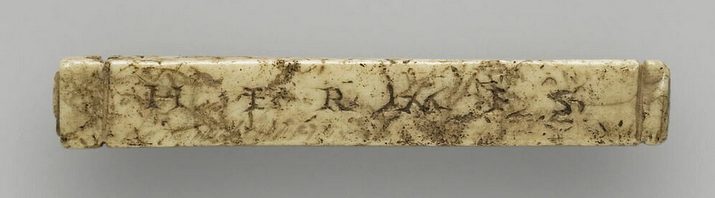
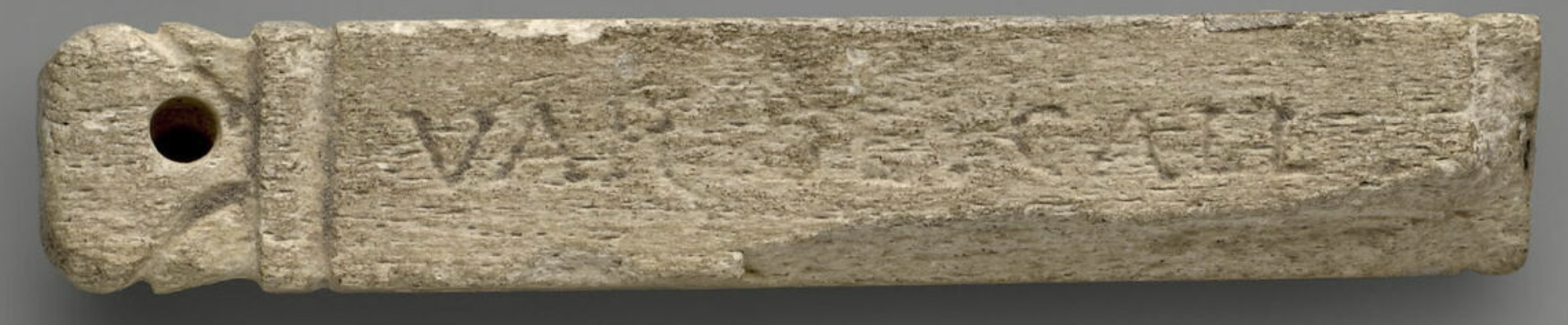
I cannot read the date but everything else is clear: “Hermes, enslaved by Vibius, inspected [this] on the ___ August, in the consulship of Paterculus and Salinator” (Louvre)
Besides what you see on this map, there is one more find spot in Sicily and one in N. Africa. Otherwise it is a largely Italian phenomenon, but with no evidence yet for their use in the southern regions. small: 1 find, medium: 2 finds, large: 3 or more finds.
Here’s a quick and dirty histogram by decade of the 141 specimens with secure dates in EDCS database (see above for link).
The phenomenon of these tags goes back at least to the mid 90s. None are known from the years of the social war but they are attested both under Cinna’s regime and Sulla’s dictatorship. The greatest density of known specimens date between Cicero’s consulship and Caesar’s crossing of the Rubicon. There are little to no specimens from the height of civil unrest between Julius Caesar’s murder and the being of the Augustan principate. There is steady even growing usage throughout the Augustan era and through the early Julio Claudians seeming drop off in the Age of Claudius with perhaps greater usage in the Flavian period.
Of course this picture could also be accidents of survival to some degree.
comment It is very puzzling, because in the first several months of 53 BC there were no consuls in office, since the elections were delayed as 4 candidates competed for election: M. Valerius Messalla (Rufus), Cn. Domitius Calvinus, M. Aemilius Scaurus, and C. Memmius. During this long interregnum the tesserae nummulariae were dated by the interreges, not by the pair of consuls, whose names could not have been known until after they had been elected. See EDCS-24700159. Hence I suggest that this tessera nummularia was dated on 30 January 32 BC, at a time when C. Sosius had been deposed from the consulate and his place had been taken by M. Valerius Messalla, but Cn. Domitius Ahenobarbus was still officially a consul. Later in the year he would be succeeded by L. Cornelius. (John D. Morgan III)
I’m tucked up in a sunny bay window on a comfy chaise lounge. The blanket I’m crocheting for my youngest daughter is now large enough to cover me as I work the edges. So why in good heavens am I making a blog post?
Well I have LibriVox on. Specifically I’m enjoying listen to a very soporific reading Livy book 23.
And I cannot help thinking that Pacuvius Calavius seems very much a Julius Caesar or August type figure. He presents himself as clement, maintains the structure of government while presenting himself as the savior of both the people and the elite, all while being coming a de facto autocrat. I wonder if this is a case of Capua being “good to think with”. The emphasis on Pacuvius’ marriage connections are Rome equally curious—Claudii and Livii!
It doesn’t mean the man isn’t ‘real’, but rather I wonder how much Livy enjoyed meditating on how the episode paralleled politics of his own day…
Is the cannibal accusation against Hannibal just a trope about what it means to be uncivilized, or is it possibly related to antisemitic tropes? The latter seems unlikely. The accusation is found in fuller form in Polybius
One scholar has speculated that the origins of the antisemitic trope goes back to Alexandria and Apion and conflation with the Isis cult, but this seems a stretch.
—
The whole banquet scene and then back alley conversation between the younger and elderPacuvius Calavius about whether to murder Hannibal seems ripped from the stage: an unknowable yet dramatic moment on which history turns. Makes me think of Wiseman’s hypothesis that much historical knowledge at Rome derives from theater productions.
—
“obtaining the necessary permission to mount his horse, he published an edict that all who had been guilty of capital offences or who were in prison for debt and were willing to serve under him would by his orders be released from punishment and have their debts cancelled. 6000 men were raised in this way, and he armed them with the spoils taken from the Gauls and which had been carried in the triumphal procession of C. Flaminius. He then started from the City with 25,000 men.”
I am so confused about where these 6000 men were… the Romans didn’t go in for mass imprisonment, debt bondage (nexum) had been abolished. I having a hard time imagining physically where these men lived and under what conditions…
—
“the rest returned in safety to Praeneste with their commanding officer (praetore), M. Anicius, who had formerly been a notary (scriba). To commemorate the event his statue was set up in the forum of Praeneste, wearing a coat of mail with a toga over it and having the head veiled. A bronze plate was affixed with this inscription: “Marcus Anicius has discharged the vow he made for the safety of the garrison of Casilinum.” The same inscription was affixed to the three images (signis) standing in the temple of Fortune. … There is more obscurity as to what happened to the Perusians, as there is no light thrown upon it by any monument of their own or any decree of the senate.”
I wonder the material of the statue? Can we say it was not bronze because of the inscription medium is explicitly mentioned? Why three signis in the same temple? Are the truly images? Or could he have dedicated his standards? The word is ambiguous. It could mean many v different types of dedication from a statue to a panel painting. The toga is an interesting detail as the passage includes a refusal of Roman citizenship by the Praenestine troops in favor of their local citizenship. We tend to think of it as a ‘sign’ of Roman citizenship, which Anicius might have as praetor… but is it also the garb of other Latin people? The passage made me pause because I tend to think of Livy emphasizing his written sources not monuments but his concern to mention the lack of contemporary documentation for the Perusians is note worthy…
10.27: Ecbatana is an exception. This city is situated in the northern part of Media and commands that portion of Asia which borders on the Maeotis and Euxine. It had always been the royal residence of the Medes and is said to have greatly exceeded all the other cities in wealth and the magnificence of its buildings. It lies on the skirts of Mount Orontes and has no wall, but possesses an artificial citadel the fortifications of which are of wonderful strength. Beneath this stands the palace, regarding which I am in doubt whether I should go into details or keep silence. For to those who are disposed to recount marvellous tales and are in the habit of giving exaggerated and rhetorical reports of certain matters this city affords an admirable theme, but to such as approach with caution all statements which are contrary to ordinary conceptions it is a source of doubt and difficulty. The palace, however, is about seven stades in circumference, and by the magnificence of the separate structures in it conveys a high idea of the wealth of its original founders. For the woodwork was all of cedar and cypress, but no part of it was left exposed, and the rafters, the compartments of the ceiling, and the columns in the porticoes and colonnades were plated with either silver or gold, and all the tiles were silver. Most of the precious metals were stripped off in the invasion of Alexander and his Macedonians, and the rest during the reigns of Antigonus and Seleucus the son of Nicanor, but still, when Antiochus reached the place, the temple of Aene alone had the columns round it still gilded and a number of silver tiles were piled up in it, while a few gold bricks and a considerable quantity of silver ones remained. From all the objects I have mentioned sufficient was collected to coin money with the king’s effigy amounting to very nearly four thousand talents.
I wonder if metallurgical testing could confirm this source for Antiochus III’s bulllion? Perhaps easiest would be to compare gold from the excavations of site with some of his surviving gold. Silver might be harder.
Image Source (Just a pretty picture: I’m not suggesting a direct connection to the text above)
My goodness it is nice to find amongst the inbox fires after a long holiday weekend an email with a coin of a very interesting type one has not seen before!
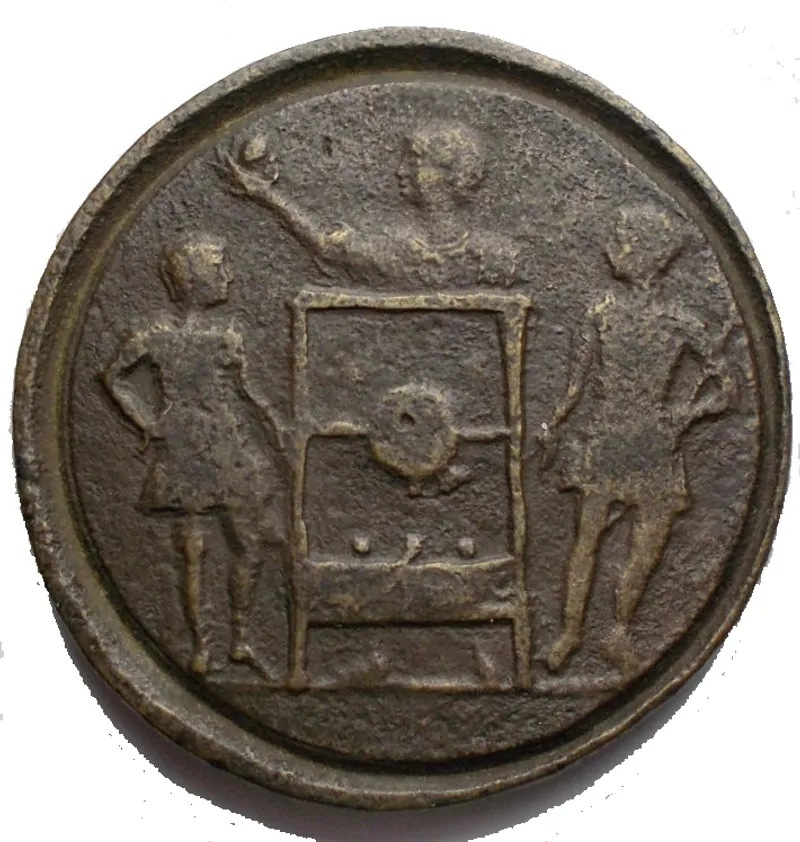
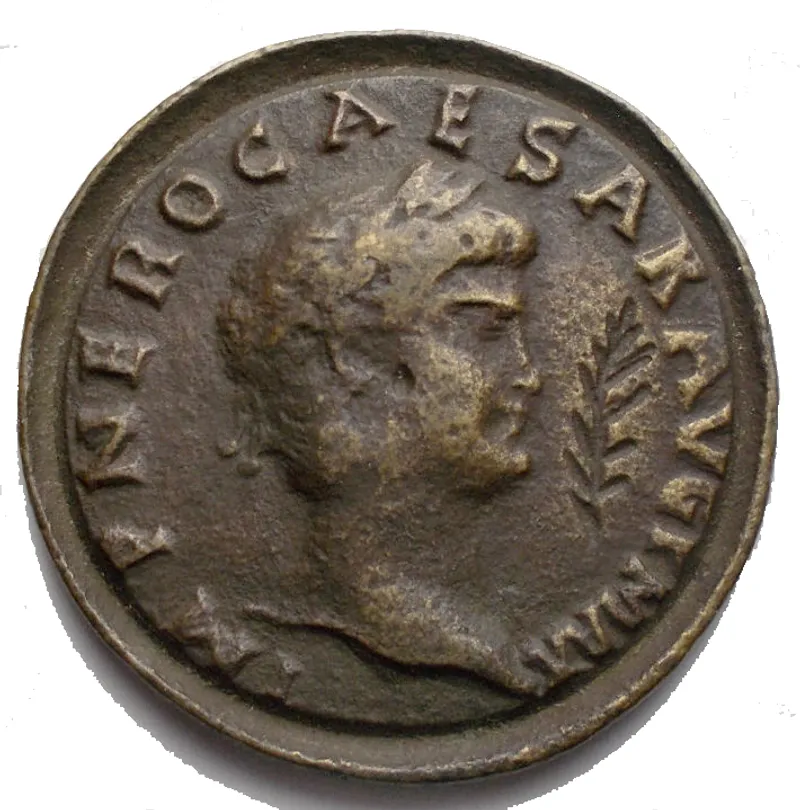
I love contorniates. They seem to me to represent the numismatic collecting spirit amongst the Romans best in how they celebrate the past and popular entertainments and even coins themselves. This reverse type I particularly love for how it helped with the decoding of a control-mark (older post, another post on this technology).
This represents the drawing of the lots to determine race order in the circus.
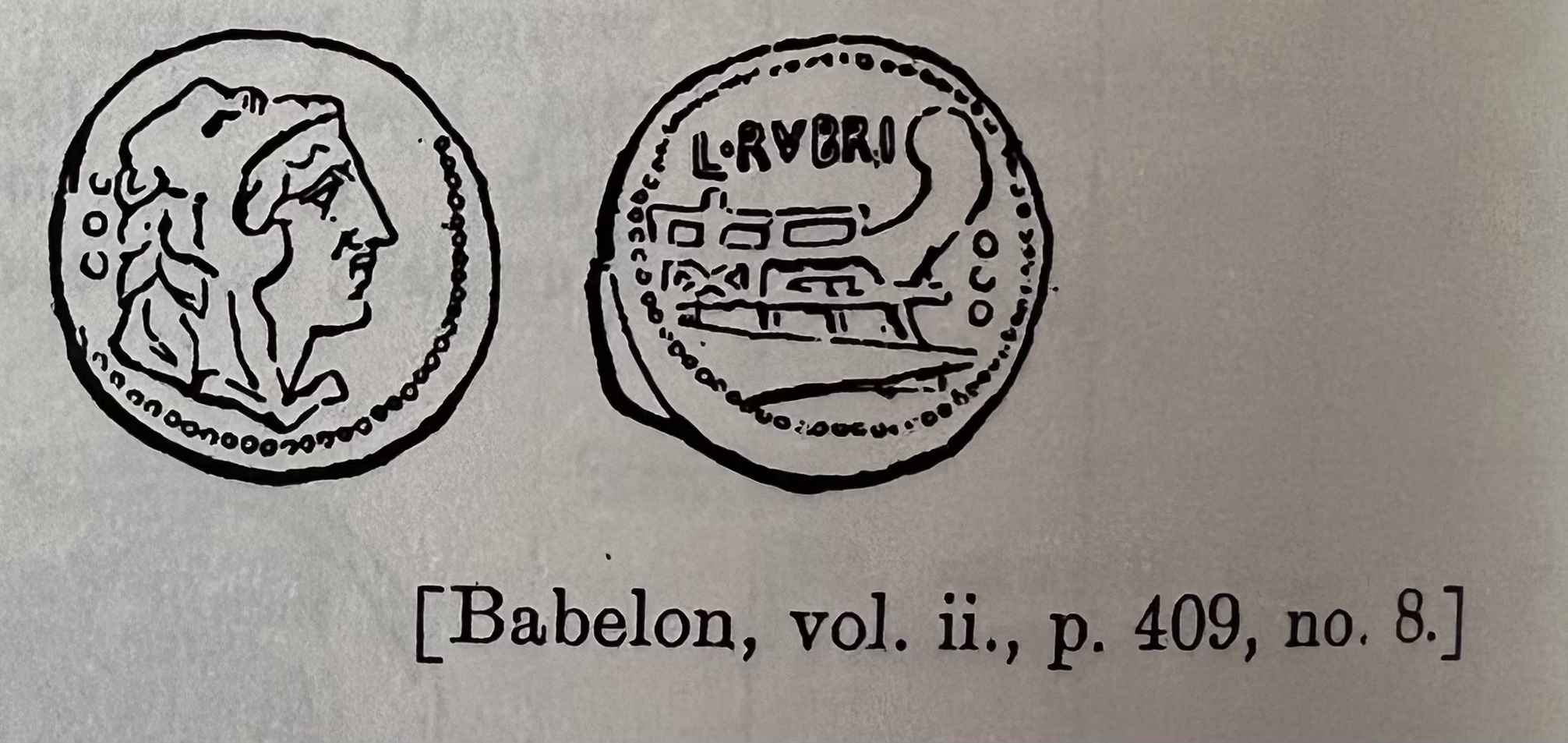
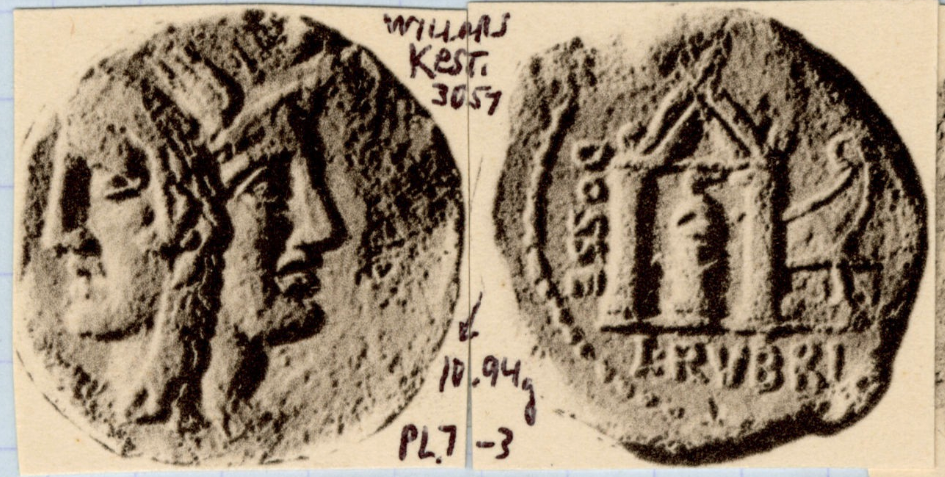
None of these seem to be the specimen known to Babelon and illustrated by Gruber
Bahrfelt knew the specimen from the Capitoline Museum (originally in the Bignami collection). Ricco reported (p. 178, no. 27) a quadrans with the legend DOS…
Riccio records a Semis with DOS and Gruber includes, but Bahrfeldt decided in the end it probably doesn’t exist. UPDATE: Thanks to William in the comments below, you can see a photo of what is likely to be the same coin owned by Mabbott and published in 1945:
There has been some attempt to link other types with RVB legend to this moneyer or his family but this isn’t currently accepted. I will note that HN Italy 2675 weight and S on the obverse would make it fit into the series as a semis… There is supposed to be examples HN Italy 2676 (turreted goddess/lion star/ RVB) in Oxford and Paris but I cannot find illustrations and its not linked in IRIS. Nor can I find any in trade.
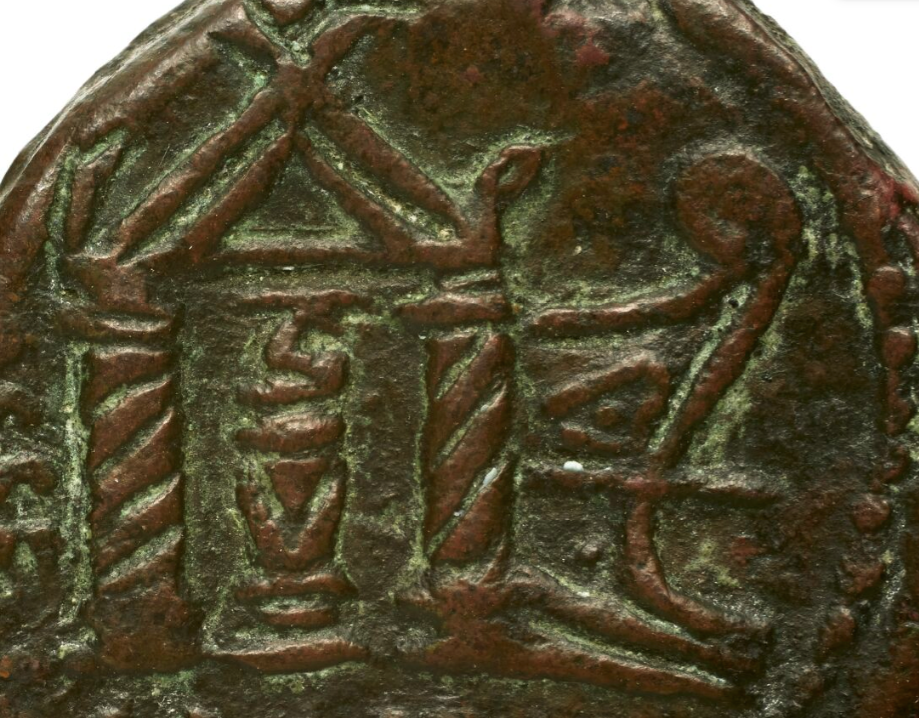
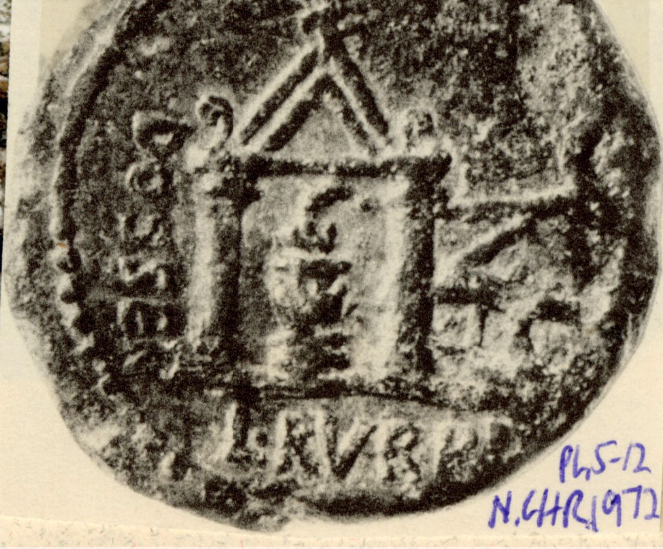
Paris specimen. Is this tooled? It seems too sharp to be real and other specimens don’t have spiral columns, but damn I wish it was authentic. Opinions? Send them my way. Trell 1972: 52 thinks the spiral is original. But I’m less confident. She was working from a cast and believed it came from the BM rather than Paris, a simple record mix up I believe, originating from her having widely requested such casts.
A lovely sharp specimen with an unfortunately poor photo in the Schaefer archive. Do you have a better photo of this coin? I’d love that. Another lovely and clear specimen for the legend this time, again from Schaefer Archive, same link as above.[Ok, I really need to pull that NC article from 1972….]
So why am I writing this blog post instead of editing and revising the article that is due Monday and the very reason I’m ignoring my children on this first full day of their fall break?! Well, It’s because of what Crawford and Wiseman said in 1964:
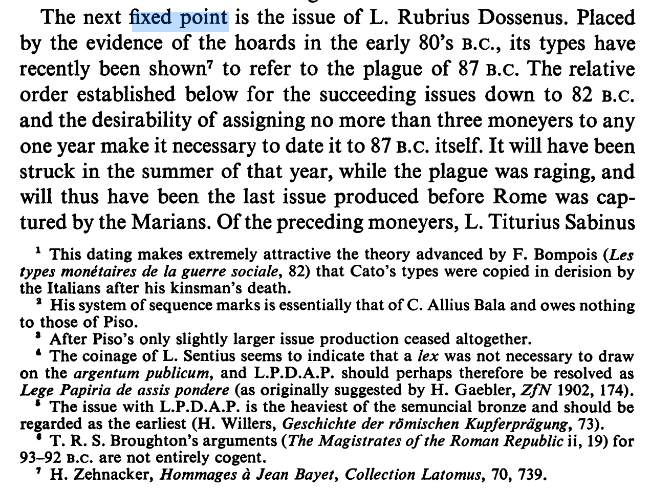
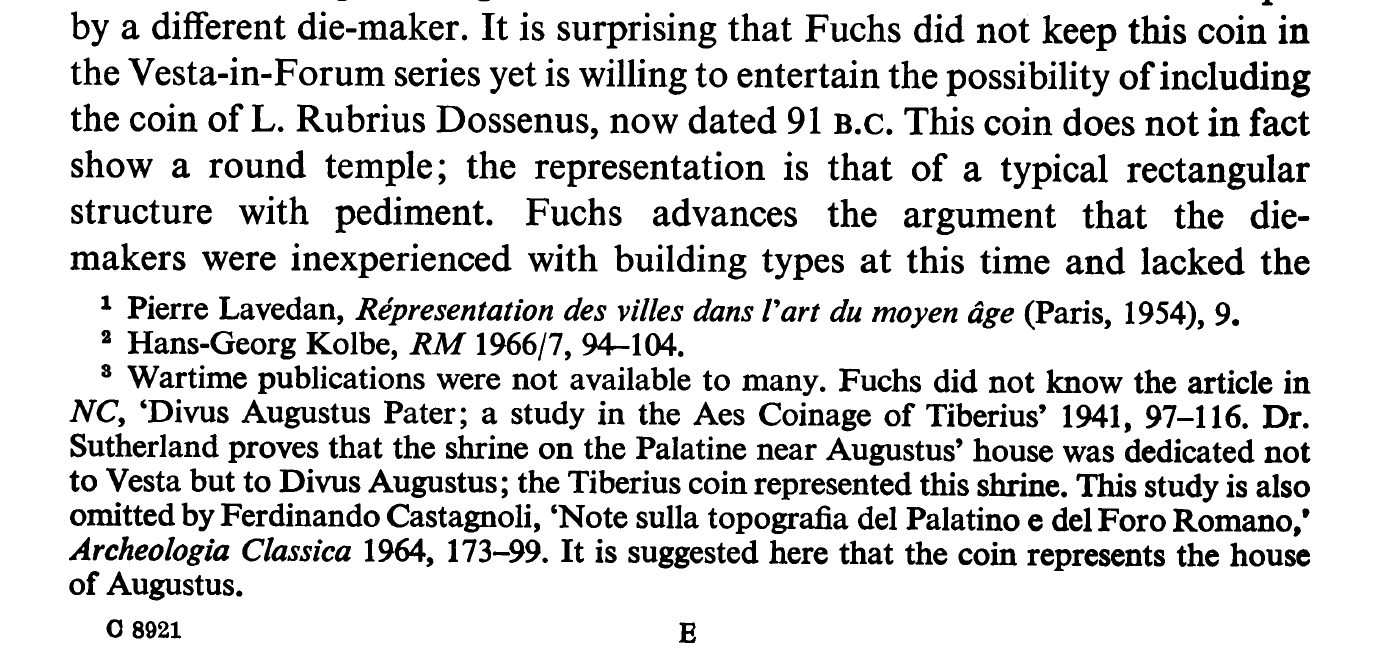
The idea that the iconography is being used as a dating tool worries me. And the date matters for the article I’m co-writing. And, I have a 10 year old post about how Alföldi problematized the Aesclepius connection, suggesting Apollo was more the intended resonance. A point I was then inclined to accept even before I realized our chronology was hanging in the balance. However, Elkins in 2015 (pp. 25-26) accepts the Aesclepius interpretation. The As imagery in particular is read by him, Wiseman, Crawford, and Zehnacker as related to Ovid, Metamorphosis 15.622-745 and the plague of 87 BCE, BUT the association of the iconography with the with the events of 293 BCE and the establishment of the cult Aesculapius goes back to Babelon (2.405). Babelon even sees the Neptune on the quinarius as related to the sea voyage to fetch the god.
The passage is all about Aesclepius in the form of a giant snake taking a ship voyage to Rome and does make mention of the’ relationship to Apollo and Tiber Island, but nothing about an omphalos.
Alföldi, A. (1976). “The giant Argus and a miracle of Apollo in the coin-propaganda of Cinna and Carbo.” In In Memoriam Otto J. Brendel: Essays in Archaeology and the Humanities, 115-119. Mainz.
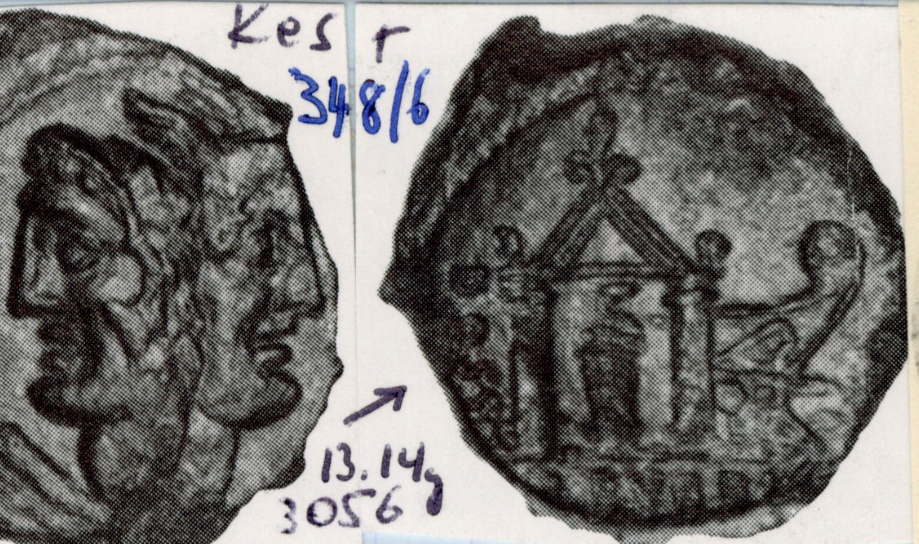
So now it matters a great deal more to me with chronology at stake if I agree that the imagery is related to Aesclepius or Apollo. All the pictures above are because I was trying to see if there was an omphalos on the top of the altar along with a snake or if the so called altar was an omphalos. Or to put it another way how close is the iconography between this As and the Quinarius in the same series.
AND LO! That 1972 article Schaefer’s archive was insisting I read is indeed useful on the question of the Omphalos! Thank you Dr. Trell.
TRELL, BLUMA L. “Architectura Numismatica: Early Types: Greek, Roman, Oriental: An Extended Review of G. Fuchs, ‘Architekturdarstellungen Auf Römischen Münzen.’” The Numismatic Chronicle (1966-) 12 (1972): 45–59. http://www.jstor.org/stable/42666335.
[Thanks to Richard Schaefer and the great move towards Digitization we most certainly have these corpora now!]
The other As in the Dossenus series (RRC 348/5) is more conservative in design but still works in the omphalos and snake motif, super imposing it on the Janus head:
So what do I think now? I’m pretty sure that it is the altar/omphalos/snake imagery not the temple imagery or ship imagery that is key to understanding the iconography. If someone can prove to me that this imagery is related to Aesclepius I’ll be happy to accept a Tiber island resonance.
Events of 293 BCE (sources beyond Ovid):
… a pestilence which raged in the City and country districts alike. The mischief it did was looked upon as a portent. The Sacred Books were consulted to see what end or what remedy would be vouchsafed by the gods. It was ascertained that Aesculapius must be sent for from Epidaurus. Nothing, however, was done that year, owing to the consuls being engrossed with the war, beyond the appointment of a day of public intercession to Aesculapius. (Livy 10.47.6-7)
Val. Max. 1.8.2 (perhaps overly influenced by Ovid or deriving from the same source): But then we may relate how favourable the rest of the gods were to our city. For when our city was visited with a three-year pestilence, and neither through divine compassion or human aid could any remedy be found for so long and lasting a calamity, the priests consulted the Sibylline Books and observed, that there was no other way to restore the city to its former health but by fetching the image of Aesculapius from Epidaurus. The city therefore sent ambassadors thither, hoping that by its authority, the greatest then in the world, they might prevail to obtain the only remedy against the fatal misery. Neither did hope deceive them. For their desire was granted with as much willingness, as it was requested with earnestness. For immediately the Epidaurians conducted the ambassadors to the temple of Aesculapius (distant from the city some five miles) and told them to take out of it whatever they thought appropriate for the preservation of Rome. Their liberal goodwill was imitated by the god himself in his celestial compliance, approving the kindness of mortals. For that snake, seldom or never seen except to their great benefit, which the Epidaurians worshipped equally to Aesculapius, began to glide with a mild aspect and gentle motion through the chief parts of the city; and being seen for three days to the religious admiration of all men, without doubt taking in good part the change to a more noble seat, it hastened to the Roman trireme, and while the mariners stood frightened by so unusual a sight, crept aboard the ship. It peaceably folded itself into several coils, and quietly remained in the cabin of Q. Ogulnius, one of the ambassadors. The envoys returned due thanks, and being instructed by those who were skilful in the due worship of the serpent, like men who had obtained their hearts’ desire, joyfully departed. When after a prosperous voyage they put in at Antium, the snake, which had remained in the ship, glided to the porch of the temple of Aesculapius, adorned with myrtle and other boughs, and twisted itself around a palm-tree of a very great height, where it stayed for three days in the temple of Antium. The ambassadors with great care put out those things wherewith he used to be fed, for fear he should be unwilling to return to the ship: and then he patiently allowed himself to be transported to our city. When the ambassadors landed upon the shore of the Tiber, the snake swam to the island where the temple was dedicated, and by his coming dispelled the calamity, for which he had been sought as a remedy.
Plut. Rom. Quaest. 94: Why is the shrine of Aesculapius outside the city? Is it because they considered it more healthful to spend their time outside the city than within its walls? In fact the Greeks, as might be expected, have their shrines of Asclepius situated in places which are both clean and high. Or is it because they believe that the god came at their summons from Epidaurus, and the Epidaurians have their shrine of Asclepius not in the city, but at some distance? Or is it because the serpent came out from the trireme into the island, and there disappeared, and thus they thought that the god himself was indicating to them the site for building?
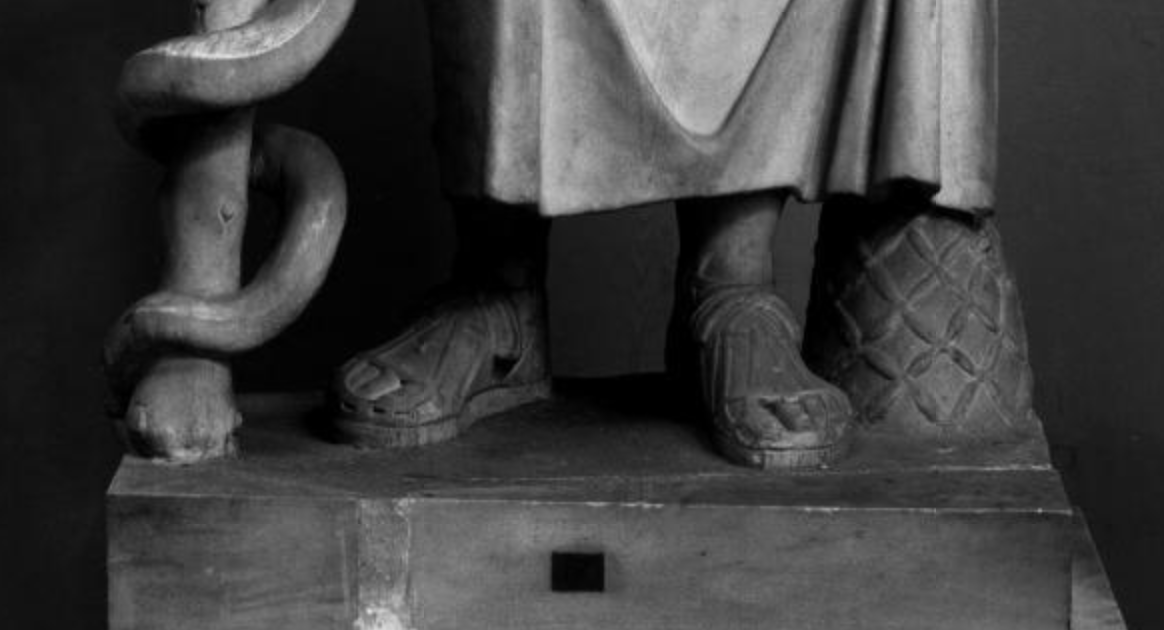
Can the Omphalos be associated with Aesclepius? It certainly appears in most imperial statues as a prop for the god:
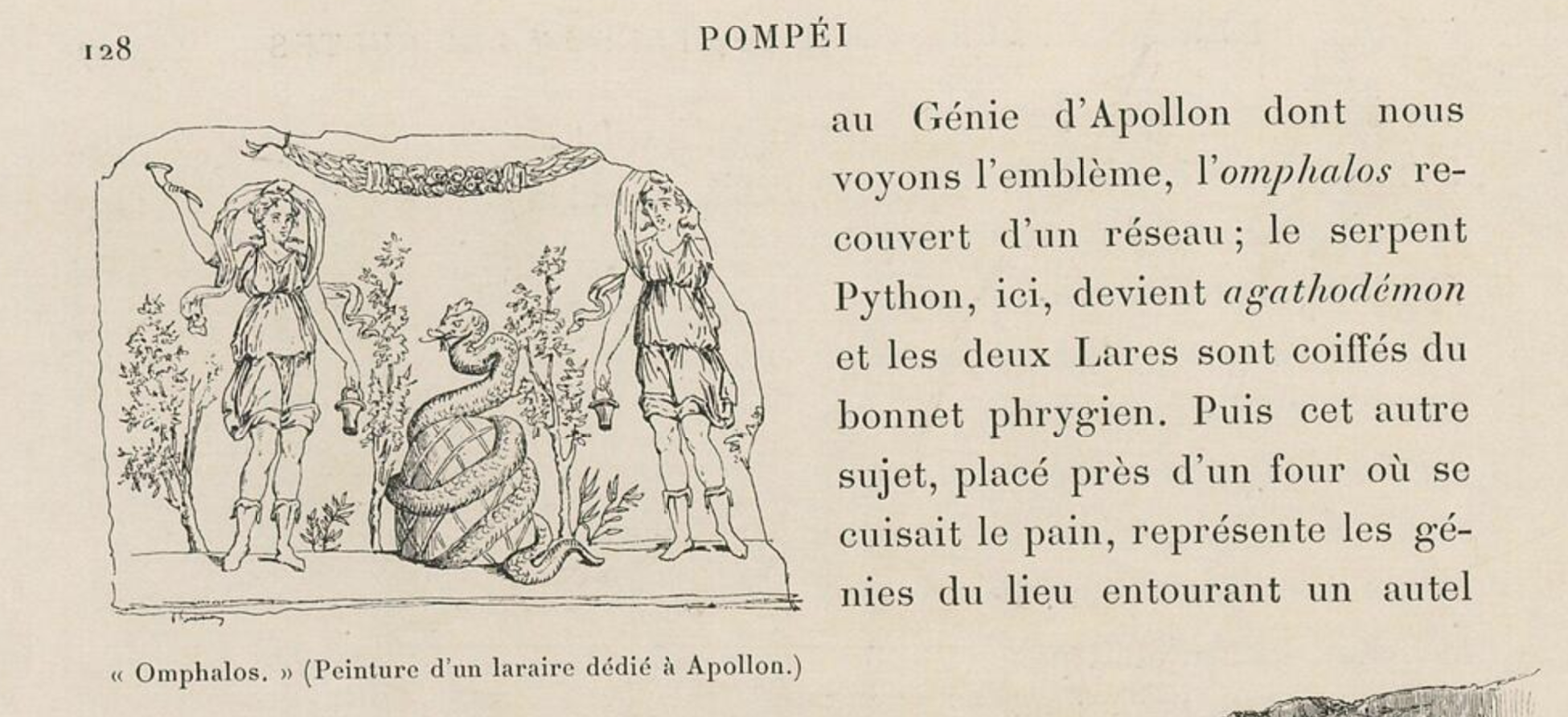
But the problem remains that when we don’t have other clear refers to Aesclepius (like his staff), and when the snake curls round the omphalos alone the most typical interpretation seems to be Apollo and his cult. Aesclepius’ connection to both Omphalos and arguably even the snake is because of his status as Apollo’s son. The question becomes is the resonance of Aesclepius or Apollo OR both?! the intended on on the coins. No sure yet. Darn it. And I still don’t like using iconography for dating.
One more thing to toss into the mix is that we think from Varro (LL 7.57) that the temple of Aesclepius was restored sometime in Varro’s life time (116–27 BCE). [Note that CIL 6.7 can no longer be used to support this restoration as it has been redated to the 3rd cent BCE.]
And, the only other Dossenus known from Latin epigraphy was a banker who owned a slave named Philodamus who sealed a bag of money on the 10 day before the Kalends of November in 73 BCE. (posts on tessera nummularia)
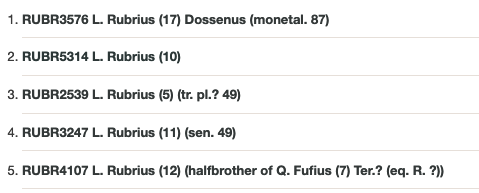
Gruber wanted to connect the Moneyer with the L. Rubrius mentioned as a Senator on the Pompeian Side at Corfinium in 49 by Caesar in BC 1.23. This seems unlikely. Recent prosopographical work keeps all the various L. Rubrii separate:
Gruber also suggested that Dossenus might be in the same college as Cn. Cornelius Lentulus because they both made quinarii and because of what he saw as similarities in legend. I’m not sure this logic holds.
87 BCE Plague Testimony
Granius 21-23
Vell. Pat. 2.21.4
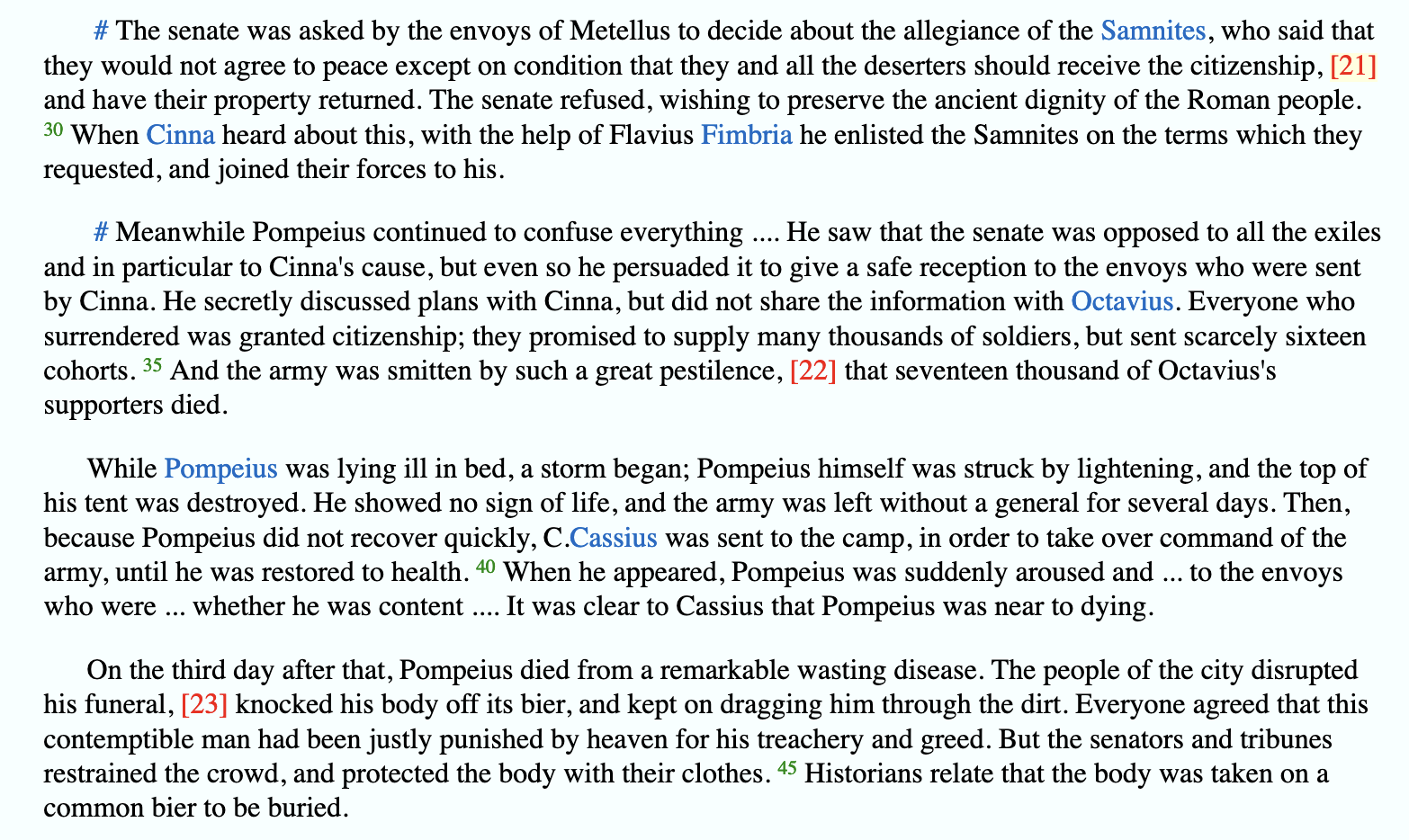
Shortly after this battle, while pestilence was ravaging both armies, as though their strength had not been sapped enough by the war, Gnaeus Pompeius died. The joy felt at his death almost counterbalanced the feeling of loss for the citizens who had perished by sword or pestilence, and the Roman people vented upon his dead body the hatred it had owed him while he lived
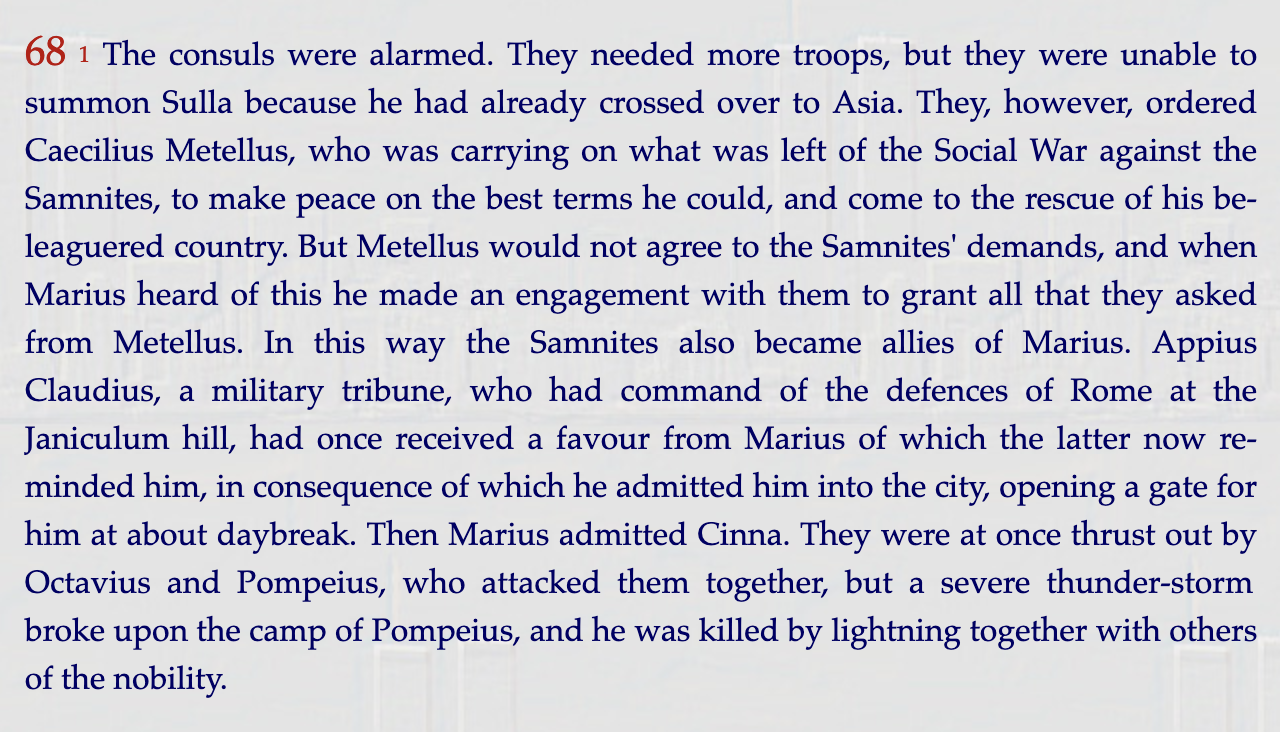
THERE IS NO PLAGUE in the parallel passage of Appian, BC
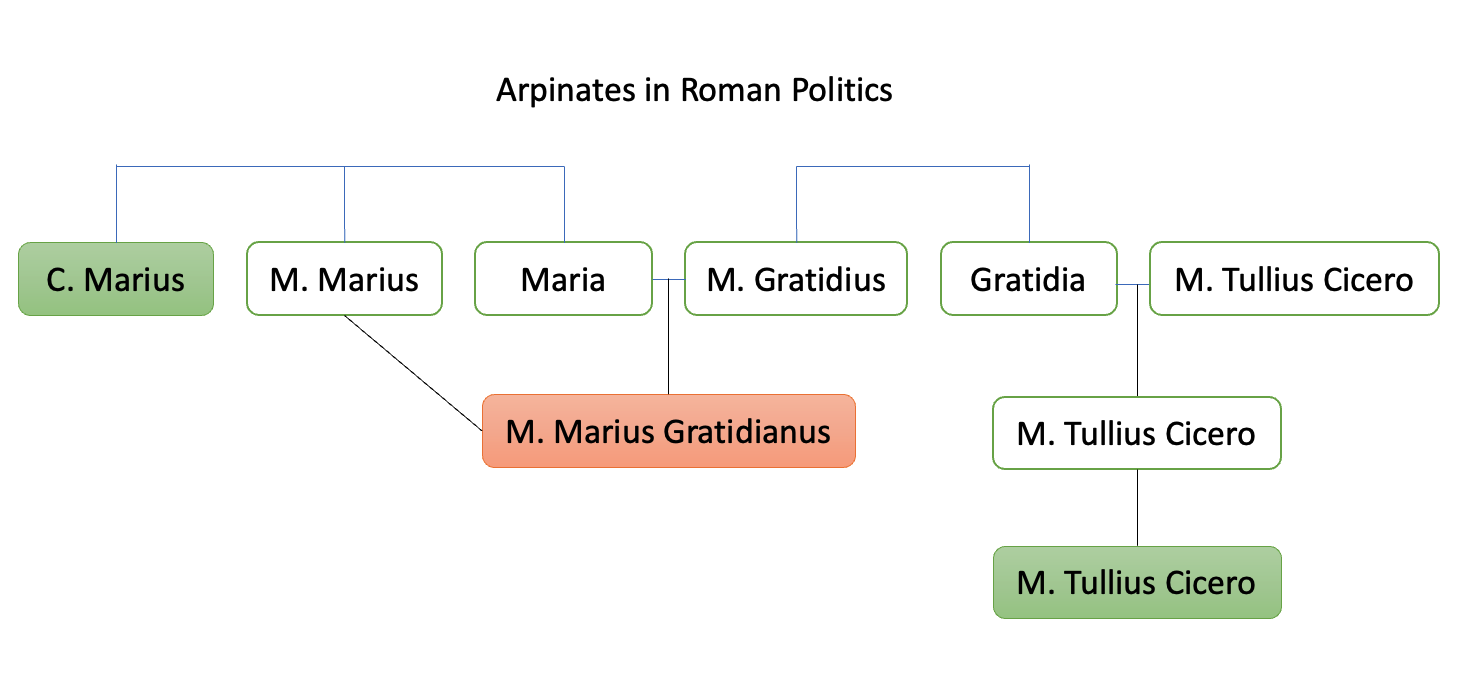
I need a stemma; I was getting confused about Marius, Gratidianus, Cicero and the Arpinum family connections. Those names in color are the famous ones.
Cic. deOrat. 3.9: For we ourselves remember, that Quintus Catulus, a man distinguished for almost every type of merit, when he entreated, not the security of his fortunes, but retreat into exile, was forced to deprive himself of life.
Cic. Brut. 4.307: In the same year Sulpicius lost his life; and Q. Catulus, M. Antonius, and C. Julius, three orators, who were partly contemporary with each other, were most inhumanly put to death.
Cic. Tusc. 5.56: Was not Marius happier, I pray you, when he shared the glory of the victory gained over the Cimbrians with his colleague Catulus (who was almost another Laelius, for I look upon the two men as very like one another,) than when, conqueror in the civil war, he in a passion answered the friends of Catulus, who were interceding for him, “Let him die” ? And this answer he gave, not once only, but often. But in such a case, he was happier who submitted to that barbarous decree than he who issued it. And it is better to receive an injury than to do one; and so it was better to advance a little to meet that death that was making its approaches, as Catulus did, than, like Marius, to sully the glory of six consulships, and disgrace his latter days, by the death of such a man.
Cic. Nat Deo 3.80-81: Why before that were so many leading citizens also made away with by Cinna? why had that monster of treachery Gaius Marius the power to order the death of that noblest of mankind, Quintus Catulus? The day would be too short if I desired to recount the good men visited by misfortune; and equally so were I to mention the wicked who have prospered exceedingly. For why did Marius die so happily in his own home, an old man and consul for the seventh time? why did that monster of cruelty Cinna lord it for so long? You will say that he was punished. It would have been better for him to be hindered and prevented from murdering so many eminent men, than finally to be punished in his turn.
Vell. 2.22.4: then there was Quintus Catulus, renowned for his virtues in general and for the glory, which he had shared with Marius, of having won the Cimbrian war; when he was being hunted down for death, he shut himself in a room that had lately been plastered with lime and sand; then he brought fire that it might cause a powerful vapour to issue from the plaster, and by breathing the poisonous air and then holding his breath he died a death according rather with his enemies’ wishes than with their judgement.
































 Liv Mariah Yarrow