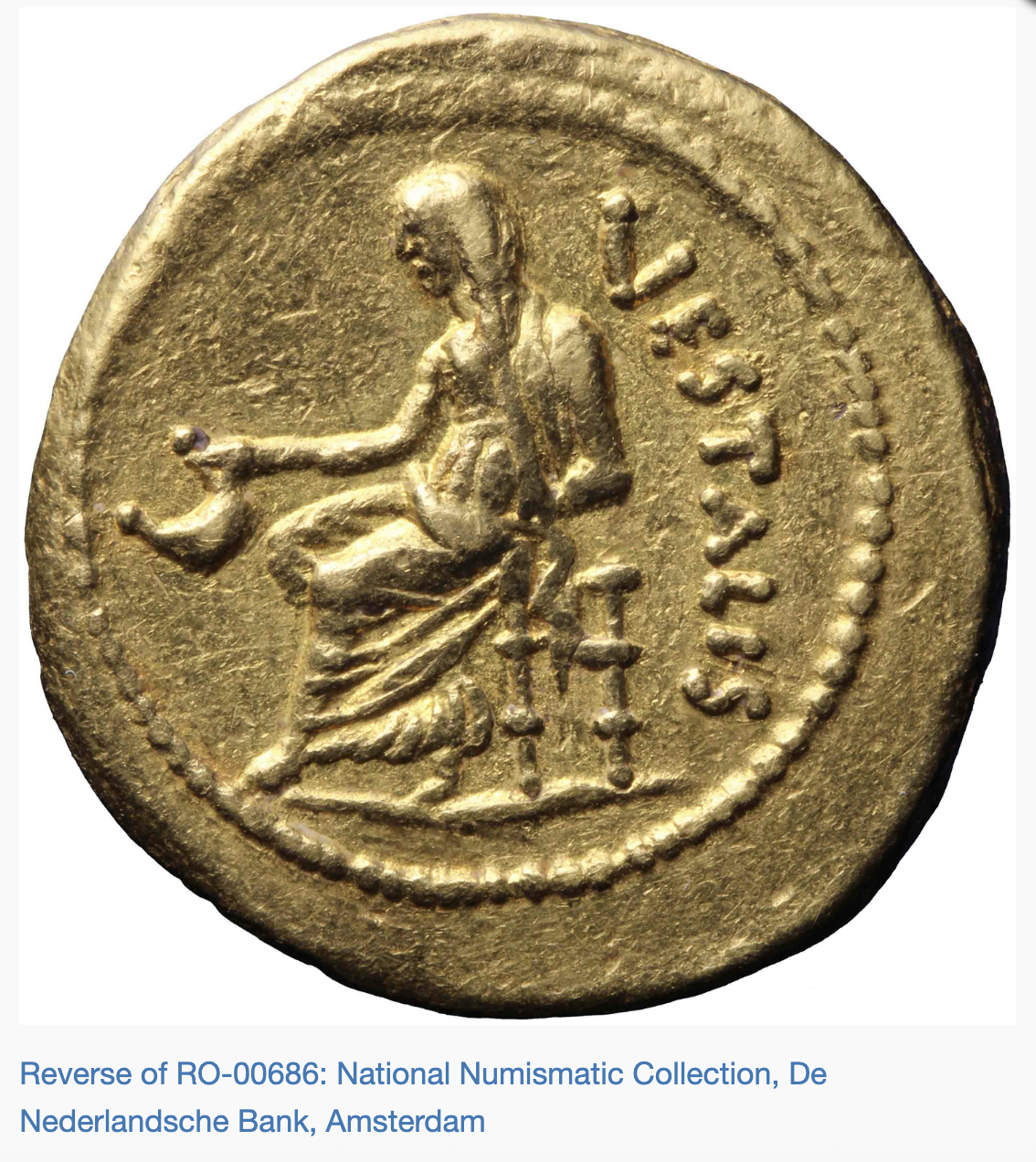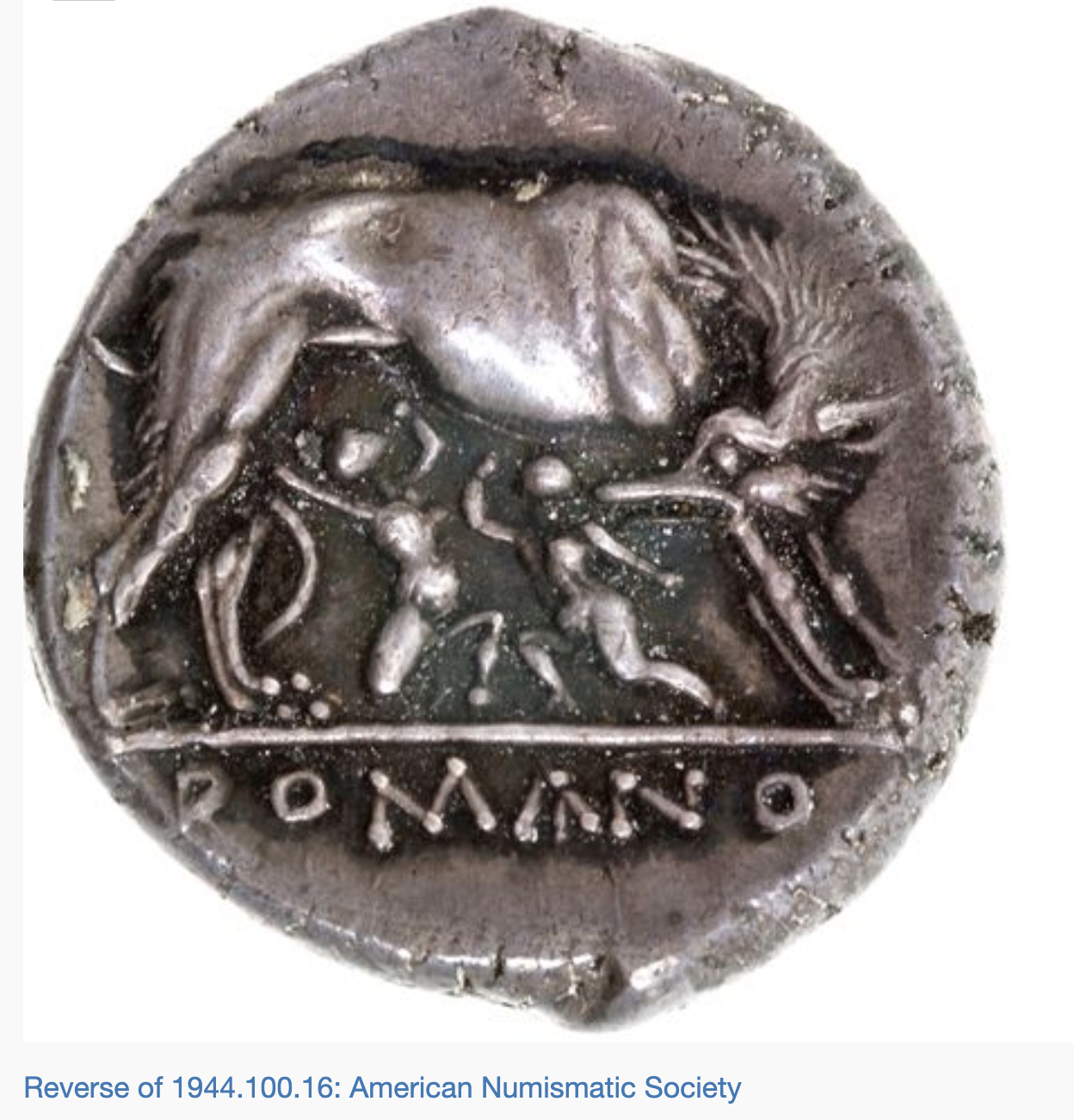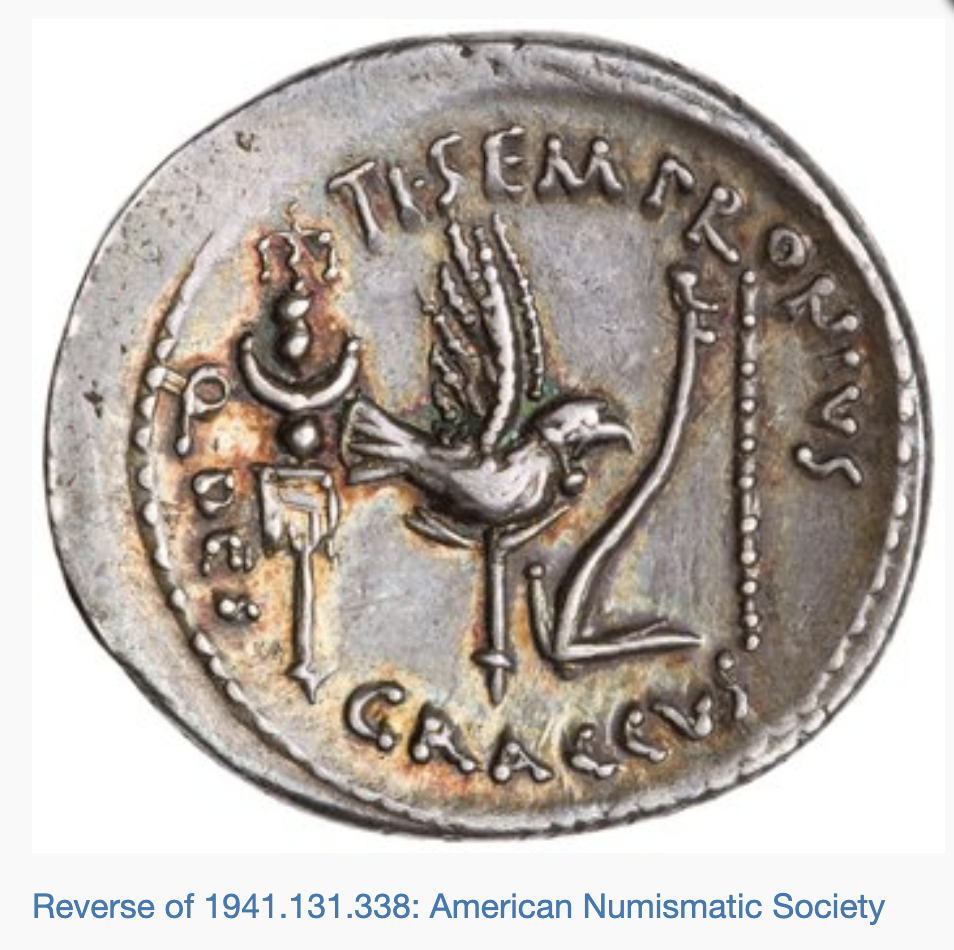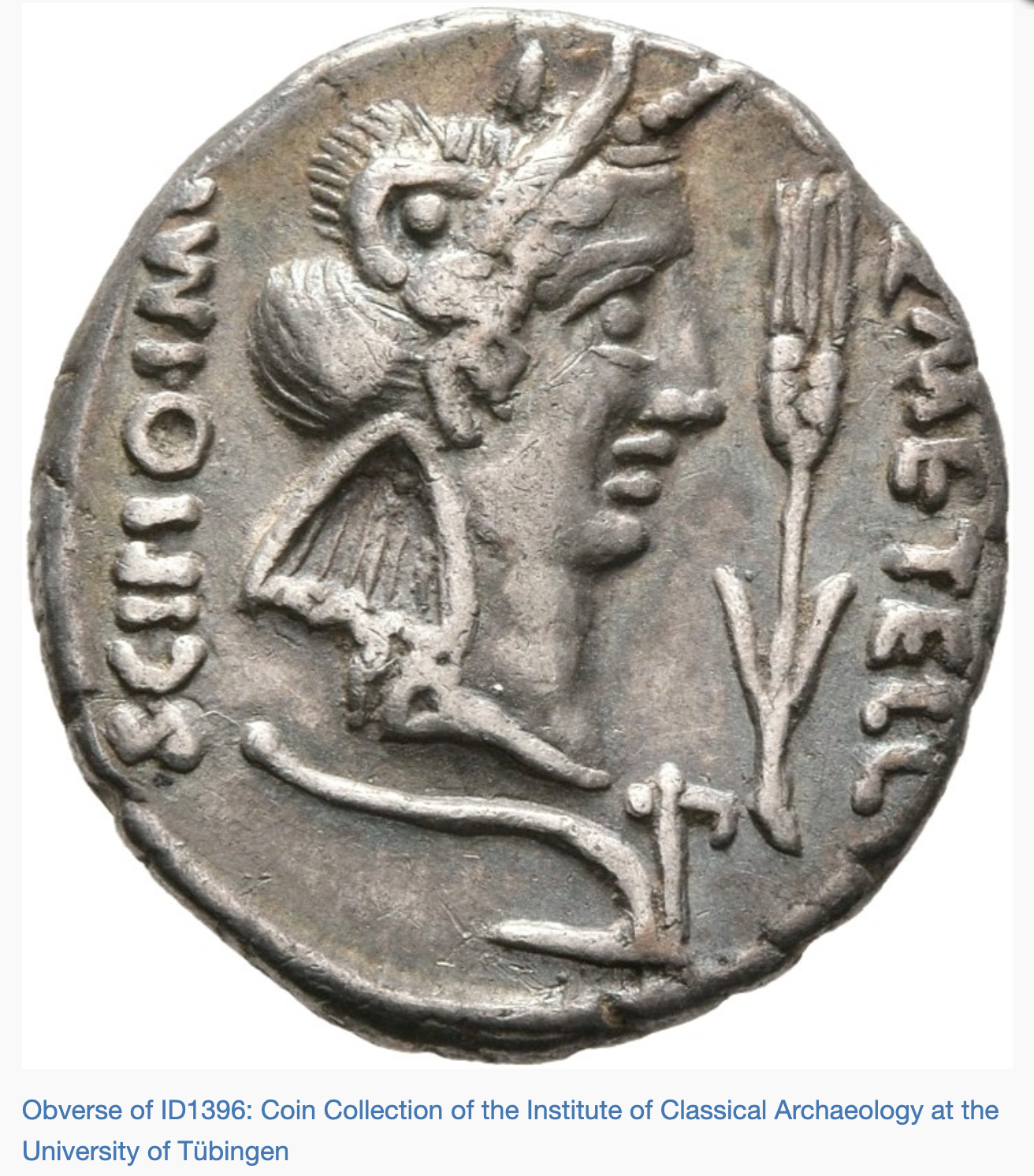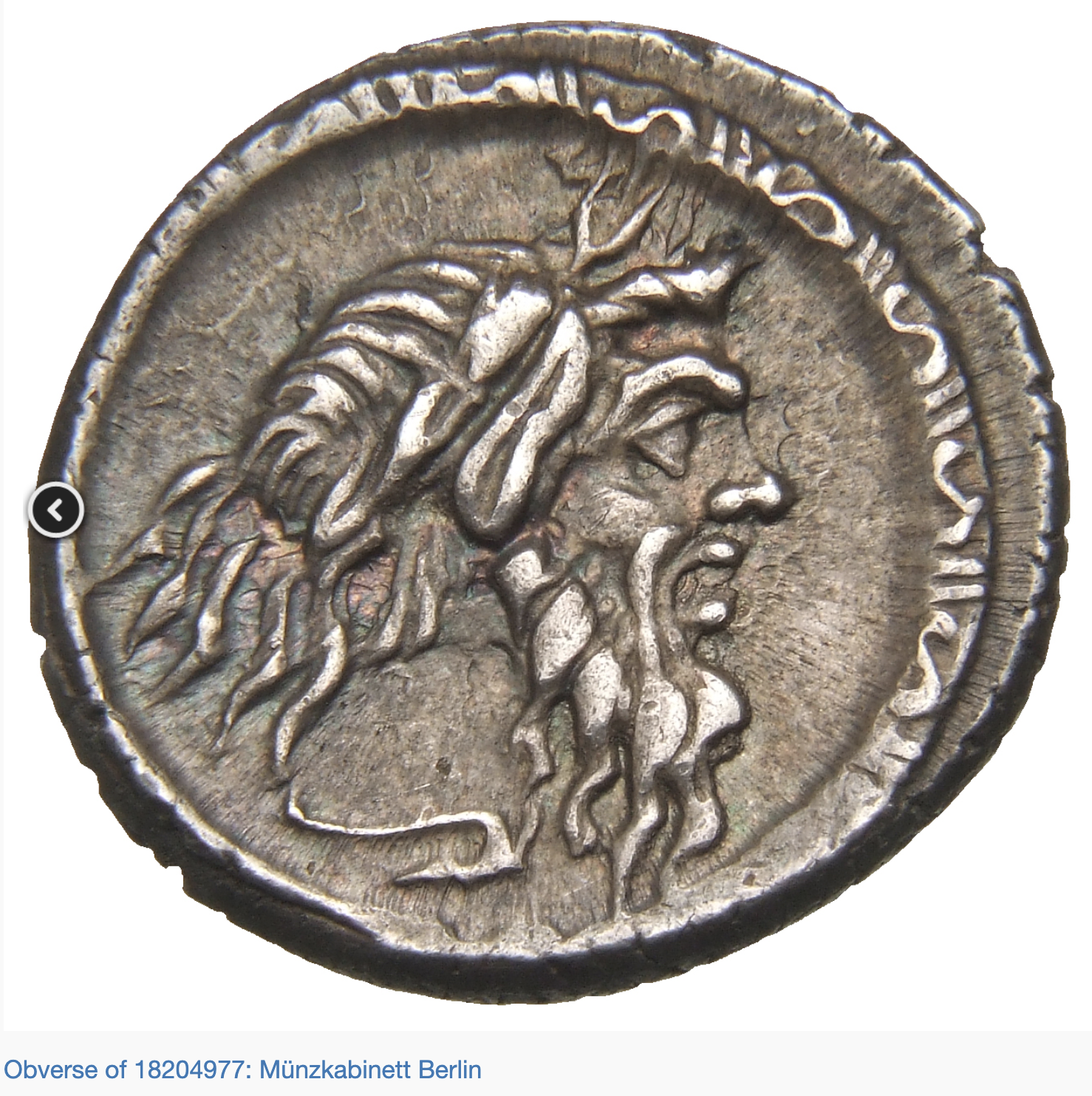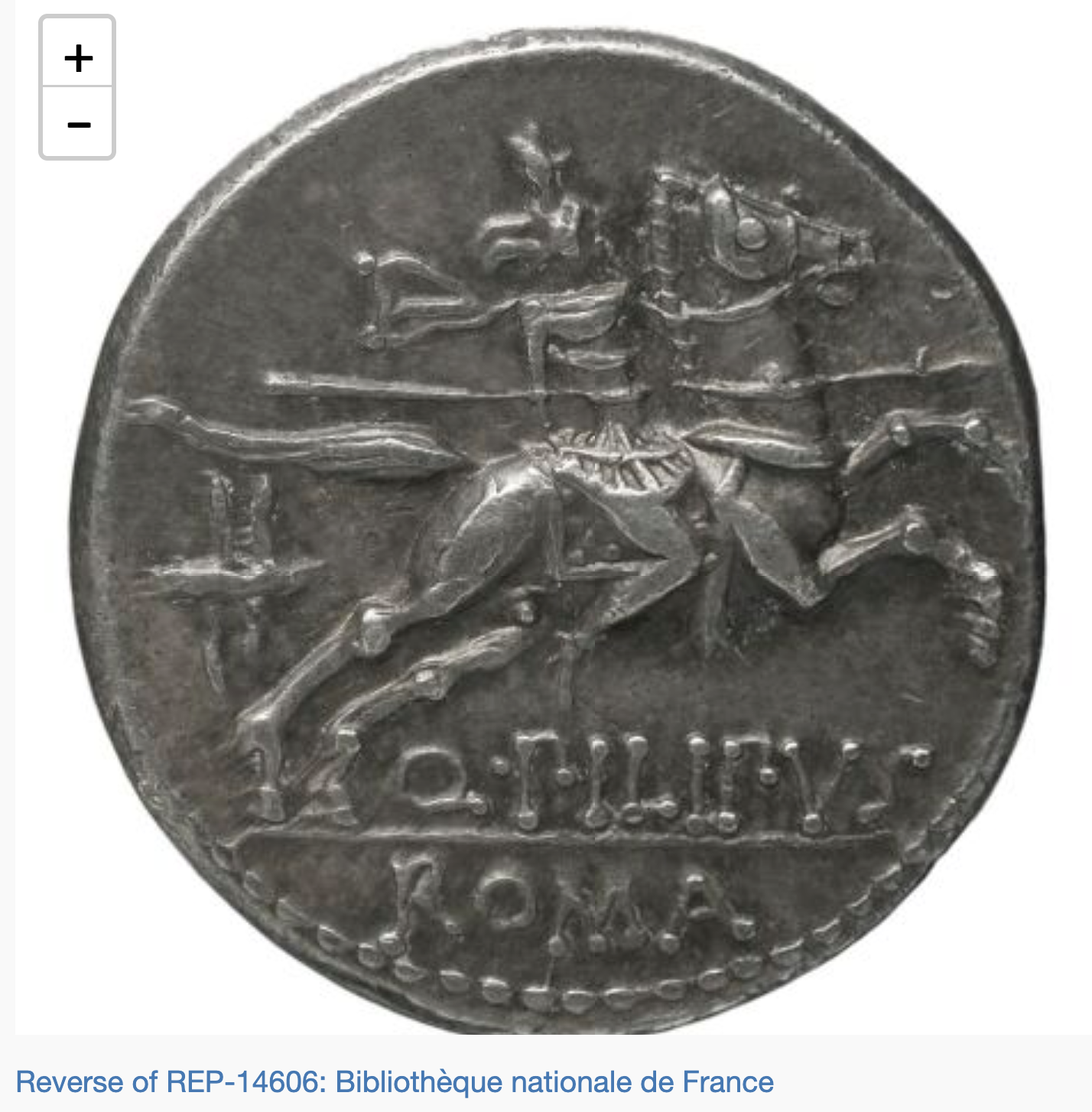
I just needed a minute with my discipline before I address the mess.It’s 7.45 am and I refuse to feel any guilt about a little research indulgence.
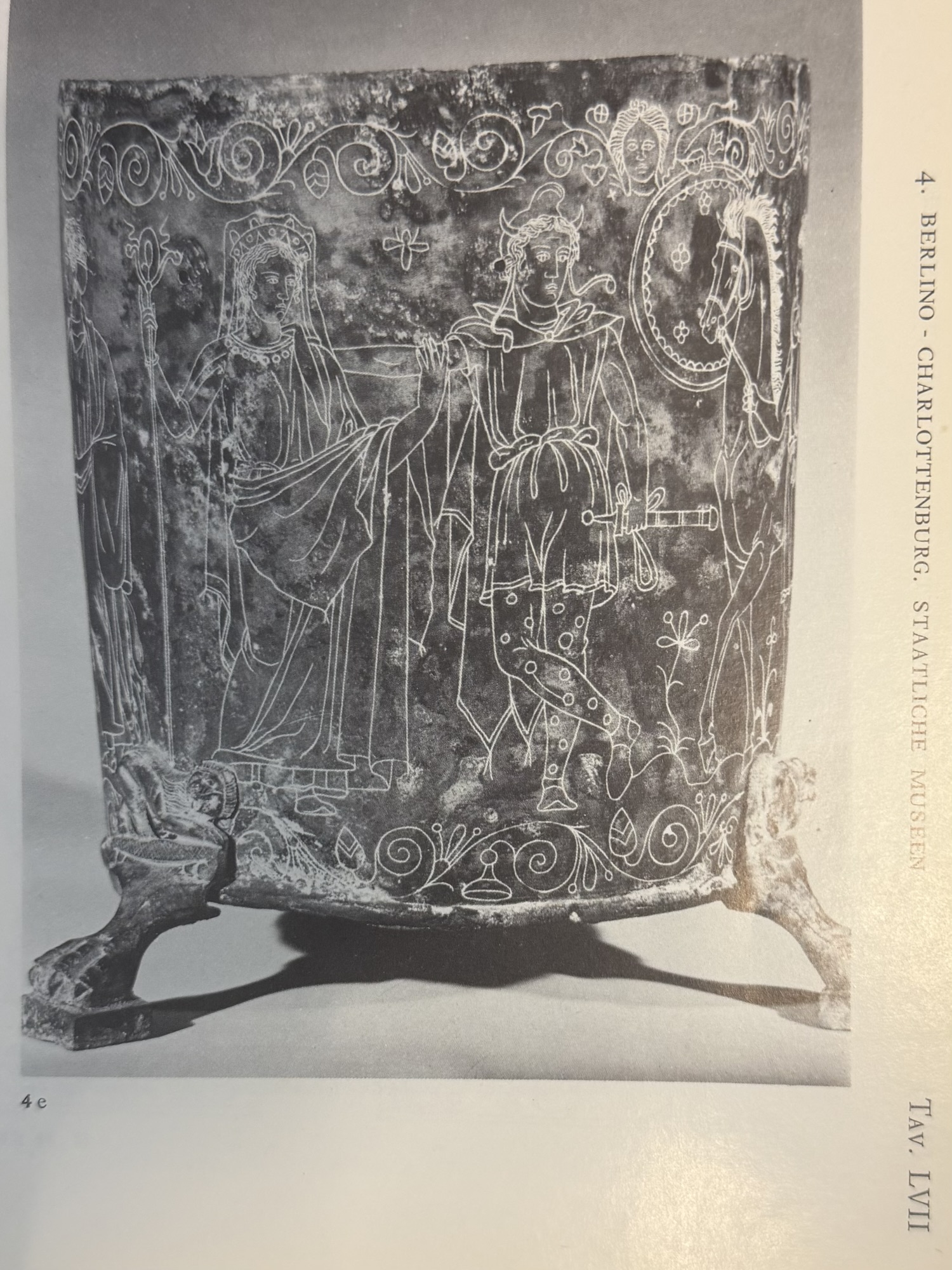
Above we have a cast of gem from the Medici collection now in Florence, of the original the Louvre catalogue says:
Italie – Florence : Musée archéologique – N° inv. 14952. Intaille en améthyste. Buste de guerrier de face, barbu, casqué, tenant une lance et un bouclier. Identifié comme Hannon, Jugurtha ou Massinissa (?). Ancienne collection Médicis.
I’m most curious about how this identification was made, by whom, and when.
Apparently there was a similarly identified gem in the Poniatowski collection, a garnet not an amethyst, or so Beazley tells me without any image.
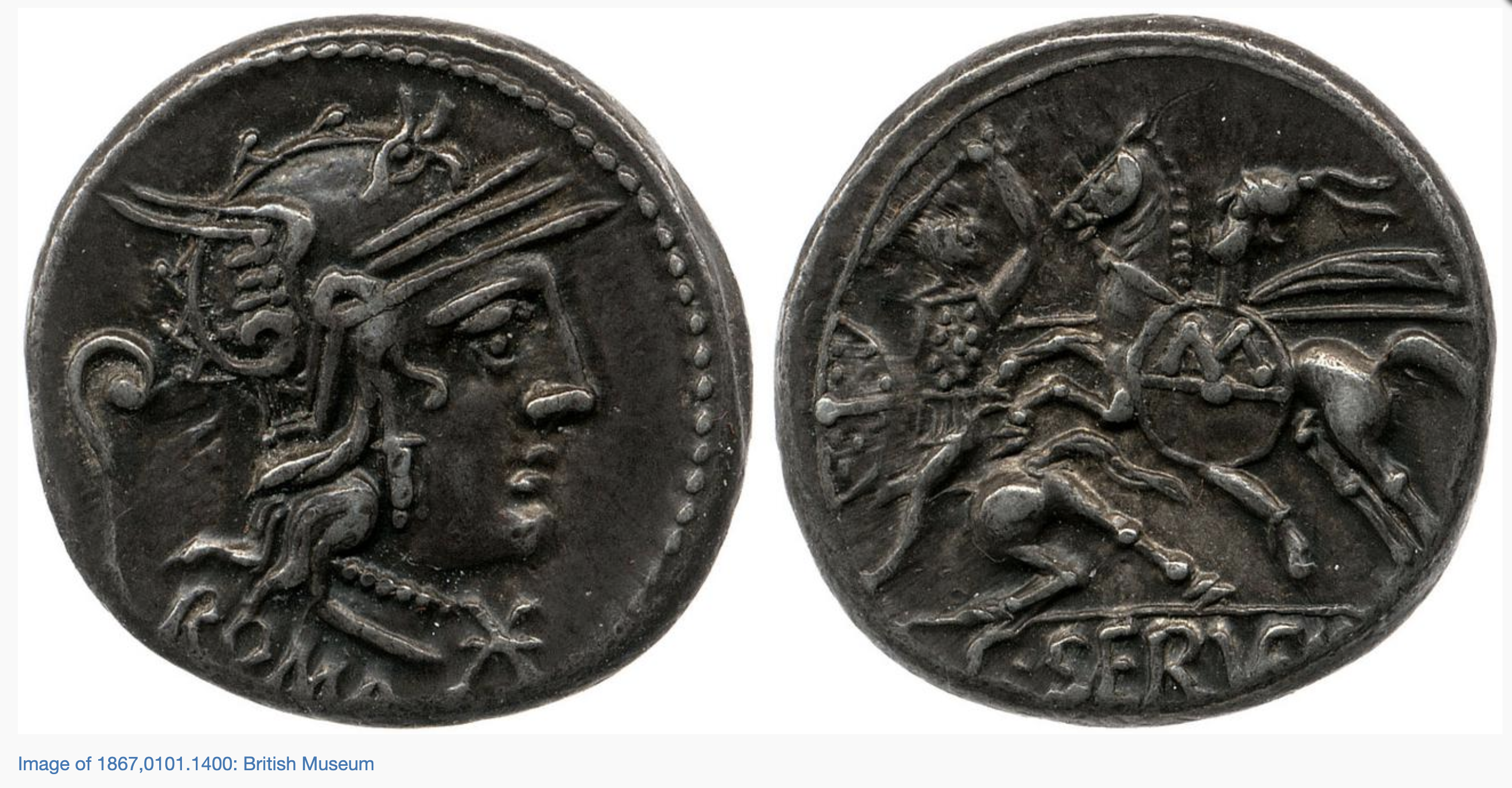
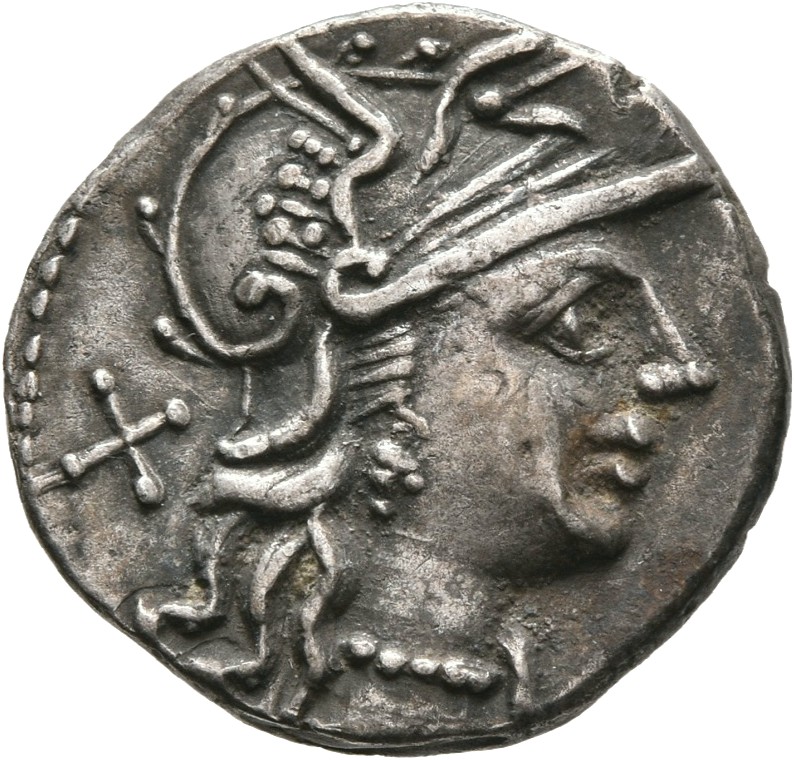
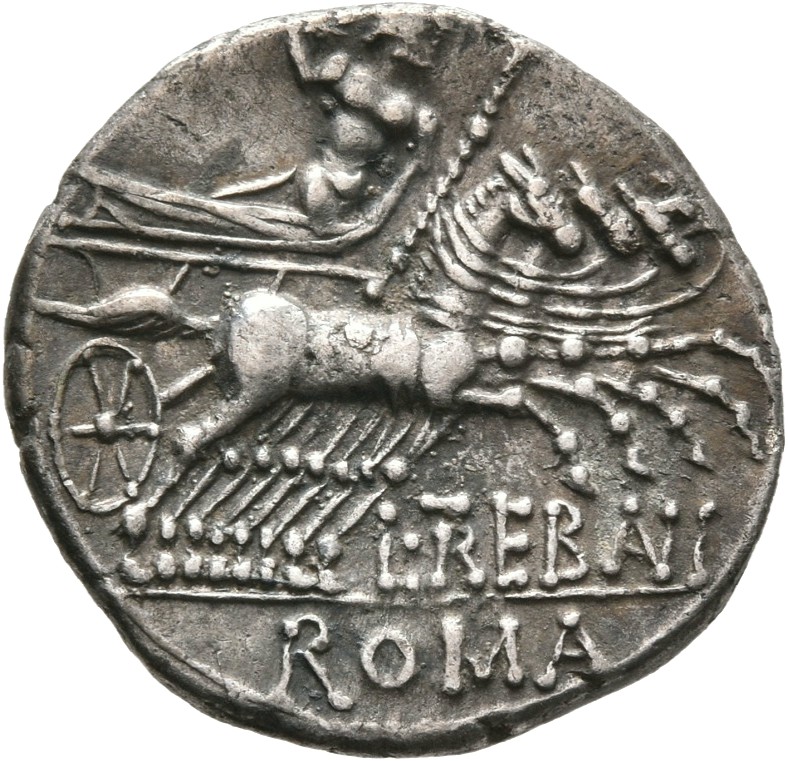
I dropped the above coin images into a draft post as I was writing last week’s Jugurtha post. I thought I’d use this to start my day and if you scroll down I might even actually talk about those coins. Out of the blue I’ve found myself with a day to write. I checked the inbox. I checked the calendar. It’s true. I can be deeply selfish in my work agenda today. I am calm, contented, and feeling positive about many things at least on a personal, if not on any national or global scale. Now to do the thing. I know the task I most want to do–the back half of the introduction to the RRDP volume (earlier pre-writing post). sh!t. I just remembered I have two letters of reference to revise/rewrite. This is ok. I’m allowed to tackle them them tomorrow or this afternoon. I get to be selfish.
Why, the heck, do I keep using this word? How is doing my literal job, one that involves many other researchers and writers in any way selfish? Let’s see if I can re-frame.
“Put on your own mask before helping others.” [I thought there would be better visuals for this modern metaphor.]
I know how I write best. I know that first just getting down a little bit about about my mental state and relationship to the work gets my fingers in the groove. I know that a little free writing about coin images then get my brain focused on the right types of things and over my omphloscopy.
Digression. I have been using and enjoying that pretentious neologism for navel gazing since my grad school days. I have a vivid memory of some don of Brasenose first used it in conversation with me at the foot of the stairs leading to the library in the passage between the old quad and the new ones.. Now I learn the more commonly accepted term is omphaloskepsis. Questioning what we think we know and our very vocabulary is the joy of the academic process. Just last night my seminar group had the most intense discussion of the rise of the term sex-work and a vocabulary consent and the limits and ambiguities of both terms. This is how we learn both individually and together.
Those coins. Let’s get a bit more serious about this warm up.
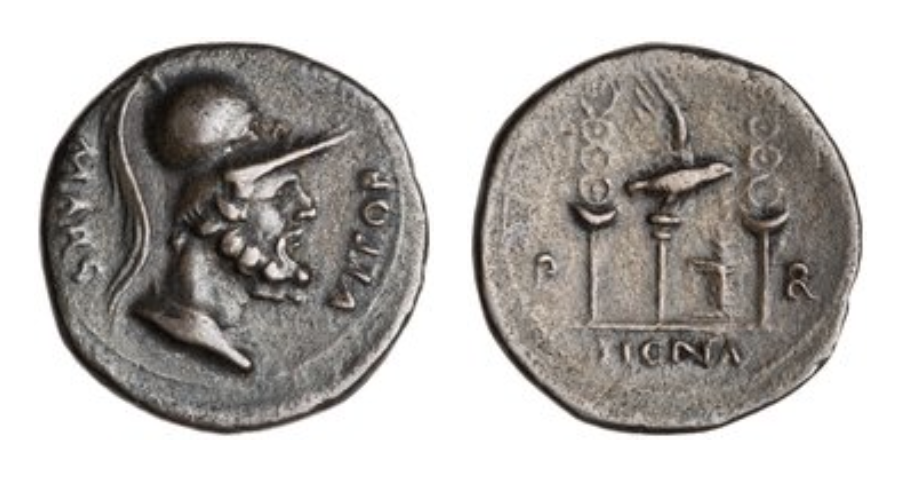
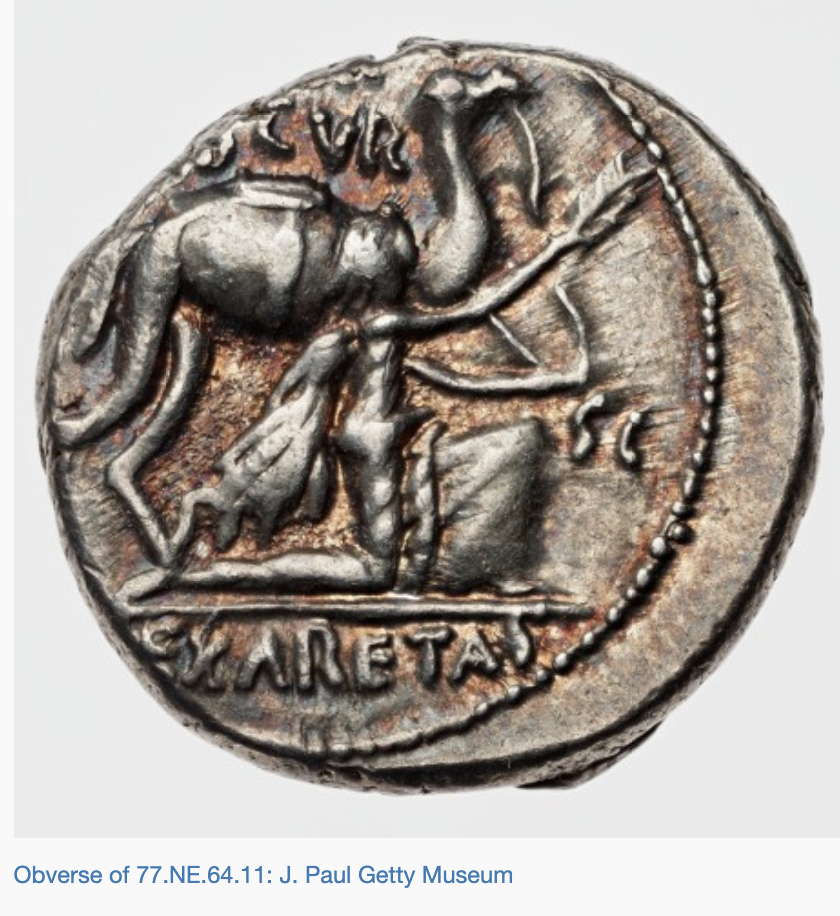
The last post discussed a single complex design from the mid 20th century. As I looked for an image of that type of course other Jugurtha coins popped up in my searches.
The Dassier medal didn’t surprise me. I’m a fan of their Roman historical medals series and own the catalogue of their medals, if not any of the medals themselves (books and plane tickets are my only true weaknesses). Jugurtha is a clean shaven prisoner chained to the wall of a stone prison with a barred metal door. That it is Jugurtha would be hard to deduce without the legend. If you’d ask me what it might represent without the text and I didn’t know the theme of the series, I’d probably have guessed Saint Paul imprisoned. I wondered if this was because I had some archetypal image in buried in mind from which this might be derived, but a quick google suggests not obviously so. I find something pathetic and sympathetic of the straining towards the door (light?) but am not at all confident the artist intended this. Overall I find the medal pro imperial. The Gracchi are described as seditious and the allegory of Rome is heroic and violent in her victory over them. The attribute of sedition seems to be a torch and the poverty evoked by the dress of the defeated man at Rome’s feet. The torch seems to be the implied threat to the city and its infrastructure through indiscriminate burning. Roma is also, of course, victorious over Jugurtha who is punished for resisting Roman authority over his kingdom. Both sides suggest a ‘resistance is futile’ message regarding the nature of Roman rule.
The earlier Belli medal was new to me and had it’s artist not been identified my first thought would have been to associate it with the tradition of Paduan Medals, associated with Giovanni dal Cavino and those working in a similar style. Essentially fantasy pieces of a sort. Marius is the rough and ready soldier and Jugurtha is much like any bound prisoner at the foot of a trophy (cf. Judaea Capta et al.) but the prisoner bound to a column with victory atop is not known on the Roman coin series to the best of my knowledge (I hate arguments from silence).
The other two numismatic images are more closely related to the previous post and the heroicization of Jugurtha as a figure of indigenous self rule in the Magreb (N. Africa). I don’t have much to say about them but dropped them in to keep them on file as it were.
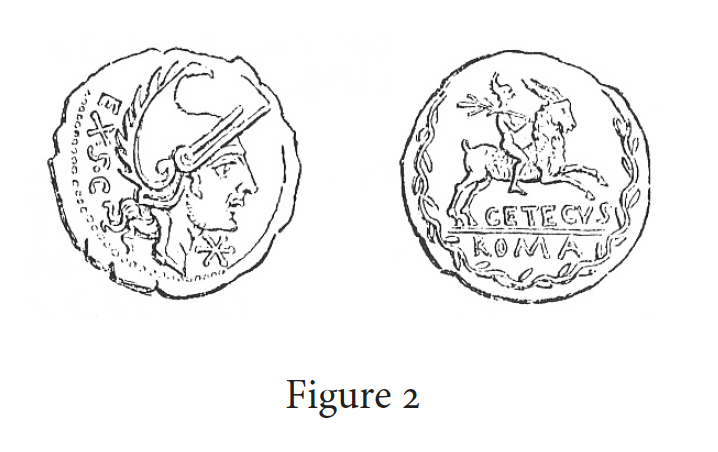
I wanted to talk a bit about Jugurtha on the republican series, RRC 426/1, but I’m itching to get to that chapter and I’ve at least written about it before. Maybe I’ll come back. I also think a little on reception of Numidian coinage could be worthwhile if I want to keep going on this theme.
I started this post earlier this morning while I was waiting for an important meetingand then it ran away with me.
Thus far today I’ve graded, drafted a grant report, crafted an agenda to meet program priorities and cleared the top of my inbox (don’t worry I officially still have unread messages – yes I live my life on the principles of a chaotic good).
My brain is spinning and I just want to be a researcher again. I wracked my mind for a coin, just one, I might want to free write about for comfort and connection with my scholarly self. I’ve been meaning to blog about the above type for a while. It was shown to me by my colleague at UCRiverside, Kyle Khellaf, over the summer as we planned his recent speaking event. It is an incredible appropriation of antiquity to create a narrative of continuity for a modern nation-state. I will only be discussing the side–call it obverse or reverse as you will–with the name “Iugurtha” and the denomination “1 Dinar” text.
The bottom of the design has a map of a section of the north African coast. It shows the area primarily occupied by Tunisia. Instead of marking this territory, it asserts the boundaries of the primarily inland ancient kingdom of Numidia. As I always tell my students ancient kingdoms, city-states, empires, etc. rarely have clearly defined boundaries like this. The evolution of the militarized and defensible Roman limes under the high empire–forts along the Danube, Hadrian’s wall–is its own whole unique conversation and topic of scholarship. In earlier periods of Mediterranean wide cultures boundaries were often reliant on physical landmarks — the watershed on top of a mountain range, e.g. limit’s of Cicero’s provincial command, or water ways, e.g. Ebro River in the treaty between Carthage and Rome at the end of the 1st Punic War (and yes, the Rubicon, if you must mention it). Those lines on the coin’s map defining ancient Numidia read modern conceptions back into an earlier period that had very different conceptions and definitions of space and territory. The image is of course useful for the claiming of Numidian heritage and legacy by Tunisia. Numidia represents, in this numismatic context, a form of indigenous self-definition in opposition to colonial powers.
This is embodied by the ‘portraiture’ of the most famous Numidian king and opponent of Roman control, Jugurtha. I put ‘portaiture’ in quotes because the form of the head seems strongly influenced by laureate heads on Punic Silver struck in Iberia and Sicily at the time of Carthage’s Wars with Rome, long before Jugurtha came on the N. African scene. The images on these ancient coins have often been mistaken for portraiture. Something I discuss in my 2021 book (p. 119) and also in earlier blog posts. I have and continue to argue these are divinities, most likely a Herakles/Melkart figure (see my 2013 article on the syncretism of this divinity in the Western Mediterranean).
Behind the head is a steelyard-style scale. A type of scale common in ancient Rome as well as other ancient Mediterranean cultures.
Found in Pompeii, On display in the Naples Museum, Uncertain photo credit.
In the pan one places what is being weighed and the other end has a counterweight. The counterweight may be visually smaller than the thing being weighed but still be the appropriate counterweight because of leverage based on its position on the scale arm. In the pan of scale on the coin is the symbol of Rome, one promoted by Mussolini in particular, the Capitoline Wolf with latter addition of the twins beneath. This symbol is meant to evoke ancient Rome, but also perhaps modern colonial powers and their entanglement with the Magreb. The counterweight is a coin, specifically a Punic coin. Rome is weighed by its relationship to Carthage. By extension, the coin implies that more contemporary colonizing powers are measured by their relationship to the N. Africa.
Ok. That’s enough for now. i have more to say but I need to do some other things.
Morning of 10/24/25 some typos were fixed. Below image and hyperlinks added.
Sicilio-Punic Type in Trade. Over a long history of striking coins in various regions the Carthagians show a strong preference for the palm tree and horse separately and together in a variety of forms. Often but not always the Palm tree is depicted as a Date Palm.
A colleague asked for my puffy pita recipe. I don’t really like recipes. They are so bossy and rigid. Where’s the story with all its beautiful digressions in that?
The amount of bread you end up with depends on how much liquid you use to begin.
Some where between 8 to 16 oz is a great place to start, so let’s say 12 oz.
Because we’re going to cook the bread v fast and v hot to hope to get a glorious puff of steam between the layers, water is our best choice, BUT if you have milk, left over breakfast cereal, stock, juice, beer, soup, or really anything, you could use it in your bread.
Time and temperature and amount of yeast all work together for final fermentation. If you start with cold water it will go slower. If you start with warm water everything goes faster from the start. Don’t go over 115 degrees F. I usually aim for 110.
Stir in a few spoonfuls of flour into your water and if you feel like adding a spoonful of honey or sugar go ahead. The liquid should look milky and smooth but still liquid, not too pasty.
If you have all day or overnight try a 1/2 to 1 teaspoon dried yeast. If you’re on a deadline of 2 hours or so go with a full tablespoon and be sure to use warm water and a little sugar boost. After you stir in the yeasty beasties you must wait for them to wake up. (or not, if you have all the time in the world and just want to mix and forget).
As they wake up they start belching their lovely gases and bubble and foam gather on the top. 15 to 30 minutes is a good estimate on how long to let it develop, but if you get stuck on a work call or lost in a good book for a few hours it will be fine, perhaps better for being ignored.
The ambient temperature matters a great deal at all the waiting stages. If you live in a hot NYC apartment just leave it on the counter. If you live in a drafty old house you can stick the bowl in the microwave (don’t turn it on!) and it will be well insulated, or, my personal favorite, is to put water in my instant pot and set it to the yogurt setting and rest the bowl on top. Your oven might even have a yogurt setting you can use.
Now we feed and exercise our yeasty beasties. I use a stand mixer with a bread hook, but this is just for ease.
I start the mixer at the lowest setting and then start adding flour rather slowly maybe a 1/2 cup at a time. When I’m at the pasty sticky stage, before it wants to come together in a ball, I add in a few glugs of olive oil — at least a tablespoon not more than a 1/3 cup. This is optional, but delicious. And, more salt than ever seems reasonable. If you started with a full two cups of water, give it a generous full tablespoon of salt. It won’t be too much. If you’re salt-phobic add at least a teaspoon even for just one cup of liquid. Salt makes the bread taste better but also inhibits the yeasty beasties growth, thus we let the beasties get a head start before we add it in. Keep adding flour and wait for the dough to form a ball and start thunking around the machine. Slowly continue adding flour until the sides are mostly clean.
Now watch as the machine keeps kneading the dough. If you like precision set a timer for 4 minutes. Turn it off. let it rest three minutes. Turn it on again for three minutes and call it done.
OR keep inspecting the character of the dough. The yeasty beasties are helping the gluten stretch into long smooth chains. The dough should not break and should become far less sticky. It will become smooth and elastic.
Now after all this work the yeasty beasties need a rest someplace warm. (or in the fridge over night or just on the counter if you want to ignore them for a long time)
Come back after an hour or two and peak. If the dough is doubled, punch it down.
If you have time, wait another hour or two and punch it down again.
Double rising really helps the dough mature and the yeastie beasties to release their gases throughout.
Did you forget your dough and let it rise too much and did it collapse? NO PROBLEM! put some flour on the counter scrape the dough mess on to it. Fold it a few times tenderly and tell it you still love it. Promise it you’ll check on it in just an hour or so. When it looks happier, you may now continue.
After the last punch down it is time to prep the oven.
You need the hottest oven possible and ideally a very hot cooking surface. My oven isn’t very good. It barely wants to hold 450 and rapidly loses heat when I open the oven. So I bought some oven bricks. When I make pita these go in the bottom of the oven to help with heat retention through the baking process. You vould also use your old cast iron pans in the bottom of the oven to help with heat retention. Add your pizza stone or iron griddle on to a middle baking shelf now. Cast iron pans will also work for the pita cooking surface, but less well than a stone or a griddle. Put your oven on its highest setting and let it all heat up.
Divide the dough into an even number of pieces each the size of a small clementine. Form the pieces into balls by pinching the loose edges together until the outside is completely smooth.
Ideally you now leave these little balls to rest a bit more. Maybe 30 to 40 minutes, but I am usually too impatient and they only get the time I spend on forming the other balls and waiting for the oven to heat.
On a lightly floured surface roll each piece as flat as you absolutely possibly can. The stretchy dough will spring back. Sometimes I roll them all out and then go back and give each piece a second roll right before it goes in the oven.
Your goal is to get that piece of flat dough onto the hot stone or griddle in the oven as fast as possible while loosing as little oven heat as possible. Having someone open and close the oven door for you can really help.
Ok now you have one or two in the oven. Turn on the oven light and watch. They should puff. It starts with a few bubbles and then all the bubbles grow together. Once you’re sure it has stopped puffing. Get your tongs and quickly open and v v gently flip the bread. (Some people just give it one more minute and no flip.)
Give it a moment longer and then pull it out and eat it straight away.
I tend to serve dinner in the kitchen on nights I make pita and get the whole family involved. The kitchen table is filled with lots of little dips (hummus, labneh etc…) and salads to eat with the pita.
Dammit I’m hungry now.
And remember even without any puff, fresh baked flat bread is still delicious.
Sometime in 2009 (or thereabouts) my beloved and I decided we could see no future together. We were too different. Being long distance was too hard. The present was full of pleasure, but the uncertainty and seeming incompatibility unbearable. The ups and downs of trying to see a way forward too painful. So with mutual compassion we called if off. That night we drove a long empty stretch of highway. Just a twinkle of radio towers in the distance. Tears streamed down our faces as those lights got closer. The finality of the good-bye at the train station looming ahead. There were no more words. We’d said it all. We’d ripped off the band-aid. Just tears.
Those tears washed over us. Together we felt the pain in the silence and dark. A desolate road before us.
And I honestly don’t remember which of us said what, but after many miles we acknowledged we could just stop the car. Nothing was forcing us to decide anything, only our own discomfort with the present and no clear way forward. Stopping the car didn’t stop the pain, or the uncertainty, or even the tears.
The tears in our eyes laid bare our individual grief and longing for something else. What that somethingelse could be took years and some excellent professional help to determine. And, we remain very much partners in life, not for life. Each day is a choice. A re commitment. As much as leaving is choice, so too is staying and engaging.
There have been many tears since and many more to come. They continue to show me where my heart is. When to pause. When ponder. And occasionally, even, when to proceed and in what direction.
This morning a song on the radio, or perhaps the stretch of highway, or perhaps something else entirely, brought this bittersweet memory to the forefront of my mind. And there it has stuck until I found a way to tell the story of those particular long, dry tears and why they still matter.
The last six weeks have been full of far more inexplicable tears. Unbidden wetness streaming down my cheeks. An inconvenient catch in my voice.
Then, last night, at last, catharsis.
On the stage there unfolded the timeless pain of personal desires and familial loss in the face of global tragedy and local injustice. The desire to do something, to hold on to something. The desire to sacrifice oneself, to leave the pain of living in this imperfect world. The haunting guilt of finding joy as so many suffer and die. And the music. And the movement. Those voices. I wept and it was good to weep.
After, exhausted, I felt lighter, my eyes clearer.
Art and performance made meaning of all the recent tears that have tumbled down my face, so uninvited. Sometimes in the shower. Sometimes stuck in traffic. Occasionally, as I try to make dispassionate conversation with friends and colleagues about my work and the state of higher education. Even, ridiculously, in the face of demonstrable success.
I’m not, I assure you, depressed or anxious. I do not feel particularly vulnerable. These tears are not weapons or defense mechanisms.
They are not for anyone else or even about any one else. They are mine alone.
They do not need to be fixed. I am not broken.
They tell me to pause and ponder. To be. I need not run. I need not avoid this particular pain.
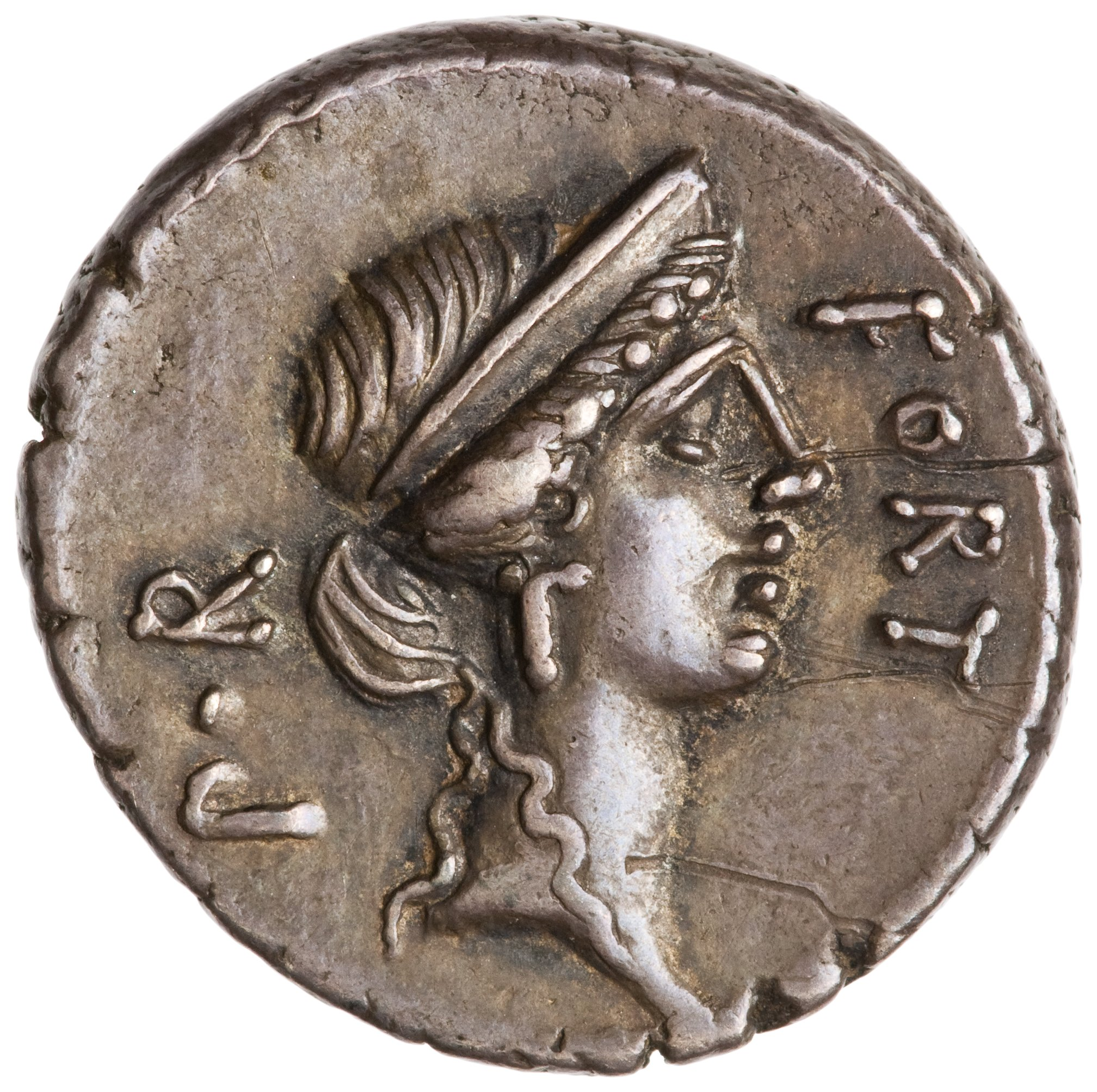
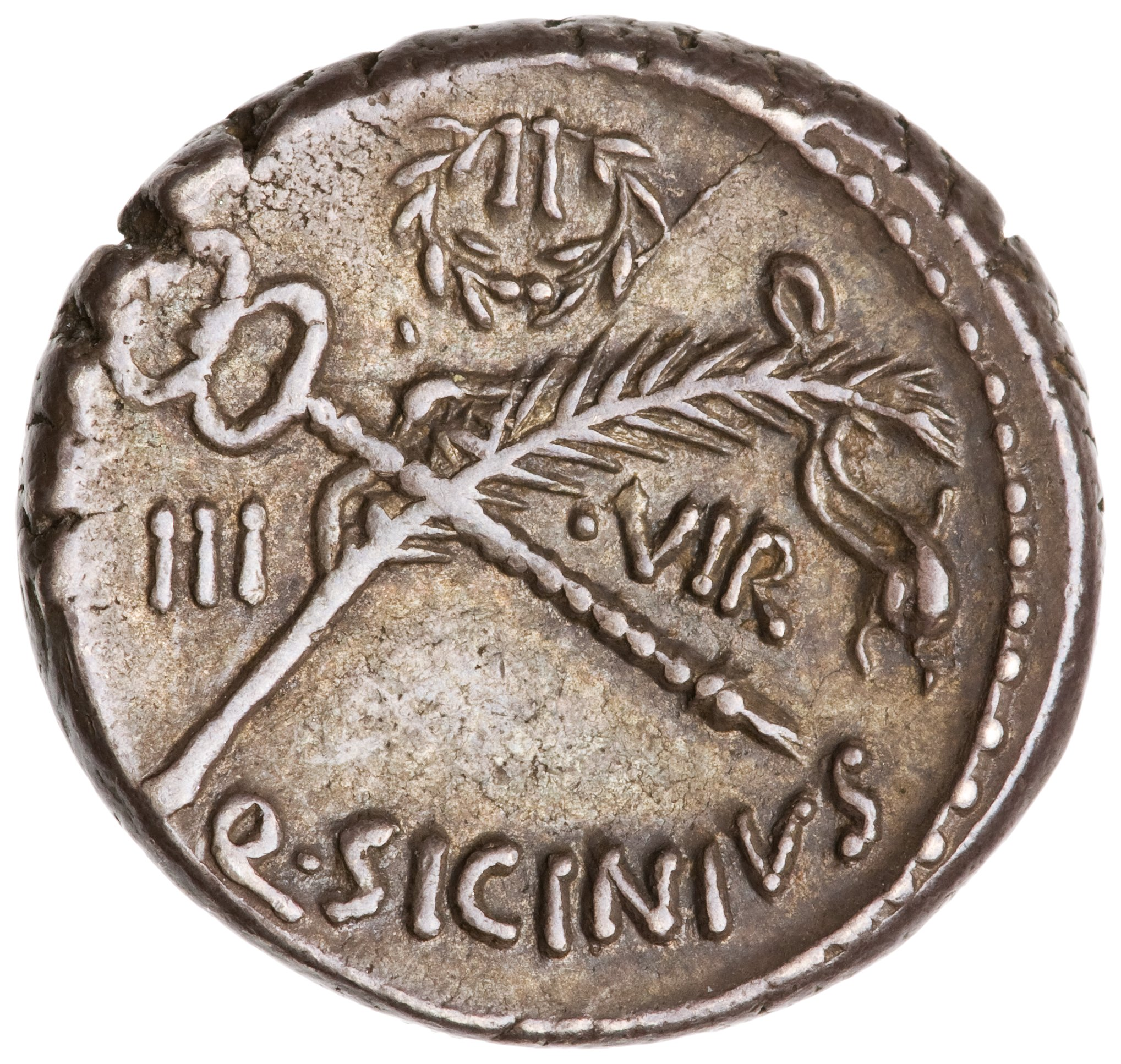
Semuncia of the Mercury-Prow Type, prior to 208 BCE. It seems likely this may be from one of the issues struck for the Romans at Luceria. The expert on these bronzes is Andrew McCabe. I defer to his judgement and do not assign this a Crawford number as McCabe has shown that we can better group these south Italian Hannibalic War issues than was possible when Crawford was assembling his typology. The excavators classify it as RRC 38/7.This quincunx of Luceria corresponds to HN Italy 678. These are also typically dated to the later part of the Hannibalic War, c. 211-200.
Here is a machine translation of the excavator’s report of the context of these finds and possible explanations:
On the top surface of the moulded base, two bronze coins were found: one (RP 14) along the southern edge (fig. 31), the other (RP 15) along the western edge near the NW corner (fig. 24). RP 14 (figs. 24, 32) is a quincunx from Luceria (Obv. head of Minerva / Rev. eight-spoked wheel, legend LOVCERI with archaic L), datable to the late 3rd century BC, while RP 15 (fig. 33) is a semiuncia (diam. 2.0 cm; Obv. head of Mercury to the right / Rev. prow to the right, legend ROMA), also assignable to the late 3rd century BC. Given the small number of coins recovered from trench M-6 — just three in total — the discovery of two of them at the edges of the base and in contact with it may not be entirely coincidental.
The stratigraphic sequence helps make sense of the recognition of activities. At the end of the sanctuary’s life, in the 1st century AD, the inscribed block RP 19 was still on the moulded base, along with another block to which it was connected by two iron clamps; the data does not tell us whether they still supported a crowning block. At some point, the clamps were broken, and a fragment of one ended up on the surface in front of the base, before the fall of block RP 19; presumably, it was only at this point that the upper block was dismantled. The coins, found on the edges of the base and covered by the abandonment layer, may have been uncovered during the dismantling of the blocks. If this hypothesis is accepted, they could be interpreted as objects deliberately placed between the blocks at the time of the base’s construction; otherwise, one must suppose that they were inserted into the joints during the ‘ritual’ life of the base, emerging by chance only after its dismantling.
Osanna et al. “Rossano di Vaglio, santuario italico: cronaca e nuovi dati dalla campagna di scavo del 2024″ doi.org/10.69590/e8zcns05
Once again I’m grateful to Dan Diffendale for sharing his work so readily. I would have missed this publication and its FIVE new Oscan inscriptions, to say nothing of these coins without his public out reach.
By they by, I’ve been to this site, but not since 1999 when in October Michael Crawford took me and two other students on a Lucanian adventure. An amazing man. An amazing mentor. He was so committed to showing us more than just artifacts, but the actual landscape of the history we so wanted to understand.
Matter is a strange word. The OED tells me the noun predates the verb in English by a few hundred years and verb derives from the noun. Just like email is a noun but we can also use it as a verb: to email someone something. Matter comes to us from the Normans–likes so many of our points of overlap with the other romance languages.
“The sense development of Latin māteria was influenced by that of ancient Greek ὕλη hylen., of which it was the accepted equivalent in philosophical use.”
Oxford English Dictionary, “matter (n.1), Etymology.”
To be or have substance, to be substantial, for there to be a there there.
Perhaps I find it hard to articulate why my work matters, to make meaning of it, is because I tend to put first the pleasure, or at least satisfaction, I derive from it. The work calls and drives me forward. It feels good in my brain. Like crochet. Like a great conversation. Like gardening. Like dozing under heavy blankets on a cold evening listening to the rain.
Second, I value any meaning others might derive from my work. If it helps them look at the world in new way or sparks their curiosity or answers a question they might have had. I like the potential that my work has to create connections. I know my brain is different than most brains. Perhaps even most brains that enjoy coins. Not, better, not worse, just different. Unique. There is a pleasure to be had in meeting both the familiar and the unique.
These are not the things of academic book introductions, I suspect some even raise an eyebrow to my placing them here on an academic blog for all to see.
But, facing facts, we are in crises, be they local or regional or global. There are significant limits to our personal agency. This does not absolve us of moral responsibility, but it does complicate our relationship to the mundane.
Over the last month I’ve become more intent in enjoying the transience of life. A sunbeam. The sound of my children. The feel of the night air. The taste of bread baked by a friend. I know this is to a degree an outgrowth of my dread of what may come. The unknown future and the disturbing present.
This being in the moment and centering my awareness of the goodness of my life helps intensely in coping with the day-to-day, but it does not easily spark forward momentum. I prefer to plan than to react, and right now in most aspects of my life with respect to the emerging crises, the best approach is hold space for multiple possibilities and not rush engagement from my frustration at not knowing what will come to be. I know my options. I know my values. I trust I will make the right decisions as it is time to make decisions.
Yet, the flip side is I miss dreaming and pushing towards a goal. That last blog post helped me see not only what I want to include in this introduction but the ways in which over the last decade and more each apparent set back has laid a foundation for my next career step, even as they felt devastating.
So perhaps this moment too will bring something new and wonderful that 10 years from now I will celebrate.
My relationship with RRDP and the project itself are things to celebrate. Partly because they brought me pleasure and satisfaction, good conversations, and deep meaningful partnerships. But, again, we cannot admit in any formal context that this is the function of our work.
Joy has is not a legitimate justification for an academic project.
So maybe to find the justification, the meaning, the substance of my work (of joy, sssshhhh), I must ask different questions. Not “why does it matter?” because, frankly, in comparison to the present human suffering and our likely futures, it does not truly matter at all.
Perhaps I need to ask:
what questions does it answer?
what questions could it answer?
how does it intersect with the work of other scholars?
who has and who can utilize this data?
Not “why it matters”, but rather “what is its utility?” and if it must “matter” perhaps we can say, yes it has substance, depth, and seriousness and rigor. These things need not have moral or ethical values or even practical value for addressing practical problems.
[Yes it is exhausting to have my brain work this way. No, it is not always quite this bad, but trust me it is better to write through the contortions of my thinking, to iron out the wrinkles of my mind, than to remain paralyzed and self-loathing for not engaging with the work I said I would do. Please do not feel you must read any of this.]
—-
At this point you may be glad to know that I actually started writing something like a real draft. I cut and pasted it into a word doc and will keep on going tomorrow.
It took almost 3,000 words of navel gazing to produce just over 600 plausible words on the topic I need to write about, but this is ok. If 80% is tossed to the wind and I keep 20%. This is not so bad.
The origins of this blog and the RRDP project are pretty much the same. I was trying to figure out how to write my second book on Roman republican coins and how to explain their significance to the average historian. In the spring of 2014 (still in the first year of this blog) I was still thinking of the book as a chronological treatment (I gave that approach up in 2018). But even as I conceptualized the project of translating republican numismatics for republican historians, I already knew that certain topics and themes would be more important or just frankly easier for the uninitiated to see the relevance.
Already in December 2013 I had identified the grain supply as one of those topics and had written off the blog in a word document some 5,500 words on that topic. I naively thought at that point that that writing was ‘drafting’ my ‘book chapters’. I still clung to the view that this blog was ‘non-sense’ and that drafting could be done in the raw without pre-writing. I did eventually post the timeline I had created and then used those early off-blog drafts to influence other bits of published writing in the book. Some of the work also ended up in my 2017 Minucius article. Strangely, the topic ended up being scattered over the whole book.
Sometime while I was wrestling with the grain supply, I think, in early 2014, I realized the key importance of RRC 330/1, the Caepio Piso issue, as potential quantitative evidence to set against literary testimony of state expenditure on grain, particularly for the urban population.
Then came the key question: Had a die study been done already or was that for me to do?!
I asked Rick Witchonke and in his response was the first time I learned about Schaefer and his monumental archive. I wrote Richard and he very kindly sent me scans of the binder pages for RRC 330/1. I didn’t believe such a thing could exist. It was brilliant and tantalizing. If the metadata is correct on the below image file. The birthday of RRDP or at least the first seeds of the project were planted on April 17, 2014. I was out of my mind on all the hormones and stress involved with invasive infertility treatments and here was a numismatic treasure trove that promised a lifetime of curious puzzles, meaningful work, and joy. I was obsessed.
That August I returned to the US pregnant with twins and with about 80% of a manuscript. I hit three walls simultaneously. The deep fatigue of growing humans, the demoralization of learning my manuscript bore no resemblance to what my publisher wanted to publish, and teaching four days a week for the first time ever because of scheduling snafu. Fall 2014 was the hardest teaching semester of my life. I taught, I slept, I tried to ingest as many calories as I could keep down. I did not think about coins. And I really didn’t return to coins for a significant period of time. As the fog lifted mid 2015 (post birth and post-partum depression) I let myself enjoy Dionysius of Halicarnassus, work that will appear in future years, in various fora, and I threw myself into Mellon Mays, which eventually took me towards new meditations on debt, slavery, and the nature of freedom. As those regular readers of the blog will know that debt is a topic to which I’ve been returning with gusto over the last 18 months.
I didn’t make it back to mentally engaging with either my second book project or the Schaefer archive until Fall 2017. [That is about one year after I bought my house and left the city to get a little physical distance from my campus, as I was not really managing to have any emotional distance.] That Fall I recruited a team of undergraduate research assistants and wrote a successful proposal for us as a team to work on the RRC 330/1 using the images Schaefer had sent me back in April of 2014. Those students were so brilliant! They helped me learn how to teach RR coins and die studies and databases to Undergrads. Each took a control symbol and completed the remainder of the die study augmenting the the Schaefer material with other specimens. Of course at that point I didn’t know about overflow/clippings images Schaefer didn’t have in the binder. The students ended their semester’s work with data visualization of how best to represent die links within their individual controlmarks. Those posters decorate my office in Brooklyn and they collectively convinced me of the Roman republican inclination to pair dies. There are a few clusters but mostly pairs.
[I’ll finish the origin story, but I’ve already decided that the introduction to the RRDP volume will center RRC 330/1 as a case study and exempla of the importance of the project as a whole. I had to write to this point to know that I want to do this and to believe it would work and I’d have something to say. Just like my previous post was necessary to realize, I WANTED to write the volume introduction, not just to have written it.]
Fast forward a year and I was thinking more about aes grave and my former teaching partner, Wayne Powell, was talking to me more and more about his work on ancient bronze artifacts. I started dreaming up a metallurgical project on cast coinages. I pitched it to the ANS. After much back and forth, I failed to convince them that such a project had any merit such that they wished to provide access to their materials for testing.
That was hard to hear, but eventually led to two great outcomes. First, the aes grave work has continued first with my work on metrology and then actual metallurgical work with Princeton, Yale, Rutgers and then Nottingham for the Nemi material, and now the ISIS particle accelerator. This work is ongoing and has led to a much broader network of collaborations. Had, the ANS not said ‘no’ in the first instance, it is hard to see myself as being brave enough to reach out to other partners and the project might never have led me to such exciting horizons. Second, as I was discussing my disappointment and numismatic ambitions with Lucia Carbone in the aftermath, I told her my biggest dream, the one I most wanted to accomplish, was a digitization of the Schaefer archive. And, she said, LET’S DO IT. I needed that “yes”. That confidence that it could be possible, that it was worthy of funding, and time, and preservation, and our creative engagement.
There have been many struggles and compromises along the way, but I have no regrets we did it. And we did deliver what we said we would. I might have dreamed of more and different data interfaces, but the data is accessible and safe for future generations. I doubt I will ever write anything on republican coins that will not utilize it in some fashion.
Drawing of a Roman Gem, Knowledge as Victory? Conquest of the Mind? (BM image)
Things are not good. Perhaps we can just all agree on that.
The title of this post is not a giving up, but rather yet another sincere effort to push myself to engage, to write, to know why I do what I do. I’ve been writing but all my blog posts end up in the drafts file this past month. An alternate post title might be: What am I NOT writing today?
I’ve got 2/3s of a banger of a post on disciplinarity. Yes, once again I’m wrestling with what the heck is Classics and where does it belong in the 21st century academy. That post is most certainly inspired and necessitated by my own struggles as a chair of a shrinking department. And, yet discretion is often called for in delicate moments. I write to know my mind and sometimes its best not to share. I know. I know. That is radically different than the very premise of this blog and my own general philosophy of being. I want to be an open book.
I’ve got another draft of a massive numismatic-themed post about a gorgeous 18th century series of drawings of coins, the vast majority of which don’t exist but are directly inspired by identifiable types. It feels a rather a significant step forward in my emerging work on fantasy pieces. I think I may actually have something original and necessary to say on the topic given some more time and data collection. After 12 years of blogging my research process, I know how slow it is to go from post to completed article. My first post on elephants and pigs appeared 2014 and the article didn’t appear in a PR journal until 2021. I like complex puzzles and pulling ALL the threads together. I’d publish more, I think ,if I turned more of my one-off ideas into articles or notes.
Today, I have time to write and I’m in the mood to return to either of those two pieces. But I’m not doing so. And, in fact, I stopped working on both because of other professional commitments.
I have also not started any new blog posts. I have an incredible itch to write about necro-classics, a concept introduced to me in conversation with Kyle Khellaf, a visiting scholar, I hosted earlier this week for a campus lecture. If I’ve captured the idea he himself adapted from other scholars of more contemporary periods, necro-classics is when an ancient society marks certain humans as unworthy of life and/or where their death is without any significance or meaning. Humans so marked then experience being in essence the living dead. If you want a quick conceptualization just think of Cicero’s state of mind after Clodius manages to have him exiled. Or the proscribed under Sulla. We know and discuss these historical examples because in fact whether those lives mattered were disputed by the Romans themselves. By contrast, there were whole peoples the Romans were happy to exterminate that barely blip on our historical radar. In this conversation, I then raised the concepts of social death and natal alienation as the defining characteristics of enslavement as theorized by Orlando Patterson. Who were the scholars influencing Khellaf on this? I’d write and ask, but the answer might just be another distraction.
So here we have already three things that I’m NOT writing about (that I want to write about!) and looming over me (with SO many shades of guilt) is the need to draft some sort of introduction for the conference volume for the AAR-RRDP conference last April. There I said it. Confession is good. Even a little bit of public shaming of myself.
I keep telling myself that I have no inspiration, that it doesn’t move me, that I don’t know what to say, that I wish to be back in Rome in the gardens of the Academy bouncing ideas off my fellow conference attendees and contributors. I tell myself I’m bored with the topic. That there is nothing left to say. Or, that none of it matters–what’s the point?! On the flip side, the conference was awesome and I want the papers published and I want to say why six years of RRDP matters and why I bothered to give that project so much time and why I think there is still work to be done.
On Monday, after Khellaf’s brilliant lecture on the PostClassical Magreb, I had a conversation with Joel Christensen about writing at the reception. He was talking to a student when I joined in. Christensen was extolling the virtues of writing (only?) when one has something to say, giving it a little time (rather than hours, days, weeks of sitting with the work), and letting one’s brain continue to work on the topic even as one engages in all the other aspects of academic life. There is truth in all this. When I know what I want to say, even what I need to say, the words just come. Setting work down and coming back to it always makes it stronger. Writing is an iterative process. And, when I’m in a writing project it is easy to return to it, I even feel compelled to do so. Such is very much the case with the post on disciplinarity or the one on fantasy pieces sitting in my drafts folder.
Yet, as I said to Christensen, sometimes we can also write just to start. To know that our fingers will move. That we can control our brains and take the noise and chaos and put it to a problem in a linear fashion. Herein is the essence of my blogging. It started as an exercise and meditation on how to write. It evolved into a repository of ideas. A workspace for connecting disparate pieces of primary evidence. And, now when I find being simultaneously a scholar and petty bureaucrat so hard, it is again an exercise and meditation on writing.
989 words. In less than an hour.
I can make myself write. I will make myself write.
I can explain why my work matters, even in the face of fascism. I will not despair.
To be a humanist of esoteric things is to resist despair.
It is not selfish, but rather a small gift I can give future generations.
I’m delighted to learn that the proceedings of the International Numismatic Congress held in Warsaw, Poland, in 2022 is now published AND is OPEN ACCESS. Now we can all read the papers we couldn’t attend!
In the Roman section I contributed two short pieces on RRDP both co-authored, on the second one Alice did all the heavy lifting. I’m dead impressed and honored to be on the author list. The first one is an abbreviated preliminary version of ideas that will appear in a fully fleshed out article this year or next in RBN.