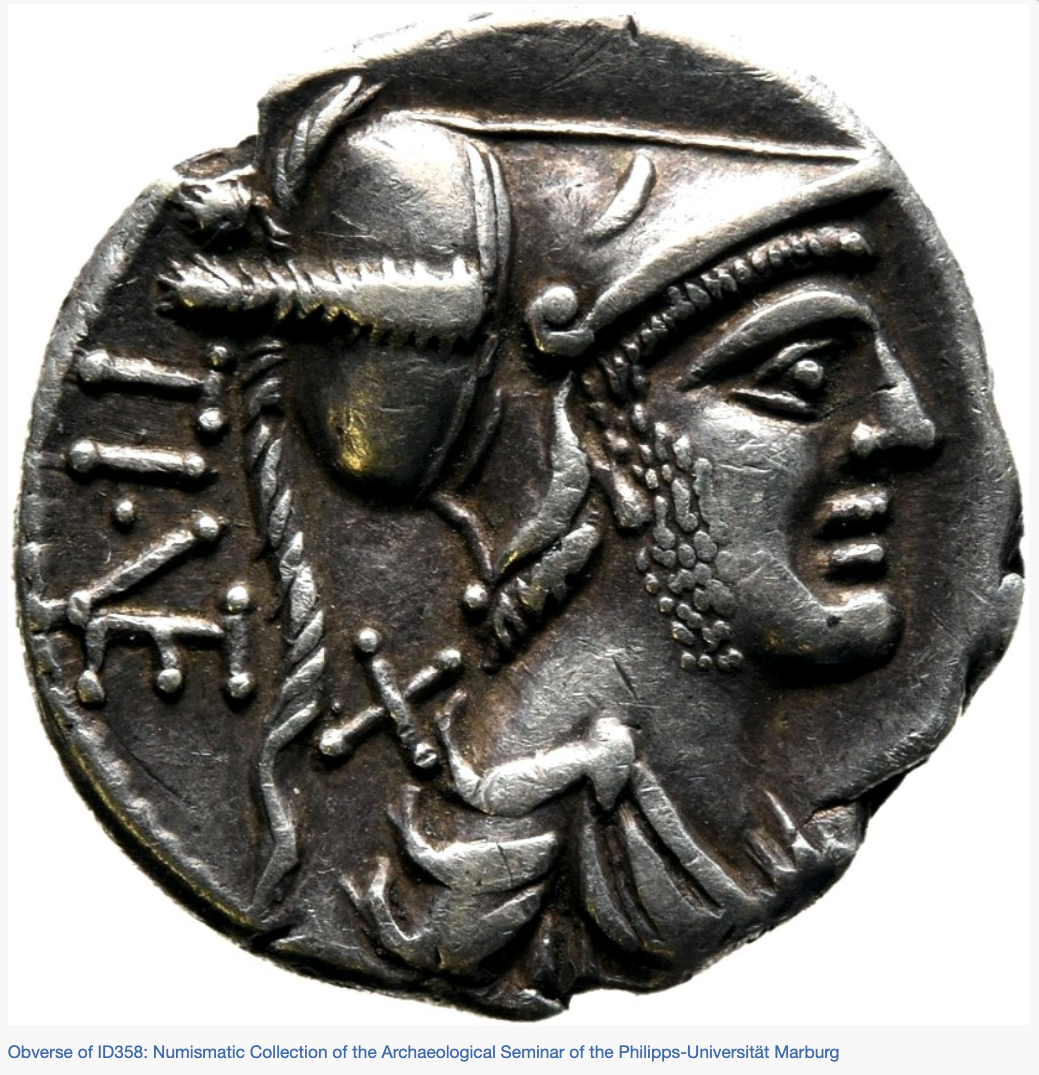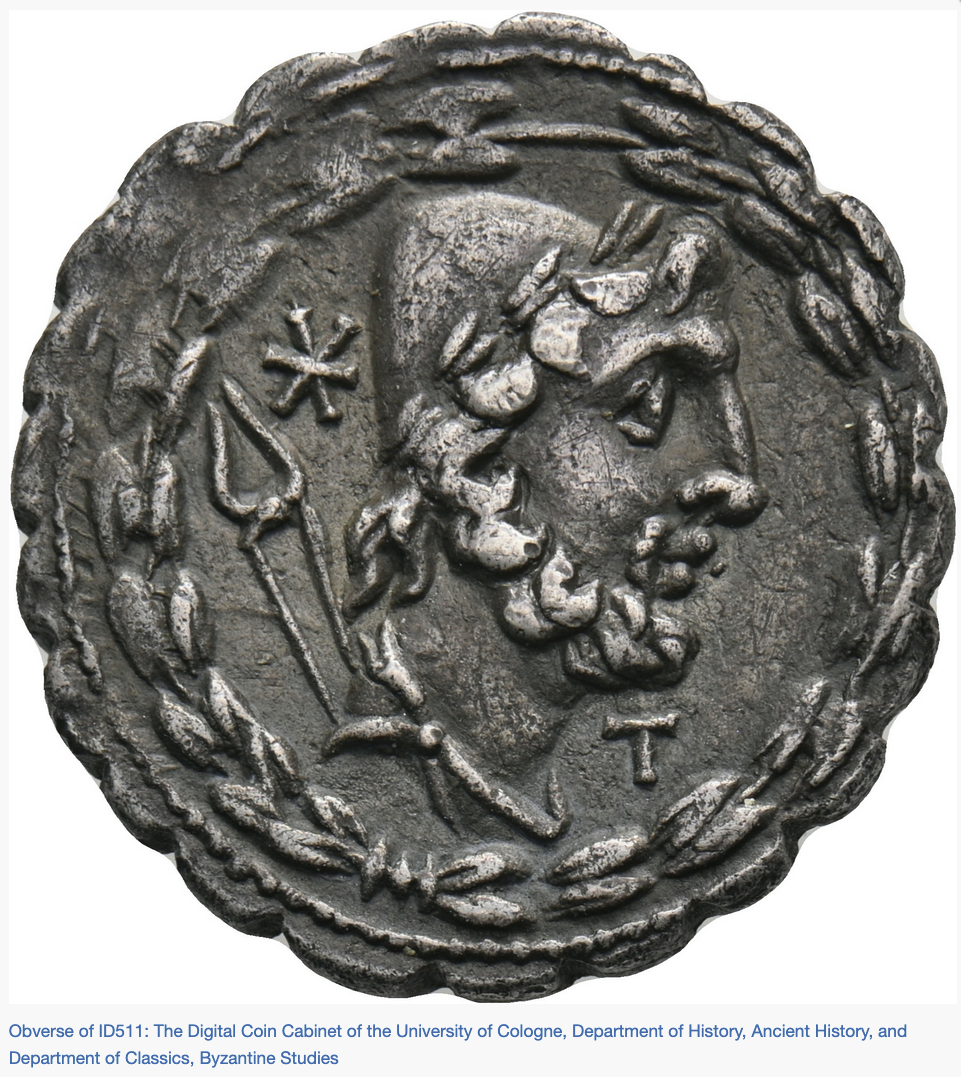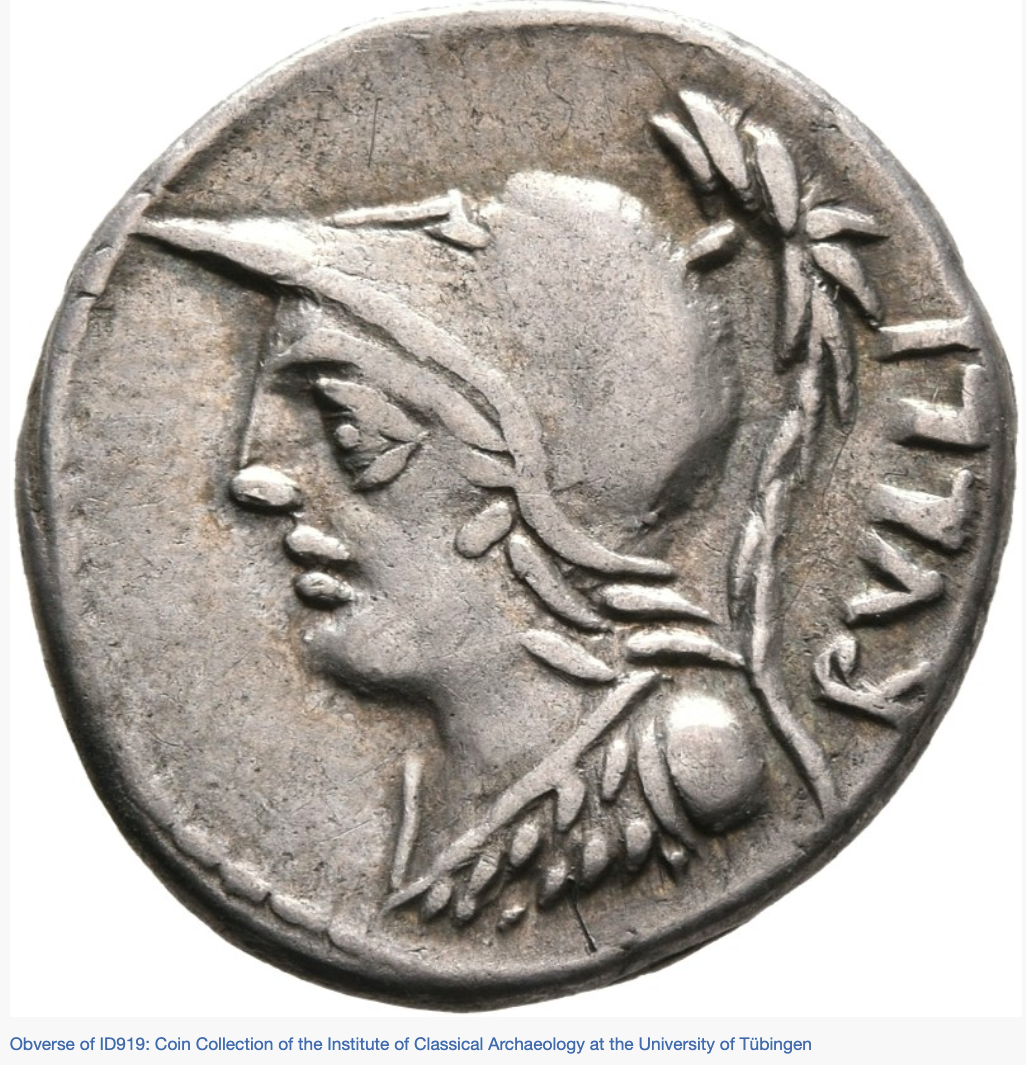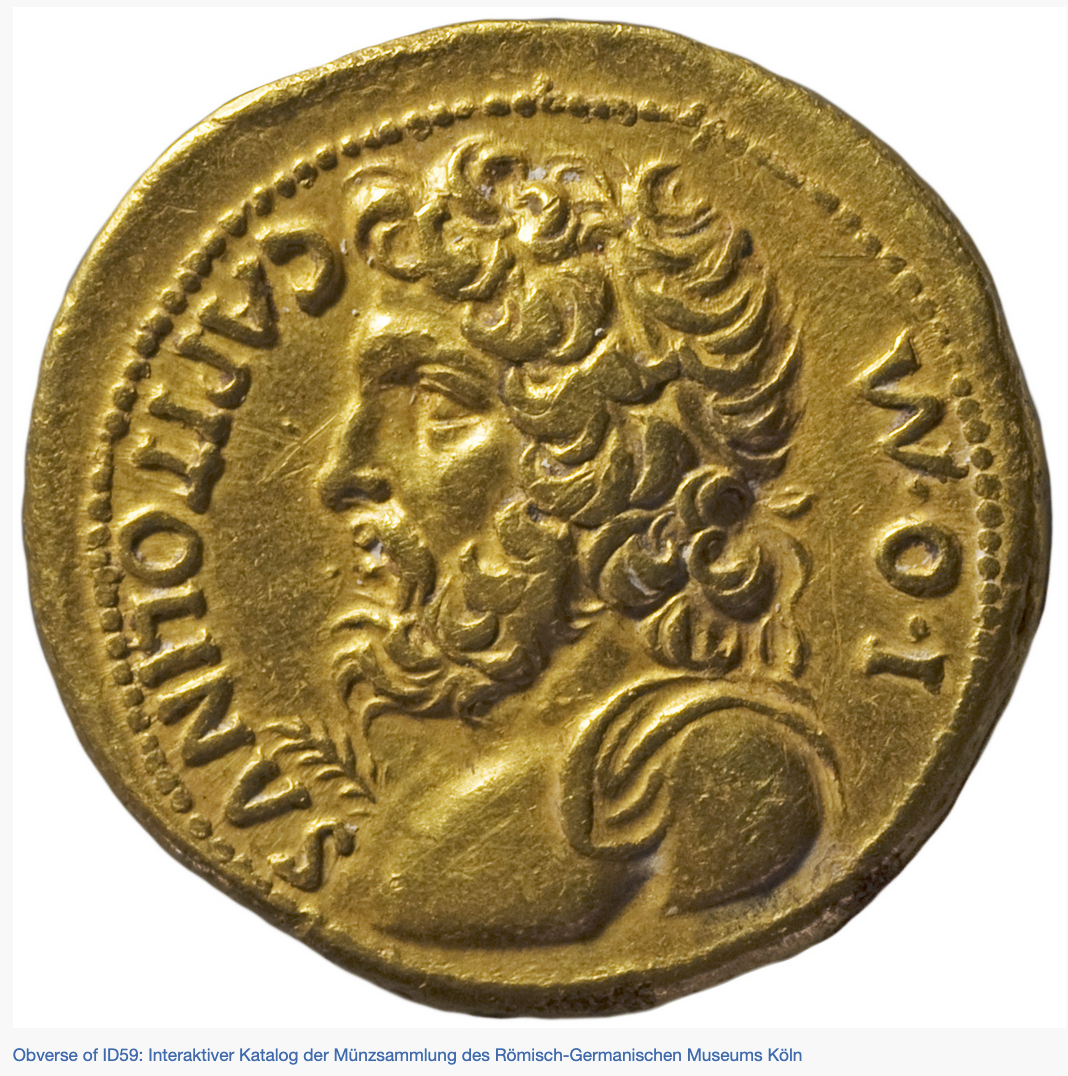
Notes on Fajardo on Anonymous Civil War coinages of 68-69 BCE

Link to ANS specimens relevant to this topic

Any attribution to a particular emperor or leader uncertain

NW empire provenance

Mattingly 1914 could not establish provenance, but now CHRE allows us to do so.

Movement and finds suggest a decoupled from troop movement

Variable weights and many plated examples 17% in Martin’s study

144 types, of which 127 denarius, 13 shared by aurei and denarii, 4 aurei only types.

Heads where present represent gods, personifications, or divus Augustus

Thought to be republican until 19th century, but on a Neronian standard and metallurgical testing support dating

25 possible find spots from a range of sources, Martin 1974 and CHRE. 10 have sufficient data quality for inclusion in the study.

All small hoards, 9 denarii hoards, 1 aureii, typically only one anonymous denarius per hoard.

Created a data set of hoards with Contemporary Imperial issues those struck in the names of Galba, Otho, and Vitellius dated to 68-69 BCE.

The hoards with anonymous coin show a significantly different geographical distribution than would be expected from the other hoards. Clustering along the northern frontiers. [photo on file]

Really cool statistical visualizations, I want to practice using Kernel Density Estimates myself as an alternative to traditional histograms.

Take away, the anonymous coins spent only a small period of time in circulation but the contemporary civil war coinages linger in the hoards much longer.

Both (variable) quality and iconography likely lead to their falling out of circulation faster than contemporary issues.


Cool (new to me) finds database out Germany.


N.B. I enjoyed Aracelli’s paper on Rhodian coins but came in too late to take adequate notes. The most interesting point came at the end and in discussion regarding comparison of patterns of coin finds with amphora finds.

Notes on Accettola on Nabataean epigraphy and identity

I’m super excited to start my conference with a paper by Prof. Accettola on Nabataeans and Greek and Roman sources and these peoples own self presentation. . My excitement comes from her publication on one of my favorite topics.

Accettola, Anna. “To Whom Does the King Kneel? The Absent Supplicandus in First-Century Republican Coinage.” American Journal of Numismatics (1989-) 36 (2024): 15–38. https://www.jstor.org/stable/27352948.

I have not yet read the above. Expect a blog post on it in time. I discuss the topic in my Tree and Sunset paper of 2018.She’s discussing how Greeks self identify but how Nabataeans did. Specifically how tribal identifiers many not be legible to Greek audiences especially at greater geographical distance. Nabataean is a more of catch all, perhaps even a political concept more than an ethic. External audiences recognize the term and the fame of the kingdom even if the the individual so identifying might not have a strong attachment to the term.

First case study, Tenos, 2nd cent BCE, Salamenes son of Edemon proxenos, good man, and the Nabataean. Paternal name is completely unknown in Nabataean prosopography, this leads some to suspect there may be a mistranslation of how the man himself identified. Perhaps he was of Edom.

Second case study, from Capitoline, 1st century BCE, bilingual, Latin, Greek, and specifically casts Nabataea and their ‘king’ as below Roman authority, something the speaker says she’s not at all confident the Nabataeans themselves would have considered accurate at this time.

King of Nabataeans not a term used in Nabataea until 9 BCE! Then two case studies of personal religion dedications in the Greek world, aramaic and Greek bilingual at Miletus again late 1st cent BCE. Super interesting as the dedicator seems to concern himself more with his divine audience not the local audience. Similar one from Delos, perhaps dedicated by the same man, perhaps a marker of his journey through the Mediterranean from his homeland to Rome. King is used but not a King OF the Nabataeans, just King.

Super great paper cannot wait to read the final version.

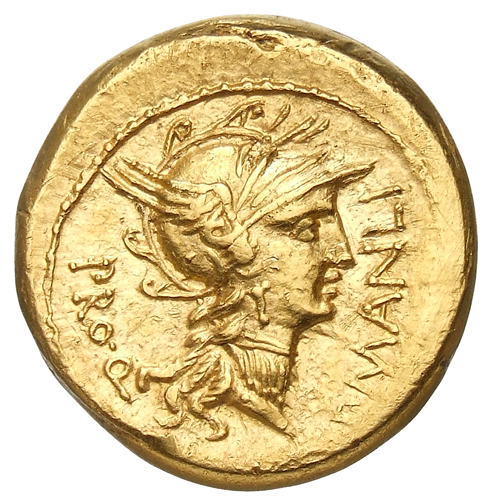
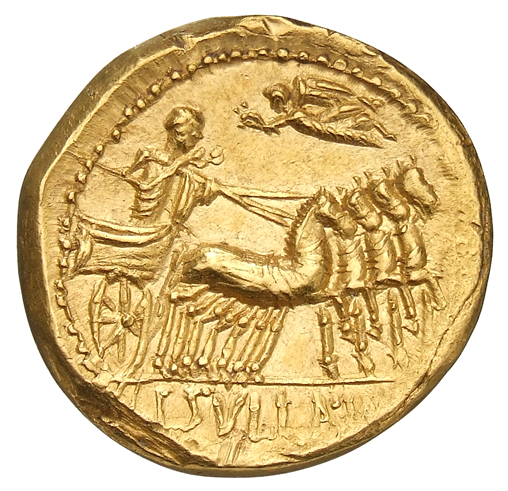
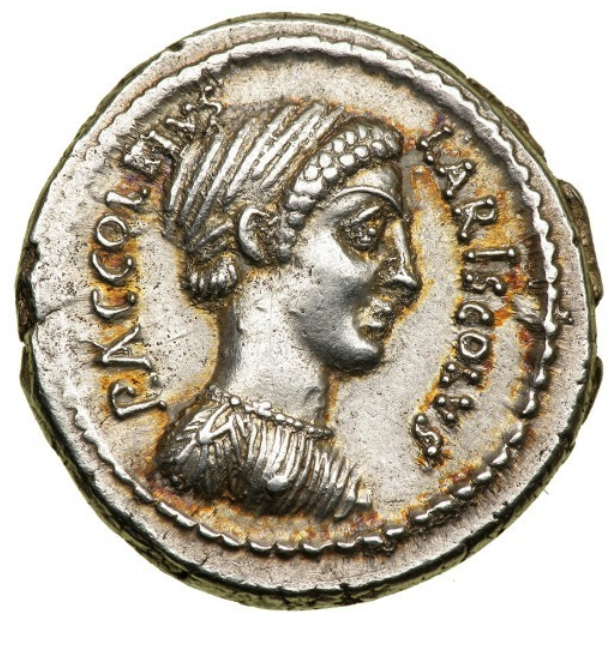
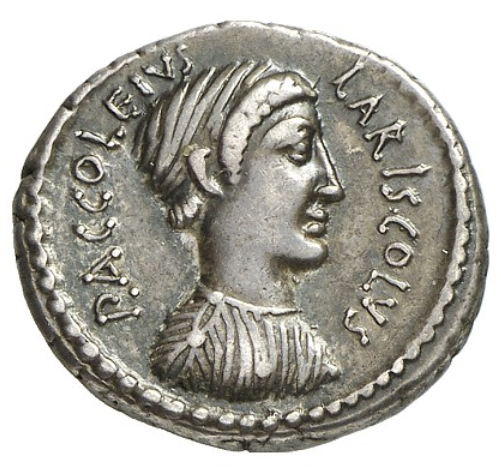
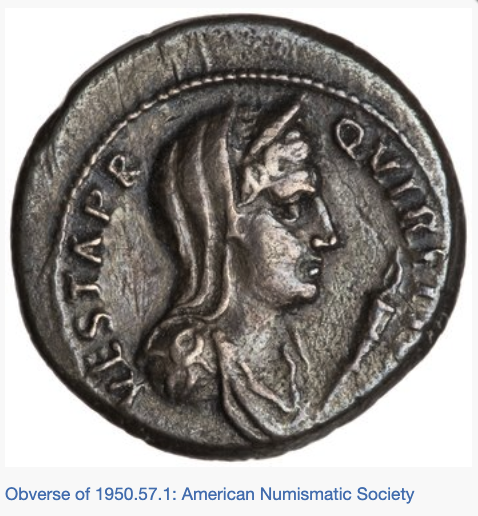
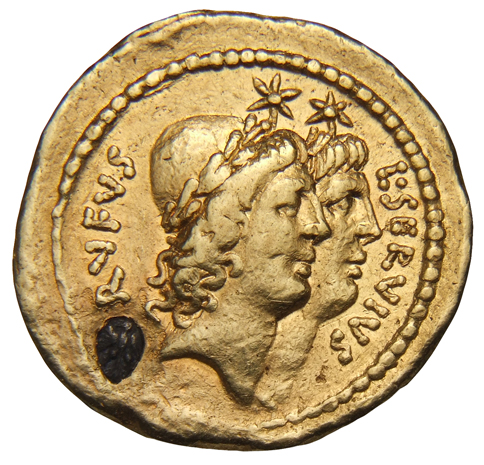
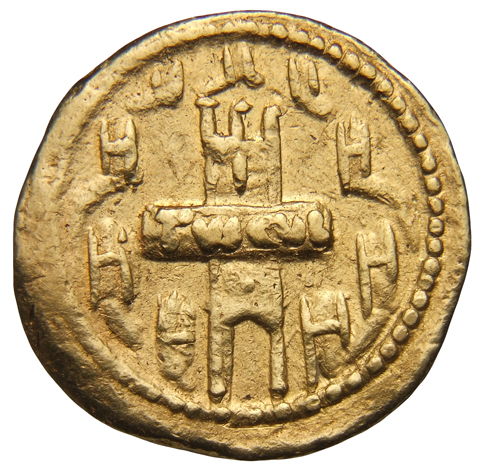
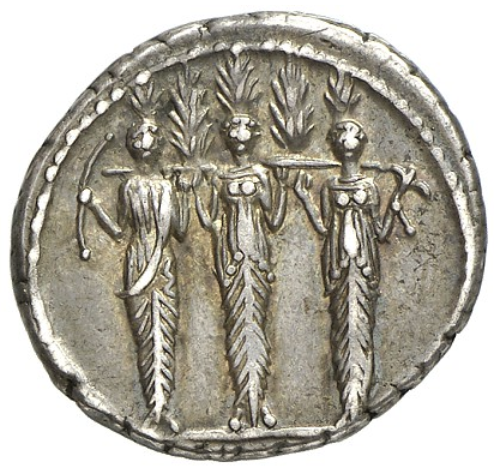
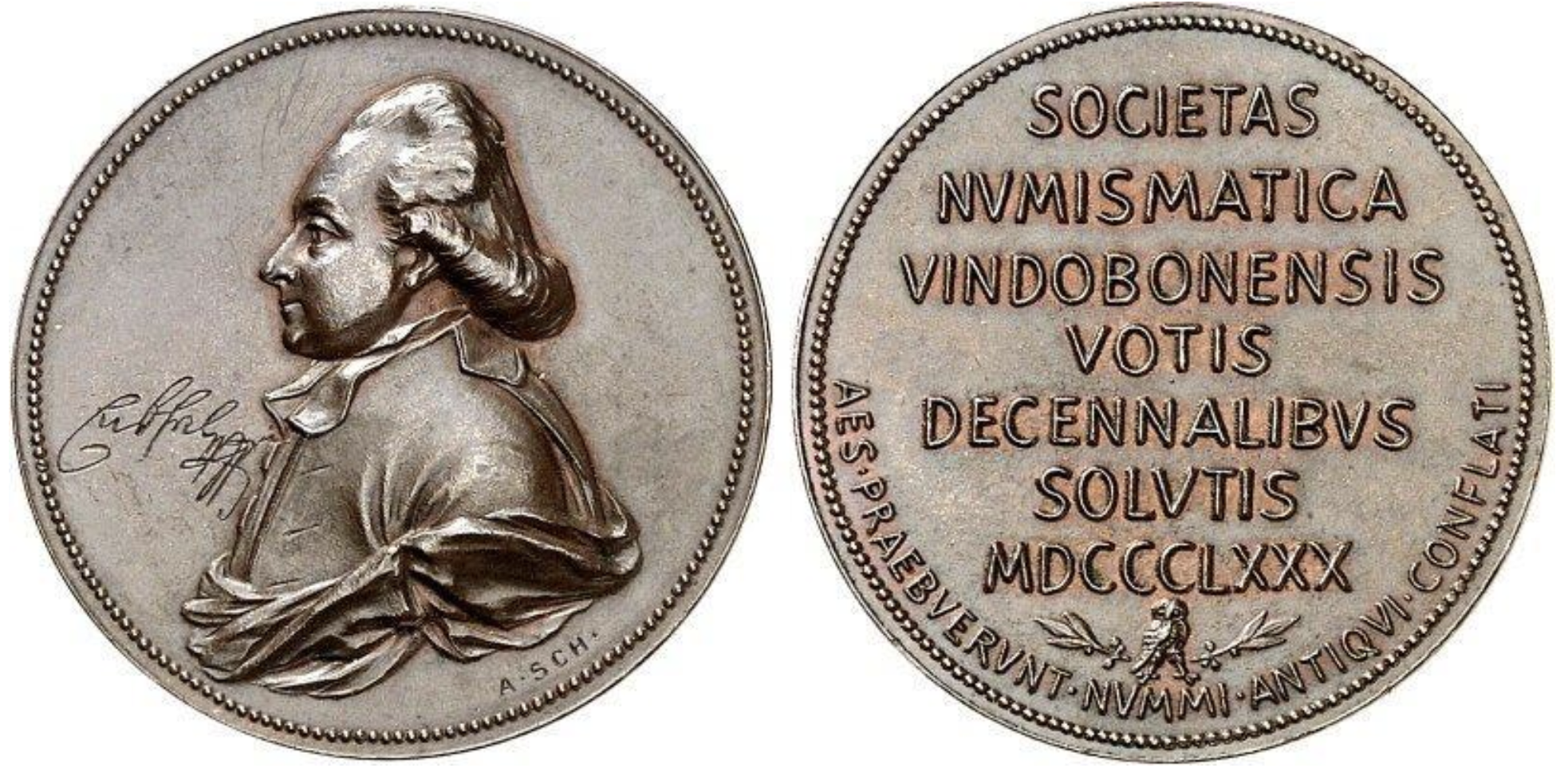
Here’s a coin just to give this post an image.

RRC 422/1

The Joy of Correspondence

One of my fondest archival memories is reading letters sent to Hersh by scholars across the globe and inferring a bit of what he might have said to spark the response. I flatter myself that today’s fast paced online world creates something of the same scholarly exchange below the level of publication. A sharing of ideas, a willingness to be wrong and learn from our peers. I blog to capture my stray thoughts for myself to figure out what I might think, but the best is when others write back and help me learn more. Andrea Pancotti sent me his 2013 essay and I’m beyond grateful. I’m flying to the AIA (SCS) and have completed one student reference, one professional reference, and made it through another Wiseman chapter. More chapters and references need attention this flight but I wanted to return to Cetegus and honor Pancotti’s generosity.

Let us start with some important factual information.

“Only one example of this denarius is officially known today, preserved at the Bibliothèque Nationale de France (Ancient Fonds 1068). In the second half of the 19th century, a second example was reported in the numismatic cabinet of the ducal palace of Gotha in Thuringia (BAHRFELDT 1897, Cornelia 5, p. 91): this one, whose authenticity was seriously doubted (M. Bahrfeldt in NSA 1876, 2 [February], pp. 9 and 19; ENGEL 1879, p. 34, n. 1), presented small details on the reverse (such as the shape of the goat’s beard) that stylistically differentiated it from the coin preserved in Paris. After World War II, the collection suffered considerable losses, and the piece is currently missing.” (p. 279 n. 2, roughly translated)

This is a good reminder of the fragility of the historical record. I also find his comments on how preservation effects interpretation very apt and important”

“Given the state of preservation of the specimen preserved in Paris (bb-VF), it is not possible to determine with certainty the floral elements that characterize the wreath; for Eckhel (ECKHEL 1795, p. 180), Cavedoni (CAVEDONI 1829, no. 46, p. 152), Riccio (RICCIO 1843, no. 15, p. 63), Cohen (COHEN 1857, p. 101) and Crawford it would be ivy; for Babelon and Belloni it would be laurel (BELLONI 1960, p. 73, no. 539); according to a further interpretation by Cavedoni, it would be “two branches laden with leaves or oblong fruits”. (p. 280, n. 4, roughly translated)

In 2013 Gallica and its high resolution images were not available. Today we can all have an opinion on these fine details worn and indistinct as they may be.

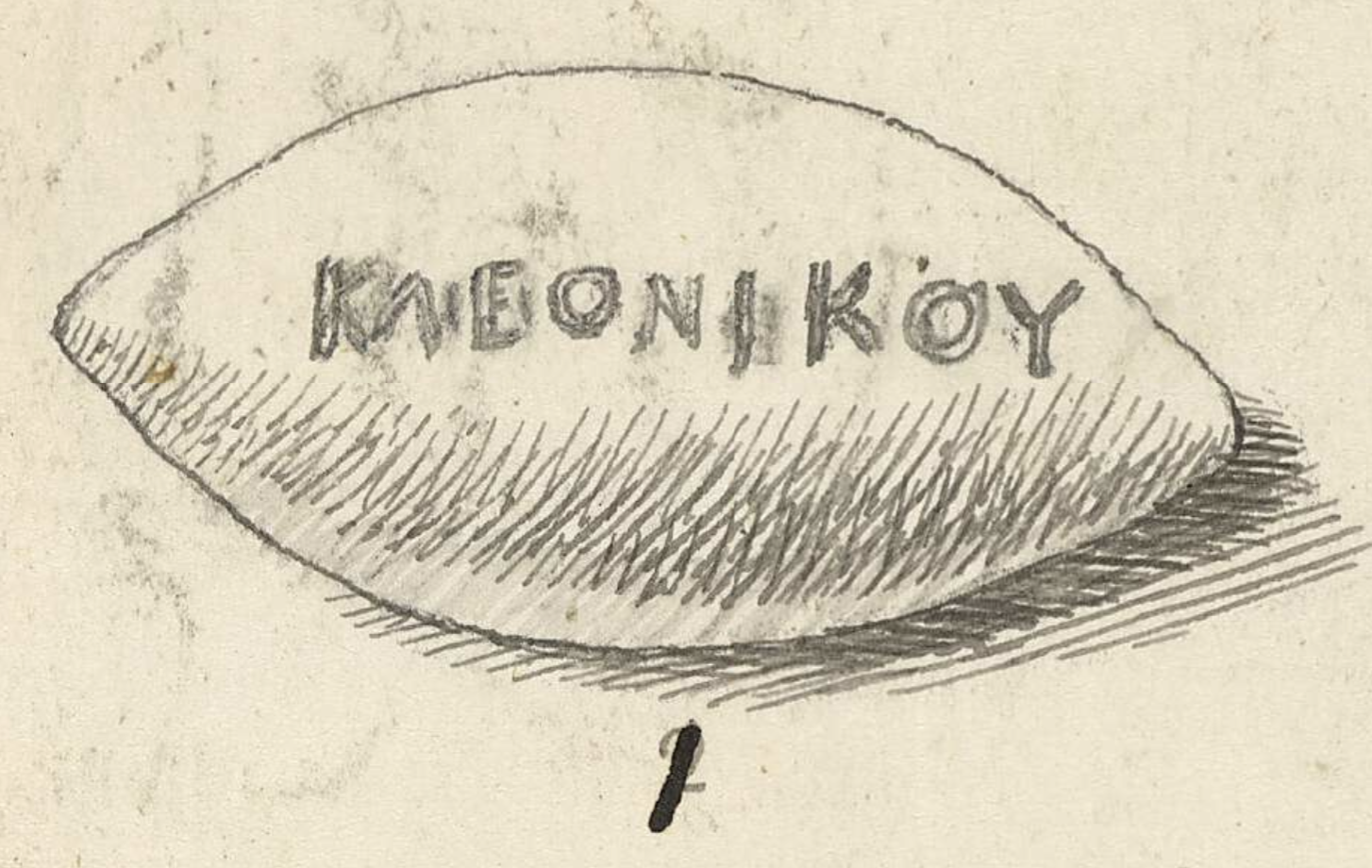
I’m pretty confident that laurel can be ruled right out. Laurel wreath borders pretty universally on coinage look different, more like as series of interlocking Vs starting at bottom and center and going up both sides (e.g. RRC 263/1 and many more besides). There are no ivy borders on the republican series for comparison. The most famous ivy border of the hellenistic period is that of the cistophori, but these wreaths (example) tend to alternated two leaves and berries clusters and/or flowers. The heart shape of the leaf is typically emphasized. What I see is a wavy line with alternating small leaves. It is hard to make this out to be ivy. The motif feels distinctive and possibly can be matched to other iconography in future. The drawing of the now lost second specimen shows the border slightly better (if it is accurately rendered and if the coin itself is genuine):

Image from p. 281 of Pancotti’s article.

“Before the excavations conducted at the end of the last century at the sanctuary on the Palatine Hill, which uncovered numerous votive offerings dedicated to Attis dating back to the 2nd century BC, the deeply rooted belief among scholars that the cult of the Phrygian god only spread widely from the imperial period onwards was always stronger than a critical analysis of the primary sources, even in the face of the evidence of the key role of M. Cornelius Cethegus, an ancestor of the moneyer, who held the consulship with P. Sempronius Tuditanus in 204 BC, the year of the official introduction of the cult of Cybele in Rome.” (from page 281)

This is absolutely key.

I’m now skipping over any mention of his excellent re reading of RRC 353 to which I may wish to return at another point in detail and discuss just a bit below.

I browsed Attis in LIMC to make up my own mind if this was iconographically possible. I’d normally drop in a bunch of screen shots here but the wifi on this plane just isn’t up to that. The most distinctive and consistent part of his iconography is his youth, often, pudgy, with a Phrygian cap and and funny trousers. All of these could correspond to the coin. The funny trousers cannot be confirmed given the worn surface of our one extant specimen. There are a variety of attributes he holds in other depictions. Most common are the pedum and pan pipes, marking him as a shepherd god. But plenty of other attributes are shown (theater masks, cornucopiae, torches, even a small round shield). In two images, nos. 142 and 143, he is shown like the good shepherd with a sheep or goat on his shoulders, which type of animal is unclear, at least to me (cf. also 214). No. 146 has a small shepherd milking a goat at Attis’ feet. No. 236 is an adorable figurine of baby Attis cuddling either lambs or kids. Nos. 291, 293-295 show Attis sitting side saddle on a giant rooster. Not an exact parallel but a nice indication that Attis does ride animals, as Erotes often do. Attis has other parallels with Erotes in his iconography, sometimes leaning on an extinguished torch (like Thanatos) and even commonly winged and depicted as such in jewellery. Nos. 297-298 has him riding a lion (attribute of Cybele). And most intriguing is no. 304b which is a figure that is meant to be astride an animal that is now missing.

I was despairing about the little spikes on the Phyrgian hat on the coin as I’d seen nothing parallel in LIMC until I got to no 312 which clearly has rays coming from Attis’ hat. From the front not the ridge but still I’ll take the parallel. Compare this figurine from Tarsus in the Louvre.

I am also a little befuddled by the branch on the coin. Attis never holds one, that I’ve seen thus far, even if many of the reliefs and 2D scenes include a tree. I think here no. 335 may help. It is a relief of symbolic cult objects including a bust of Attis. Above the bust is a tree/branch with ritual objects dangling from it. Perhaps this is suggestive that such branches or trees were closely associated with the cult, not just pastoral scene setting in the other reliefs.

I now understand why Grueber wanted to date this coin to 104 BCE, the year of the embassy from Pessinus that caused such a stir. See Diodorus 36.13.

So I’ve come to agree that Attis seems most likely, but we’ll need further explanation of the branch I think at some point.

Pancotti suggests that RRC 353 may refer indirectly to the cult of Attis, alongside other gods, in a response to contemporary politics. I find his logic very interesting, even compelling, but will let you make up your own mind whether you are convinced. The type of symbolic enmeshment he sees in the design does have other instances on the republican coin series. I’ve mentioned this only briefly on the blog with regard to RRC 409/1, but it also applies to RRC 352/1. The latter especially lends weight to Pancotti’s argument. In many ways, what we make of RRC 353 is a much more important historical question than what we do with the Cetegus coin type.

I leave you with a little more Pancotti:

“It is not surprising that Attis was not depicted directly [on RRC 353], as in the coin of the Cornelia gens: presumably, the extreme rarity of the Cethegus denarius is due precisely to the direct depiction of the god, in contrast to the political line pursued by the Roman Senate towards the orgiastic rites in his honor; this must have led to the minting of the coin in a limited number of specimens or, more likely, its sudden withdrawal from circulation.” (p. 283-284, rough translation)

Speculation, yes, but certainly highly plausible!


Note to self, the next time I discuss the Veovis/Apollo types, I must review:

L. PEDRONI, Crisi finanziaria e monetazione durante la guerra sociale, (Collection Latomus 297), Bruxelles 2006. p. 133-145

[old post where Pedroni should have been discussed – I’ve got a roughed out chapter on this for my next book as well, but it needs much work before publication]

CETEGVS, Cethegus (?)

RRC 288/1 has caused too many scholars too many fever dreams. And it is their energies that once again drive me back to it. I don’t think it is really worth much of our energies from a historical perspective and any arguments based on its existence, supposed dating, and iconography are on shaky ground indeed.

Do I sound a little fiery this morning? Has 2026 found me with the bit between my teeth? Perhaps. I definitely find as I approach my half century later this year that I am less concerned about whether I am pleasant and well-liked and more if I am effective and justified. It’s not a bad place to be.

Anyway, before I fell asleep I was reading Wiseman’s new collection of essays and reviews and again this morning over coffee I read another chapter. I’m only up to page 136. On January 19th if you are in London you can come listen to Christopher Smith and I chat with Wiseman himself about this retrospective of his last 25 years of work. The essays thus far in the volume are ‘spicy’ in tone themselves. He has strong opinions on Carandini and Alföldi whom he groups with Frazer and Dumézil (cf. p. 118-120). His punches have only the thinnest of velvet gloves for treating speculation as fact. Maybe I’m finding myself wishing to season my own work similarly on occasion.

P. 119 is where you’ll find the reference to RRC 288/1. Wiseman is recounting the back and forth on interpretation between Alföldi and Weinstock. Crawford also condemns Alföldi’s view and invokes Eckel and Cohen to point to ivy wreath and phrygian cap and the male sex of the goat to dismiss most interpretations, settling on a Dionysiac allusion for the iconography and comparing it to RRC 353/1 & 2. I’m inclined to follow Crawford here and have a more richly illustrated post on hairy goats and RRC 353 from the v first year of this blog. I however would like a better explanation for why a Dinonysiac figure or the infant Dionysus himself would be wearing a Phrygian cap.

My bugbear is that RRC 288/1 on which so many leading lights has spilt so much ink is unique. Unique coins do not lend themselves to historical conclusions. If you know of a second specimen I’d love to know. Crawford is certain in CHRR (1969) that it is unique, but then in RRC (1974) says 2 reverse dies and ‘now unique’ suggesting a possible lost second specimens. One day maybe I’ll go through all his citations for this type and see why he decided to write “2” as the reverse die count.

I too have been guilty in the past of worrying extensively about unique types, but have tended to shy away from attributing too much historical significance to any thing produced in such small numbers and without clear date or context. See my 2013 post on RRC 358/1 (which holds up rather well in my humble opinion, even if not all from the early days of this blog does).

That said, I do think the Phrygian cap complicates things. Having wasted/enjoyed a great deal of time with LIMC to consider if such a cap could be Dionysiac, I have to say probably not. There is this vase(?) in Munich (I so want a better image) that is Fulfluns 83. I cannot figure out for the life of me why anyone made this ID, except unless they see etruscan letters in the squiggles that I cannot quite make out 𐌐𐌖𐌘𐌋𐌖𐌍𐌔. Dionysus does sometimes have thyrsus spear in gigantopicay scenes but I can’t see that here either.

More promising is this image of the infant Dionysus riding a goat with Silenus’ support.

A rare case where a better image is in the database!

Link.

There are not many goats in the LIMC plates but here is a male and female goat pulling Dionysus on a gem.

Decoding iconography is fun but I doubt that Cetegus’s design choice can tell us anything about how Romans writ-large conceived of their relationship to the divine or their legendary history. For us to draw conclusions imagery needs to be pervasive, not unique.


Probably irrelevant but I do want to mention the 3rd Cent CE child Jupiter on a goat type with the legend: IOVI CRESCENTI. The child always waves with hilariously large spread finger hand and he sits side saddle on the goat.


This lituus had to be documented. So interesting….

New Co-Authored Publication – Data Visualization! Quantification! Roman Intervention in the Greek East! Oh my!

RBN publications are fully open access two years after publication. To respect this policy you’ll have to email me for a private PDF of this publication if you want to read it now instead of December 2027.

I’ll be honest not everyone who has read this article has thought it was methodologically sound, but any number of other colleagues have encouraged us to put our approach out there. I find it a little terrifying but also exciting to explore new means of comparing production using observed specimens per die. That said even if we’re wrong we’re still trying to say more with our data and hopefully provoking others to think with this data.

It’s been an intense semester and this would never have appeared if Lucia Carbone had not done the heavy lifting at the last push and supported and encouraged me to hold up my end earlier in the summer. Team work makes the dream work. As always I’m so grateful to our colleagues at RBN for timely feedback, eagle eyed proofing, and, of course, making our work look so good!

Below I give a little taster to hope you might be interested in reading more of our work. We synthesize all the numbered issues in RRDP that are numbered ODEC issues (One Die per Control Mark) and then test Esty’s formulae against the presumed unseens. We then propose a new means of displaying and comparing the same data, hypothesizing that the shape of the data is an artifact of production, one that can be used to compare one issue to another. Most exciting in the back half of the article we use is artifact of production to suggest how and where the Romans may have intervened in the production of coinage the Greek East.

P. 82-83


P. 85-86


Intrigued?! More interested in the Greek East in the time of Mithridates? Please request a copy of the article for your own private use.

1831 reports and other varia

Part one, two weeks old.

I’m at the airport. Can I tell you how much I love the day flight?! Instead of trying to pretend one can compress 12 hours into 6 overnight and function the next day. I get to be out of time for just one day, go to bed ‘early’ by my own body clock and still function tomorrow. No performance, little to no jet lag. I’ve scheduled the flight to bang out a little supplementary grant request to augment some other research and maybe snag myself a student assistant to share the grunt work of the project. I’ve got a little wool and a crochet hook and a late 19th century detective novel audio book. But I think once I finish that little grant, I really just want to indulge in more antiquated coin stuff. Fingers crossed the internet on the plane is marginally acceptable.

Early in this volume we had mention of coins (bronze, silver, gold) being found by ordinary people around Orvieto and sold to a local enthusiast but with no significant details of interest. There was also a long lovely account in Latin of a “new” type deemed to be of importance to the history of Catania. While I found the language interesting, I wasn’t moved to dig further as not really my area.

I thought the year was going to be a bust for finds of interest to me. But then I got three hoards in short succession.

Contorni at Modena (must find report!)

Gallic hoard of ~1700 specimens from near Lyon.

And, jackpot! a letter on a hoard of Castel S. Giovanni near Piacenza of republican material with lamentations of lack of content preservation but enough that we can say it is likely post 58 BCE base on absence of Capurnius Piso Frugi from Mesagne. But with most of the types observed associating the majority of the coins with the late 80s and early 70s. The Sullan Venus/Cornucopiae is indeed interesting.

Part two.

I’m on the return voyage once again at the airport early and feeling like self indulging in old publications, still in 1831 (link above).

This year a correspondent reports a type from the city of Lysinia saying prior to this there was no record of any coinage of this city. He found the coin in a mass of numismatic material recently shipped to him in Italy from Constantinople. Today we know of 7 types struck by the city. The coin described appears to be RPC V.3. 73872.

I moved on to 1832.

There is a fascinating narrative of discoveries between January and June 1831 including much of what I think is the house of the faun and also the discovery of a woman, her child, and some personal belongings. The end of this report makes allusion to many small finds without specifying where in the excavation area they were found but most tantalizing to me is the several hundred silver coins mostly of the republican period. This is squashed in with reports of gems and jewelry. (p.9)

The reports of spring 1832 excavations at Volterra (p. 161-163) say that in many of the tombs one or more Roman bronze coin was found. The descriptions are vague and the treasure hunters clearly disappointed they didn’t find better loot, but in one case they mention that the coin had the head of janus and a ship prow.

Punic overstruck on Roman

Burnett and Glenn showed me a very exciting coin and I’m trying very hard to SEE what others have seen on it. Abdy, like I, struggled to perceive the undertype. Burnett very generously pointed out to us the critical features. The back of Saturn’s head with is messy hair can be seen just above the lips.

Ok that isn’t that convincing so maybe the reverse is easier. I at least feel more hopeful here of seeing what others see.

Behind the horse’s head one can see the ground line and the top of the O of ROMA and maybe also the top of the R.

Do you see it?

Let me know.

Ok. I now spotted a bit of the border on the obverse and Abdy has convince me he sees part of the M next to the O.

Oh how we struggle in the shadow of giants.

Inspiring Fakes

I’m at the BM this AM thinking about what get faked and why I’ve held soapy casts of real coins and too perfect flans struck with equally too perfect Becker dies, but neither of these types of fakes are really want to know more about. I want to know why individuals put lots of time and energy into creating other types of fakes that now seem so obviously fake, but must have appealed to a certain type of collector at certain point in time.

This specimen is just the sort of thing I find fascinating. It is well carved, and an incredibly sharp strike that is off flan. Much of the design bears a very close resemblance to actual coins but too much differs in the extreme.

ML is a meaningless ‘misreading'(?) of IMP.

The prow of a Roman war ship is carved like a little row boat with water lines all about it.

The forehead of the portrait is far too small and the eyes too large looking upwards in a Constantinian fashion.

The flan itself feels like it might be a restrike on a serrated denarius.

Yet even down to the letter forms and head shape on the obverse there are many distinct similarities. Note the shape of the B and the small o and the elongated head and shape of the ear.
What type of story can explain the copy of this coin? A hubbed die made from a worn specimen then recut? Possible. Or a die created from a poor drawing? I’ve long considered the possiblity that drawings of coins may have inspired fakes created for collectors greedy to possess what they see in books.

Anyway… I will continue through the trays…

There is a certain thrill about holding a gold fake made for a mad king! As a curator peeking over my shoulder just said Cleopatra “looks like she’s been pulled through the 18th century beauty filter”. The closest parallel to a “real” type is RRC 543/1. Interestingly enough the same royal collection also held another ‘fake’ aureus which might have been cast from this same type. The mold was recut to sharpen the letters before the casting. I am keen to try to die match this but that would slow me down.

Early Fish and Chips Lunch Break!

Here’s one I have a hard time being certain it is fake independently of the BM’s placement of the object in the box full of imitations. I went through the Schaefer Archive pages and I could not spot the die among either the gold or the silver (RRC 521/2). The main difference in execution is the lituus. On the genuine specimens it has far more of a bend in it and typically a slight widening out at the bottom. It is also light. The specimens in CRRO range from 8.01g to 8.11g.

This one I have no trouble condemning this as a fake on style. Both the head and the standing figure bear no resemblance to republican coin designs. Based on the legends and types it seems to imitate RRC 531/1. But it is so stylistically different (the original is very badly engraved) that it is almost as if someone imagined what the type might look like from a written description. I’d love to find the catalogue of the sale if possible.

Validating Our Literary Testimony

More pre writing.

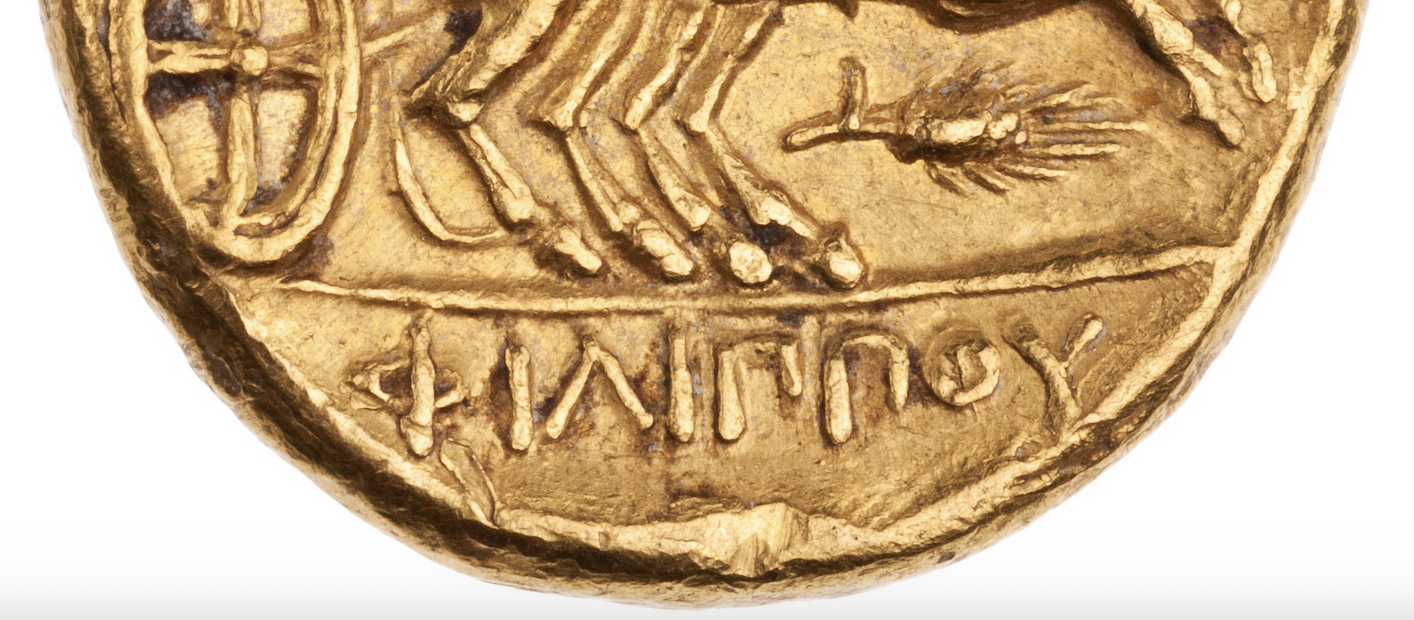
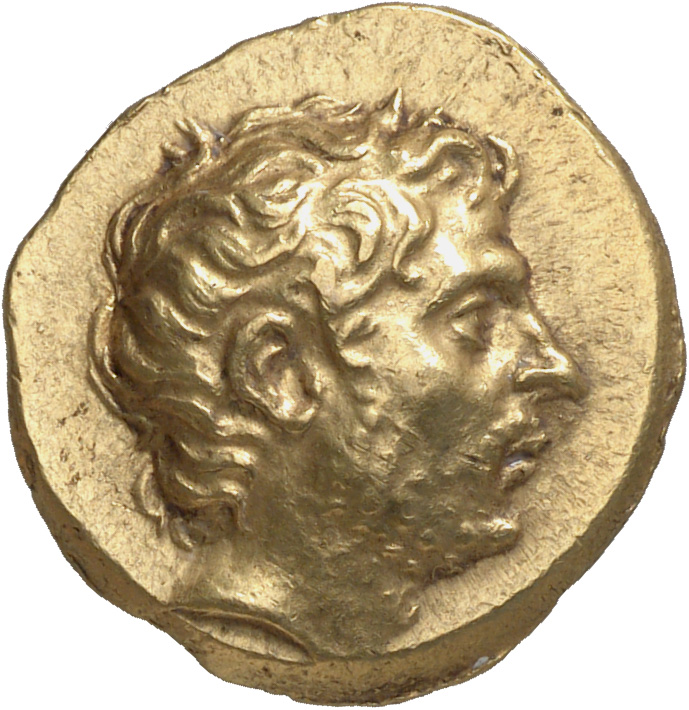
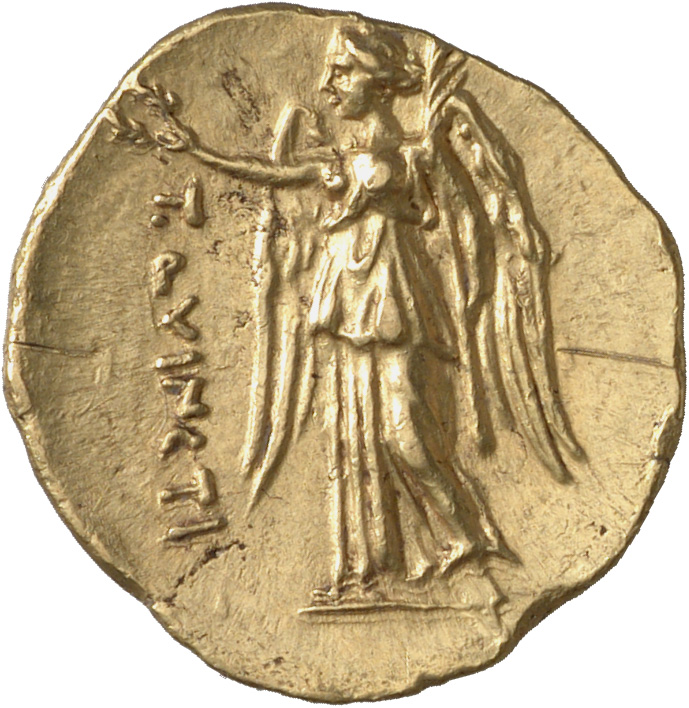
After this he went to the city of Crenides,⁠ and having increased its size with a large number of inhabitants, changed its name to Philippi, giving it his own name, and then, turning to the gold mines in its territory, which were very scanty and insignificant, he increased their output so much by his improvements that they could bring him a revenue of more than a thousand talents. And because from these mines he had soon amassed a fortune, with the abundance of money he raised the Macedonian kingdom higher and higher to a greatly superior position, for with the gold coins which he struck, which came to be known from his name as Philippeioi,⁠ he organized a large force of mercenaries, and by using these coins for bribes induced many Greeks to become betrayers of their native lands.

Diodorus 16.8

I’m on to Duyrat et al. in AVREVS. It’s nice when our data matches our literary testimony. Here we have some further conversation use of die studies for quantification similar to the previous chapter but they quickly move on to metallurgical analyses. These seem to confirm that Philip’s initial striking of gold is very low in Palladium and Platinum consistent with recently mined ore, such as Diodorus point out. The analyses also show far higher and variable levels of Palladium and Platinum for both Darics and Alexanders struck in Asia Minor. The authors quote Herodotus and Strabo to suggest that the higher variable levels of these trace elements is reflective of repeated melting and mixing of the metals.
This was the tribute which came in to Dareios from Asia and from a small part of Libya: but as time went on, other tribute came in also from the islands and from those who dwell in Europe as far as Thessaly. This tribute the king stores up in his treasury in the following manner: — he melts it down and pours it into jars of earthenware, and when he has filled the jars he takes off the earthenware jar from the metal; and when he wants money he cuts off so much as he needs on each occasion.
Herodotus 3.96

…also the following, mentioned by Polycritus,⁠ is one of their customs. He says that in Susa each one of the kings built for himself on the acropolis a separate habitation, treasure-houses, and storage places for what tributes they each exacted, as memorials of his administration; and that they exacted silver from the people on the seaboard, and from the people in the interior such things as each country produced, so that they also received dyes, drugs, hair, or wool, or something else of the kind, and likewise cattle; and that the king who arranged the separate tributes was Dareius, called the Long-armed, and the most handsome of men, except for the length of his arms, for they reached even to his knees;⁠ and that most of the gold and silver is used in articles of equipment, but not much in money; and that they consider those metals as better adapted for presents and for depositing in storehouses; and that so much coined money as suffices their needs is enough; and that they coin only what money is commensurate with their expenditures.

Strabo 15.3.21

Unsurprisingly most of the Seleucid gold shows the same type of mixing, the exception being the Bactrian mint which not only strikes recycled metal but also seems to access local mines for fresh ore and to coin that as well.

P. 133 in AVREVS

Again as the authors point out this corroborates epigraphic testimony that Bactria supplied the Achaemenids with gold.

DSf, foundation tablet from Susa

I would note that Bactria is not marked out as a particular source of gold in Herodotus’ accounts of tribute paid to Darius, he reserves this role for “India” (cf. 3.92 and 3.94). This fits well with Herodotus’ world view where gold comes from the far east and is associated with ‘gold digging ants’ (3.102-105). He says the Indians there live much like the Bactrians. (cf. the gold guarding griffins at 3.114)

The authors note of the Ptolemies: “Although they developed a closed monetary system and exploited resources in gold in the eastern desert, potentially with different characteristics, no new signature can be detected.” p. 137

In short Ptolemaic gold looks much like Seleucid gold (excepting a bit from Bactria) which looks much like Alexander’s gold and that of the Achaemenids.

When turning to the Western Mediterranean they note that a wide range of alloys were struck. In the east gold coins are nearly pure gold, where as alloys in the west may vary from over 96.5% gold down to 20.4%, most notably at Syracuse and Carthage. But for me the best was saved for last. Look how much the Roman republic coins fit right in with other western gold.

Quantifying Precious Metals

In an article published in 2007, I attempted to explore multiple perspectives to define the coined share of precious metals in the Hellenistic world. Somewhat to my surprise, it repeatedly emerged that this share was a minority, if not small, probably less than 20%. In a paper intended to follow up on this, presented shortly after in 2009, I tried to estimate the importance of this Hellenistic goldwork, a task far more arduous than estimating the amount of coined metal. I certainly did not succeed in a field dominated by art history, where quantification remains, even today, in limbo. But it is clear that goldwork must be integrated into our reflections.

De Callataÿ in AVREVS p. 93

The 2007 article is listed by google scholar as 2006.

François De Callatay, 2006. “Réflexions quantitatives sur l’or et l’argent non monnayés à l’époque hellénistique (pompes, triomphes, réquisitions, fortunes des temples, orfèvrerie et masses métalliques disponibles),” ULB Institutional Repository 2013/114583, ULB — Universite Libre de Bruxelles.

The 2009 essay was published in the following volume appearing in 2017:

Liámpī, Katerínī., Dimitris Plantzos, and Κλεοπάτρα Παπαευαγγέλου, eds. 2017. Νόμισμα / Κόσμημα : Χρήσεις, Διαδράσεις, Συμβολισμοί, Από Την Αρχαιότητα Έως Σήμερα : Πρακτικά Διεθνούς Συνεδρίου Ίος, 26-28 Ιουνίου 2009. Αθηνα: Εταιρεία Μελέτης Νομισματικής και Οικονομικής Ιστορίας. [Academia.edu link to De Callataÿ chapter]

This table is handy and fascinating!

My first thought is how much of the uncoined then in turn became coined by the Romans themselves?! And then how much of the uncoined metal was previously struck as coins and then recycled to create the very objects being carried in procession? Finally does this preference to display uncoined metal reflect the tastes of the triumphators to create spectacle. Gold and silver objects may be easier and more impressive than coins when carried in parade. How do you even display mountains of coins in such a moving spectacle?!?!

relief from the arch of titus to help us imagined the spectacle of precious metal objects (instead of coins)

The display of coins is particularly presents a challenge. Think of the iconography of liberalitas under the empire where the money shovel becomes the key symbol not piles of coins themselves.

Heaps of coins are impressive yes but they tend to slide all over the place once you get beyond a relatively small amount. Here I cannot help but recall Frank Holt on the coin as meme (in the Dawkins sense and less in the internet phenomenon) — a great book, consider buying if you’ve not yet.

Fresco from Pompeii now in MANN depicting piles of coins illustrating the problem of spreading heaps

I’d also point out that not all the coin acquired by the commander in the war needs to have been carried in the triumph itself. Commanders gave coin largess to troops during the campaigns themselves and could acquire coin and use it for purchases on campaign reserving objects for purposes of the triumphal spectacle, conspicuous dedications in sacred spaces at Rome AND abroad, as well as alliance building through ‘repatriating’ materials to presumed ‘rightful’ owners Cf. Scipio at Carthage calling Sicilian embassies to reclaim lost artifacts c. 146BCE.

None of this is to undermine De Callataÿ’s larger point that at any one time a great deal of precious metal, esp. gold would be in uncoined form. We know all this material was heavily recycled and repurposed throughout antiquity. we might even recall of how the gold hieroglyph derives from a pictogram of a necklace! It seems highly likely to me that gold as primarily a crisis coinage was more often stored as object rather than as coin. Look again at the above fresco the precious metal pile of coins has eight gold pieces in a vast mountain of silver, it visually communicates the relative scarcity of gold coin even amongst the well-moneyed, as well as how bronze coin is segregated from precious metals, but what gold coin there is travels with the silver coin.

Generally speaking I find De Callataÿ’s attempts to treat quantify the volume of surviving gold jewellery a worth-while endeavor and what I’d like to do is think more about this methodology in relationship to inscriptions on silver objects that record their weights, a topic on which Alice Sharpless is the expert (earlier related blog post) and from there the bronze statues with weight inscriptions at San Casciano de Bagni (see my notes from last AIA-SCS here).

Circling back to the AVREVS volume, De Callataÿ relies on average weight standards, observed numbers of coins, and observed numbers of dies to across ALL gold issues (including Roman republican!) distill down an estimate of how much gold was struck in various periods:

We see, therefore, that the gold of the age of Alexander [340-290 BCE] does indeed represent the largest gold minting ever produced in the Greek world, but that this preeminence is perhaps less pronounced than has long been thought. First, because the total number of Alexanders has been revised downwards (1,000 staters instead of 1,200); second, because there are earlier, large-scale mintings such as the Cyzicean issues, the Darics, and the Croeseids, which also amount to hundreds of staters; finally, the examination conducted here further indicates that it would be a mistake to consider only the Alexanders, Philips, and Lysimachus, given the scale of production down to the end of the 1st century.

De Callataÿ in AVREVS p. 109

He goes on to discuss the fragility of our evidence because of differing survival rates and also highly variable reporting of finds. This is a theme he is cognizant throughout the chapters. I think this picture may change how we read Plautus as well…. See last post. Perhaps indeed make De Callataÿ sympathetic to at least some of my arguments about gold and the Romans. …

My take aways from this is how critical die studies are for this type of quantification and also how much periodization matters and how we need to look across geographic boundaries.