So I’ve got a number of posts from early in 2023 on this type, but I never really made up my mind about it. And, that has started to bother me as I have some up coming talks where I need to contextualize my particle accelorator investigations of Nemi material and that means giving an overview of the cult site. In sum in 2023 I went back and looked at old pre-Crawford iconographic interpretations and didn’t like any of them. Prosopographically, I was satisfied that the moneyer might want to celebrate the cult at Nemi. Also I am inclined to follow Woytek on making the date of the coin later chronologically.
Crawford follows this interpretation.
Massa-Pairault, Françoise-Hélène. “Diana Nemorensis, déesse latine, déesse hellénisée.” Mélanges d’Archéologie et d’Histoire de l’École Française de Rome LXXXI (1969): 425-471. Doi: 10.3406/mefr.1969.7581 [open access!]
I’ll do a deep dive but as a matter of principle I better start with reading the iconography on my lonesome.
Reverse first. Examples of two specimens. I also used the Schaefer Archive images to train my eye on the variations with in the depictions to distinguish what was key to the design and what might be a simple engraving variation.
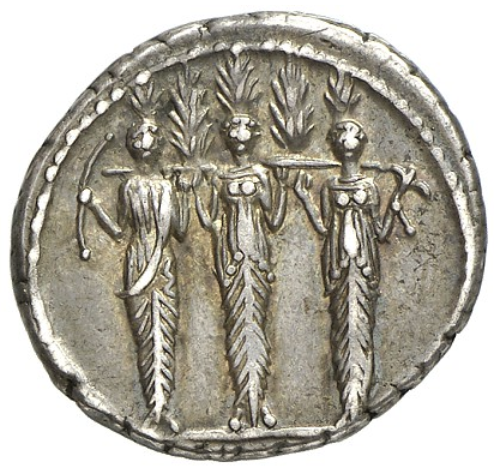
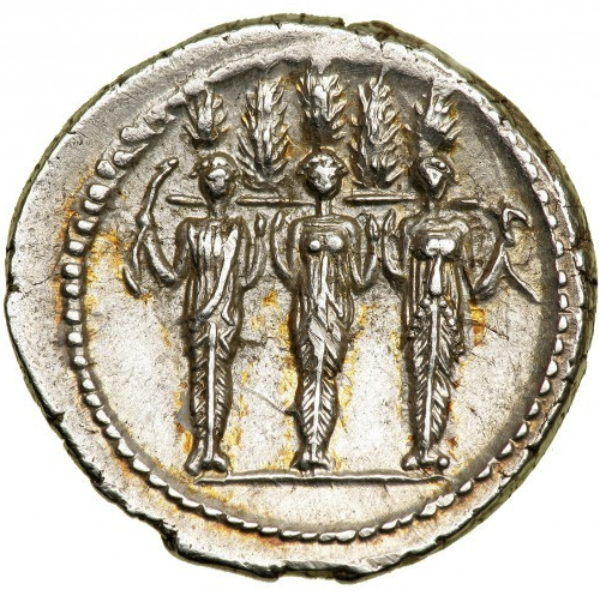
There are three figures facing the viewer. All three have what appear to be plant material coming from their heads but the representation is does not have any precise parallels with any other trees on the Roman coin series. On some interpretations they could be standing in front of trees. We might also consider if something other than plant material might be intended by the artist. Perhaps fire or flames? The central figure has a much larger bush emerging her head than the other two figures. This may mark her as more important or may be dictated by the circular composition. All three figures have tight cloth around their legs with a strong central seam or line. The geometric fabric folds create an arrow like patter pointing upwards and echo the downward lines of the decoration on top of the heads.
There is a strong horizontal line that seems to be behind the necks of the three figures. On some specimens it appears to rest on their shoulders an they hold it up with their hands. Some have interpreted this as a wall from behind which the plants or trees appear. Between the three women emerge two larger tree-like elements from the horizontal line directly above where their hands meet.
The central and right hand figures have the same costume with breasts clearly visible and vertical lines come down from theme to suggest a further layer of drapery. The left hand figure has a different top. No breasts are depict and instad there is a strong sweeping line of cloth from her left shoulder down to below her right hip. In her right hand she holds what is reasonably interpreted as a bow. The right hand figure holds an uncertain object that might be a stylized flower with three petals above the hand and a stem curving away.
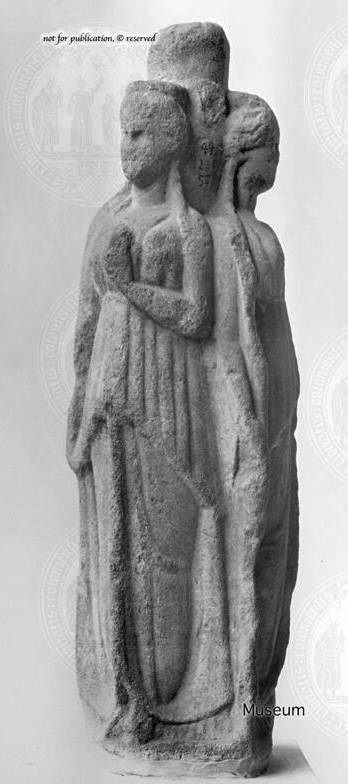
The garment of the above Hekate figurine seemed a notable parallel (another more fragmentary). A cast of another Hekate wearing a similar garment. another perhaps better garment parallel. The garment does seem generally typical of archaizing representations of Hekate as a triple goddess. I’d also note that on some late antique representation of Hekate she is shown with stars over her head or on her crown.
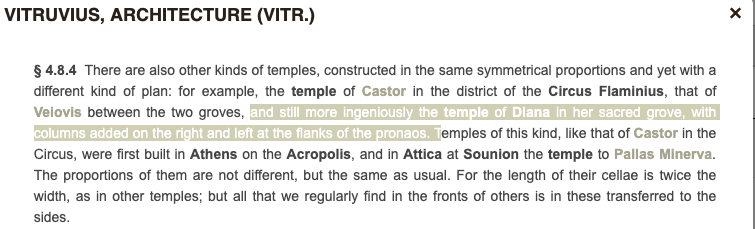
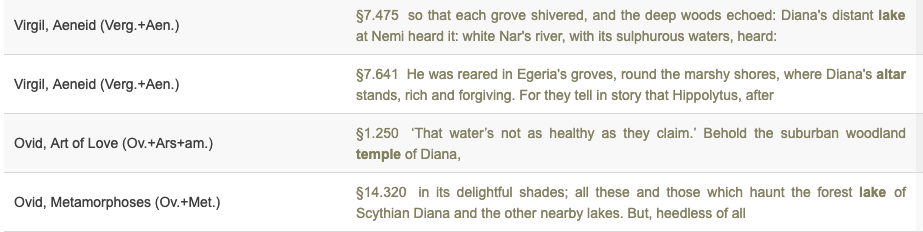
This clearly suggests a relationship between the sanctuary and trees, as do the more poetic references by Vergil and Ovid (topostext link)
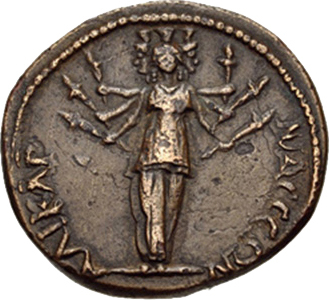
There are numismatic depictions of the three-faced goddess similar to the statues shown above and closely linked with iconography on gems.
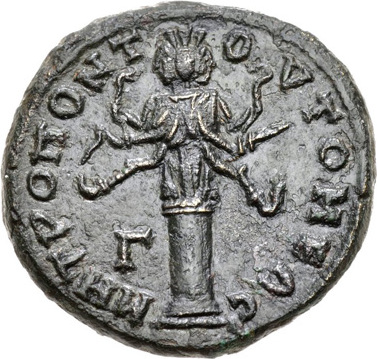
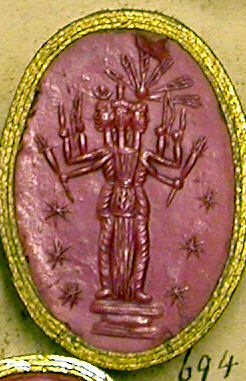
I’ve toyed with the idea that the RRC 486/1 is trying to represent a three-faced statue group unrolled, but I think not. My reasoning for this is from a detail of a terracotta votive found at Nemi in the form of a temple.
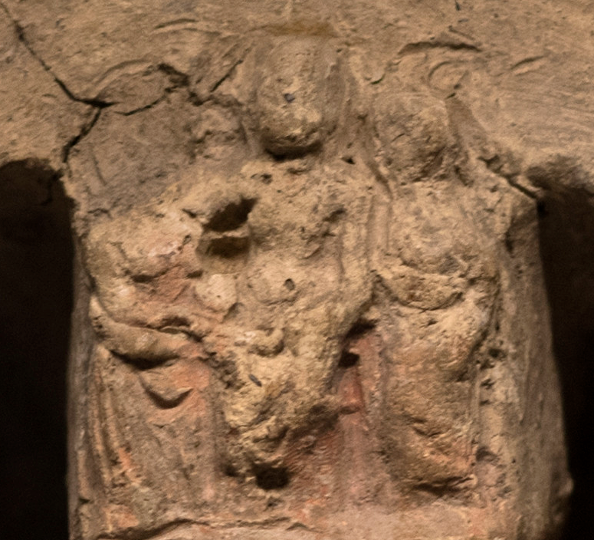
It has as a central focal point a depiction of three women side by side. The style is very different but it still suggests to me that three Nemi cult might have emphasized the three distinct aspects of the goddess.
Among votives depicting a goddess from the sanctuary the vast majority show a young woman in a short chiton, Diana in the garb of a huntress.
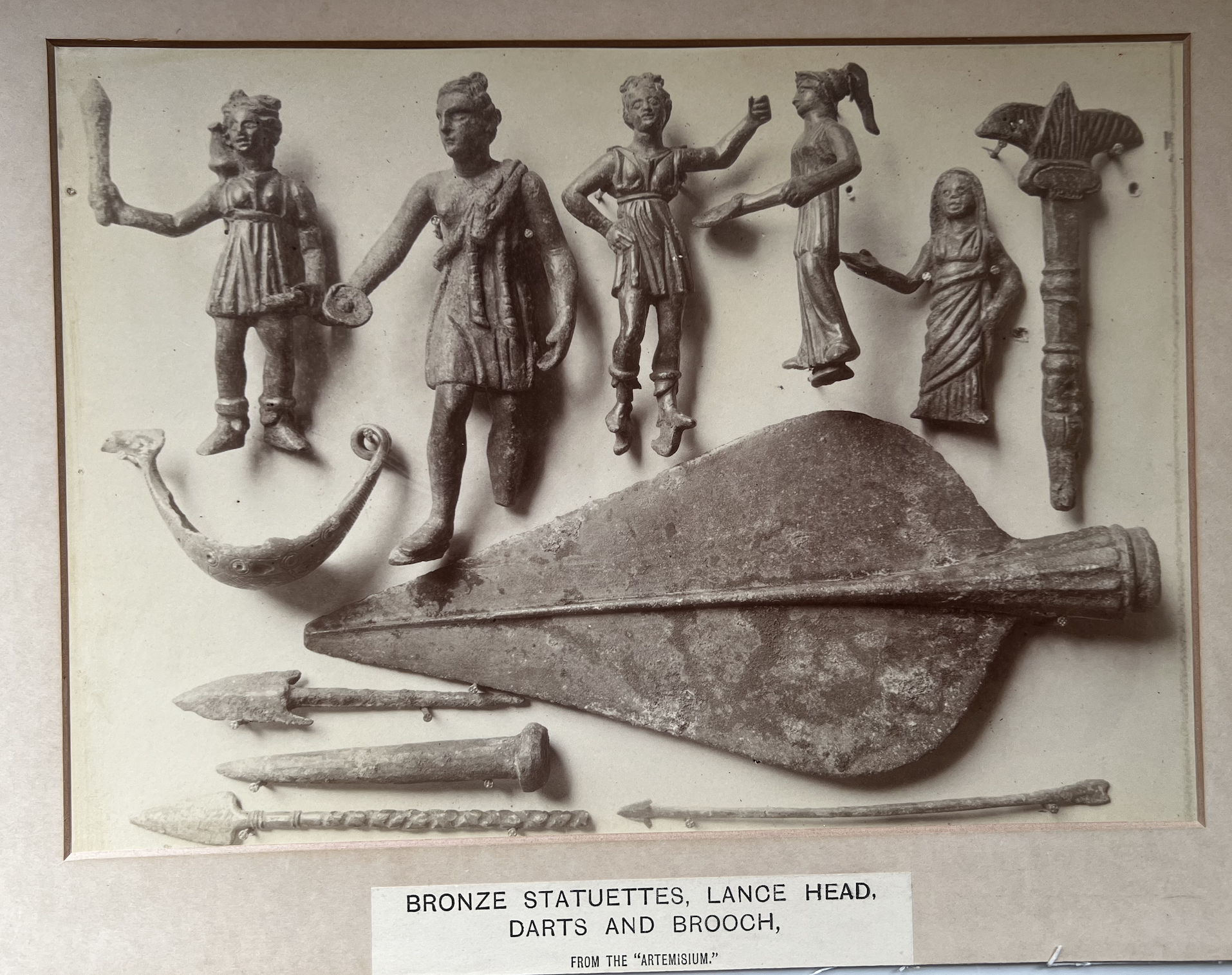
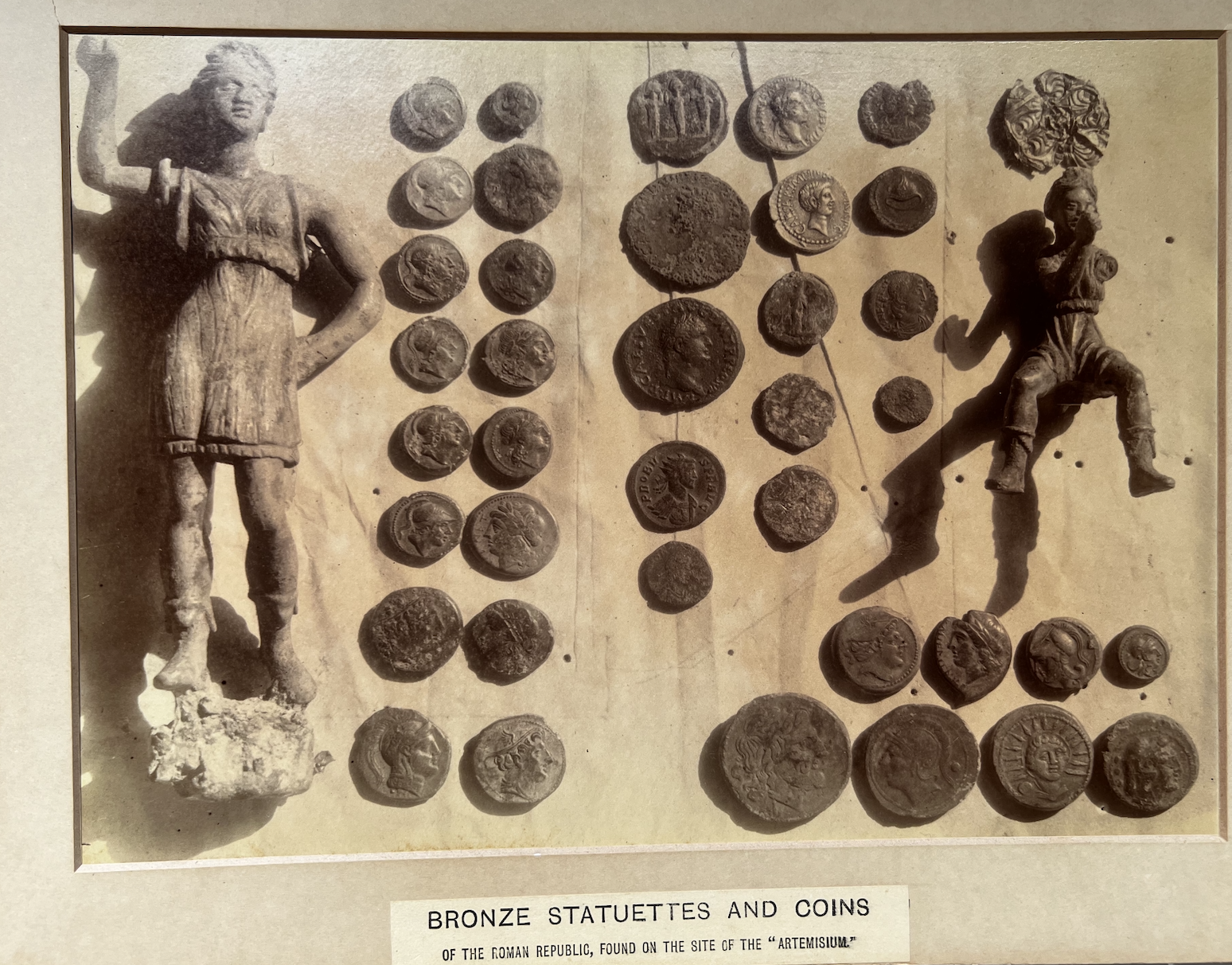
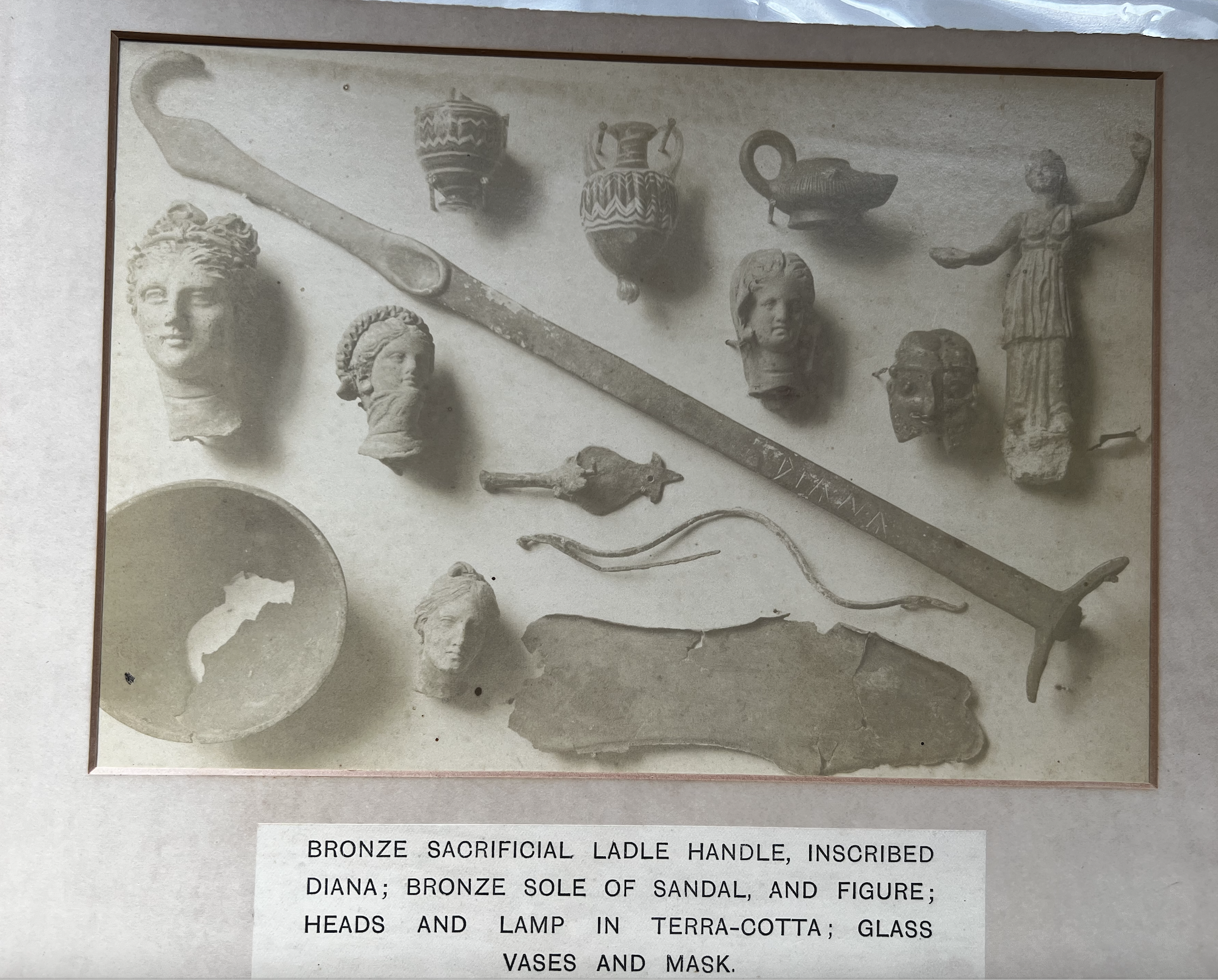
But there is enough variation in the depiction of presumed goddesses to permit us to speculate that the triple aspects of the goddess was part of the local cult.
In the image below note the triangular relief. The one that has been defaced is clearly diana the huntress. Does this make the one on right another aspect of the same goddess?
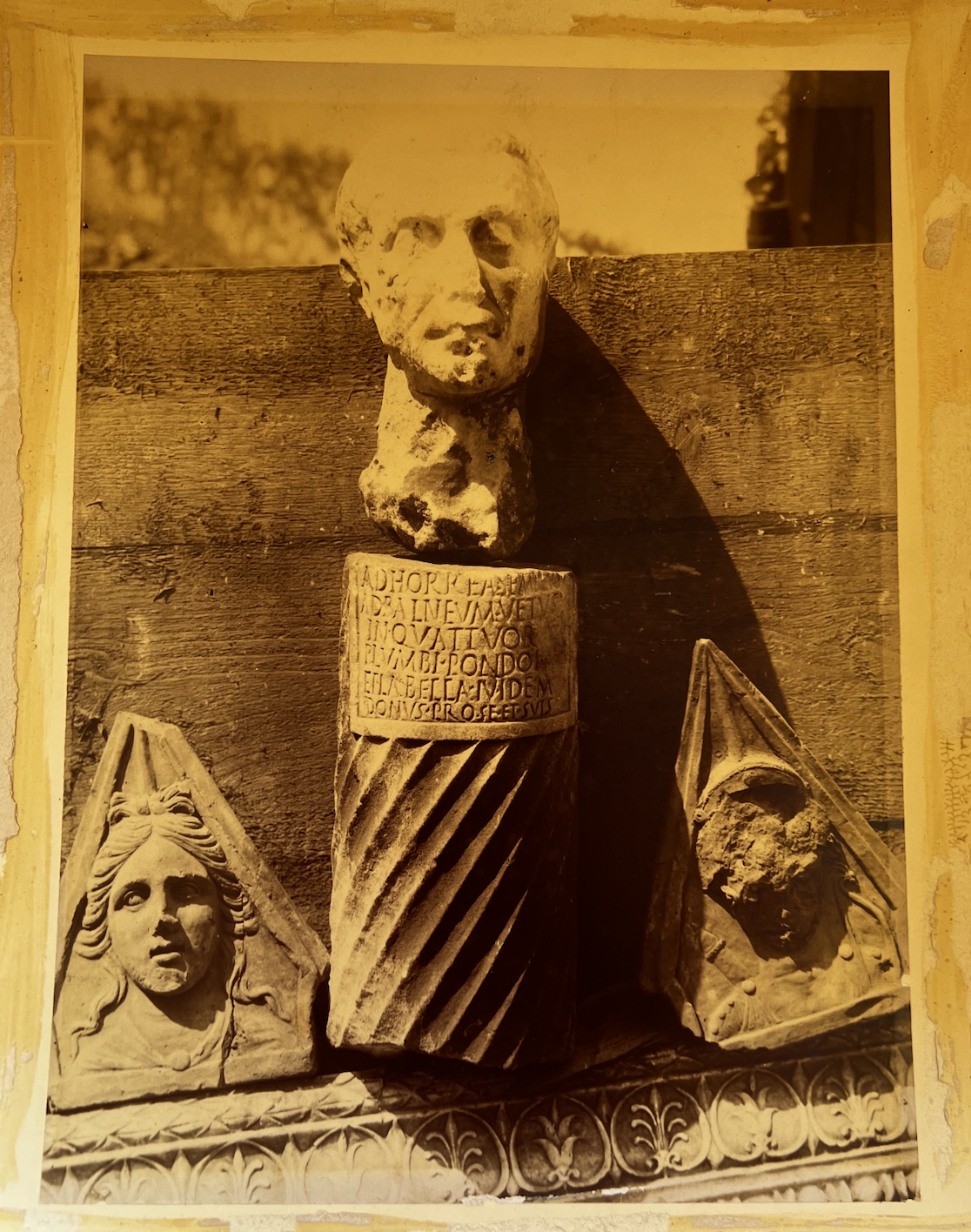
Also those apices/spikes coming out of their heads! Is this just for the purposes of the triangular composition? An artistic variation or something specific to the cult at this site? Could it be a stylized version of those trees popping out of the heads on the coins?
There is very little that I’ve seen from the Nemi sanctuary that suggests an inclination towards archaizing, but there is one little figure that we’ve presumed to be archaic, but now checking my pXRF readings I see at least on surface it reads nearly identical to all of the figural bronze votives in a more hellenistic style.
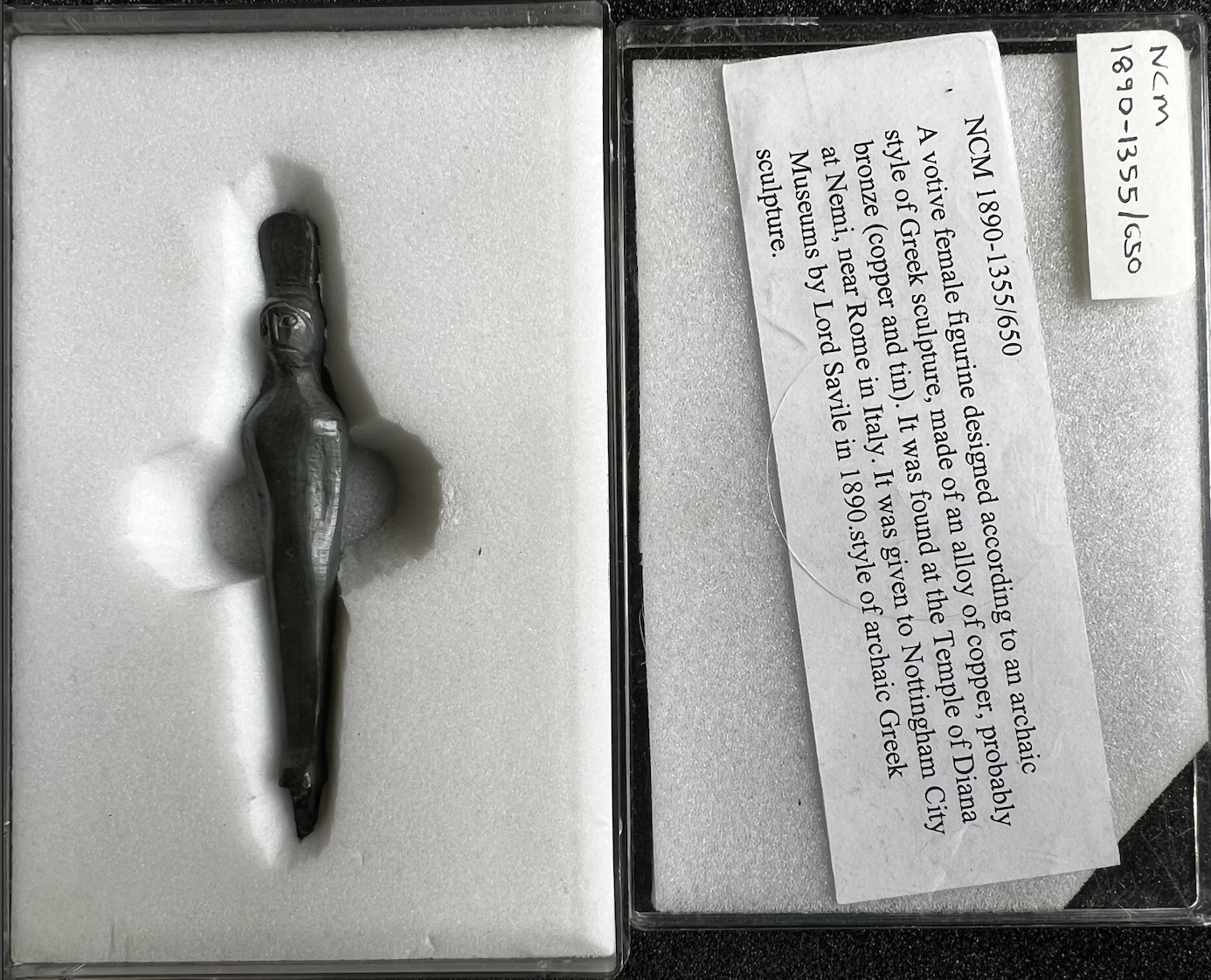
Also notice the archaizing votive has something stiking out the top of the head. If I was being poetic I might call it a rising full moon.
The other evidence for archaizing is the portrait herm of Fundilia
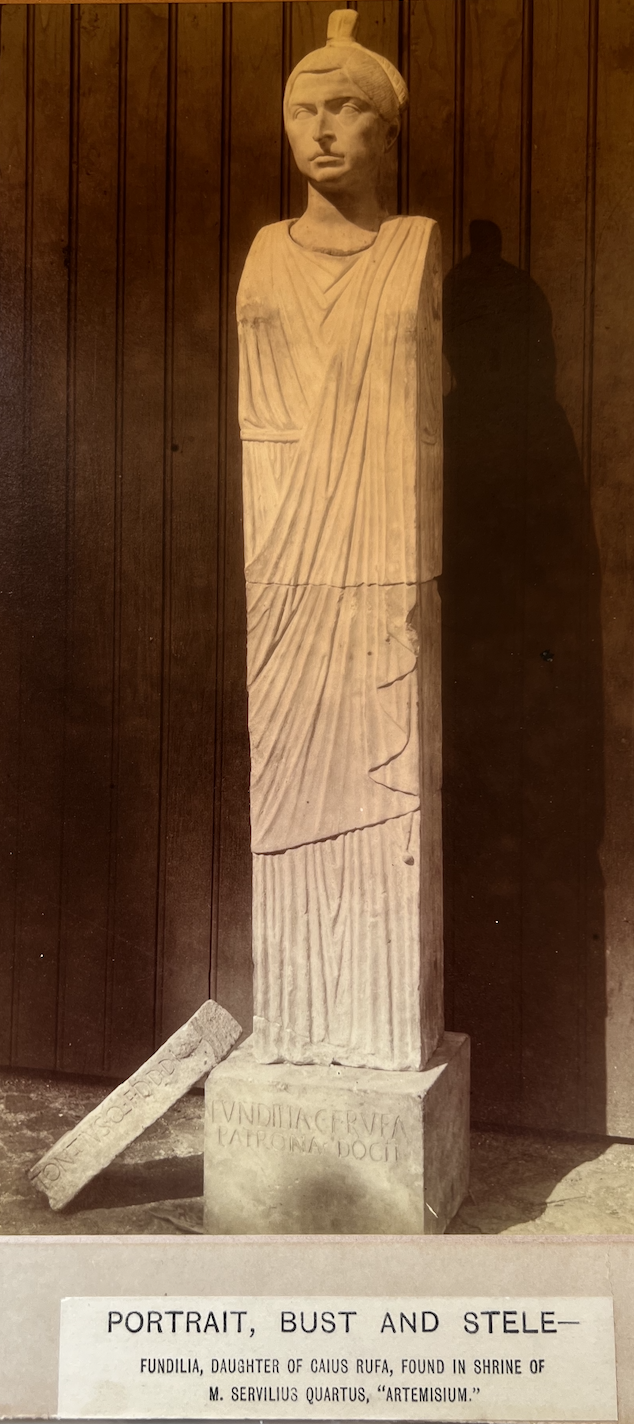
I’m totally enchanted by her side view and how pointy this hair style is.
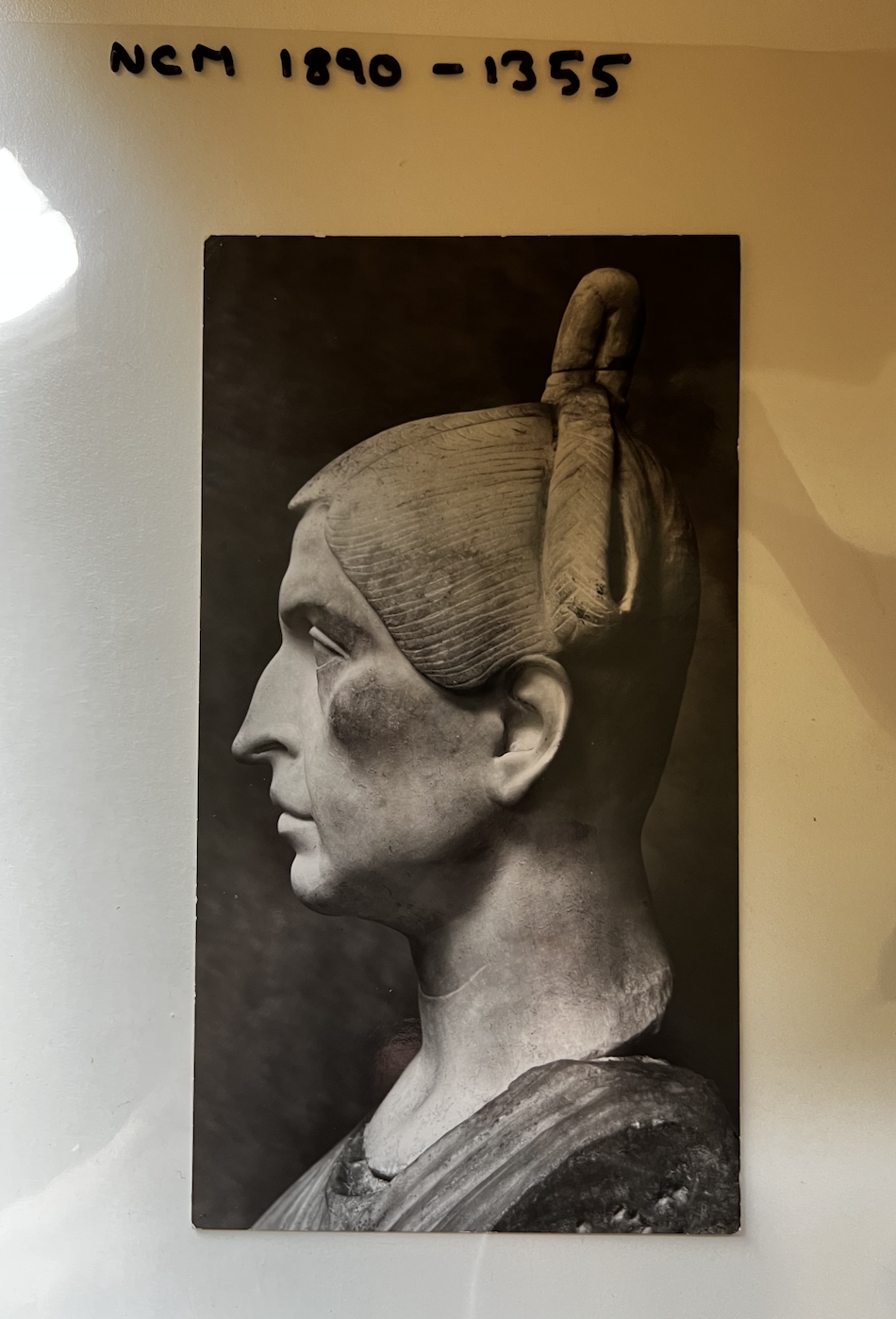
So taken all together I’m more and more comfortable endorsing the identification of the three women as three aspects of Diana as worshipped at Nemi.
To be continued.
Massa-Pairault 1969: 459:
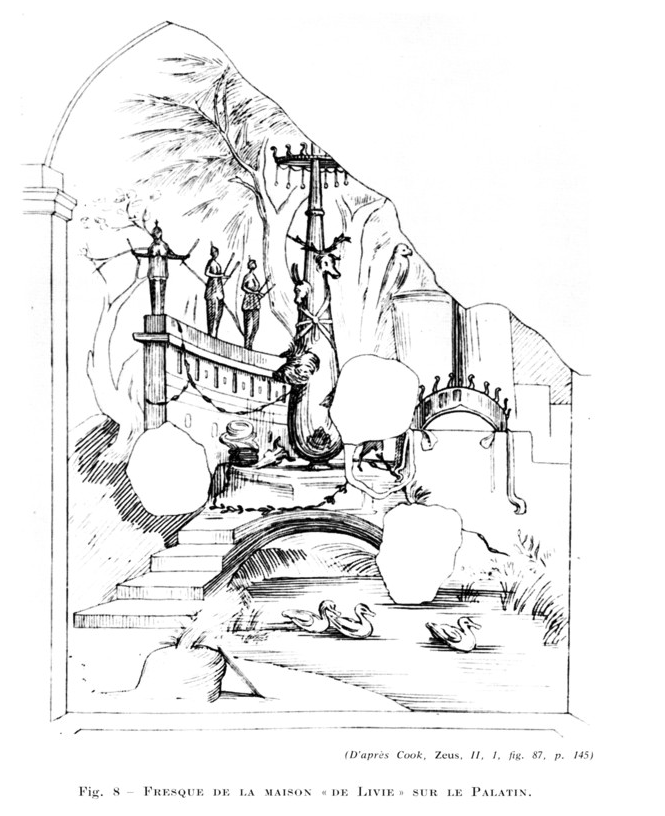
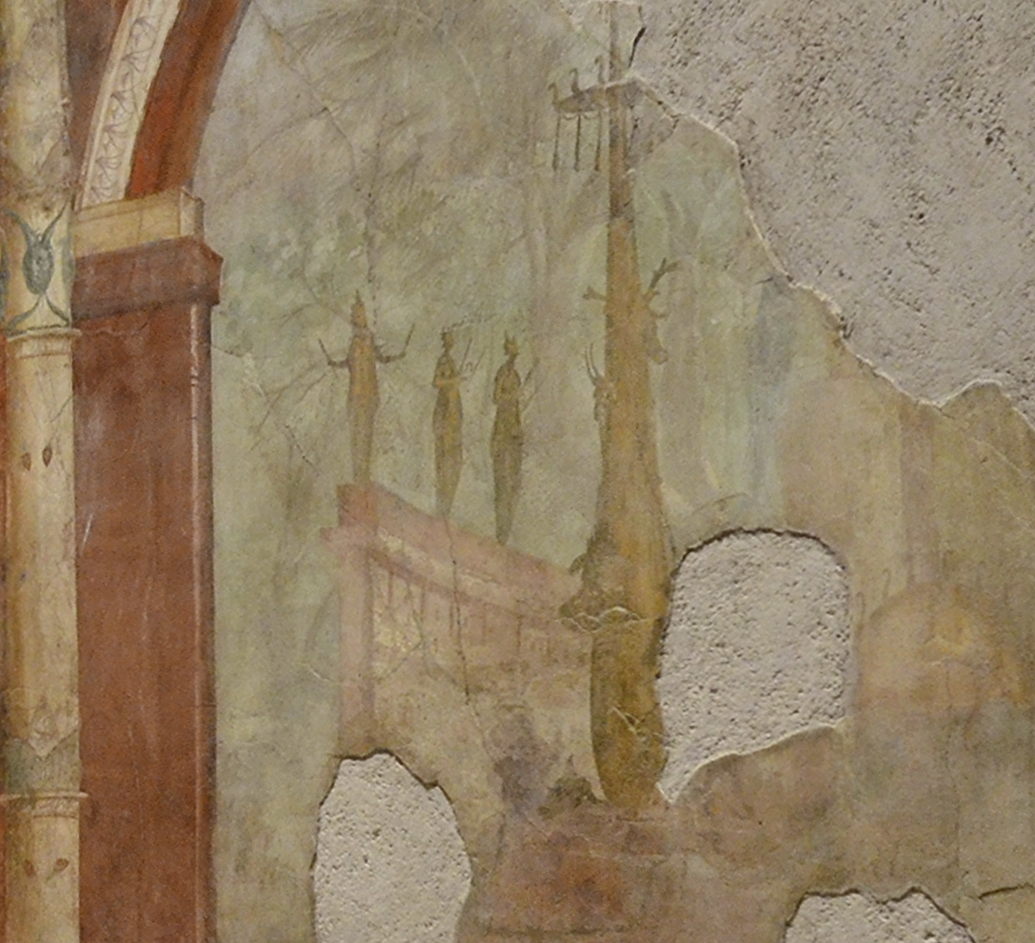
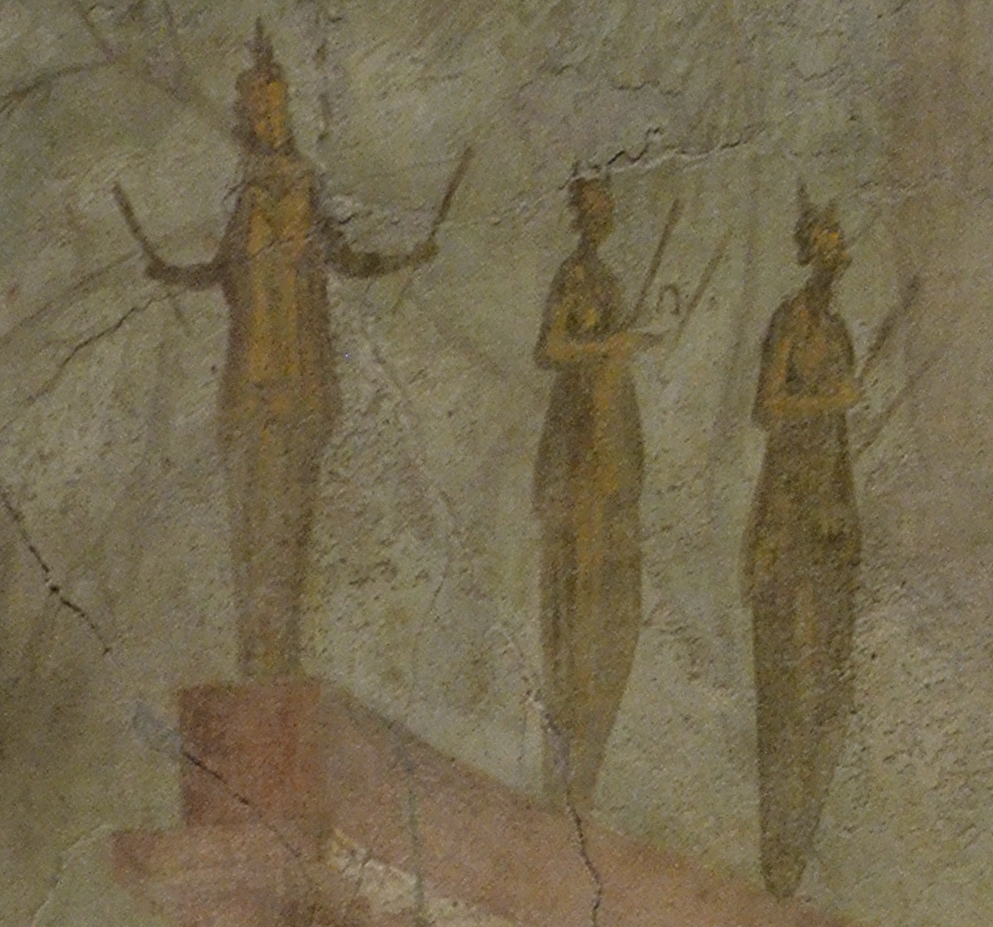
Notice the front most statue has something pointy almost like a lotus flower coming from her head while the other two seem to have crescent moons. The acroteria on the column and on the bridge in the background are clearly meant to evoke truly archaic terracotta architectural elements in a similar style.
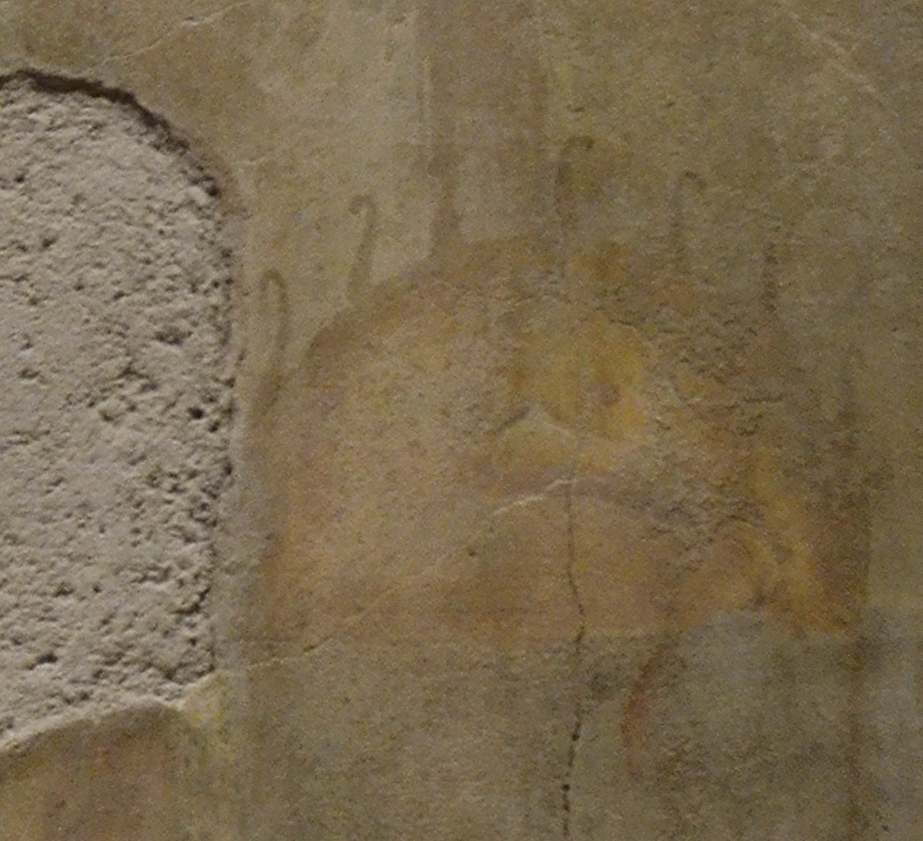
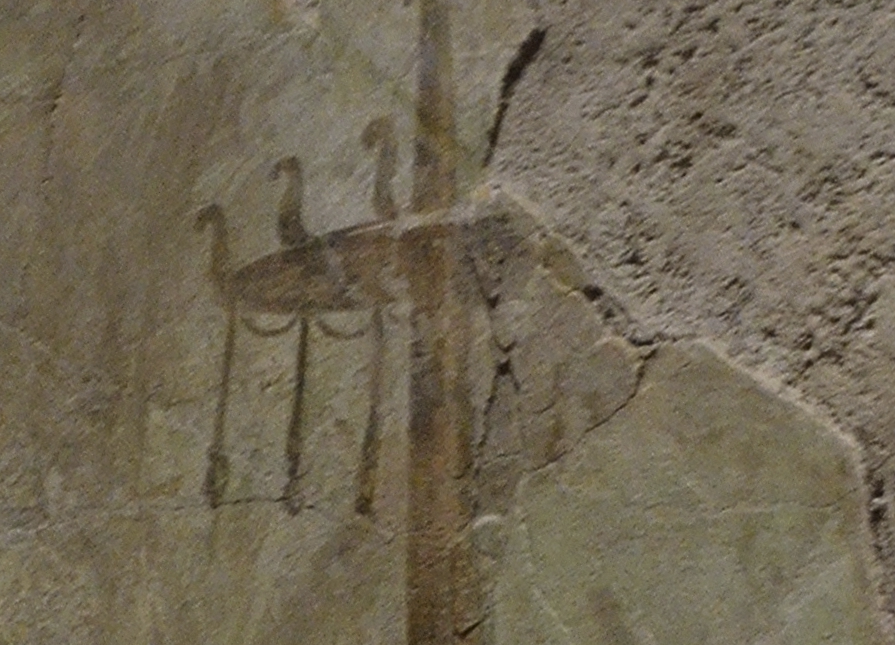
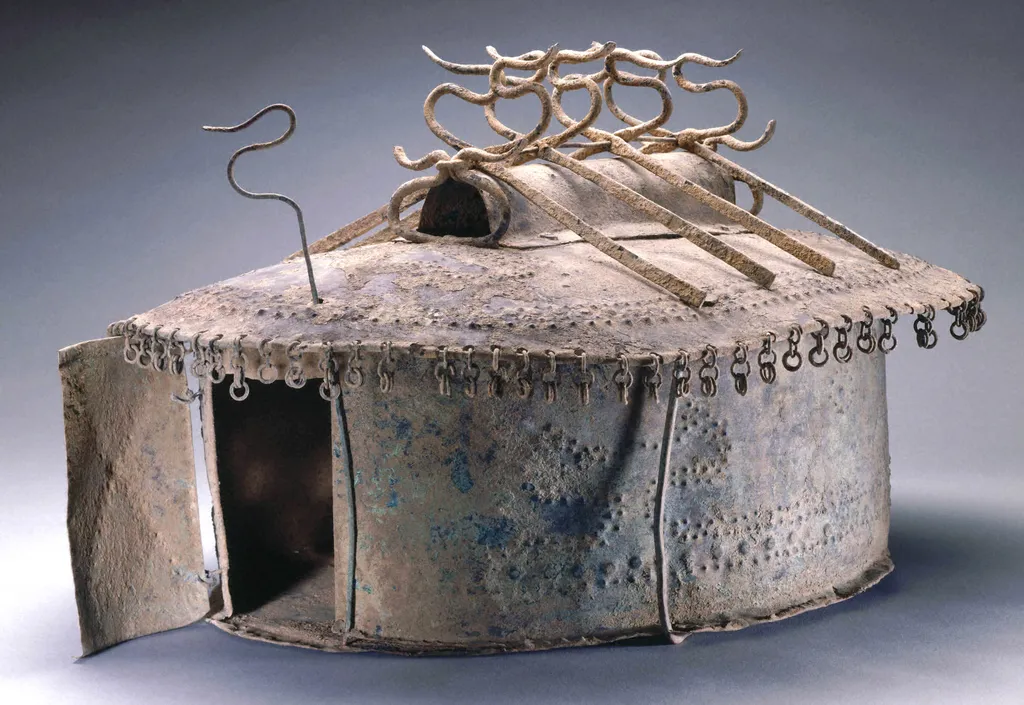
Comparative iconography from Powers, Roman Landscapes (2023):
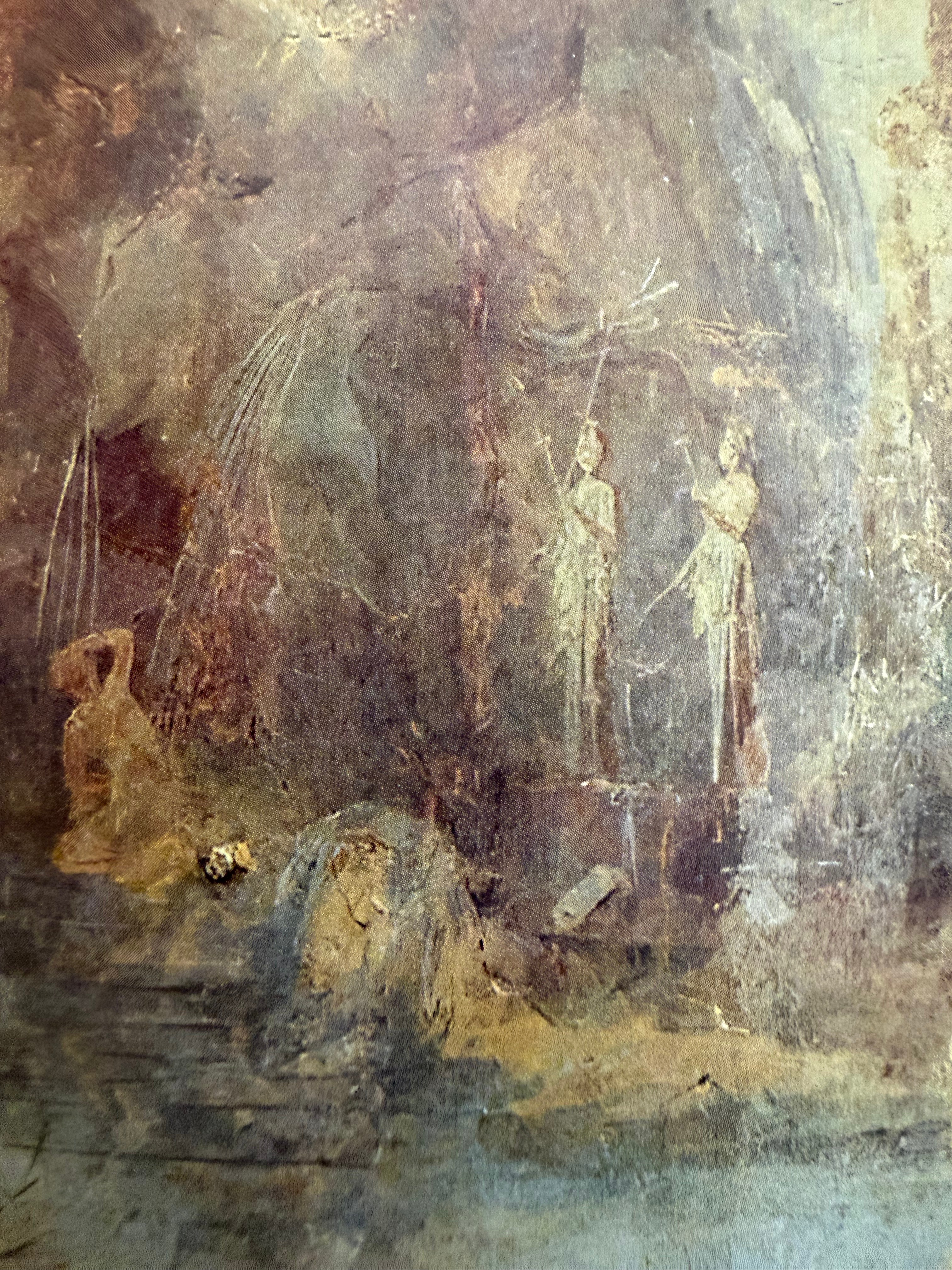
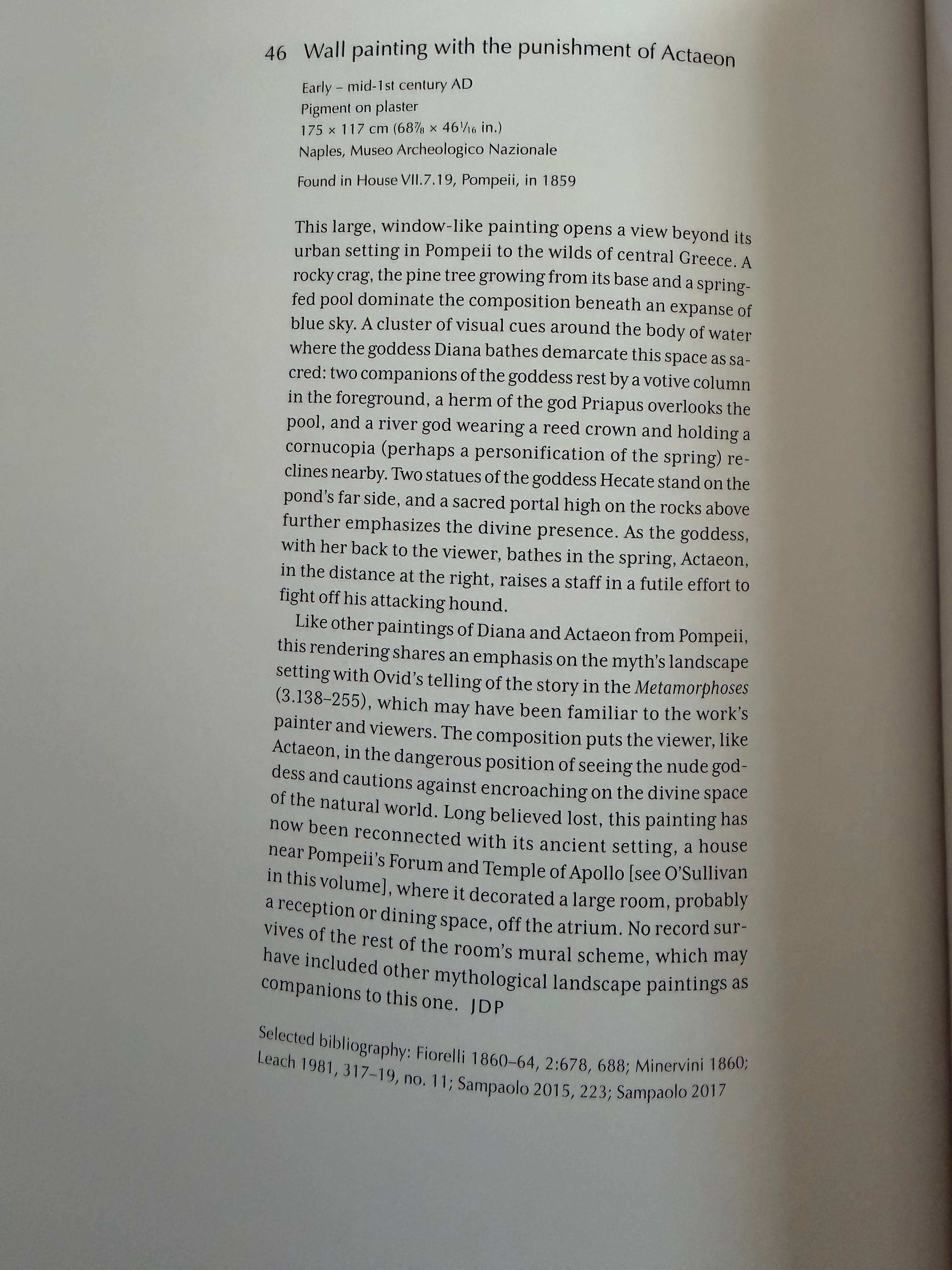
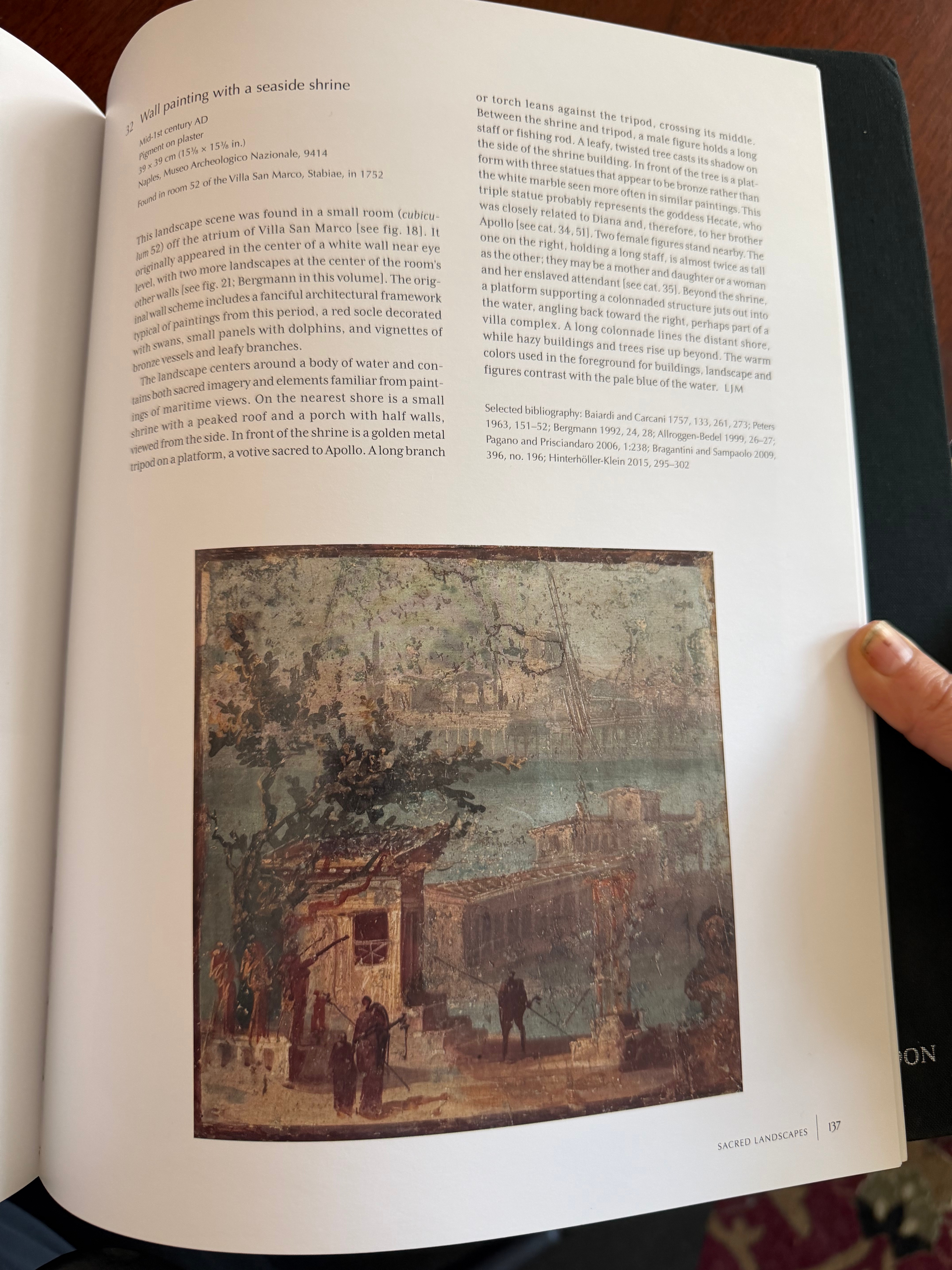
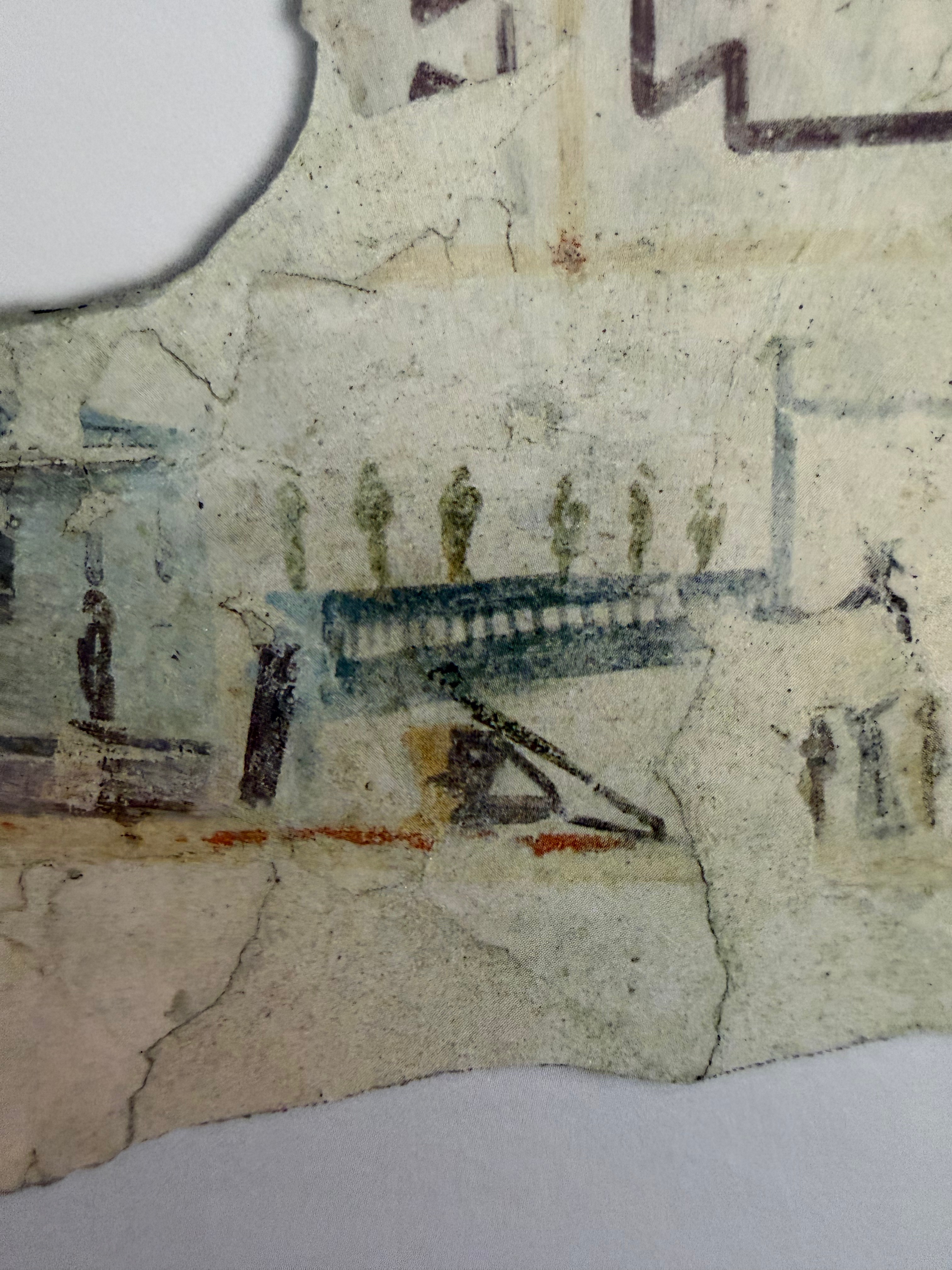
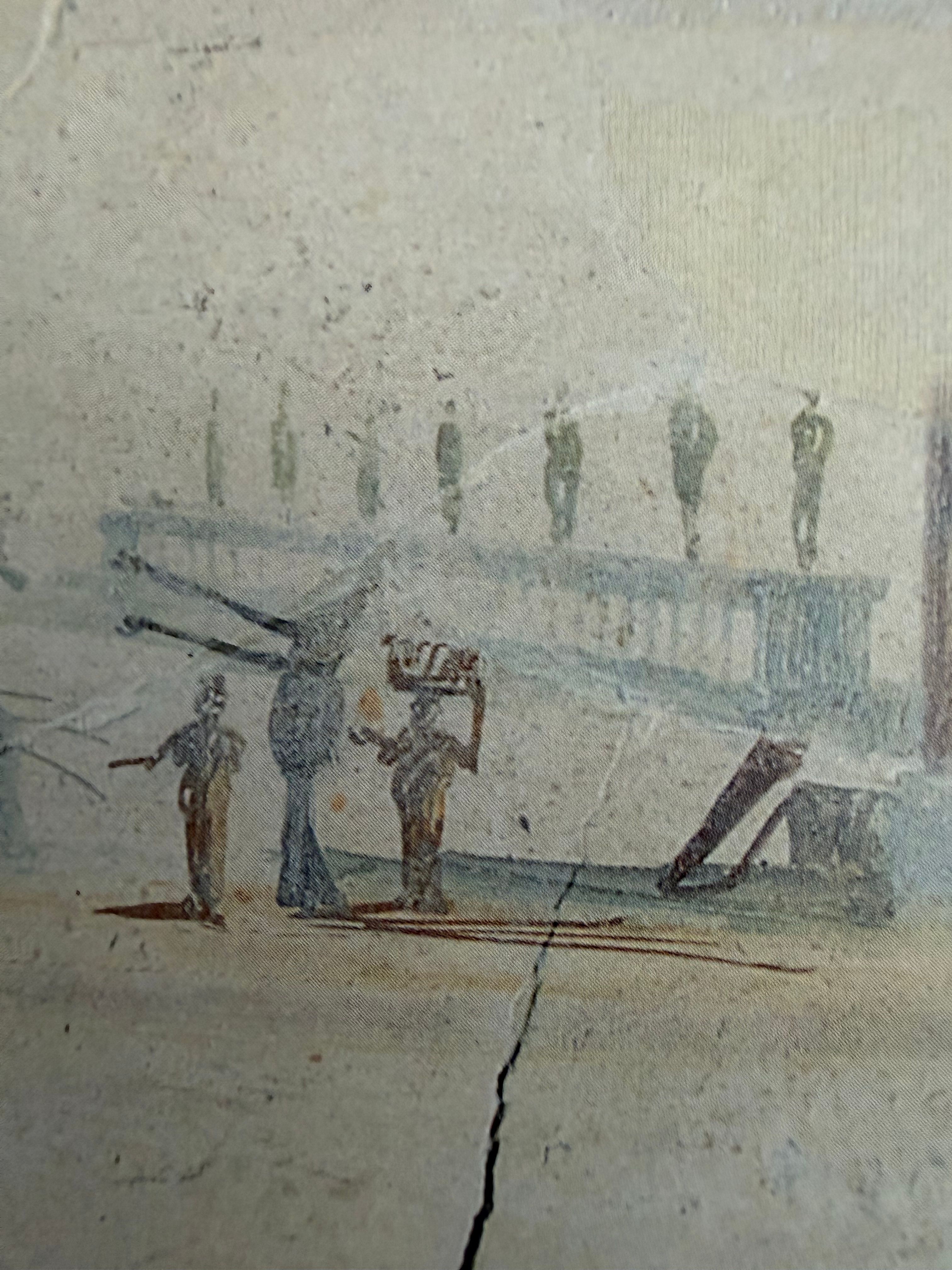
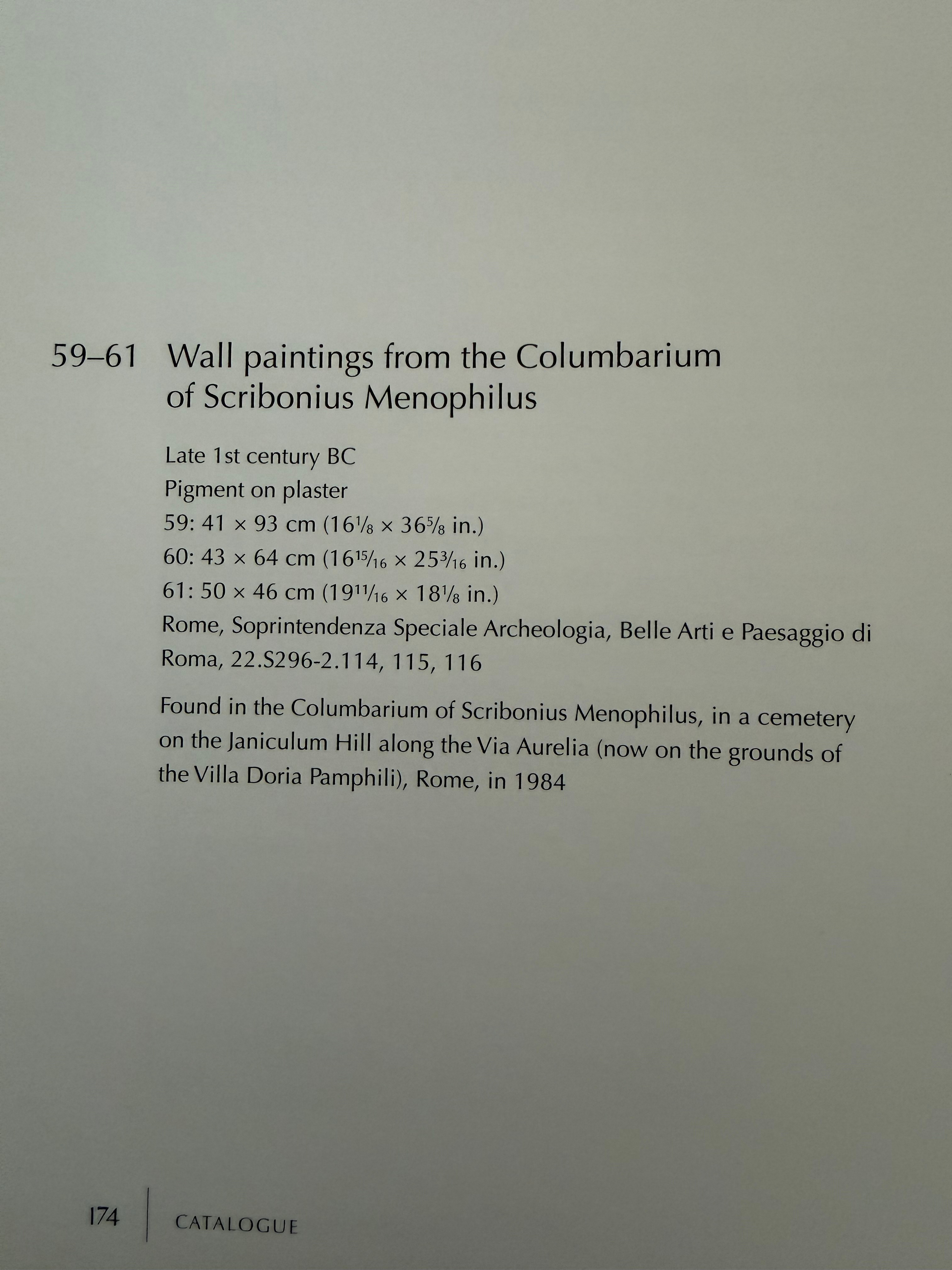
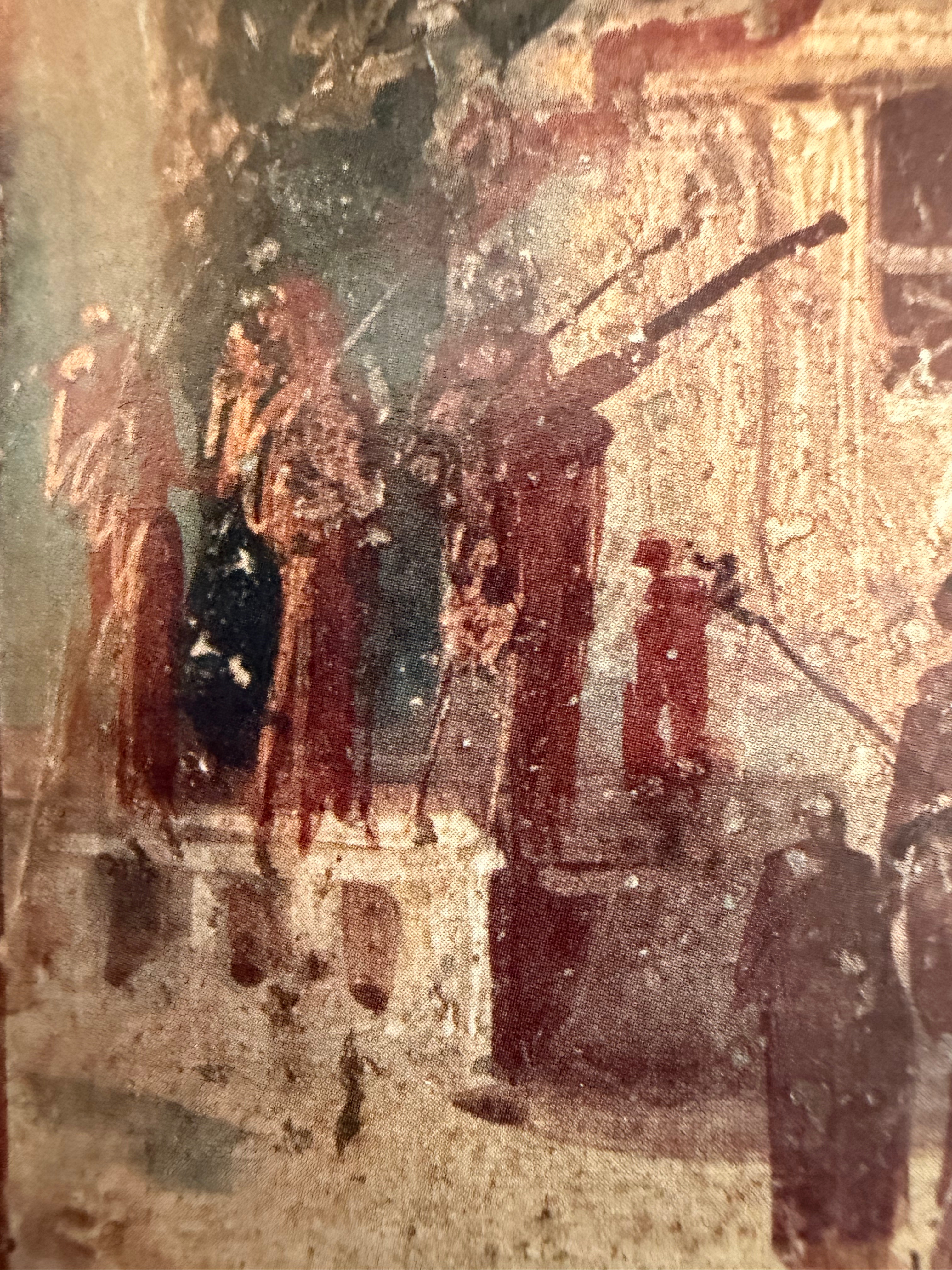
I think the catalogue is incorrect that there are only 2 statues in the scene of Diana bathing I think the figure I’ve outline in blue is Diana the huntress with her bow.
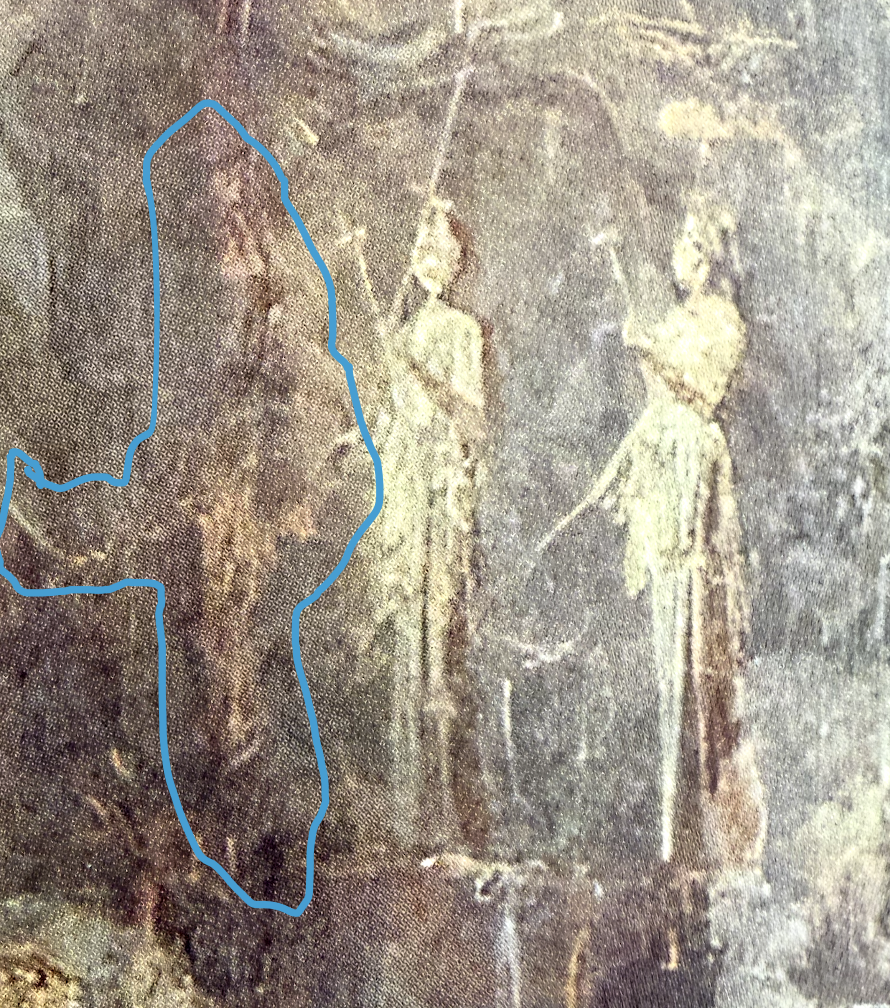
The prevalence of triple statues of Hekate/Diana/Selene need not surprise us. Her cult is associated with wild places and thus fits nicely into Roman preferences in landscape painting. They need not all be coded as “Nemi” but they do help us see that the coin would be readily interpreted as associated with this tripartate divinity.

 Liv Mariah Yarrow
.jpg)

