
earlier posts on sling bullets
Dane Scott (BU PhD candidate) is our speaker in a panel at 8 am sponsored by Society of Ancient Mediterranean Religions. I like the energy of this society, perhaps I need to join.
He reads in sling bullets as materialized curses; he uses magic as heuristic tool, not an emic category used in antiquity. His case studies are from Asculum and Perusia as case studies, and I personally found the earlier ones most stimulating or at least less familiar to me.
The panel is in honor of Brenk and the speaker refers to the reading of Caesar’s last words “Kai Su! Teknon” by Brenk in his article of 1999 as a key work showing how apotropaic traditions were available to ancient individuals not just in narrow confines of what we normally think of as magic. Unfamiliar? I have some examples in my teaching materials.
The speaker points out the treatment of magic is on the periphery of Religion and religion studies, but that this marginality is an inheritance from antiquity where our texts are often suspicious of such acts, but effects this has limited modern scholarship and categorization. Magic is least useful when we use it categorize objects, rather than practices. Broadening the category of Magic invites inclusion of wider range of classica texts as enacting speech rather than descriptive speech. The speaker points to the double work of verbs on curse tablets (e.g. Kropp 2010).
He now turns to the evidence and points to how the verb PETO mirrors the physical action of the bullet as it leaves the sling.
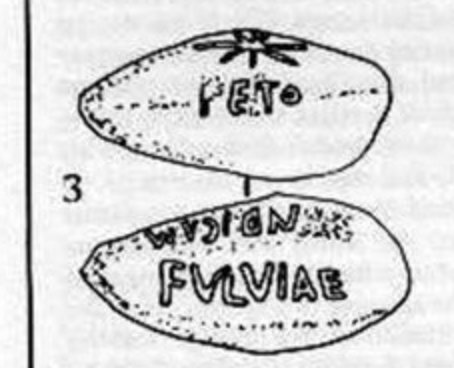
Likewise he points to Latin inscriptions like “for the belly” “on the backs” guide the bullet to its destination and the inevitability implied by perfect or perfect tense : ” you runaways have perished”, “Tamen EVONES omnes” “You will spit all of them out”. He then turns to “em tibe malum malo” and how it invokes ambiguous supernatural forces and sends them away from thrower towards the target. This reminds me so much of the “I’m rubber you’re glue…” playground chant of my childhood. It really stuck with me his comment on how the bullets embody the theorization that the harm can be manifested linguistically, not just kinetically.
Comment from audience – Is imagination important in Magic as conceptualization? Speaker says he’s using imagine as a substitute for belief which he does not feel captures’ the ideas in the minds of soldiers.
At least in modern contexts writing on bullets, weapons, bombs etc. the audience isn’t really the people being hit, but for the sender and his allies, but does this hold for ancient audiences? These bullets are enduring.
Question of archaic speaking objects connection to these bullets and other curses, especially linked through grammatical use of first person.
Speaker says Judith Butler’s performativity complicates speech acts theory of Austin by making clear that we are always enacting ourselves through performance and speech…
[handout on file]
Next up Sebastian Tyrrall on Fortuna Populi Romani. Below are my rough notes as I listened but to me the most important part of this paper was how it helps me contextualize RRC 440/1.
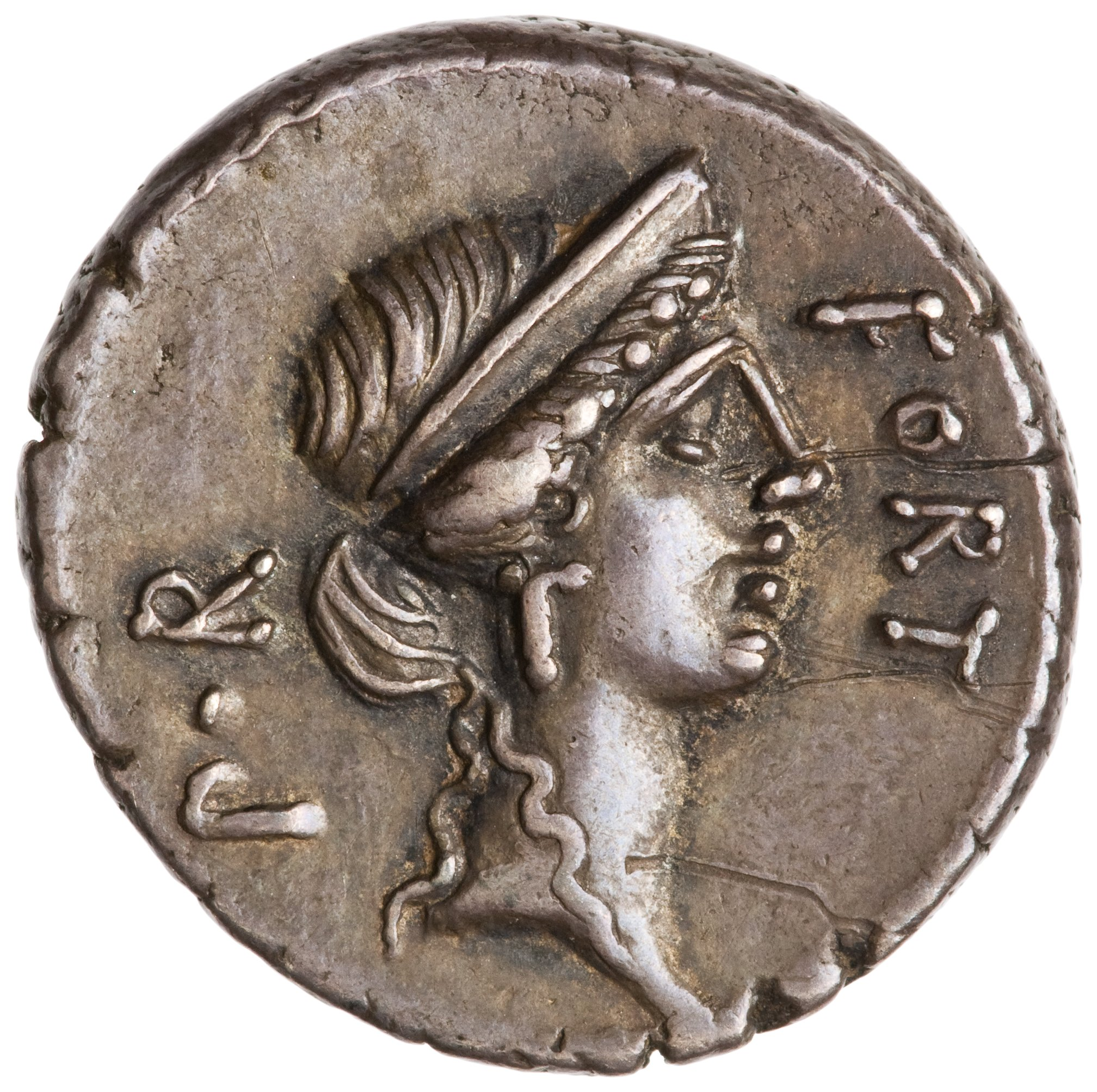
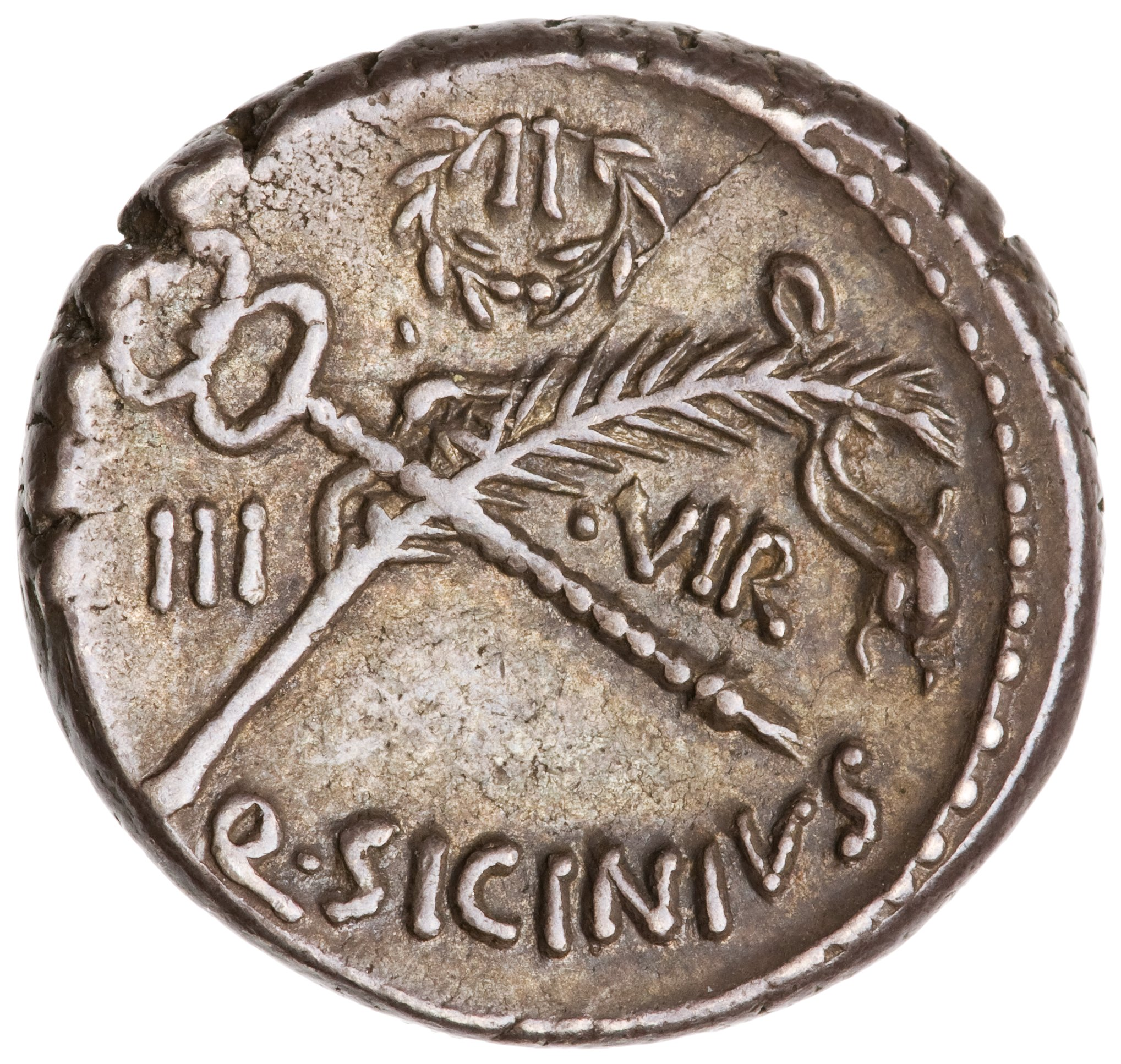
I’m interested in how the speaker connects FPR to the populism and how this may connect to Caesar’s self positioning. And also how this may connect to the Genius PR and also Sulla’s positioning of himself as “blessed” (Felix). I also feel the speaker’s selections of passages help us see why this type is appropriate at the moment that Caesar takes the city itself in a bloodless shift of power. I want to think much more of this.
Rough notes [handout on file]
Plutarch, de Fort. Rom. 317f-318a describes in words artistic depictions of the movement of art
Livy 6.30.6 contrasts the poor judgement of the generals with the FPR that protects of the soldiers because of their virtus. cf. 35.6.9. When human leadership fails, divine provides.
1.46.5 FPR arranges a marriage to allow Servius more time to set Rome on firm foundations. Livy first says it was chance and then shifts via CREDO to give divine agency.
Is Fortuna Urbis the same as FPR see 3.7.1? The speaker thinks so. Only causal invocation of this concept, another Four for FPR.
But speaker says FPR is implied on many other occasions (cf. 5.49)
Tyche goddesses of Hellenistic States, but no cult with the name FPR known in the city.
Evocation of FPR in speeches cf. 7.36, 28.44

 Liv Mariah Yarrow
One thought on “Sling bullets got me out of bed”