
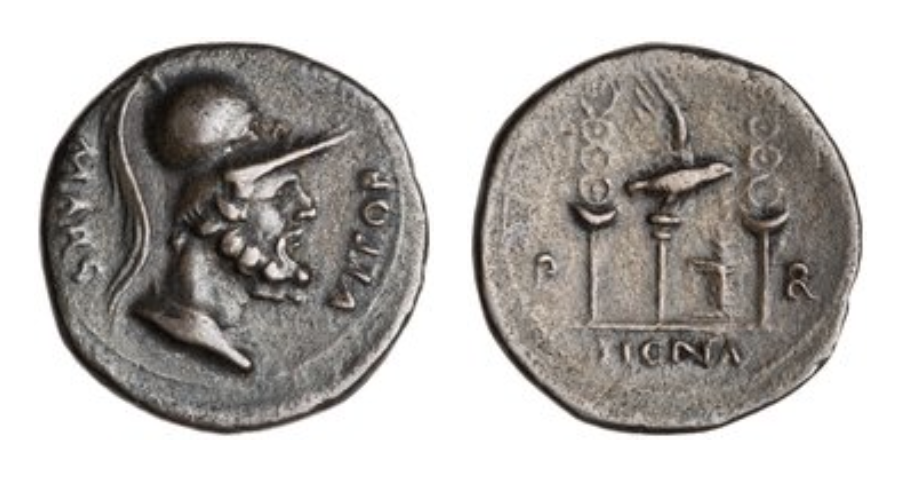
Any attribution to a particular emperor or leader uncertain
NW empire provenance
Mattingly 1914 could not establish provenance, but now CHRE allows us to do so.
Movement and finds suggest a decoupled from troop movement
Variable weights and many plated examples 17% in Martin’s study
144 types, of which 127 denarius, 13 shared by aurei and denarii, 4 aurei only types.
Heads where present represent gods, personifications, or divus Augustus
Thought to be republican until 19th century, but on a Neronian standard and metallurgical testing support dating
25 possible find spots from a range of sources, Martin 1974 and CHRE. 10 have sufficient data quality for inclusion in the study.
All small hoards, 9 denarii hoards, 1 aureii, typically only one anonymous denarius per hoard.
Created a data set of hoards with Contemporary Imperial issues those struck in the names of Galba, Otho, and Vitellius dated to 68-69 BCE.
The hoards with anonymous coin show a significantly different geographical distribution than would be expected from the other hoards. Clustering along the northern frontiers. [photo on file]
Really cool statistical visualizations, I want to practice using Kernel Density Estimates myself as an alternative to traditional histograms.
Take away, the anonymous coins spent only a small period of time in circulation but the contemporary civil war coinages linger in the hoards much longer.
Both (variable) quality and iconography likely lead to their falling out of circulation faster than contemporary issues.
Cool (new to me) finds database out Germany.
N.B. I enjoyed Aracelli’s paper on Rhodian coins but came in too late to take adequate notes. The most interesting point came at the end and in discussion regarding comparison of patterns of coin finds with amphora finds.

 Liv Mariah Yarrow