
On the domestic side, the family arrived yesterday, auspiciously coinciding with “Founder’s Day” at UCL, meaning the library was shut and I had no excuse but to fluff the duvets, procure groceries, stir the risotto pot, and acquire many volumes of books to entertain and reward my brave small humans. It is good to have them here: I am a bit of a barbarian without the familiar rhythms of our shared life.
On the professional side, I’m distressed by the news out of Montclair State (it’s grim – in short major restructuring and the demise of the humanities), the shifting of the department of Education into the department of Labor (it’s extra grim – the only reason for education is to create workers, not citizens, not thinkers, not full autonomous humans with deep curiosity to push the bounds of knowledge, but cogs in the capitalist economy), and then very locally impending retirements and excuses about why we will have to wait until Fall 2027 at the earliest for any chance of FT staffing and why it is not fiscally responsible to provide even short term FT staffing in the interim. I’ll probably push back on this infernal, irresponsible illogic, but right now I’m on research time in a research library so I’m going to put it all in a box and get back to my other job. It is a radical act of resistance to refuse to despair and to continue to intellectually engage with my esoteric disciplines.
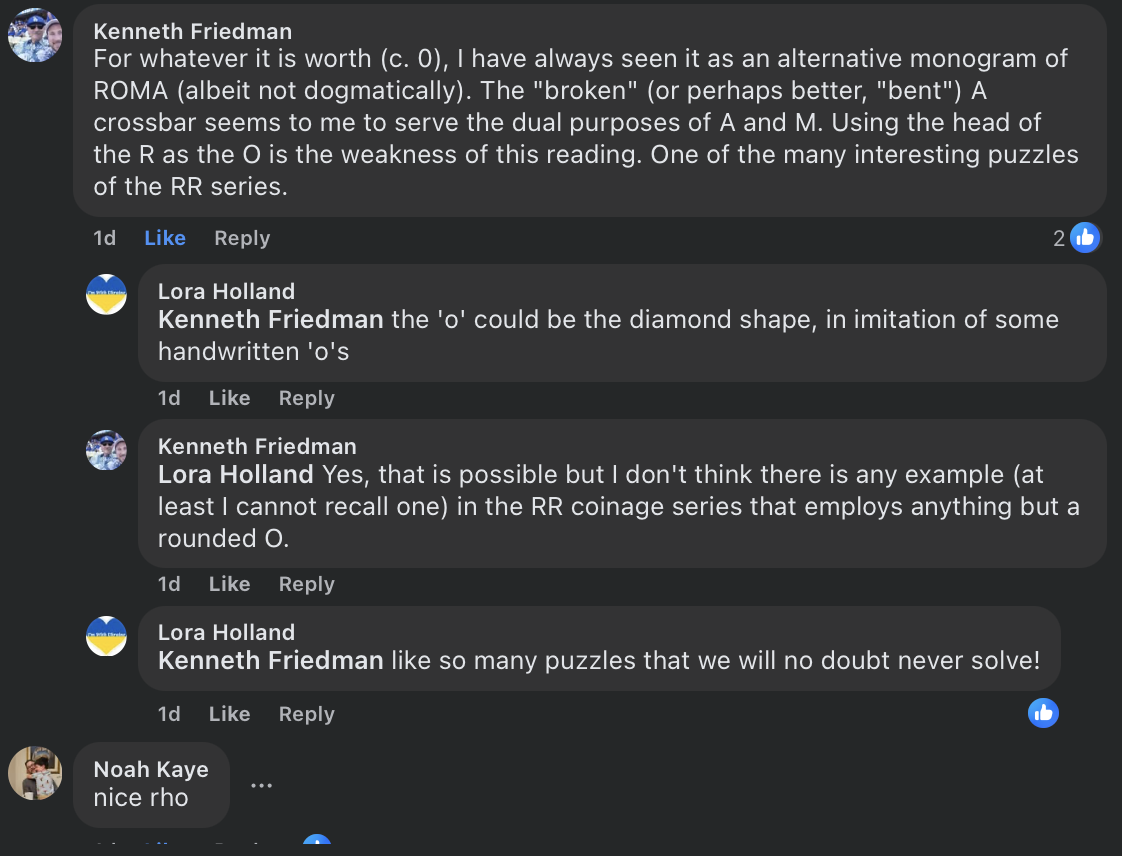
Right so I got you to click on this link because I promised more on monograms. After published that last post I also released it via my socials and got some quality feedback. See below. I’m a little embarrassed I didn’t immediately see the M which seems so obvious now. With the M the final question is where is the O?!
Can the the head of the R double in a monogram as an O? I cannot answer this directly but as monograms are a major feature of Hellenistic coinages especially royal coinages, we have (a) a rich scholarly tradition of studying these types of thing AND (b) this is likely the tradition that is influencing the fashion for monograms on Roman coinages. So can a Rho head be an Omicron in a monogram? Yes. There are 4 clear cases in the HRC database of the 93 monograms that are identified as containing both letters. There are also plenty more examples where an omicron is identified as part of the monogram but not represented by a full closed circle. Below is a random selection. I decided I didn’t feel like tallying up an exact count.
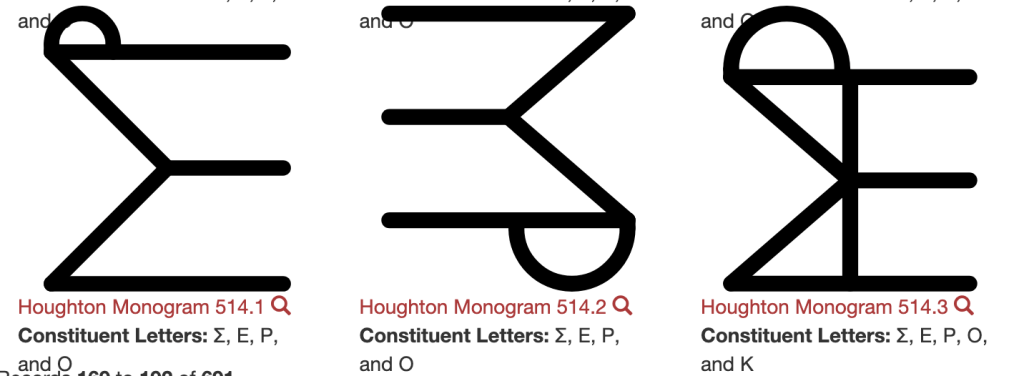
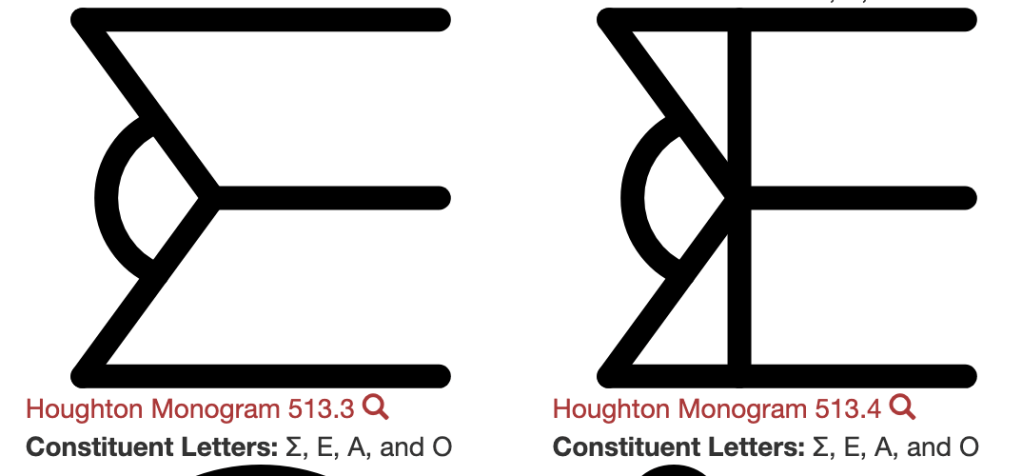
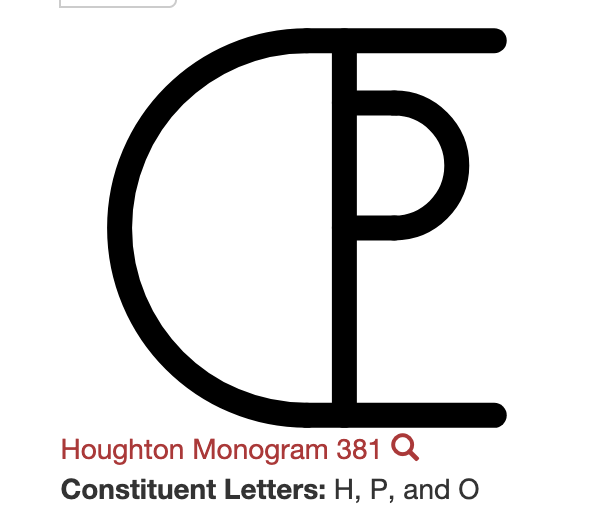
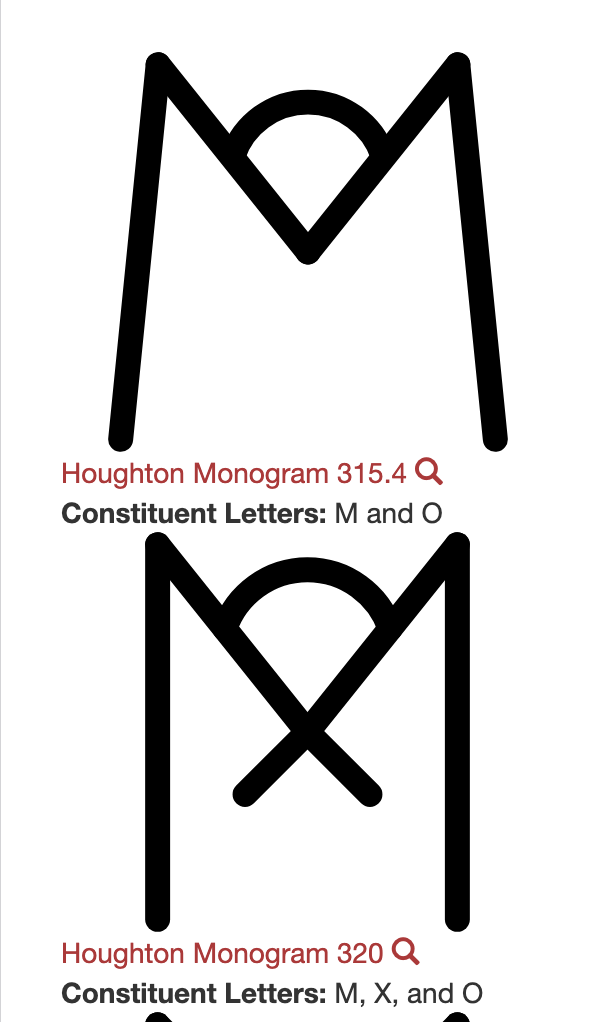
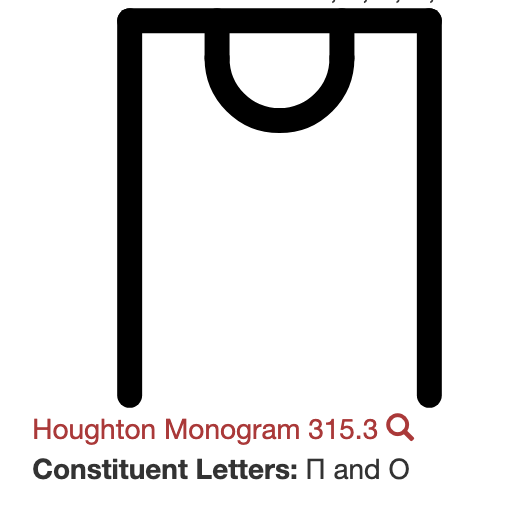
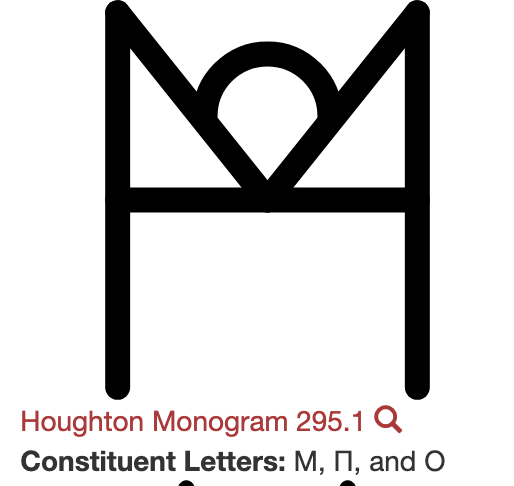
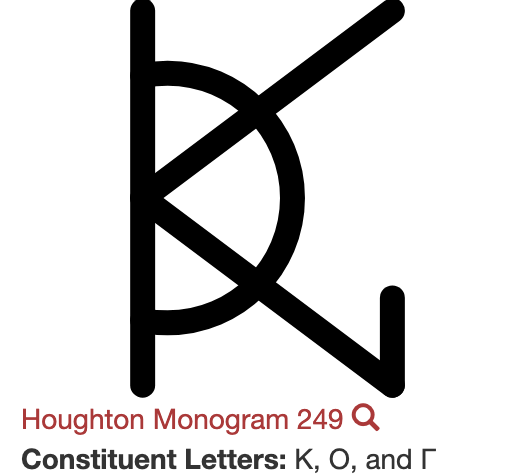
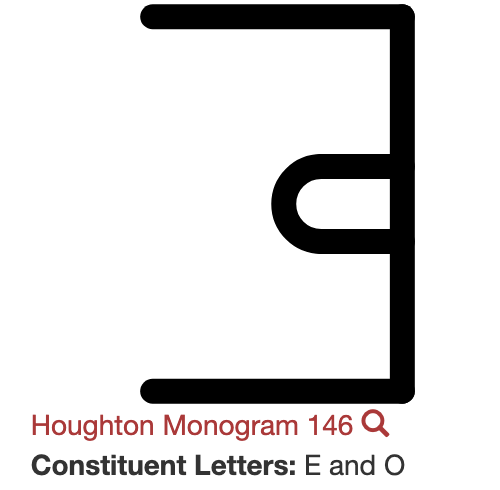
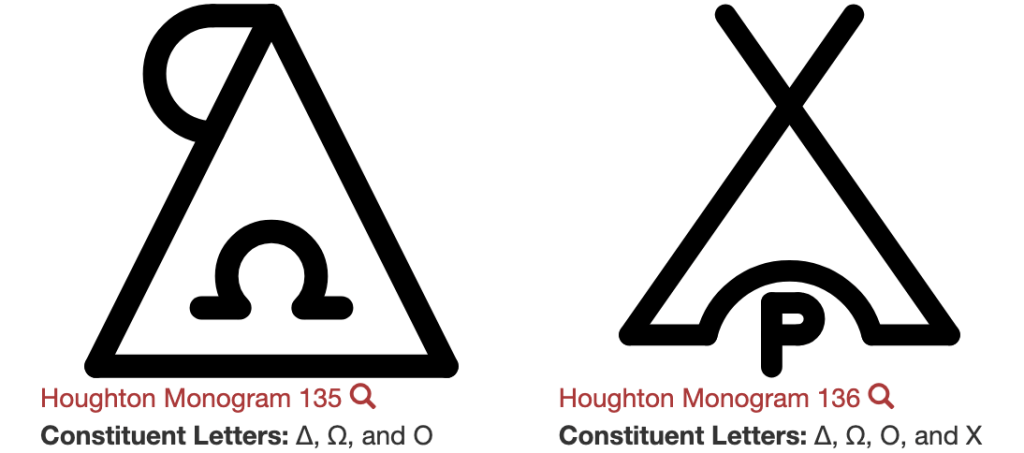
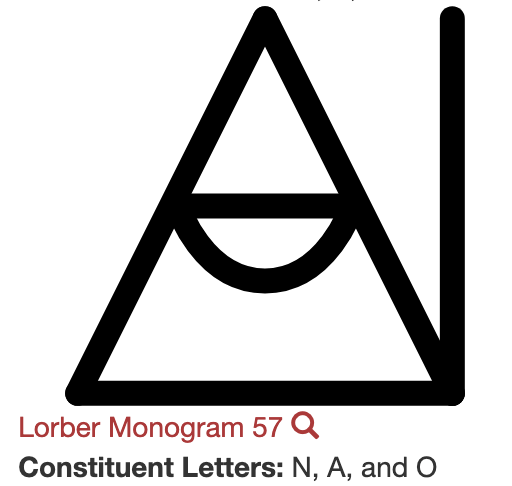
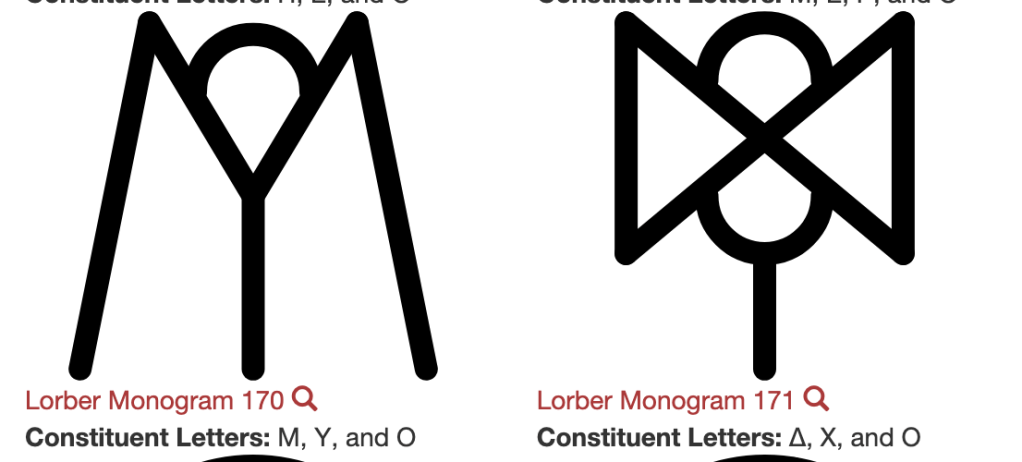
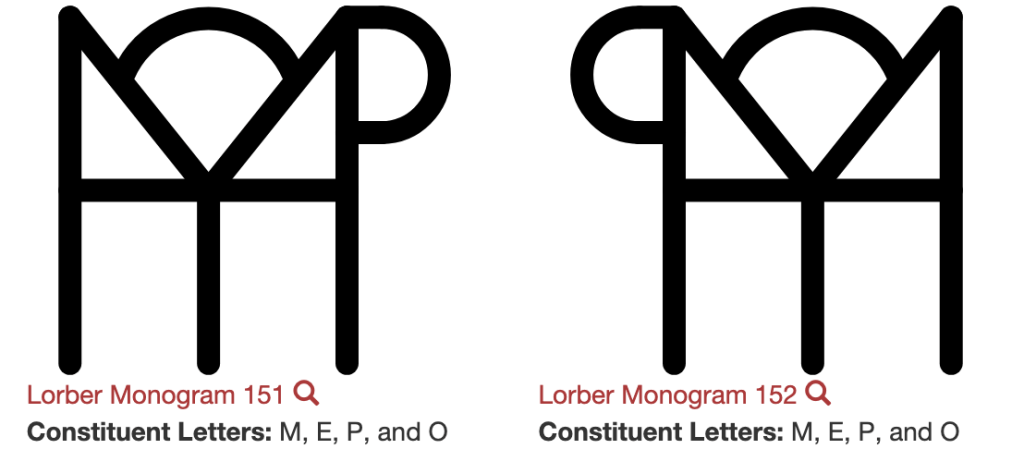
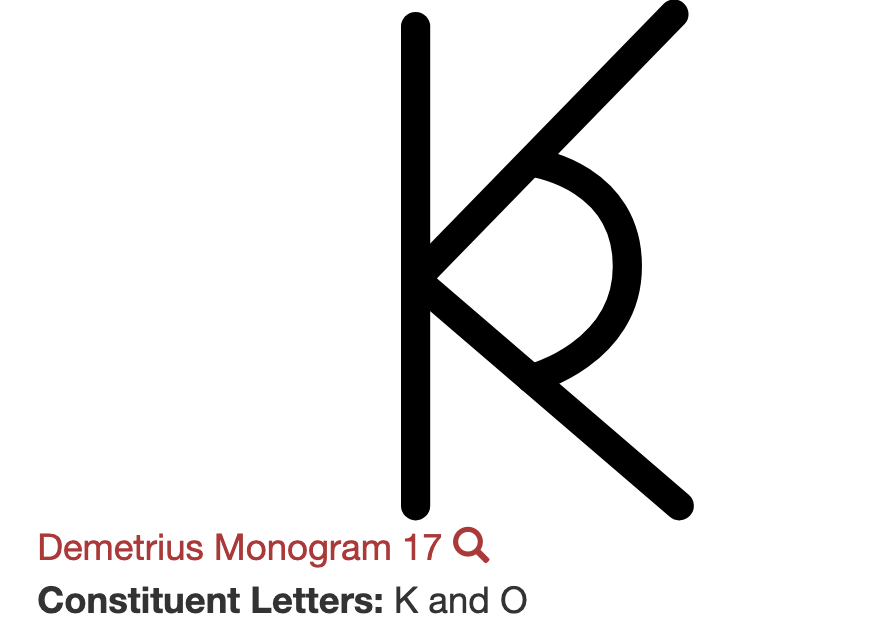
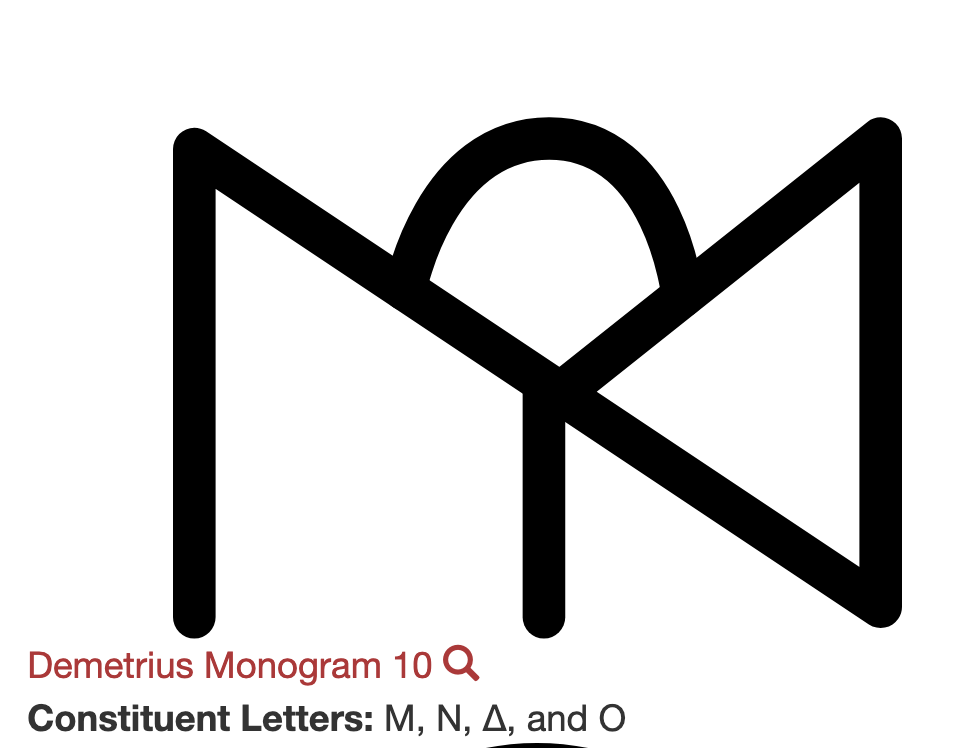
I’m totally confident that R head can stand for an O and that this monogram can be resolved as ROMA. Why did Crawford dismiss this suggestion? Uncertain. But as he’s dismissing someone likely suggested it before Eckel? Sydenham? Babelon? Grueber? Oh I’ll have to check but again not now. If you know, do say and save me the digging.
As mentioned in the last post, RRC 293/1 is struck around the same time as RRC 298/1. RRC 294/1 uses a ROMA monogram and the head of Roma, but RRC 293/1, like RRC 298/1, uses the a ROMA monogram with a totally unrelated obverse head.
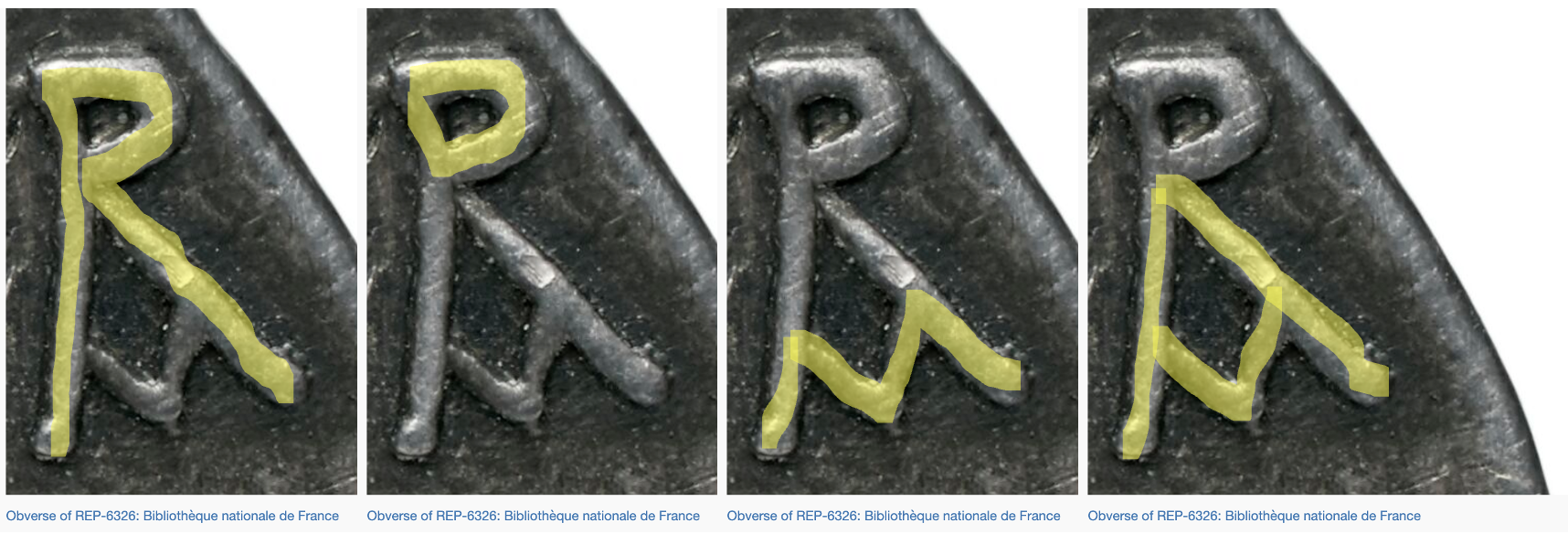
Is it a good monogram? No. It wasn’t used again. Generally speaking monograms are not as popular on RR coinage as on other Hellenistic coinages.
Ok. I think I can let this go out of my mind for now and move on to another topics more directly related to my immediate publication goals.

 Liv Mariah Yarrow
Dear liv,
I had a couple of spare moments (well, dodging less fun chores that want attention) and looked up the coin as described in BMC RR . Gruber does resolve the monogram as ROMA and has the following fn. 2:
“The obverse type of the bust of Veiovis and the monogram [depicted…I can’t type it here] have already been noticed and explained in connection with the coins struck at Rome circ. B.C. 85 by C. Licinius Macer and Mn. Fonteius (see vol. I, pp. 320, 322). The bust occurs on denarii of the former, and the monogram on those of the latter.”
In Gruber’s description of the Mn. Fonteius coin (in Vol. I, pg. 322) he has the following fn. 2:
“The identification of this head with that of Veiovis (Babelon, vol. I, p. 505) is confirmed by the reverse type, for in the temple of that divinity at Rome there stood near his statue a goat bearing a winged genius on its back, a representation of which recalls the infancy of Jupiter, who was suckled by the goat Amaltheia on Mount Ida. Aulus Gellius (v. 12) relates that at the festival of the god on the nones of March the usual victim was a goat, which was sacrificed ritu humano. The caps of the Dioscuri refer to the worship of those divinities at Tusculum, the original birth-place of the Foneteia gens. The head of Veiovis varies somewhat in form. On some denarii the hair is arranged in thick formal ringlets, but on others it is somewhat loose and straggling. These differences may be due to the circumstance that the coins were struck in more than one officina, at which separate sets of engravers were employed to execute the dies. A similar variation in the form of the head of Apollo has been noticed on earlier coins of C. Vibiius Pansa (see above, p. 290).
“The monogram [again, depicted but I cannot type it] has been variously explained. This is not its earliest occurrence, as it is found on the coins of L. Caesius with the bust of Veiovis already referred to (see p. 320) which are classed to Italy (circ. B.C. 91). Mommsen (Hist. mon. rom., t. ii, p. 30) and Eckhel (Doct. num vet., vol v., pp. 157, 219) both interpret it as consisting of the letters AP and the former considered them to be the initials of Apollo, but the latter to be possibly the initials of Argentum Publicum. We are unable to accept either of those interpretations from the fact athat at this period the letter A rarely occurs as [here, he depicts the A with the broken/bent crossbar], and P is always given as [here he depicts the P as the squarish P without the bottom stroke of the head…like a gallows] or [here he depicts the same form but with a 90 degree arc curving downward from the top of the vertical line instead of the squarish, right angles], and consequently we prefer to see in this monogram the name of ROMA. There is a distinct R, the upper part of which could form O, and the peculiar shape of [again the A with the broken/bent cross-bar] furnishes the combination of MA (Num. Chron., 1895, p. 162). Similar monogrammatic forms of the name ROMA are met with about this time as RA (see above, p. 267), and [here he depicts a monogram with two connected As forming an M, the left-most of which has the cross-bar slanted downward to the right and also having a small line connecting the downward slanting stroke of the cross-bar slanting upward to the right leg of the A; the right-most having an unbroken/unbent cross-bar; all surmounted by a small o the center of which is even with the peaks of the two As] on coins of L. Marcius Phlippus (Babelon, vol ii, p. 187).”
So you are correct in your surmise that Prof. Crawford is dismissing Gruber as well as Eckhel (and adopting Mommsen).
I have also looked up the Babelon reference to the L. Marcius Philippus coin. Curiously, the text above the coin ignores the monogram entirely (addressing only the Greek phi as being expandable to Pilippos (I am too lazy to pull up the Greek font for this email). The text describing the coin begins “ROMA (en mongramme).” (without, of course, any discussion of the reading of the monogram…probably because it is rather self-evident. As for Babelon’s discussion of the monograms in Vol I, p. 505 (actually the entry on the coins of Man. Fonteius C. F. starts on pg. 504 and continues on thought 508…rather than try to type all that out, I will take pics of those pages with my cell phone and either text or email those to you.
Sorry, but my poor library lacks both Eckhel and Mommsen so you are on your own for those!
I hope this is helpful and apologize for any transcription errors in my typing (an unforgiveable sin to my late mother who taught typing in high schools).
Kenneth L. Friedman of
Karno, Schwartz & Friedman
A Partnership Of Professional Corporations
16255 Ventura Boulevard, Suite 1200
Encino, California 91436-2363
Telephone: 818-981-3400 extension 181
Telecopier: 818-981-2145
IMPORTANT CONFIDENTIALITY NOTICE
This message from Karno, Schwartz & Friedman, A Partnership Of Professional Corporations, is intended only for the use of the addressees shown above. This message contains information that may be privileged, confidential and/or exempt from disclosure under applicable law. If you are not the intended recipient of this message, then you are hereby notified that the copying, use, forwarding or other distribution of any information or materials transmitted in or with, or as an attachment to, this message is strictly prohibited. If you received this message by mistake, please immediately send it back to us at klf@ksf-law.comklf@ksf-law.com and then immediately destroy this message.
THANK YOU SO MUCH! THIS IS FANTASTIC.