I started this post earlier this morning while I was waiting for an important meeting and then it ran away with me.
Thus far today I’ve graded, drafted a grant report, crafted an agenda to meet program priorities and cleared the top of my inbox (don’t worry I officially still have unread messages – yes I live my life on the principles of a chaotic good).

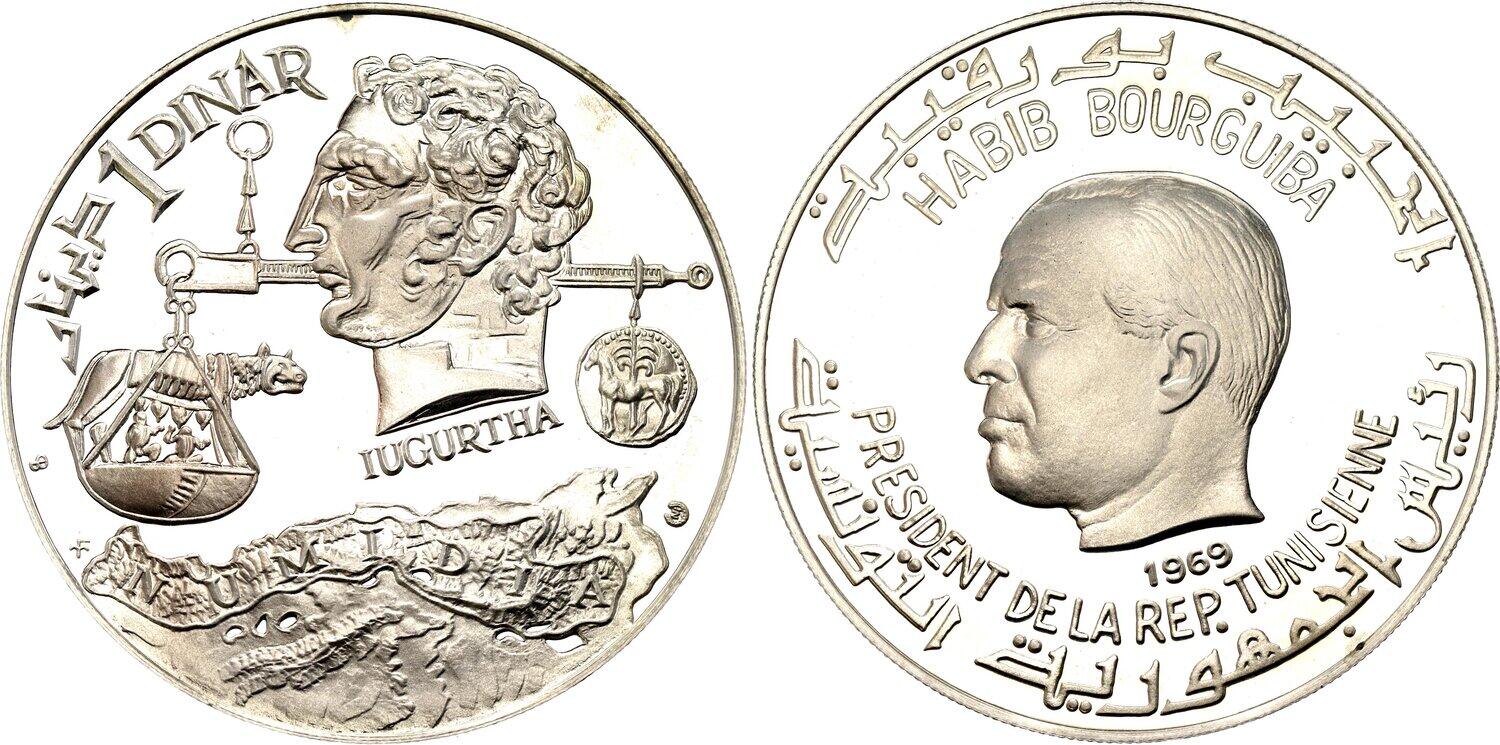
My brain is spinning and I just want to be a researcher again. I wracked my mind for a coin, just one, I might want to free write about for comfort and connection with my scholarly self. I’ve been meaning to blog about the above type for a while. It was shown to me by my colleague at UCRiverside, Kyle Khellaf, over the summer as we planned his recent speaking event. It is an incredible appropriation of antiquity to create a narrative of continuity for a modern nation-state. I will only be discussing the side–call it obverse or reverse as you will–with the name “Iugurtha” and the denomination “1 Dinar” text.
The bottom of the design has a map of a section of the north African coast. It shows the area primarily occupied by Tunisia. Instead of marking this territory, it asserts the boundaries of the primarily inland ancient kingdom of Numidia. As I always tell my students ancient kingdoms, city-states, empires, etc. rarely have clearly defined boundaries like this. The evolution of the militarized and defensible Roman limes under the high empire–forts along the Danube, Hadrian’s wall–is its own whole unique conversation and topic of scholarship. In earlier periods of Mediterranean wide cultures boundaries were often reliant on physical landmarks — the watershed on top of a mountain range, e.g. limit’s of Cicero’s provincial command, or water ways, e.g. Ebro River in the treaty between Carthage and Rome at the end of the 1st Punic War (and yes, the Rubicon, if you must mention it). Those lines on the coin’s map defining ancient Numidia read modern conceptions back into an earlier period that had very different conceptions and definitions of space and territory. The image is of course useful for the claiming of Numidian heritage and legacy by Tunisia. Numidia represents, in this numismatic context, a form of indigenous self-definition in opposition to colonial powers.
This is embodied by the ‘portraiture’ of the most famous Numidian king and opponent of Roman control, Jugurtha. I put ‘portaiture’ in quotes because the form of the head seems strongly influenced by laureate heads on Punic Silver struck in Iberia and Sicily at the time of Carthage’s Wars with Rome, long before Jugurtha came on the N. African scene. The images on these ancient coins have often been mistaken for portraiture. Something I discuss in my 2021 book (p. 119) and also in earlier blog posts. I have and continue to argue these are divinities, most likely a Herakles/Melkart figure (see my 2013 article on the syncretism of this divinity in the Western Mediterranean).
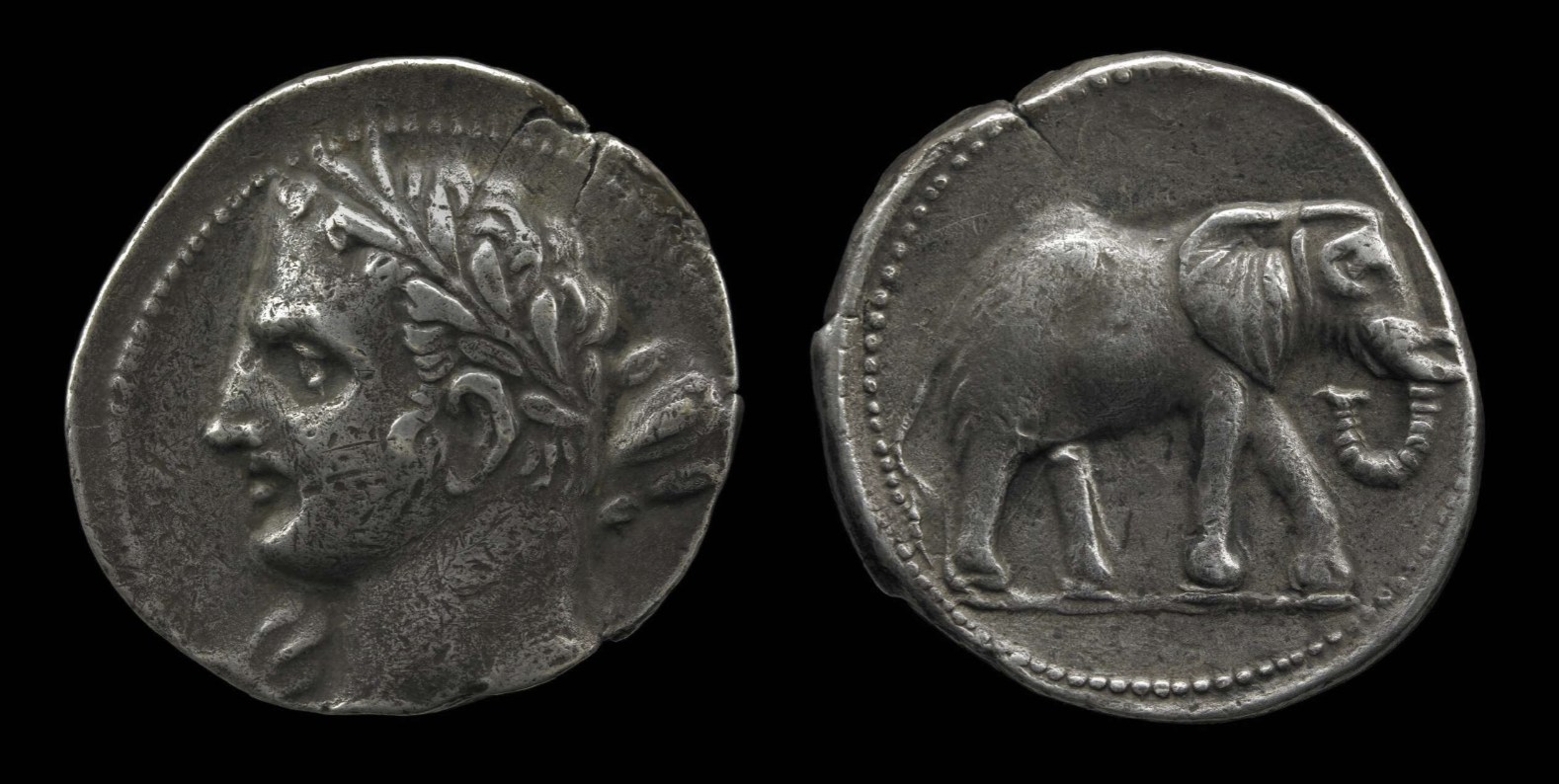
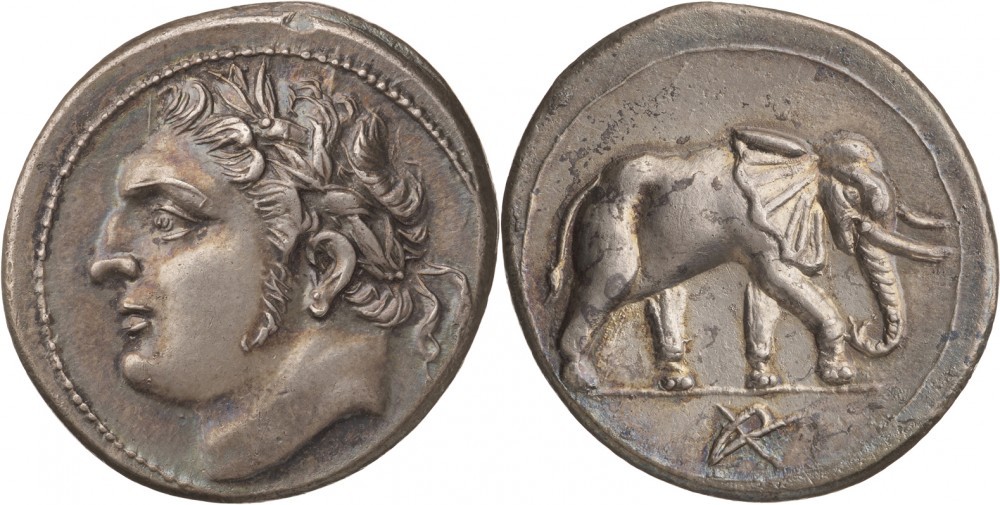
Behind the head is a steelyard-style scale. A type of scale common in ancient Rome as well as other ancient Mediterranean cultures.
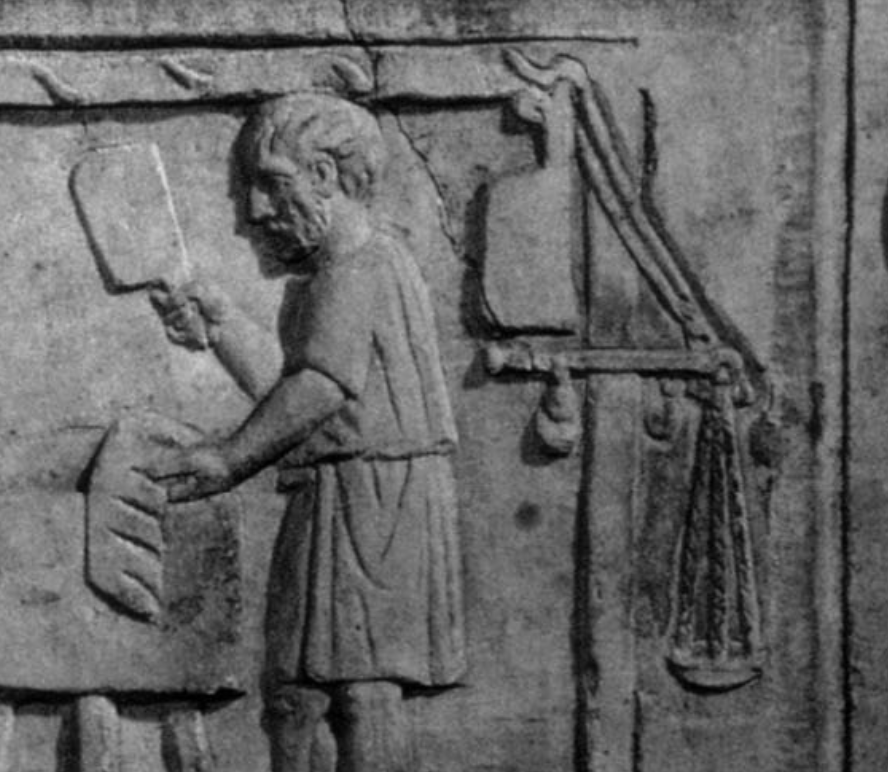
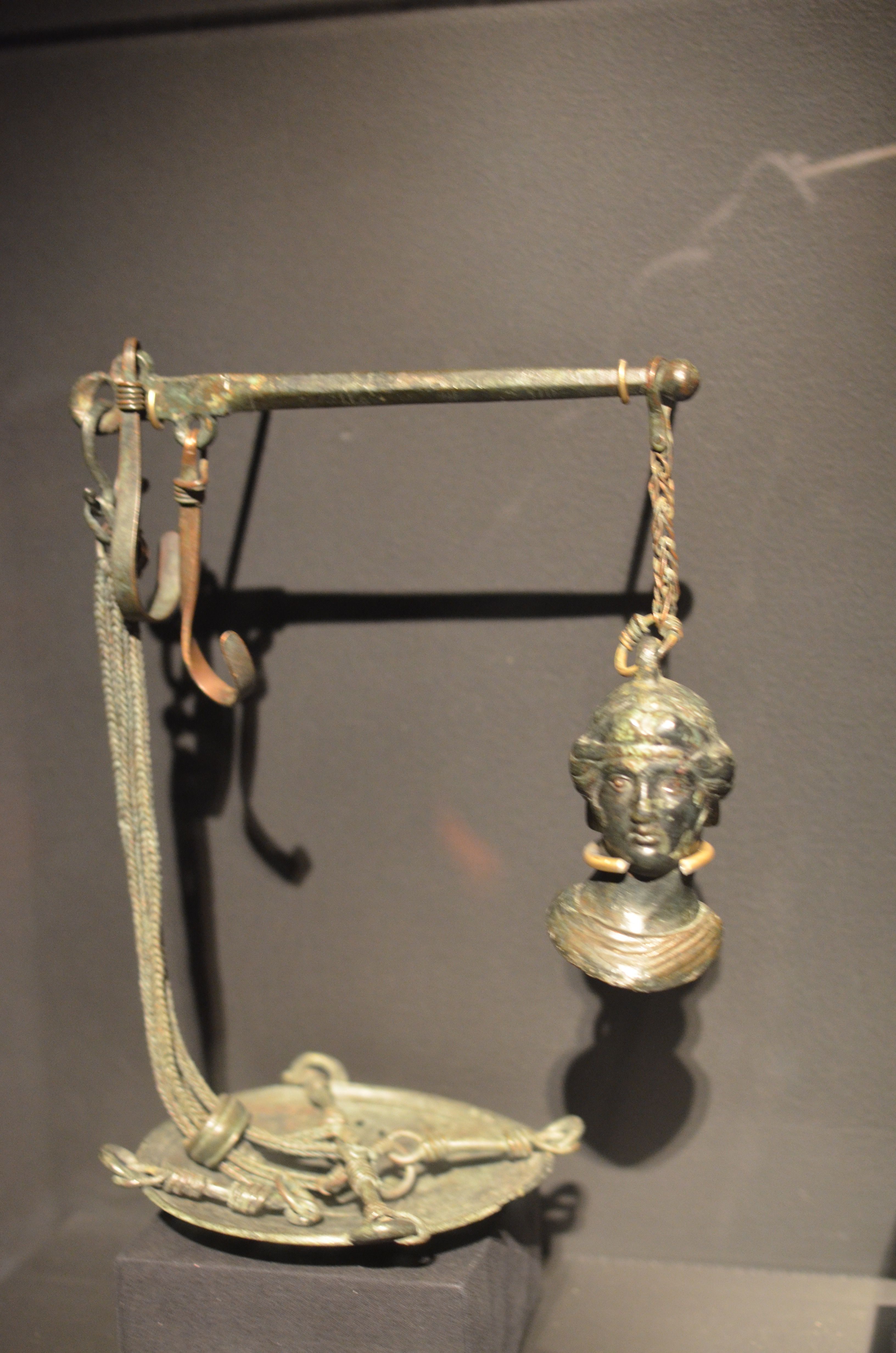
In the pan one places what is being weighed and the other end has a counterweight. The counterweight may be visually smaller than the thing being weighed but still be the appropriate counterweight because of leverage based on its position on the scale arm. In the pan of scale on the coin is the symbol of Rome, one promoted by Mussolini in particular, the Capitoline Wolf with latter addition of the twins beneath. This symbol is meant to evoke ancient Rome, but also perhaps modern colonial powers and their entanglement with the Magreb. The counterweight is a coin, specifically a Punic coin. Rome is weighed by its relationship to Carthage. By extension, the coin implies that more contemporary colonizing powers are measured by their relationship to the N. Africa.
Ok. That’s enough for now. i have more to say but I need to do some other things.
Morning of 10/24/25 some typos were fixed. Below image and hyperlinks added.
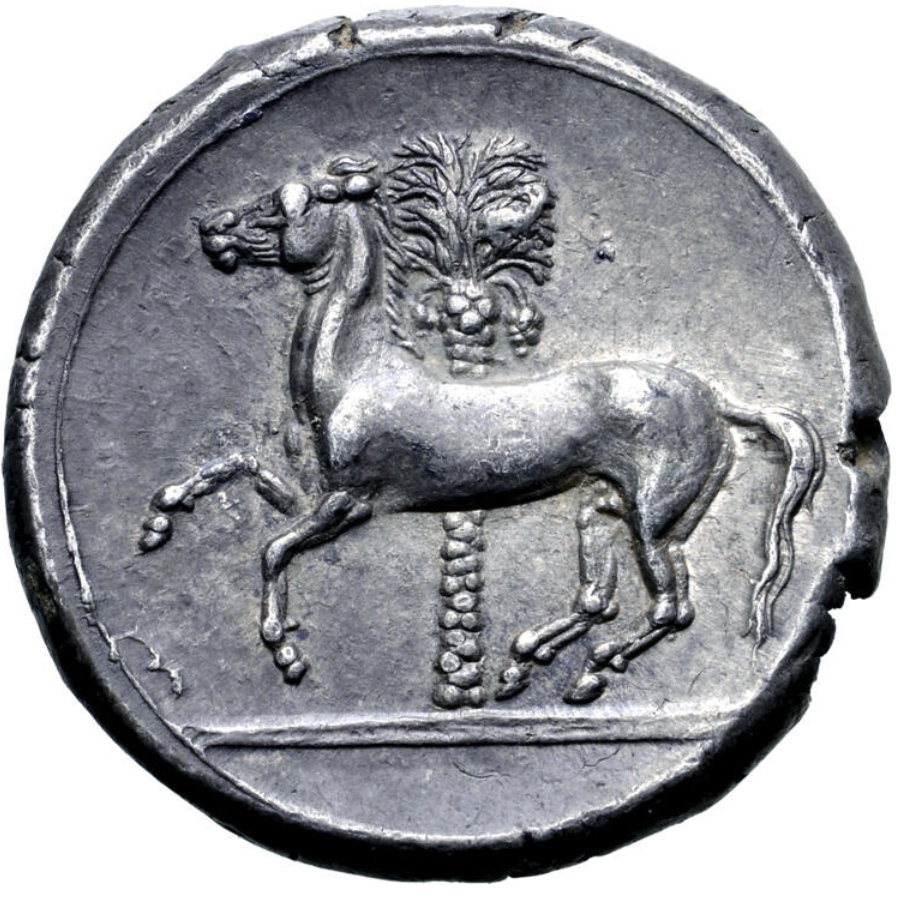
Over a long history of striking coins in various regions the Carthagians show a strong preference for the palm tree and horse separately and together in a variety of forms. Often but not always the Palm tree is depicted as a Date Palm.

 Liv Mariah Yarrow
shared with a friend from Maghreb
John B. Van Sickle