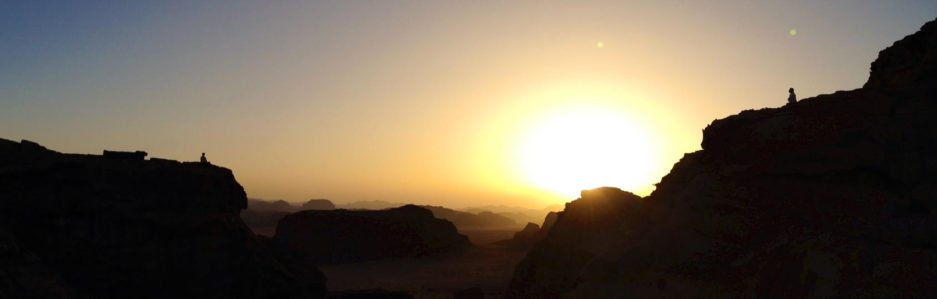
I had to dig out some things from my files for our taxes yesterday and found myself remembering all the images I’d taken on my travels last spring. As I’m still in the delightful phase of post EU travel where I go to bed at 7.30/8 and wake up at 5 am naturally, I felt maybe I could enjoy myself over coffee with these pictures and recording what I see. It is always good to exercise the writing muscles and deepen the images on this site for future use. If any of these images are useful to you, let me know and in most cases I can send you a higher resolution.
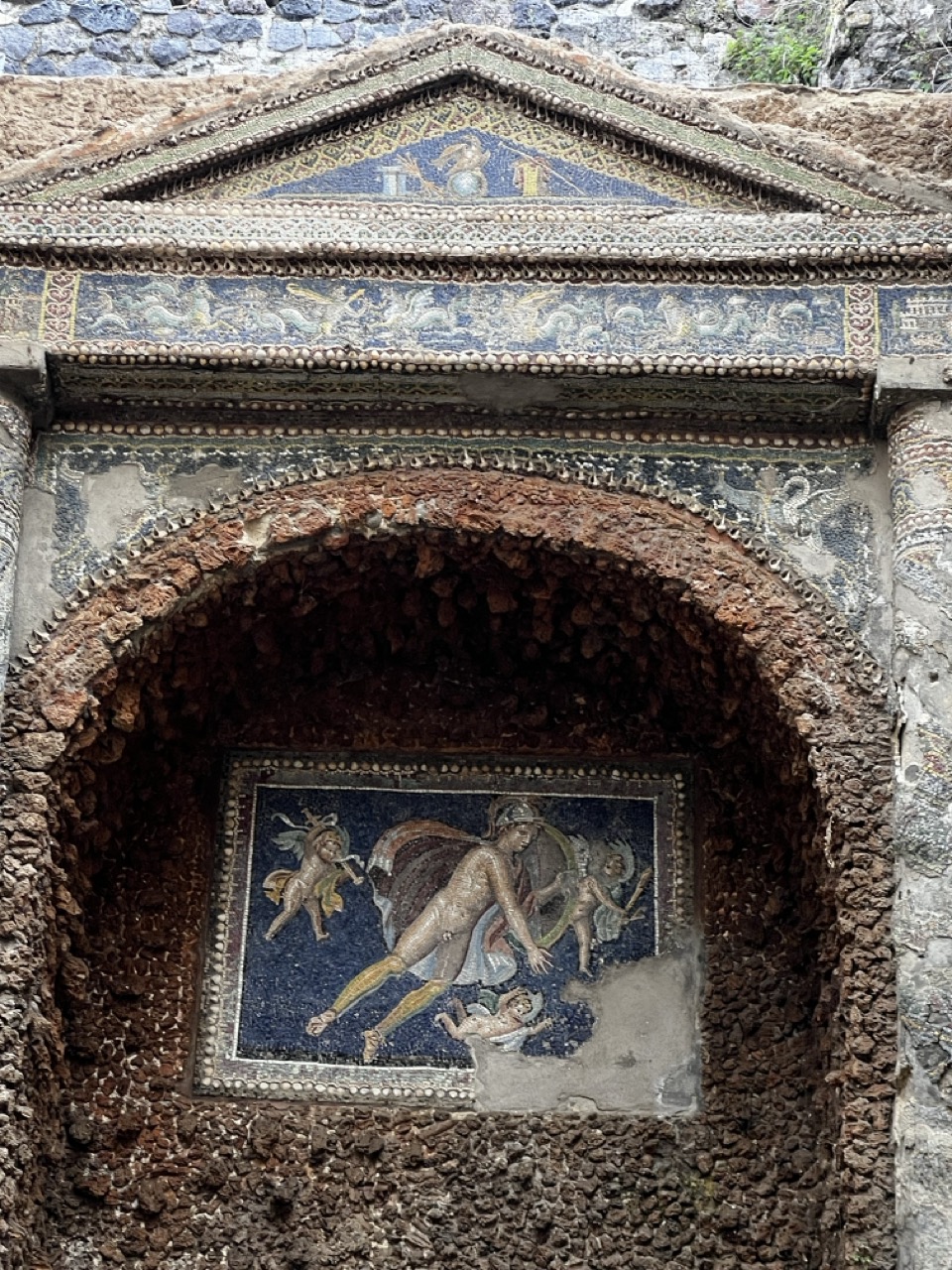
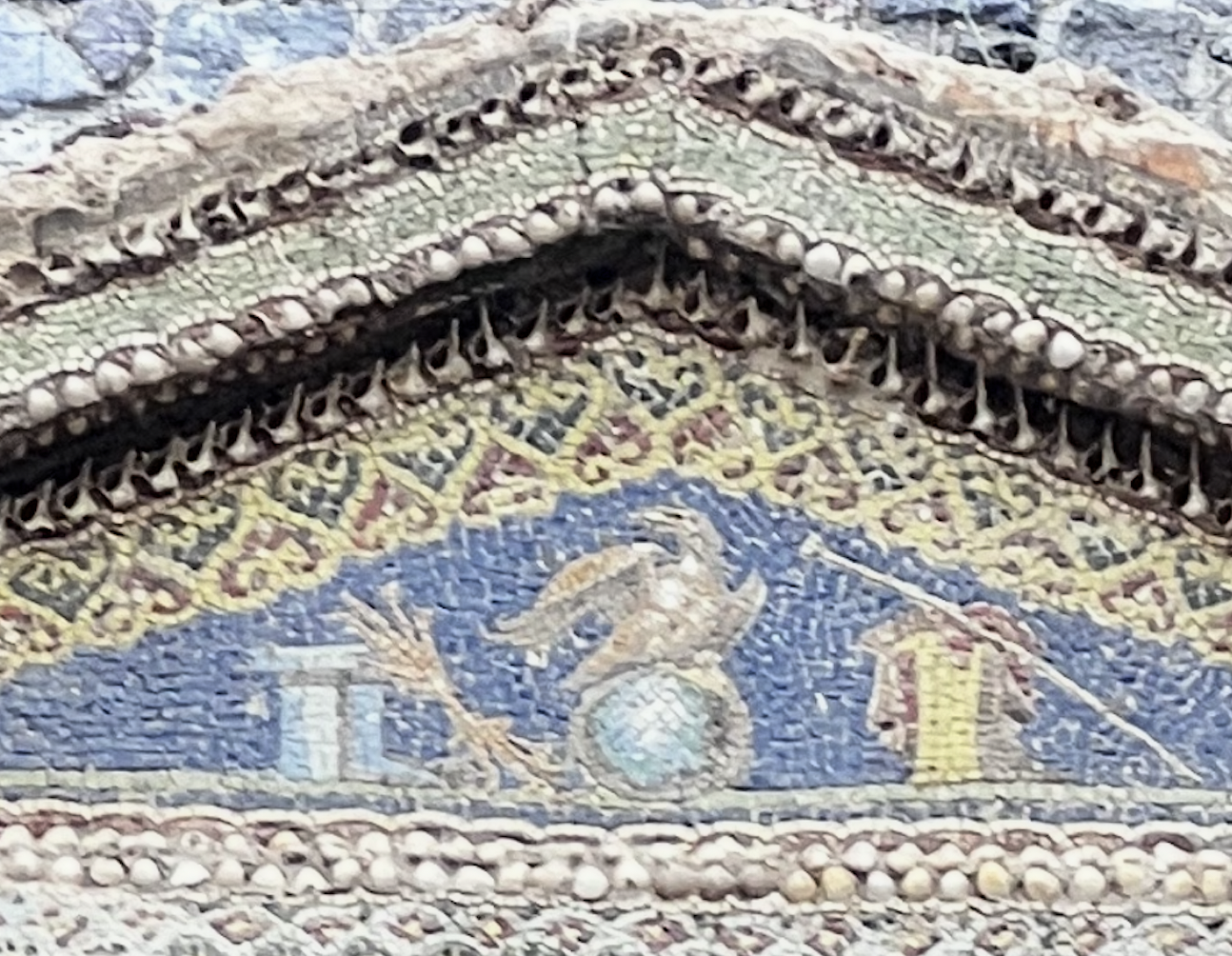
This mosaic from the Suburban baths is a nice teaching parallel for the Neptune Amphitrite mosaic from a domestic context in Herculaneum. The blue and shells are just the start. The central themes echo each other in male gods undone by desire. The cupids steal away Mars’ arms. Venus’ swans watch from the corners of the arch. Above this the freeze is more watery. Mermen engage with sea-griffins and just out of view we have the suggestion of architectural panels. I had a little conversation about the pediment yesterday on Bsky. We settled on altar and thunderbolt, eagle and globe, and cista with purple robe and scepter. I almost wonder if there might be a crown in that design. I’d need a better photo. Image the hands that collected the shells and sorted them and the artists who set each one to create this tapestry of color and texture and pattern.
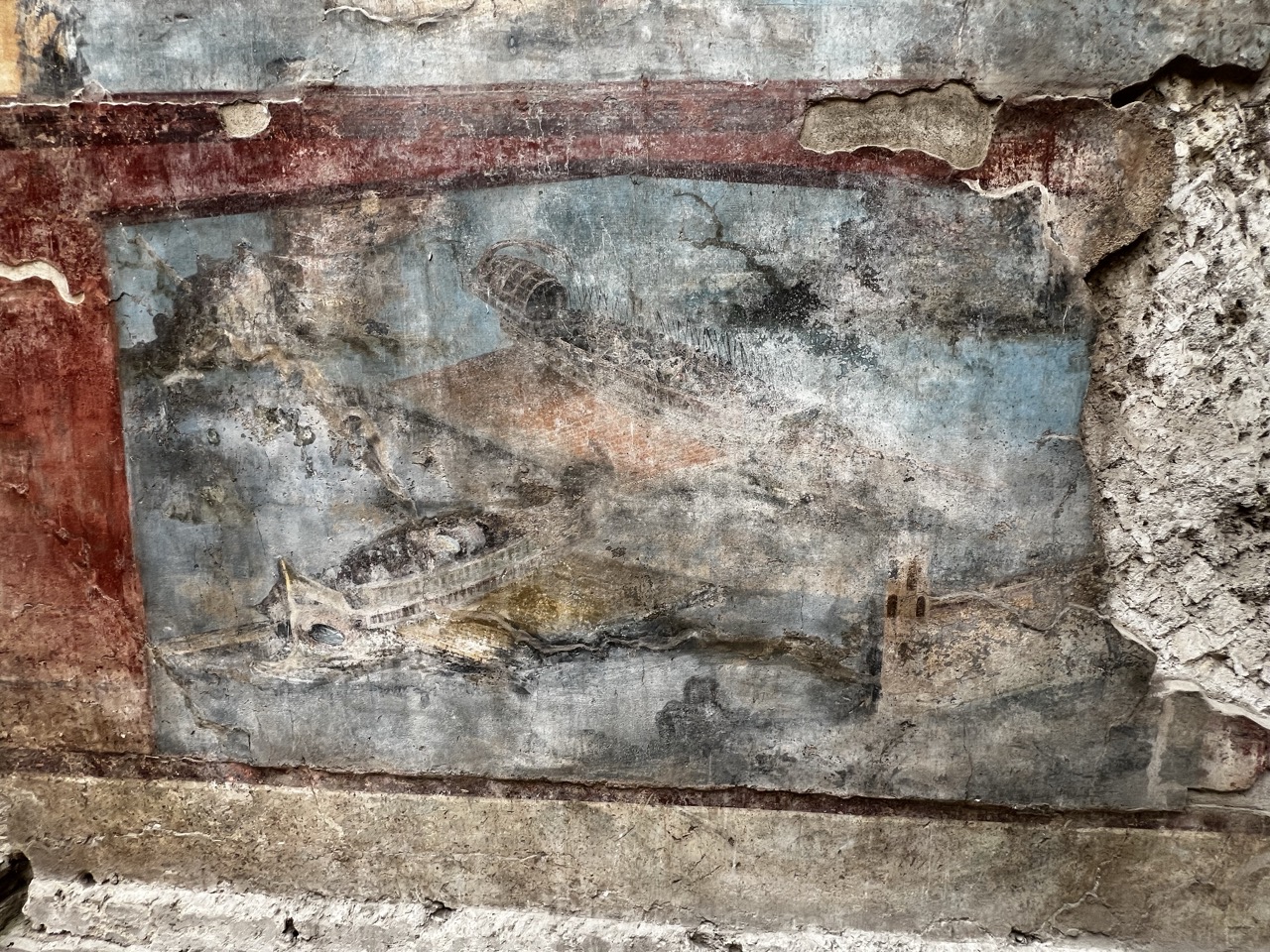


Here we’re in one of the urban baths. I like again for teaching the echoes of painting styles in plaster. Architectural fantasies are a common theme of domestic wall painting. Commonly I use as the primary teaching example the Boscoreale bedroom from the Met. It is good to show students these artistic esthetics cross the public/private divide and also different media. I also like the hints of pigment and how we must re color the environment for the original effect. I often talk to my students about the intensity of the Mediterranean sun and the quality of the light and how that changes the experience of color. I ask them to think about modern Caribbean esthetics and how that palette also plays with light and reflection off the water. It isn’t the same palette but the parallel helps them re conceptualize ancient art without defaulting to the polished white marble so beloved by the Victorians.
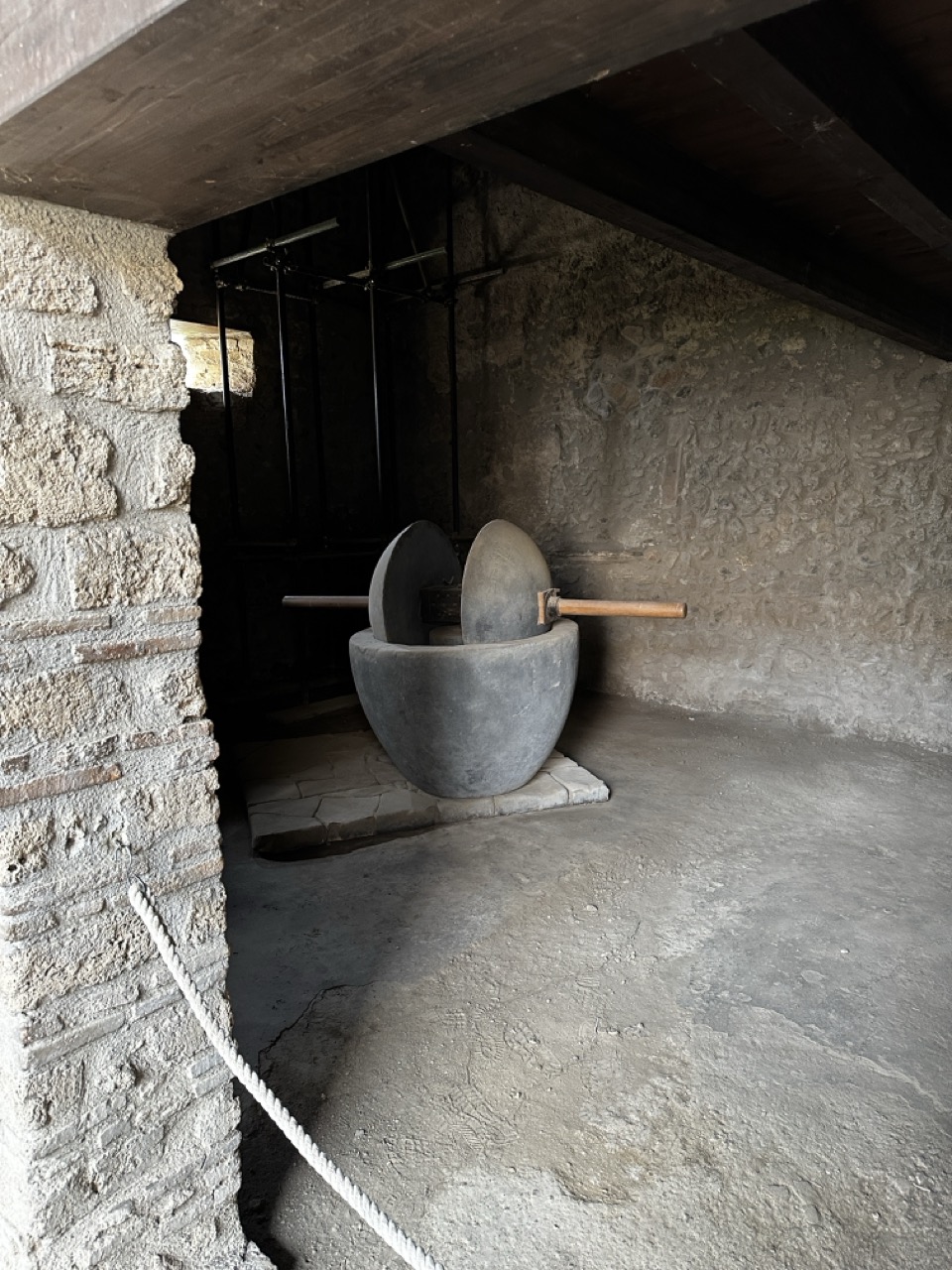
I’ve not found one of these amongst my control marks but I’m leaving it here largely because of how control marks have sparked my interest in technologies. Reconstructions like this are critical for the historical imagination. We can consider the human cost of the enslaved labor used to power this grinder. The Romans had all the skills and technology at their disposal for an industrial revolution and yet their elites found it more convenient to invest in exploitation rather than mechanical solutions. While I cannot romanticize the horrific exploitation of our own industrial revolution, nevertheless I would argue that a rejection of slavery, an abhorrence of child labor, and an understanding of the collective power of workers has driven progress and resulted in efficiencies unknown to the Romans. We are only hindered from future development by our willingness to turn a blind eye to current exploitation and a refusal to distribute benefits of automation to the whole of society rather than just capitalist elite. There must be dignity in work and humanity in our policies and goals.
To be continued as time allows. There are some 300 photos in the folder from this two day trip! Eek.

 Liv Mariah Yarrow