
Machine translation, loosely cleaned up by a human:
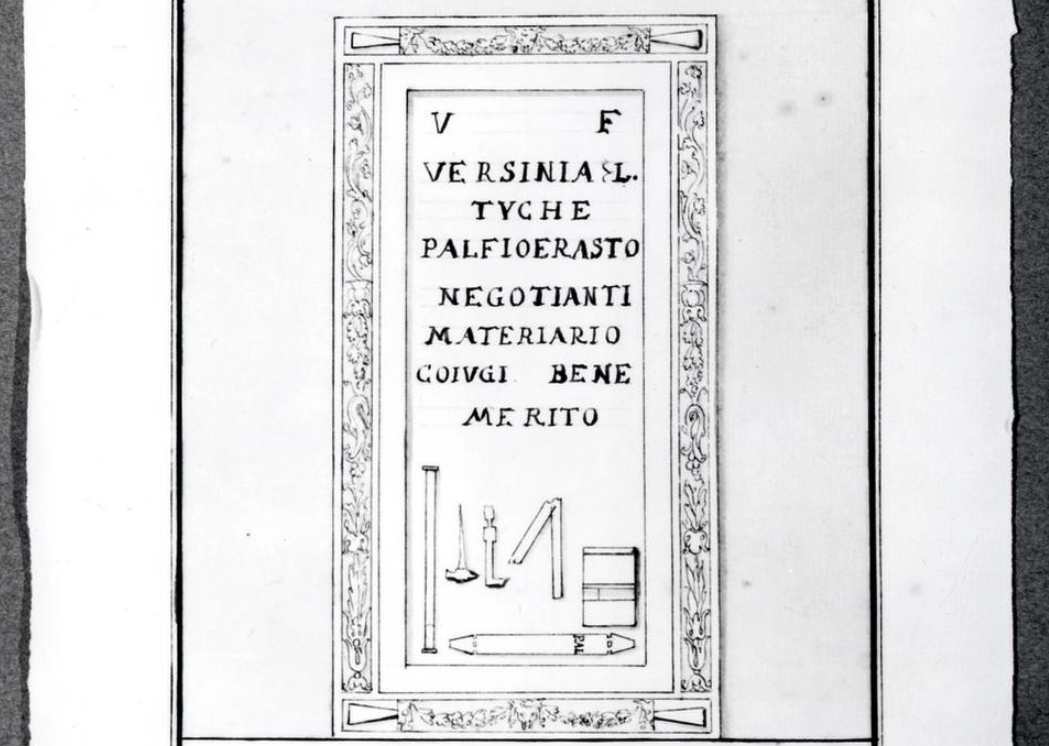
The area where the tomb stele of Publius Alfius Erastus was discovered, c. 1546, appears to be Podere Ellera I on the outskirts of Antella (Fi). The Marquises Niccolini, owners of the territory of the discovery, transferred the stele to their palace in Florence, where it remained for approximately three centuries. The first floor of their palace was then rented to the Municipality of Florence as the home and office of the Royal Commissioner until 1849 and it is probable that the Marquis Ferdinando Panciatichi Ximenes of Aragon saw it there in 1848, when he was commander of the IV battalion of the Civic Guard. We don’t know exactly how, but the fact is that we find the epigraph from Palazzo Niccolini in the Castle of Sammezzano.
“Versinia Tyche, freedwoman and wife, during her lifetime, erected this monument for the timber merchant for Publius Alfius Erastus, a meritorious spouse”
So we are dealing with an entrepreneur who lived in the 1st century. A.D. dedicated to the trade of construction timber and on his epigraph we find all the tools of his work, which leave some doubts for a correct interpretation, because since this stele is a “unique” of its kind, there are no terms of comparison. The tools could be: Measuring rod or staff, Forestry Hammer, Hypsometer and Grapple Scraper or Stylus Case Diptych Compass sheath
Taken from an article by Silvano Guerrini on “Correspondence”:
Il Castello di Sammezzano, monumento unico del suo genere per i caratteristici ambienti moreschi, conserva, nel suo pianterreno, un’altro “unicum”, una epigrafe funeraria di epoca romana. La zona di ritrovamento della stele sepolcrale di Publio Alfio Erasto, avvenuto intorno all’anno 1546, pare sia il Podere Ellera I alla periferia di Antella (Fi). I Marchesi Niccolini, proprietari del territorio del ritrovamento, trasferirono la stele nel loro palazzo di Firenze, dove rimase per circa tre secoli. Il primo piano del loro palazzo fu poi affittato al Comune di Firenze come abitazione e ufficio del Commissario Regio fino al 1849 ed è probabile che il Marchese Ferdinando Panciatichi Ximenes d’Aragona l’abbia vista lì nel 1848, quando era comandante del IV battaglione della Guardia Civica. Non sappiamo esattamente come, fatto sta che l’epigrafe, da Palazzo Niccolini, la ritroviamo nel Castello di Sammezzano.
Si tratta di un’iscrizione completa, che recita:
V.F. VERSINIA .).
L TYCHE
P. ALFIO. ERASTIO
NEGOTIANTI
MATERIARIO
COIUGI ^ BENE
MERITO
che possiamo tradurre con:
Versinia Tyche, moglie libera, in vita fece per Publio Alfio Erasto commerciante di legname da costruzione, coniuge benemerito
Quindi abbiamo a che fare con un imprenditore vissuto nel I sec. d.C. dedito al commercio di legname da costruzione e sulla sua epigrafe ritroviamo tutti gli strumenti del suo lavoro, che lasciano alcuni dubbi per una corretta interpretazione, perchè essendo questa stele un “unicum” nel suo genere, non esistono termini di confronto.
Gli strumenti dovrebbero essere:
Canna per misurare o Stadia
Martello Forestale
Ipsometro e Rampino
Raschietto o Custodia per stili
Dittico
Fodero per compasso
Tratto da un articolo di Silvano Guerrini su “Corrispondenza”

 Liv Mariah Yarrow