
The twelve tables only exist in fragmentary form. The best edition is in Crawford’s Roman Legal Statutes, but it is more accessible in the Loeb. I’ve got both but I’m reading the Loeb yesterday and today.
In Aulus Gellius’ Attic Nights (16.10) there is a long disquisition on the meaning of old words based on a line of Ennius that calls in as evidence the XII tables. The main concern is what does proletarii mean as compared to capite censi. It is a good read all on its own. But the part that is of interest is in the list of out dated legal jargon occurs the phrase: ‘twenty-five asses’ viginti quinque asses, but it is commonly said the XII give no units to their multiple fines. What is meant here then?
Festus to the rescue! (Verb. Sign. 371.1)
Viginti quinque poenae in XII significat viginti quinque asses
In the twelve [tables] a penalty of 25 refers to 25 asses.
Gellius is glossing or remembering an edition that itself supplied the word asses. The same glossing occurs in Gaius, Inst., IV, 13–14: with reference to solemn deposits of 500 or 50. And then even more explicitly in Gaius:

We get later in Gellius this amusing anecdote about inflation and the fines being out of date (20.1).

The key Latin reads: Si iniuriam alteri faxsit, viginti quinque aeris poenae sunto
Was aeris “bronze” in the original? I again expect a gloss.


The restoration of sestertiorum here is non-sense.
Numbers mentioned
500 or 50 for a surety
10,000 for freedom of an enslaved person on death of enslaver on payment to heir or to whom the heir sold him Ulpianus, Tit., II, 4
300 or 150 for a broken bone
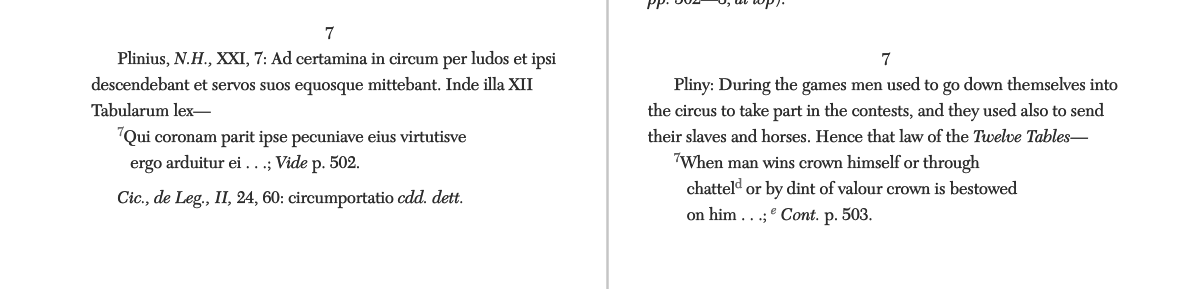
25 for a cutting down a tree (Plin NH 17.7 with aeris)
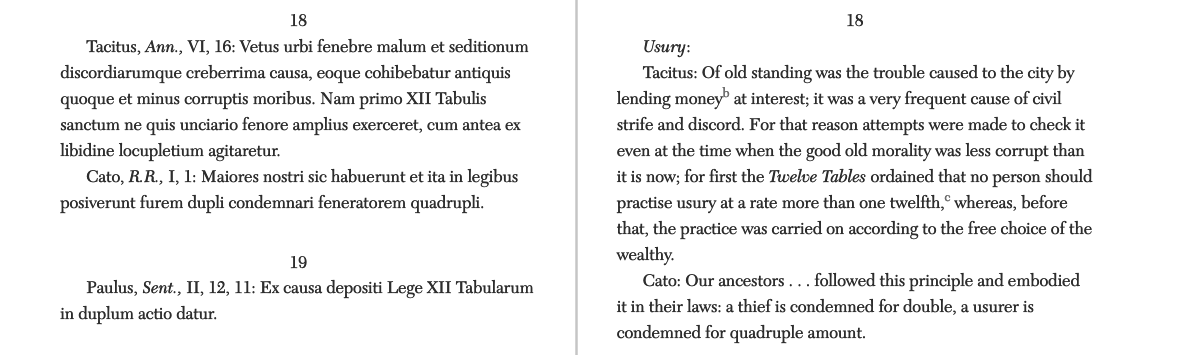
one percent per month = 12 percent per annum, legal interest:
aeris as a term for debt or money owed! Gell. 15.13.11

Pecunia meaning slaves and other property!?

 Liv Mariah Yarrow