
So I was reading about Tiberius Gracchus and came across the account of his dealings with the Numantines in Plutarch’s Life:
This outstripping of one’s commander in diplomacy seems so oddly reminiscent of Sulla receiving Jugurtha’s surrender while Marius’ Quaestor. Then there is also Scaurus’ claim to have defeated Aretas of Nabatea while Pompey’s proquaestor. How odd is all this behavior? We could throw into the mix testimony of the decree of Lampsacus honoring their ambassador Hegesias. Hegesias travels nearly the breadth of the Mediterranean in his efforts to secure Roman favors for his city. He leave no stone unturned and is usually quoted for his use of kinship diplomacy mythical and otherwise. For our purposes though we should note that he takes very seriously his diplomatic engagement with a quaestor, even after having dealt with higher ranking officials.
Update 28/11/2013: Or maybe it is a literary topos? Consider the same characterization by Plutarch of Gaius Gracchus‘ actions in Sardinia as Orestes quaestor. I owe the reference to the discussion by Garnsey and Rathbone in JRS 1985. They emphasize how Gaius may have borrowed from his experience as quaestor in his grain legislation.
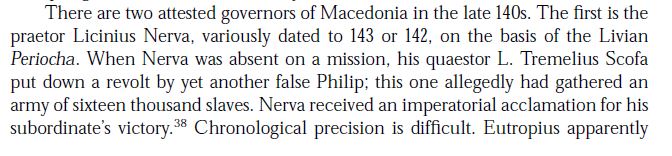
Update 5/7/2014: Here’s another instance of possible interest. Snippet from Brennan, Praetorship (2000) 226:

 Liv Mariah Yarrow