
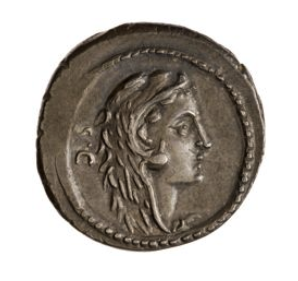

I sat in on a seminar on Cistophoric Coinage today. I had learned most of what was presented along the way or had read about it in books, but there is something so nice in being talk through a topic, show the pictures, and handling the coins. I creates grooves in ones mind and one sees the image anew. Some of what I saw got me thinking about the coin above. Not that it looks anything like a Cistophoric coinage. Look at the reverse (“tails” side). (I’ve turned it around.)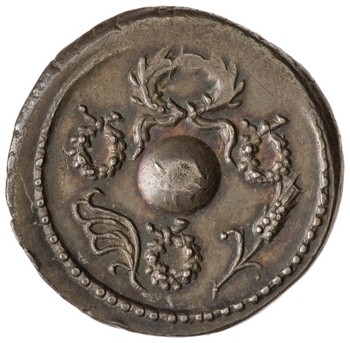
On the bottom left corner of this is image is something called an aplustre, the stern decoration of an ancient ship:
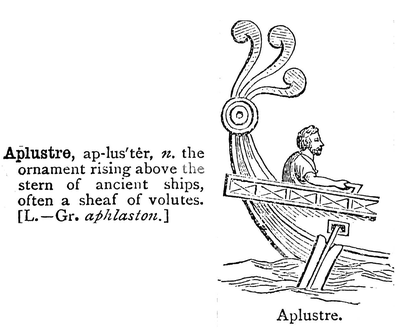
The coin is made by Sulla’s son, Faustus, who at the time of its manufacture was quite close to Pompey and these images are widely accepted as celebrating Pompey’s various accomplishments with the aplustre representing his clearing the seas of pirates. That’s not controversial. It’s just that before this aplustre aren’t known on the republican series. [Update 7-9-26: This isn’t really true as the aplustre is used as a control mark if not as a solo symbol on the primary design. Moreover whole ships on early coins have aplustre as well.] There are plenty of aplustre on various Greek coinages. For example its often on the observe (“heads” side) the coins of Sinope (e.g. SNGuk_0901_1463)
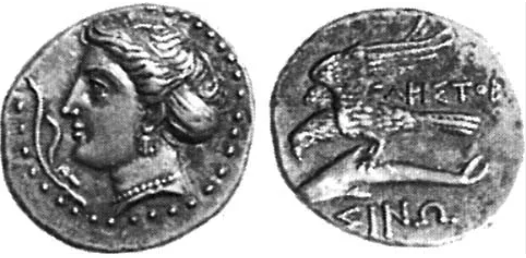
Or even better this beauty:

But, sitting in the lecture today I was struck by how prominent (at least to my eye) the decoration on the bow case of the typical cistophori seemed to resemble an aplustre.
Here’s one that looks more like a bow case:
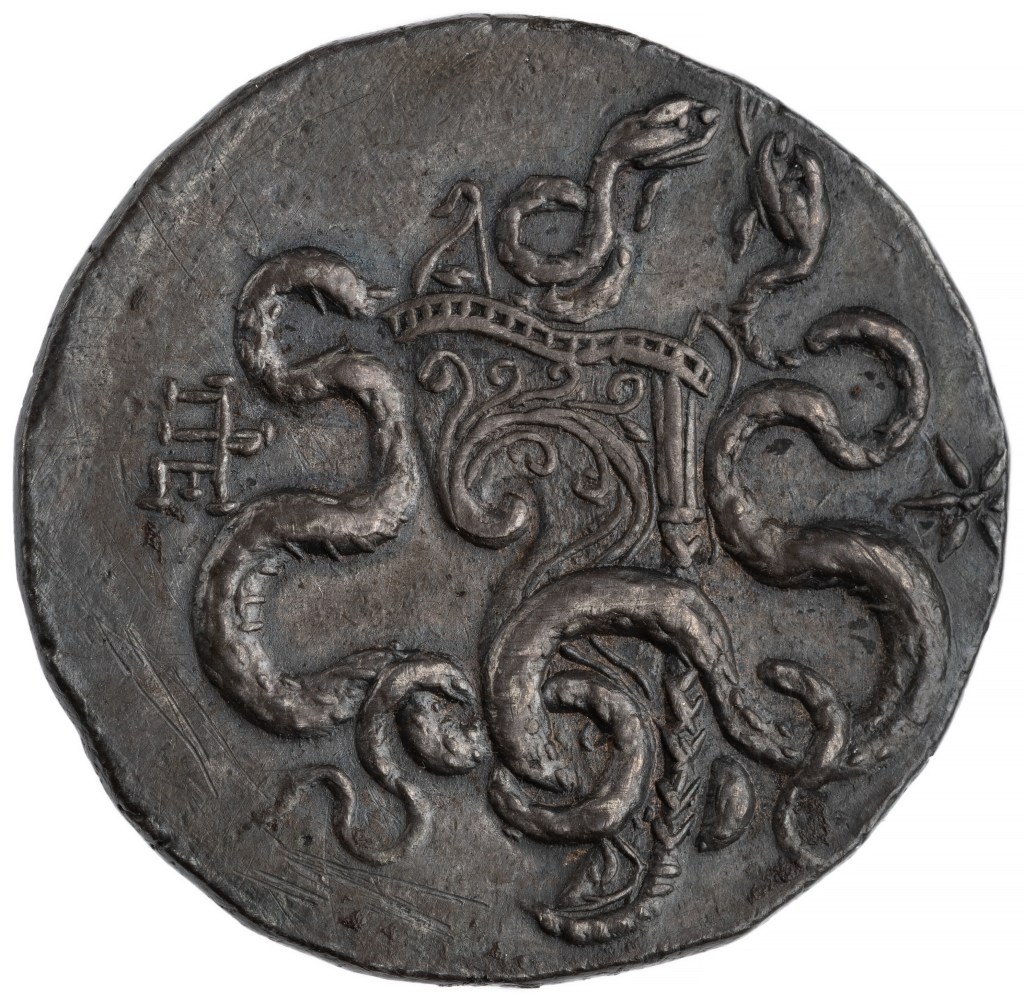
[Update 7-9-26: notice the literal bow sticking out of the top to right of the snake.]
But many look more like this:
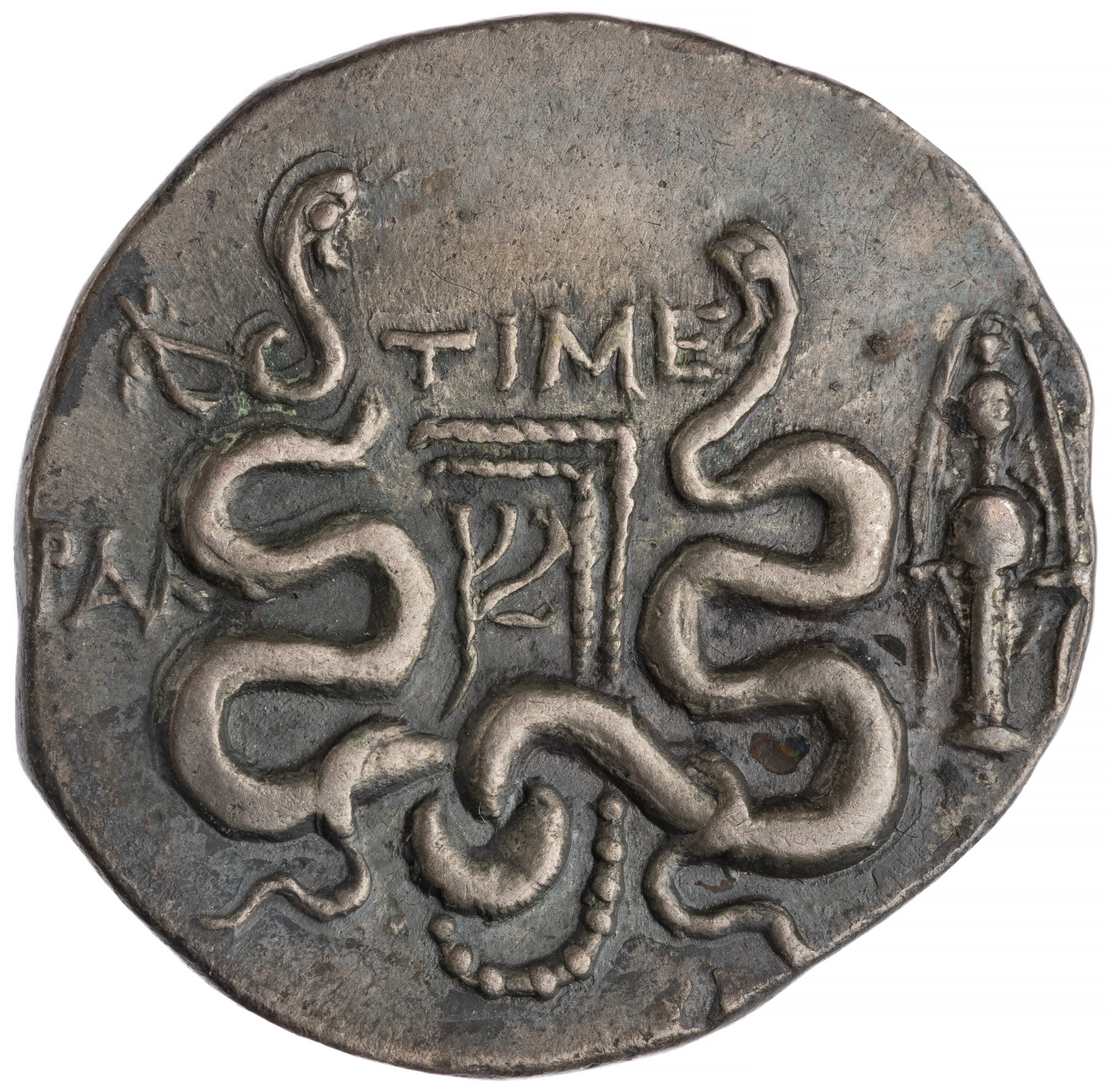
[Update 7-9-26: I get what I was driving at 13 years ago but now it just looks like a highly stylized bow case to me.]
or like this:
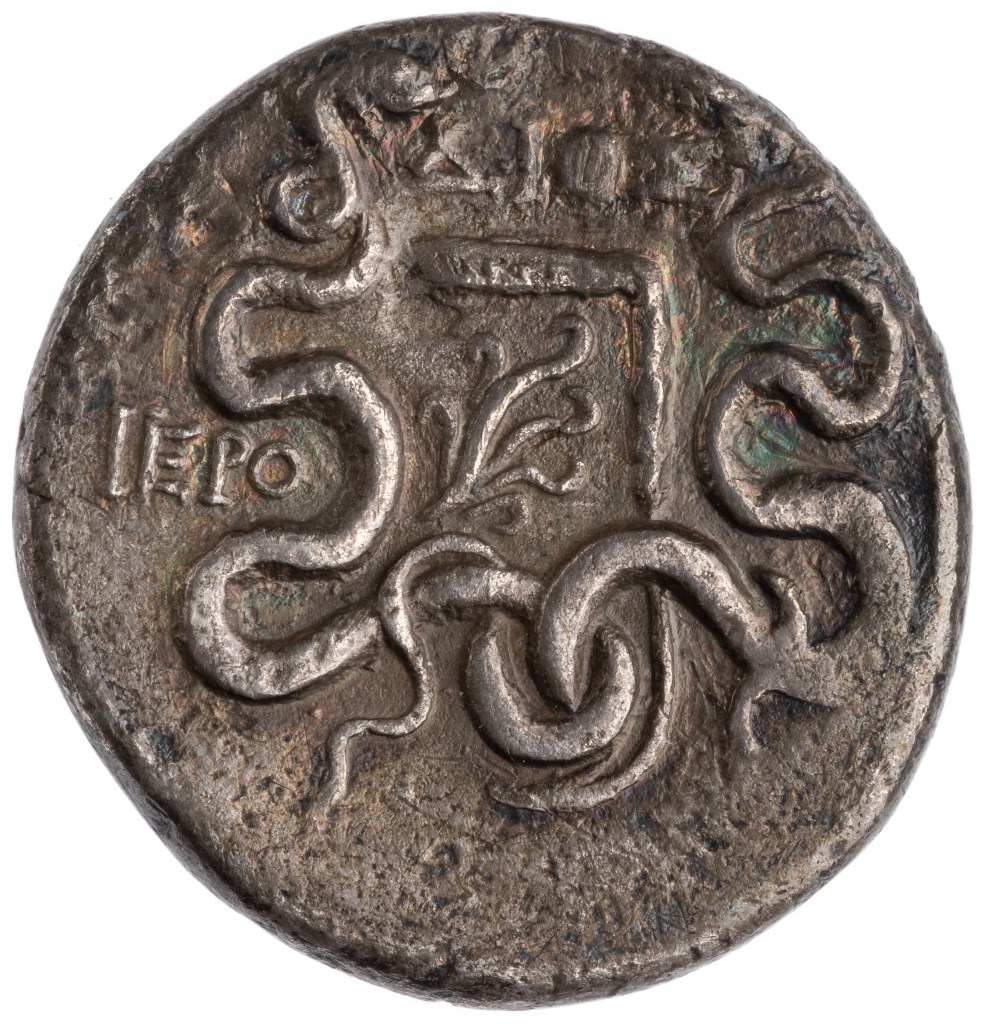
Stylized bow case or an actual aplustre? I don’t know. Is there any reason for naval symbolism on late Attalid coinage? I do think that many ancient viewers would see an apulstre before they saw a bow case. I’m not the first to think this. The BMC catalogue recorded the image as an aplustre, but the description has fallen out of favor along the way. Want a look at the whole group? This is a good starting place. So does it relate to Faustus’ coin probably not through an sort of intentional symbolicalism, but cistophori might have been just about the most common aplustre type of coin imagery the creators and uses of the coins may have handled.
***
Both of the bibliographical difficulties from earlier have been cleared up! Thank goodness for academic friends.
***
Image links fixed 7-9-26. DEFINITELY BOW CASE. APLUSTRE IS A RED HERRING!

 Liv Mariah Yarrow
Great catch, I’m sure that is an aplustre on the cistophori. I do have an earlier aplustre on a Republican coin, here, see the left hand end of the galley:
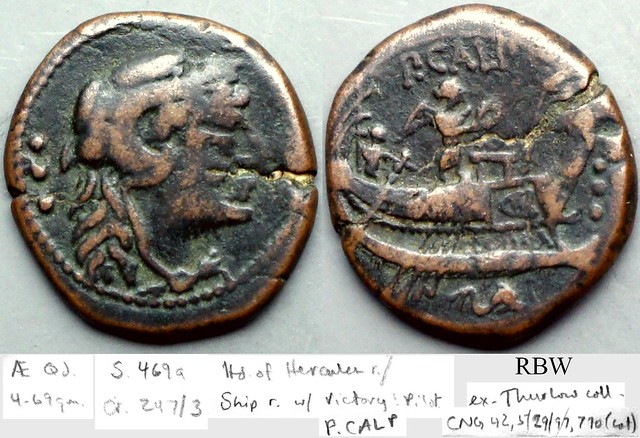
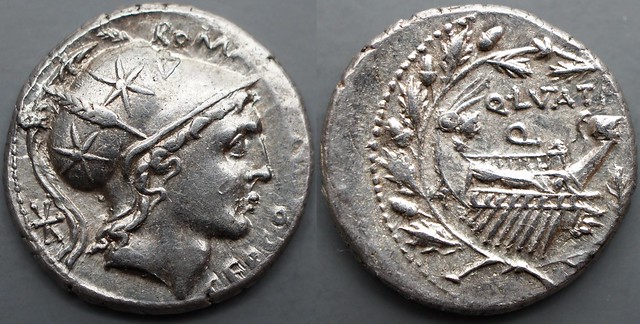

issued by C.Calpurnius in 133BC – coincidentally the same year that the Romans took over Pergamon, and also at the same time the first complete galley shown on a Roman coin. On this slightly later coin, about 109BC, a full galley is also shown.
This coin from the same time, 108BC doesn’t show an aplustre
Thanks so much! Very Helpful!