chickens eggs chickens eggs chickens eggs

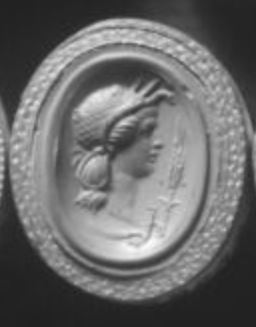

Africa, Elephant Headdress, Plow, Grain, Corn, Wheat, Scipio, Metellus, Imperator, etc…..
adventures in my head
chickens eggs chickens eggs chickens eggs
Africa, Elephant Headdress, Plow, Grain, Corn, Wheat, Scipio, Metellus, Imperator, etc…..

I first posted about this gem when getting acquainted with Gori this past summer.
It’s been worrying me ever since. Yesterday, Social Media solved my confusion about the male head its Oceanus. Today with a little prompting it helped me find the impression James Tassie made in the Beazley archive. So thrilled.
And much to my horror I now know how to match Tassie catalogue and Tassie plates. I could get lost for weeks, must resist.
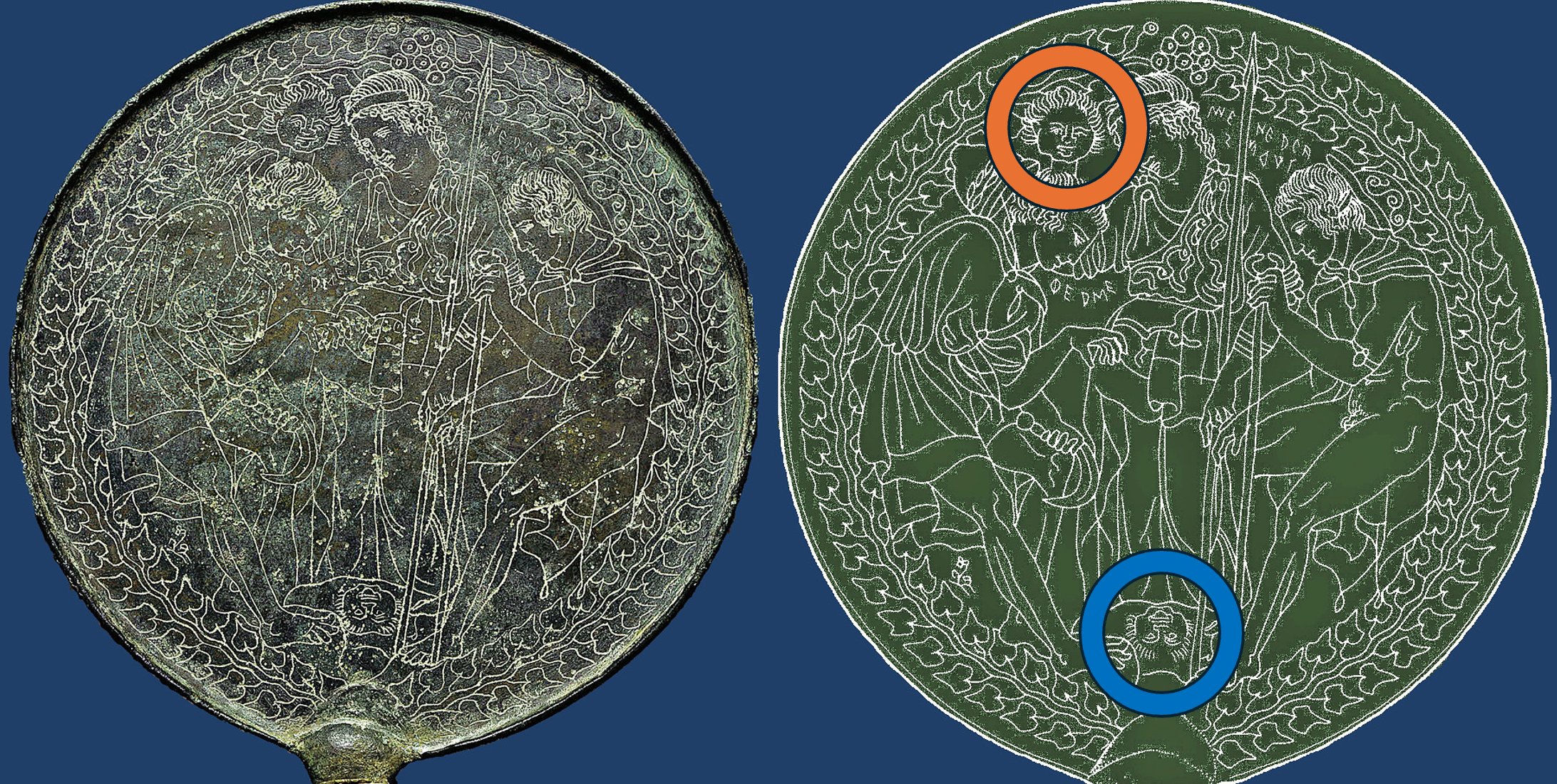
I do love a mirror (I think its the round intimate composition form I love really, coins, gems, lamps, I’ll take’m all). Anyway. In one of my classes yesterday the birth of Dionysus came up and then I stumbled on this lovely Etruscan mirror today. So I’m posting. To drawings of the same object . Top is from Millin 1811.


This is just a quick drop for future ref. I was browsing this book looking for a reference to a gem I’m using my current article project. The image reminded me so much of a paper I heard on the Etruscan for runners to the Caput Oli myth as the AIA/SCS a month ago! Can’t remember who presented it but it will come to me.
Update 26 June 2024:
I realize I wasn’t clear enough in my above post. While the iconography is evocative of it the scene seems to be Perseus/Minerva/Head of Medusa. Compare this mirror from the BM.
Also I just really like this modern imaging by Duilio Cambellotti 1979.

Look familiar? Of course it does! RRC 509/5 is a perfect example of the way in which coin images a huge staying power and can be resurrected after centuries to evoke connections between events/places/people. The inspiration is one of the many representations of same goddess (likely Tanit, but perhaps seen by some as Demeter, or other name for the mother/fertility/argiculture goddess) on the coinage of Carthage.

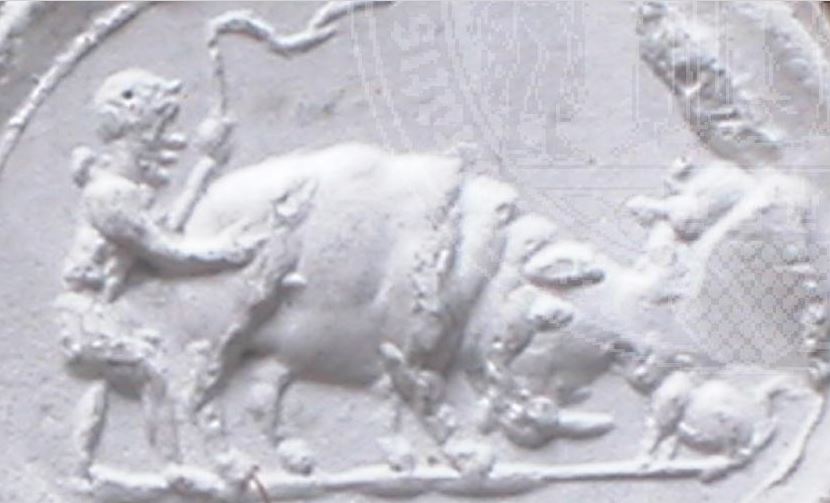
I’m not sure if the wrong descriptor got linked to the the wrong image or if someone was just very tired and confused about their large ‘exotic animals’ …. File under odd database search results. (image links to original database entry)
What the heck is going on on the right hand side of the image. Some other smaller animal(s), but what? Maybe a beast fight?
Architecture
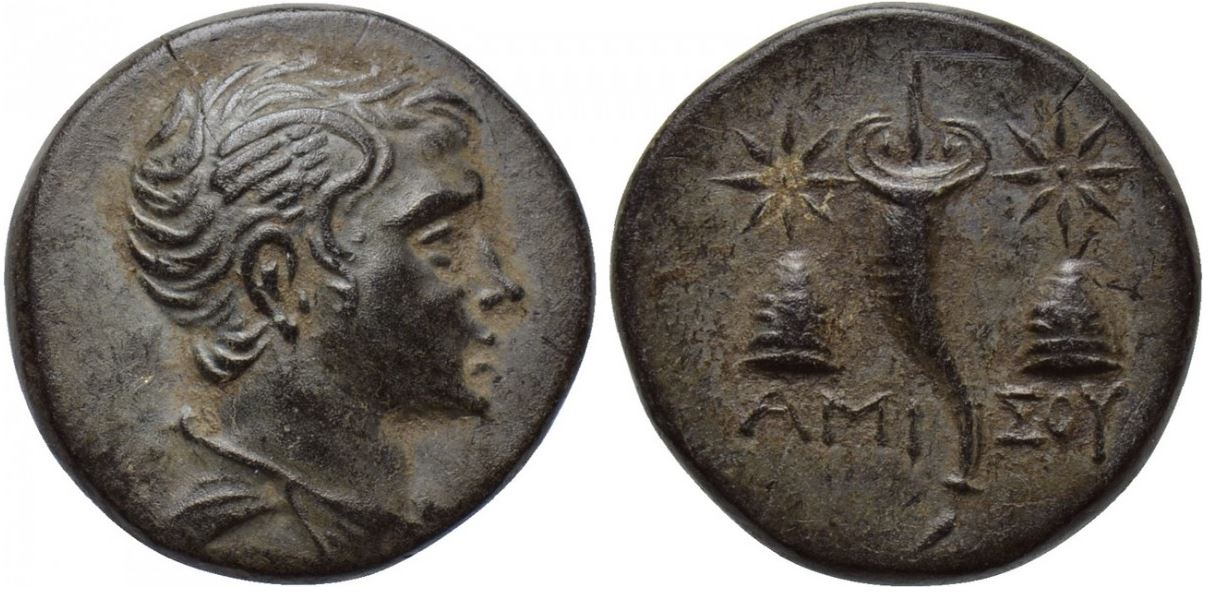
On the Bronze coins of Amisos from the time of Mithridates, I think it likely that the winged bust of a youth is Hermes (Mercury). On the coins of Amisos of this period the obverse and reverse are closely thematically tied one to another (Eros/Quiver, Perseus/harpa or pegasus, Dionysus/Cista Mystica, Athena/Perseus slaying Medusa, Herakles club and quiver, Amazon (?) in a leather persian cap/quiver and un strung bow, Artemis/tripod, etc…).
Hermes gave the Dioscuri their horses and is the bringer of good fortune (i.e. horn of plenty) the literary testimony is slim but solid. Which in turn made me thing about RRC 14/1 and RRC 25/4 in the aes grave series!
Or how I lost sometime today. Here’s the digitization.
Here are the images that caught my eye for various reasons. The first is the specimen now in Berlin that sparked my interest for its mention in Dardenay 2008.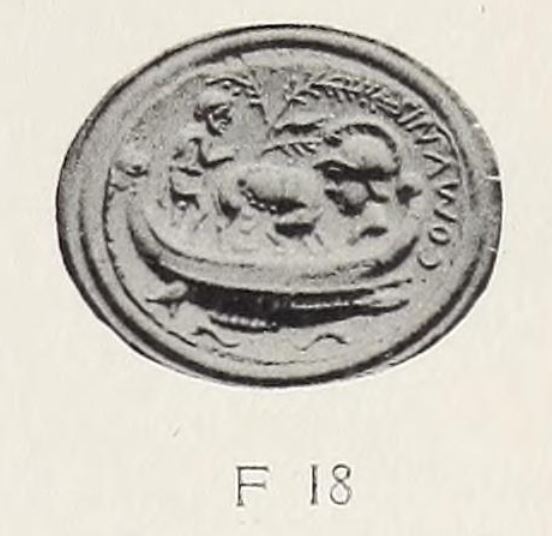
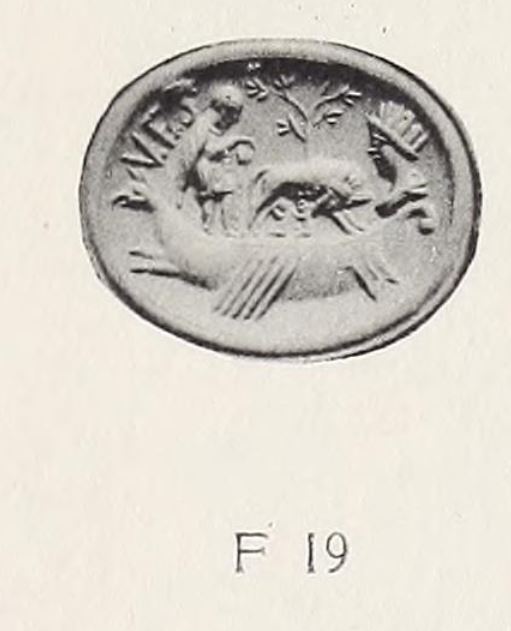
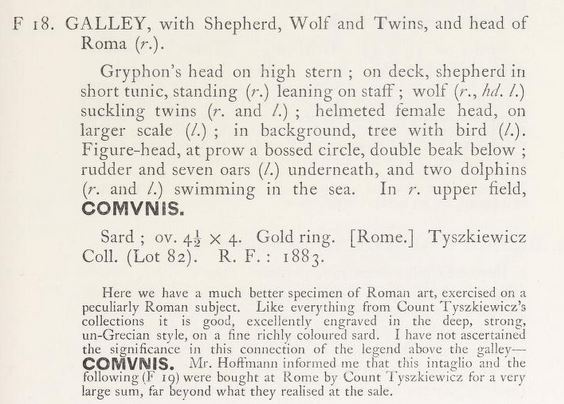
And from this old catalogue I learned it had a friend and both were purchased in Rome. COMVNIS is a pretty common inscription because it seems to have been the name of potter(y). The stamp usage is tracked by The Roman Economy Project on fineware, but the name turns up lots of examples on vessels, especially lamps, in Clauss Slaby Database. (Scholarship on the possible connection.) The gem may just be testimony to another use of the same name. It clearly derives from the coin (RRC 235/1). With the tree rendering, but also connects with intaglios of the last post. Below the V.F.S. would usually stand for vivus fecit sibi. “He made for himself while living” common on funerary monuments, but unless this was made as a tomb offering that’s nonsensical as a resolution. Vibi filius Spurius, Spurius, son of Vibius would also work.
Notice the head is rendered differently one wears a turreted crown and the other a helmet. I am inclined to see both as personifications of Roma.
That head in the field needs more thinking about especially in relationship to the Medici sard recorded in Gori with three heads and other symbols.
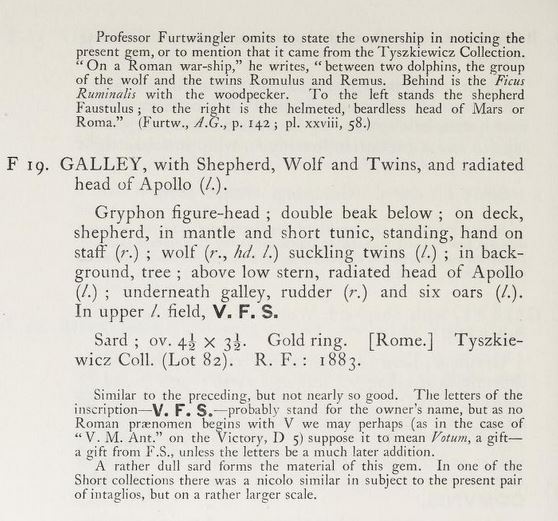
These remainder caught my eye for one reason or another. C16 contextualizes well RRC 287/1, for which by the by, I found a glass paste precedent in Berlin.
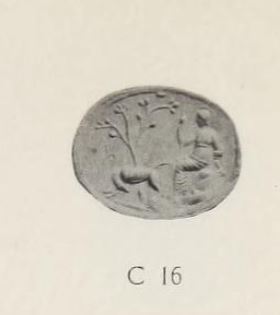
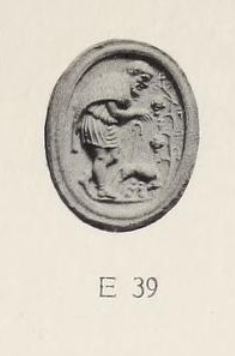
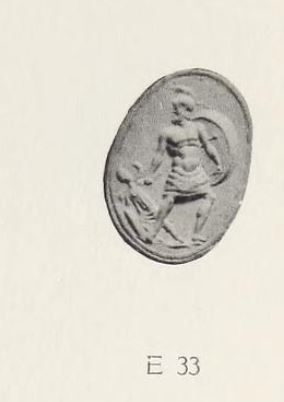
E39 is just a nice typical shepherd with wolf and twins. E35 Below is a type much discussed by Alfoldi 1950 in relationship to RRC 398/1. He interprets the scene as one of Rhea Silva.
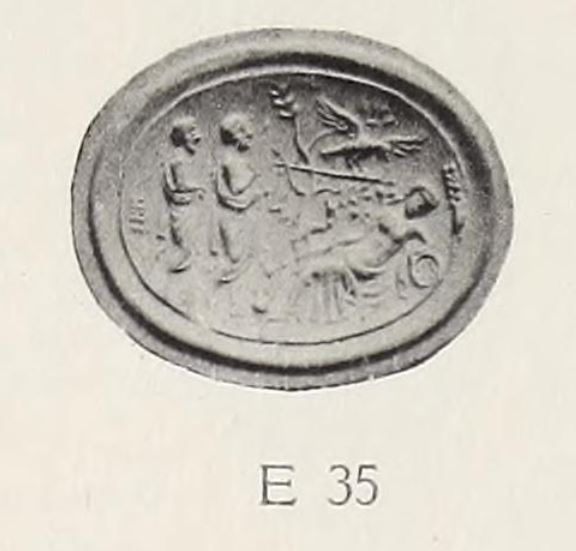
And here we have yet another instance of the Crepereii’s Goddess
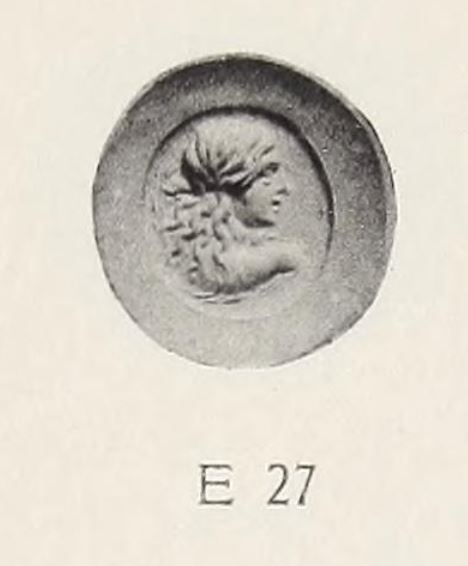
For good measure we should always have some elephant scalp personifications of Africa, though I’m not sure I’ve seen it in cameo before…
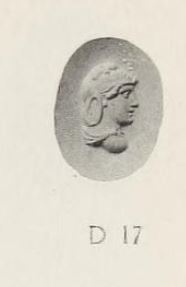
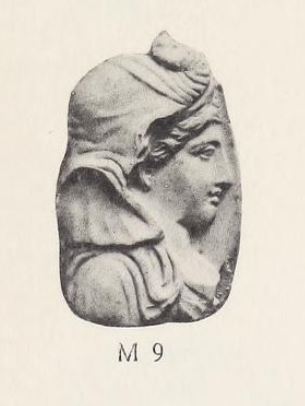
And this sow and shrine reminded me for all the world of the Ara Pacis relief:
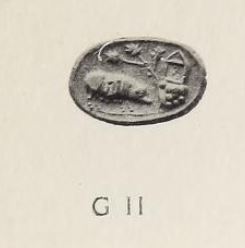
Finally I wanted to think about gems with this type of design as they relate to RRC 401/1, there are better parallels for the type which I’ve discussed earlier, but nonetheless good to think with.
 :
:
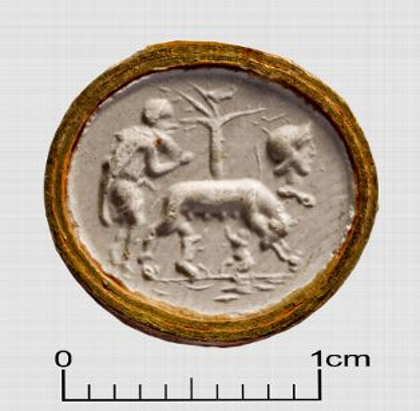
Chabouillet, Anatole. Catalogue général et raisonné des camées et pierres gravées de la Bibliothèque impériale. Paris : 1858, n°1531.
I think it likely by the by that this gem was originally in the Medici collection based on Gori’s illustrations.
Most of the trees on the intaglios are leafy and bear no visual relationship to RRC 235/1.
Notice also that the tree has a bird in it. The catalogue says a woodpecker but this is a stretch of an assertion. I’ve been obsessed by the bird question before.
This is by far the closest visual parallel I’ve found. And interestingly it provides a parallel also for the head on this Sard in the Etruscan style for the BM (1814,0704.1319).
I’ve discussed this gem before on this blog.
wolf and twins
faustulus
gems
 Liv Mariah Yarrow