This post is being updated and evolving: some edits have been made, more are likely to come.
Ex RBW collection
I’ve been reading a little about the Meta Sudans thanks to Harriet Flower’s new(ish) book. Its my bedtime reading right now.
So was very excited to see Molinari published the coins. Just some tantalizing info for those of us most interested in the Republic.
An English (Machine with Human editing ) Translation of a portion of Molinari’s 1995 piece.
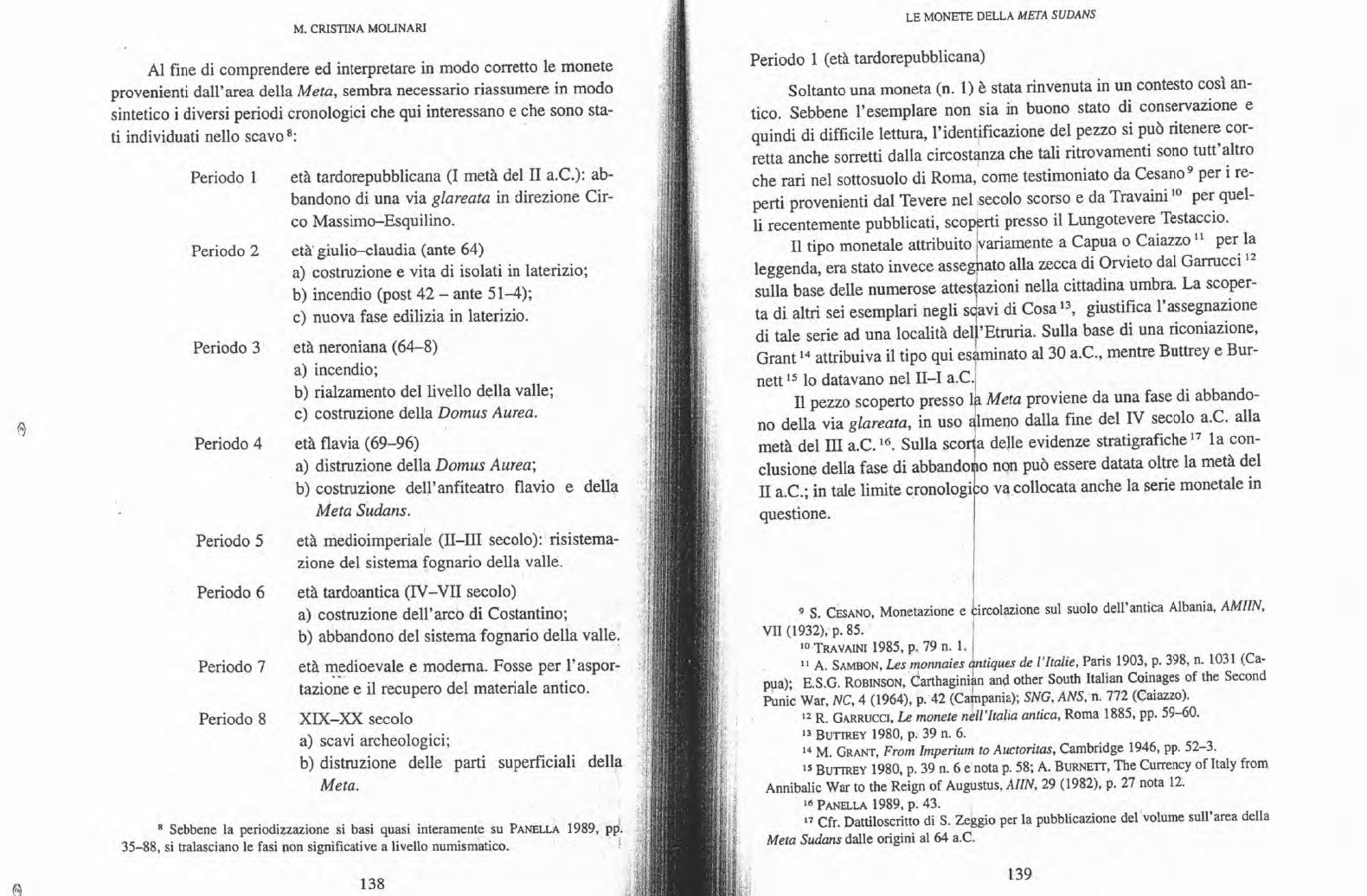
“Period 1 (late-Republican age)
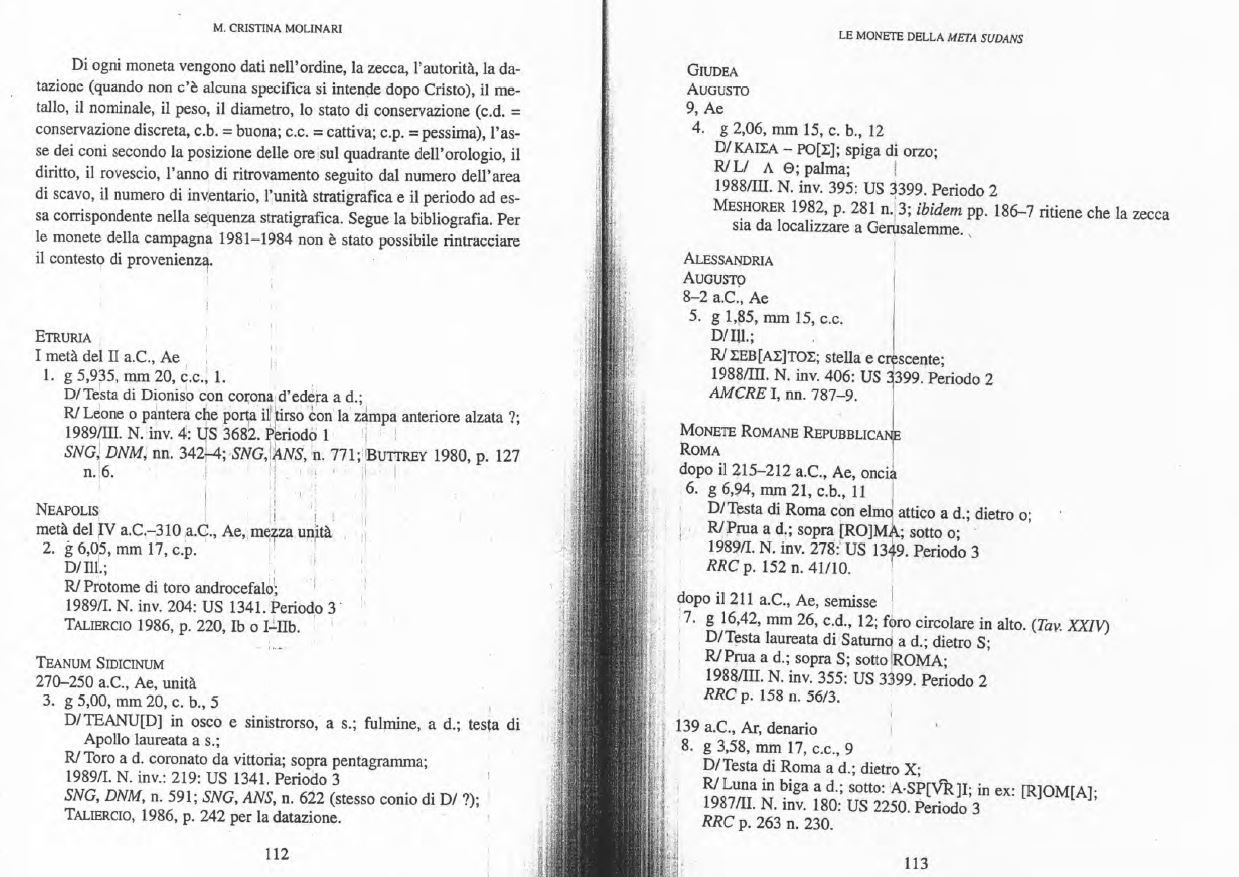
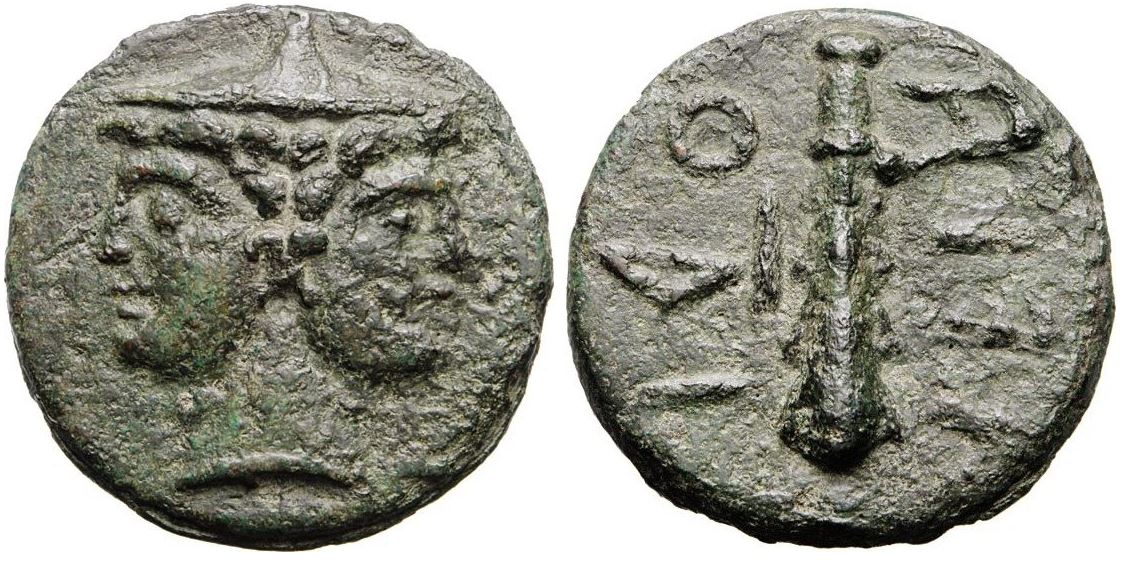
Only one coin (No. 1) was found in such an ancient context. Although the specimen is not in a good state of preservation and therefore difficult to read, the identification of the piece can be considered correct also supported by the fact that these findings are quite rare in the basement of Rome, as witnessed by Cesano for the finds coming from the Tiber in the last century and from Travaini for those recently published, discovered at the Lungotevere Testaccio. The currency type variously attributed to Capua or Caiazzo for the legend, was instead assigned to the mint of Orvieto by Garrucci on the basis of the numerous attestations in the Umbrian town. The discovery of six other specimens in the excavations at Cosa justifies the assignment of this series to a location called Etruria. On the basis of a reconception, Grant attributed the type mentioned here to 30 BC, while Buttrey and Burnett dated it to the II-I BC . The piece discovered near the Meta comes from a phase of abandonment of the via glareata, in use at least from the end of the IV century a.c. in the middle of the 3rd century BC. On the basis of the stratigraphic evidence the conclusion of the phase of abandonment cannot be dated beyond the middle of the second century BC .; in this chronological limit also the coin series in question should be placed.”
Images of Italian original text and accompanying catalogue entry below.
So… This picture of the dating of the abandonment of this particular via glareata needs to be reconsidered in light of overstrikes (over RRC 338/4 an LPDAP quadrans of c.91 and RRC 350B/1 a semis of c. 86 BCE) and further finds of this type that have now come to light:
Crawford 2002 in CH 9, p. 274 mentions that he knows of 3 overstrikes with the Janus in wreath / OPPI (Romano-Sicilian?) undertype. A CNG catalogue suggests that this undertype was made by M. Oppius Capito, Mark Antony’s naval prefect, circa 39-35 BCE, but that seems far too late… I think this is a misreading of Crawford’s meaning. I cannot find just now an image of the coin Crawford means but it is described here.
On the lead tokens/coins discussed in 2014 also see:
Stannard, C., A. G. Sinner, N. Moncunill Martí and J. Ferrer i Jané (2017). A plomo monetiforme from the Iberian settlement of Cerro Lucena (Enguera, Valencia) with a north-eastern Iberian legend, and the Italo-baetican series. Journal of Archaeological Numismatics: 59-106.
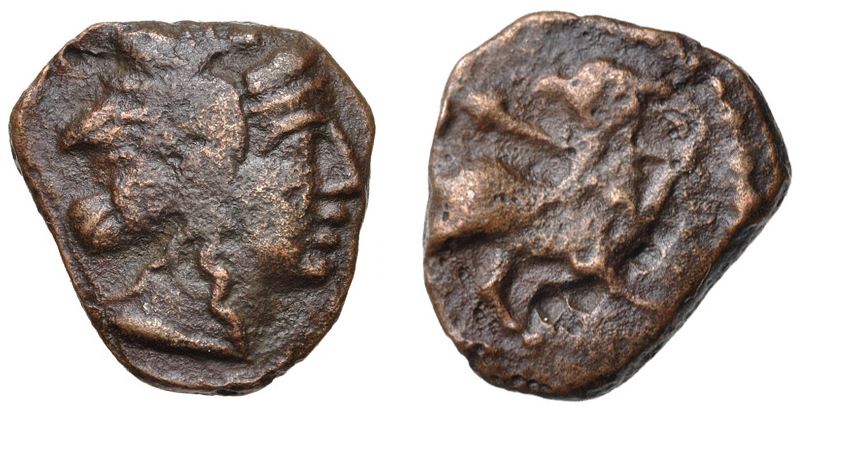
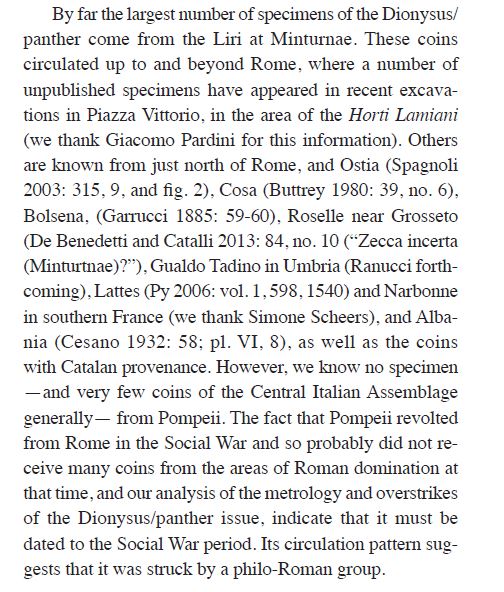
Why would a philo-Roman group overstrike Roman coins?!
The Socii were ALL ABOUT Dionysus…
Also note that Molinari notes the find of an imitation quadrans found in Period 5 but dated c. 91 BCE as part of the Meta Sudans excavations. Given that the Dionysus Panther type is being associated with a pseudo mint (Minturnae?) perhaps this should be brought into the conversation too:
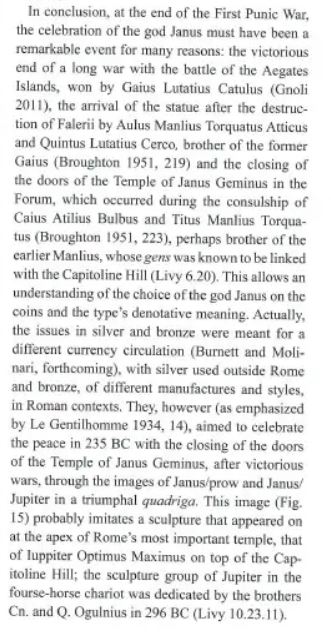
This short, dense well illustrated article is pretty convincing.
I want to think about what it means for other janiform heads on other (Non Roman) Janiform heads, esp. the third century aes grave of Volterra (Vecchi 128-144). Vecchi thinks Roman types may be influencing Volterran choice in this instance.
235 BCE makes sense as a watershed date for the quadrigati and the janus/prow series, but it still leaves me wondering about the as of RRC 14 which Molinari and Jaia help put into a pre-Punic War context.
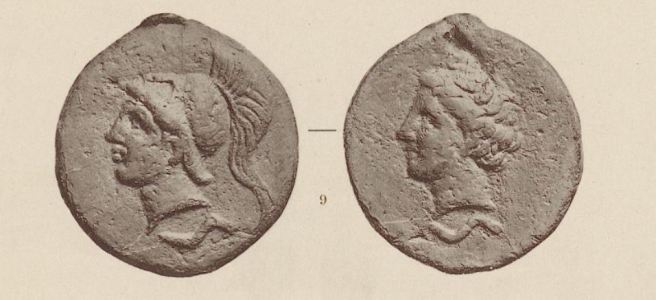
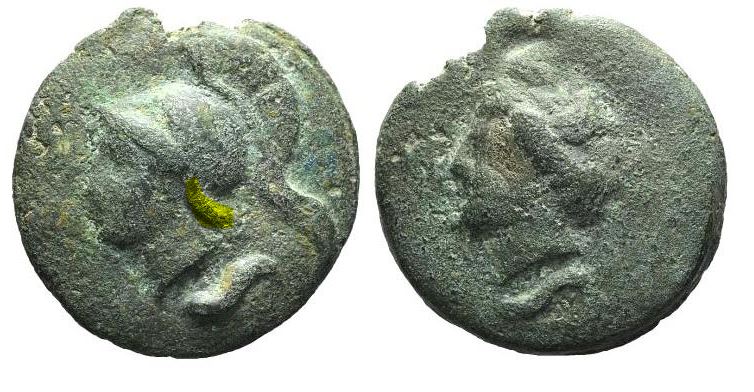
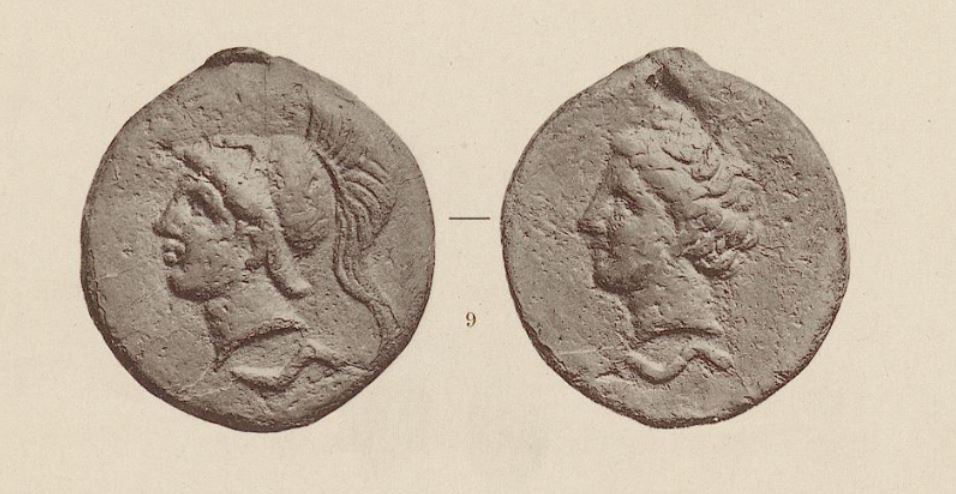
Rejecting Crawford’s identification (Minerva/Goddess) and going with Haeberlin‘s Mars and Venus (followed by Thomson), has a big implications. Perhaps for the historian most importantly it pushes the evidence for the synchronized foundation legends (Romulus and Aeneas) further in the past.
I think I’m ready to abandon Crawford’s vision for Thomson. Specimens are really worn, but the defining characteristic of Minerva/Athena is her hair as a marker of gender, BUT there is no hair on pretty much any specimen photographs I’ve seen so far. They are all worn and soapy but surely one would preserve this detail if it were there. Above I highlight in yellow the neck guard of the helmet which might be mistaken for hair.
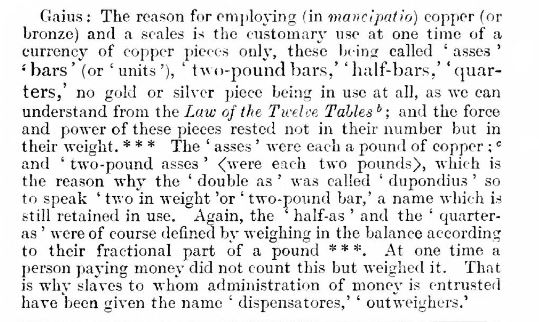
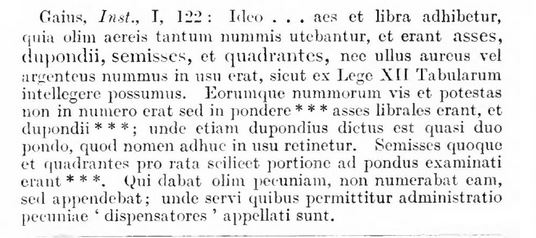
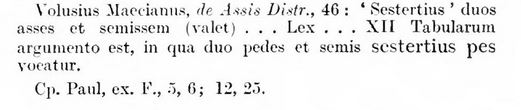
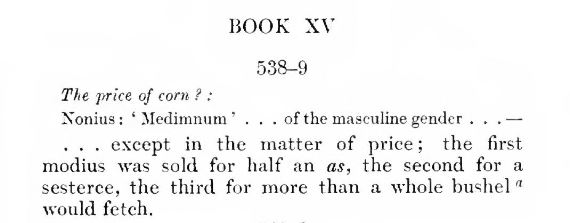
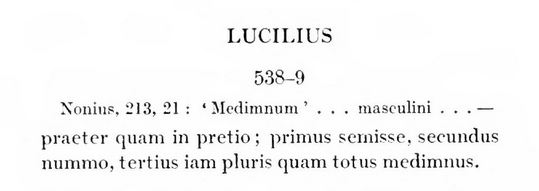
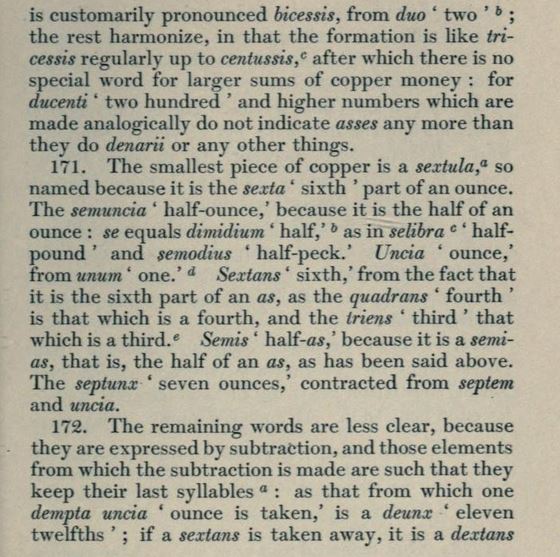
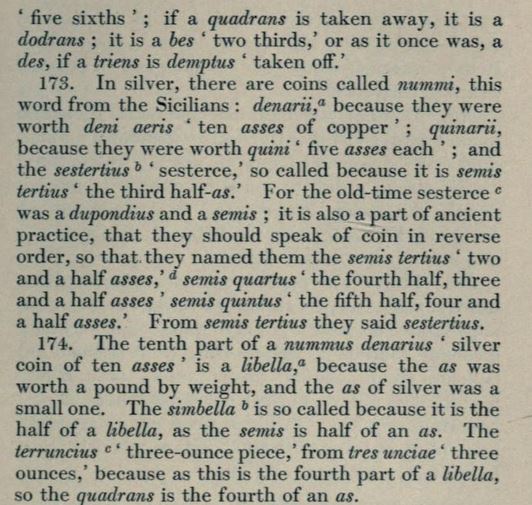
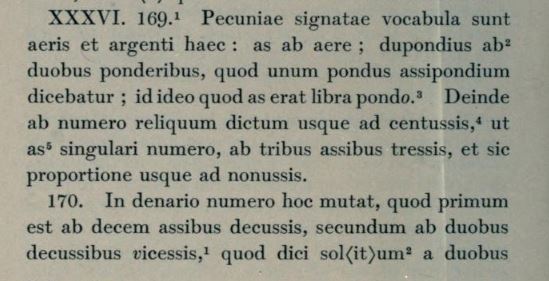
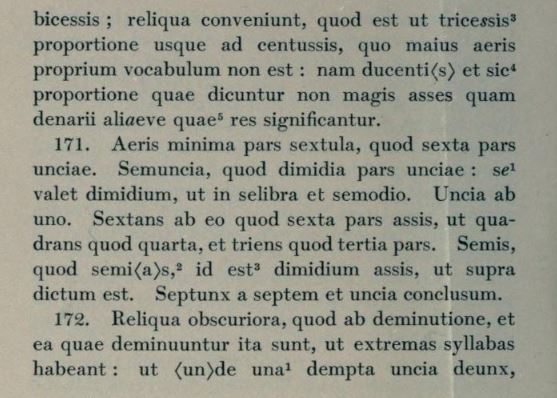
Sesterce as a translation of nummo is weird and uncalled for. A medimnus = 6 modii.
BUT
Cf. Cicero, Verrines 2.3.116
Verum ut hac ipsa ratione summam mei promissi compleam, ad singula medimna multi HS binos, multi HS singulos semis accessionis cogebantur dare, qui minimum, singulos nummos.
But that by this present calculation I may make out the sum which I promised to do, many were compelled besides to pay two sesterces, and many one and a half, with each medimnus, and those who had to pay least paid a single coin with every medimnus.
I want to check out the manuscripts but it seems like nummos here must mean sestertius. So maybe it should mean a single unit rather than a physical coin. …
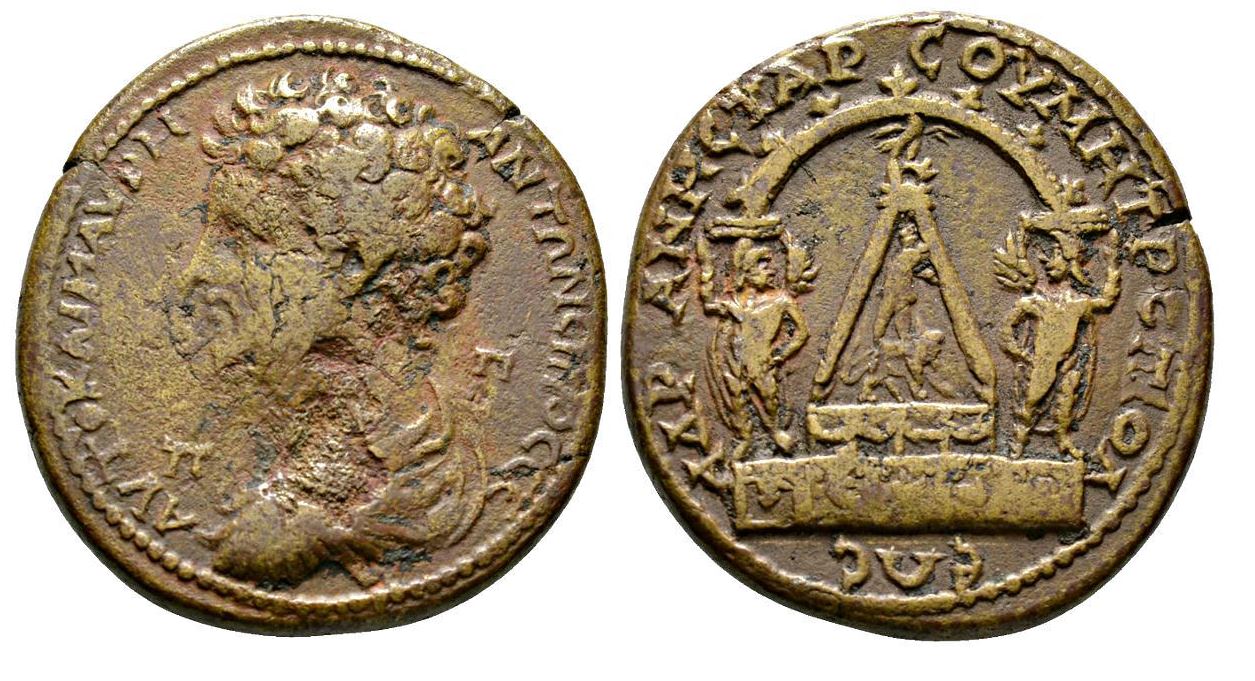
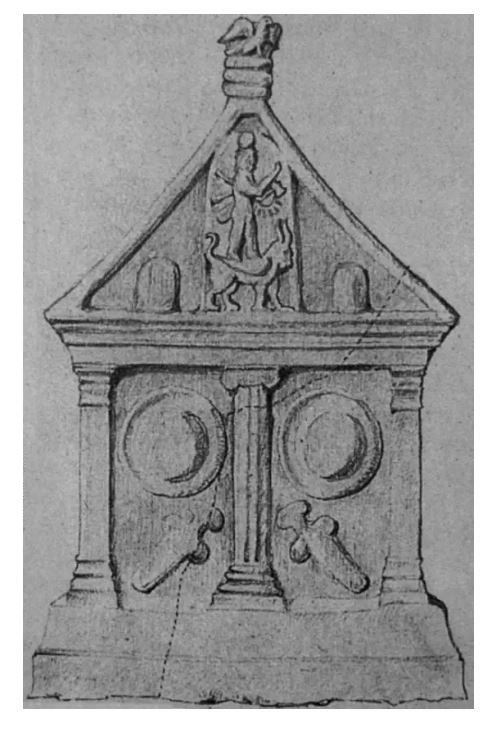
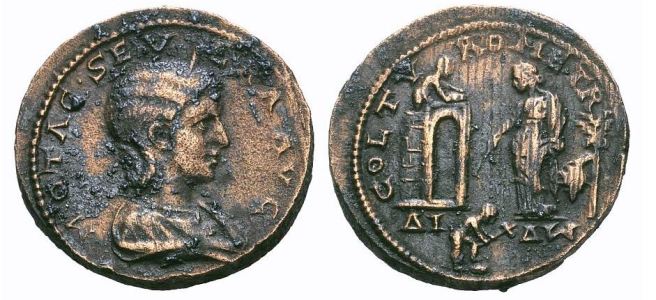
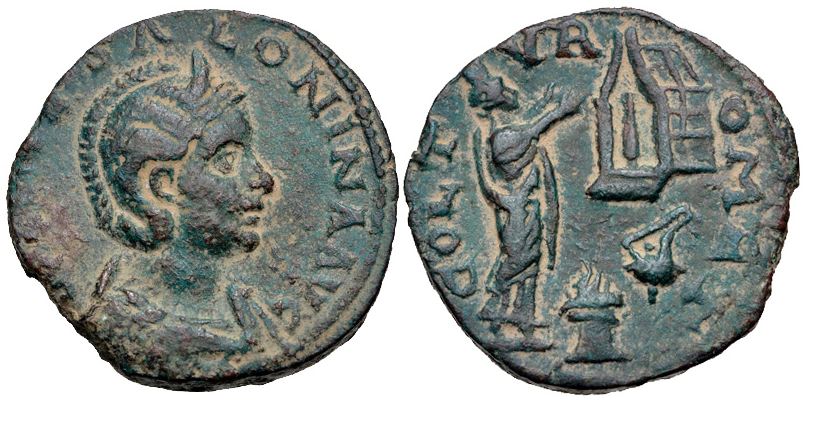
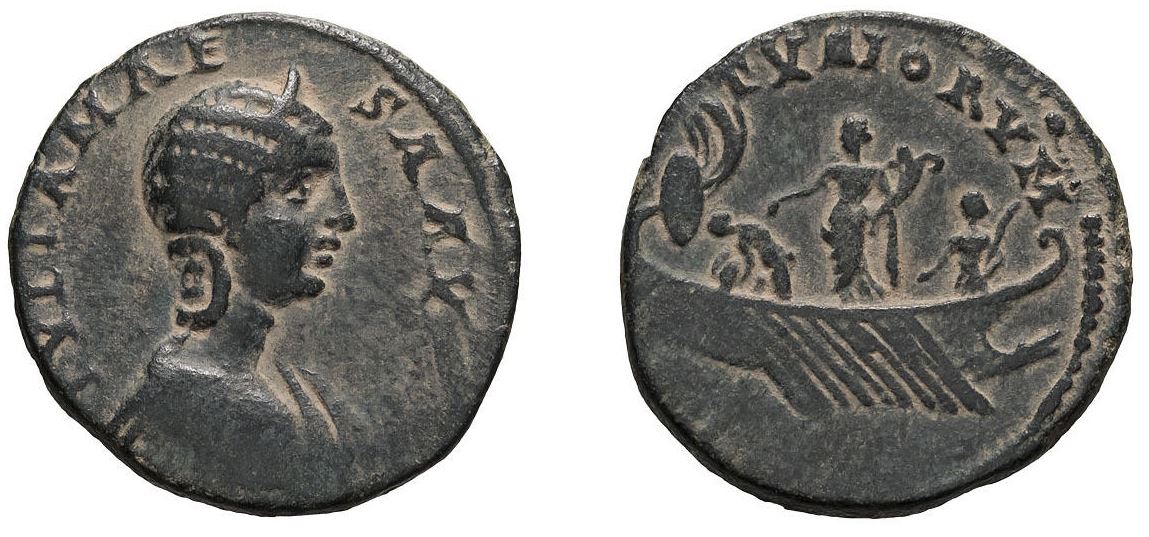
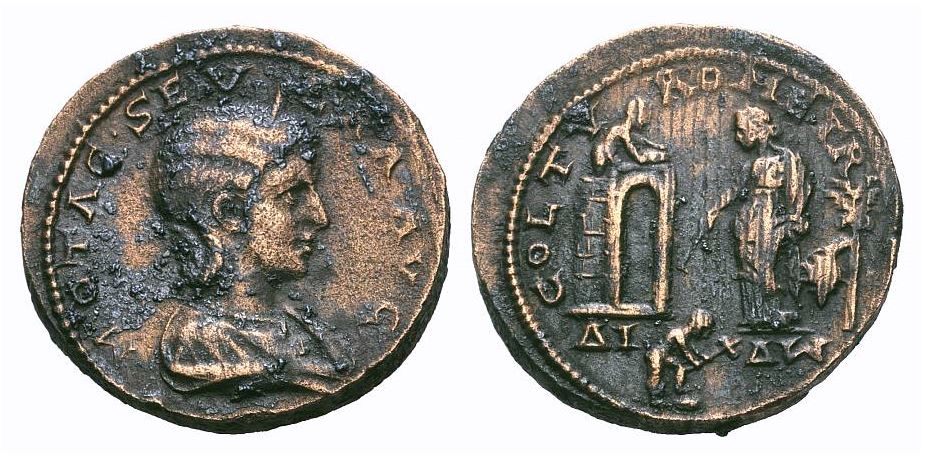
So I’m a little obsessed with what we do and do not know about the god numismatists call Sandan and others call Sandas or Di Sandas (Disandas, Desandas) or Ba’al Tars or even Tarsos.
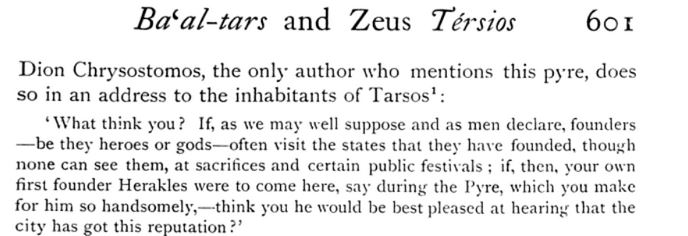
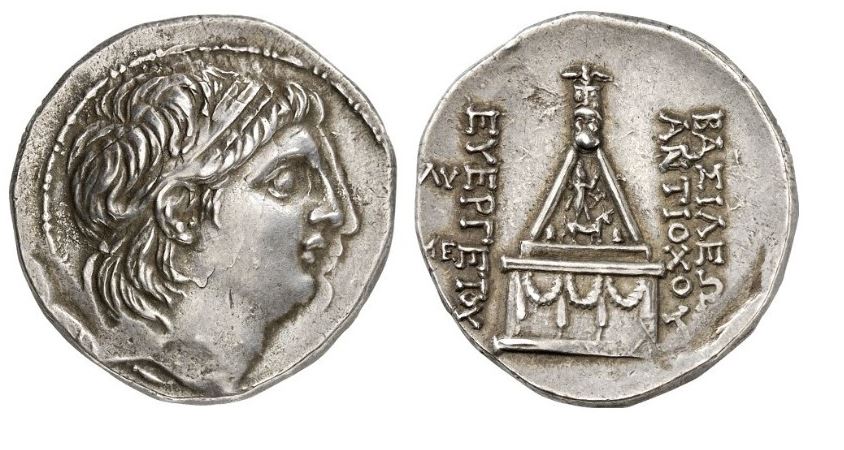
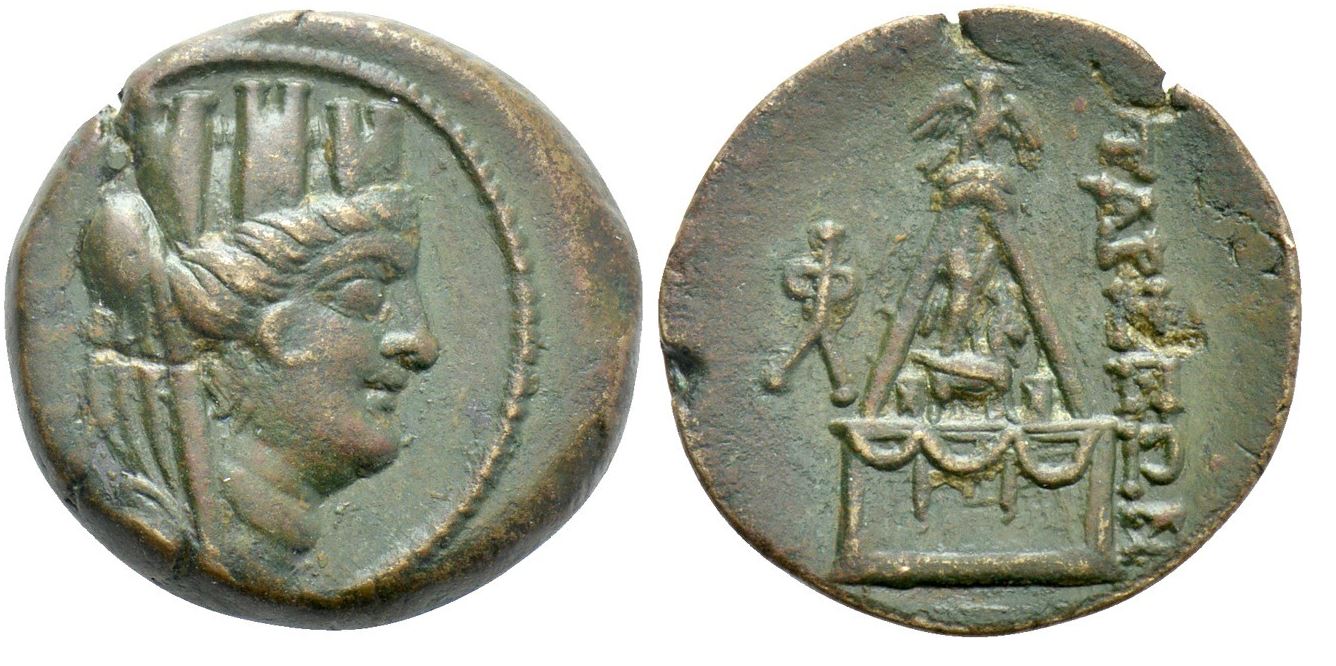
One interpretation of the coin imagery is that it represents the Pyre which we here about as a central ritual in the worship of “Heracles” at Tarsus.
Antiochus VII Euergetes, 138 – 129 BCE
164-27 BCE
under Marcus Aurelius
Image of Clay Plaque from Mastrocinque’s piece cited below.
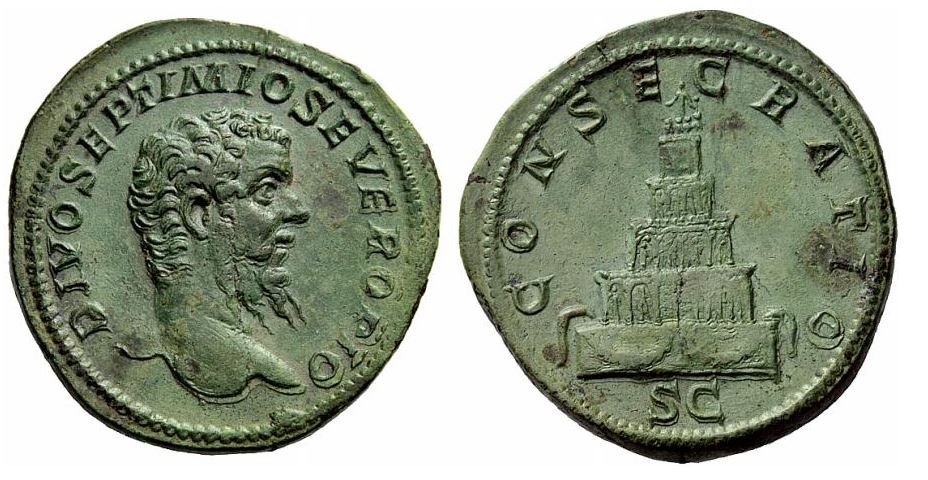
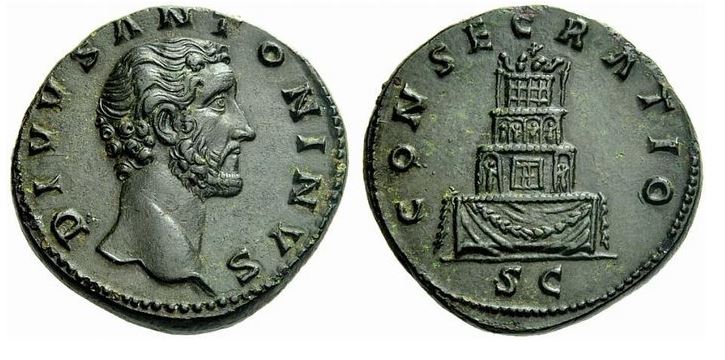
While I’m not convinced that these must represent a pyre, a monument seems to be more likely, I would note there is a bit of similarity to the imperial funeral pyres…
Caracalla for Severus
Aurelius for Pius
***
Lots of primary sources are well collected by A.B. Cook in his Zeus (1914), p. 593ff.
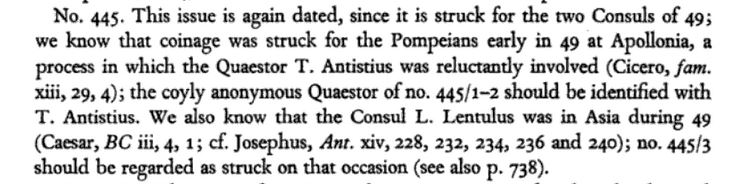
Cic. Fam. 13.29: “…I am exceedingly intimate with C. Ateius Capito. You know what the ups and downs of my fortunes have been. In every position of honour or of difficulty of mine, Capito’s courage, active assistance, influence, and even money were ever at my service, supplied my occasions, and were ready for every crisis. He had a relation named Titus Antistius. While this man was serving in Macedonia as quaestor, according to the lot, and had had no successor appointed, Pompey arrived in that province at the head of an army. Antistius could do nothing. For if he had had things his own way, there is nothing he would have preferred to going back to Capito, for whom he had a filial affection, especially as he knew how much he valued Caesar and had always done so. But, being taken by surprise, he only engaged in the business as far as he was unable to refuse. When money was being Coined at Apollonia, I cannot say that he presided at the mint, nor can I deny that he was engaged in it; but it was not for more than two or three months. After that he held aloof from the camp: he avoided official employment of every sort. I would have you believe me on this point as an eye-witness: for he used to see my melancholy during that campaign, he used to talk things over with me without reserve. Accordingly, he withdrew into hiding in central Macedonia at as great a distance as he could from the camp, so as to avoid not only taking command in any department, but even being on the spot.
Crawford (RRC vol. 1 p. 80) of course knows this, but still exciting to read a fresh in Cicero.











 Liv Mariah Yarrow