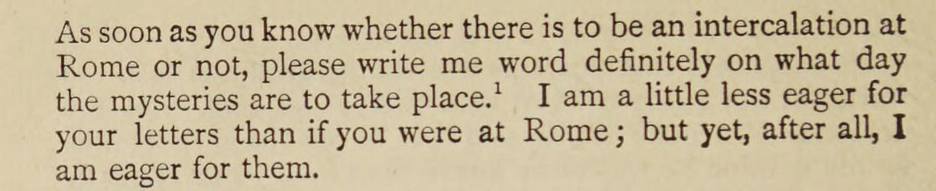
Romae intercalatum sit necne, velim ad me scribas certum quo die mysteria futura sint.
A.5.21
This is a late postscript in a letter to Atticus in Epirus from Cicero at Laodicaea on the 13 of February 50 BCE.
Neither Schuckburgh or S-B suggest what the Mysteries could be and presume the answer is unknowable. Of course the Romans had voluntary initiation rituals already at this date associated with any number of gods (Dionysiac, Isis, etc…). But none of this really seems really in keeping with Cicero’s own attitudes which tend to be skeptical leaning into out right condemnation
My first instinct is that what Cicero wants to know is if there is any chance he can attend THE Mysteries, i.e. the most famous and prestigious, Eleusinian Mysteries outside Athens.
Cicero and Atticus were both initiates and fell these were the only type of ‘mysteries’ including nocturnal rites and secrecy that should be permitted.
These Mysteries were held on the 14-23 of the Attic Month of Boedromion. While ostensibly this fell in the season we associate with Sept/Oct, how it lined up the Roman calendar is wholly unclear to me as both Athens and Rome did their own v different intercalations.
I’m guessing Cicero wants to know if he can catch the mysteries on his way back to Rome if he leave Laodicaea on the July 30. Not for his own initiation, but probably to ensure his son and he and Atticus’ nephew were able to initiated. The postscript isn’t about his political commitments but instead falls in the domestic affairs section and part of the goal of his governorship was some experience and acculturation of the boys who were approaching the age of manhood.
Speculation, but I think a better one than those I’ve read.
—
It is also possible that Cicero was interested in the rites on Samothrace or Lemnos both of which could have been included on his route home, if he had wished:
Cicero was aware both of a long tradition of Magistrates stopping at Athens enroute from provinces and that the timing of the mysteries themselves were non negotiables. The above passage was written in 55 BCE. The words are attributed to Licinius Crassus (cos. 95) and is referring to an incident c. 110 BCE.
cf. Kuhn, Annika B.. “Ritual change during the reign of Demetrius Poliorcetes.” In Ritual and communication in the Graeco-Roman world, Edited by Stavrianopoulou, Eftychia. Kernos. Supplément; 16, 265-281. Liège: Centre International d’Étude de la Religion Grecque Antique, 2006. Interprets demands for ritual change as expression of authoritarian power.
MY whole logic seems to fall apart when we get to a letter from just a week later:
end of A.6.1
But everything else about the passage is focused on Athens and specifically Eleusis… What makes the Mysteries Roman? Did they conduct special initiations for Romans? I just don’t know enough… S-B doesn’t indicate any problem with the manuscript and this particular word for all some of the surrounding text is disputed. Could Cicero have asked for the ROMAN date of the Mysteries…?
faciesque me in quem diem Romana incidant mysteria certiorem et quo modo hiemaris.
Look I know changing the Latin to fit one’s wishes is a bad precedent. But if an Romana could be shifted to modify diem all would be fine. If we fast forward to 44 BCE when Cicero really should have taken this vacation he was thinking about to avoid Antony, we see again Cicero asking about the dates of the Mysteries and here no one would assume it meant anything other than those at Eleusis:
And we known that Cicero was aiming to stop in Athens on the way home and to try to see Atticus there:
End of A.6.2. Dated first week of May.A.6.3. June. Cilicia.Loeb Link
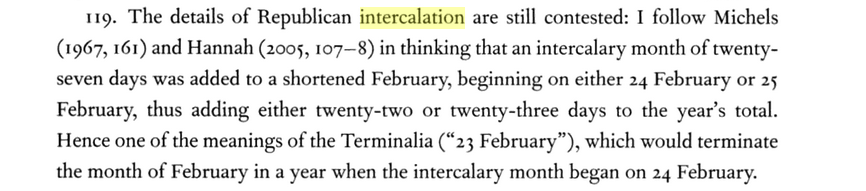
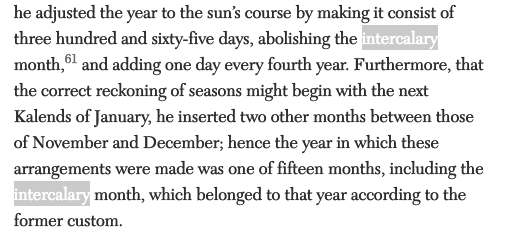
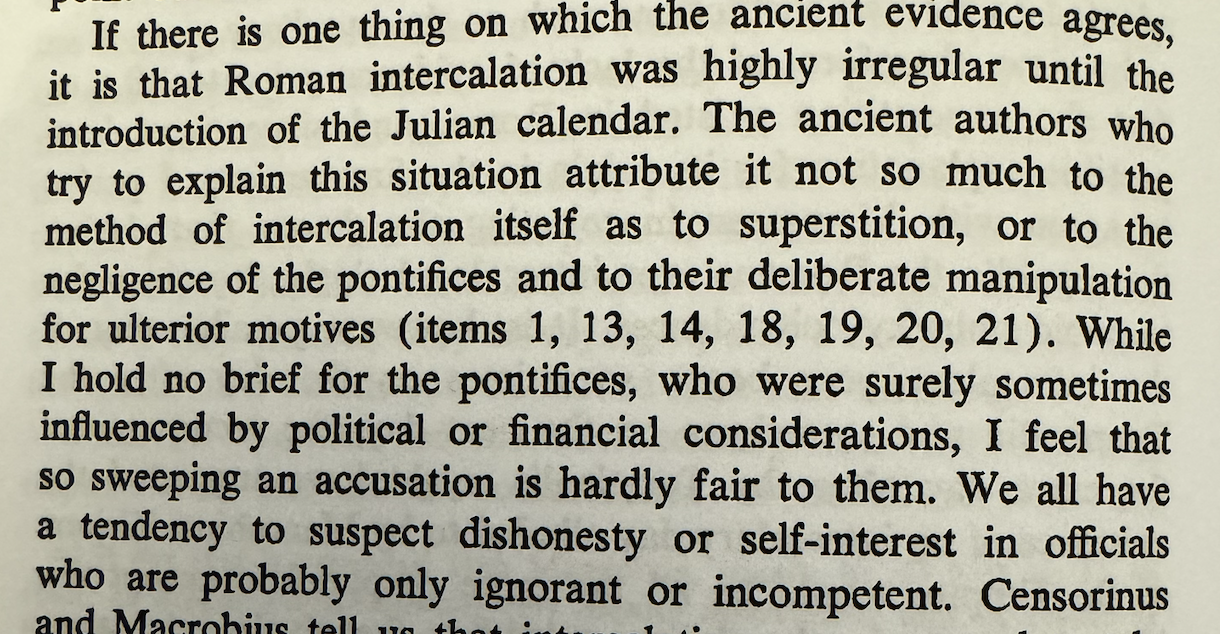
This isn’t a new thought, but it is perhaps an under thought, thought. We know the the republican calendar was all kinds of F-ed up. Hence the Julian Calendar, on which see Feeney who gloriously side steps the question:
Suet. Iul. 40
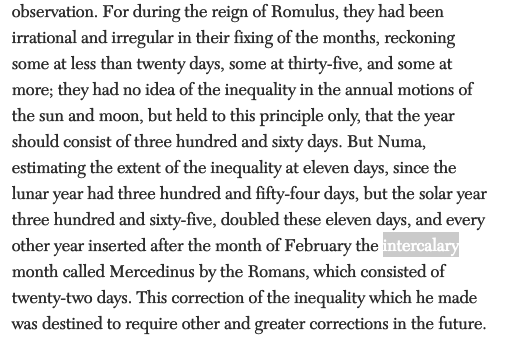
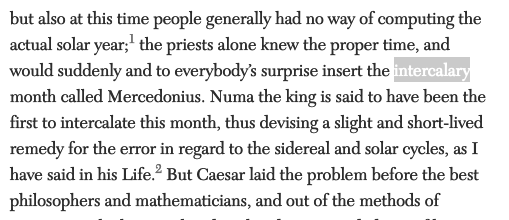
Typically intercalary months were every other year.
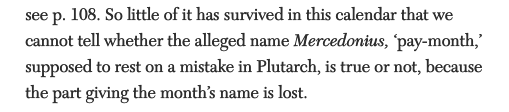
Plut. Num. 18Plut. Caes. 59Loeb commentary on Antium Calendar
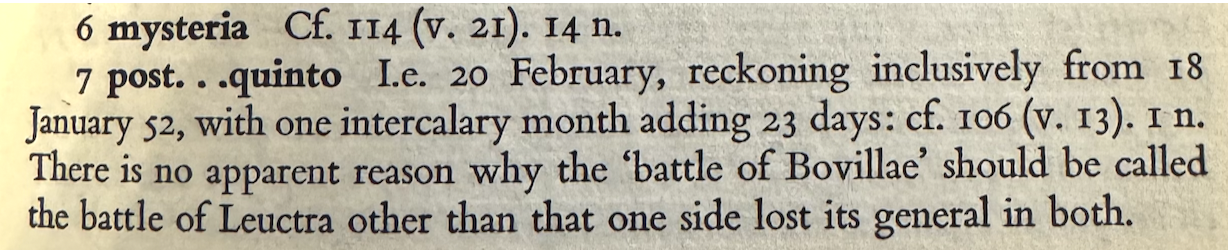
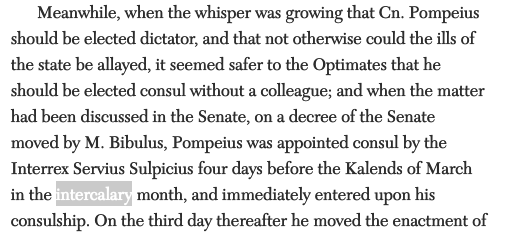
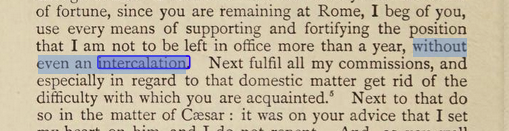
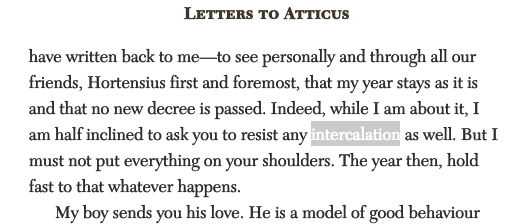
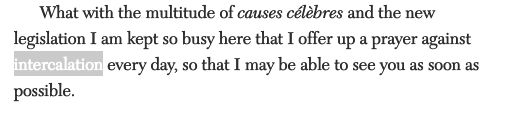
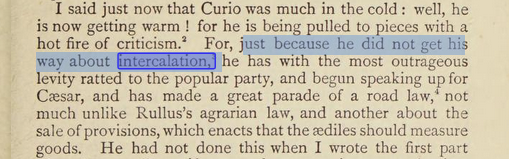
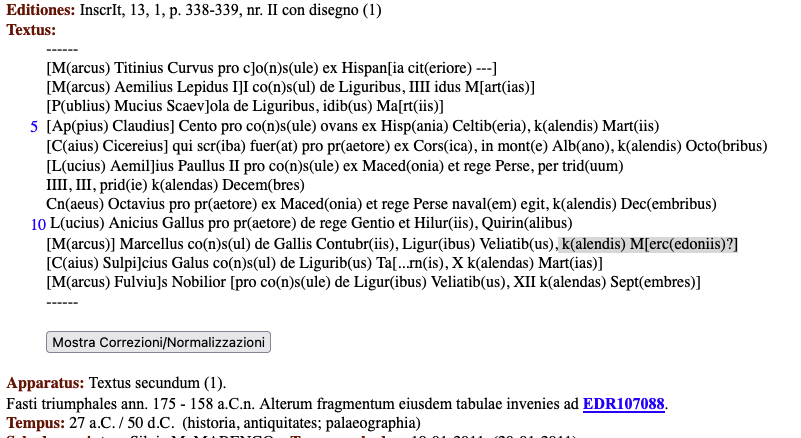
52 had been intercalary, hence the fear that 50 would be too.
Cic. Mil. 5
Cicero doesn’t want an intercalation in 50 because it will extend his time in the province.
So why would someone be for or against such a month?
My hunch is that it is a big financial burden on those who have borrowed money. If you believe tessarae nummularia really are payment verification tags (not everyone does), these suggest the idea:
BUT there are more inscriptions that just call the month Intercalares from Roman tombus, e.g. CIL 06, 8224, 8225 8259, 8295, and 8368, all c. 2nd half of first century BCE.
She gives full original texts without translation of all in the proceeding pages.
Bennett, Chris. “Evidence for the Regulation of Intercalation under the Lex Acilia.” Zeitschrift Für Papyrologie Und Epigraphik 151 (2005): 167–84. http://www.jstor.org/stable/20191985.
Brind’Amour, Pierre. Le calendrier romain: Recherches chronologiques, Collection d’études anciennes de l’Université d’Ottawa 2. Ottawa, ON: Éditions de l’Université d’Ottawa, 1983.
Anyway. I think the intercalary months likely did have financial ramifications… And I want to think more about this.
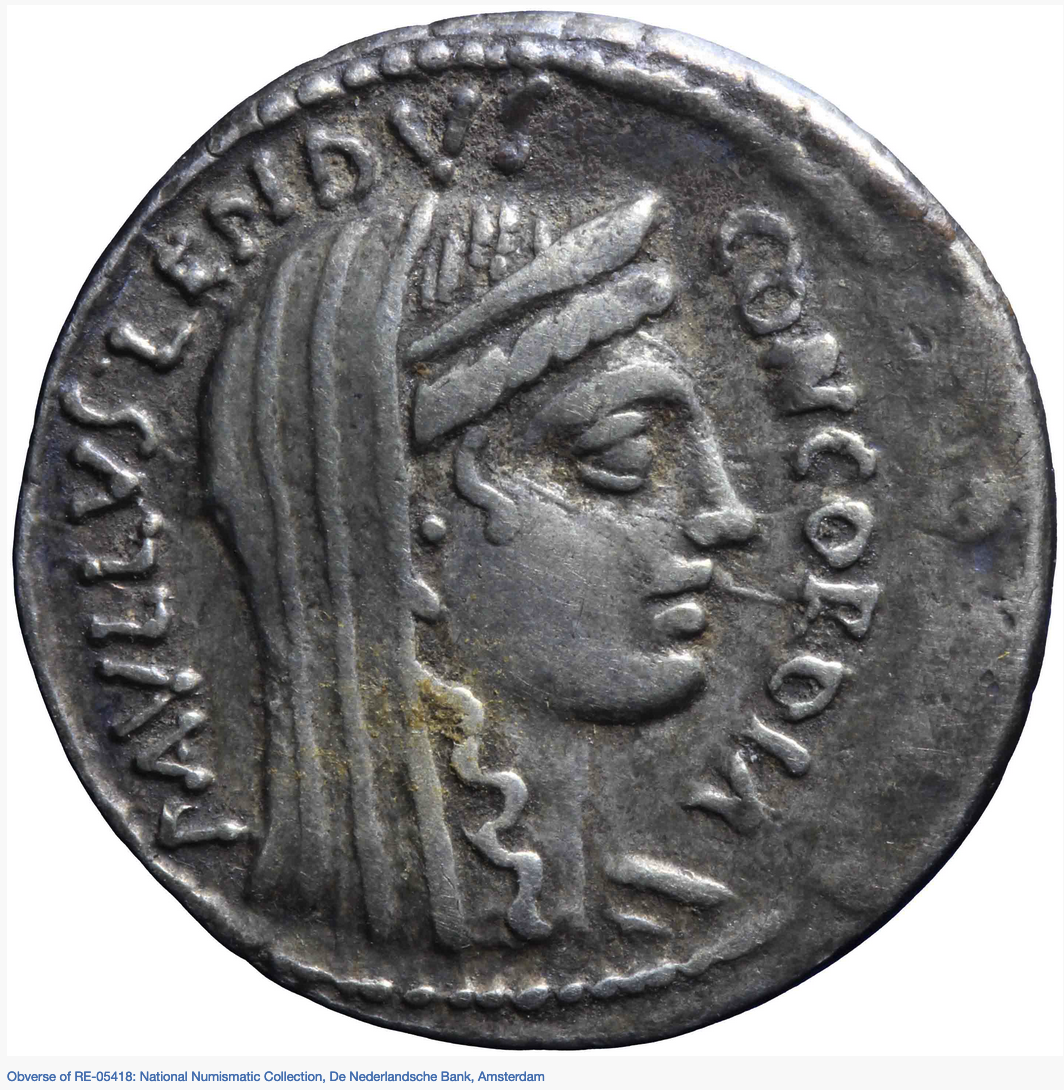
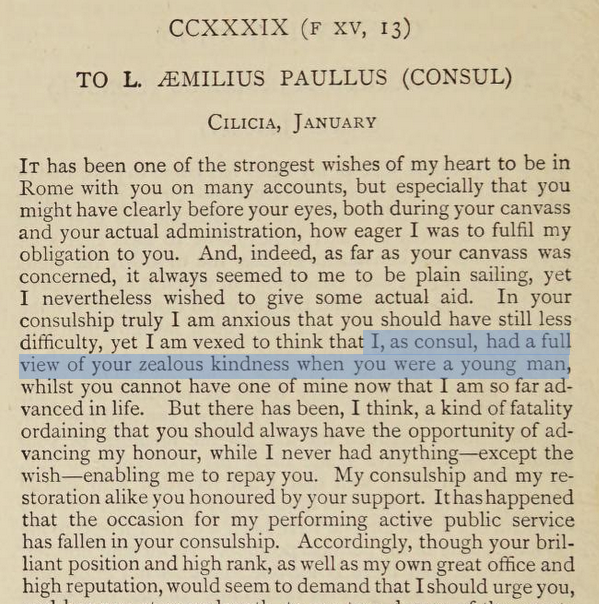
We don’t know all the services Paullus offered Cicero but we do know one. He echoed the rhetoric of concordia on his coins to support Cicero’s controversial handling of the Catilinarian conspiracy. I discuss this in chapter 4 of my coin book and I’ve got a chapter in my next book on this topic. CF. earlier blog post.
So why repost. Well, it fits so nicely in this moment of the letters where I’ve been thinking so much about the moneyers and consuls and the relationship. So read this as a footnote to the previous posts.
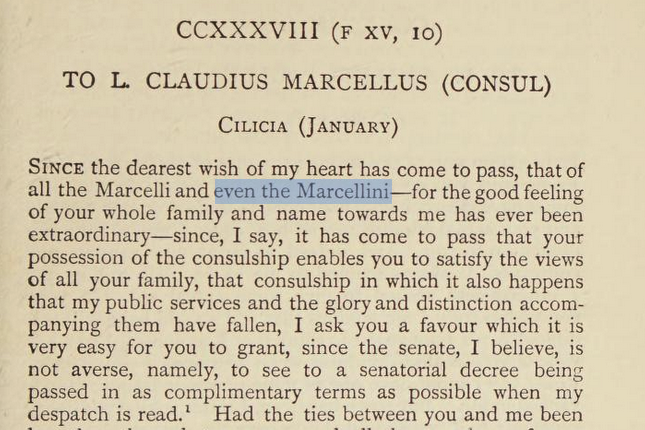
None of this explains though why the consul was being congratulated by Cicero on the successes of the Marcellini… The family bond between these men is very distant, but perhaps the young man was using the connection to his advantage nonetheless….
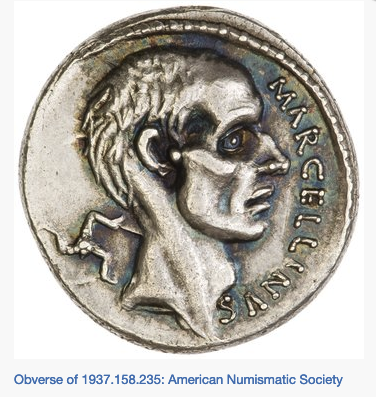
Anyway Cic. F. 15.10 certainly makes me think Crawford was right to assign this coin to this year….
The basic idea for this post started with the observation that the consuls of 51 BCE were at once cowardly and super concerned about their personal egos AND might have been controlling the moneyers through kinship claims.
There is also a basic similarity between the presumed logics of the coin designs, they use trophies and architecture to evoke ancient victories on ancestors who don’t quite share their names.
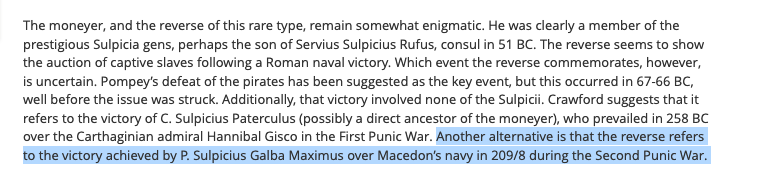
Then I fell into the old chestnut about which naval victory is Suplicius commemorating. The literature isn’t going to answer this question. Maybe a new inscription one day. Our best bet is to get a handle on the coin icongraphy and like always it seems to come down to funny headwear.
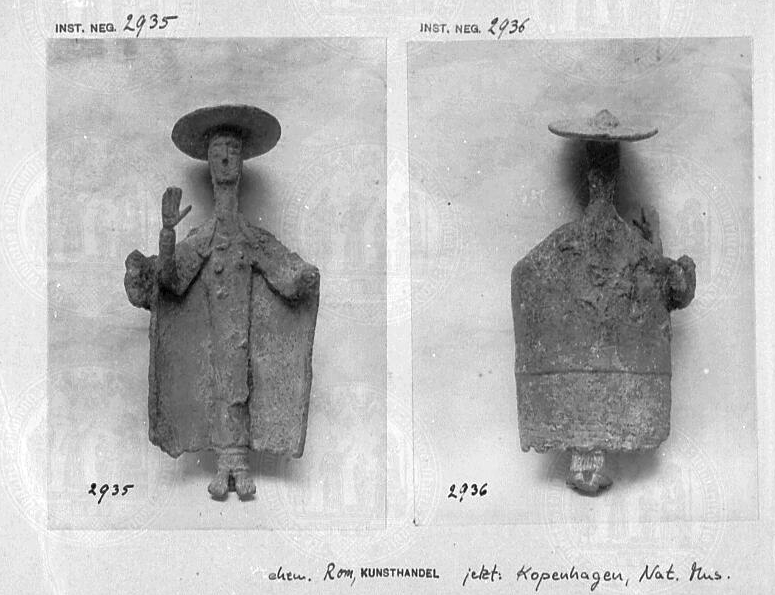
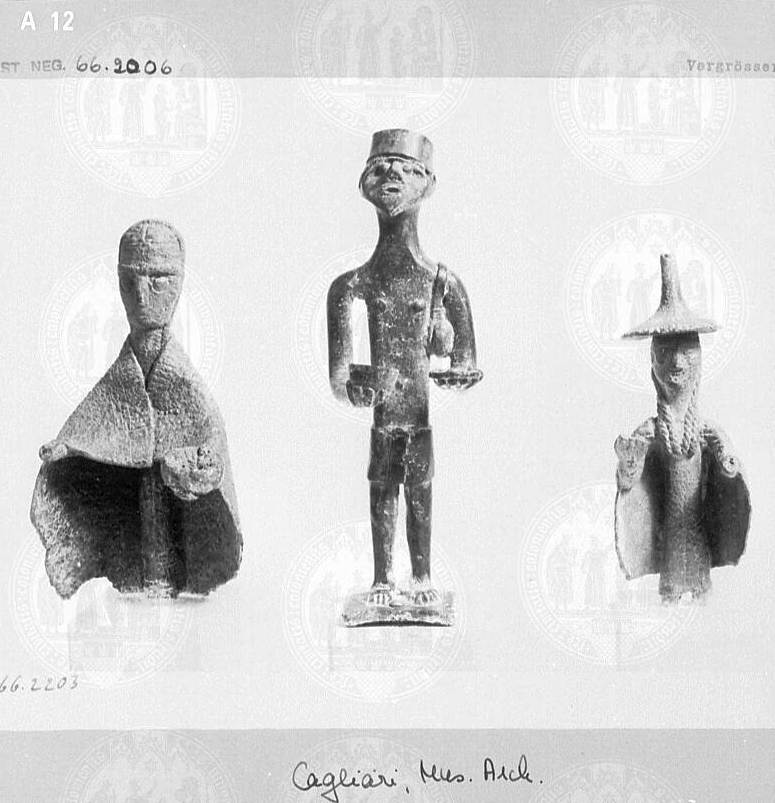
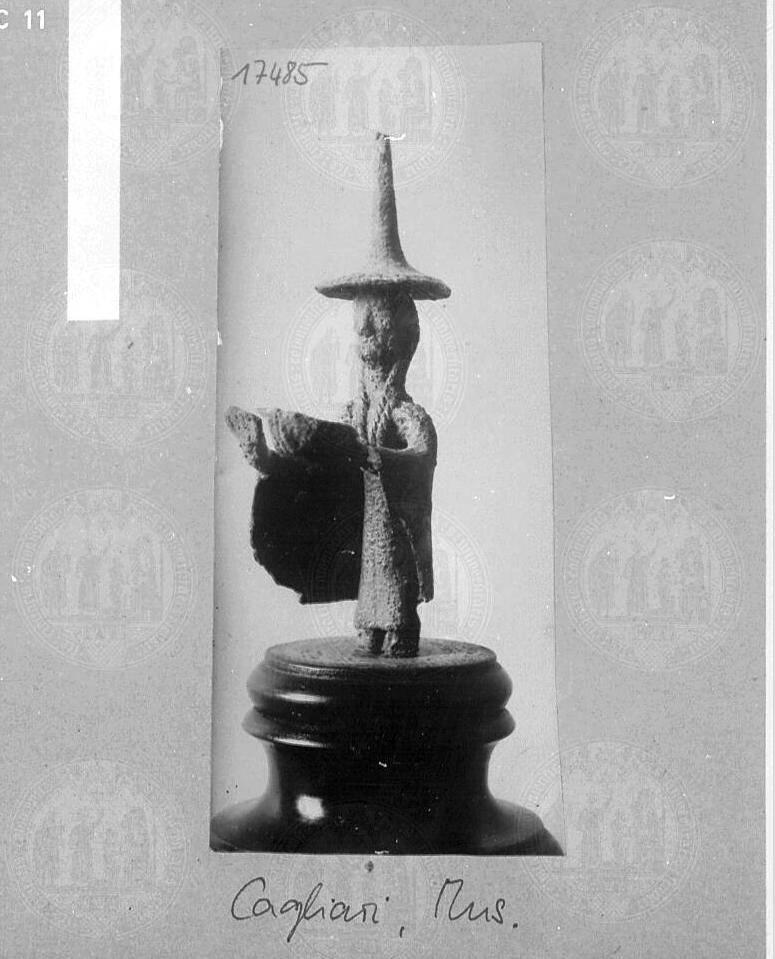
You might have already guessed from the above images that I found the idea of a Macedonian allusion tempting based on the possibility that the left hand figure of the naval monument might wear a kausia (causa) and cloak, but the pointy hat on the right hand figure confuses me. I thought maybe the figure was tied to a pole but on none of the Schaefer dies (A-L) can I detect this to be the engravers intent. We also don’t know of the naval triumph awarded to Sulpicius Maximus, although the fasti are incomplete between 222 and 197 BCE.
So then I started wondering about ancient stereotypical representations of Sardinians. What I found instead were little metal figurines from Sardinia. I don’t necessarily think these are relevant but I did find them interesting.
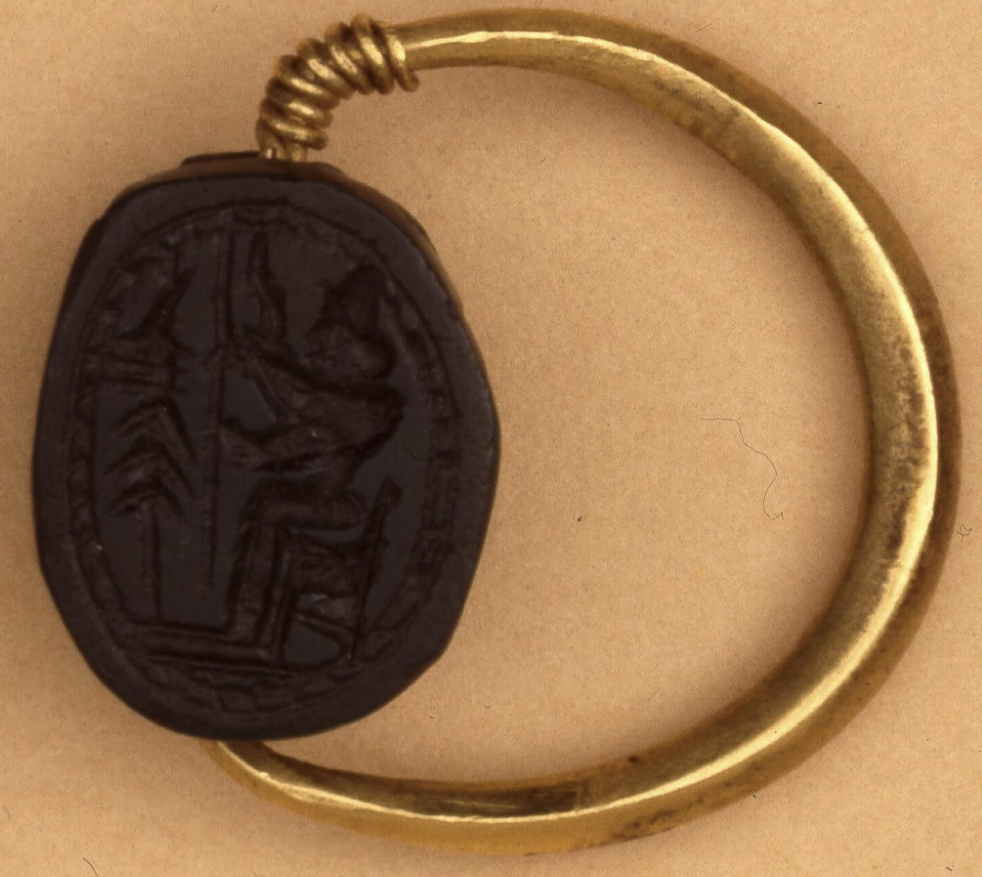
Cylindrical gold amulet-case surmounted by lion mask with sun disc with uraeus; originally contained amulet written on papyrus or gold leaf. BM 135781. Tharros, Sardinia. 7th-6th cent. BCE?
We often think about career paths at Rome as relatively fixed and there being standard intervals or at least norms to when these various political offices are held. There are numerous diagrams I share with my students to help them try and conceptualize this system. Cicero has influenced our thinking in that he brags about reaching each of the offices in his year meaning the first year he was eligible.
But the exceptions are numerous and interesting. They also warn us about using assumptions about the cursus and relative status of offices to suggest when a particular individual might have been a moneyer in either relative or absolute chronology.
After this tribunate what does he do? He stays in the City and in 50 or 49 BCE campaigns and wins a moneyership (RRC 449 solo, RRC 451 with D. Iunius Brutus Albinus)
Many have assumed that honoring Jupiter A(n)xur(us) means a connection between the moneyer and Terracina (1st cent CE inscription).
In EDCS I can find at least 11 inscriptions attesting to the gens Vibia at Terracina, mostly with praenomen of Gaius or Lucius, but by comparison there are nearly 300 attestations of the gens in all of Latium and Campania (Regio 1). Pansa is not attested at Terracina, neither is Caetronius.
Why take the moneyership after tribunate? We might assume that Pansa stayed in the city to be an agent of Caesar. Some have hypothesized in the past that his coins were struck as aedile or praetor, but we have no other evidence he held these offices.
His cursus looks like this: Tribune–Moneyer–ProPraetorian Appointment–Consul
We could blame Caesar for the irregularities and probably should. BUT how did the Moneyership serve either Caesar or Pansa’s needs in this moment?
Maybe tomorrow I’ll blog about his coin types, the way they evoke his father’s types, Valentina Arena’s thoughts on Liber and Libertas, His collaboration with another moneyer… But now I need to cook dinner.
I tried for a catchy pun in the title but I feel I failed.
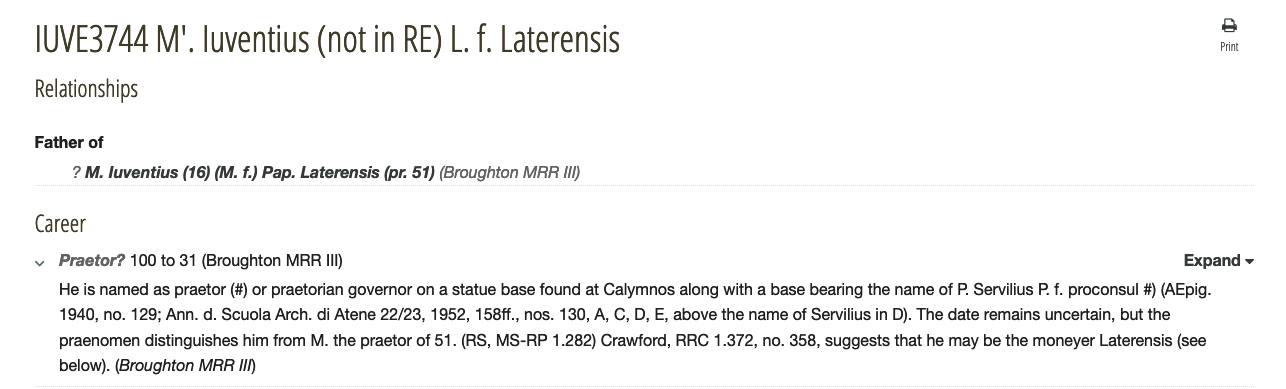
Anyway. This post is collecting various things that may or may not be related to the moneyer of RRC 358, of which I’ve blogged before mostly just noting that it is one of a kind and in Berlin.
The praetor of 51 BCE is unlikely to be our moneyer, assuming Crawford is write about the date (and for that for now we only have stylistic considerations and his date seems plausible, cf. Bead and Reel borders and laurel wreath borders and serration on the Republican Coin Series.
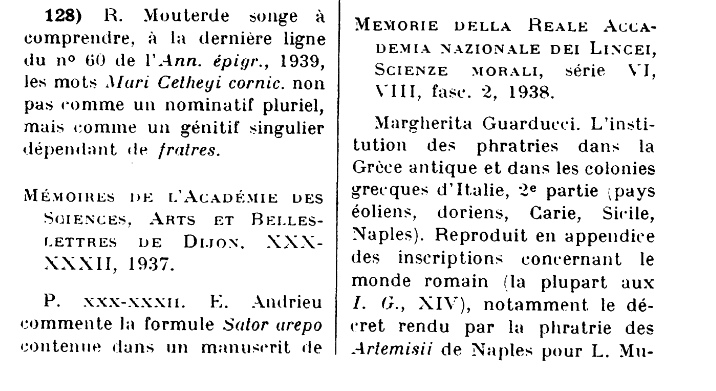
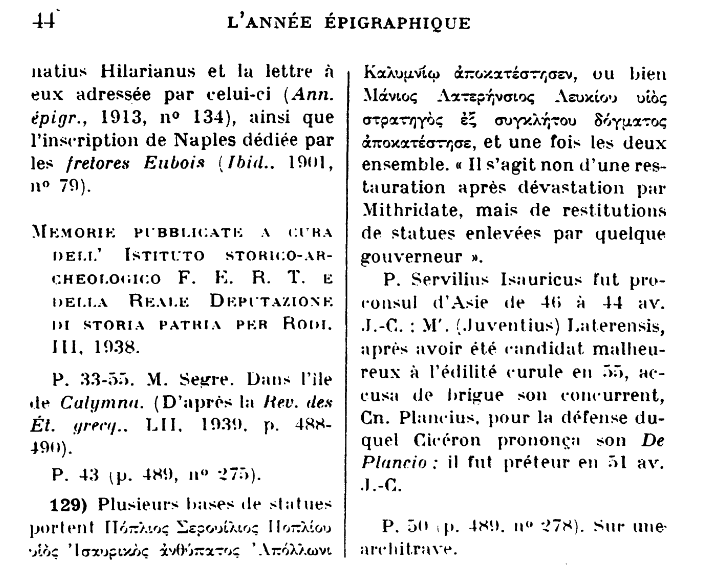
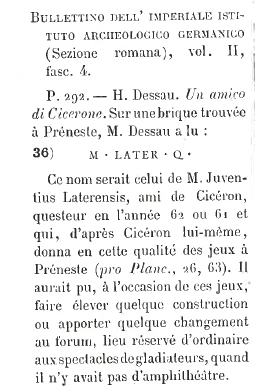
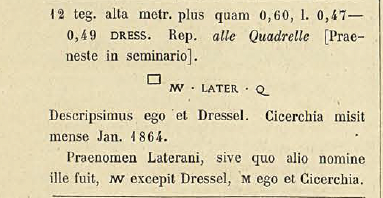
But we do have some epigraphic testimony that might be too early for the praetor of 51 BCE that could be the moneyer:
Anyway. The Family is ripe for some prosopographical sniffing out to see if we can say more about the moneyer. We could also potentially date it by comparison to RACOM data if we could use Muonic x-rays on it….
The moneyer of c. 54 BCE (RRC 434) is a favorite because of how his coin types are in close dialogue with those of Brutus (RRC 433). And, seem to influence my favorite anti-regal coin type of 53 BCE of Messala (RRC 345).
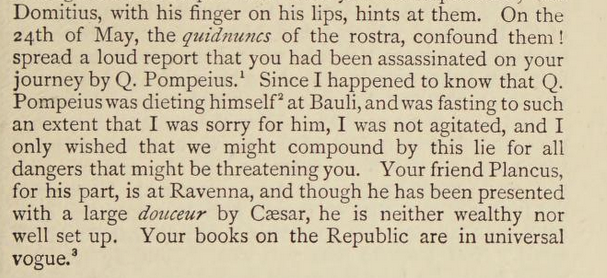
I’m just thrilled to meet some gossip about Rufus in a letter from Caelius (lover of Clodia) to Cicero.






















 Liv Mariah Yarrow

