It is a masterful collection of essays teasing out the historical relevance of the the results of the extensive Orleans project using LA-ICP-MS. The results of all this work is game-changing and has allowed us to interrogate, confirm and debunk many suppositions. So for instance the volume has shown that there is NOT a likely Ptolemaic origin for the mars/eagle gold one – a popular theory deriving from literary sources and iconographic parallels (see earlier post, more below as well). It inspries me to seek out similar opportunities for further metallurgical testing to secure even more answers (Can we confirm Pompey’s PRO COS aureus was made in Spain as Woytek has proposed?! Can we settle once and for all that the XXX oath scene goal is fake?!).
I’ve been dipping in and out of the AVREVS volume getting excited about various answers it provides, but now I want to think about it more holistically. Part of what I admire about the project is that it accepts that such work on metallurgical analyses must cross certain common boundaries. We must look at Greek, Roman, and Celtic coinages together as they share metal sources and relate to overlapping geographical areas. The more we try to separate them by rigged boundaries the harder this gets. So I’m reading mostly for an eye to the overlap. Hence that random post on Egyptian coins that went up last week.
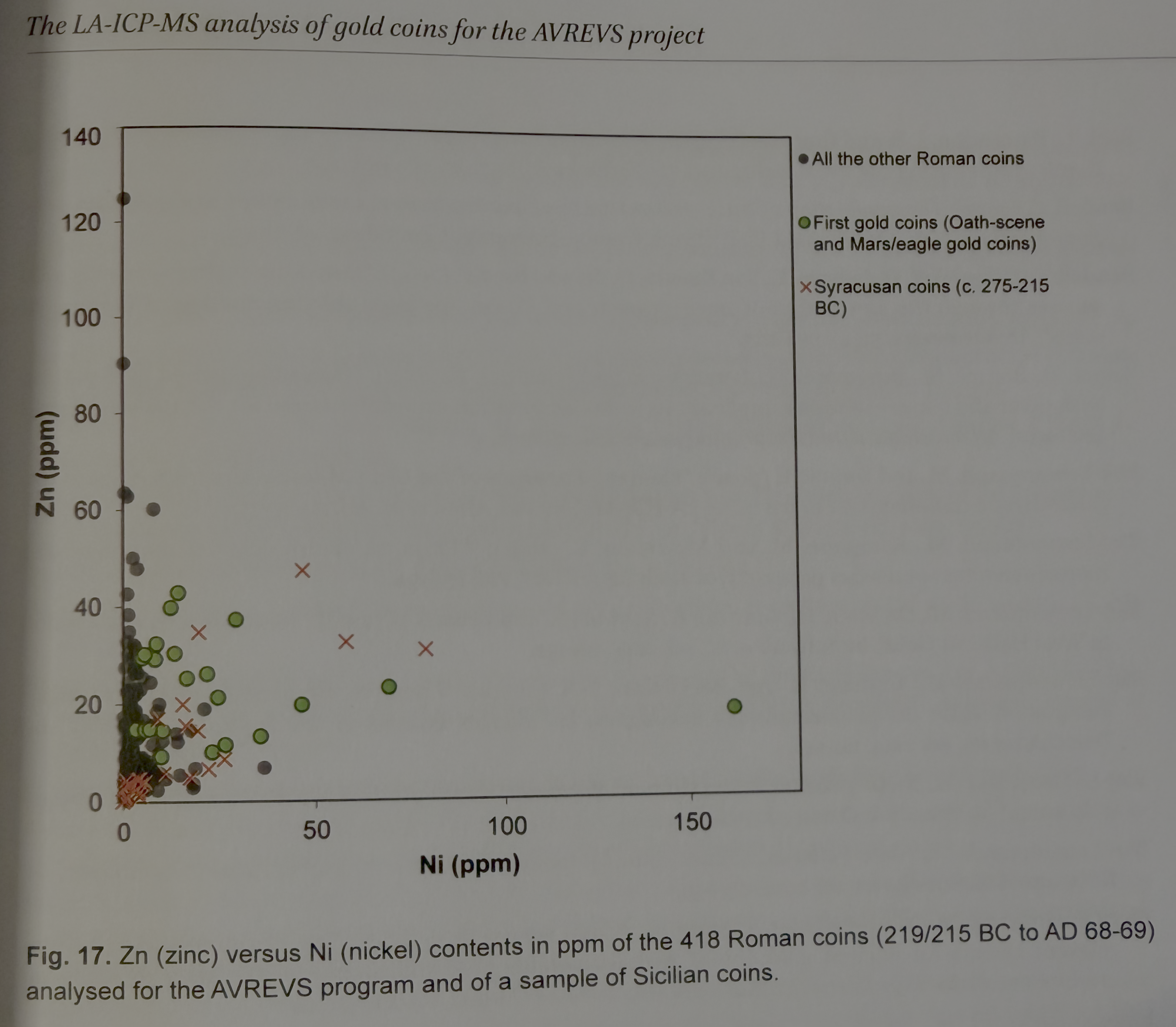
The basic methodology employed is to look for common patterns in the relative amounts of trace elements. This is not about finding the ore source, but rather about looking at what groups of coins have similar or different patterns and considering if those patterns are meaningful and why. In most cases Platinum to Palladium ratios are mapped, but other groups have also proved meaningful–Iron to Antimony, Antimony to Tin, and Zinc to Nickel. So below we quickly see that early Roman gold of the 2nd Punic war is very different than later Roman gold, but more similar to Syracusan gold. We know of many connections between Syracuse and Rome from our literary sources during the War but this is pretty convincing support (cf. Livy 22.37 – Hiero’s golden victory). If one studied Roman coins alone without reference to other mints we’d have a far poorer view of possible extensions.
Blet-Lemarquand p. 53
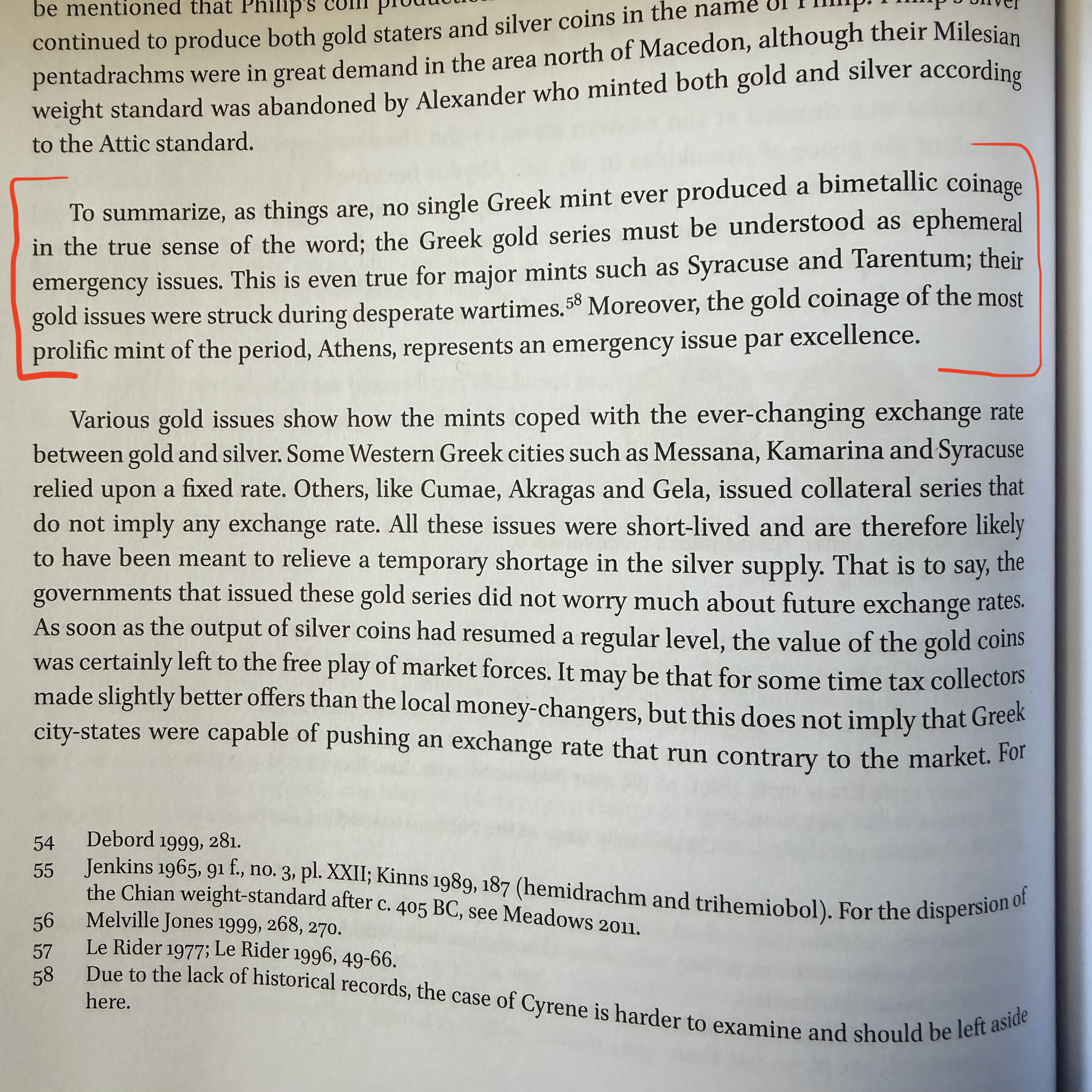
As Fischer-Bossert (p.75) so aptly points out the Greek tradition of coinage has its origins in Mesopotamian hacksilber economy and that for most of its history was predominantly a silver coinage with gold being the exception, even if the origins of this coinage tradition itself beings in Lydia with ‘white gold’ or electrum. Although electrum (an alloy of silver and gold) does naturally occur, the electrum used for coinage was a controlled alloy even if different ratios are known. If we this line of thought to Italy and the early Romans we find ourselves back at silver becoming the dominant metal of coinage but having at its introduction to contend with indigenous traditions of using hunks of (leaded) bronze as monetary objects. The Italic peninsula is remarkably lacking in precious metal ores, these having to been imported. Thus the Romans and other Italic peoples accept silver, but gold remains much less common. We have 2nd Punic War gold, the Flaminius stater (made in Greece after 2nd Macedonian War), the Pompey stater (made in Spain during war against Sertorius), Sullan staters (mostly eastern, perhaps one made at Rome), and then the post 49 gold of the Civil Wars. It isn’t much and very little of it is produced at Rome after the 2nd Punic War. Fischer-Bossert (p. 84) gives a broad overview about who (before Alexander) minted gold and why (as far as we can surmise), but perhaps the most important point he makes is this ….
What marks out the Roman imperial coinage from the republic is that gold is produced on a very regular basis, something that was exceptional under the republic.
I’m going to have more to say but I think I’ll stop this post here and move on to a new one.
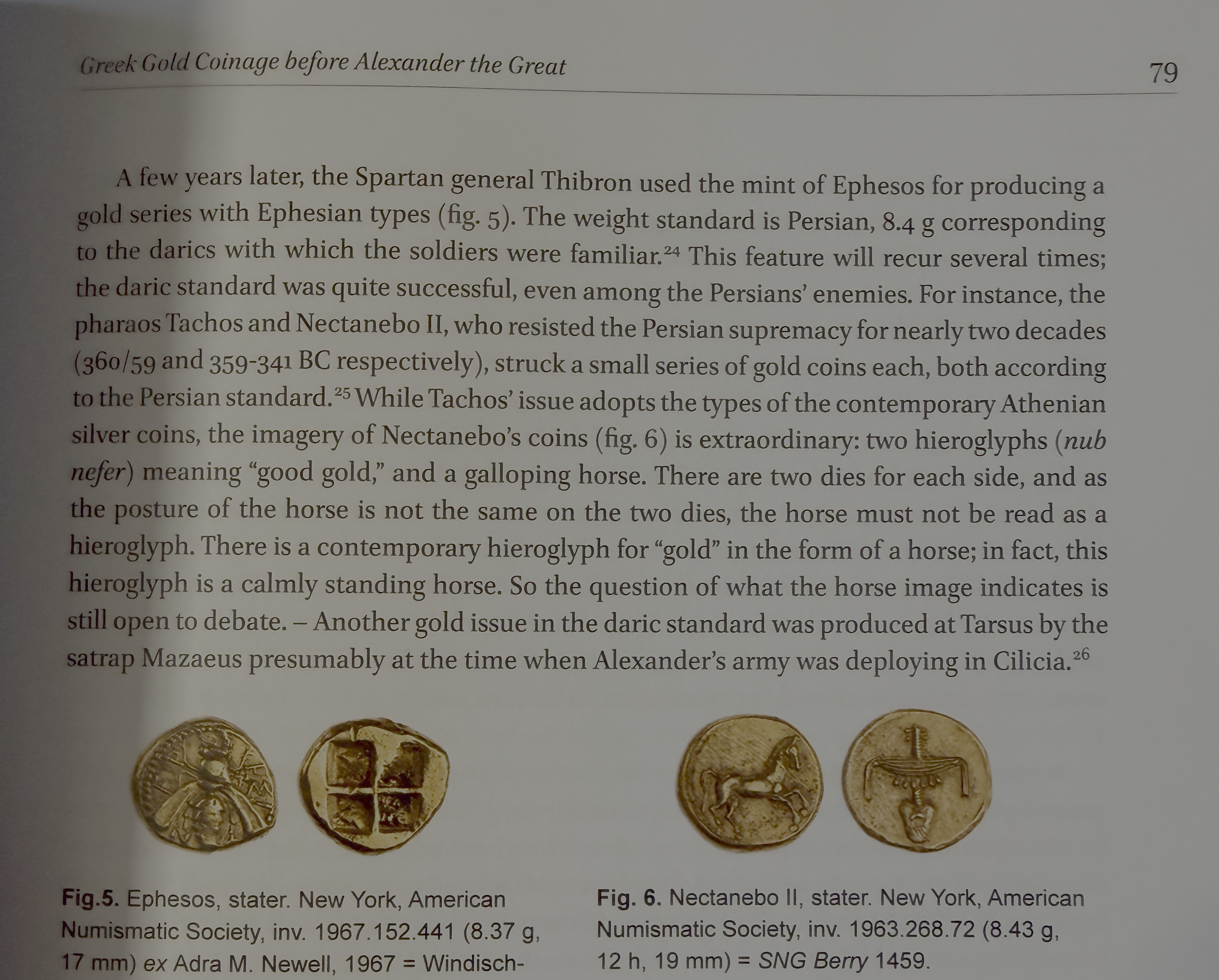
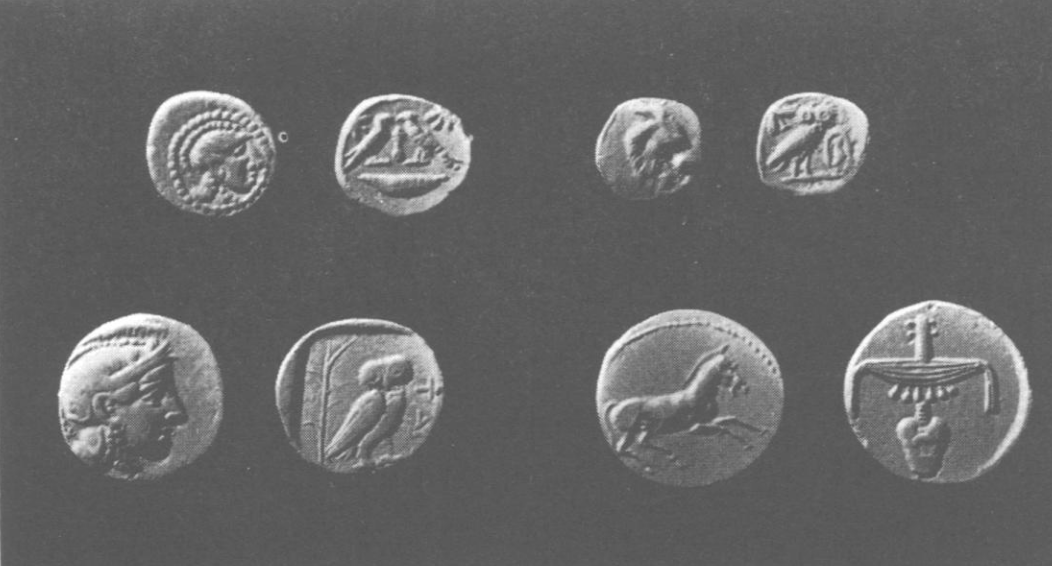
A while back on social media I was wondering about how we know what certain hieroglyphics mean. I still don’t know the answer to that and would like to, but I was reading for another blog post and came across this discussion by Fischer-Bossert:
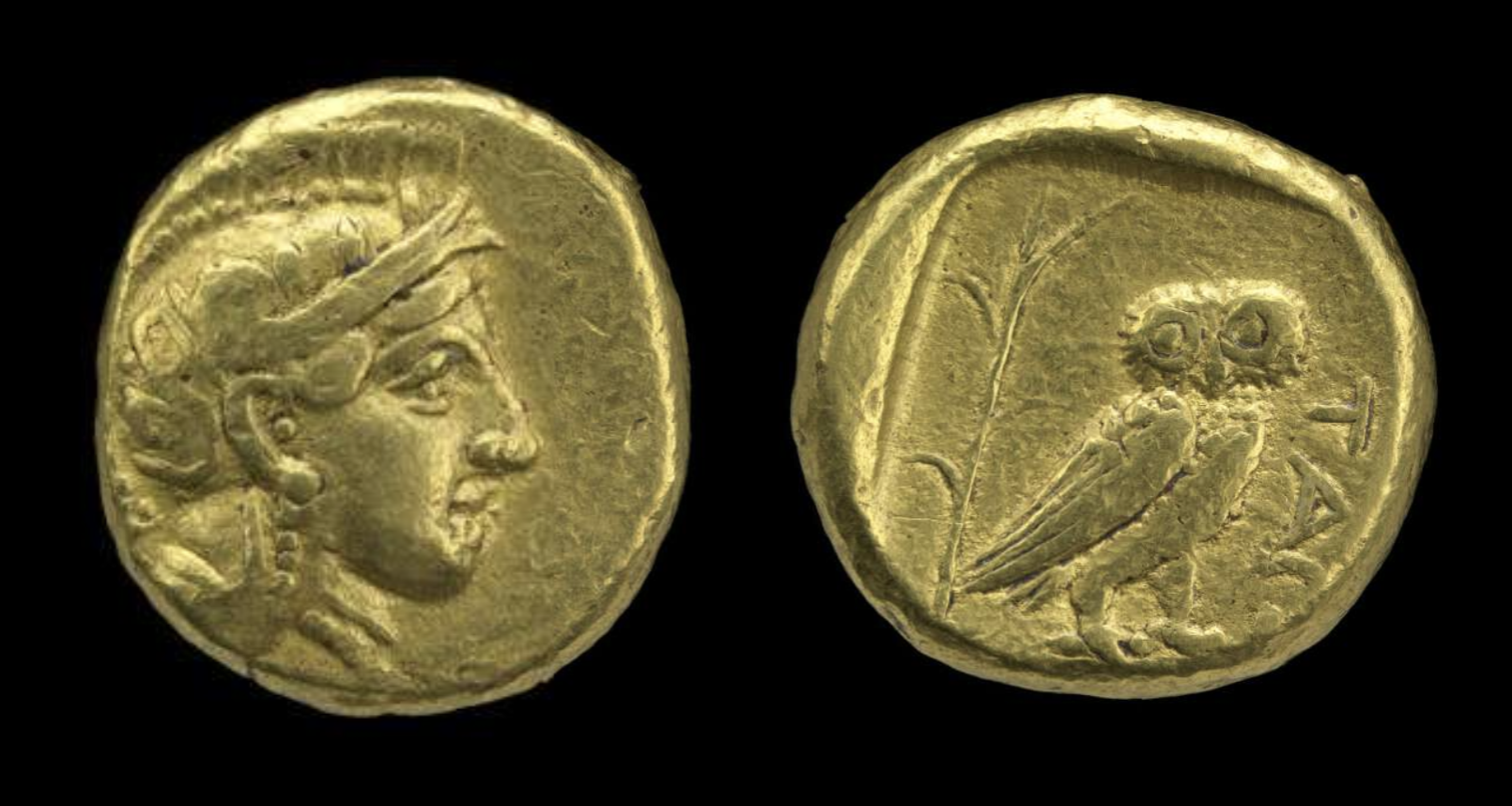
It was news to me that Tachos (Teos) struck before Nectanebo II and thus that heiroglyphic coin in fact suggests a rejection of designs that emulated outside traditions even as the striking of coinage was itself an innovation for of Pharonic Egypt. What I’ve not managed to find yet is any illustration of Tachos’ coinage.
I finally found some bad photos here:
James W. Curtis. “Coinage of Pharaonic Egypt.” The Journal of Egyptian Archaeology 43 (1957): 71–76. https://doi.org/10.2307/3855280.
The coins are supposed to be in the BM so I’m not sure why I can’t get the online catalogue to spit out a better image or just a record with not image as of yet.
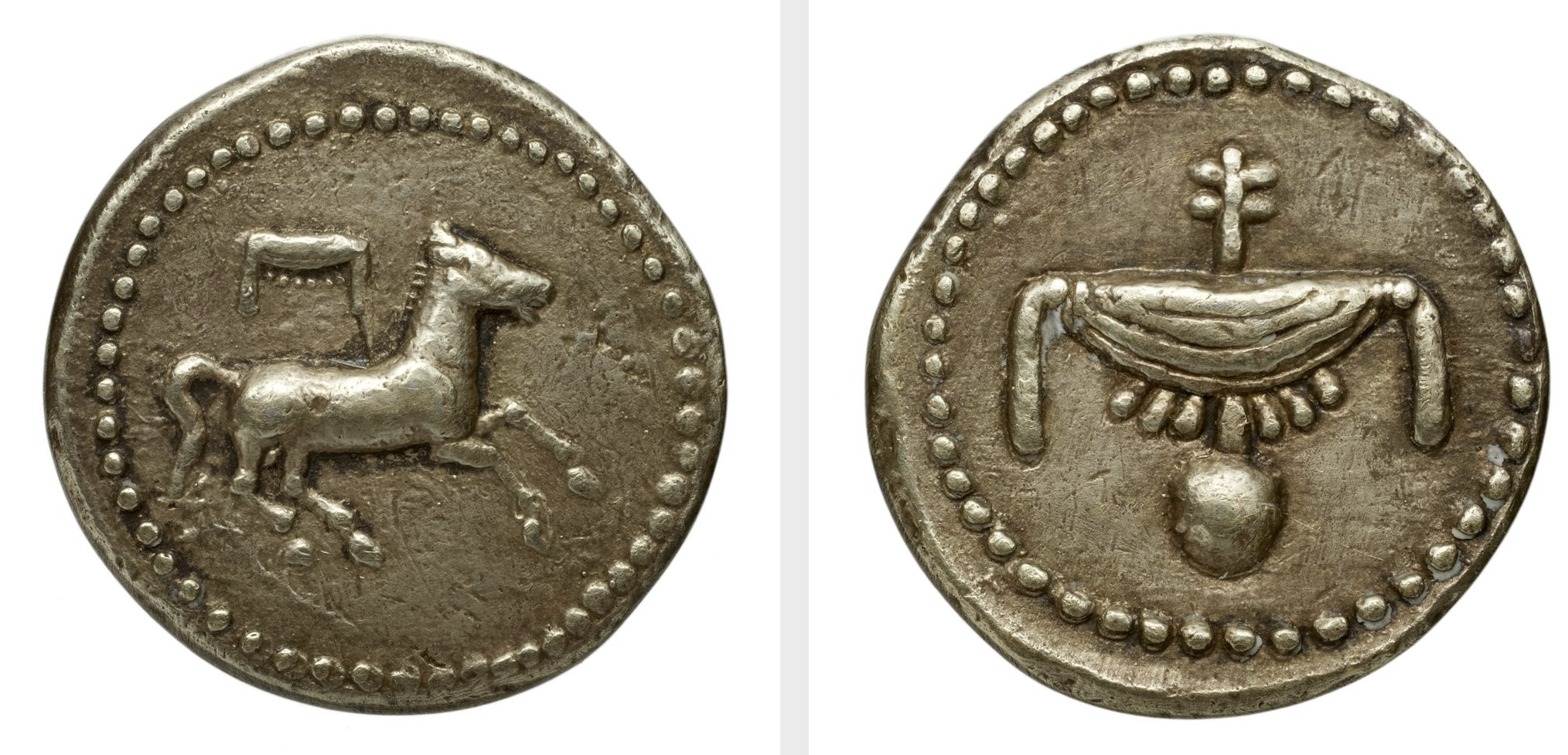
Got there, I couldn’t find it in the first instance as the BM has it under the primary name Djedher.
Interesting that the symbol for gold repeats above the horse.
The primary reason I wanted to write up a quick post was is that the Egyptians here in the 30th Dynasty are using the Persian weight standard even as it is the Persian from whom they are trying to maintain autonomy and are in active conflict.
We’re mostly comfortable with the idea that a coin must be spendable within the dominant denomination system even if that system derives from the ‘enemy’ or ‘other’, but it is still nice to have parallel examples. Think of the allies denarii of the social war, or Rome’s early didrachms. I’m sure there are other examples as well.
Ok back to the other blog post I was try to write.
On the domestic side, the family arrived yesterday, auspiciously coinciding with “Founder’s Day” at UCL, meaning the library was shut and I had no excuse but to fluff the duvets, procure groceries, stir the risotto pot, and acquire many volumes of books to entertain and reward my brave small humans. It is good to have them here: I am a bit of a barbarian without the familiar rhythms of our shared life.
On the professional side, I’m distressed by the news out of MontclairState(it’s grim – in short major restructuring and the demise of the humanities), the shifting of the department of Education into the department of Labor (it’s extra grim – the only reason for education is to create workers, not citizens, not thinkers, not full autonomous humans with deep curiosity to push the bounds of knowledge, but cogs in the capitalist economy), and then very locally impending retirements and excuses about why we will have to wait until Fall 2027 at the earliest for any chance of FT staffing and why it is not fiscally responsible to provide even short term FT staffing in the interim. I’ll probably push back on this infernal, irresponsible illogic, but right now I’m on research time in a research library so I’m going to put it all in a box and get back to my other job. It is a radical act of resistance to refuse to despair and to continue to intellectually engage with my esoteric disciplines.
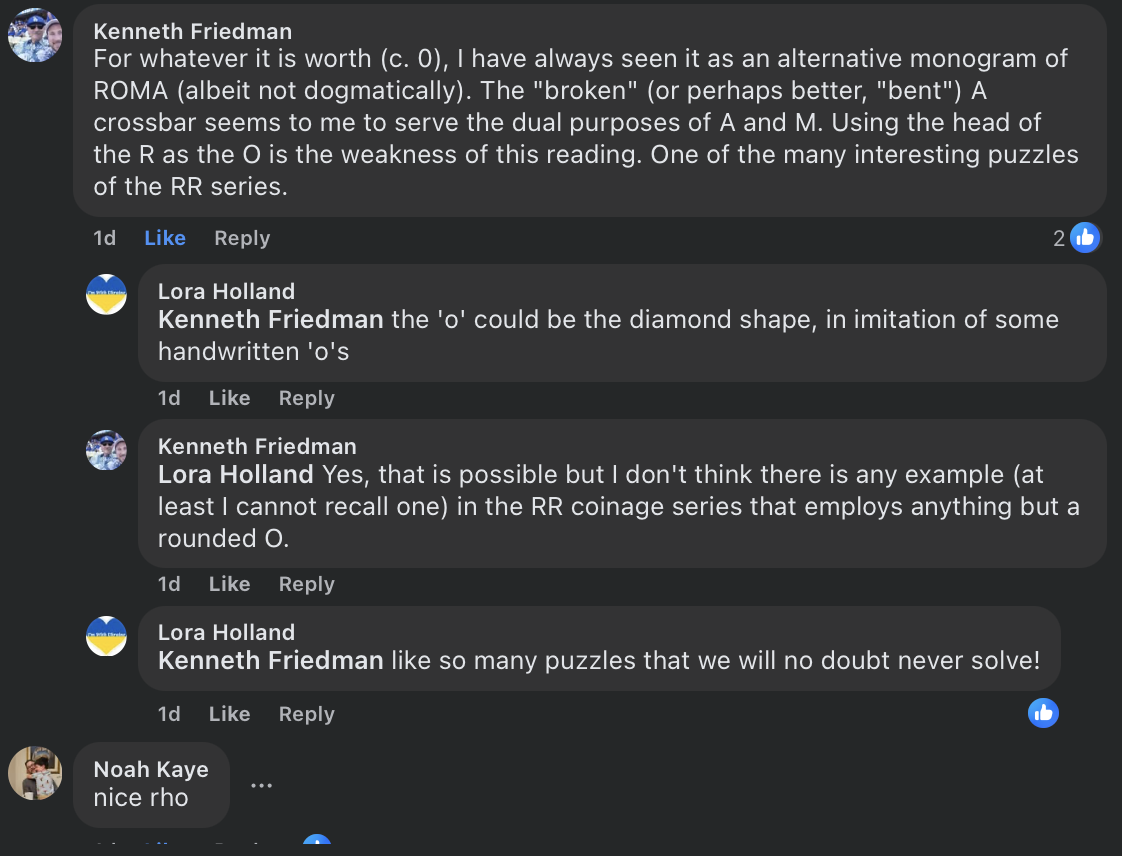
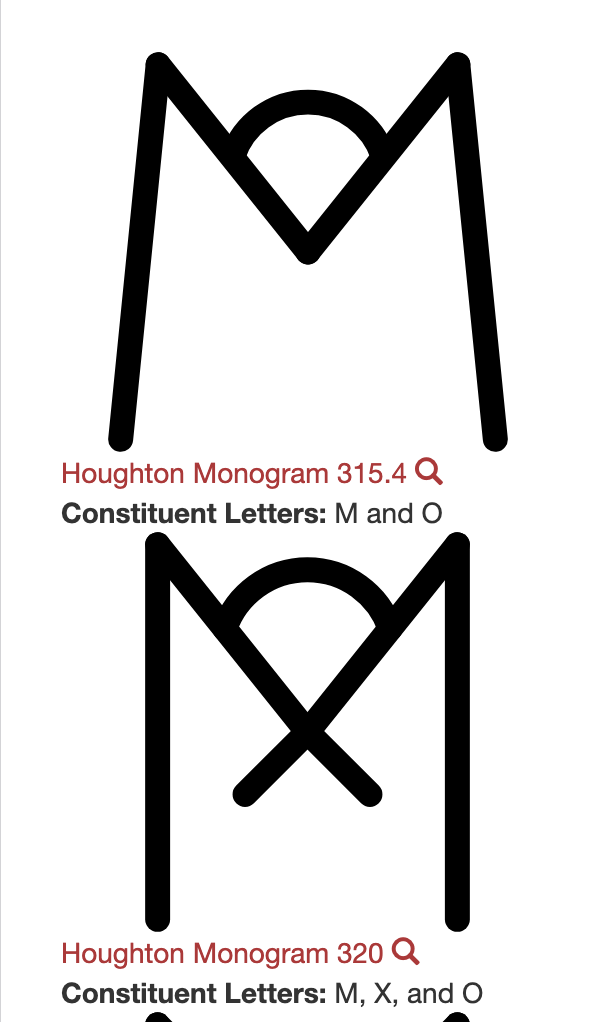
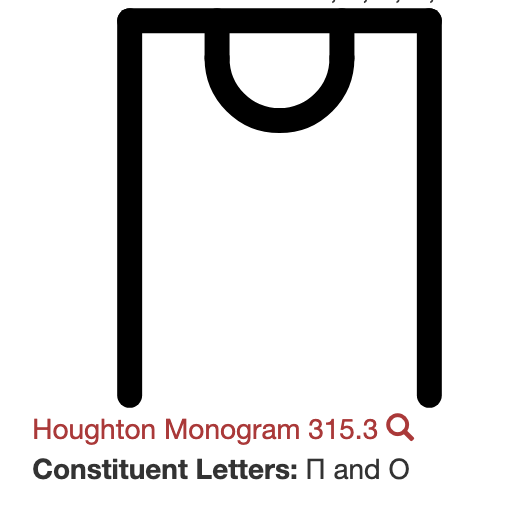
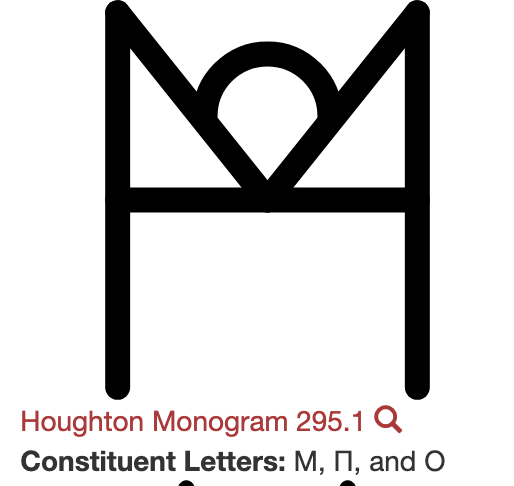
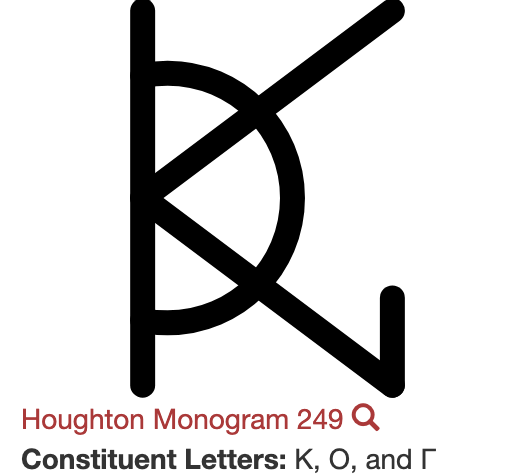
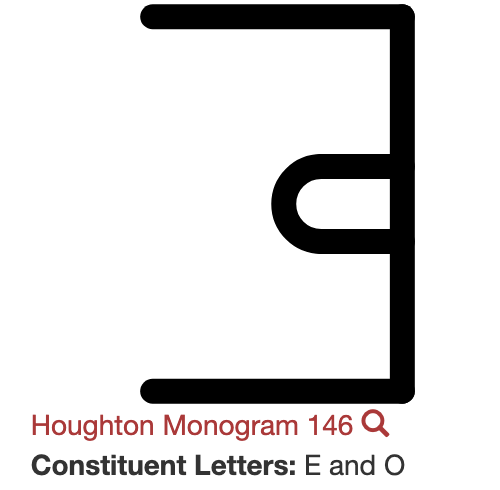
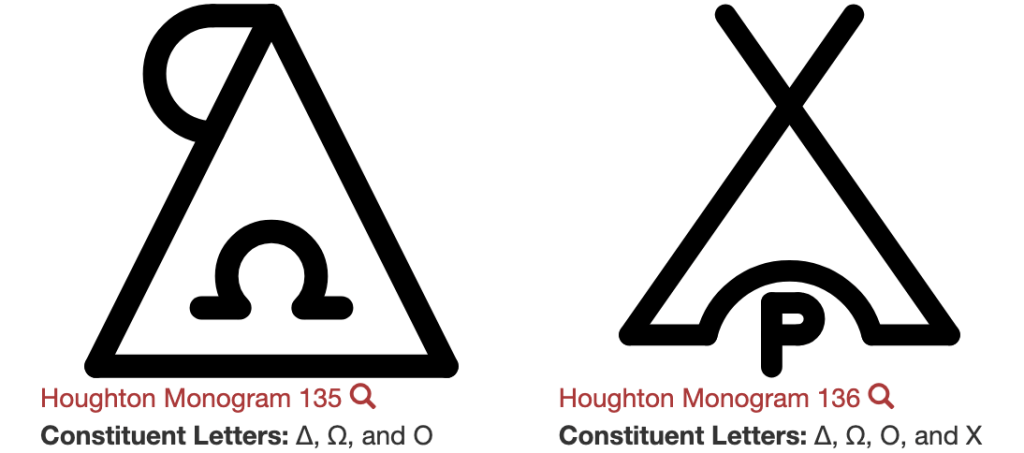
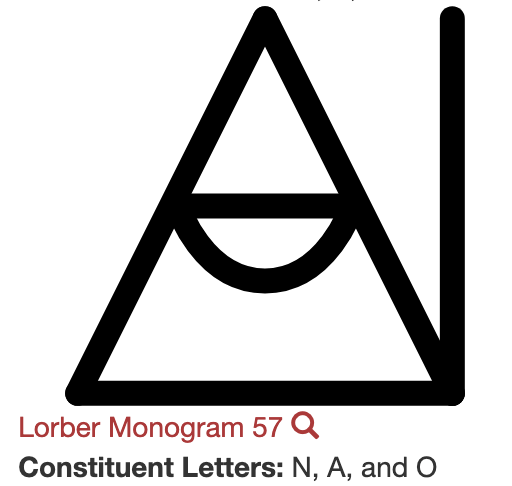
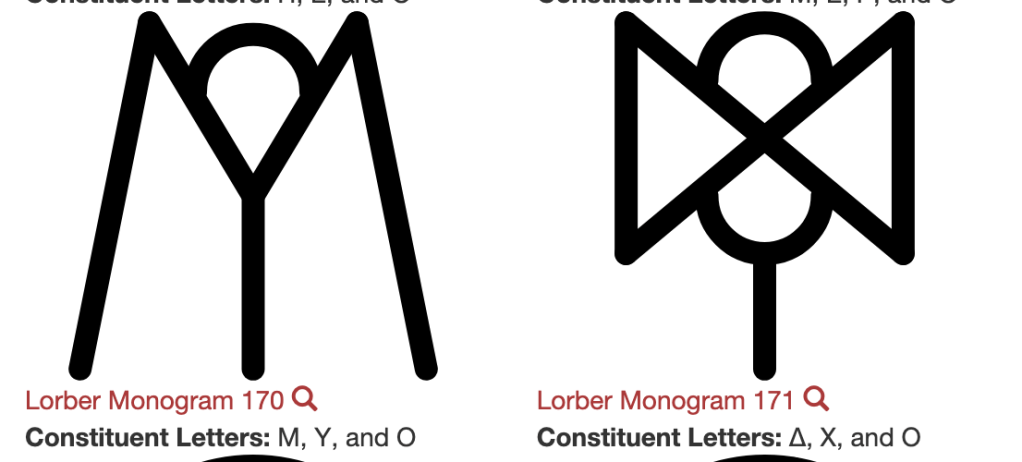
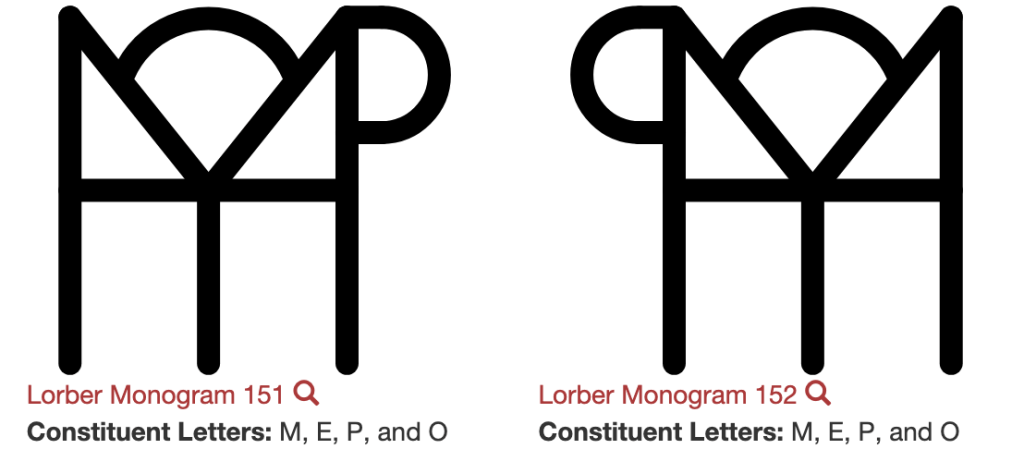
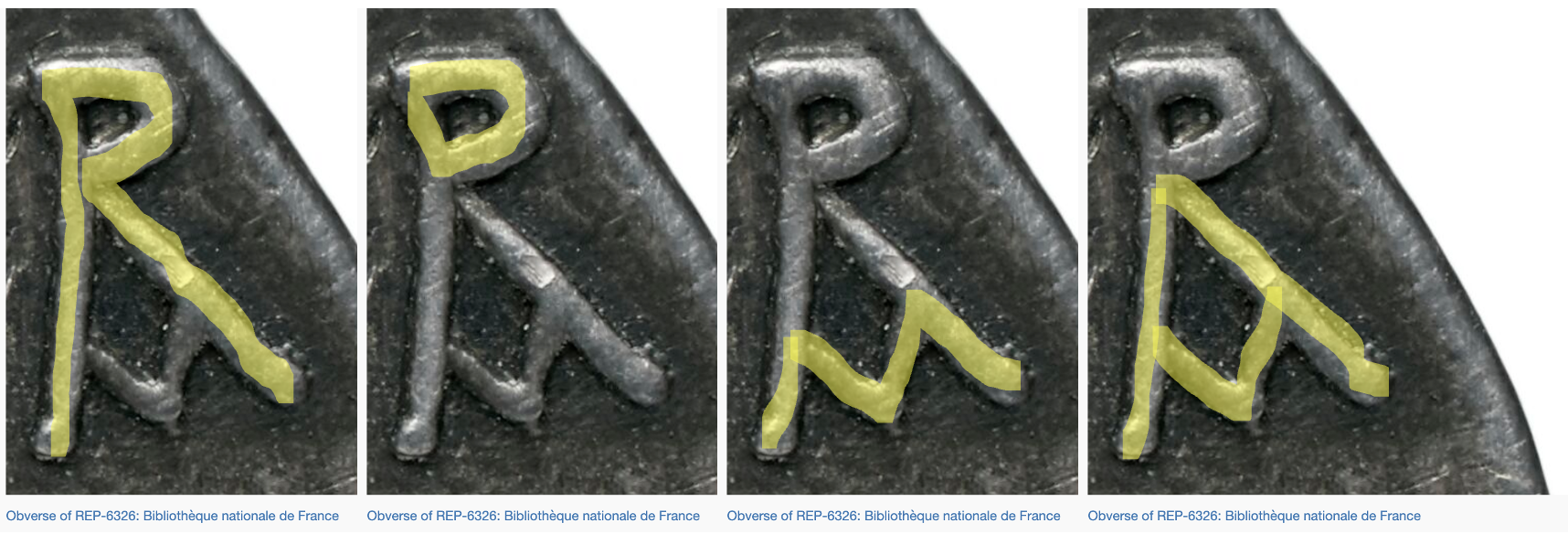
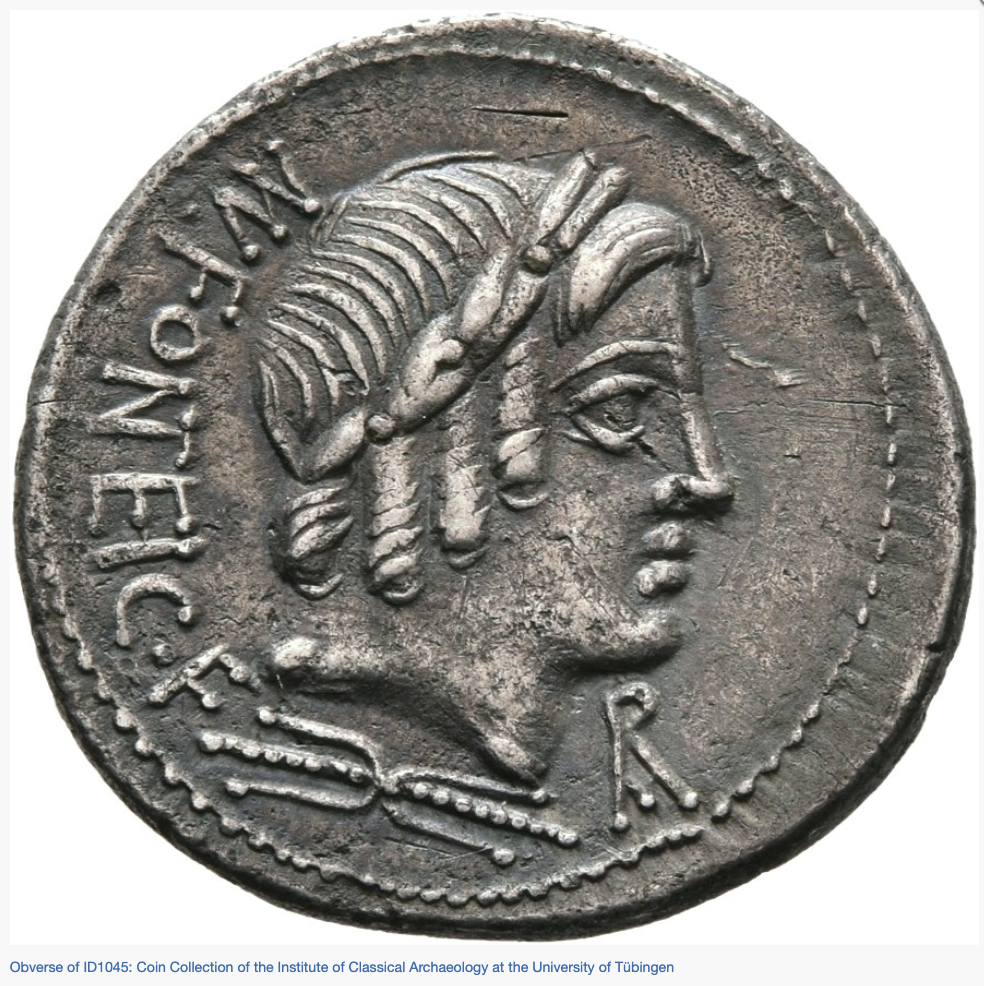
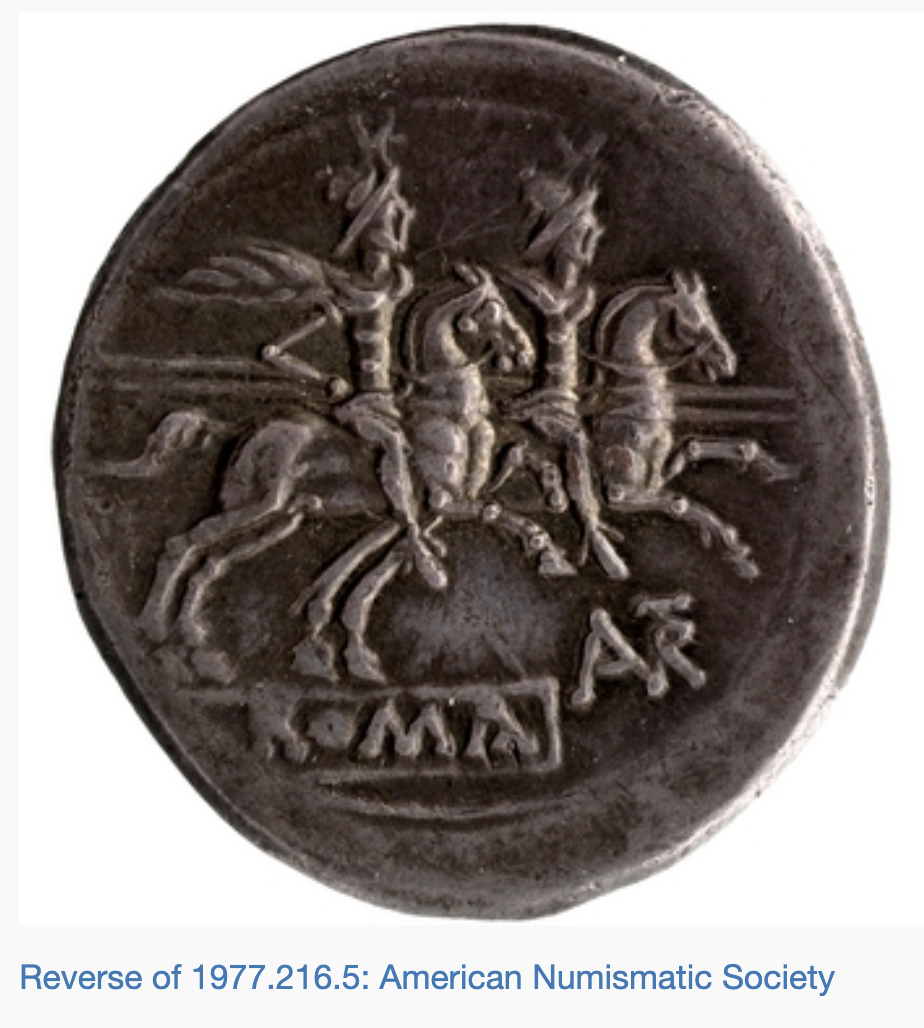
Right so I got you to click on this link because I promised more on monograms. After published that last post I also released it via my socials and got some quality feedback. See below. I’m a little embarrassed I didn’t immediately see the M which seems so obvious now. With the M the final question is where is the O?!
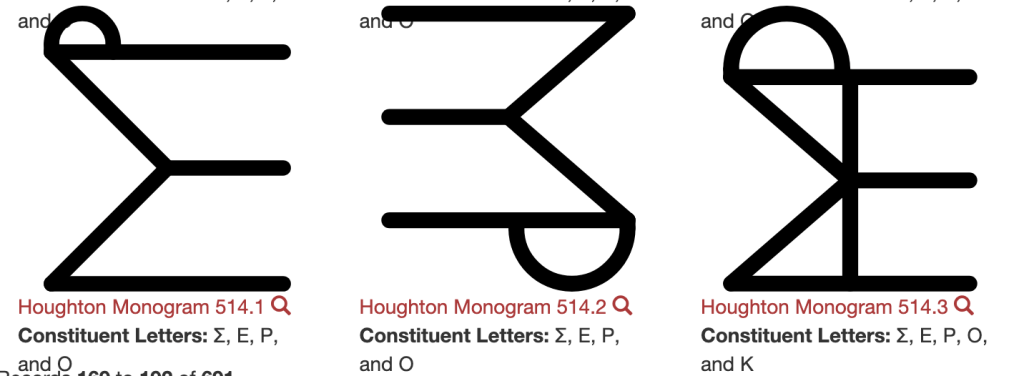
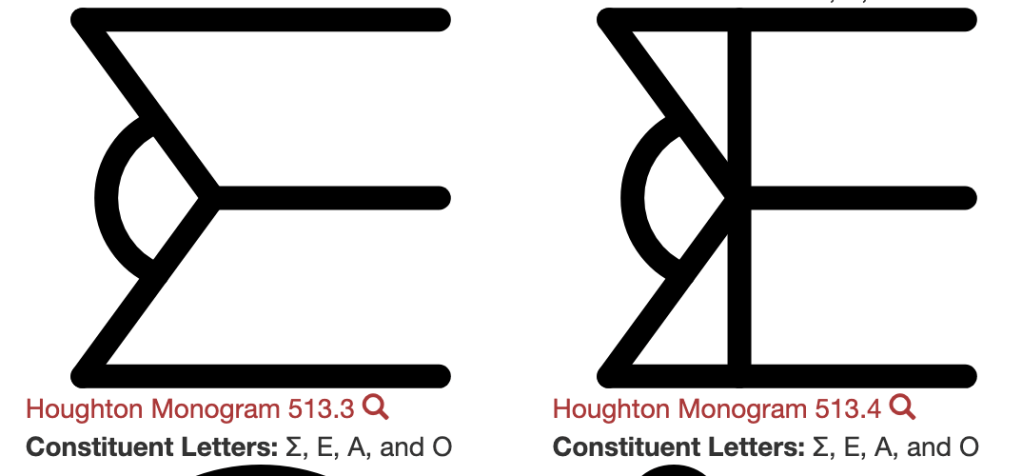
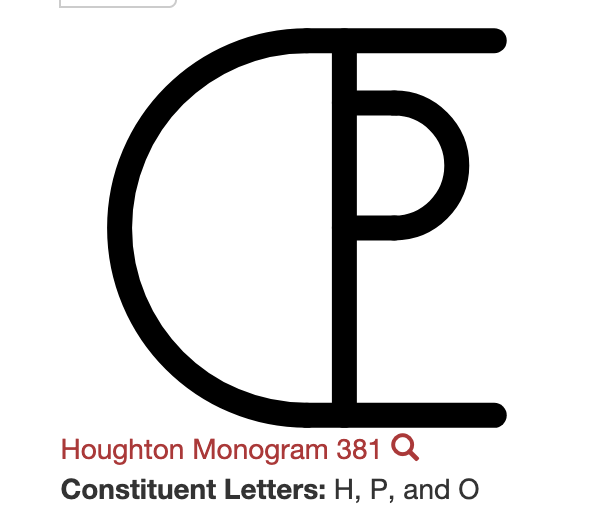
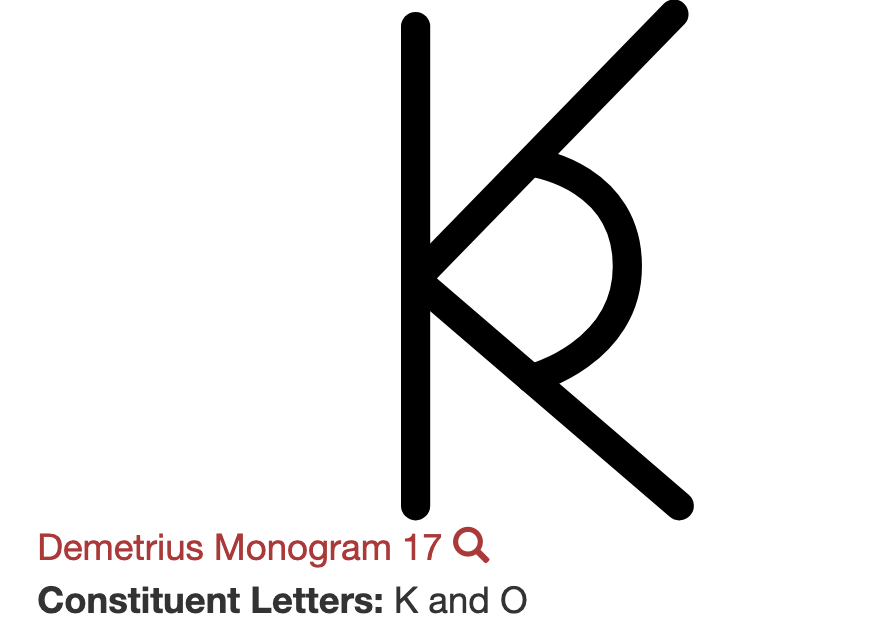
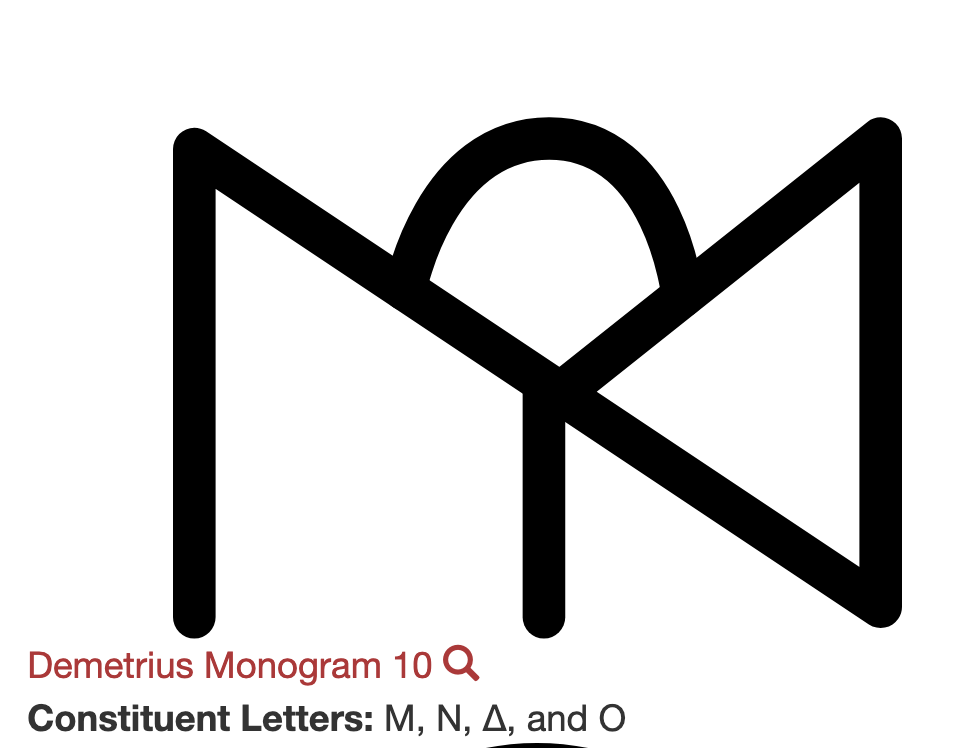
Can the the head of the R double in a monogram as an O? I cannot answer this directly but as monograms are a major feature of Hellenistic coinages especially royal coinages, we have (a) a rich scholarly tradition of studying these types of thing AND (b) this is likely the tradition that is influencing the fashion for monograms on Roman coinages. So can a Rho head be an Omicron in a monogram? Yes. There are 4 clear cases in the HRC database of the 93 monograms that are identified as containing both letters. There are also plenty more examples where an omicron is identified as part of the monogram but not represented by a full closed circle. Below is a random selection. I decided I didn’t feel like tallying up an exact count.
I’m totally confident that R head can stand for an O and that this monogram can be resolved as ROMA. Why did Crawford dismiss this suggestion? Uncertain. But as he’s dismissing someone likely suggested it before Eckel? Sydenham? Babelon? Grueber? Oh I’ll have to check but again not now. If you know, do say and save me the digging.
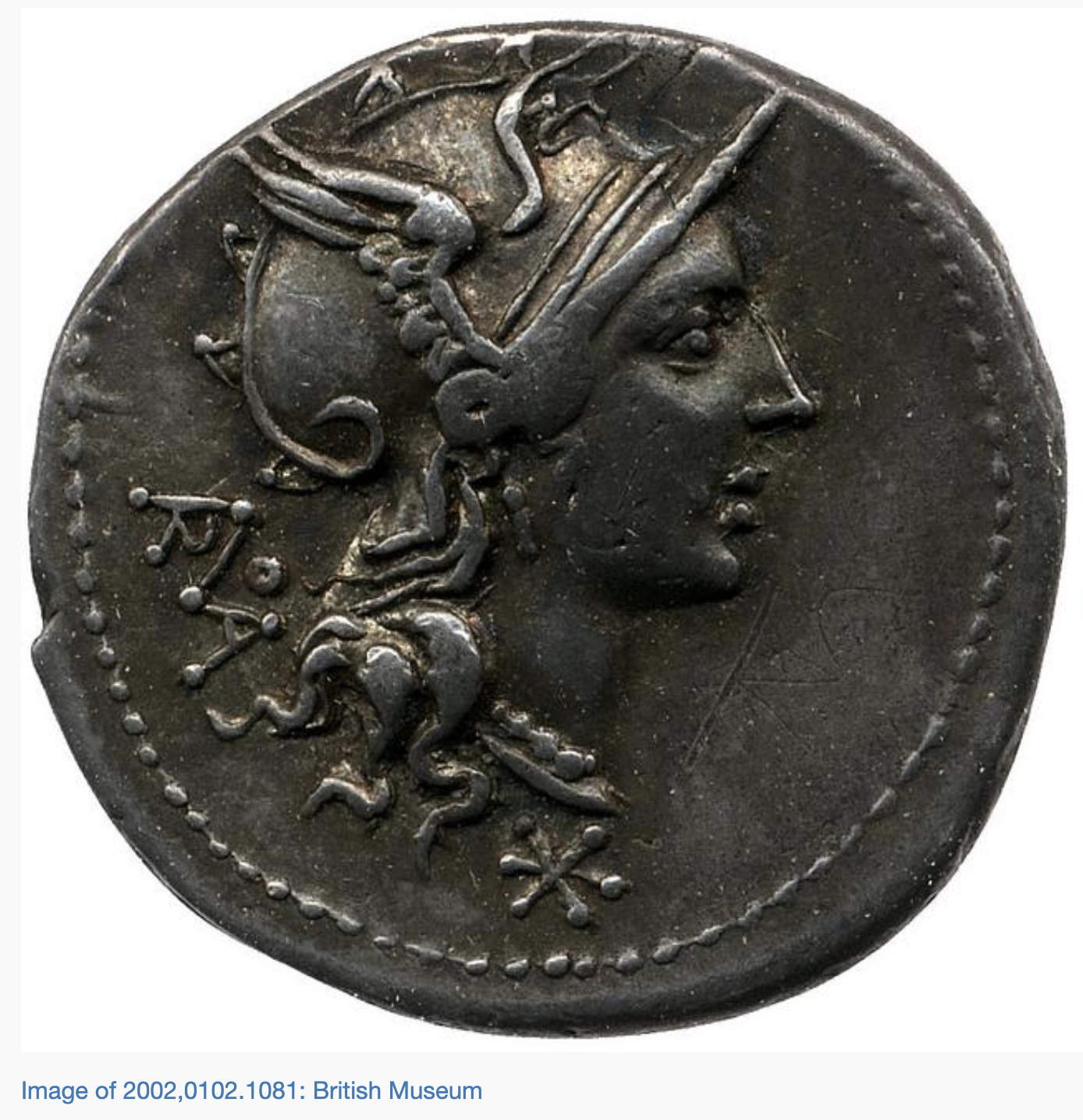
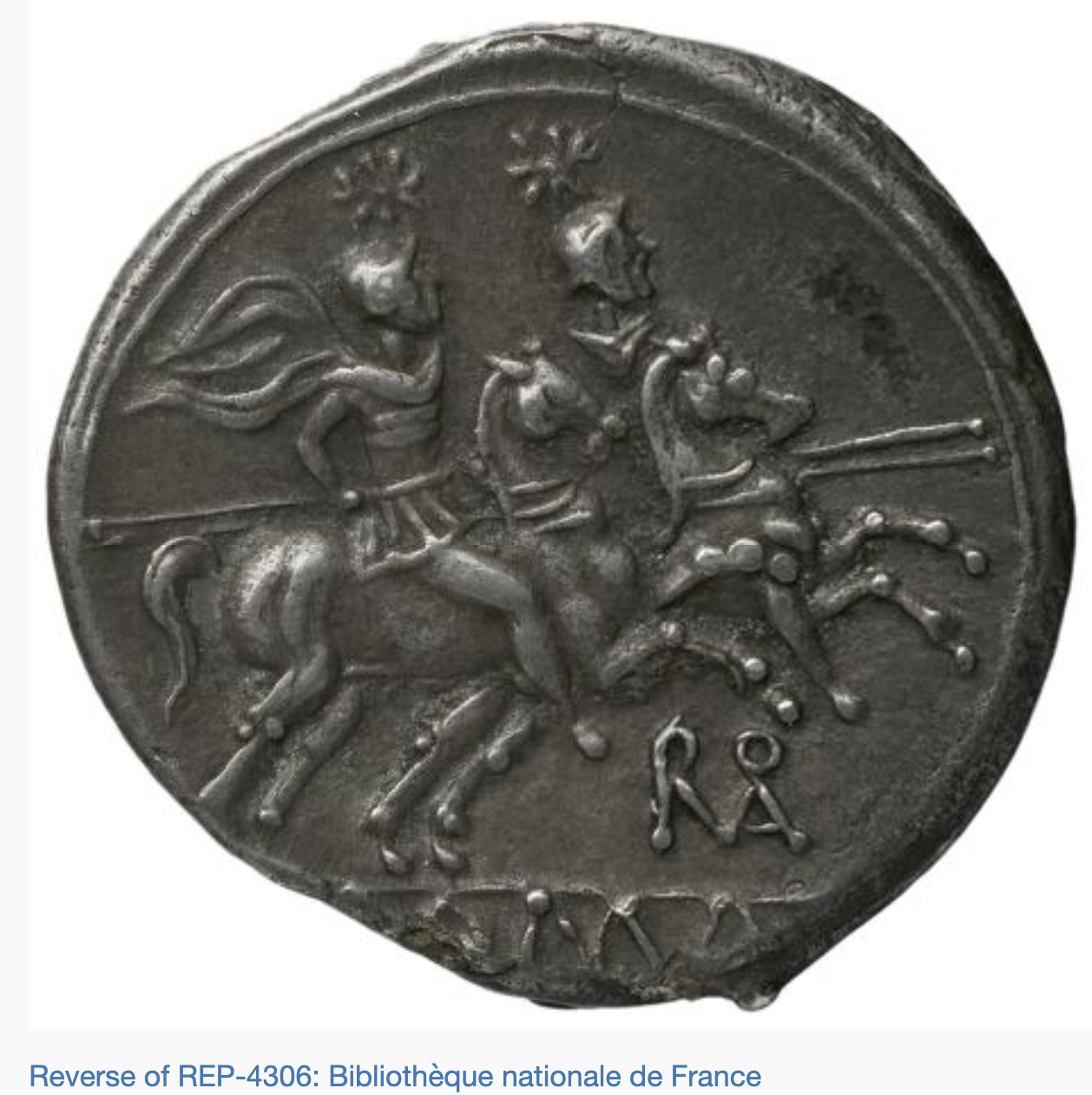
As mentioned in the last post, RRC 293/1 is struck around the same time as RRC 298/1. RRC 294/1 uses a ROMA monogram and the head of Roma, but RRC 293/1, like RRC 298/1, uses the a ROMA monogram with a totally unrelated obverse head.
Is it a good monogram? No. It wasn’t used again. Generally speaking monograms are not as popular on RR coinage as on other Hellenistic coinages.
Ok. I think I can let this go out of my mind for now and move on to another topics more directly related to my immediate publication goals.
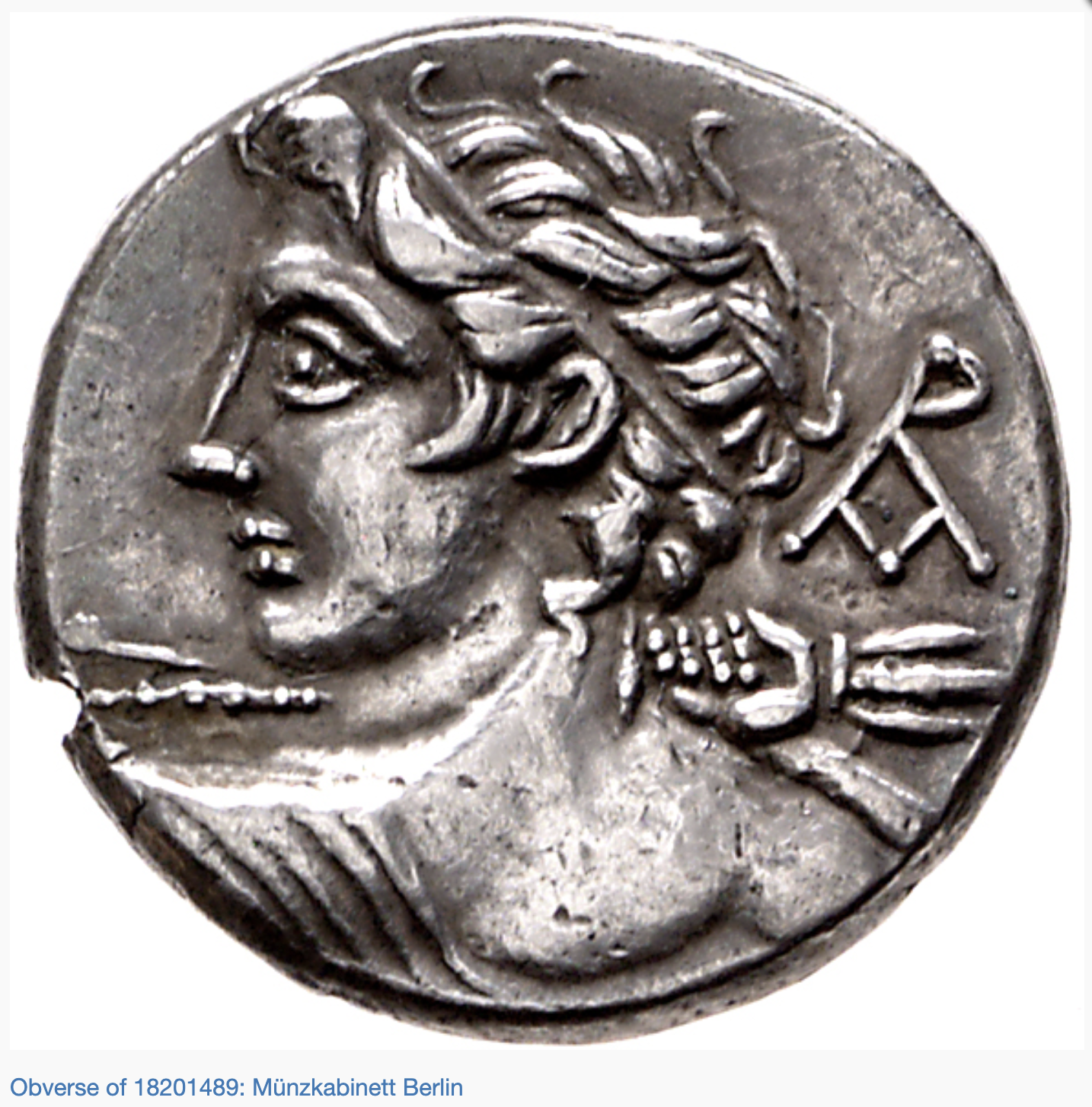
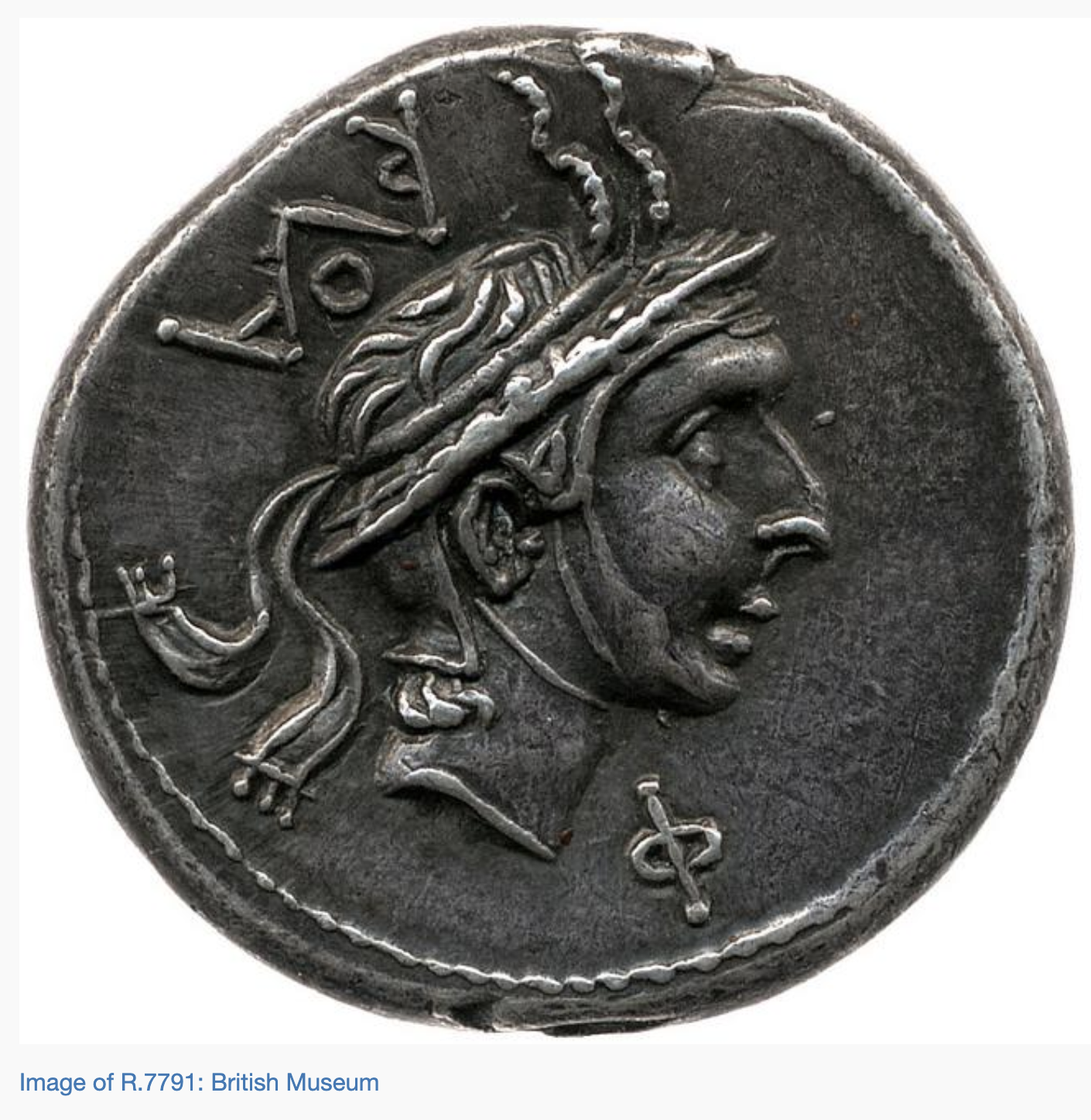
The obverse monogram on RRC 298/1 is typically resolved as AP for Apollo, although Veovis is another proposed identification of the deity, and those prefer this ID sometimes question if this reading of the monogram is correct. (Or so I remember I’m not checking secondary sources on this right now: I just want to capture this idea and move on to other things.). See my 2021 book for a little discussion of the obverse, and my 2015 Redux article for discussion of the reverse.
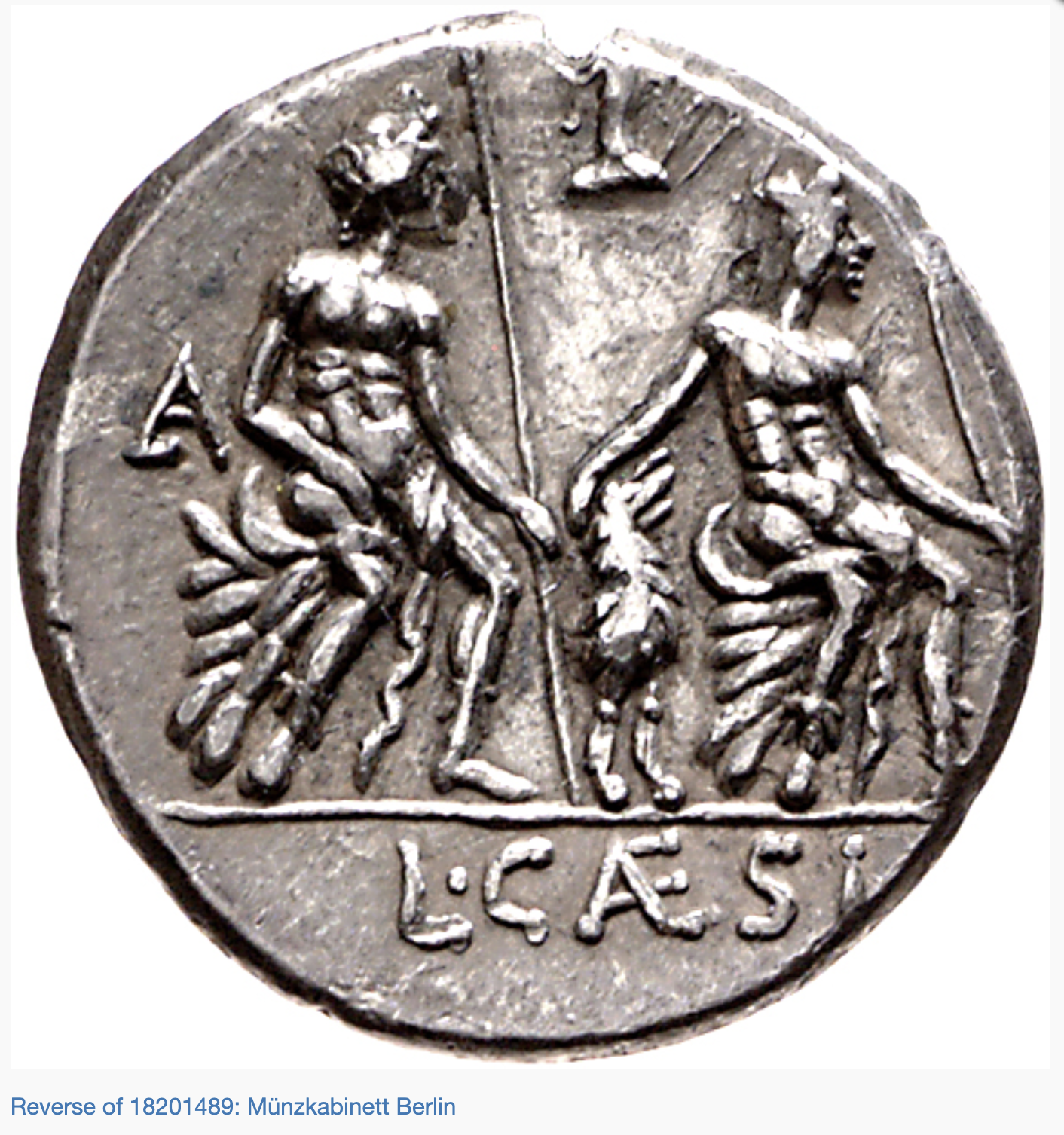
My concern is that the A has a broken bar on the obverse but not either of the As on the reverse. See below. The Schaefer Archive and CRRO images make very confident that this is a design feature, 100% intentional not some accident. SO WHY?!
The designer of the type clearly likes and labelling figures: ligature LA and RE are both so rendered on the reverse to label the two Lares who sit between these letter groupings. The designer has really stretched to create these ligatures. The L ends up having to share its upright with the angled left line of the A. To connect the E with the R the designer had to reverse the letter order when read left to right and render the E backwards! This is real dedication. More that we might say the design demanded. There is also the AE ligature in the name but this is more common and presents no comprehension challenges.
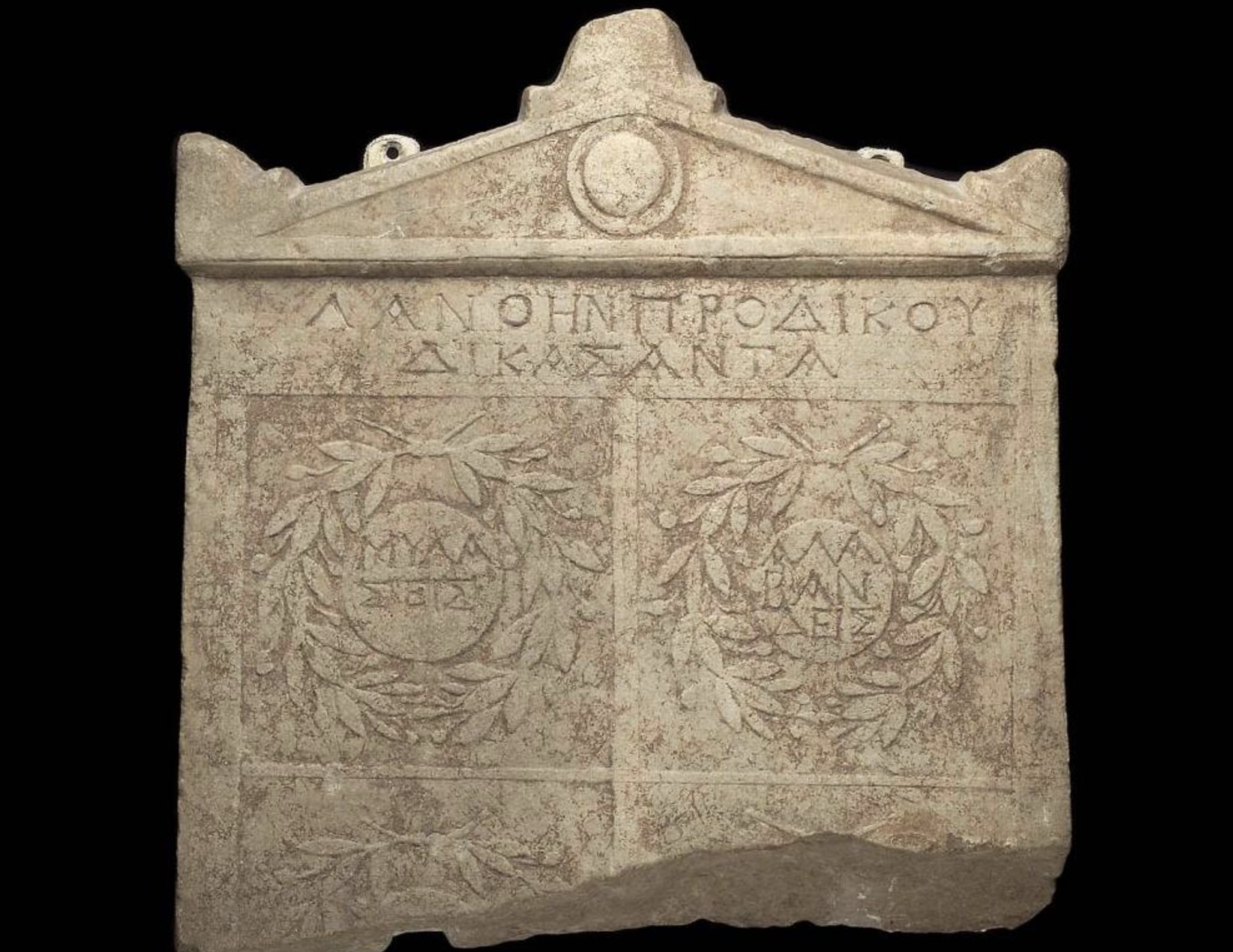
The broken bar A is well known to epigraphers. I give an example below. BUT when it is present it is used consistently through out the documents.
“The stele can be dated to 1st century BCE based on paleography: the serifs used came into use in the 3rds century BCE, broken-bar alpha was in use between the 3rd and 1st centuries BCE, and the full π started replacing the partial π in the 1st century BCE.” – US epigraphy project
I’m stuck between two theories to explain the broken bar A. (1) Romans associated the broken bar A with Alpha, i.e. Greek letters and we should read this monogram as in Greek and perhaps look to RRC 293/1 with its Phi and even all the way back to RRC 101 (which has a Greek monogram with a broken bar alpha); (2) the broken bar is significant and necessary so the viewer can resolve another as yet unpreceived letter in the monogram perhaps a V.
The control-marks on RRC 22 are letters of the Greek alphabet. The Alpha on the single A die has a broken bar, but the AA die and AB die both have flat bars. (orthography difference not noted by Crawford in relevant catalogue entry). The flat bar is standard across the series with few exceptions, besides the broken bars mentioned already and the open-bar A on RRC 100 which is also familiar from the open bar A in ROMA on incuse legend quadrigati (orthography not noted by Crawford as such in these catalogue entries). If you know of any unusual A’s on the RR coin series esp. broken bar As, please let me know.
IF the monogram is Greek it cannot be a Pi for Apollo, but rather a Rho. If it is Latin it also isn’t possible for it to be P for Apollo. Now that I’m all wrapped up in orthography, I look at it again this combination of symbol and realize that no Ps on the series are closed Ps. They are all open at the bottom, like Pis with a short right leg. If it is latin it must be an R if anything. So Alpha Rho or A, R maybe with V implied by broken bar. Crawford notes that a closed P is unusual but thought Apollo more likely than Roma or Argento Publico. I agree neither of those are correct, but I also reject Apollo as a resolution.
So here’s an outlandish suggestion. I don’t really believe it. Averruncus! Varro, LL 7.102 citing Pacuvius.
Now it gets stranger. The only other mention of this god known is in Aulus Gellus 5.12.14 RIGHT AFTER HIS DISCUSSION OF VEIOVIS! If we prefer this spelling the AVR would fit the monogram perfectly.
A quick search of PackHum Latin tells me Aurunc* is typically connected to the place and the Italic peoples, appearing in early Livy books and Vergil. NOT a god by this name.
Well. I think I’ve hit the end of this idea and exploration. I’m not sure this whole averting of evil god is to be believed (perhaps a title of Veovis?!). The Lares Paestites are pretty obscure too on the reverse. Thoughts?!
Below is a deep dive on Monograms on the series mostly just to establish how rare they are compared to ligature.
RRC 293/1 is struck around the same time as RRC 298/1, perhaps a little earlier. and has the monogram ROMA. It’s A has a straight bar. The M provides a framework for the whole. The very same monogram appears on RRC 294/1.
While ligature is pretty common on the republican series. Typically, only 2-3 letters are combined and letters remain in order, reading left to right in the same relative size on a single register. By contrast, monograms are relatively uncommon. Below I give other earlier monograms:
RRC 134/1 – resolved as L. Pl[autius] H[ypsaeus] – Crawford calls this view ” traditional” but does not strongly endorse. At first glance I tried to resolve it Phillip, but I’d just been looking at PH ligature of RRC 281/1 and I think that and the Phi on RRC 293/1 are just too much on. my brain. Regardless of how we resolve it, it is v much a monogram. RRC 101/1 (Specimen in trade): Corcyra issue with two monograms, the second much disputed but typically read as gamma alpha; the first is a found at the Corcyra mint to represent Corcyra. Ugly example below.
Part of me wonders if there is any connection in logics between the Corcyra issue and early Roma Monogram coinage:
Perhaps Roma monogram represents place of striking and thus augments the ROMA in exergue which gives authority for striking. Like the L on Luceria issues in the name of the ROmans.
We might also consider RRC 146 a monogram rather than ligature. And maybe RRC 155, 162, 176, 177, I good go one with with 2 and three letter name abbreviations among these early signed denarii.
Moreover, typically figures are labeled with a full or truncated name not just a letter or two.
This is a pre writing exercise for something I hope will eventually be published. I’ve been spending time with this catalogue and finding it very inspiring indeed.
The great thing about this regional museum collection is almost all of it comes with find locations and interesting ones.
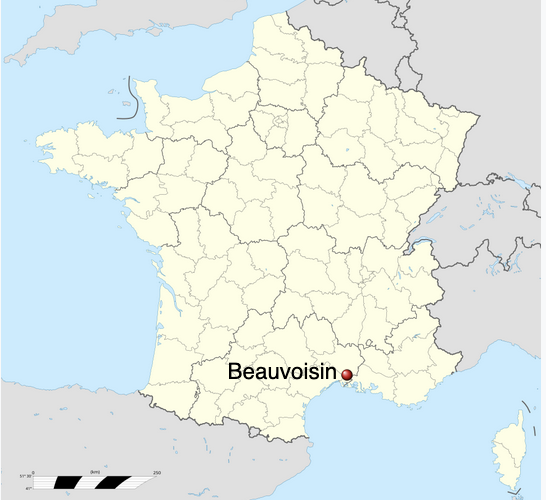
Besides Roman coins it contained 40 gallic coins of which 37 were of the DT 3159/LT 5795 type with a horse rider design associated with the Rhône Valley, as well as decorative hinged objects in bronze (but either tin or silver plated) theorized to be part of belt, 2 glass paste beads, 3 small bronze rings, and 5 of silver.
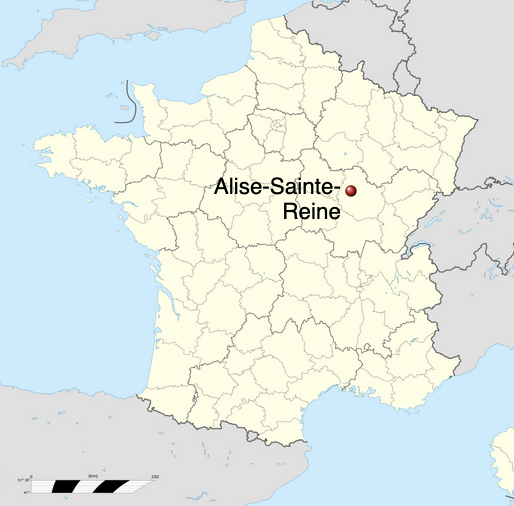
The other major assemblage are the stray finds from in and around Alise-Sainte- Reine, ancient Alesia which is most famous for the battle of 52 BCE. It is note worthy that the stray finds associated with this area go no later in the republican series than the coins of Pompeius Rufus, c. 54 BCE.
Here’s what I’ve learned. Beauvoisin has 31% of its RR coinage intentionally marked post striking. Of this 31%, 79% of the interventions are with punch-marks of diverse shapes, and only 27% are scratches/graffiti.
By contrast of the Alise finds, only 9% shows evidence of post striking interventions. Of that 9%, 42% involve punch-marks, where as 67% have scratches/ graffiti.
My first thought is to wonder if this is indicative of punch-marks being applied more intensely after 52 BCE? Or if hoards are more likely to have punch-mark because the individual collecting and saving coins may be more inclined to want to validate what they are saving. This latter is plausible but I there is little to no unity in the shape and and style of the punch-marks within the hoard. More later on the shape of punch marks.
I’ve often been inclined to theorize that punch-marks might connect to the legislation introduced by Gratidianus and that this legislation was likely re codified in a Lex Cornelia. I’ve got a piece coming out I hope later this year that discusses this in collaboration with Sharpless and Lockyear so if you’re reading this with the intention of citing my work, drop me an email, rather than citing the blog.
To really investigate when such punch marks were introduced I’d need more fully photographed hoards from the late republic. I bet Charles or Kris could help me brain storm where to find some of these. I am also curious if I might find any in Crawford’s papers in BM (I am sitting down the block from these archival materials!).
Of the 57 specimens from both find areas with punch-marks 53 (93%!) have the mark on the obverse.
Of the 25 specimens with scratched or cut interventions, 84% of those markings appear on the obverse.
Of the 77 specimens marked in either way, 43% of those markings are in the field avoiding the design and in 45% of cases it is situated on the head or neck in such a way as not to obscure the primary design characteristics or harm the facial features, typically on the cheek or neck or ear. This is not random and it is not vandalism intended to deface.
Ok more to say but I htink this captures the basics and I’ve got a brown bag lunch date!
Yes this is further self indulgence but certainly useful. Scroll down for the asses found in etruscan tombs!
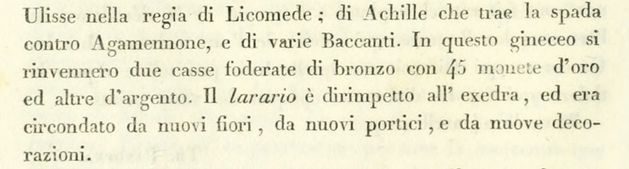
1829, In house of Castor and Pollux at Pompeii 45 gold and silver coins were found in an area described and the women’s quarters in a bronze lined box.
The same report also talks about performing excavations in front of the king and queen of Bavaria. The king got to see imperial bronze coins excavated before the gate of the temple of Augustus. The queen got to see some well preserved bronze coins excavated in a shop. Planted objects? I’m guessing not as they don’t seem that ‘exciting’. Still weird to watch excavation as a form of entertainment…
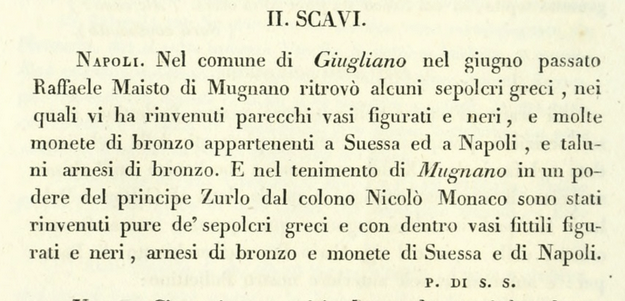
Naples. In accordance with the sovereign concession to communicate to the Institute the reports received by the Neapolitan government regarding the excavations in the kingdom, the Prince of Sangiorgio received the following information extracted from a report by the Intendant of Naples: namely, that on the 28th of last April [1829] three tombs had been discovered in Mugliano, located in the district of Casoria, in which various ancient objects were found: these include some terracotta vases with black glaze, two broken bronze fibulae, and twenty-five coins of the same metal; of which twelve coins belong to Suessa and thirteen to Naples.
Can we call this a hoard? We can’t really say from this description if all 25 coins were found in the same tomb or if some in one and some in another. My guess is that this if better documented would be a very nice little assemblage of vernice nera with petites estampilles with coins of the First Punic War. But on this testimony it is only a guess. Naples IΣ series bronzes are often found with the short lived Suessa Bronzes. In the same bulletin we have a later report that seems like it might be the same incident as quoted just above. Were there three, two, or just one discovery? I think two perhaps. Giugliano is a long way from Casoria. But Mugnano perhaps shouldn’t be confused with Mugliano?! Interesting though that the coin finds are all discovered in the same way.
1830.
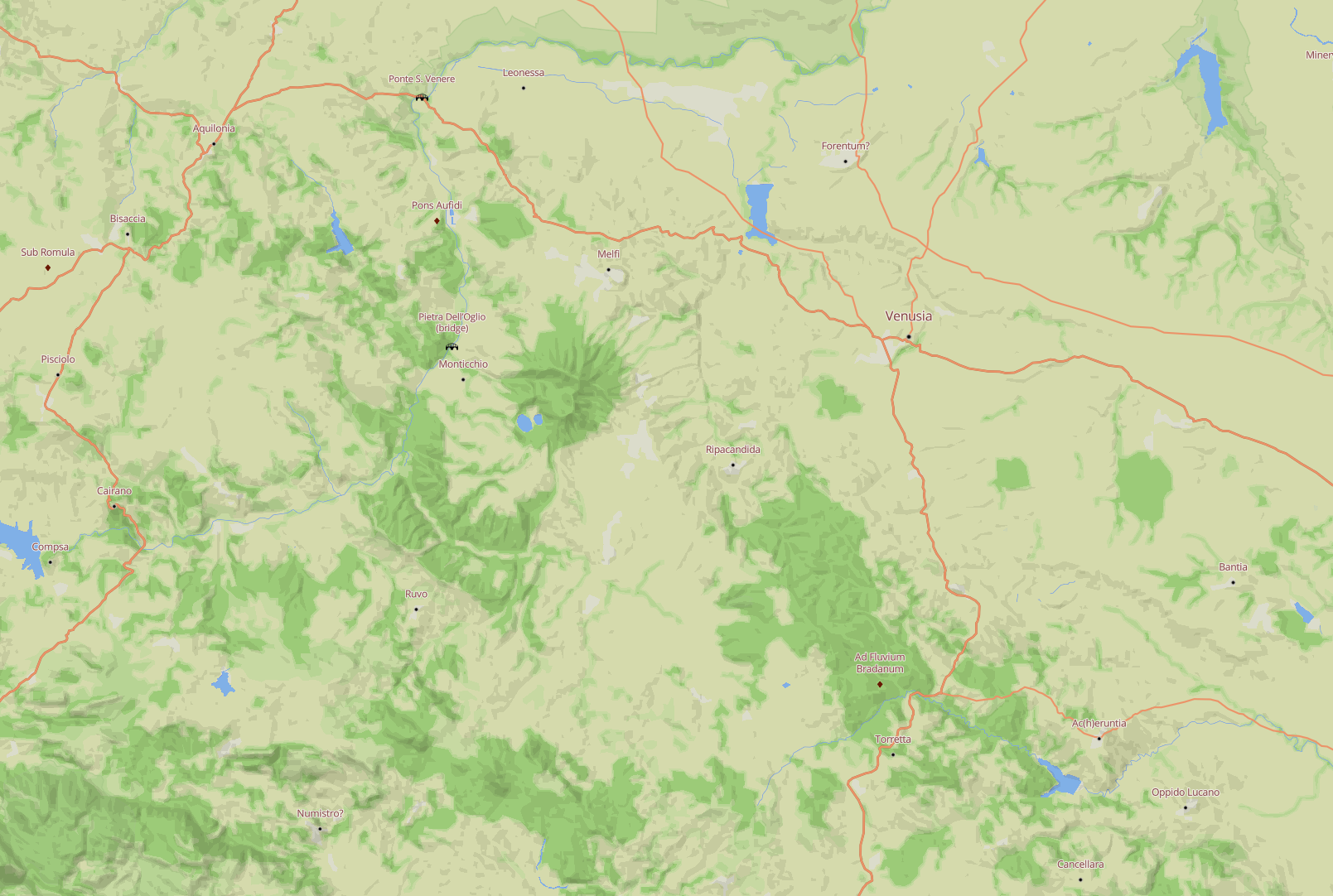
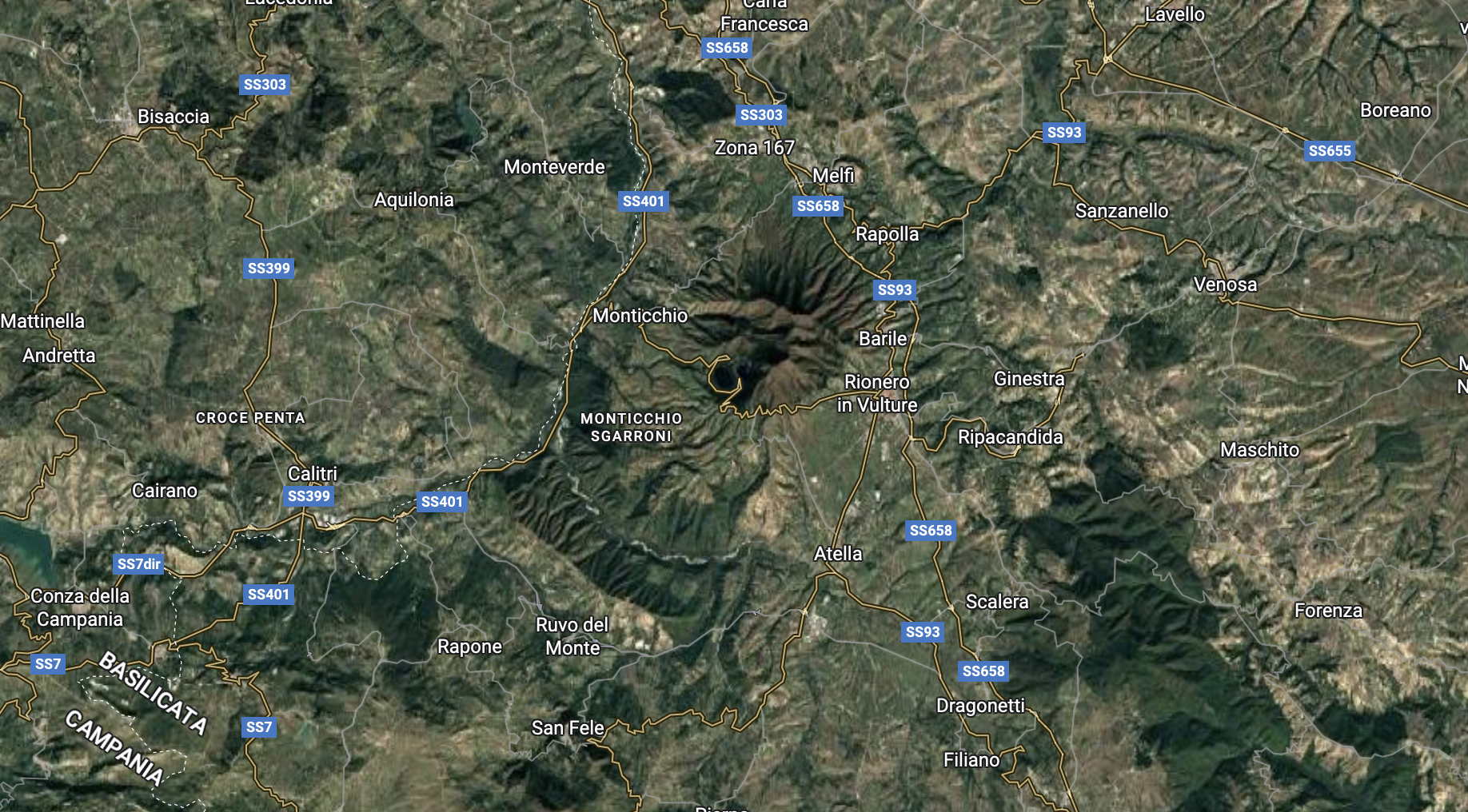
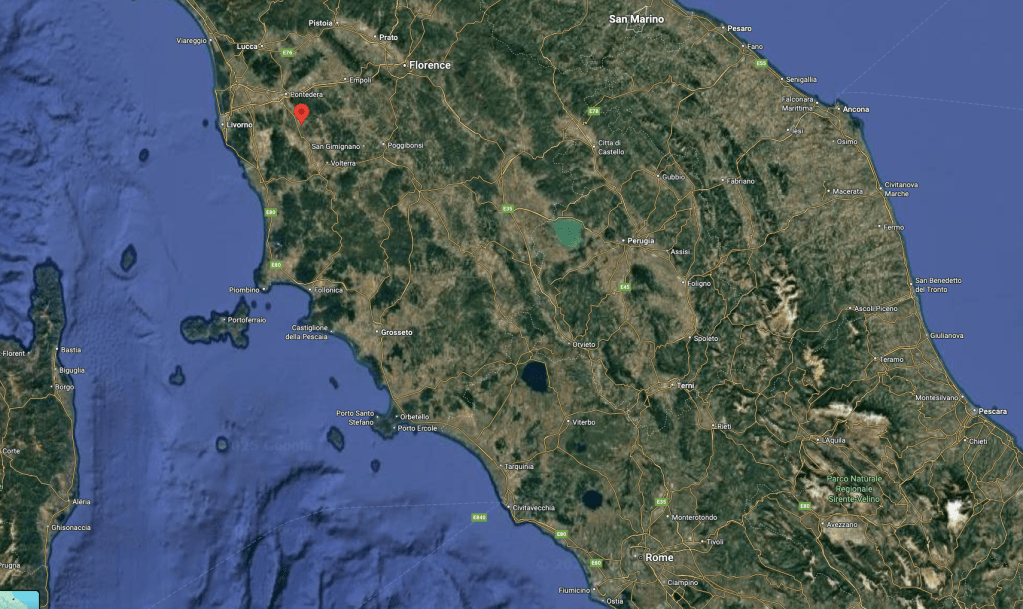
Considerable remains of an ancient bridge can be seen on the river that intercedes between Barile and Ripacandida, which further down takes the name of Divento, and in the vicinity of Barile, consular coins have been found, and still are found, in abundance, and almost all of them are silver.
I presumed based on reading this that I’d be able to spot the likely road or bridge on the new itiner-e. That’s the new roman road online map that has made a splash. To place Barile you’ll need to use the google screen shot to help you eyeball it. I see no particular reason this place should have a reputation for turning up republican silver coins and the road for that bridge is certainly not yet traced.
This feels like a jackpot of a testimony.
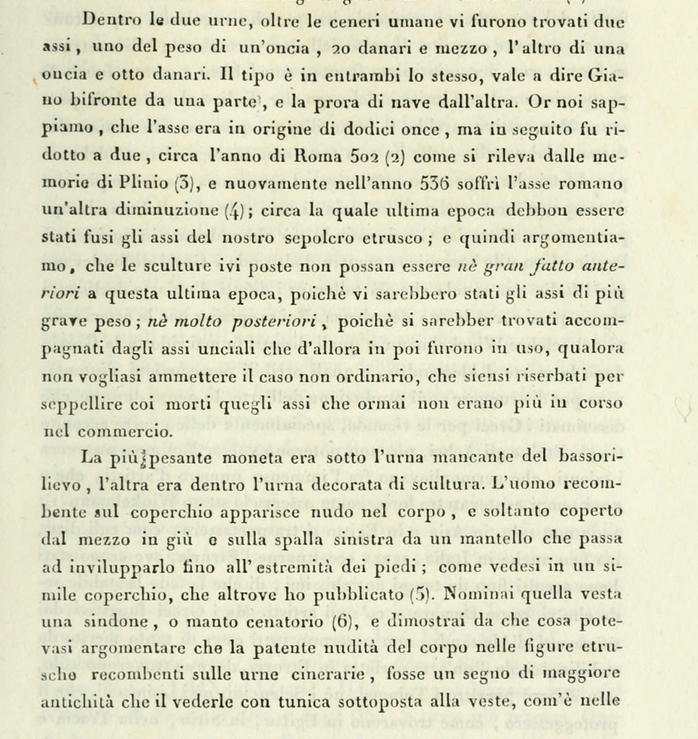
Inside the two urns, among the human ashes, two asses were found, one weighing one ounce, 20 denarii and a half, the other one ounce and eight denarii. The type is the same in both, that is, Janus bifrons on one side, and the prow of a ship on the other. Now we know that the as was originally twelve ounces, but was later reduced to two, around the year of Rome 502 as is revealed in the memoirs of Pliny, and again in the year 536 the Roman as suffered another diminution. It is around this latter period that the asses of our Etruscan tomb must have been created; and therefore we argue that the sculptures placed there cannot be much earlier than this latter period, since the asses of heavier weight would have been there; or much later, since they would have been found accompanied by the uncial axes that were in use from then on, unless we wish to admit the unusual case that those asses that were no longer in circulation were reserved for burial with the dead. The heaviest coin was under the urn missing the bas-relief, the other was inside the urn decorated with sculpture.
An uncia in 19th Century Italy was approximately: 26.73g, a denaro was 1/24 of the uncia. The heavier As weighted about 49.6g. This puts it at the tail end of the anonymous struck bronzes and right before we start to get symbols (Crescent, Cornucopia, Apex and Hammer). So we’re probably looking a coins struck during the Second Punic War but the latter portion right at the very end of the third century BCE. The lighter As weighed about 35.64. This would put it in the era where most of the asses have symbols and or initials. Dating is disputed but first quarter or first third of the second century BCE. Weights very a great deal and specimens stay in circulation a long time. Below I give the approximate find spot.
Regarding Modena!
Since April 1828, when the collection of ancient Roman marbles was decreed, not a few ancient marbles have subsequently come to public view, some from underground and some from unknown and distant places; and two more treasures, one of over a thousand denarii from Roman families in the autumn of 1828, and another of one hundred and thirty coins of lesser silver from Gordianus Pius to Claudius Gothicus, in the autumn of 1829.
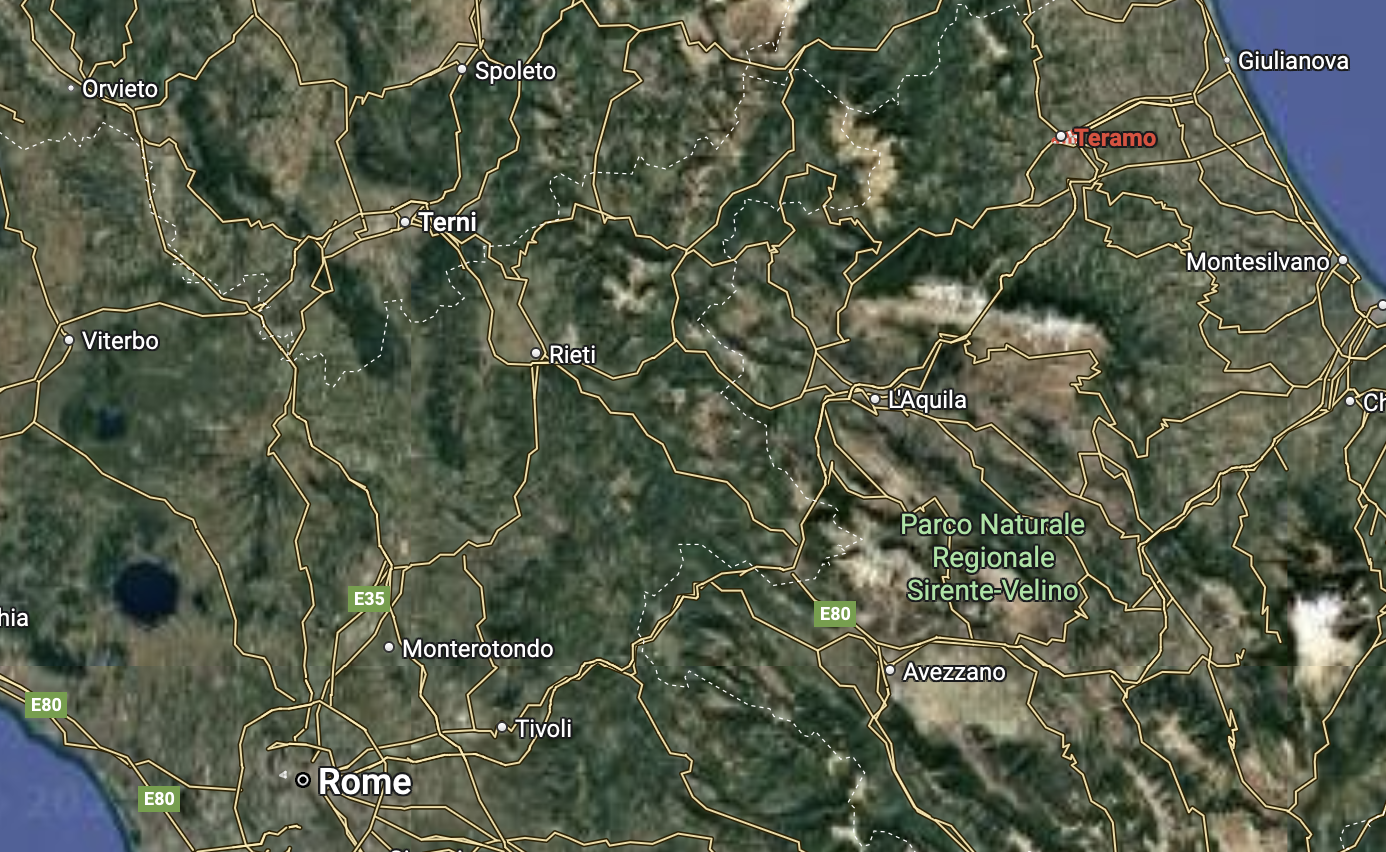
Social War hoard found in Teramo!
Teramo. In Giulia, in the province of Teramo, 1216 silver coins were found last year [1829], almost all belonging to the Tituria family, of which sixty-two of the best preserved and most valuable were purchased for the royal museum.
Gold Hoard at Capua
I forgot to mention some time ago that, while excavating the underground parts of the Campanian amphitheatre, a few months ago, 40 imperial gold coins were discovered, the oldest of which are from Augustus, and the most recent are six from Alexander Severus. Among these coins are two of great value, namely a Pertinax and a Man. Scautilla: in addition, many rare reverses. It should be noted that these coins, as they date closer to the time of Alexander Severus, are in better condition, so that those of this emperor are not only very well preserved, but still show the preserved stamp that the coins have when they come out of the die; which gives rise to the well-founded argument that the treasure was hidden during the time of this emperor. Many gold coins were also found in various places, during the excavation of all parts of this amphitheater, among which two very large medallions of the same number as those surrounded are worthy of note: one of F.L. Valentinian, the other of Anastasius, which seemed to clearly demonstrate that this amphitheater was in full use up to the beginning of the sixth century of Christ.
(i) The eminent Marquis Arditi, director of the exchanges of the kingdom of Naples, through Mr. Bonucci, has sent us the specified note of the said 40 coins and 4 medallions. They are 4 with the image of Nero, 6 of Vespasian, 2 of Domitian, 2 of Trajan, 7 of Hadrian, 2 of Antoninus Pius, 3 of Marcus Antonius, 1 of Luius Verus, 1 of Pertinax, 1 of Septimius Severus, 2 of Caracalla the son, 6 of Severus Alexander, 1 of Sabina the wife of Hadrian, 1 of Faustina the Elder , and one of Manilia Scantilla, wife of Didius Julian: 1 Medallion in bronze with the image of Trajan Decius, 1 of bronze of Valentinian, 1 coin similar to Antoninus, one small ivory head of Medusa in fine work. Both the gold coins, as well as the other objects described, were found in a corner of the substructures of the area of the said amphitheatre.
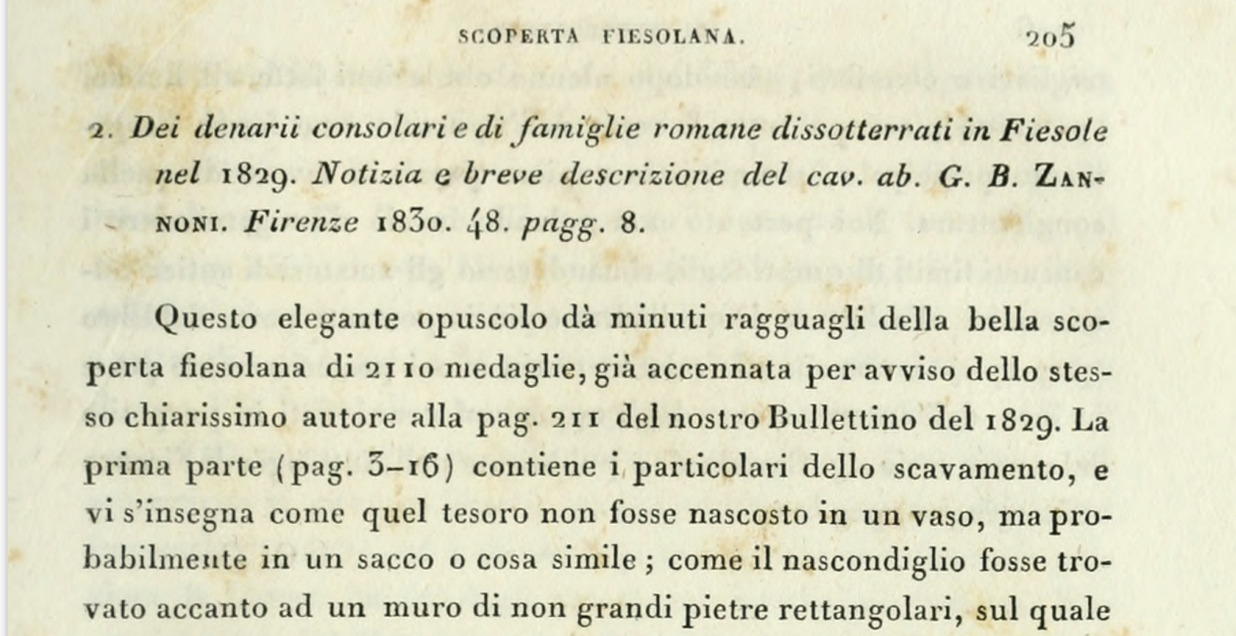
None of the numbers agree. Here is it says 2,110 coins. Crawford 1969 says of over twice the number: 2,004 denarii. Lockyear catalogues 2,006. I opened Backendorf as I often do and then put it back down as it does not have clear indices.
I thought I was getting over my cat grief. Nope. My lovely artist neighbor presented me with a painted portrait of my dear, demonic Odysseus as an angel flying over my house. I’ve been sobbing and blubbering ever since. So I’m going to be self indulgent now and just poke around in old books to make myself feel better.My beloved has confiscated the painting and put it somewhere safe until it stops triggering such astrong emotional response.
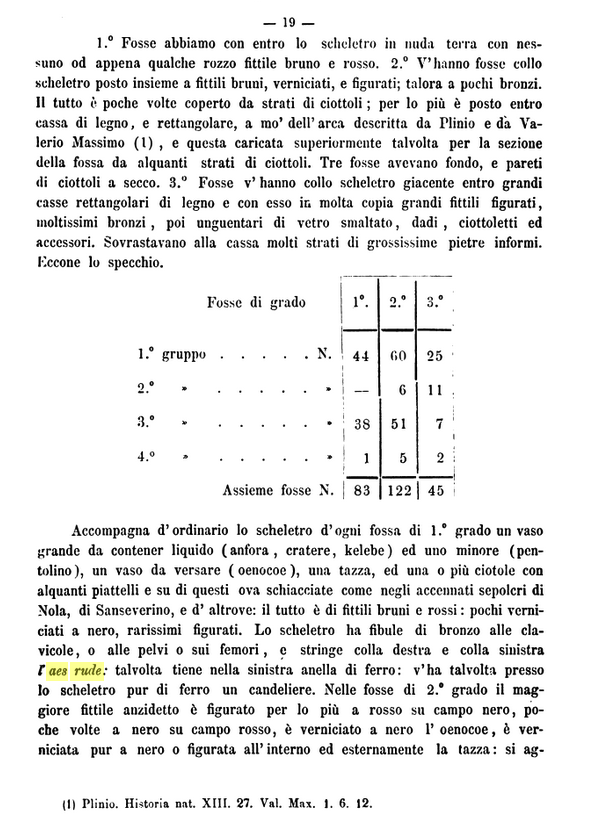
“The skeleton of each grave of the first type is usually accompanied by a large vessel for containing liquid (an amphora, crater, kelebe) and a smaller one (a saucepan), a vessel for pouring (oenocoe), a cup, and one or more bowls with several small plates and on these flattened eggs as in the aforementioned tombs of Nola, Sanseverino, and elsewhere: everything is made of brown and red earthenware: a few are painted black, very rarely are figured. The skeleton has bronze fibulae on the clavicles, or on the pelvis or on the femurs, and holds aes rude in the right and left hands: sometimes he has an iron ring in the left hand: sometimes there is a lamp stand, also of iron, near the skeleton.”
The second type (p. 20) is also said to hold aes rude in a hand (not specified which). The speaker now refers to photographs not in the publication but shown to the audience of his excavations at Certosa:
Observe, among the first, that little boy who holds the aes rude in his tender right hand, and clutches a bronze armlet in his left; do you see the group of rough earthenware pieces that are to his left?
Look at the other one, a little older: he also has the aes rude in his right hand, a fibula rests on the eye of the left femur, and nearby is a bowl containing crushed eggs. Look at the third small skeleton, also with the aes rude in his right hand, and the four bowls, and the eleven small plates, along with the small pot and the human-faced oenochoe? The other skeleton is somewhat larger: it also holds the aes rude in its left hand, and a fibula is on its chin. This skeleton had its head not facing south, but south. Do you see the cotyle and the oenochoe not on the left but at the foot, as if to say, north?
And here is the beautiful skeleton of the adults with a very beautiful skull of the Etruscan type and the two adjacent ones of the Umbrian type: do you see the aes rude, which the third is still holding tightly in his right hand and the necklace of amber beads, which lies stretched out from the neck to the chest? Observe the other group of three adults too: how all the skulls have the imprint of the Umbrian type, and how they all still hold the aes rude and fibulae, like the clay figures on the left! And in the skeleton, separately, do you see the three bronze bracelets, two on the left arm, the third on the right? But the last pit is very singular. You will soon see two skeletons in a pit: I will say that one pit had the skull and fragments of a woman’s skeleton and burnt bones. In the extracted pit, observe: here are two supine skeletons. One is of a very old woman, the other on the left is of a boy, who is just over two years old: observe that the woman also has an aes rude in her right hand, a pin and a fibula on her chin, the smaller skeleton also has a bronze armlet on his left, almost on his chest some amber pearls and a pendant: to the left of the two skeletons are a cup, a goblet, a lechito and a figured kelebe.
We now jump ahead in the discussion to pages 46-47. Here I’m getting very excited because we see the origins of the belief that aes rude MUST have intrinsic value.
Never, gentlemen, has the aes rude been so clearly exposed as has been done by the excavations of Certosa, although it has been found in tombs on other occasions [cf. Todi]. You saw it discovered in the burnt remains together with the remains of the pyre. You still see it clutched in the hands of skeletons, but the analyses I have deduced are very important.
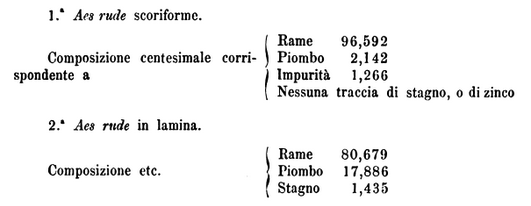
The aes rude of Certosa, as elsewhere, does not have a single form: rather, there are four distinct forms: here is the aes rude in the form of slag, or colo; in the form of a slab, in the form of rods; in the shape of more or less ovoid and almost oblong disks. And that ribbed fragment, and those two with lines, would they be fragments of aes signatum? And would a true aes signatum be the 0.03 disk crossed by three parallel lines? It was in the face of these differences in shapes that a problem arose in my mind. Are these shapes, gentlemen, accidental, arbitrary, or are they shapes given specifically to the aes rude to establish a monetary value specific to each shape? And could this monetary value of the aes rude depend on the elements that compose it, that is, on its different alloy? It is certain that if the alloy is different, it could not be indifferent, therefore the value of the aes rude would be only one, but rather, I said, its monetary value must be proportional to its alloy. And would the different forms described have ever been used to distinguish this value? Thus reasoning, I turned to the very accurate Professor Casali, and here are the analyses resulting from three of the forms of the aes rude, having only a single specimen of the fourth.
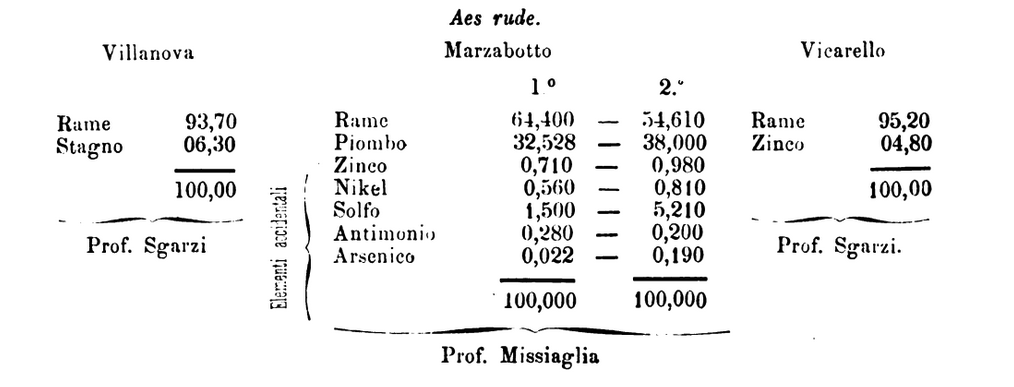
This is fantastic but wow the logical fallacy of thinking all the aes rude of the same basic shape would have the same basic composition. These are percentages. Rame is Copper, Piombo is Lead, and Stagno is Tin. Given the date of publication only wet chemistry was possible. I’d love to know the technique. Did they use the whole object or just part of the object? I’d also love a modern dating of these tombs, perhaps based on pottery serration.
He further observes that the first and second varieties of aes rude appeared as shapeless masses, ashen in color, without luster, and brittle when hammered. The one in a sheet, when coated with azotic acid, initially dissolved easily, later abandoning approximately 1/3 of its quantity of metallic substance, which was refractory to the action of the acid itself, aided also by the heat. Such a fact, which repeated itself several times, induced the writer to test this portion of the alloy separately, which was found to be composed of lead and tin, and a small quantity of copper. And since, when inspected with a magnifying glass, the said substance was found to be compact and not very porous, the writer himself infers that it was a special alloy, formed in the molten mass of bronze during its slow cooling. Gentlemen, therefore, the chemical analysis confirms my deductions: the aes rude therefore has a different alloy according to its different shape; first the scoriform aes rude, then the aes rude in sheets, then the aes rude in rods and these three alloys gradually increase its value perhaps in the following scale: 1st the scoriform aes rude, 2nd the sheet aes rude, 3rd the aes rude in rods? Our aes rude then differs from the aes rude of Marzabotto [also from a necropolis], the one in rods approaches the aes rude of Villanova, the scoriform one for copper approaches the aes rude of Vicarello (1).
I’m trying to wrap my head around this extrapolation from single objects. I’m so proud of Prof. Missiaglia for texting TWO specimens. I also trust his results because of the detail. The Vicarello numbers REALLY surprise me. What is that Zinc number coming from I’ve never seen anything like it and it worries me. (Copper Zinc Alloys). How did Sgarzi get his specimen from Vicarello, were these reports published anywhere? For Marzabotto we have Gozzadini’s publication on the ancient necropolis (maybe? I cannot find it…).
Our author circles back to invoke the aes rude in his conclusions (p. 55)
…And these elements, which hint at remote ages, are they not confirmed by the aes rude gradually developing from scoriform to laminate, to rods, to obeli, and then up to the presumed aes signatum, the aes signatum, marked precisely, according to the illustrious Mommsen, first by Servius Tullius in Rome? It is certainly true that Felsina must have had its own currency in the development of the times.
While we must reject the chronology and correlation between form development and metallurgical content, these observations detailing the position of the finds and the wet chemistry is invaluable.
I wonder where I could find Zannoni’s excavation photos. …
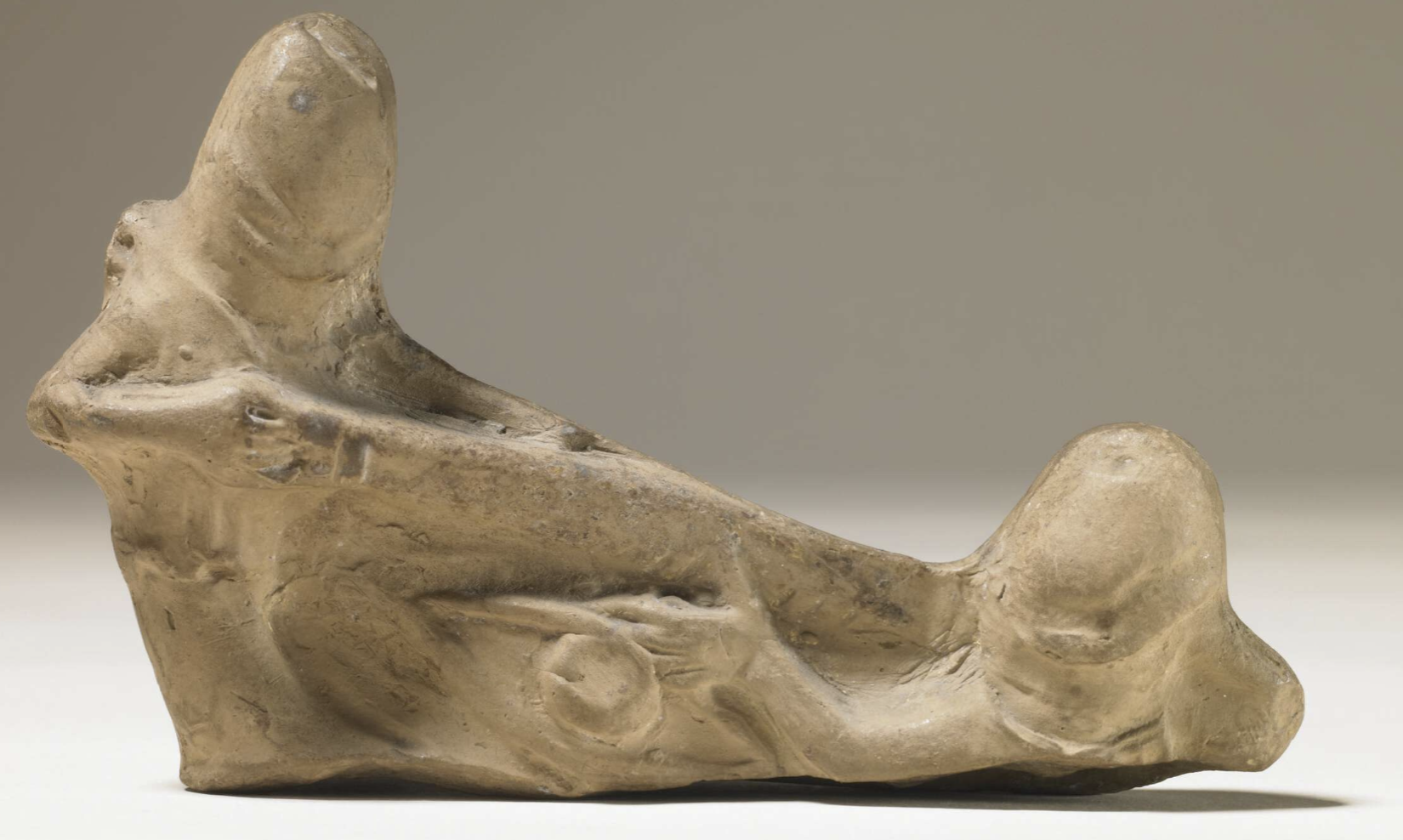
A rather famous BM piece: two phalloi saw the evil eye in half
I’m was doing teaching prep yesterday and started to spiral out on George Witt, a very peculiar gentleman, trained as a doctor, made a fortune in banking, and obsessed with ‘obscene’ objects and even created the first ‘Turkish’ bath in England (for men of course). His donations to the BM include 498 objects, of which 338 have images in the online catalogue.
The above object has appeared in many books and also my own teaching slide decks. It is a quintessential illustration of the power of the phallus over the evil eye. I also use in my class slide deck a bunch of images from Leptis Magna to make the same point. (more on this blog about the evil eye)
In the class lesson we’re trying to nuance out the erotic gaze, particularly the elite male gaze, from the power associated with gaze through invidia and beliefs around the evil eye and the non-erotic, protective apotropaic power of the phallus and the laughter it can engender. Here’s the unit. Here’s supplementary study images.
So why if I’ve dealt with this through my teaching am I here on my blog over bodega breakfast still writing. It’s Witt and BM catalogue of course. The entry in the online catalogue provides a place of origin for the topic image, “Tarsus”. How do we know this? How do we know it is even genuine?
When a collector is obsessed with a specific type of object the market supplies that object with whatever stories are necessary. I’ve seen this time and again. Here’s a thought experiment. If a collector wants small bronze coins often associated with a particular archaeological site, all of a sudden these previously incredibly rare yet worthless objects appear for purchase at whatever price the collector wishes to pay. The logical deduction if unprovable is that someone is feeding this habit through illegal excavation, or at least hitting up all the local collectors in the region to find specimens that have languished in drawers and boxes unloved for years, past stray finds previously considered worthless.
There is also a great desire to foist fakes similar to the collector’s desired objects onto said collector. Here is something my grandfather had in his attic! I see your interest and wouldn’t this be a nice addition to your collection. Today it is harder to fool the most experienced collectors because of the mass of images and information available and the speed of communication between individuals with expertise across a global network. And yes sometimes sellers of fakes find my blog and try to leverage my expertise to validate their objects. I don’t validate objects on the market. Period.
In the 19th century it was much easier to sell fakes, even to the very highest end of collectors. Partly because collectors feel in competition with one another. Once something rare and precious comes to market everyone wants one!
This was claimed to have been excavated in Caere but is now regarded as a forgery. Inscription copied from a gold brooch at the Louvre. Several elements are unlike anything from the Etruscans: the poses of the couple, the nudity of the man, and the nineteenth century under-garments of the woman.
Curator’s Comments, BM online catalogue
While not everyone would agree with me I’m also very suspicious of the birthing scenes in the Wellcome Trust collection which also seem to me to encode 19th century fantasies about birthing and feed the collecting habits of the Victorians who purchased them.
In the above montage only the top left has a firm archaeological find spot. The others ‘appeared’ on the art market. More info.
Artifacts without provenance cannot be presumed to be authentic, ESPECIALLY if they are unique or unusual. We cannot then deduce historical information.
So where does this leave me for the top image? It means what I desperately want to see are the archival records and notes that go with the Witt collection to understand how Tarsus ended up in the notes and if there is anything that would suggest that is truly plausible and the original function of the object. I am having fantasies of research abroad.
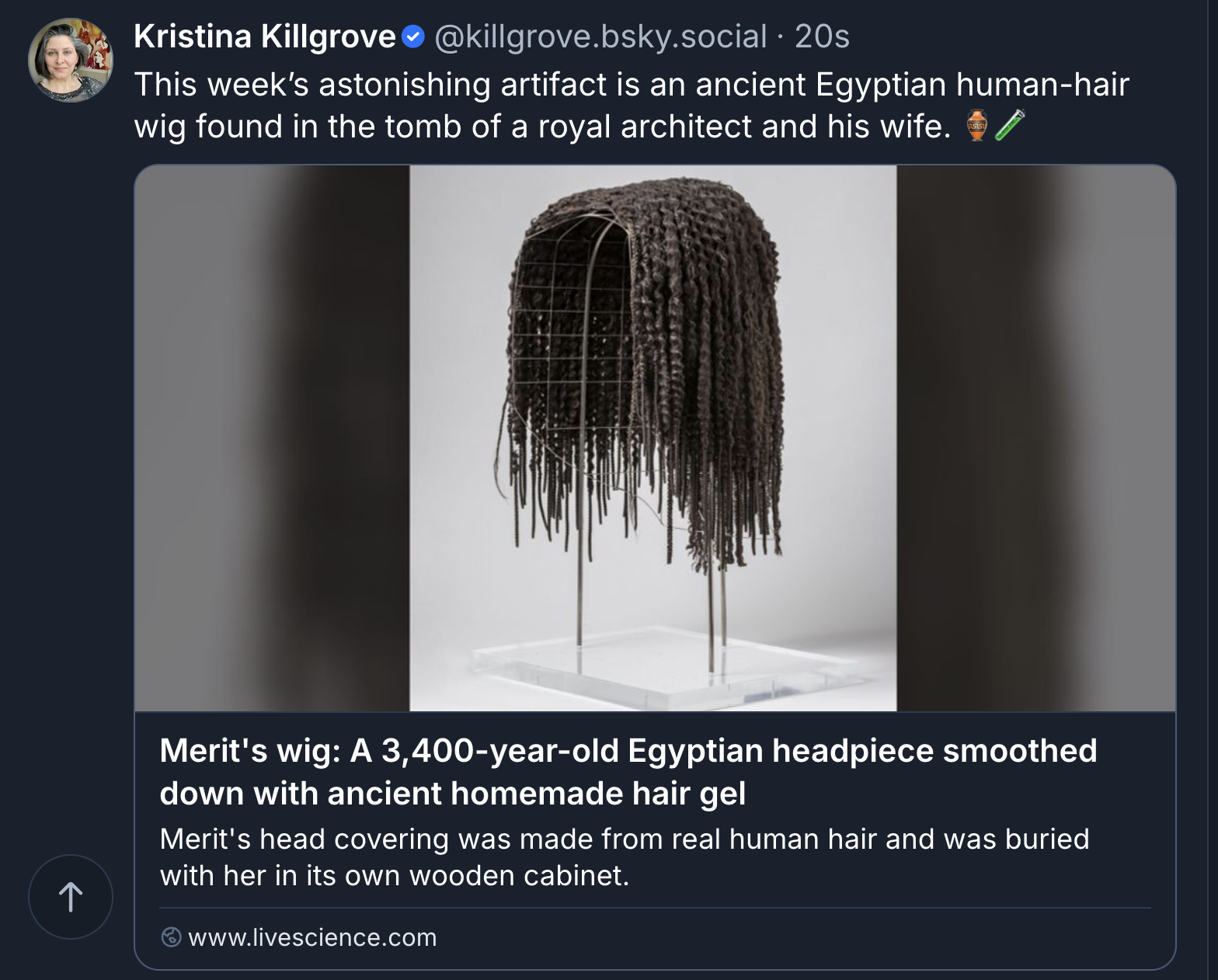
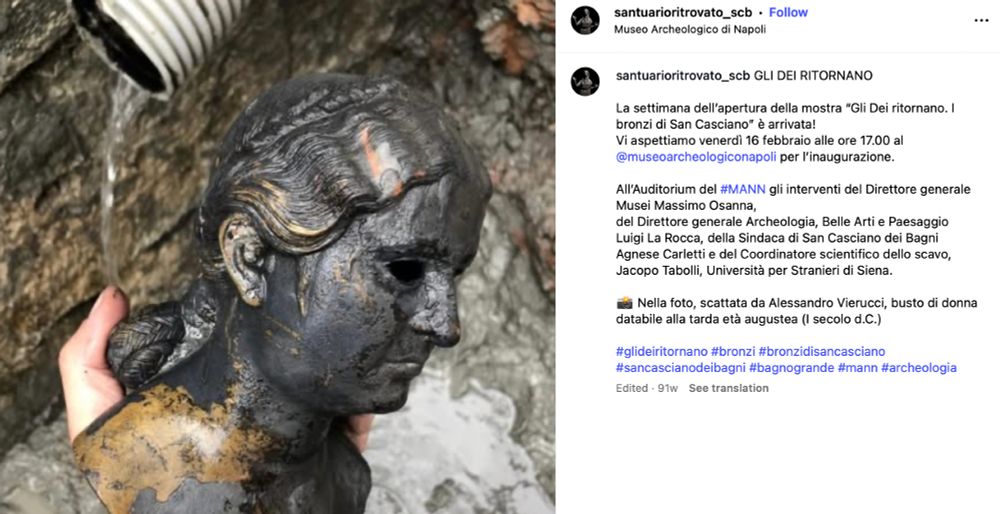
I also saw a picture on my socials this past weekend of the BACK of this head
That image is burned into my minds eye. I didn’t save it to share with you but the complexity of the braids was really epic and wonderful. I’m not up on the latest on discussions of Roman hair technologies, but it used to be everyone thought the complex designs were wigs and then one day someone woke up and realized if women with high texture hair engaged in sewing of hair to preserve styles (read, traditional Black styling) that this could have be the case in antiquity. Everyone seems pretty certain they didn’t have lots of bobby pins. I love bobby pins. If you’ve seen any pictures of me with retro hair it is all possible because of bobby pins.
When I started my post doc work everyone believed you could date coins based on the empresses’ hairstyles esp the Faustinas but then the deep variation among the provincial coinages make that very problematic at least outside Rome. That’s another conversation I’m not up on. It just hangs out in the back of my brain eager for the right moment to explore one more time.
I had a former mentee who thought she was heading to the PhD to talk about hair as a form of female communication in the Roman world, but then with a little exposure to the joys of the Hellenistic and global politics she swerved in that direction. As I got into this field because of Polybius after thinking I was going to be an art historian, I cannot blame her, but I still sometimes want to chat hair. Hair dressing. Combs. Barbers. Depiliation techniques. All of it. Just for fun.
Anyway. I’m full of grief and guilt. We had to say good bye to our very difficult cat, much beloved, a dumped stray who walked into our lives 3 years ago and felt like a gift from the universe, even an apology for other shitty things at that time. I miss my cat intensely. And no I don’t want to talk about it so I’m posting about hair. Don’t send cat pictures. I’m not ready.
I’m procrastinating. Or rather I’m avoidant. I need to open two emails. And then respond to them. They are from individuals reminding me of things I’ve left undone.
I’ve done a great deal of things other than these tasks. I want to do the tasks. They haven’t reached the top of the priority list because of my institutional commitments and other professional commitments. I’m using this blog post to force myself to acknowledge that I’ve not fulfilled these obligations and to accept the consequences.
The thing that puzzles me is the desire to avoid. After some interrogation of my deep inner resistance, I realize at its root is shame. I wish I had been able to do these things. I feel a should have found a way to do ALL THE THINGS. I can’t. On one level I’ve made peace with my own limits and foibles–my incredibly dangerous tendency to say yes, even in the face of evidence that I’m already over-committed.
But I think this isn’t really about my internal self judgement, but that sense of being seen in my neglect of tasks. I said I would and I haven’t yet. A teeny bit of my brain thinks if I don’t read the email, I’ve not been seen, or I will not have to acknowledge that I’ve been seen, and, somehow, the shame will be less.
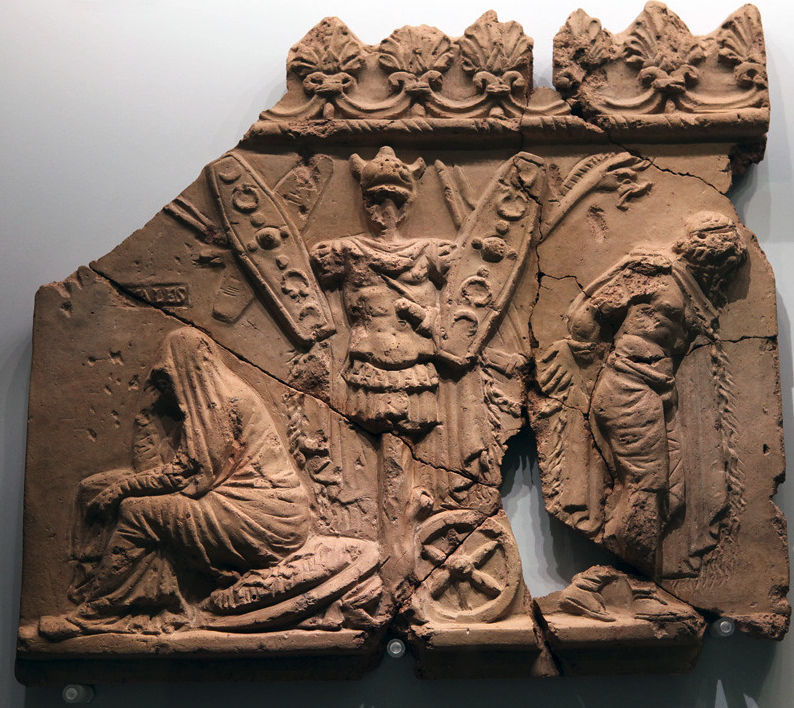
The Romans loved a good public shaming. And, many went to great lengths to avoid such shame. We are led to believe Cleopatra killed herself to avoid being led through Rome in such a spectacle. The Romans clearly enjoyed inflicting a good public shaming and humiliation of those they defeated. The theme is all over ancient art and who can deliver a brutal invective better than Cicero? We know our values and who we are by those we distain and disgrace. Even, if that is ourselves!
None of my colleagues are like this. I know this. Well, at least not the ones I care about. I do not need to pull the veil over my face to avoid the stares. I can just own what I’ve not done and try to better assess what I can do.
Ok. I’m going to not hit publish until these two email tasks are done.
Funny story. One of the emails wasn’t what I thought it was. It was a piece of bureaucracy that does need doing but not actually anything that feels like letting someone down. What it made me realize is that pro actively writing to one of my editors would feel good. So I did that and explained where I was at and asked for guidance and if they still want the piece.
Yes, it is loud in my head. Yes, the blog helps. Enjoy the pictures and ignore the navel-gazing. I am moving on to other critical administrative tasks.