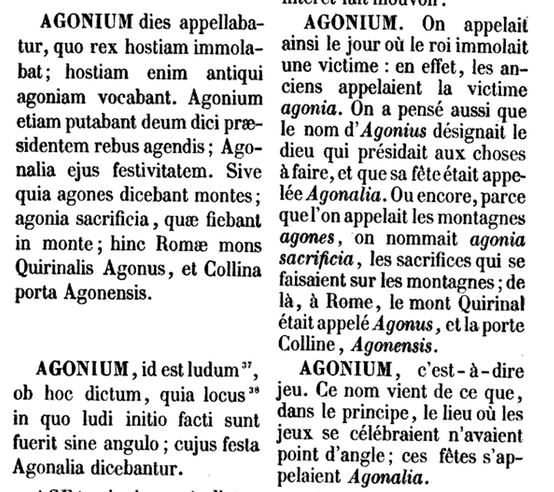

The (so-called) lex arae Dianae in Aventino

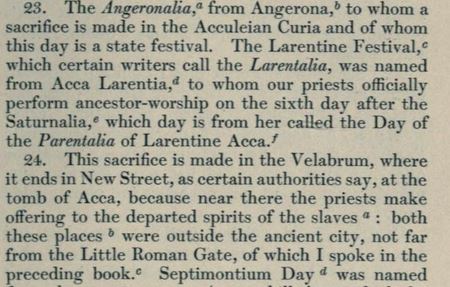
Still on RRC 372/1.  (See previous post).  I am worried that the togate figure (be he Servius or not!) does not have his head covered while he’s using the priestly implement, we now know as an aspergillum (not a real Latin word!), to sprinkle the heifer.  Which got me on to the worship form for Diana at the Aventine, which brings me to a bunch of well known inscriptions.

Green:

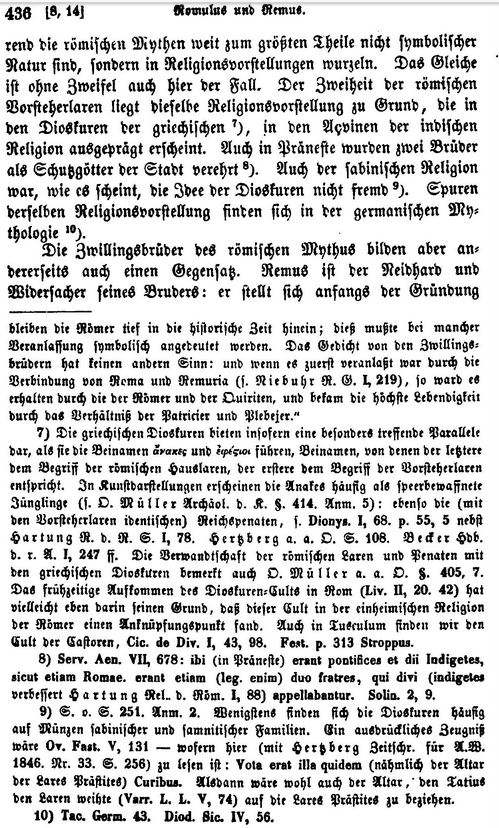
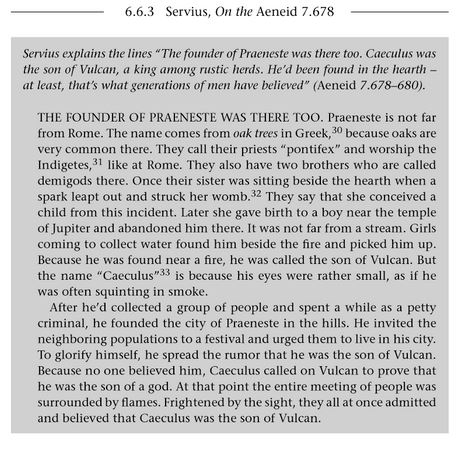
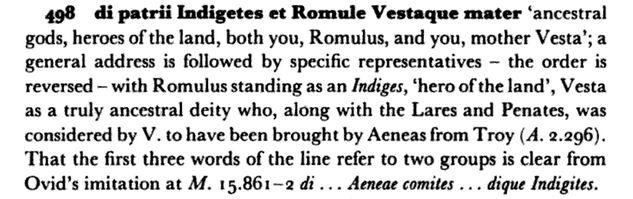
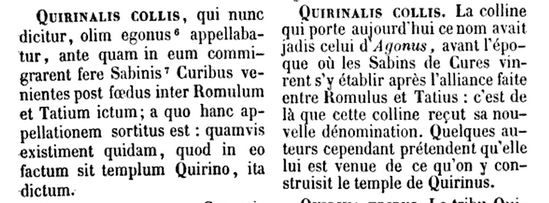
Capture8 Capture7

Ando (besides this below, he also have as whole article dedicated to Diana on the Aventine):

Capture9

Cornell:

Capture6

Also see Goldhill on local identity using this lex as a case study.

Servius Tullius on a Coin?

On this theme, please now see pages 103-104 (fig. 2.55) of my 2021 book.


I’m thinking about potential connections between RRC 372/1 and RRC 334/1.  This is building off of an old post of mine.

These are the only two scenes of sacrifice on the republican series, other than those which show the creating of a foedus (oath scenes with a pig).

Anyway.  I just wanted throw up this 1924 commentary on Plutarch’s Roman Questions.

Capture9

Vir. Illus. 7 and Cic. Att. 15.17

The question is: was the de Viris Illustribus actually preserving an alternative ancient tradition or was it just an error?  Antro in Cicero appears to be a freedman and Antro his slave name which are often chosen for ethnic connotations  (cf. Cic. Fam. 15.20.1).

Curiatius is a name most associated with Alba in Latin literature (general survey, but note esp. Livy 1.30).


Pliny on Drusus

Pliny NH 25.21: that Drusus among us, most illustrious of our tribunes of the people, who was cheered by all the commons standing before him but charged by the aristocrats with causing the Marsic War, was on the island of Anticyra cured of epilepsy by means of this medicine. For there it is very safe to take the drug because they add to it sesamoides, as I have already said. In Italy it is called veratrum.

Pliny NH 28.41: Drusus, tribune of the people, is reported to have drunk goat’s blood because he wished, by his pallor, to accuse his enemy Q. Caepio of having poisoned him, and so to arouse hatred against him.

Pliny NH 33.6: Also it was from a ring put up for sale by auction that the quarrel between Caepio and Drusus began which was the primary cause of the war with the allies and the disasters that sprang from it. Not even at that period did all members of the senate possess gold rings…

Pliny NH 33.13: Livius Drusus when holding the office of tribune of the plebs alloyed the silver with one-eighth part of bronze.

Pliny NH 33.50: His brother Allobrogicus was the first person who ever owned 1000 lbs. weight of silver, whereas Livius Drusus when tribune of the people had 10,000 lbs.

Excepting the first, all these passages suggest a tradition that casts Drusus as motivated by avarice and fundamentally dishonest.

(Online translation of the Natural Histories)


Sulla at Vibo Valentia?

Capture8
links to acsearch.info

The auction catalogue of this specimen linked this type of Sulla’s with Vibo Valentia.   An interesting idea not in Crawford (“275 – Q Mint-uncertain 81 BC”).  Here’s the CRRO link for 375/2 (375/1 is the same type in gold).

Where did the idea come from?  Clearly it is inspired by the iconographic similarities of the Semis type of the colony (HN 2263):

Capture7
links to acsearch.info entry

I picked a specimen that makes the visual parallels most evident.  The styles vary considerably over the years; see this acsearch.info set of results for a quick demonstration of this stylistic variety.

I traced the idea back to Bahrfeldt via Alföldi but it may go back further.

Is it plausible?  Maybe.  None of the hoards containing this type come from Southern Italy, but that isn’t definitive by any means:

Capture9
Links to CHRR search results

Didn’t know a collection of Alföldi’s papers were translated into English?  Me neither until today!  Here’s the Table of Contents.

Note to future self: I also really want to think more about what it means that the carnyx is used as a mint mark at this colony…


Desultores, Apollo, and Tarentum

So I’m trying to wrap my head around the possibility that the ludi Apollinares were introduced because of a connection between Apollo and Tarentum (cf. Livy 25.1-12).  This idea seems accepted by Santangelo on the basis of Russo 2005.  I really admire the work of the former so want to go along with it, but I am trying connect the dots as it were.  Russo led me back to Evans (yup, good ol’ Sir Arthur):

Capture5Capture6

This article is free on JSTOR (see p. 190-191).  Anyway.  This got me worried we’re in circular logic territory.  Evans is using Republican imagery to argue an Apollo connection back onto the Tarentine evidence (maybe correctly?) and then Russo is pulling that forward to support our interpretation of Apollo’s significance in Rome in 212 BC.  Bah.  So what about Evans’ suggestion that the Roman desultor imagery derives from Tarentum?  He doesn’t tell us which coin he means so I’ve had to guess.  This one has two horses and one rider so is perhaps what he means.

Capture4
image links to acsearch.info

Two horses yes, but no whip, no felt hat, etc etc.  Not a great parallel.

Here are my older posts on desultores.  (Notice the coin of Suessa has Apollo on the obverse!)

I actually think the strongest evidence for why horse races are part of the ludi Apollinares may actually come from Tacitus as cited by Russo, but has nothing to do with Tarentum!

Capture7

Here’s Tacitus 14.21:

“Our ancestors,” they said, “were not averse to the attractions of shows on a scale suited to the wealth of their day, and so they introduced actors from the Etruscans and horse-races from Thurii.

The critical point here is that in 212 BC Hannibal had not only taken Tarentum but also Thurii! (see Livy link at top of the post.)


Origins of the Testudo?

Some young Romans turned their training in the Circus games to purposes of war and in this way seized the lowest portion of the wall. Before the extravagant habit came in of filling the Circus with animals from all parts of the world, it was the practice to devise various forms of amusement, as the chariot and horse races were over within the hour. Amongst other exhibitions, bodies of youths, numbering generally about sixty, but larger in the more elaborate games, were introduced fully armed. To some extent they represented the maneuvers of an army, but their movements were more skilful and resembled more nearly the combat of gladiators. After going through various evolutions, they formed a solid square with their shields held over their heads, touching one another; those in the front rank standing erect; those in the second slightly stooping; those in the third and fourth bending lower and lower; whilst those in the rear rank rested on their knees. In this way they formed a testudo, which sloped like the roof of a house. From a distance of fifty feet two fully armed men ran forward and, pretending to threaten one another, went from the lowest to the highest part of the testudo over the closely locked shields; at one moment assuming an attitude of defiance on the very edge, and then rushing at one another in the middle of it just as though they were jumping about on solid ground.

A testudo formed in this way was brought up against the lowest part of the wall. When the soldiers who were mounted on it came close up to the wall they were at the same height as the defenders, and when these were driven off, the soldiers of two companies climbed over into the city. The only difference was that the front rank and the files did not raise their shields above their heads for fear of exposing themselves; they held them in front as in battle. Thus they were not hit by the missiles from the walls, and those which were hurled on the testudo rolled off harmlessly to the ground like a shower of rain from the roof of a house.

Livy 44.9

I don’t really think I believe it originated in the Circus and then was applied on the battlefield, but it certainly was a memorable, showy move!

Visual aid from Trajan’s column:

Different Trumpets for Different Troops

To add to the confusion the sound of a trumpet was heard from the theatre. It was a Roman trumpet which the conspirators had procured for the purpose, and being blown by a Greek who did not know how to use it, no one could make out who gave the signal or for whom it was intended.

I’d like to read up one day on the use of musical instruments in warfare and variations among different ancient peoples.  And I just find this bit of Livy (25.10) describing Hannibal’s taking of Tarentum rather amusing.

Caduceus and related symbols

The natives near the pass conspired together and came out to meet him with treacherous intentions, holding olive-branches and wreaths, which nearly all the barbarians use as tokens of friendship, just as we Greeks use the herald’s staff.

Polybius 3.52.3

Earlier posts discussing this symbolism.

Not sure if I put this up here before but the best real caduceus I’ve ever seen is in the Minneapolis Institute of Art:2012-10-31 11.32.44.jpg


Testimony on the Falcata?

I’ve previously blogged about the falcata (Spanish sword) as an ethic marker on republican coins.  Thus I found this passage of interest (Livy 31.34):

Philip’s men had been accustomed to fighting with Greeks and Illyrians and had only seen wounds inflicted by javelins and arrows and in rare instances by lances. But when they saw bodies dismembered with the Spanish sword, arms cut off from the shoulder, heads struck off from the trunk, bowels exposed and other horrible wounds, they recognised the style of weapon and the kind of man against whom they had to fight, and a shudder of horror ran through the ranks.

nam qui hastis sagittisque et rara lanceis facta uolnera uidissent, cum Graecis Illyriisque pugnare adsueti, postquam gladio Hispaniensi detruncata corpora bracchiis cum humero abscisis aut tota ceruice desecta diuisa a corpore capita patentiaque uiscera et foeditatem aliam uolnerum uiderunt, aduersus quae tela quosque uiros pugnandum foret pauidi uolgo cernebant.

There are actually a number of passages in Latin that discuss Spanish swords.