These are just me backing up Jaia and Molinari 2011 with some pretty pics.

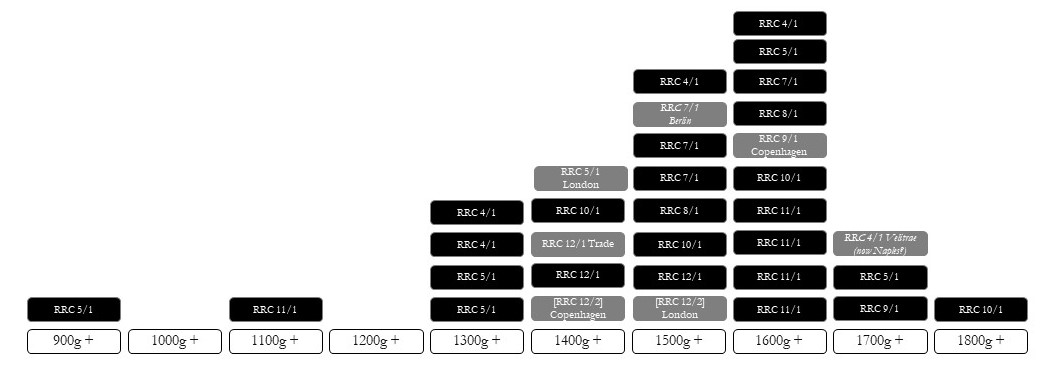
Their Appendix II visualized (Hoards with just first two aes grave)
adventures in my head
These are just me backing up Jaia and Molinari 2011 with some pretty pics.

Their Appendix II visualized (Hoards with just first two aes grave)
No promises this is error free, just draft no. 1 no. 2 (now with Compulteria and Nola added)
I’m working on the principle here that a picture is worth a 1000 words hoping I can show rather then tell my audience and save my precious word count. (link to basic map)
As evidence that this alliance did not meet universal approval we cite an example of this very coinage on which the reverse inscriptions were chiseled away (NAC 9, 1996, lot 115), presumably by a dissatisfied Locrian.

This awesome specimen of RRC 5/1 is from Berlin. Here’s some commentary on the inscription:

Vecchi says the following:

Fusi-Rossetti 96 (1995) 26 agrees with Vecchi’s translation:
I’ve ILL-ed Guy Bradley’s relevant comments:

To the list of find locations for the type should be added the Pratica di Mare hoard (Molinari 2011).
The findspot is quite a full day of walking from Sestino. I’d prefer to take two days if I had to walk it.

This piece in trade has been labeled as possibly a fragment from the oh so famous one of a kind elephant and pig type (I’m agnostic on the authenticity of this specimen). Nope. I’m pretty confident that is as a caduceus and trident. RRC 11/1 not RRC 9/1.


This isn’t an actual argument yet. It’s an instinct. I agree that this is the half value coin (Sambon 146) which goes with the full value coin (Sambon 145) with an elephant on it (see Baglione 1976).

I think that the obverse is more likely to be a Celtic warrior wearing an animal skin (bear probably) and that some how this is supposed to correlate with the dog. I’ve a hunch based on the appearance of these coins in regional Italic museums that we should date the series to late 218 early 217 while Hannibal is his winter camp having conquered the Taurini and working on improving his troop moral and recruiting Italic allies before going to meet the Roman arm near Arretium (Polybius 3.60 onwards).

The problem is I can’t find the text references or images to back my thinking up at least not to my own tastes and I need to move on to other things.
Stuff of possible relevance.
E. Wamer’s Von Bären und Männern. Zeitschrift für Archäologie des Mittelalters 37, 2009, 1-46. (good images)
M. P. Speidel’s Ancient Germanic Warriors 2004.
And then just to taunt me the internetz keep returning this damn image:

BUT (a few hours later…) Let’s not forget
Aita (=Hades) is personified with a wolfskin headdress in Etruria:
Tomba Golini, Orvieto

Tomb of Orcus II

Polybius 3.62:
Mustering the troops, Hannibal brought forward certain young men from among the prisoners he had taken molesting his march in the difficult part of the Alpine pass. 4 He had purposely, with a view to the use he was going to make of them, ill-used them: they wore heavy fetters, they had suffered much from hunger, and their bodies were disfigured by the marks of blows. 5 Placing them in the middle of the meeting he exhibited some Gaulish suits of armour, such as their kings are wont to deck themselves with when about to engage in single combat. In addition to these he placed there some horses and had some rich military cloaks brought in. 6 He then asked the young men which of them were willing to do combat with each other, the prizes exhibited being destined for the victor, while the vanquished would be delivered by death from his present misery. 7 When all shouted out with one voice that they were willing to fight, he ordered them to draw lots, and the two on whom the lot fell to arm themselves and do combat. 8 The young men, the moment they heard this, lifted up their hands and prayed to the gods, each eager to be himself one of the chosen. 9 When the result was announced, those on whom the lot had fallen were overjoyed and the rest mournful and dejected, 10 and after the combat was over the remaining prisoners congratulated the fallen champion no less than the victor, as having been set free from many and grievous evils which they themselves were left alive to suffer. 11 The sentiment of most of the Carthaginians was identical; for looking on the misery of the other prisoners as they were led away alive, they pitied them on comparing their fate with that of the dead whom they all pronounced to be fortunate.
This episode is bizarre to me. Is it Polybius’ own creation or an actual event? Is Polybius trying give a rational moralizing explanation for gladiatorial combat, such as practiced by the Romans. Does he expect his Greek audience to find this barbaric?
key words: Aes Grave, Priestly Instruments, Sacrificial Instruments, apex, priestly implements, sacrificial implements.
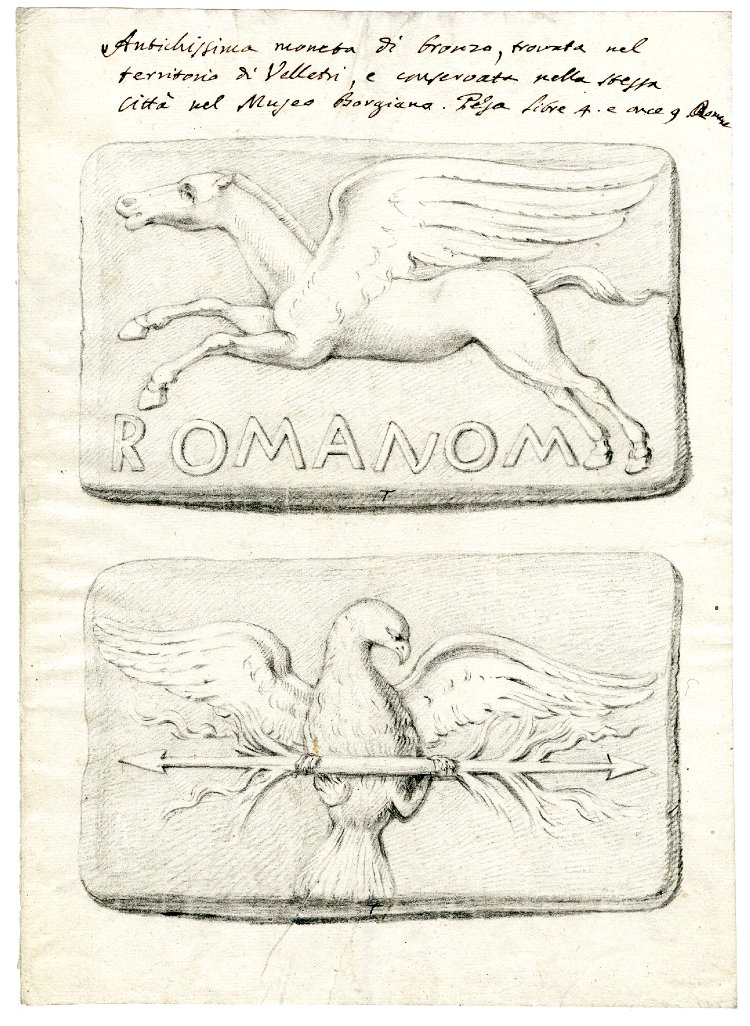
This is a drawing of BM G.2607 which is not photographed in the online database.
I feel I’ve already posted about this but can’t find that post so am throwing this up again.
The object on right is not a crescent it is a patera.

Abdera, May S. 178 Group LXXVIII (A 177 / P 183/1 stgl.). Jameson III 1999 (Var., Vs. stgl.)
In 2013 when I first blogged about this type I couldn’t find an image of this type. And it irritated me no end. 30 secs of searching in 2018 and it popped right up.
Gosh I love blogging as a searchable linkable record of my thinking.
I very much wish this specimen had been acquired by a public collection.
Key catalogue note:
” The bearded head of a man on the reverse seems not to be a portrait of the local authority responsible for the issue (cf. G.M.A.Richter, The Portraits of the Greeks, p. 79 fig. 305). On the contrary this head is certainly an idealized one and rather a canting device on the name of Pythagoras, the famous philosopher and mathematician.”

Ever since my earlier post, I’ve been rather fascinated with this little remembered myth. The gem is rich in narrative identifying iconography. Peacock = Hera, Io = Bull, caduceus = hermes, BUT what’s up with the harpa?! Seems a borrowing from the Jason myth…
I can’t tell from this image if Argos is janiform or or if his body is shown covered in eyes. Not sure its ancient any way. If it is, it seems rather late Roman.