
This confirms to my mind the significance of the Q.
***
BM 1988,1020.2
Identified as ”Theos Orkios” The god of oaths. Such a strange artifact. …

adventures in my head
This confirms to my mind the significance of the Q.
***
BM 1988,1020.2
Identified as ”Theos Orkios” The god of oaths. Such a strange artifact. …
Indian

African Forest Elephant



From Charles, Michael B. “AFRICAN FOREST ELEPHANTS AND TURRETS IN THE ANCIENT WORLD.” Phoenix 62, no. 3/4 (2008): 338-62. http://www.jstor.org/stable/25651736.
For numismatists these differences only make sense when they are exceptionally clearly rendered. So the Hispano-Punic coins: e.g. ANS 1944.100.81012 and Siculo-Punic coins: e.g. ANS 1997.9.225 all have the concave back and seem most decidedly African. But many other elephants aren’t rendered with the same care as to make the distinction meaningful.
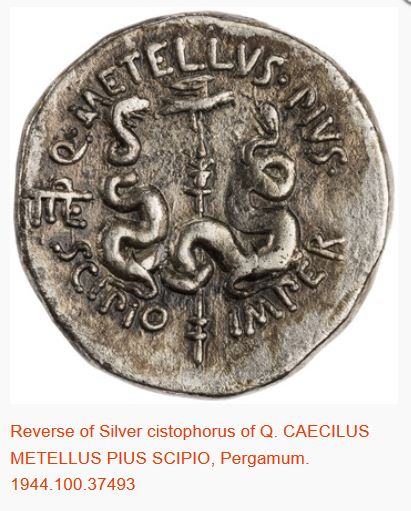
I like how the bow case is replaced with the legionary eagle (aquila). Reminds me of Fimbria’s earlier cistophorus with a legionary standard.
This is a note to myself to learn more about Heavy Runner and the Marias Massacre.



MFA 87.705. From Tell Dafana (Daphnae). 1886: excavated by William Matthew Flinders Petrie for the Egypt Exploration Fund, assigned to the EEF by the Egyptian government; presented to the MFA at EEF fifth annual general meeting.
Update 5-8-23:

Vecchi 2014 arrived! V exciting. My histogram now has reported weights of 43 currency bars. But more fun:
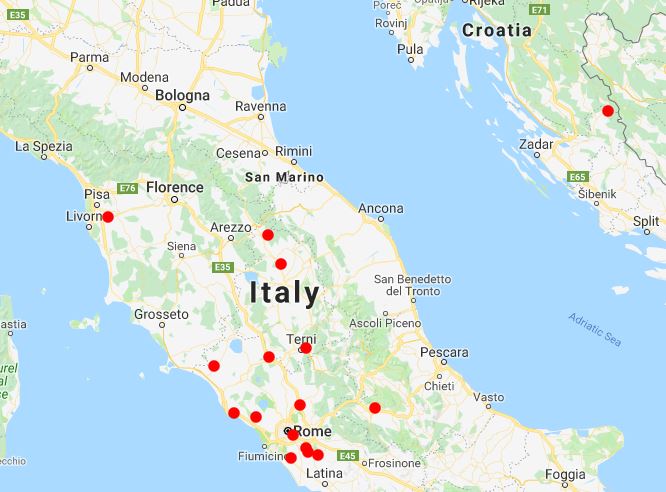
This let me draw the above map. I added Lavinium from Molinari 2011 to his listed findspots. BUT I’m sure I’m missing others.
Here’s the list with GPS coordinates used (approximate of course):
| San Marinella | 42.03333 | 11.85 |
| Ariccia | 41.71667 | 12.66667 |
| Mazin | 44.45333 | 15.96583 |
| La Bruna | 43.2354 | 12.3742 |
| Tor Marancia | 41.85291 | 12.50021 |
| Città di Castello | 43.47 | 12.23139 |
| Via Tiberina | 42.0976 | 12.5771 |
| Vulci | 42.41889 | 11.63167 |
| Velletri | 41.68667 | 12.7775 |
| Ceveteri | 42 | 12.1 |
| Castelgandolfo | 41.74675 | 12.65059 |
| Vicarello | 43.61238 | 10.46515 |
| Alba Fucens | 42.0746 | 13.40539 |
| Bomarzo | 42.48831 | 12.24188 |
| Terni | 42.56194 | 12.64139 |
| Lavinium | 41.66163 | 12.47843 |
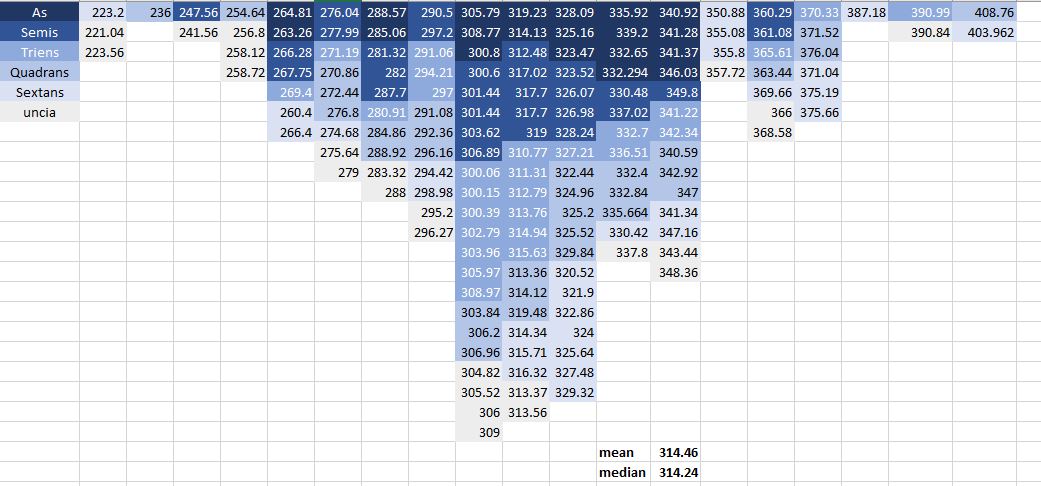
Crawford described RRC 18 as based on an as of 334g. Food for thought.
Ariminum was Roman colony founded 368 BCE. Gorini 2010 gives a full study to the coinage and places its first aes grave series in the period from 264-241 BCE i.e. the First Punic War. He also says that the series is based on a pound of 380g. That’s MUCH heavier than the Roman pound (whatever we think it was, probably c. 325 plus or minus 5). I thought, that can’t be right, so I re-looked at the data.
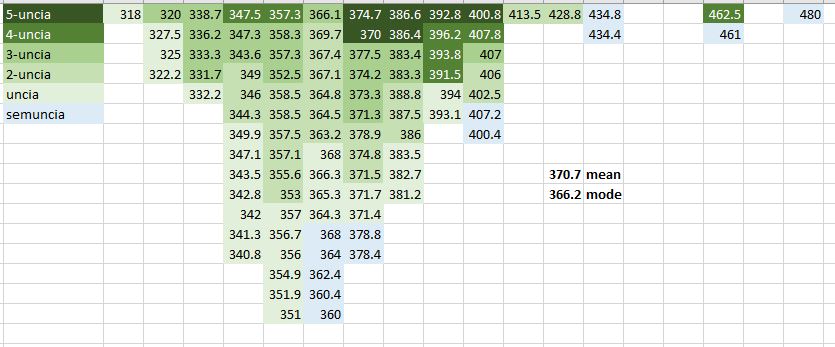
I might be inclined to suggest a target weight for the Ariminum pound c. 355-360, still heavier than the Roman, but not so extreme.
Why would a colony choose to use a heavier measure? Accident? Intent? Why use a base 10 instead of base 12 fraction system?!
***
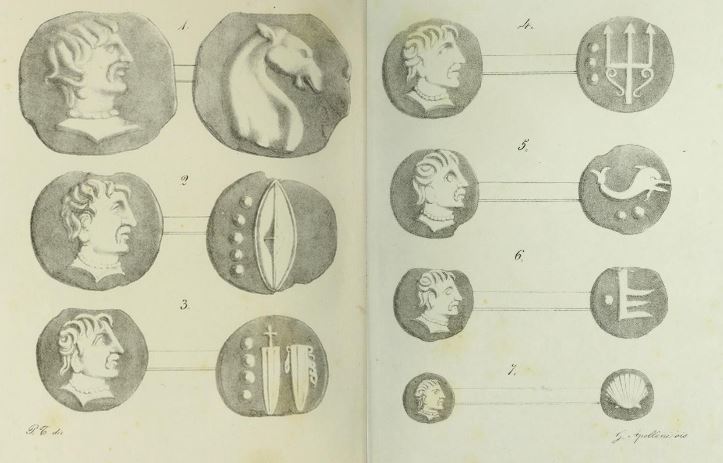
This plate from Marchi 1839 suggests that there was a still larger denomination, unrecorded by Gorini 2010 and other recent commentators. Is that a horse head? Inspired by RRC 13/1?
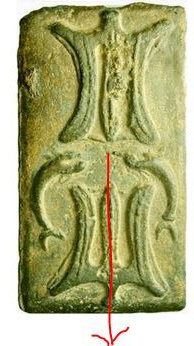
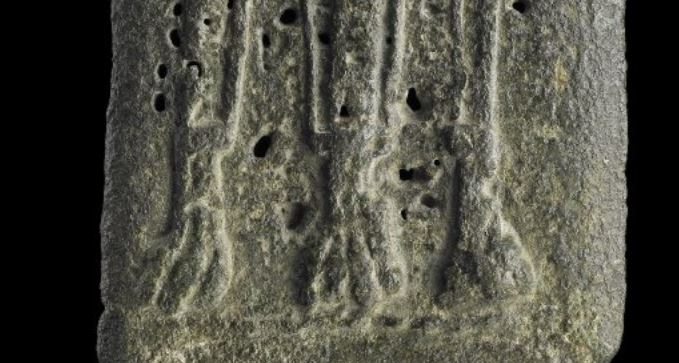
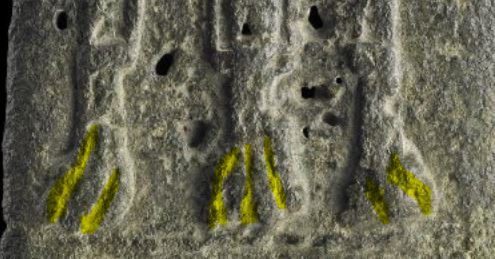
I’ve been thinking about the manufacture of aes signatum. The bars clearly have an up and down along one short end. ‘Up’ being my shorthand for the fill edge, where the bar has been broken from the casting sprue.
This got me to observe this about known RRC 12/1 specimens (all illustrated with fill edge up).
specimen in trade (ex Goodman collection)
Other specimens:
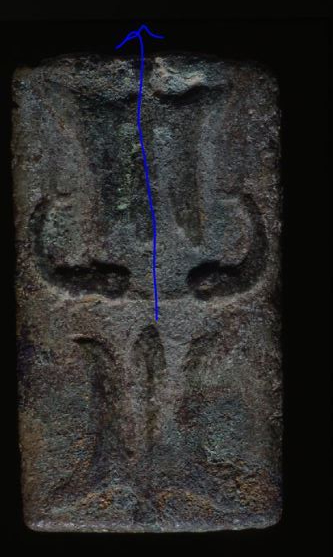
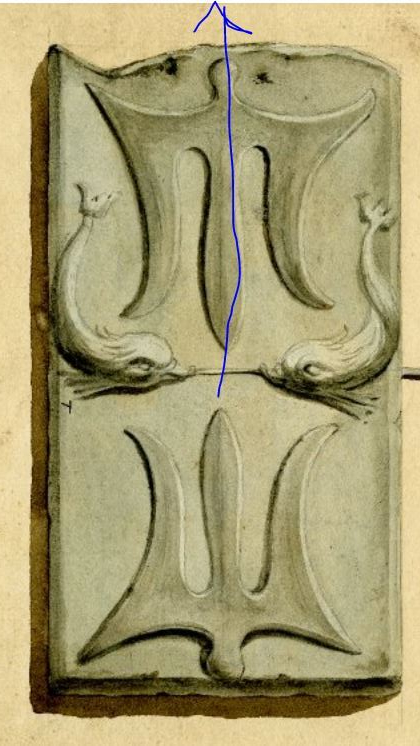
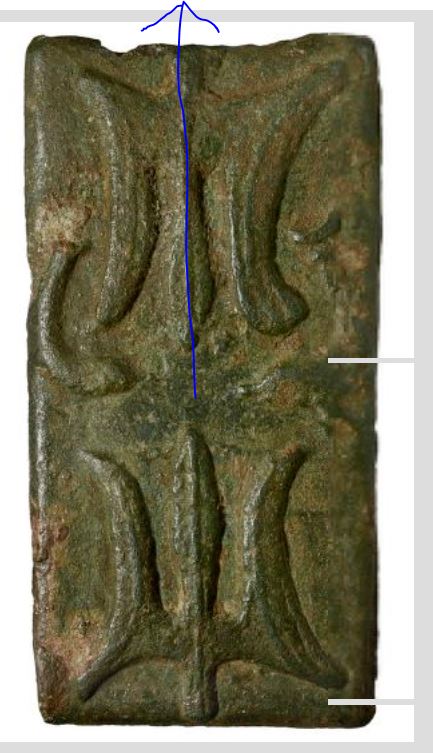
I cannot readily determine the orientation of the specimen illustrated in Vecchi 1978, but up dolphin seems most likely from the photos.
Concerning but not decisive. If you look back at previous Vecchi images of amphora/spearhead. You’ll notice that on have amphora up and the other amphora down.
 Liv Mariah Yarrow