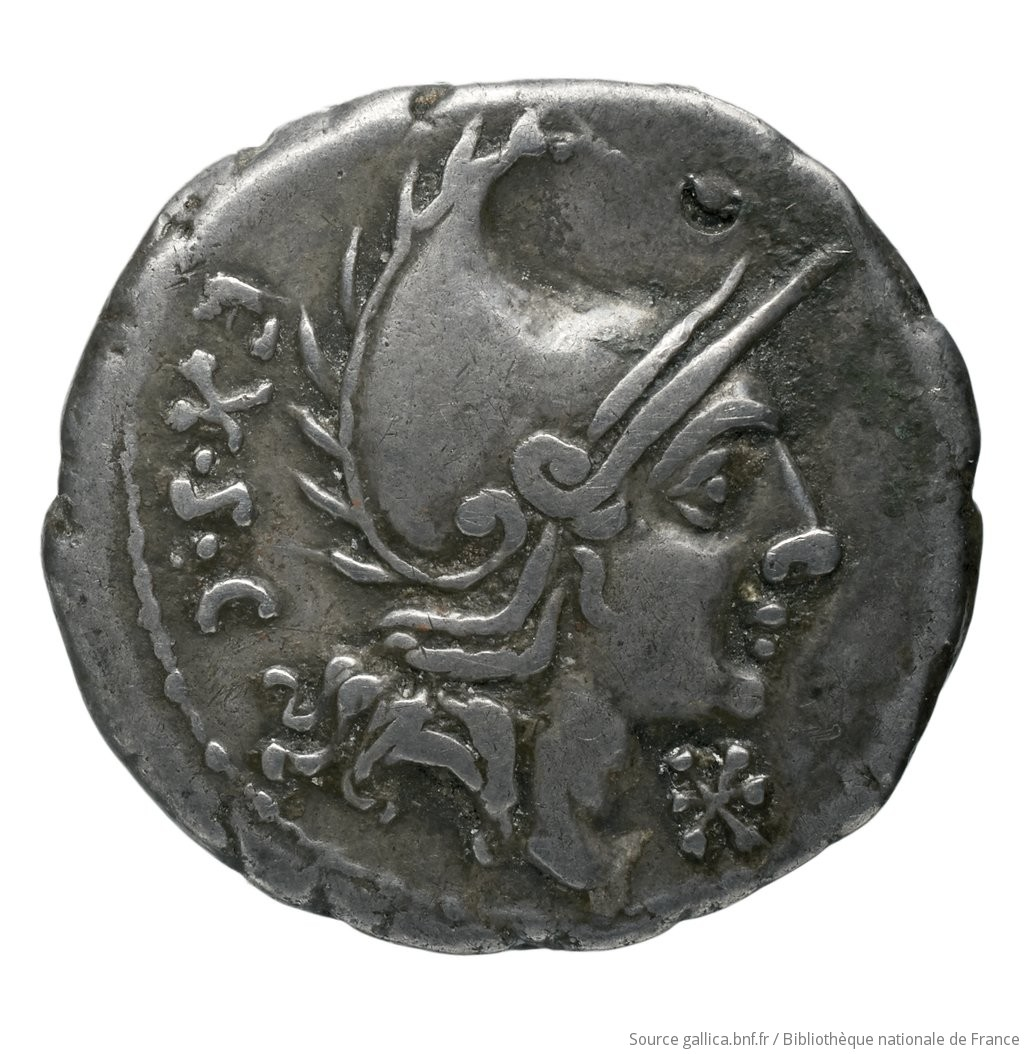
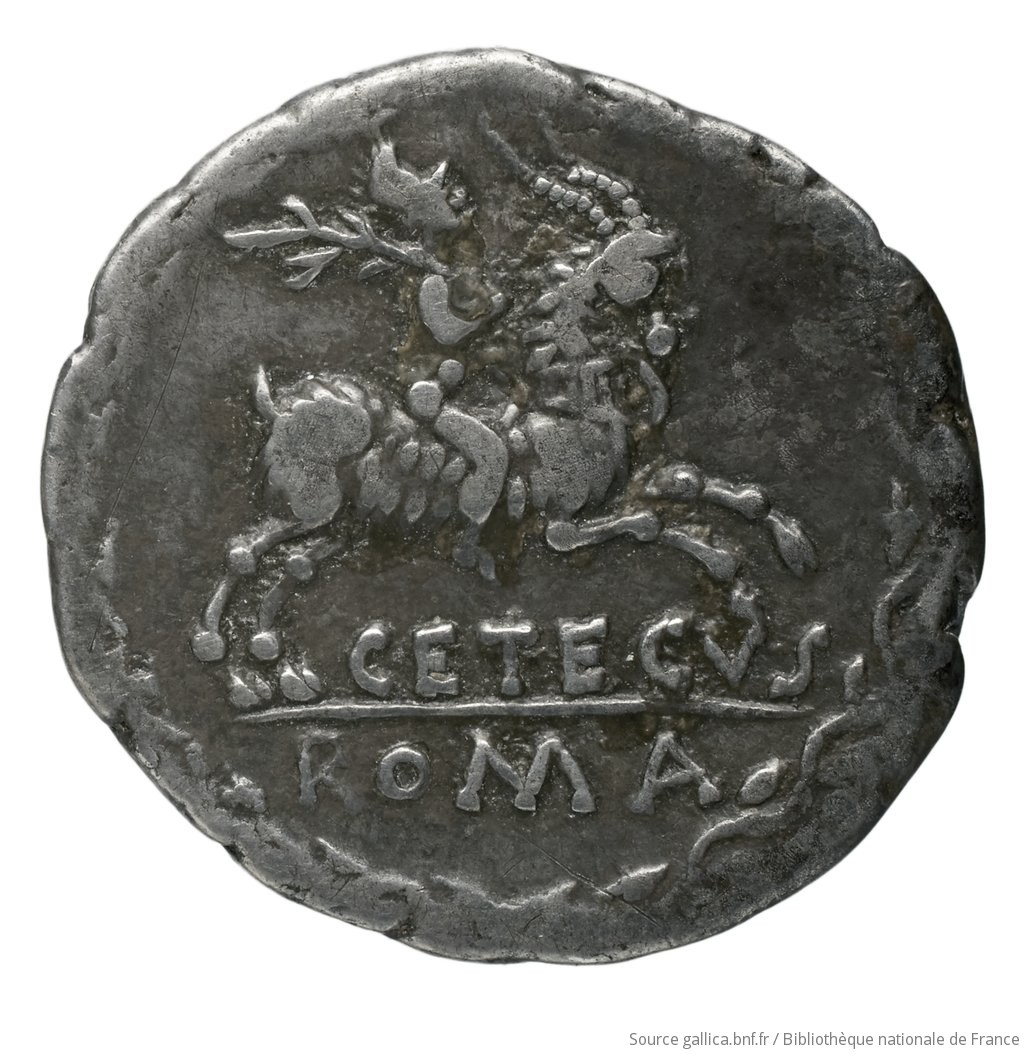
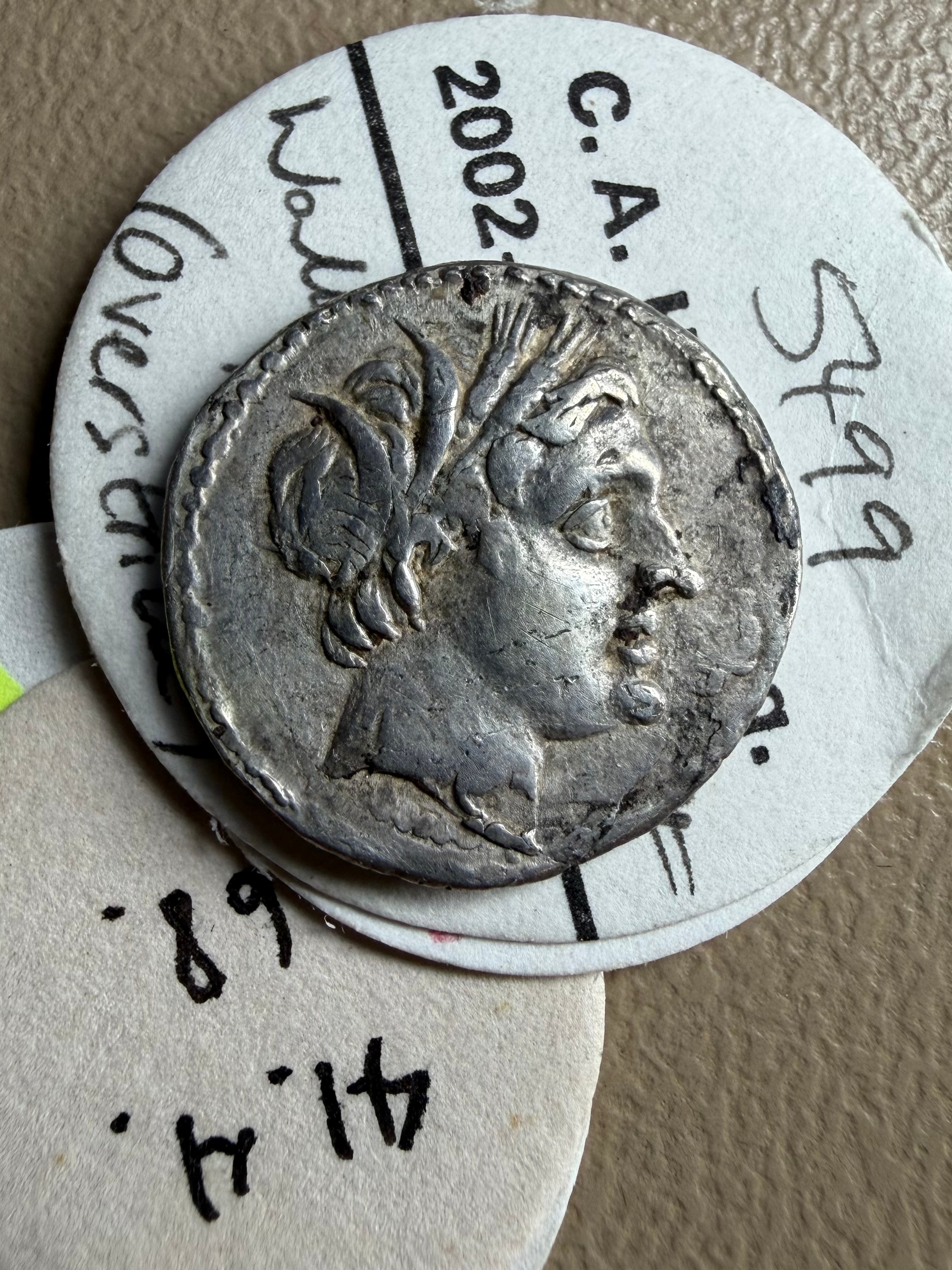
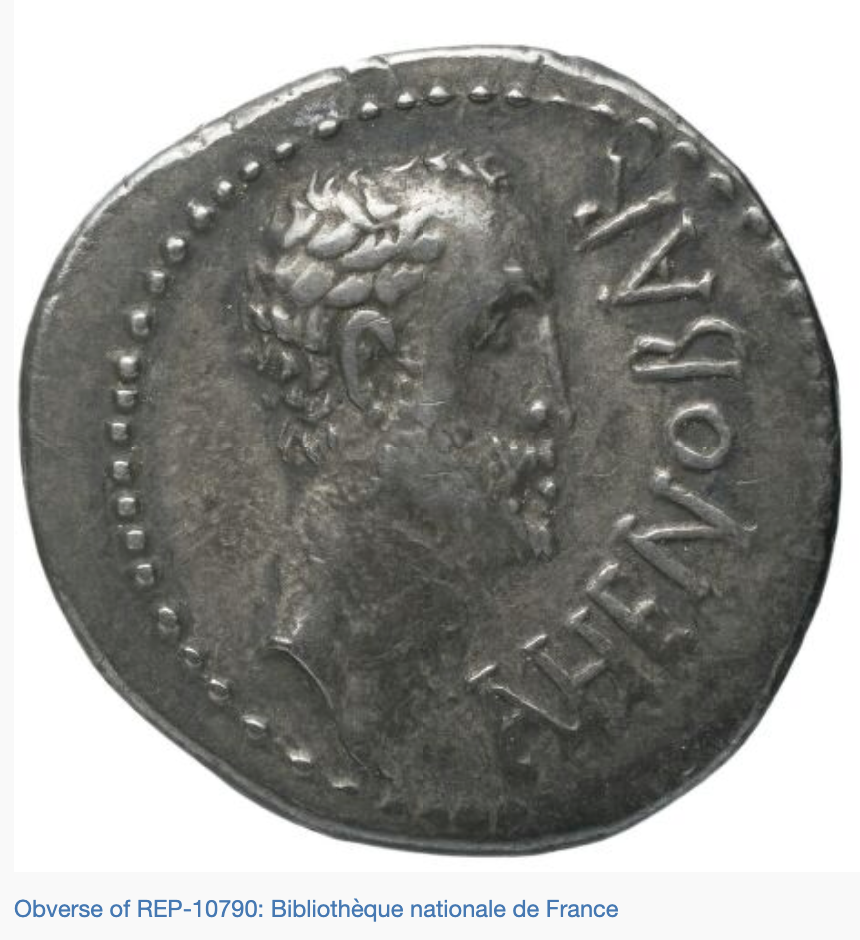
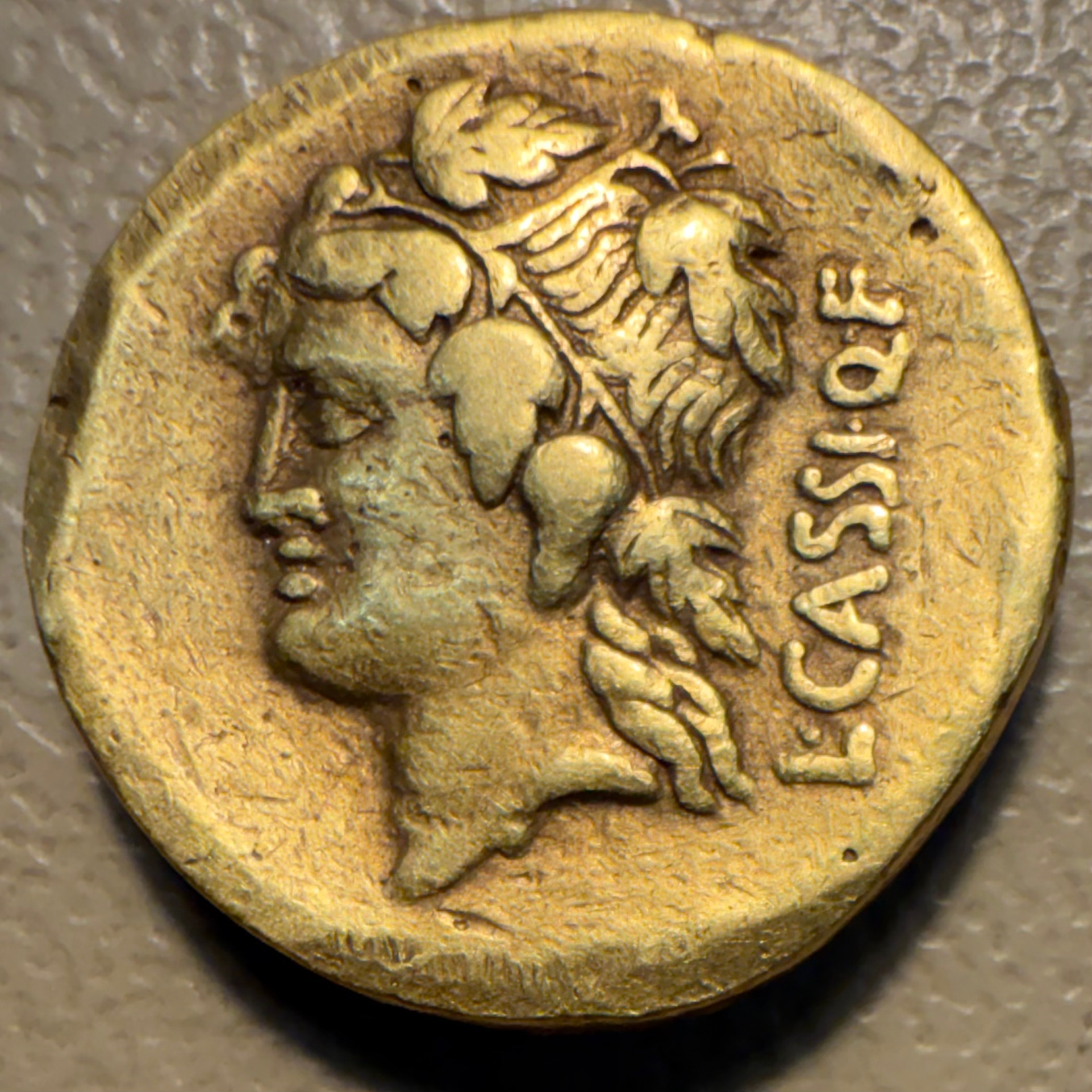
RRC 288/1 has caused too many scholars too many fever dreams. And it is their energies that once again drive me back to it. I don’t think it is really worth much of our energies from a historical perspective and any arguments based on its existence, supposed dating, and iconography are on shaky ground indeed.
Do I sound a little fiery this morning? Has 2026 found me with the bit between my teeth? Perhaps. I definitely find as I approach my half century later this year that I am less concerned about whether I am pleasant and well-liked and more if I am effective and justified. It’s not a bad place to be.
Anyway, before I fell asleep I was reading Wiseman’s new collection of essays and reviews and again this morning over coffee I read another chapter. I’m only up to page 136. On January 19th if you are in London you can come listen to Christopher Smith and I chat with Wiseman himself about this retrospective of his last 25 years of work. The essays thus far in the volume are ‘spicy’ in tone themselves. He has strong opinions on Carandini and Alföldi whom he groups with Frazer and Dumézil (cf. p. 118-120). His punches have only the thinnest of velvet gloves for treating speculation as fact. Maybe I’m finding myself wishing to season my own work similarly on occasion.
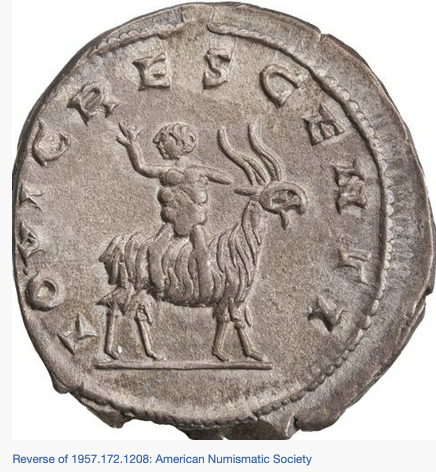
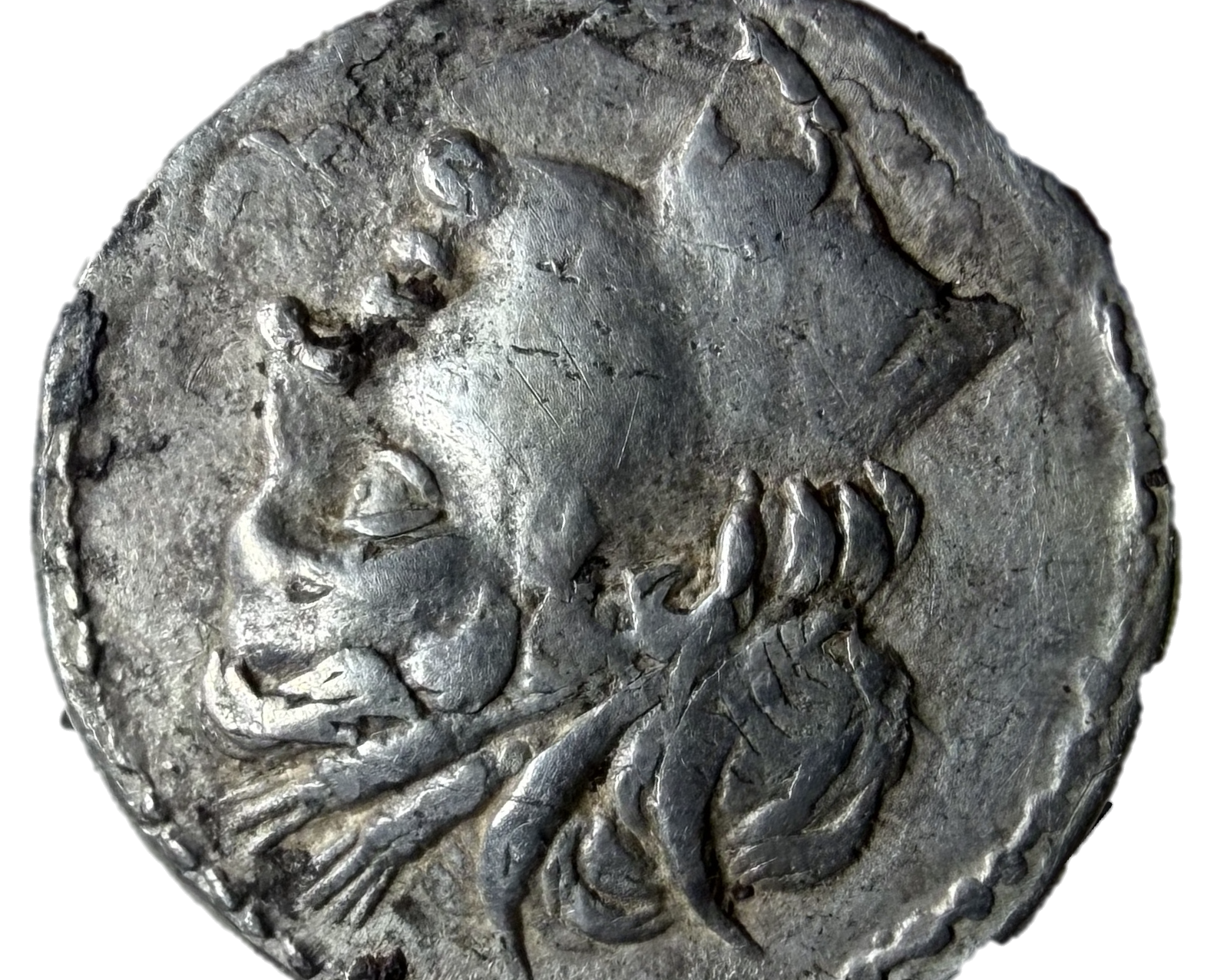
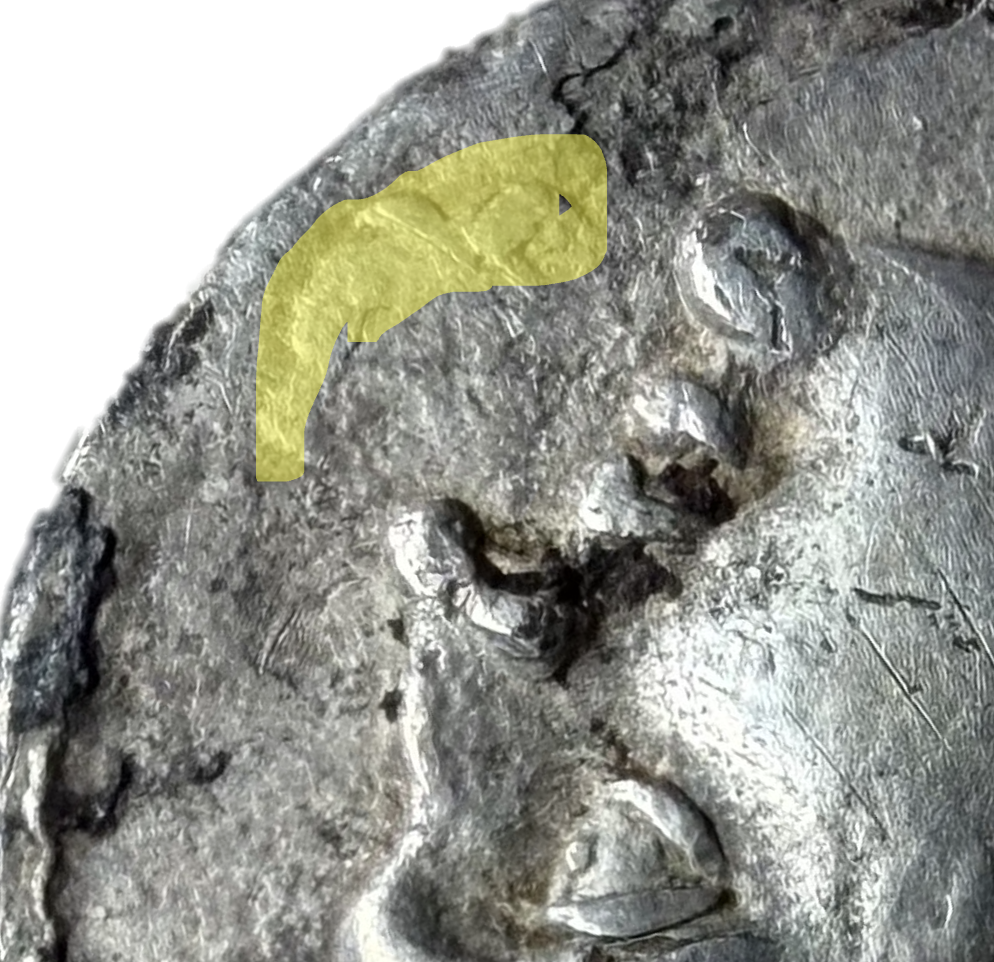
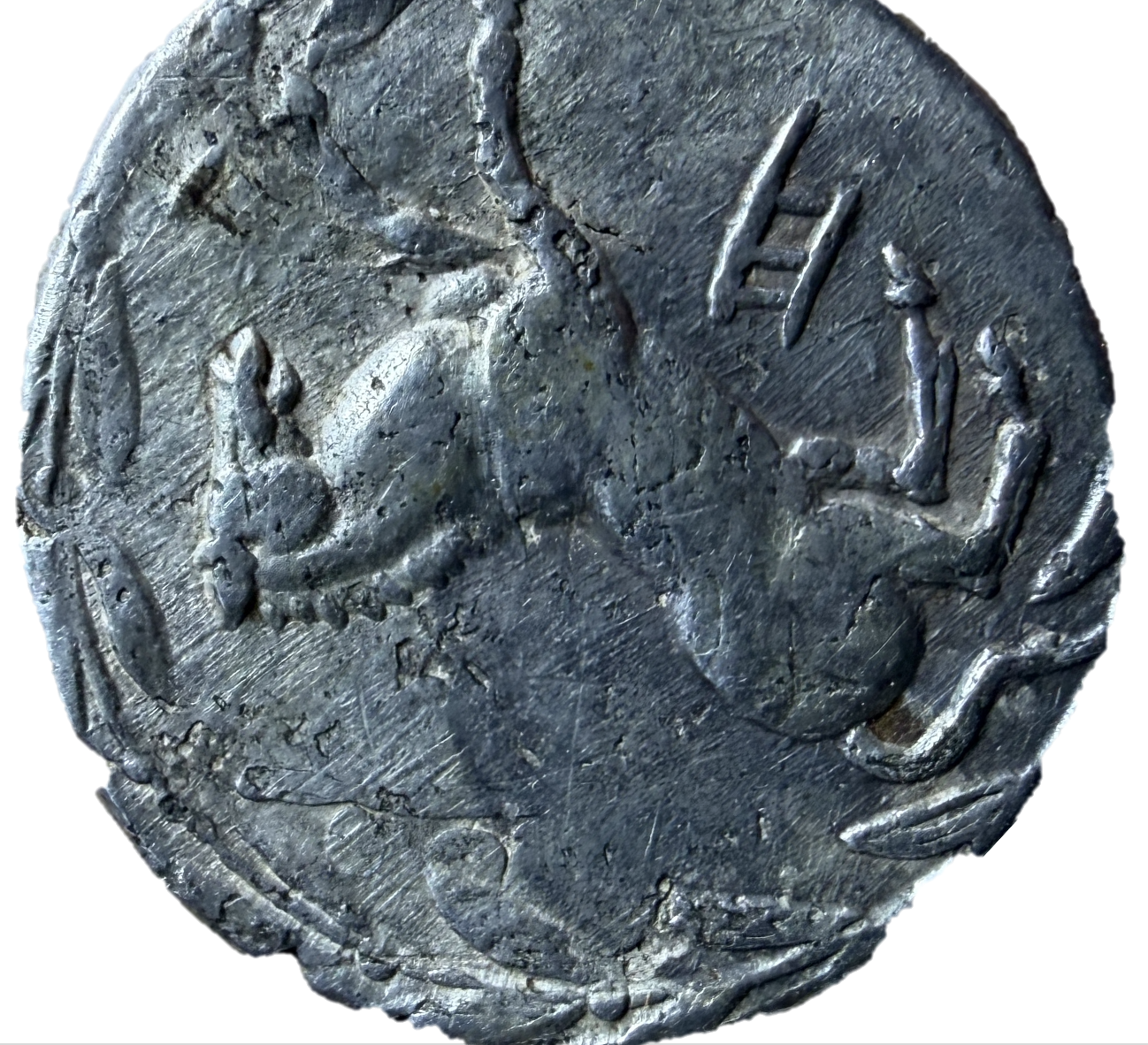
P. 119 is where you’ll find the reference to RRC 288/1. Wiseman is recounting the back and forth on interpretation between Alföldi and Weinstock. Crawford also condemns Alföldi’s view and invokes Eckel and Cohen to point to ivy wreath and phrygian cap and the male sex of the goat to dismiss most interpretations, settling on a Dionysiac allusion for the iconography and comparing it to RRC 353/1 & 2. I’m inclined to follow Crawford here and have a more richly illustrated post on hairy goats and RRC 353 from the v first year of this blog. I however would like a better explanation for why a Dinonysiac figure or the infant Dionysus himself would be wearing a Phrygian cap.
My bugbear is that RRC 288/1 on which so many leading lights has spilt so much ink is unique. Unique coins do not lend themselves to historical conclusions. If you know of a second specimen I’d love to know. Crawford is certain in CHRR (1969) that it is unique, but then in RRC (1974) says 2 reverse dies and ‘now unique’ suggesting a possible lost second specimens. One day maybe I’ll go through all his citations for this type and see why he decided to write “2” as the reverse die count.
I too have been guilty in the past of worrying extensively about unique types, but have tended to shy away from attributing too much historical significance to any thing produced in such small numbers and without clear date or context. See my 2013 post on RRC 358/1 (which holds up rather well in my humble opinion, even if not all from the early days of this blog does).
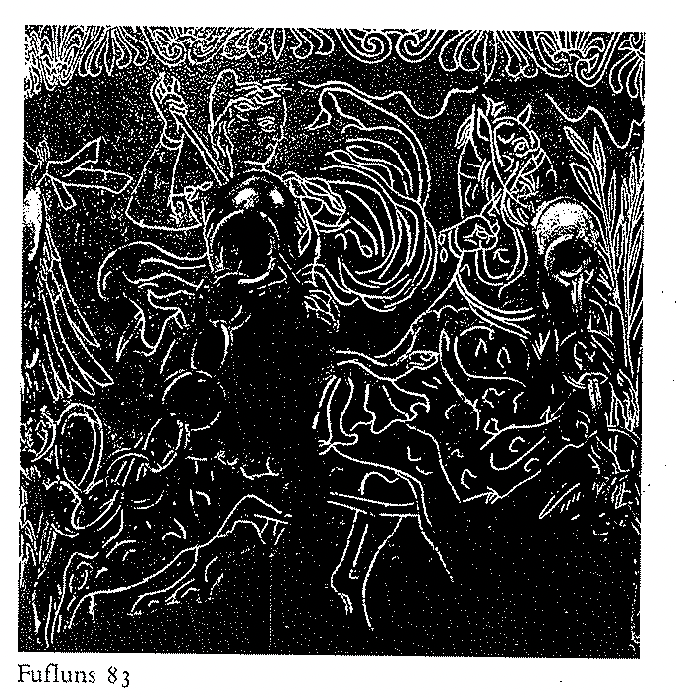
That said, I do think the Phrygian cap complicates things. Having wasted/enjoyed a great deal of time with LIMC to consider if such a cap could be Dionysiac, I have to say probably not. There is this vase(?) in Munich (I so want a better image) that is Fulfluns 83. I cannot figure out for the life of me why anyone made this ID, except unless they see etruscan letters in the squiggles that I cannot quite make out 𐌐𐌖𐌘𐌋𐌖𐌍𐌔. Dionysus does sometimes have thyrsus spear in gigantopicay scenes but I can’t see that here either.
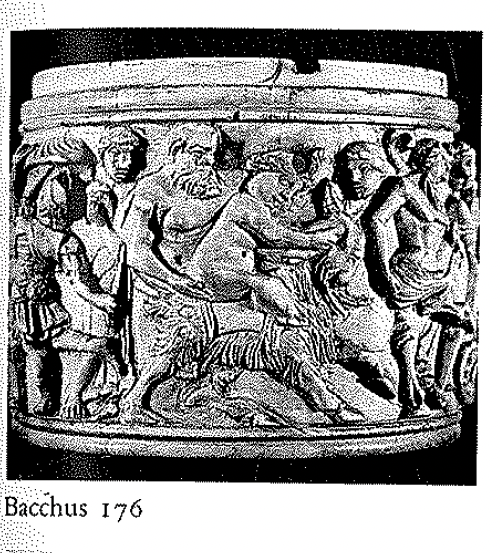
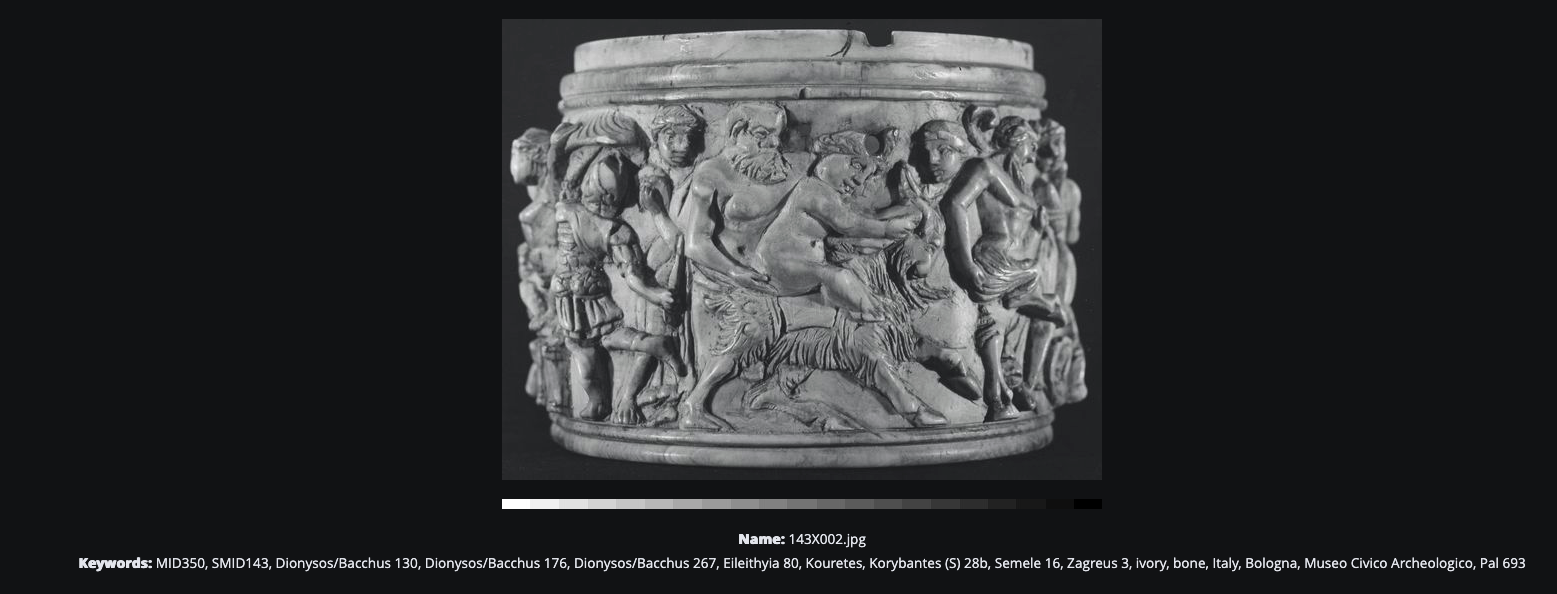
More promising is this image of the infant Dionysus riding a goat with Silenus’ support.
A rare case where a better image is in the database!
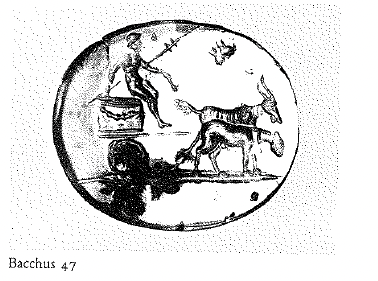
There are not many goats in the LIMC plates but here is a male and female goat pulling Dionysus on a gem.
Decoding iconography is fun but I doubt that Cetegus’s design choice can tell us anything about how Romans writ-large conceived of their relationship to the divine or their legendary history. For us to draw conclusions imagery needs to be pervasive, not unique.
RBN publications are fully open access two years after publication. To respect this policy you’ll have to email me for a private PDF of this publication if you want to read it now instead of December 2027.
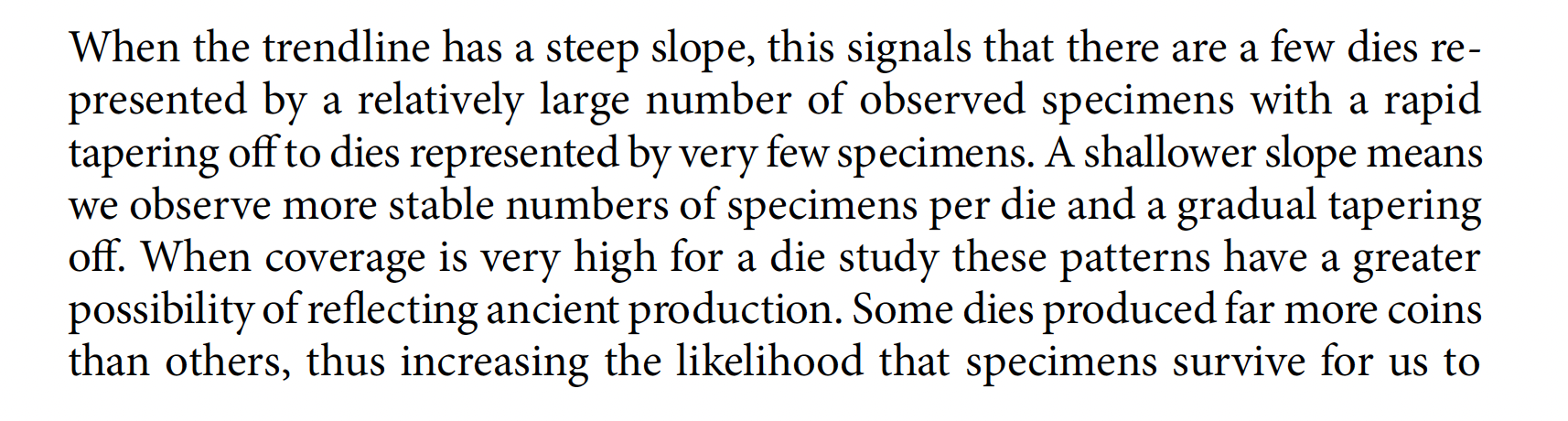
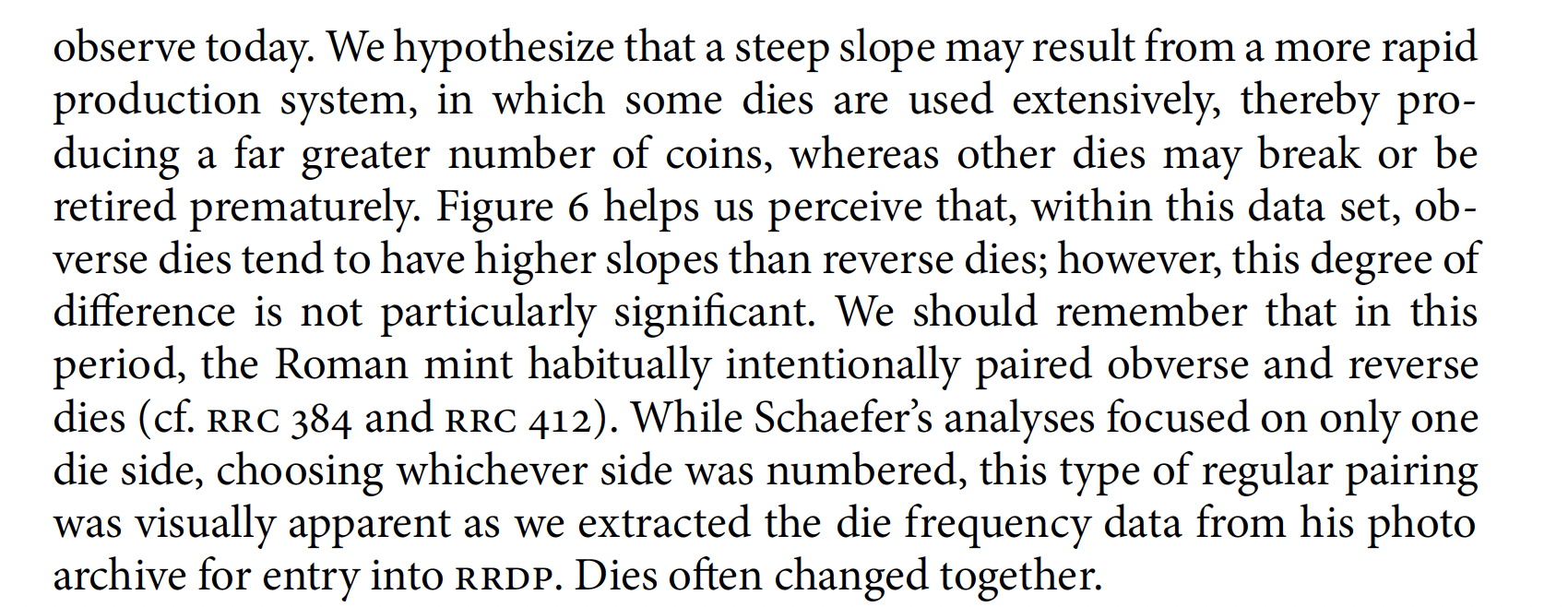
I’ll be honest not everyone who has read this article has thought it was methodologically sound, but any number of other colleagues have encouraged us to put our approach out there. I find it a little terrifying but also exciting to explore new means of comparing production using observed specimens per die. That said even if we’re wrong we’re still trying to say more with our data and hopefully provoking others to think with this data.
It’s been an intense semester and this would never have appeared if Lucia Carbone had not done the heavy lifting at the last push and supported and encouraged me to hold up my end earlier in the summer. Team work makes the dream work. As always I’m so grateful to our colleagues at RBN for timely feedback, eagle eyed proofing, and, of course, making our work look so good!
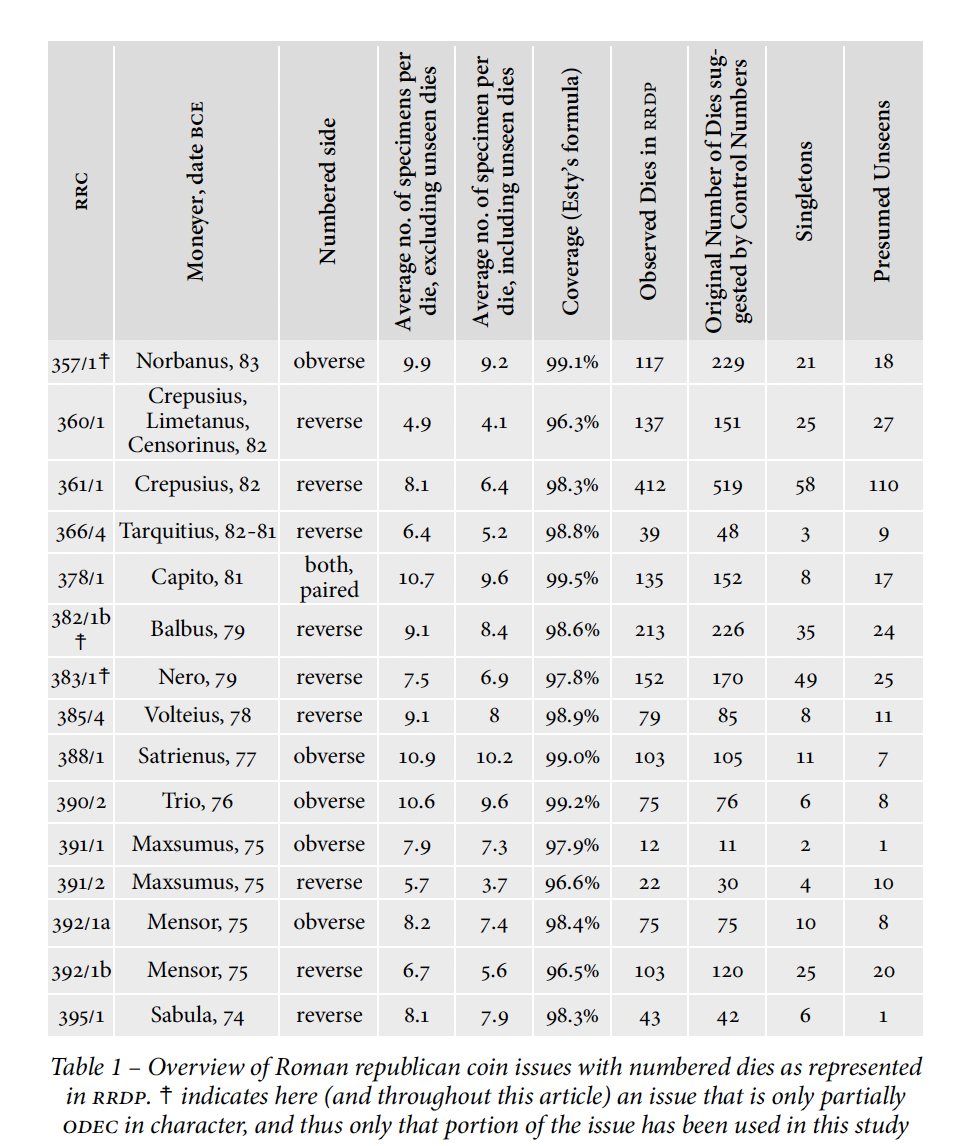
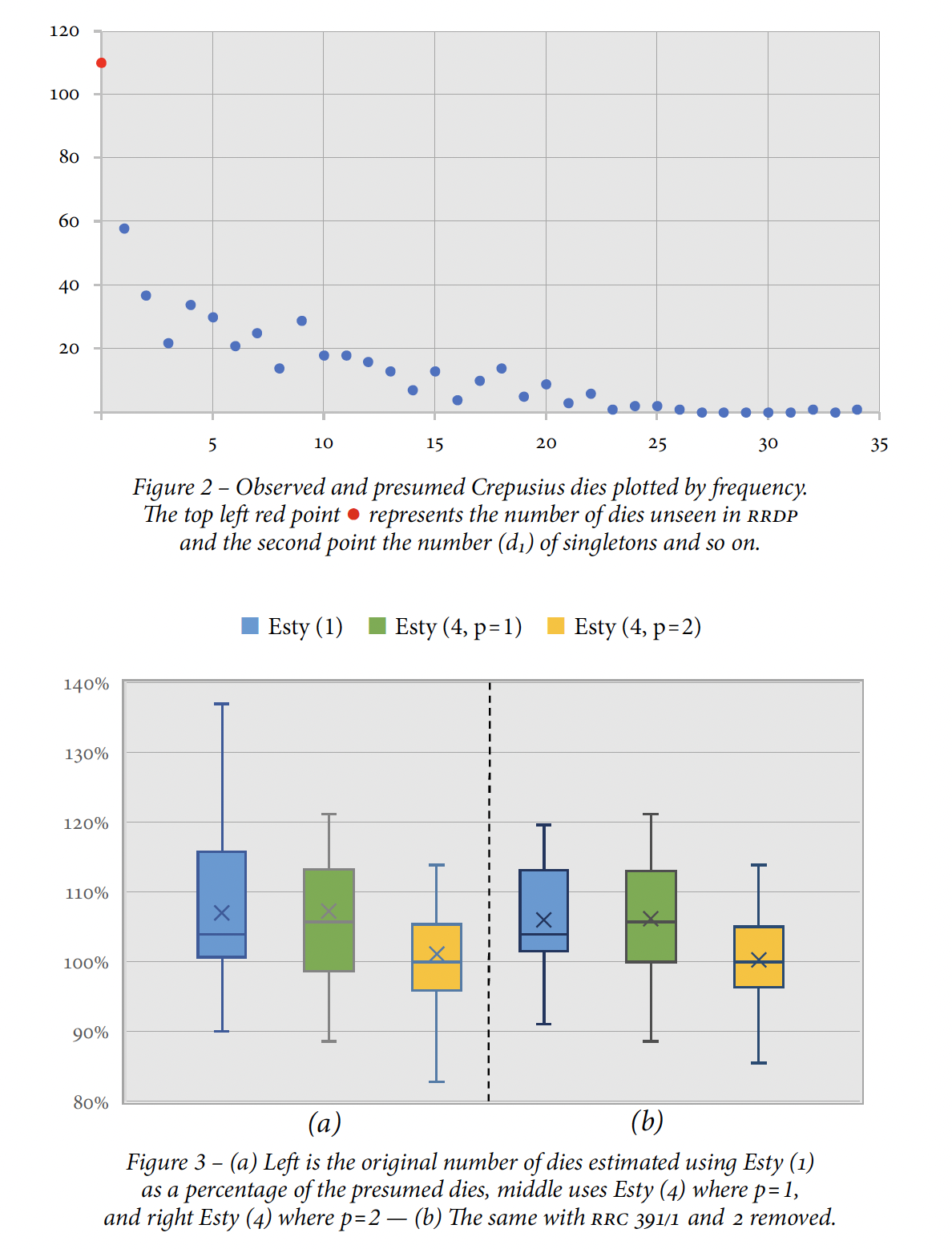
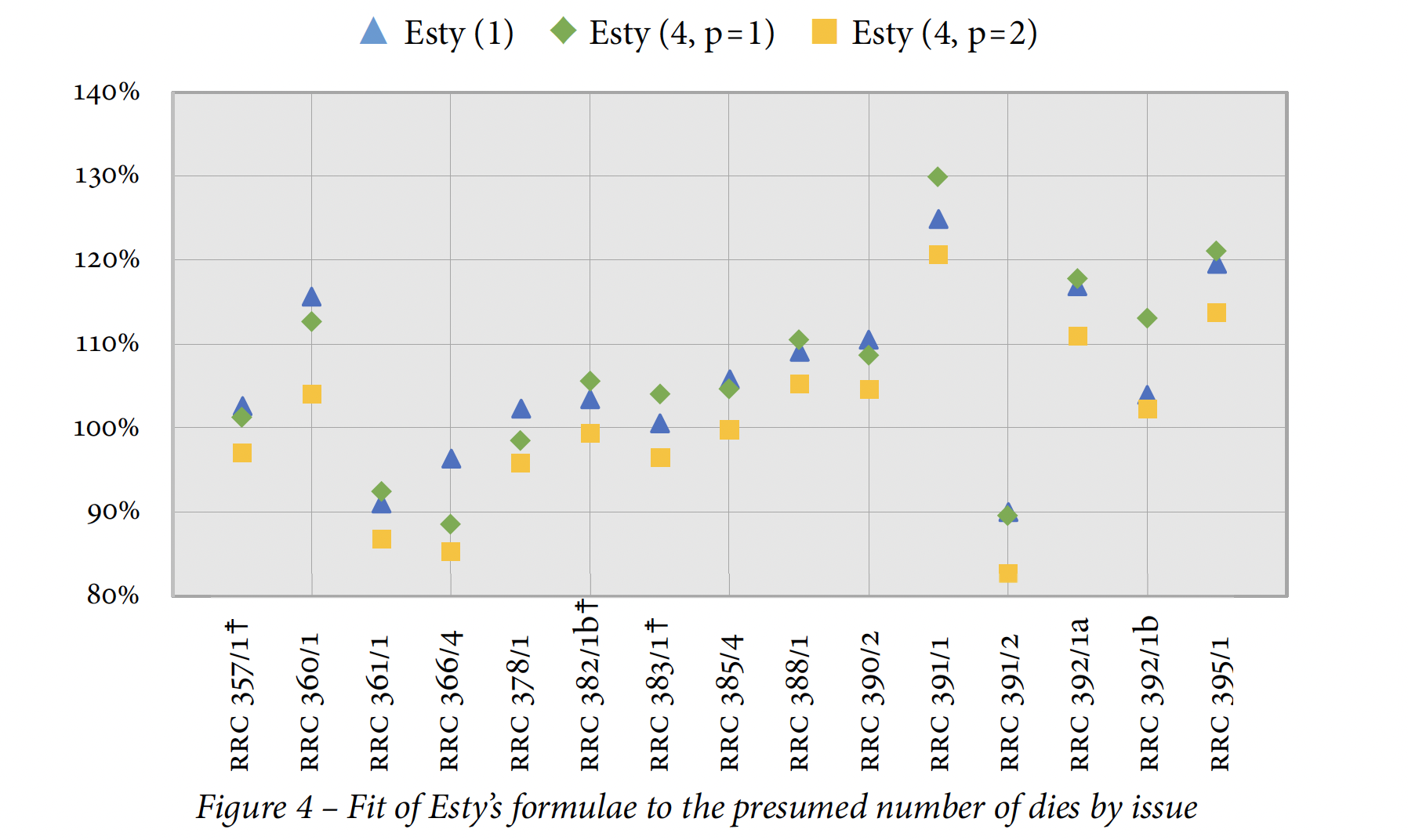
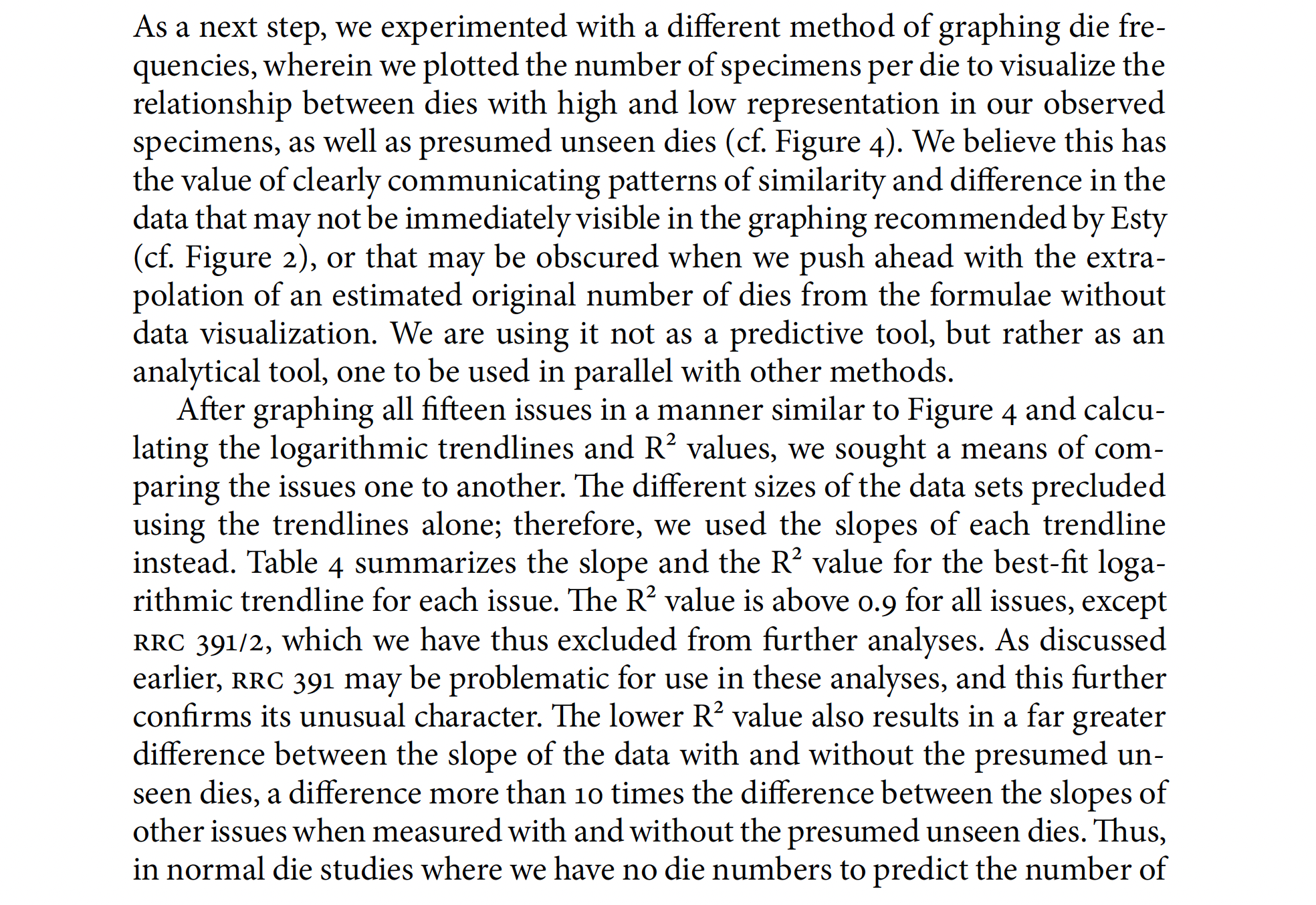
Below I give a little taster to hope you might be interested in reading more of our work. We synthesize all the numbered issues in RRDP that are numbered ODEC issues (One Die per Control Mark) and then test Esty’s formulae against the presumed unseens. We then propose a new means of displaying and comparing the same data, hypothesizing that the shape of the data is an artifact of production, one that can be used to compare one issue to another. Most exciting in the back half of the article we use is artifact of production to suggest how and where the Romans may have intervened in the production of coinage the Greek East.
P. 82-83
P. 85-86
Intrigued?! More interested in the Greek East in the time of Mithridates? Please request a copy of the article for your own private use.
I’m at the airport. Can I tell you how much I love the day flight?! Instead of trying to pretend one can compress 12 hours into 6 overnight and function the next day. I get to be out of time for just one day, go to bed ‘early’ by my own body clock and still function tomorrow. No performance, little to no jet lag. I’ve scheduled the flight to bang out a little supplementary grant request to augment some other research and maybe snag myself a student assistant to share the grunt work of the project. I’ve got a little wool and a crochet hook and a late 19th century detective novel audio book. But I think once I finish that little grant, I really just want to indulge in more antiquated coin stuff. Fingers crossed the internet on the plane is marginally acceptable.
Early in this volume we had mention of coins (bronze, silver, gold) being found by ordinary people around Orvieto and sold to a local enthusiast but with no significant details of interest. There was also a long lovely account in Latin of a “new” type deemed to be of importance to the history of Catania. While I found the language interesting, I wasn’t moved to dig further as not really my area.
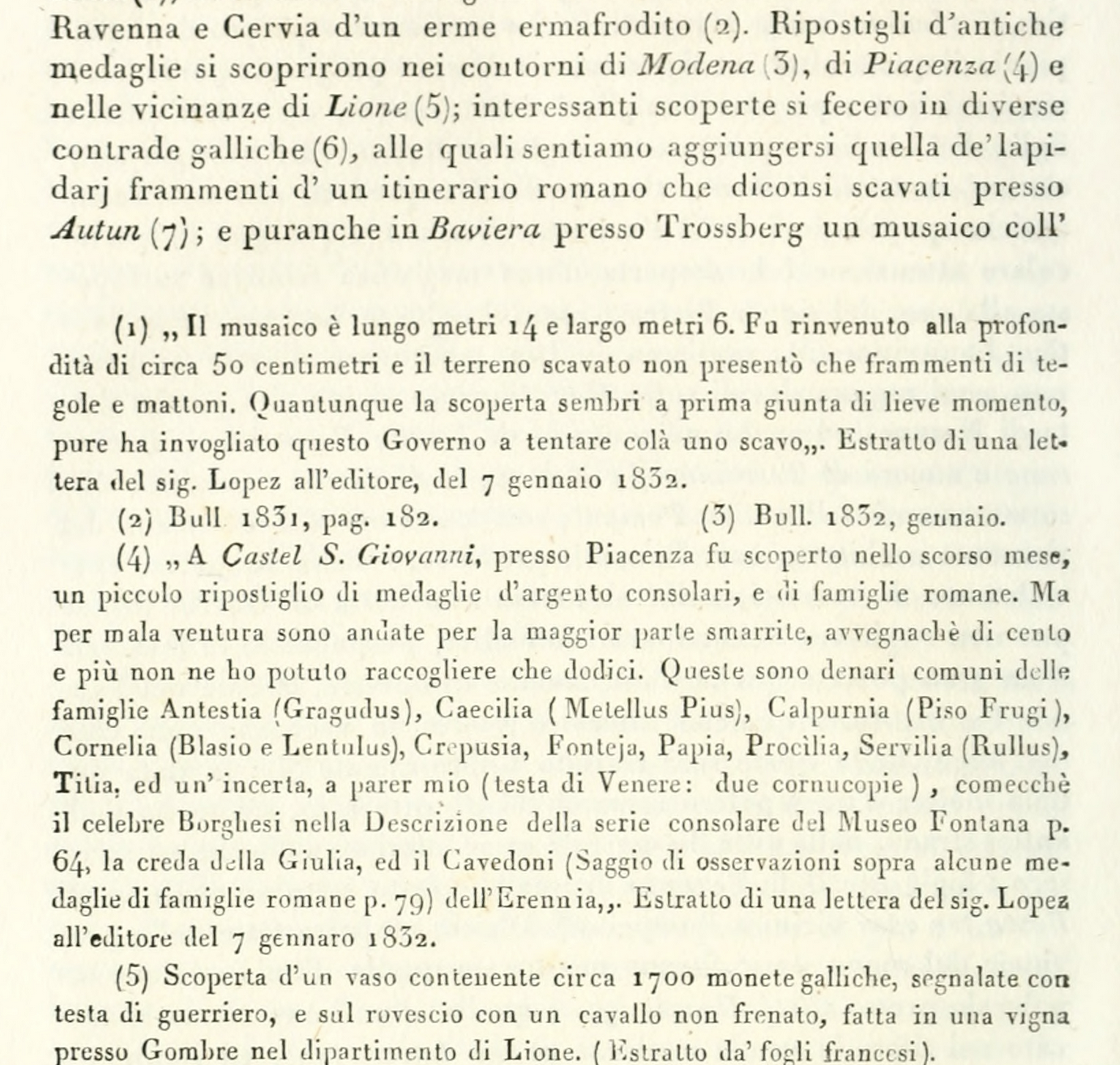
I thought the year was going to be a bust for finds of interest to me. But then I got three hoards in short succession.
Contorni at Modena (must find report!)
Gallic hoard of ~1700 specimens from near Lyon.
And, jackpot! a letter on a hoard of Castel S. Giovanni near Piacenza of republican material with lamentations of lack of content preservation but enough that we can say it is likely post 58 BCE base on absence of Capurnius Piso Frugi from Mesagne. But with most of the types observed associating the majority of the coins with the late 80s and early 70s. The Sullan Venus/Cornucopiae is indeed interesting.
Part two.
I’m on the return voyage once again at the airport early and feeling like self indulging in old publications, still in 1831 (link above).
This year a correspondent reports a type from the city of Lysinia saying prior to this there was no record of any coinage of this city. He found the coin in a mass of numismatic material recently shipped to him in Italy from Constantinople. Today we know of 7 types struck by the city. The coin described appears to be RPC V.3. 73872.
There is a fascinating narrative of discoveries between January and June 1831 including much of what I think is the house of the faun and also the discovery of a woman, her child, and some personal belongings. The end of this report makes allusion to many small finds without specifying where in the excavation area they were found but most tantalizing to me is the several hundred silver coins mostly of the republican period. This is squashed in with reports of gems and jewelry. (p.9)
The reports of spring 1832 excavations at Volterra (p. 161-163) say that in many of the tombs one or more Roman bronze coin was found. The descriptions are vague and the treasure hunters clearly disappointed they didn’t find better loot, but in one case they mention that the coin had the head of janus and a ship prow.
Burnett and Glenn showed me a very exciting coin and I’m trying very hard to SEE what others have seen on it. Abdy, like I, struggled to perceive the undertype. Burnett very generously pointed out to us the critical features. The back of Saturn’s head with is messy hair can be seen just above the lips.
Ok that isn’t that convincing so maybe the reverse is easier. I at least feel more hopeful here of seeing what others see.
Behind the horse’s head one can see the ground line and the top of the O of ROMA and maybe also the top of the R.
Do you see it?
Let me know.
Ok. I now spotted a bit of the border on the obverse and Abdy has convince me he sees part of the M next to the O.
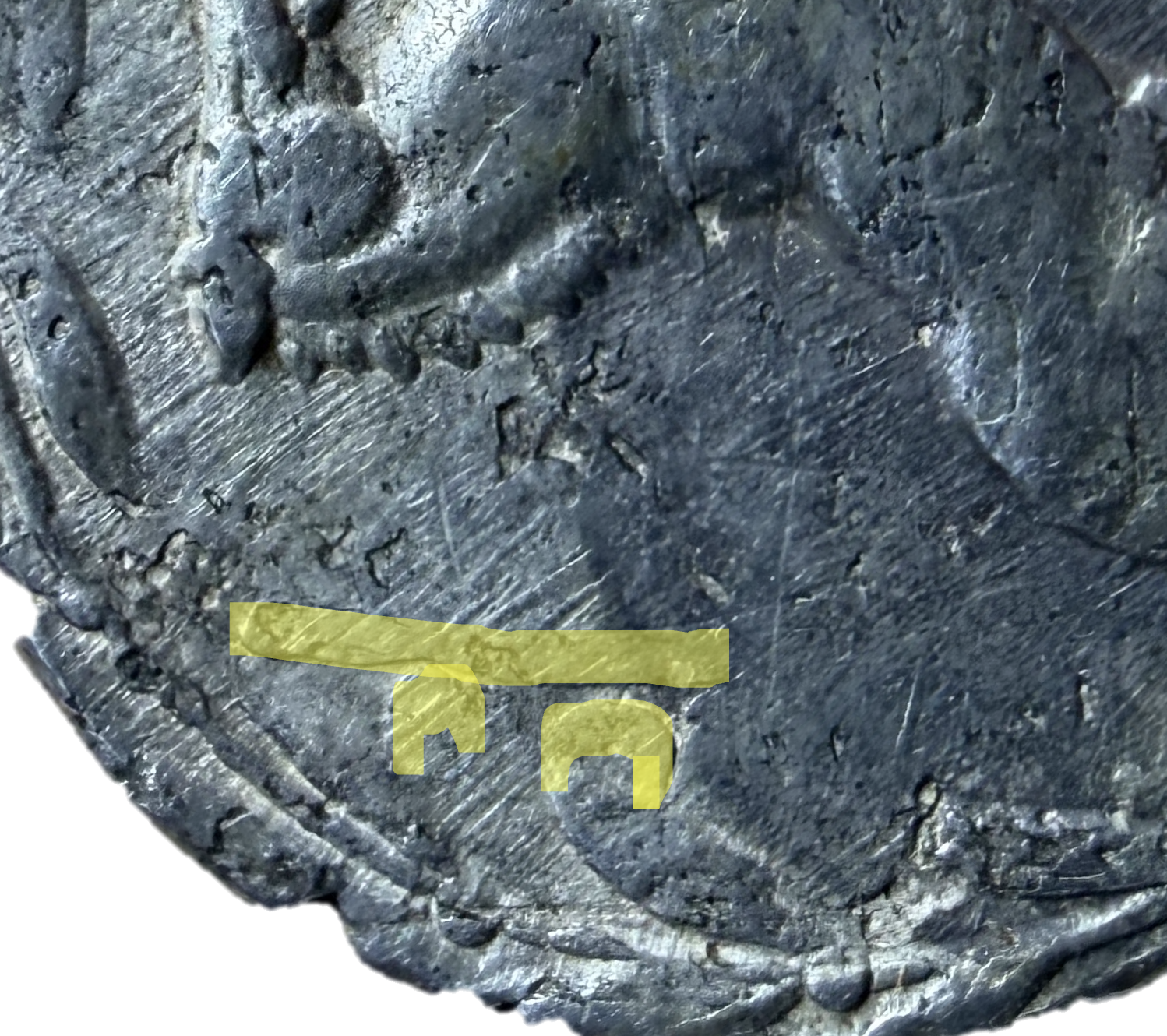
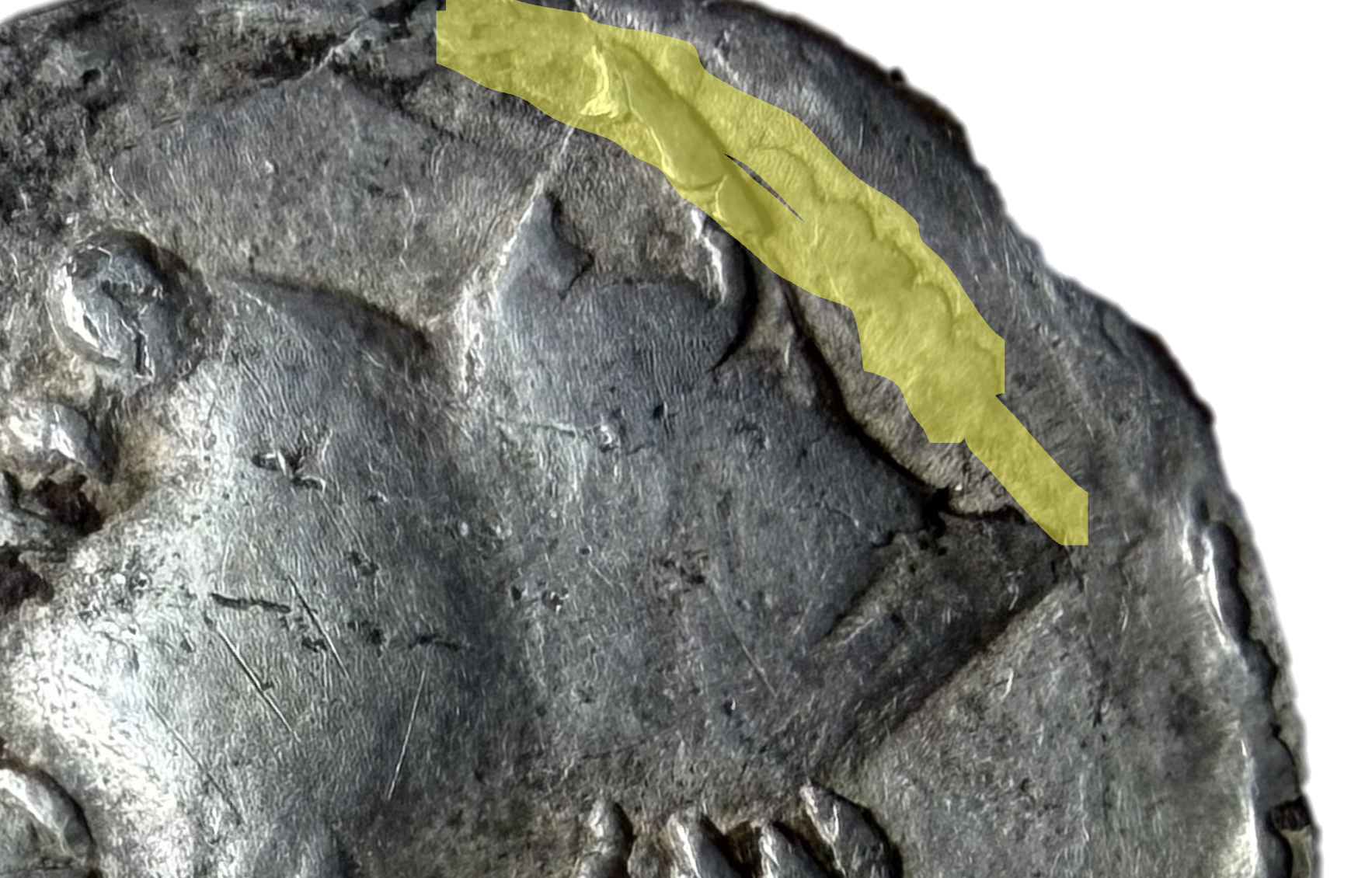
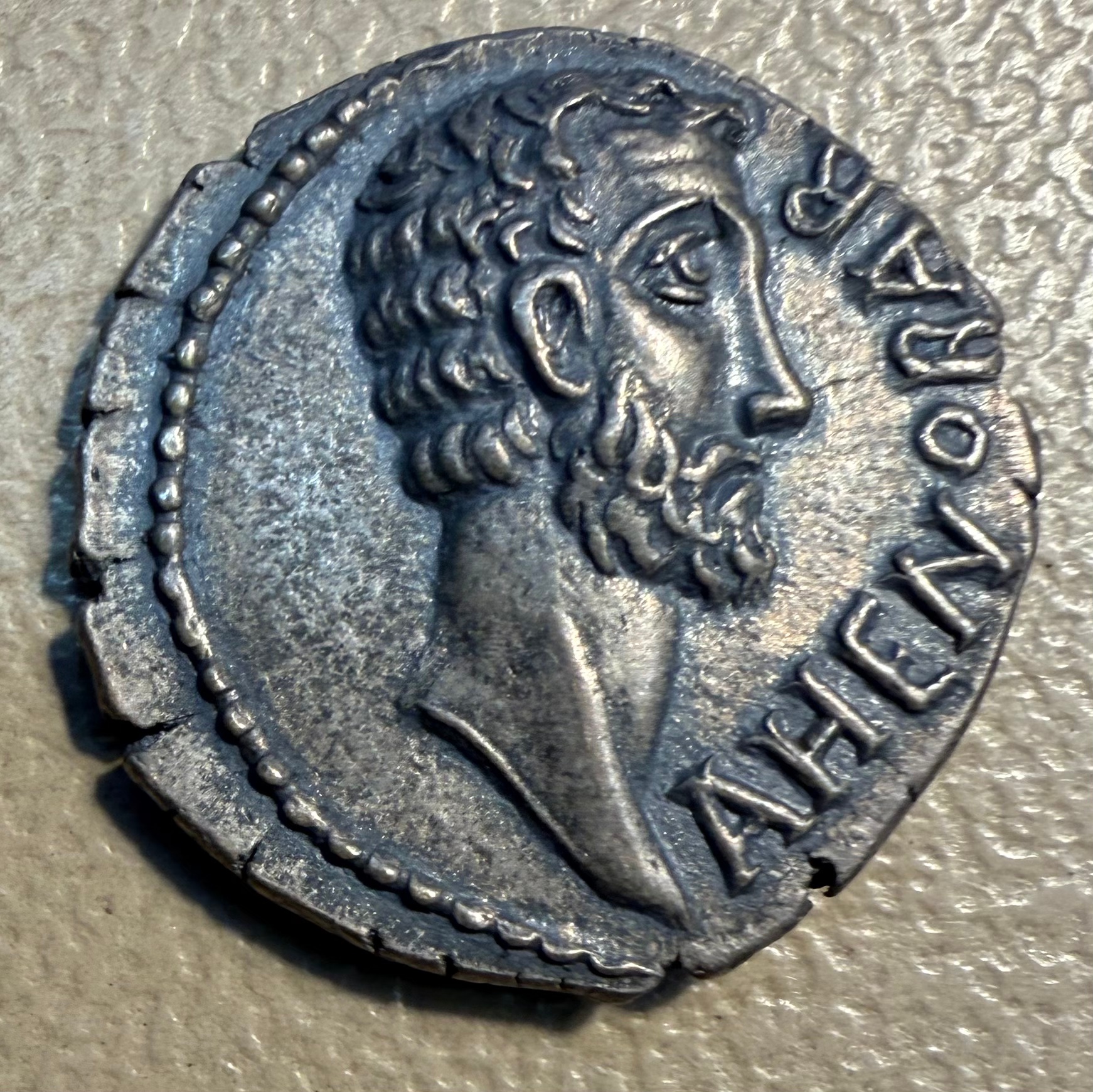
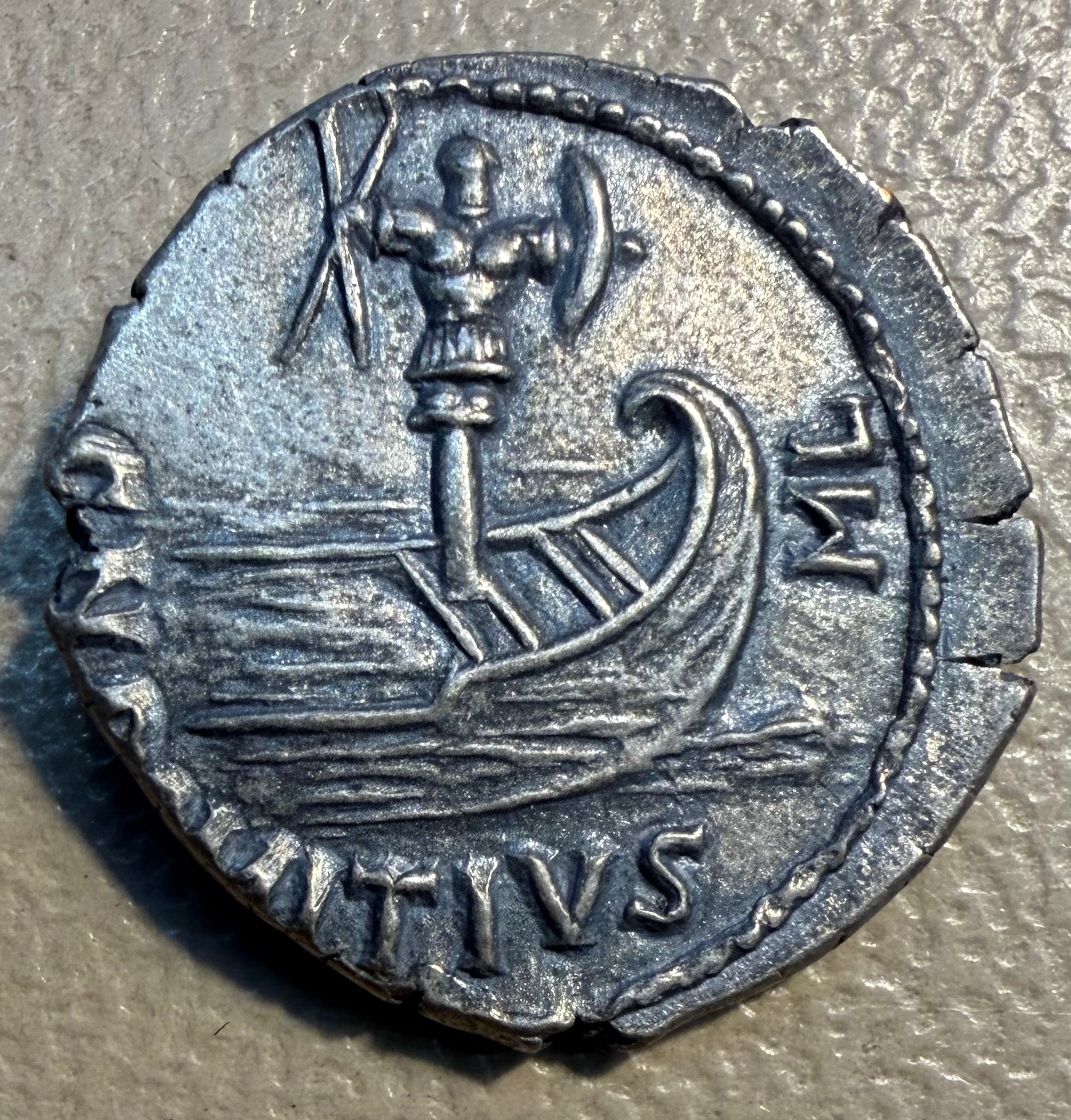
I’m at the BM this AM thinking about what get faked and why I’ve held soapy casts of real coins and too perfect flans struck with equally too perfect Becker dies, but neither of these types of fakes are really want to know more about. I want to know why individuals put lots of time and energy into creating other types of fakes that now seem so obviously fake, but must have appealed to a certain type of collector at certain point in time.
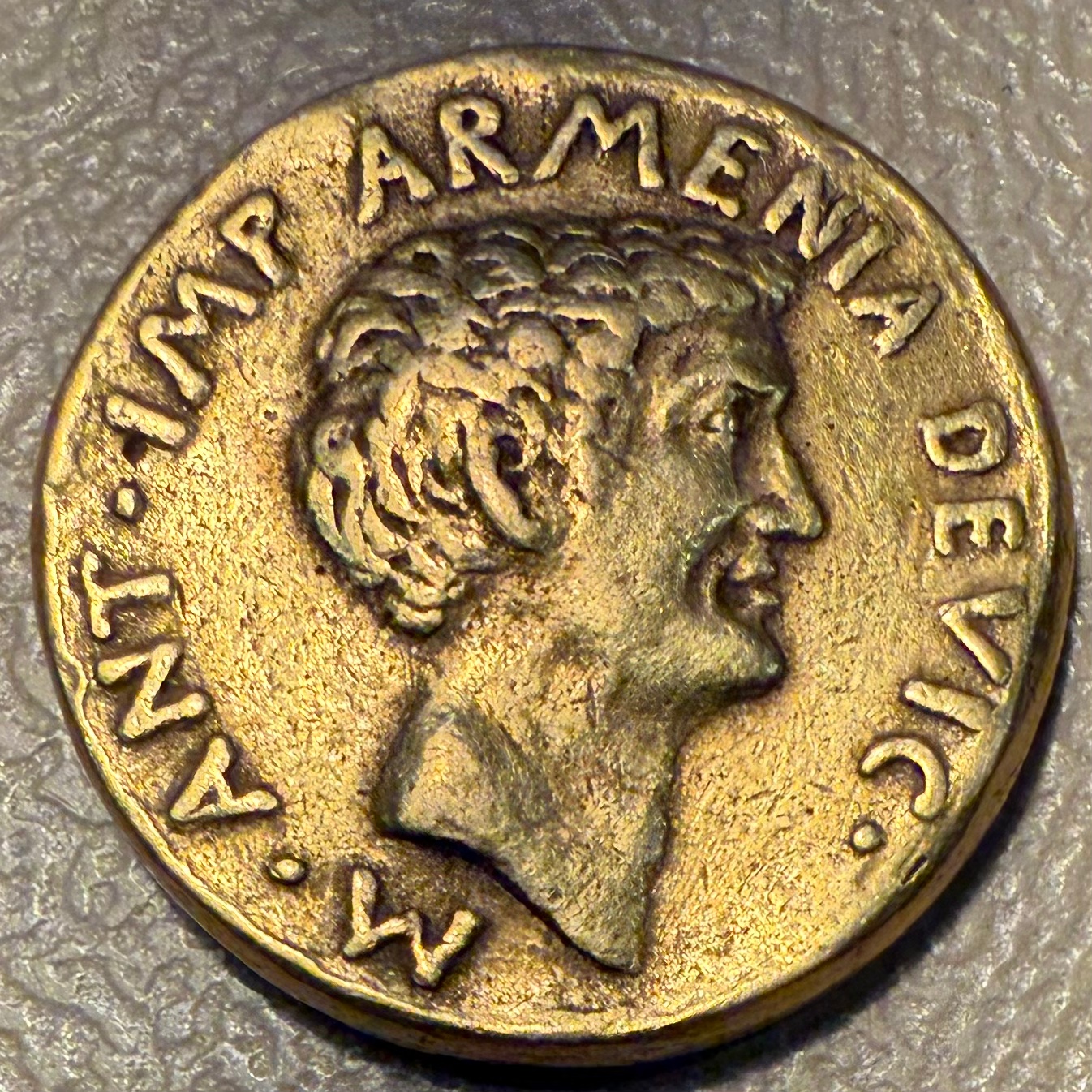
This specimen is just the sort of thing I find fascinating. It is well carved, and an incredibly sharp strike that is off flan. Much of the design bears a very close resemblance to actual coins but too much differs in the extreme.
ML is a meaningless ‘misreading'(?) of IMP.
The prow of a Roman war ship is carved like a little row boat with water lines all about it.
The forehead of the portrait is far too small and the eyes too large looking upwards in a Constantinian fashion.
The flan itself feels like it might be a restrike on a serrated denarius.
Yet even down to the letter forms and head shape on the obverse there are many distinct similarities. Note the shape of the B and the small o and the elongated head and shape of the ear.
What type of story can explain the copy of this coin? A hubbed die made from a worn specimen then recut? Possible. Or a die created from a poor drawing? I’ve long considered the possiblity that drawings of coins may have inspired fakes created for collectors greedy to possess what they see in books.
Anyway… I will continue through the trays…
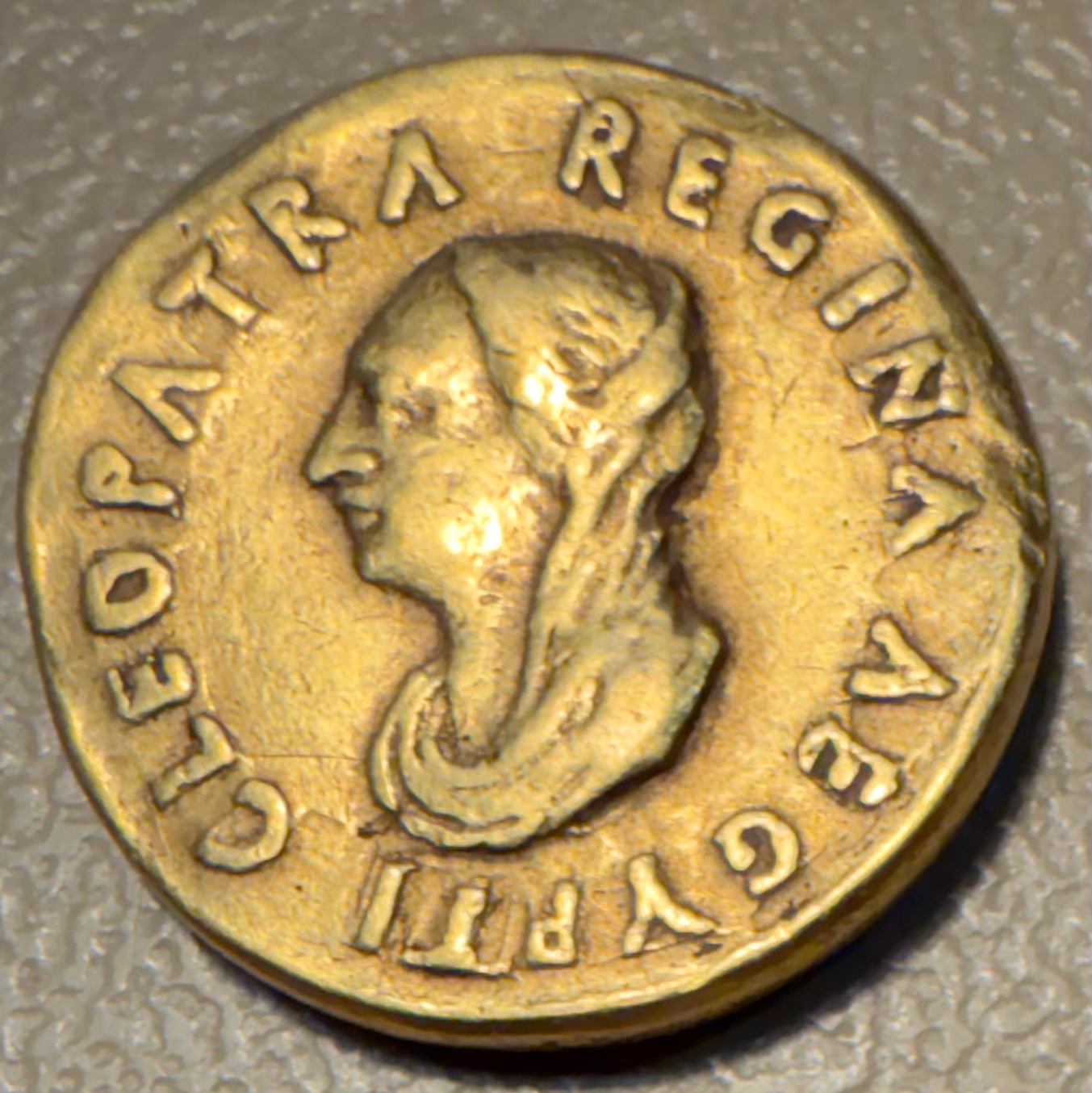
ex George III 1771 Reg, RImp #15 (8.11g)
There is a certain thrill about holding a gold fake made for a mad king! As a curator peeking over my shoulder just said Cleopatra “looks like she’s been pulled through the 18th century beauty filter”. The closest parallel to a “real” type is RRC 543/1. Interestingly enough the same royal collection also held another ‘fake’ aureus which might have been cast from this same type. The mold was recut to sharpen the letters before the casting. I am keen to try to die match this but that would slow me down.
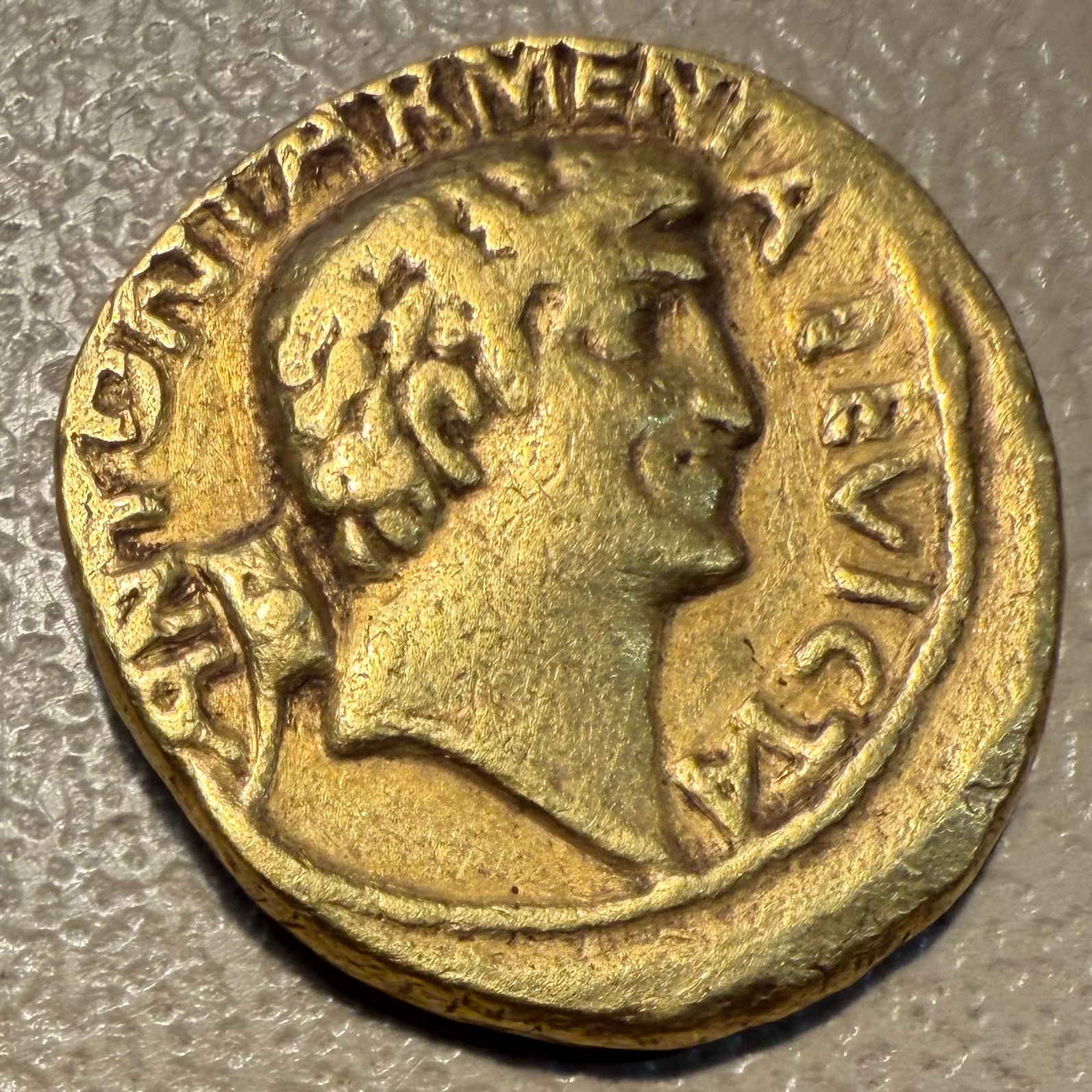
ex GIII 1771 Reg, RImp #16 (6.66g)
Early Fish and Chips Lunch Break!
BM 1909.7.14.1, present of A.J. Evans (7.76g), imitation of RRC 521/1
Here’s one I have a hard time being certain it is fake independently of the BM’s placement of the object in the box full of imitations. I went through the Schaefer Archive pages and I could not spot the die among either the gold or the silver (RRC 521/2). The main difference in execution is the lituus. On the genuine specimens it has far more of a bend in it and typically a slight widening out at the bottom. It is also light. The specimens in CRRO range from 8.01g to 8.11g.
Purchased from the Sale of Dr. George Fredrick Nott’s collection by Sotheby’s 30 May 1842 (3.64g)
This one I have no trouble condemning this as a fake on style. Both the head and the standing figure bear no resemblance to republican coin designs. Based on the legends and types it seems to imitate RRC 531/1. But it is so stylistically different (the original is very badly engraved) that it is almost as if someone imagined what the type might look like from a written description. I’d love to find the catalogue of the sale if possible.
L.A. Lawrence Bequest 1950 imitating RRC 488/26.36g imitating in gold RRC 386/1Sold to BM in 1856 by Harry Osborn Cureton (8.40g), imitating in gold RRC 439/1
After this he went to the city of Crenides, and having increased its size with a large number of inhabitants, changed its name to Philippi, giving it his own name, and then, turning to the gold mines in its territory, which were very scanty and insignificant, he increased their output so much by his improvements that they could bring him a revenue of more than a thousand talents. And because from these mines he had soon amassed a fortune, with the abundance of money he raised the Macedonian kingdom higher and higher to a greatly superior position, for with the gold coins which he struck, which came to be known from his name as Philippeioi, he organized a large force of mercenaries, and by using these coins for bribes induced many Greeks to become betrayers of their native lands.
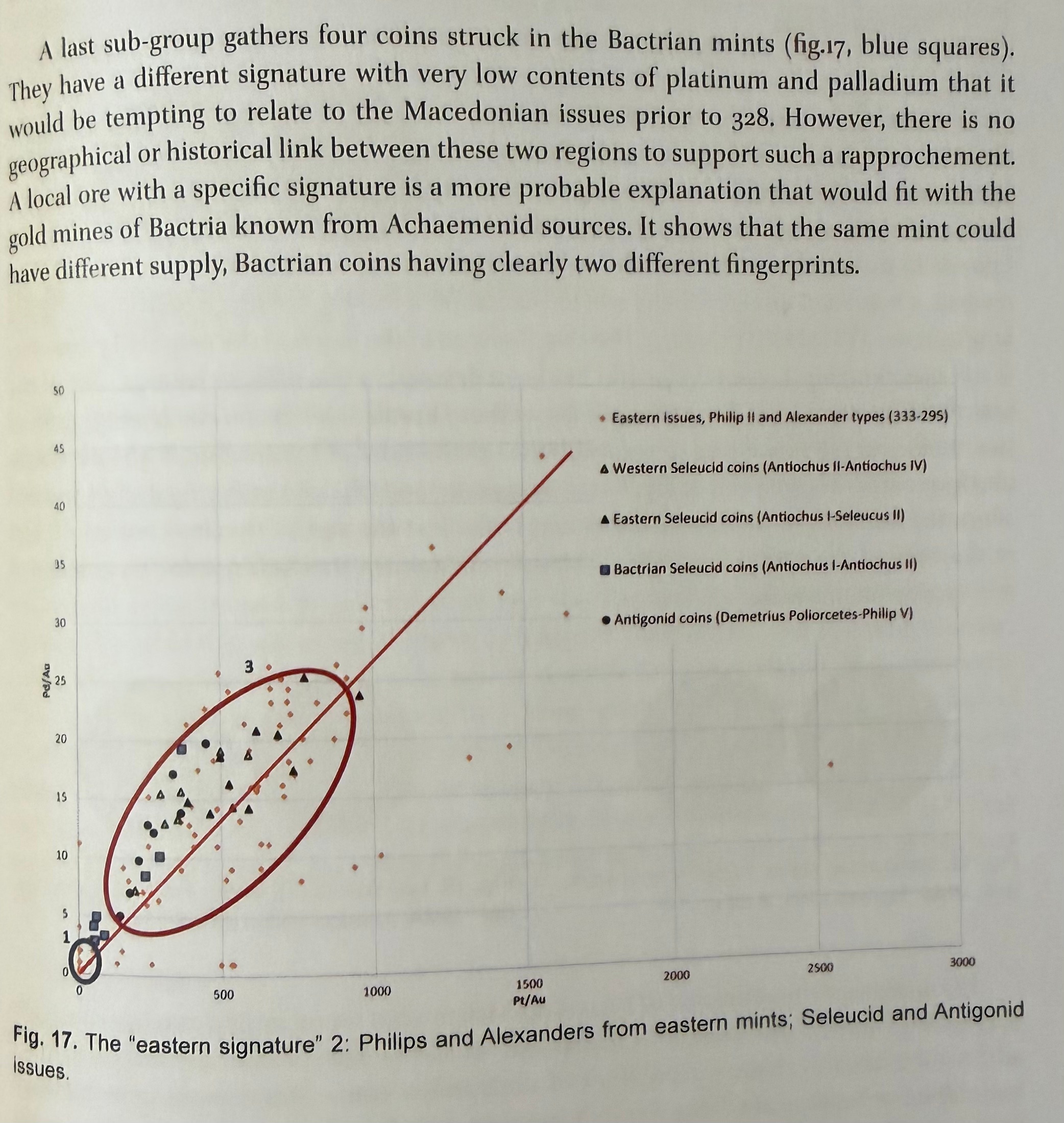
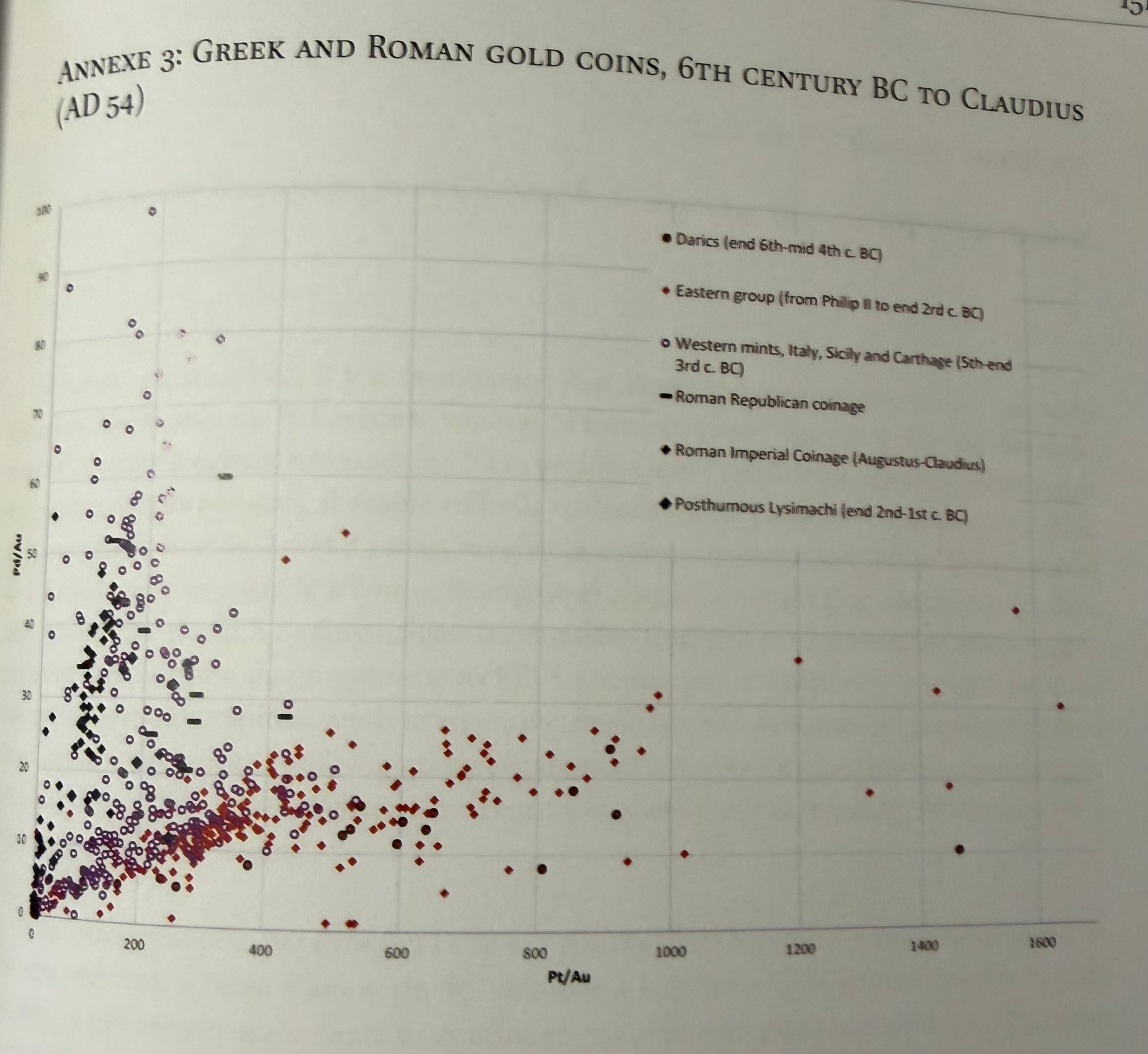
I’m on to Duyrat et al. in AVREVS. It’s nice when our data matches our literary testimony. Here we have some further conversation use of die studies for quantification similar to the previous chapter but they quickly move on to metallurgical analyses. These seem to confirm that Philip’s initial striking of gold is very low in Palladium and Platinum consistent with recently mined ore, such as Diodorus point out. The analyses also show far higher and variable levels of Palladium and Platinum for both Darics and Alexanders struck in Asia Minor. The authors quote Herodotus and Strabo to suggest that the higher variable levels of these trace elements is reflective of repeated melting and mixing of the metals.
This was the tribute which came in to Dareios from Asia and from a small part of Libya: but as time went on, other tribute came in also from the islands and from those who dwell in Europe as far as Thessaly. This tribute the king stores up in his treasury in the following manner: — he melts it down and pours it into jars of earthenware, and when he has filled the jars he takes off the earthenware jar from the metal; and when he wants money he cuts off so much as he needs on each occasion.
…also the following, mentioned by Polycritus, is one of their customs. He says that in Susa each one of the kings built for himself on the acropolis a separate habitation, treasure-houses, and storage places for what tributes they each exacted, as memorials of his administration; and that they exacted silver from the people on the seaboard, and from the people in the interior such things as each country produced, so that they also received dyes, drugs, hair, or wool, or something else of the kind, and likewise cattle; and that the king who arranged the separate tributes was Dareius, called the Long-armed, and the most handsome of men, except for the length of his arms, for they reached even to his knees; and that most of the gold and silver is used in articles of equipment, but not much in money; and that they consider those metals as better adapted for presents and for depositing in storehouses; and that so much coined money as suffices their needs is enough; and that they coin only what money is commensurate with their expenditures.
Unsurprisingly most of the Seleucid gold shows the same type of mixing, the exception being the Bactrian mint which not only strikes recycled metal but also seems to access local mines for fresh ore and to coin that as well.
P. 133 in AVREVS
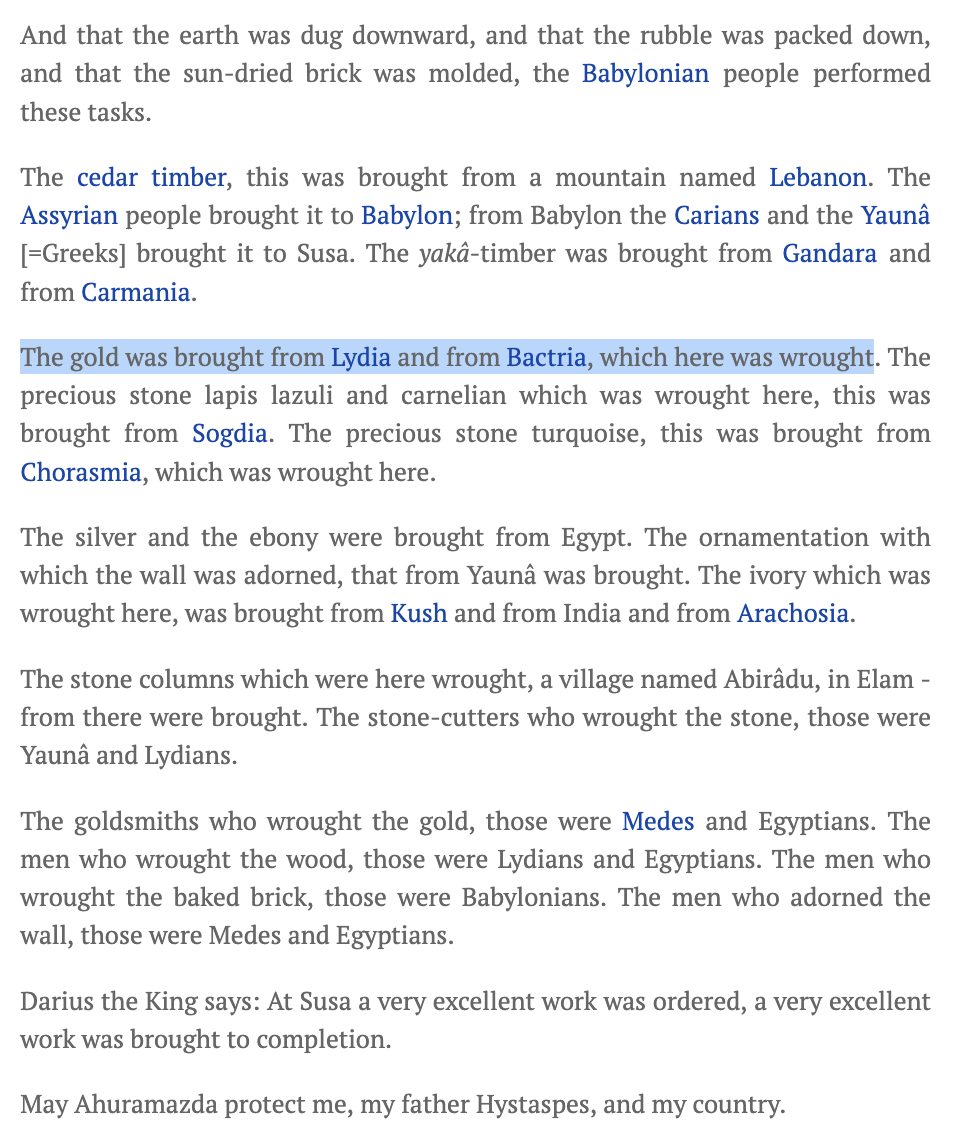
Again as the authors point out this corroborates epigraphic testimony that Bactria supplied the Achaemenids with gold.
I would note that Bactria is not marked out as a particular source of gold in Herodotus’ accounts of tribute paid to Darius, he reserves this role for “India” (cf. 3.92 and 3.94). This fits well with Herodotus’ world view where gold comes from the far east and is associated with ‘gold digging ants’ (3.102-105). He says the Indians there live much like the Bactrians. (cf. the gold guarding griffins at 3.114)
The authors note of the Ptolemies: “Although they developed a closed monetary system and exploited resources in gold in the eastern desert, potentially with different characteristics, no new signature can be detected.” p. 137
In short Ptolemaic gold looks much like Seleucid gold (excepting a bit from Bactria) which looks much like Alexander’s gold and that of the Achaemenids.
When turning to the Western Mediterranean they note that a wide range of alloys were struck. In the east gold coins are nearly pure gold, where as alloys in the west may vary from over 96.5% gold down to 20.4%, most notably at Syracuse and Carthage. But for me the best was saved for last. Look how much the Roman republic coins fit right in with other western gold.
In an article published in 2007, I attempted to explore multiple perspectives to define the coined share of precious metals in the Hellenistic world. Somewhat to my surprise, it repeatedly emerged that this share was a minority, if not small, probably less than 20%. In a paper intended to follow up on this, presented shortly after in 2009, I tried to estimate the importance of this Hellenistic goldwork, a task far more arduous than estimating the amount of coined metal. I certainly did not succeed in a field dominated by art history, where quantification remains, even today, in limbo. But it is clear that goldwork must be integrated into our reflections.
De Callataÿ in AVREVS p. 93
The 2007 article is listed by google scholar as 2006.
The 2009 essay was published in the following volume appearing in 2017:
Liámpī, Katerínī., Dimitris Plantzos, and Κλεοπάτρα Παπαευαγγέλου, eds. 2017. Νόμισμα / Κόσμημα : Χρήσεις, Διαδράσεις, Συμβολισμοί, Από Την Αρχαιότητα Έως Σήμερα : Πρακτικά Διεθνούς Συνεδρίου Ίος, 26-28 Ιουνίου 2009. Αθηνα: Εταιρεία Μελέτης Νομισματικής και Οικονομικής Ιστορίας. [Academia.edu link to De Callataÿ chapter]
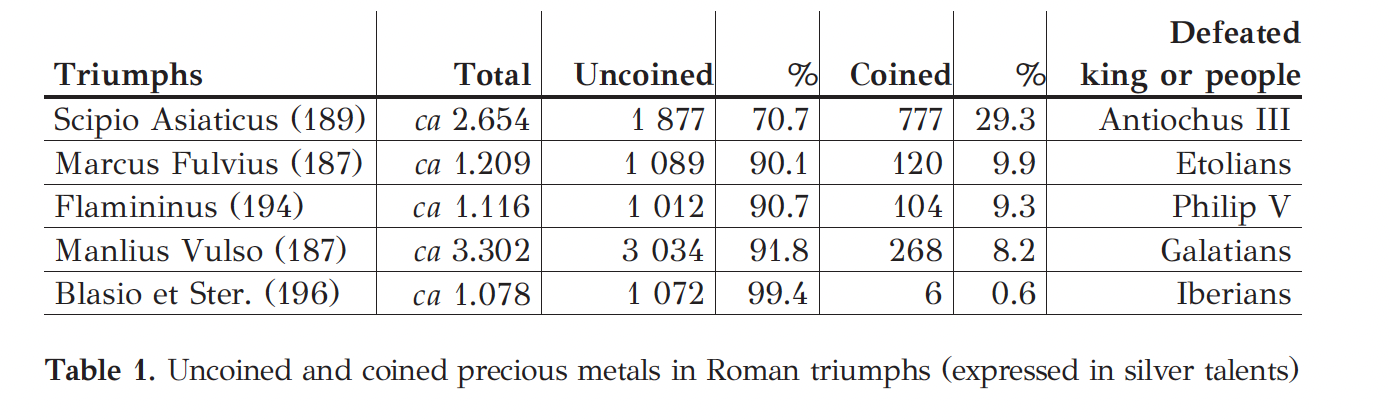
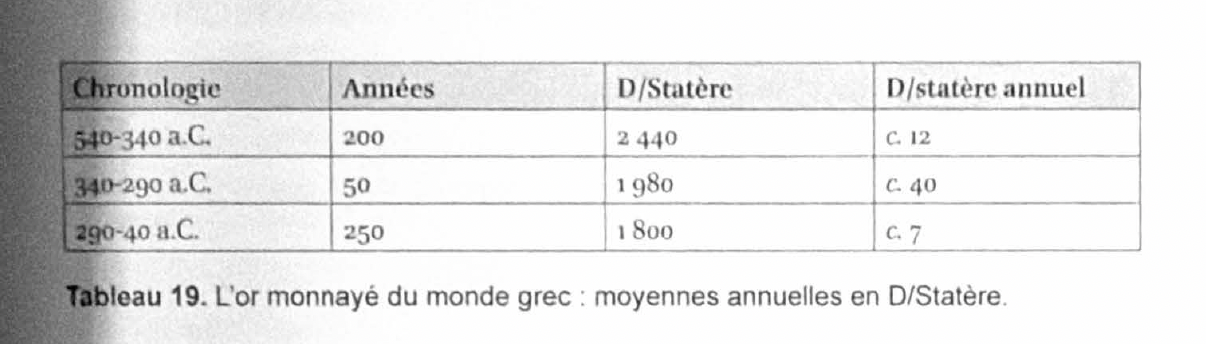
This table is handy and fascinating!
My first thought is how much of the uncoined then in turn became coined by the Romans themselves?! And then how much of the uncoined metal was previously struck as coins and then recycled to create the very objects being carried in procession? Finally does this preference to display uncoined metal reflect the tastes of the triumphators to create spectacle. Gold and silver objects may be easier and more impressive than coins when carried in parade. How do you even display mountains of coins in such a moving spectacle?!?!
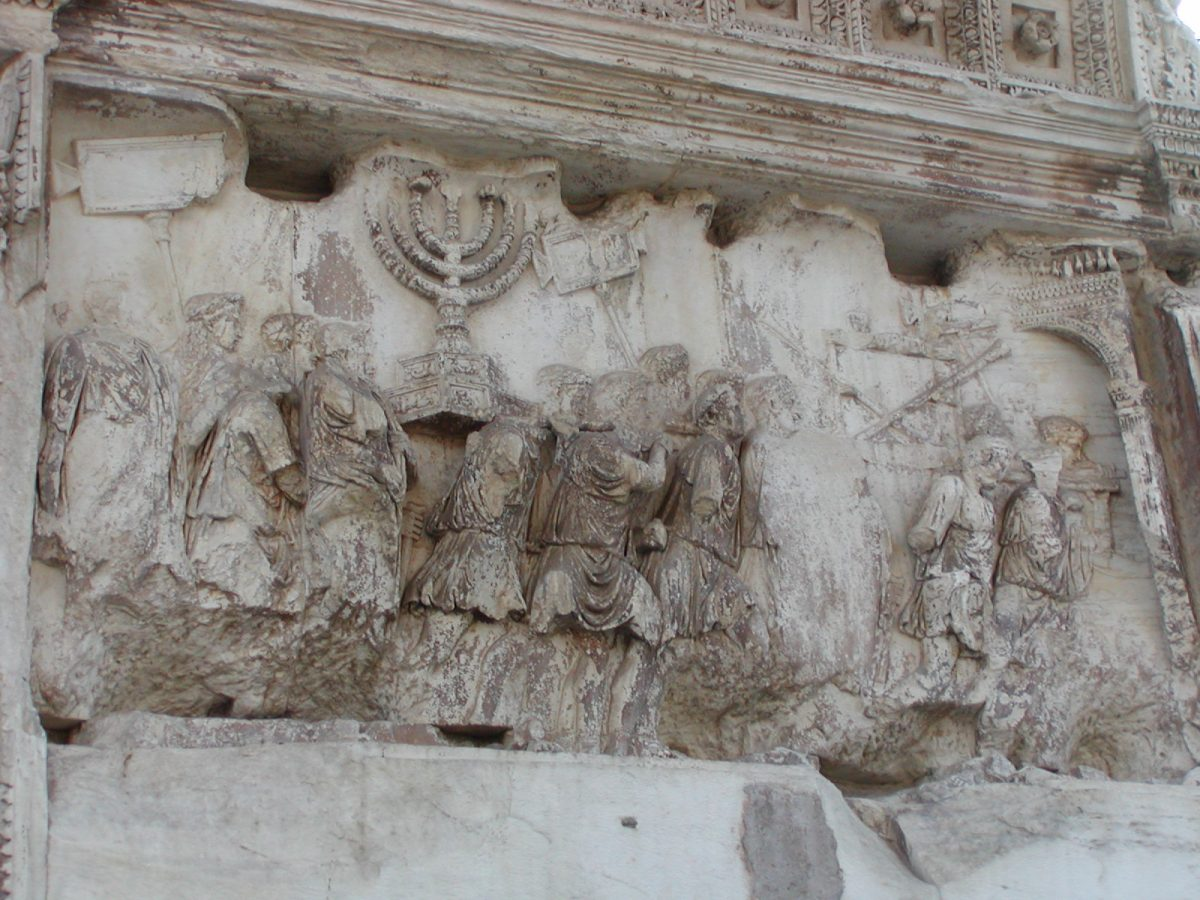
relief from the arch of titus to help us imagined the spectacle of precious metal objects (instead of coins)
The display of coins is particularly presents a challenge. Think of the iconography of liberalitas under the empire where the money shovel becomes the key symbol not piles of coins themselves.
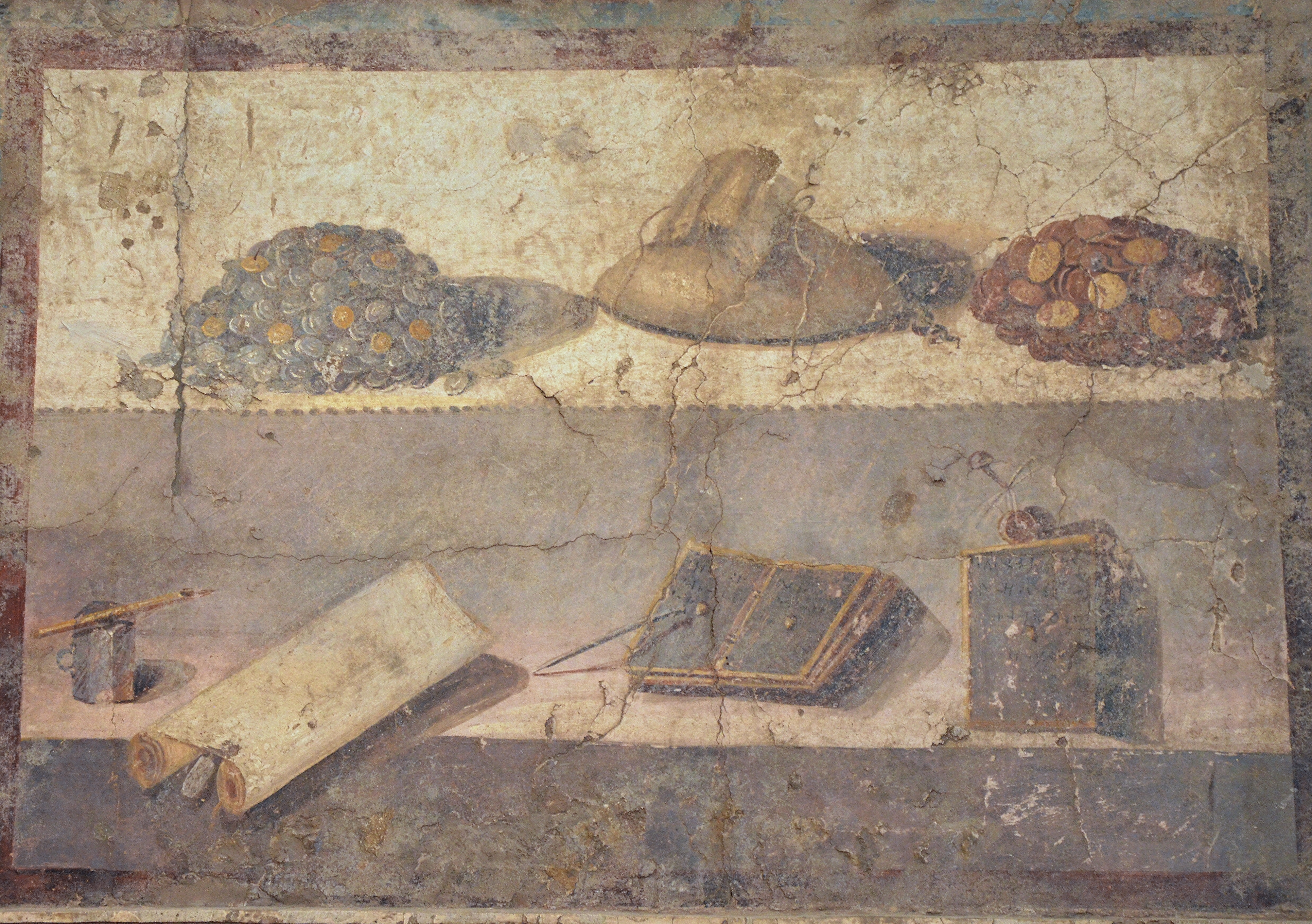
Heaps of coins are impressive yes but they tend to slide all over the place once you get beyond a relatively small amount. Here I cannot help but recall Frank Holt on the coin as meme (in the Dawkins sense and less in the internet phenomenon) — a great book, consider buying if you’ve not yet.
Fresco from Pompeii now in MANN depicting piles of coins illustrating the problem of spreading heaps
I’d also point out that not all the coin acquired by the commander in the war needs to have been carried in the triumph itself. Commanders gave coin largess to troops during the campaigns themselves and could acquire coin and use it for purchases on campaign reserving objects for purposes of the triumphal spectacle, conspicuous dedications in sacred spaces at Rome AND abroad, as well as alliance building through ‘repatriating’ materials to presumed ‘rightful’ owners Cf. Scipio at Carthage calling Sicilian embassies to reclaim lost artifacts c. 146BCE.
None of this is to undermine De Callataÿ’s larger point that at any one time a great deal of precious metal, esp. gold would be in uncoined form. We know all this material was heavily recycled and repurposed throughout antiquity. we might even recall of how the gold hieroglyph derives from a pictogram of a necklace! It seems highly likely to me that gold as primarily a crisis coinage was more often stored as object rather than as coin. Look again at the above fresco the precious metal pile of coins has eight gold pieces in a vast mountain of silver, it visually communicates the relative scarcity of gold coin even amongst the well-moneyed, as well as how bronze coin is segregated from precious metals, but what gold coin there is travels with the silver coin.
Generally speaking I find De Callataÿ’s attempts to treat quantify the volume of surviving gold jewellery a worth-while endeavor and what I’d like to do is think more about this methodology in relationship to inscriptions on silver objects that record their weights, a topic on which Alice Sharpless is the expert (earlier related blog post) and from there the bronze statues with weight inscriptions at San Casciano de Bagni (see my notes from last AIA-SCS here).
Circling back to the AVREVS volume, De Callataÿ relies on average weight standards, observed numbers of coins, and observed numbers of dies to across ALL gold issues (including Roman republican!) distill down an estimate of how much gold was struck in various periods:
We see, therefore, that the gold of the age of Alexander [340-290 BCE] does indeed represent the largest gold minting ever produced in the Greek world, but that this preeminence is perhaps less pronounced than has long been thought. First, because the total number of Alexanders has been revised downwards (1,000 staters instead of 1,200); second, because there are earlier, large-scale mintings such as the Cyzicean issues, the Darics, and the Croeseids, which also amount to hundreds of staters; finally, the examination conducted here further indicates that it would be a mistake to consider only the Alexanders, Philips, and Lysimachus, given the scale of production down to the end of the 1st century.
De Callataÿ in AVREVS p. 109
He goes on to discuss the fragility of our evidence because of differing survival rates and also highly variable reporting of finds. This is a theme he is cognizant throughout the chapters. I think this picture may change how we read Plautus as well…. See last post. Perhaps indeed make De Callataÿ sympathetic to at least some of my arguments about gold and the Romans. …
My take aways from this is how critical die studies are for this type of quantification and also how much periodization matters and how we need to look across geographic boundaries.
I’m still pre-writing and still working my way through AVREVS with an eye to fuzzy boundaries of periodization, culture groups, and by extension disciplinarity in numismatics. For full citations and more on this project see previous post.
De Callataÿ’s chapter (pp. 91-114) begins by summarizing his 2015 work and re committing to its primary thesis. I thought perhaps best then to remind myself of that work before looking at the newer work where he links his textual readings to material data.
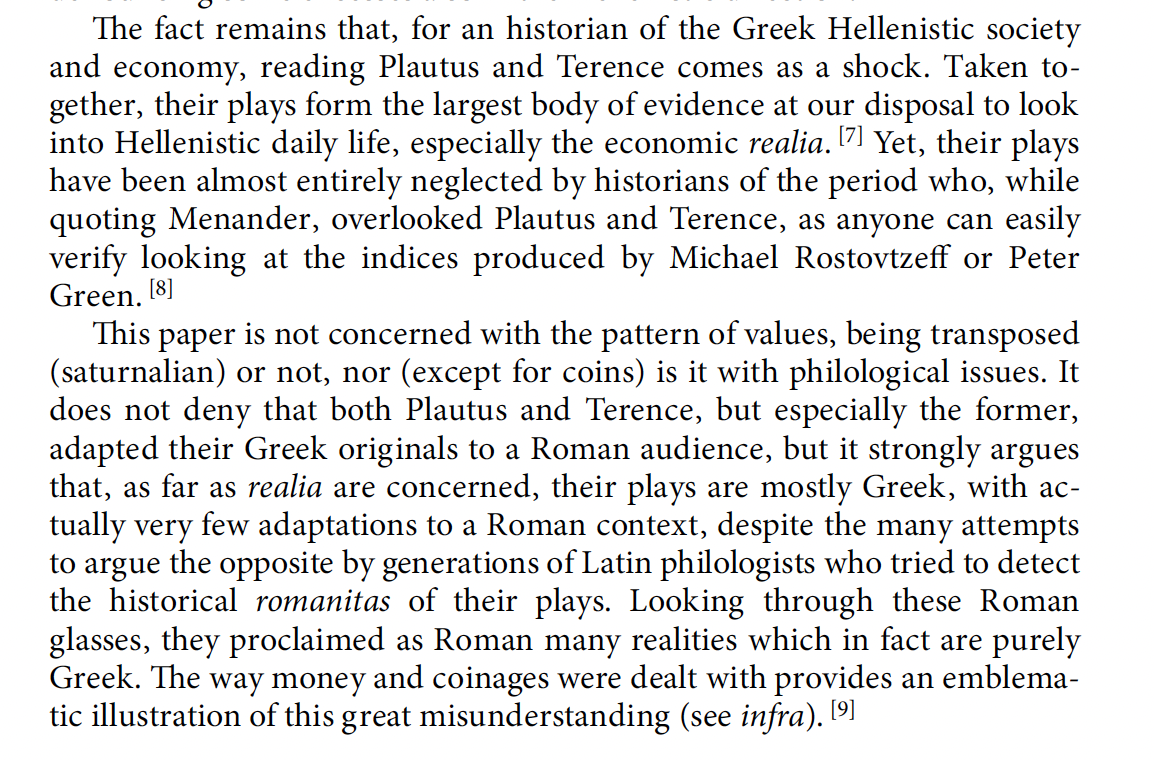
It is a rare thing for me to disagree with a scholar I admire so much. It worried me enough that I left the library yesterday in a bit of funk, committed to sleeping on the topic. And thus am revising my original notes before posting. The truth is De Callataÿ is an insightful reader of Roman comedy with a keen eye to the economic implications of the texts. I don’t disagree with the vast majority of his 2015 article and really after page 31 it brilliantly captures the full breadth of economic and monetary history we can extract from the corpus of these Latin plays. So why my funk. I don’t even disagree with the premise that the plays are good evidence for the Hellenistic period, it is only that I believe that Rome is very much at the time of the writing of the plays a Hellenistic state and that the plays reflect a shared reality. I am also very persuade by Amy Richlin’s work on the creation and context of these plays and performance, a world of the enslaved, and thus of individuals involuntarily culturally relocated from one setting to another.
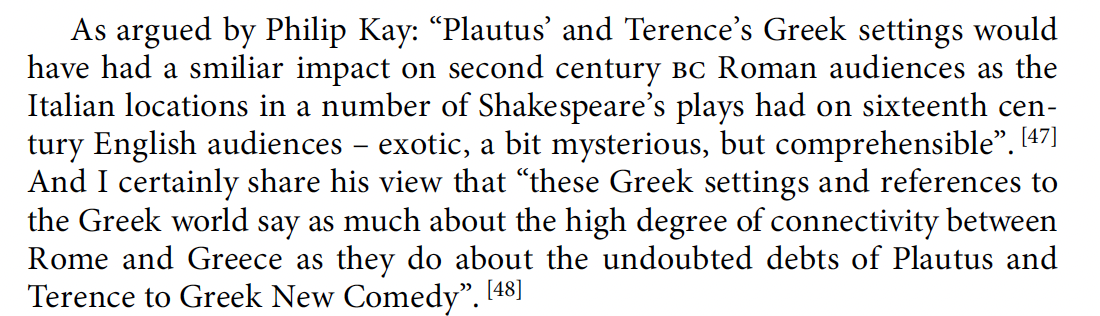
Thus in what follows are my reading notes on why I think De Callataÿ goes too far to try to create a strict dichotomy between the realities of Rome and the realities of the Hellenistic World in the time of Plautus and Terence, post 1st Punic War down to the decade just following the 2nd Macedonian War. Read Rome as economically and monetarily as fully Hellenistic in this period. This means that plays adapted from themes popular in Greek drama in an earlier Hellenistic period are equally relevant to a Roman audience.
—
I wonder if De Callataÿ might temper his views of the (lack of) romanitas in the plays.
Richlin, Amy. Slave theater in the Roman Republic: Plautus and popular comedy. Cambridge University Press, 2017. (BMCR review)
I also wonder if I am allowed a middle ground, a via media, by which I assert that the Romans are part of the Hellenistic world and that in particular the enslaved and/or formerly enslaved who developed and performed these theatrical productions were products of the Hellenistic Mediterranean with its incredible (and disturbing) mass movements of humans through enslavement, fueled by the ambitions of competing empires.
The Romans engaged in overseas trade and investments
Key to De Callataÿ’s argument in 2015 is that at the time of Plautus and Terence the Romans were not regularly engaged in overseas private travel for business/investment and thus the interconnected world of commerce so readily seen in the plays must be wholly Greek, and set in the world of the 4th and early 3rd centuries (cf. p. 22). Plautus is usually said to have died 184 BCE and Terence 159 BCE. Would their audiences recognize overseas investments in land and trade as applicable to the Romans? I think so. The senatorial class is so obsessed with presenting itself as agrarian that our literary sources tend to minimize everything else (e.g. Cato, On Agriculture), but we nevertheless can see plenty of overseas investments. Romans and their allies were keen to acquire land in Sicily following the 1st Punic War and after the 2nd Punic War we see extensive mining operations in Spain. We know of the extensive trade in vernice nera with petites estampilles with Iberia esp. the region of Catalonia, a type of pottery deeply characteristic of 3rd century Italy. In 166 BCE the Romans converted Delos into a free port. The advantage of doing so to Italian traders is well demonstrated by later epigraphic influence but the impetus to do so was likely predicated on prior Italian trade interests in the Eastern Mediterranean. The setting is Greek but the behaviors and inter-connectivity are Hellenistic, one’s the Romans and their Italian neighbors readily engaged in.
I want to think of more examples here but I also want to move forward, so for now one corroborating citation:
ROTH, ROMAN. “TRADING IDENTITIES? REGIONALISM AND COMMERCE IN MID-REPUBLICAN ITALY (THIRD TO EARLY SECOND CENTURY BC).” Bulletin of the Institute of Classical Studies. Supplement, no. 120 (2013): 93–111. http://www.jstor.org/stable/44216740.
Roman warfare enriched soldiers
The social structures of the plays are discussed as non-Roman on p. 23 following. I think Richlin does a thorough enough job on the “pimp” and “courtesan” (enslavers and enslaved) that I can just nod her direction. But I must disagree with this assertion that seems to believe that the Romans were as sober and abstemious as they tell us they were.
My knee-jerk reaction is that we know that the distribution of spoils was an expectation of Roman soldiers from a very earlier period and even if all spoils were ostensibly the property of the general for him to distribute as he saw fit, we also have anecdotal reports of the greed of individual soldiers in battle and the plundering of cities.
Marian Helm, Saskia T. Roselaar, Spoils in the Roman Republic: boon and bane. Stuttgart: Franz Steiner Verlag, 2023. Pp. 467. ISBN 9783515133692. [BMCR review]
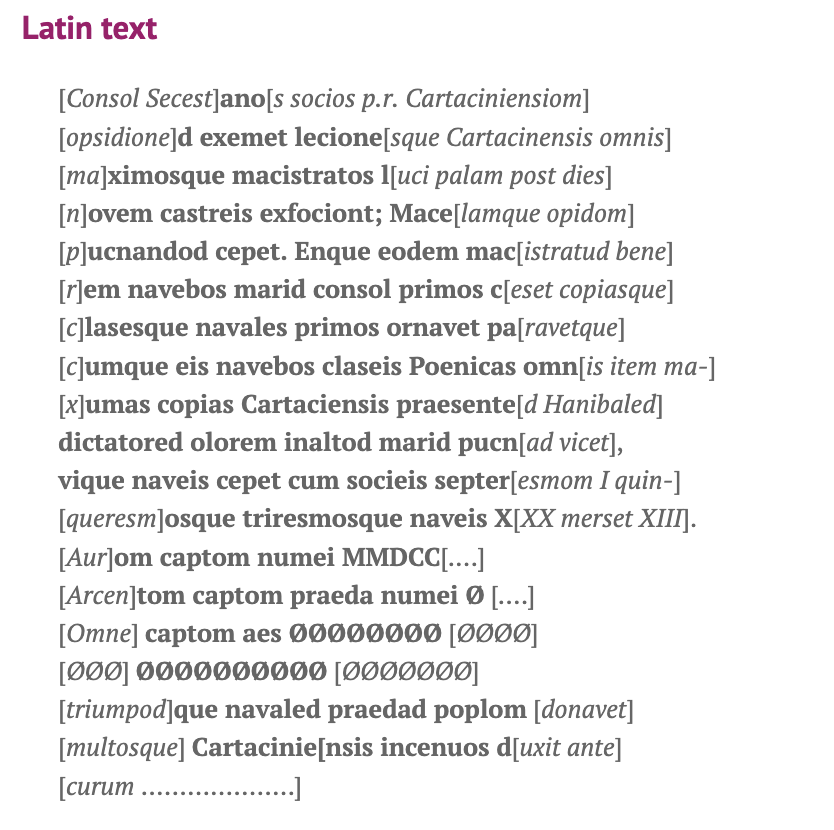
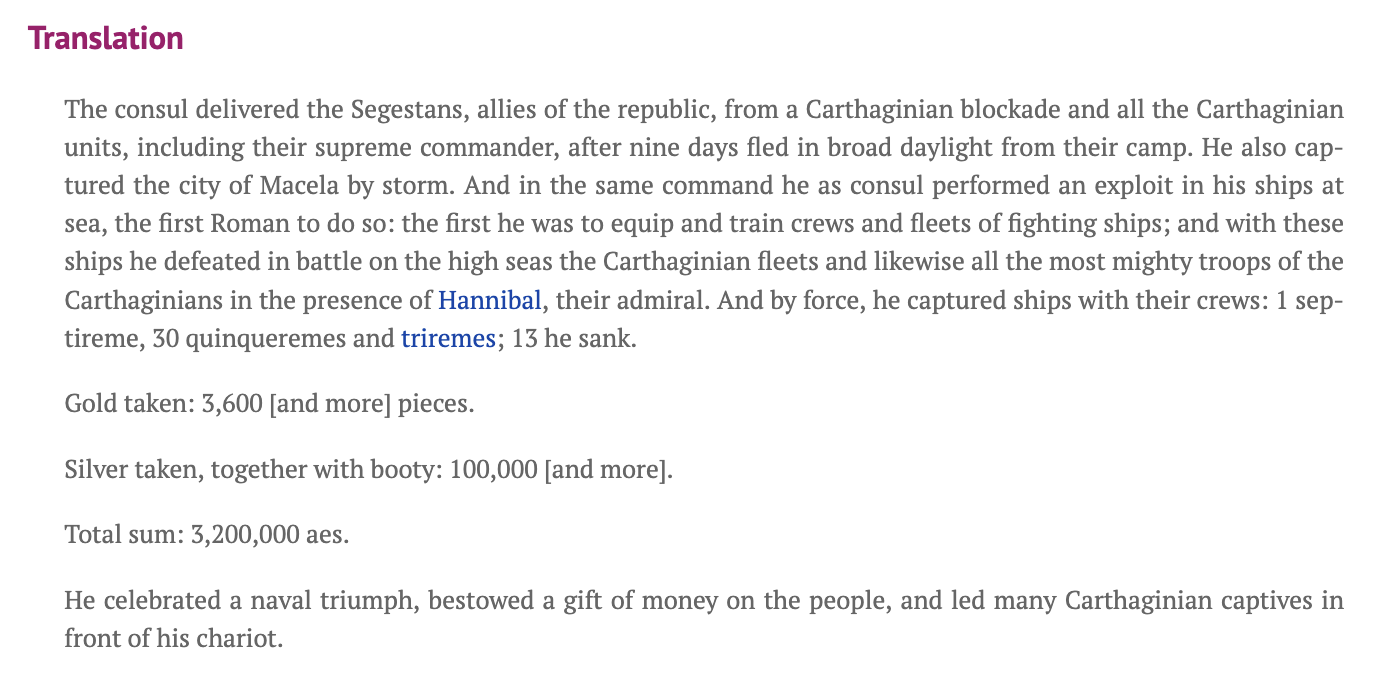
The volume of spoils of the wars witnessed by Plautus and Terence and their audiences were massive and seemingly ever increasing. As early as 260 BCE (before Plautus’s presumed date of birth) the spoils of war were being distributed not only to the soldiers but even to the whole citizen body.
Text and translation from Livius. I however hold that inscription is based on a 3rd century BCE original and is not an Augustan fantasy, only a restoration. I discuss it building on the views of Eric Kondratieff first in a 2014 blog post and then more extensively in my 2021 PR journal article.
The expectation of broad scale riches for the soldier was well in place by 167 BCE
The military tribunes had received instructions as to what they were to do. All the silver and gold had been collected together in the morning, and at ten o’clock the signal was given to the soldiers to sack the cities. So great was the amount of booty secured that 400 denarii were distributed to each cavalryman and 200 to each foot soldier, and 150,000 human beings were carried off. Then the walls of the plundered cities, some seventy in number, were destroyed, the booty sold and the proceeds furnished the above-mentioned sum for the troops. Paulus went down to the seaport of Oricum, but his soldiers were far from satisfied; they resented being excluded from all share in the plunder of the palace, as though they had not taken any part in the Macedonian war.
Valerius Antias states that all the gold and silver coinage carried in the procession amounted to 120,000,000 sesterces, but from his own account of the number of wagons and the weight carried in each, the amount must undoubtedly have exceeded this. It is also asserted that a second sum equal to this had been either expended in the war or dispersed by the king during his flight to Samothrace, and this was all the more surprising, since all that money had been accumulated during the thirty years from the close of the war with Philip either as profits from the mines or from other sources of revenue, so that while Philip was very short of money, Perseus was able to commence his war with Rome with an overflowing exchequer. Last of all came Paulus himself, majestic alike in the dignity of his personal presence and the added dignity of years. Following his chariot were many distinguished men, amongst them his two sons, Quintus Maximus and Publius Nasica. Then came the cavalry, troop after troop, and the legionaries, cohort after cohort. The legionaries were given 100 denarii each, the centurions twice as much, and the cavalry three times that amount. It is believed that he would have doubled these grants had they not tried to deprive him of the honour, or even if they had been grateful for the actual amount which he did give them.
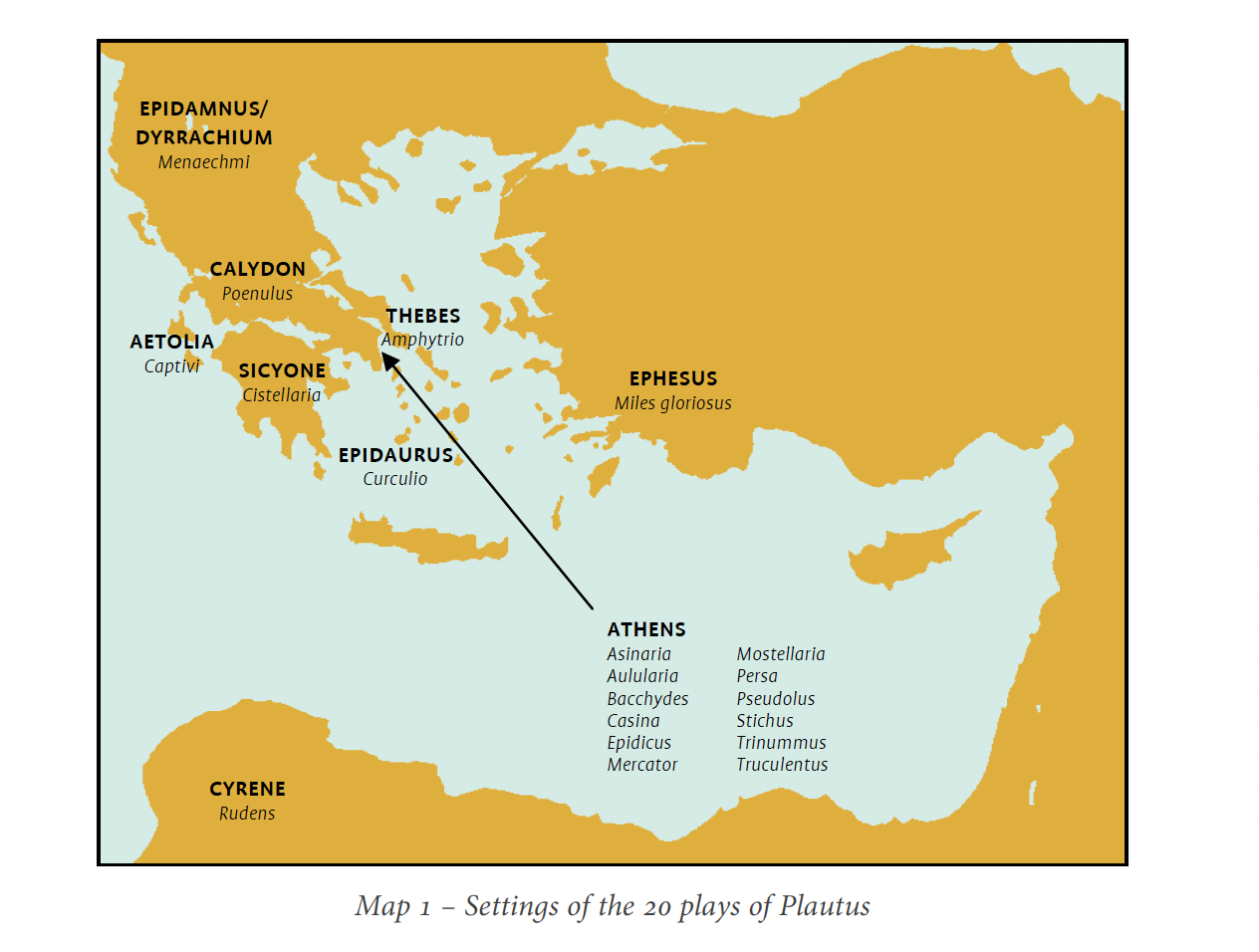
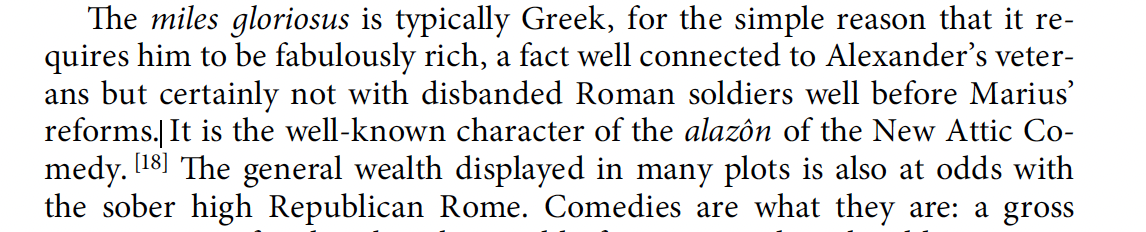
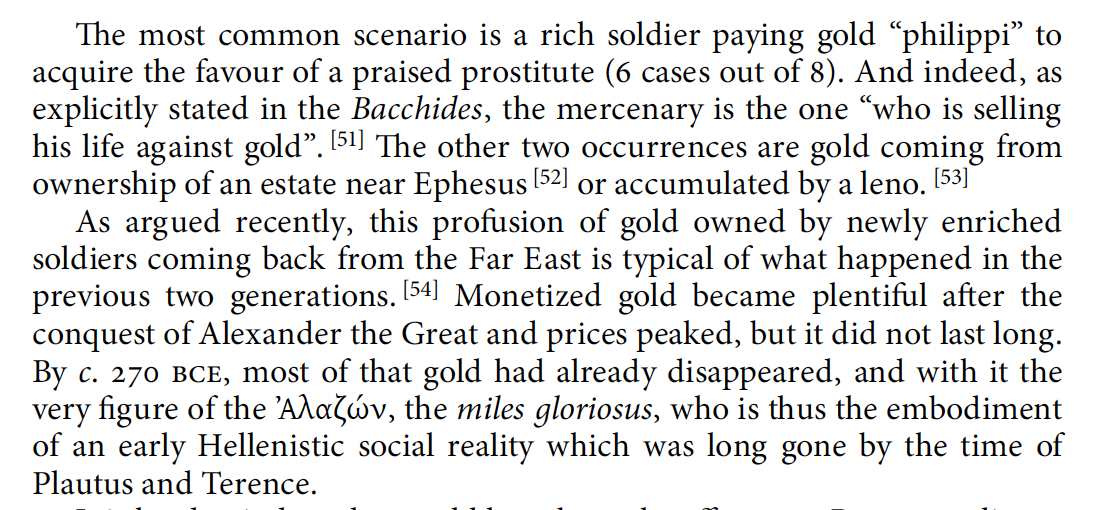
Did these amounts even one that was considered far too low by the ordinary soldier represent a life changing amount of money? I think yes. Stipendium is typically presumed to be a denarius ever three days for infantry, with grain and other matters deducted. 100 denarii is perhaps approximately what a soldier could earn in a whole year of fighting. 300 denarii (the Epirus donative and the donative after the triumph combined) is likely a generous 3 years livelihood. Any ordinary person handed 3 times they’re typical annual earning power is going to feel and perhaps act as having a very significant windfall. Yet these soldiers felt it was disappointing. Just over 3 decades earlier Scipio had given out only 40 asses per soldier but expectations were shifting fast, esp. in light of the influx of eastern wealth. Besides reports of cash pay outs Roman soldiers had long been rewarded in kind, especially with land or the use of land. If the speculation that Miles Gloriosus might have been first staged in 206 BCE is correct, the stock character of the braggart soldier enriched by War could certainly have been relatable to Roman audiences and may have even engendered hopes of a return to economic prosperity after the end of the Hannibalic War.
Taylor, Michael J. Soldiers and Silver: Mobilizing Resources in the Age of Roman Conquest. University of Texas Press, 2020. [JRS review]
Charlotte Van Regenmortel, Soldiers, wages, and the Hellenistic economies. Cambridge: Cambridge University Press, 2024. Pp. 276. ISBN 9781009408981. [BMCR review]
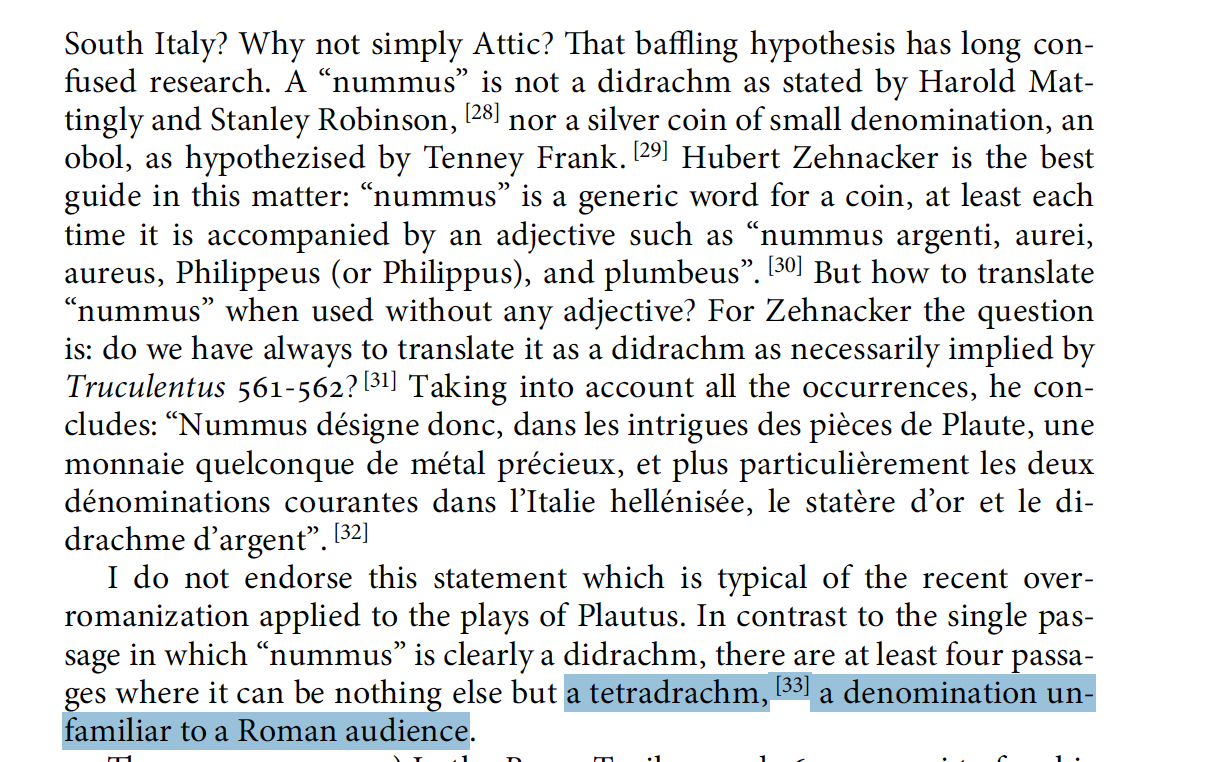
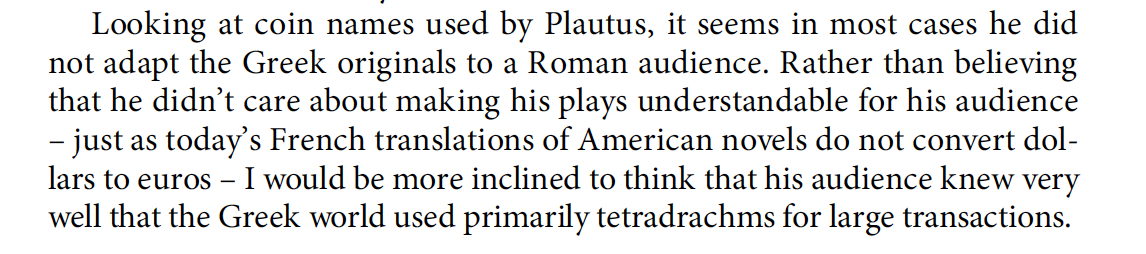
Nummus means “Coin”. Romans are well aware of Greek Denominations.
A tetradrachm is unfamiliar to the Romans? This seems implausible. AND, to his credit, De Callataÿ pretty much retracts this claim later in the same article (p.27-28).
The didrachm was preferred in peninsular Italy for striking and circulation and thus this is the first silver denomination struck by the Romans themselves, but that other denominations were preferred elsewhere was widely known:
There were carried in the procession 230 of the enemy’s standards, 3000 pounds of uncoined silver, 113,000 Attic tetrachmi, 249,000 cistophori, and numerous heavy vases of embossed silver, as well as the silver household furniture and magnificent apparel which had belonged to the king. There were also 45 golden crowns presented by various allied cities, and a mass of spoils of every description; 36 prisoners of high rank, the generals of Antiochus and the Aetolians, were also led in the conqueror’s train.
The key Latin: signati tetrachmum Atticum centum decem, tria milia, cistophori ducenta undequinquaginta
Already in the triumph of Flamininus do we have specifics about the denominations of coins being carried in triumph (194 BCE):
On the second day all the gold and silver, coined and uncoined, were borne in the procession. There were 18,000 pounds of uncoined and unwrought silver and 270 of silver plate, including vessels of every description, most of them embossed and some exquisitely artistic. There were also some made of bronze. In addition to these there were ten silver shields. Of the silver coinage 84,000 were Attic pieces, known as tetrachma, each nearly equal in weight to four denarii. The gold weighed 3714 pounds, including one shield made entirely of gold, and there were 14,514 coins from Philip’s mint. In the third day’s procession were carried 114 golden coronets, the gifts of various cities
Enslavement is a means of transporting knowledge. Every time anyone is forcibly moved from one culture to another they bring cultural knowledge. Richlin argues that Plautine comedy is slave theater and that slave audience would certainly be familiar with tetradrachms. These mass acts of enslavement and their potential for movement of knowledge is well illustrated here:
[Flamininus] asked [the Greeks] to find out any Roman citizens who were living as slaves amongst them and send them within two months’ time to him in Thessaly. They would not, he felt sure, think it right or honourable for their liberators to be in the position of slaves in the land which they had liberated. They all exclaimed that among the other things for which they were grateful they thanked him especially for reminding them of so sacred and imperative a duty. There was an immense number who had been made prisoners in the Punic War, and as they were not ransomed by their countrymen Hannibal sold them as slaves. That they were very numerous is evident from what Polybius says. He asserts that this undertaking cost the Achaeans 100 talents, as they fixed the price to be paid to the owners at 500 denarii a head. On this reckoning Achaia must have held 1200 of them; you can estimate proportionally what was the probable number throughout Greece.
I’d also note that tetradrachms were produced by some mints of Magna Grecia and A TON of tetradrachms were produced on Sicily by Syracuse and the Carthaginians. The latter specifically imitating Alexander’s coinages.
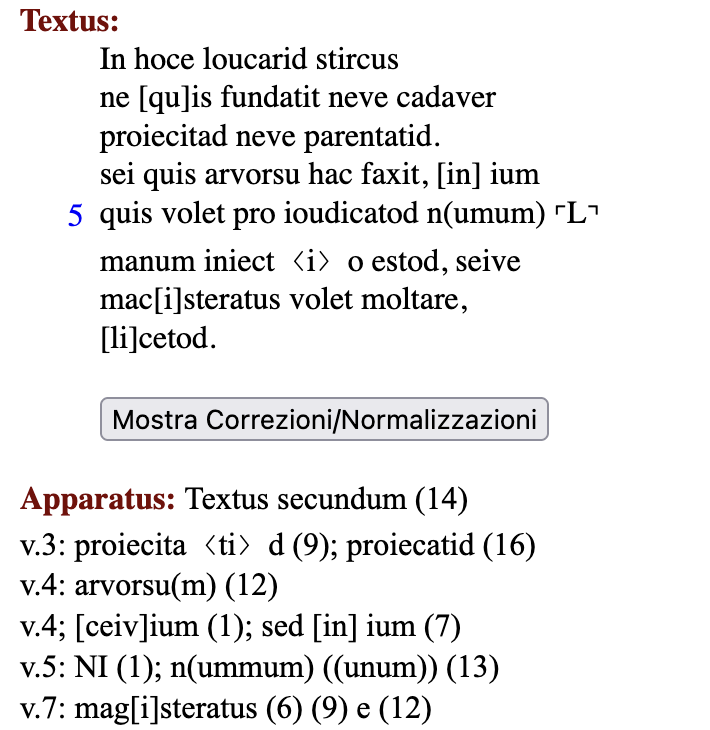
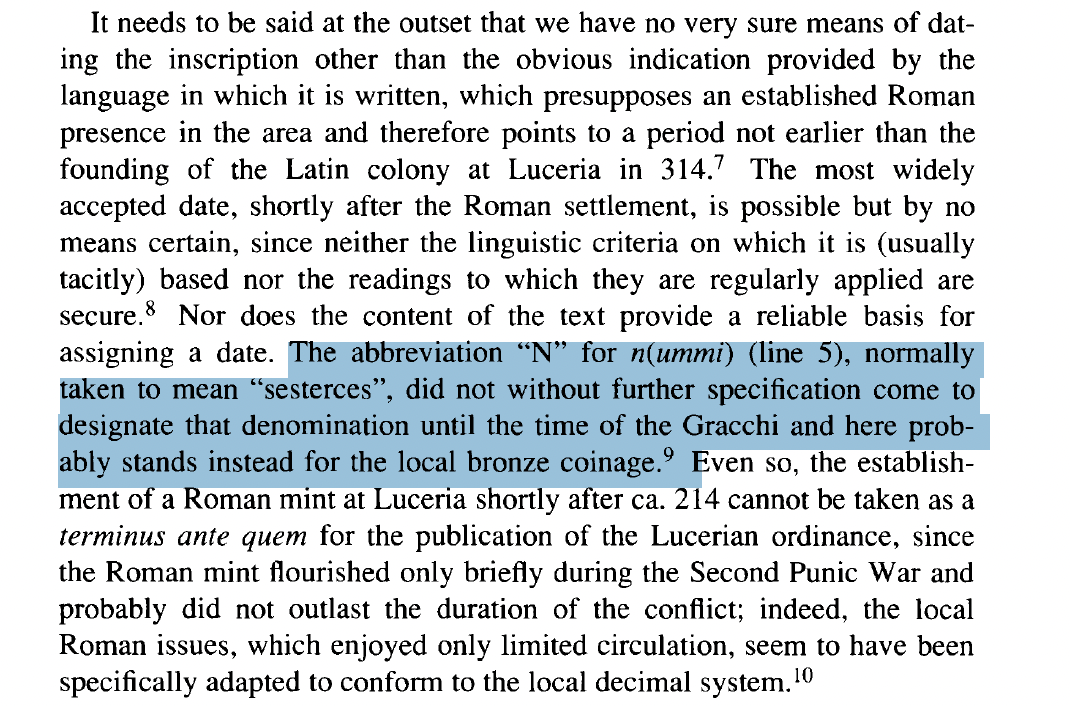
De Callataÿ is correct that nummus could mean tetradrachm in many places in Plautus, but I’m not convinced this is what it must mean. We’re out of luck for earlier literary Latin giving us clues, but we can get some help from epigraphy. I lean towards it meaning simply COIN and to an italic audience it would mean whatever happens to be local unit of account.
Bodel back in 1994 argued it could be as late as the Gracchi; this seems too late for all the -d endings.
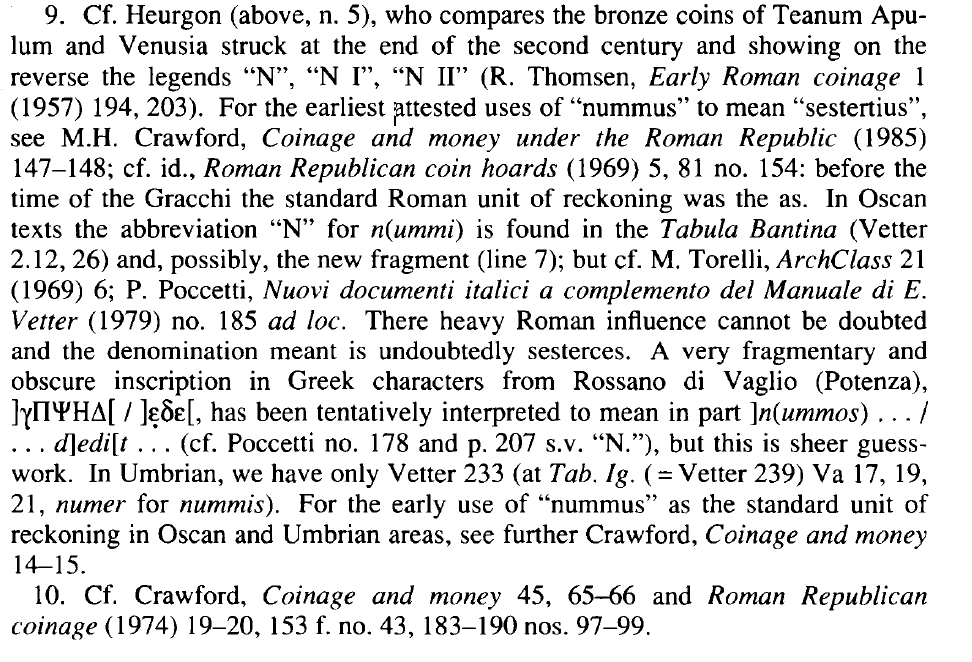
Rutter in Historia Numorum Italy records no types for Venusia with N, and does record two bronze types 698 and 703 that do have an N. The former looks much like the Apollo/man-faced bull bronzes found through out southern italy and associated with Naples. It would need no denomination mark and the N is often replaced with a club. Maybe, just maybe, I might be able to be convinced the N on the 703 is an indication of denomination and stands for Nummus, but I kind of doubt it. I cannot think of any parallels where the name of the denomination is recorded on the coin even if sometimes we have marks of value.
Generally speaking, I don’t think we have to worry too much about what nummus means in Plautus beyond, its a coined piece of money and in the plural typically means something like ‘cash’. In Cato (Agr. 14.3.7) and Lucilius (e.g. frag. 1250) it is used with this generic meaning.
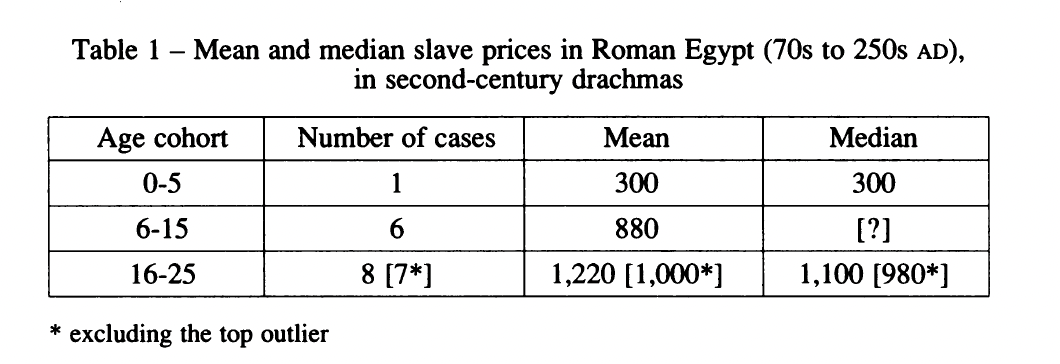
To convince his reader that nummus in Plautus most commonly means specifically a tetradrachm, De Callataÿ puts a great deal of weight on what is an “appropriate” price for a slave. I’m not convinced by this logic as prices of slaves vary greatly and I could if chose find parallels for numbers in asses paid for slaves. Compare above the 500 denarii per enslaved Roman attested c. 196 BCE. Or the following testimony from actual sales in Egypt:
From Scheidel, Walter. “Real slave prices and the relative cost of slave labor in the Greco-Roman world.” Ancient Society 35 (2005): 1-17.
Fundamentally to the plot and for the audience the numbers for the cost of freeing a slave are meant to mean A LOT coins. Could they refer to tetradrachms? Absolutely, but it isn’t necessary for the audience to enjoy the play.
I am more convinced by De Callataÿ’ observations that other Greek denominations are given their true names. This seems a plausible argument in favor of his reading of nummus as tetradrachm.
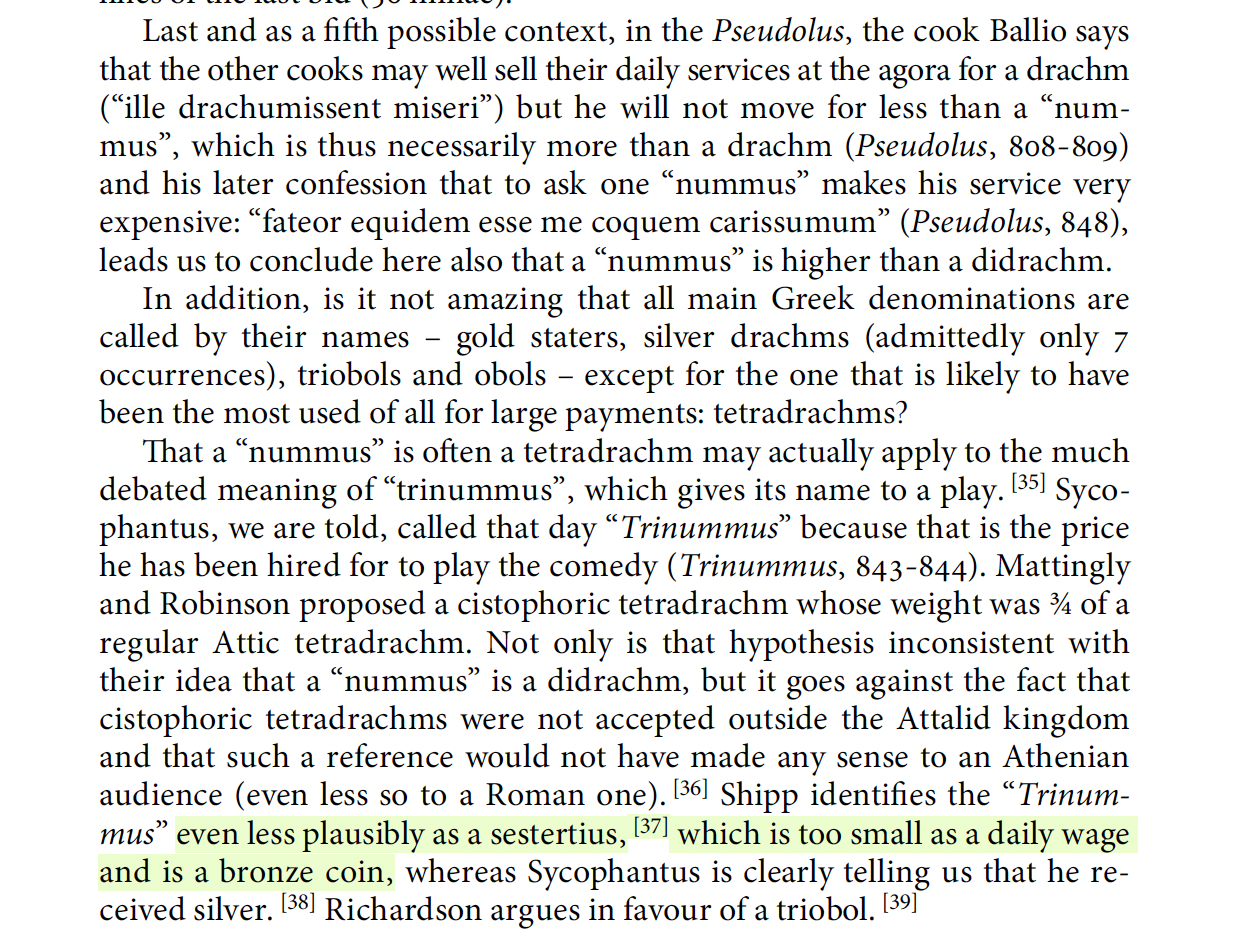
Of course the trinummus is not a sestertius but De Callataÿ has undervalued and misdescribed it. In the time of Plautus and Terence the sestertius was 2.5 asses, 1/4 a denarius, and very much a silver coin. Eventually it is retariffed at 4 asses but remains silver until the imperial period. It would be a very low single-day’s wage but not wholly inconceivable: remember a soldiers stipendium was 10 asses every 3 days. My guess is that most Romans in the audience would have assumed that a nummus was an AS that was the unit of account.
Romans struck their own gold in the age of Plautus and Terence.
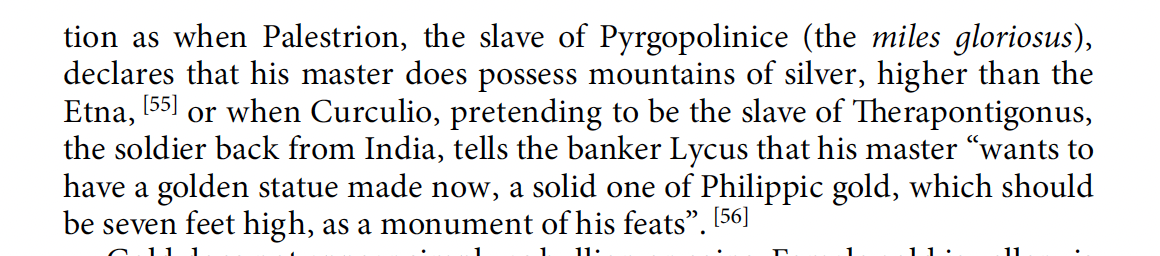
The gold of the plays is reflecting a monetized use of gold very in line with the historical realities he describes. But to continue pushing back a little. In a society where gold has never really been used as money and typically money has been heavy bronze, it is significant that these plays are being staged at least for Plautus’ early productions when the Roman state has decided it must strike gold and we get all of a sudden the oath scene gold and then the mars eagle. It may even give us context for the failed experiment of the Flamininus stater which is very much based on the very goldphilips so common in these comedies. (RR gold issues before 189 BCE). The Roman gold will fall out of circulation just like the Hellenistic did, but to the most contemporary audiences it would be a well-known artifact of recent wars. Gold is unusual and this is what makes it a good plot point for motivating characters.
I love this partly because it recalls gold statues sent to Rome in this very period. I can imagine this detail being written in as the audience knows that Hiero’s gold statue is being melted down to pay their own soldiers.
In sum, believe De Callataÿ, but also consider that Rome was very much a part of not separate from the rest of the Hellenistic world.
It is a masterful collection of essays teasing out the historical relevance of the the results of the extensive Orleans project using LA-ICP-MS. The results of all this work is game-changing and has allowed us to interrogate, confirm and debunk many suppositions. So for instance the volume has shown that there is NOT a likely Ptolemaic origin for the mars/eagle gold one – a popular theory deriving from literary sources and iconographic parallels (see earlier post, more below as well). It inspries me to seek out similar opportunities for further metallurgical testing to secure even more answers (Can we confirm Pompey’s PRO COS aureus was made in Spain as Woytek has proposed?! Can we settle once and for all that the XXX oath scene goal is fake?!).
I’ve been dipping in and out of the AVREVS volume getting excited about various answers it provides, but now I want to think about it more holistically. Part of what I admire about the project is that it accepts that such work on metallurgical analyses must cross certain common boundaries. We must look at Greek, Roman, and Celtic coinages together as they share metal sources and relate to overlapping geographical areas. The more we try to separate them by rigged boundaries the harder this gets. So I’m reading mostly for an eye to the overlap. Hence that random post on Egyptian coins that went up last week.
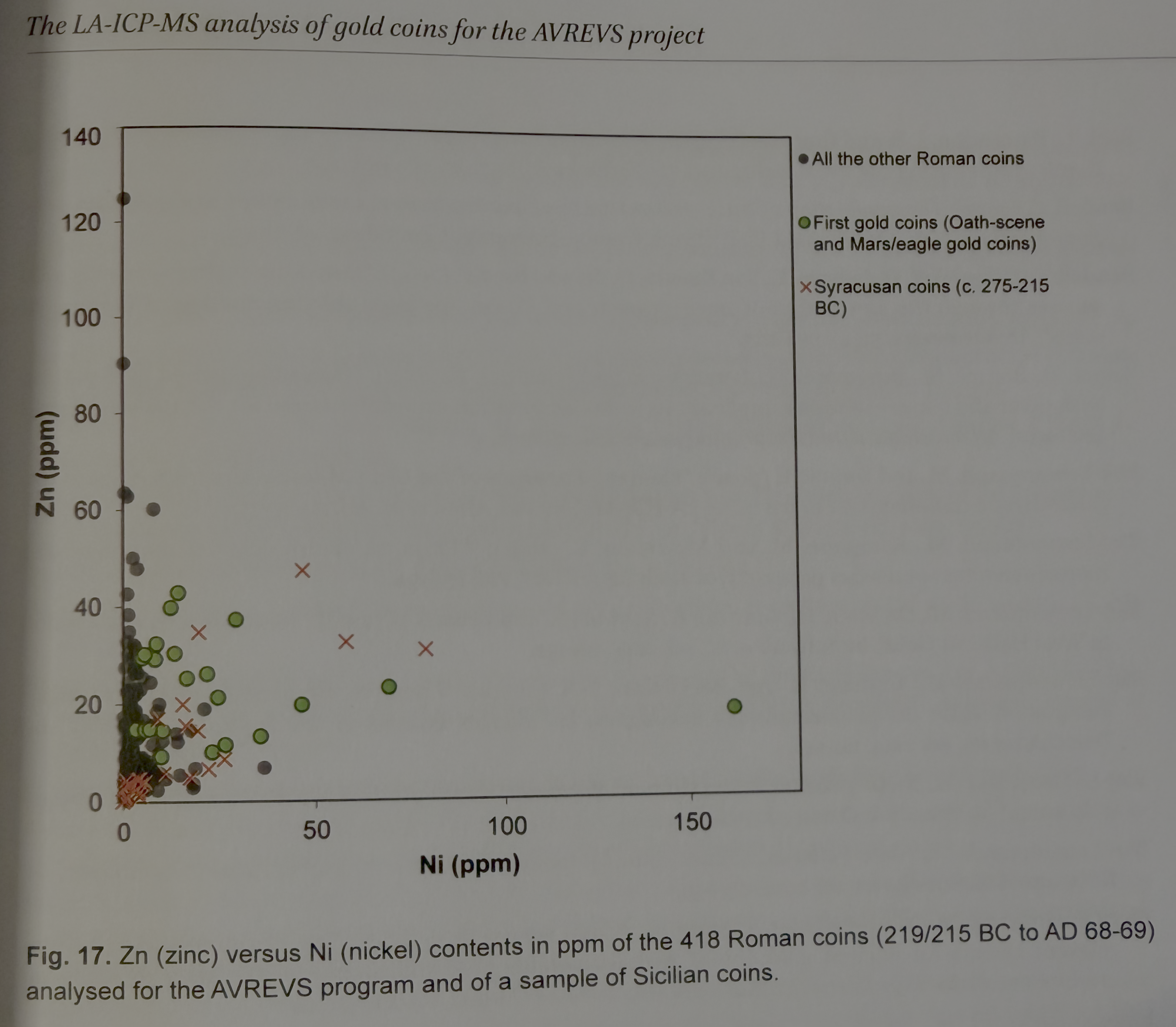
The basic methodology employed is to look for common patterns in the relative amounts of trace elements. This is not about finding the ore source, but rather about looking at what groups of coins have similar or different patterns and considering if those patterns are meaningful and why. In most cases Platinum to Palladium ratios are mapped, but other groups have also proved meaningful–Iron to Antimony, Antimony to Tin, and Zinc to Nickel. So below we quickly see that early Roman gold of the 2nd Punic war is very different than later Roman gold, but more similar to Syracusan gold. We know of many connections between Syracuse and Rome from our literary sources during the War but this is pretty convincing support (cf. Livy 22.37 – Hiero’s golden victory). If one studied Roman coins alone without reference to other mints we’d have a far poorer view of possible extensions.
Blet-Lemarquand p. 53
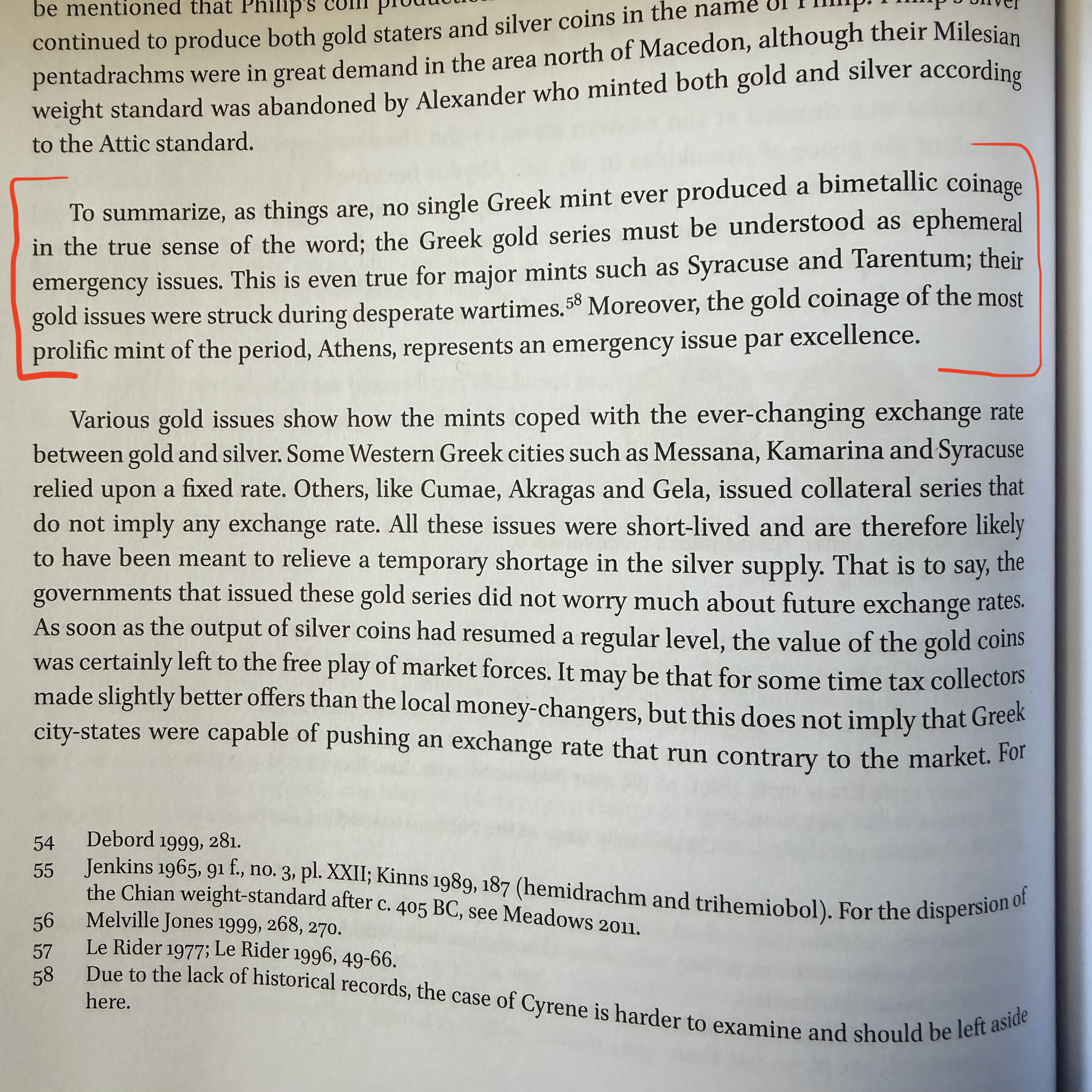
As Fischer-Bossert (p.75) so aptly points out the Greek tradition of coinage has its origins in Mesopotamian hacksilber economy and that for most of its history was predominantly a silver coinage with gold being the exception, even if the origins of this coinage tradition itself beings in Lydia with ‘white gold’ or electrum. Although electrum (an alloy of silver and gold) does naturally occur, the electrum used for coinage was a controlled alloy even if different ratios are known. If we this line of thought to Italy and the early Romans we find ourselves back at silver becoming the dominant metal of coinage but having at its introduction to contend with indigenous traditions of using hunks of (leaded) bronze as monetary objects. The Italic peninsula is remarkably lacking in precious metal ores, these having to been imported. Thus the Romans and other Italic peoples accept silver, but gold remains much less common. We have 2nd Punic War gold, the Flaminius stater (made in Greece after 2nd Macedonian War), the Pompey stater (made in Spain during war against Sertorius), Sullan staters (mostly eastern, perhaps one made at Rome), and then the post 49 gold of the Civil Wars. It isn’t much and very little of it is produced at Rome after the 2nd Punic War. Fischer-Bossert (p. 84) gives a broad overview about who (before Alexander) minted gold and why (as far as we can surmise), but perhaps the most important point he makes is this ….
What marks out the Roman imperial coinage from the republic is that gold is produced on a very regular basis, something that was exceptional under the republic.
I’m going to have more to say but I think I’ll stop this post here and move on to a new one.
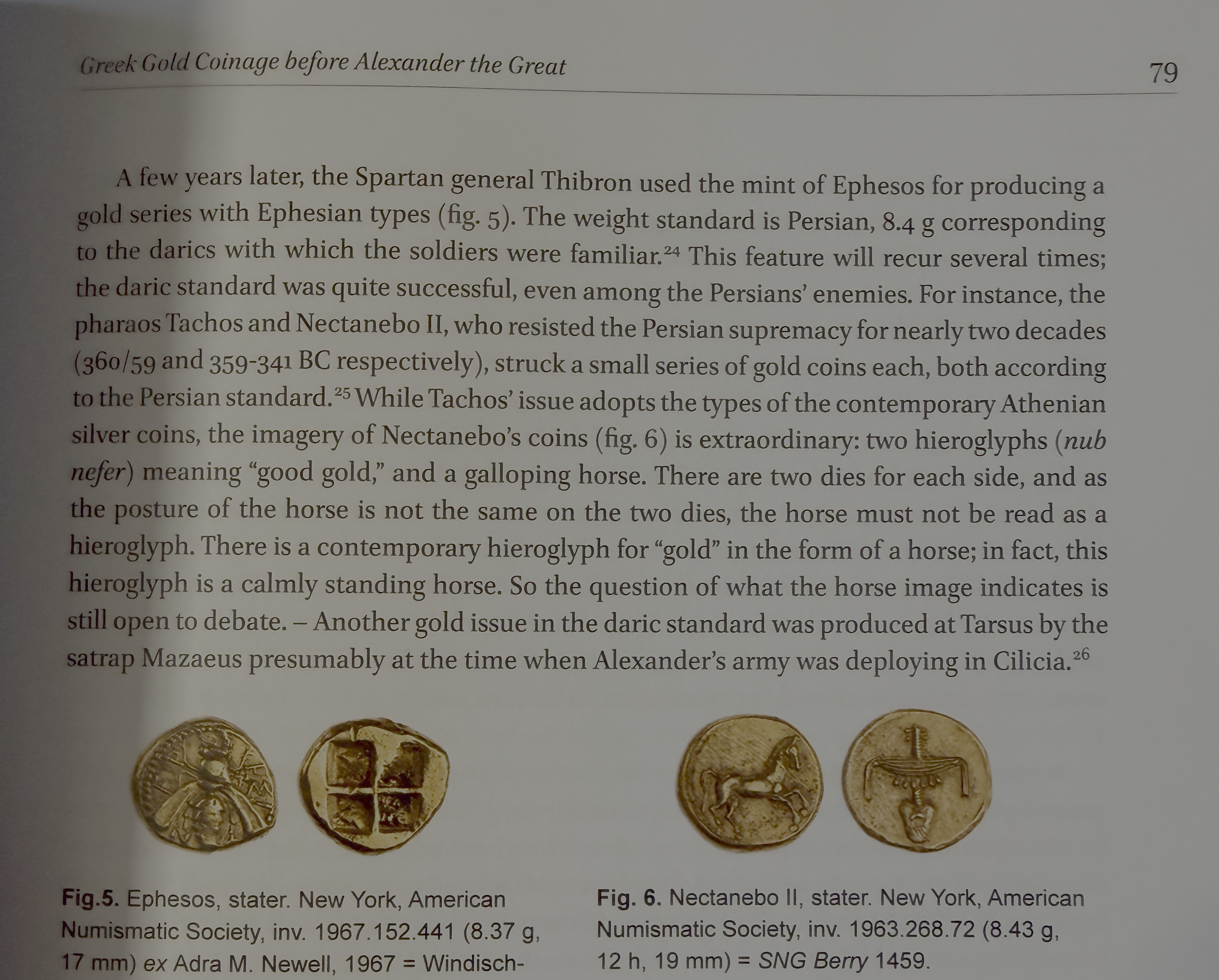
A while back on social media I was wondering about how we know what certain hieroglyphics mean. I still don’t know the answer to that and would like to, but I was reading for another blog post and came across this discussion by Fischer-Bossert:
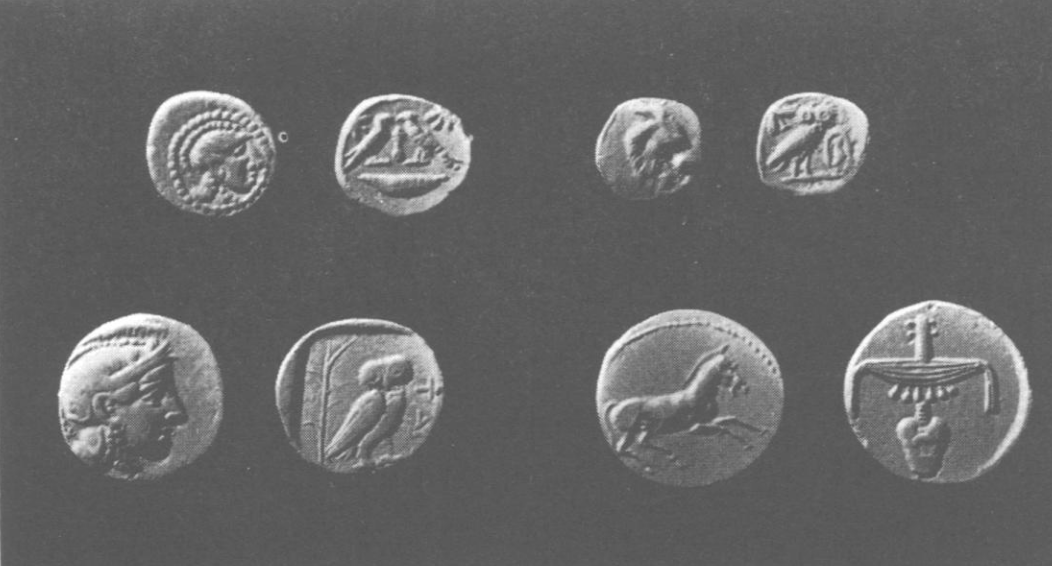
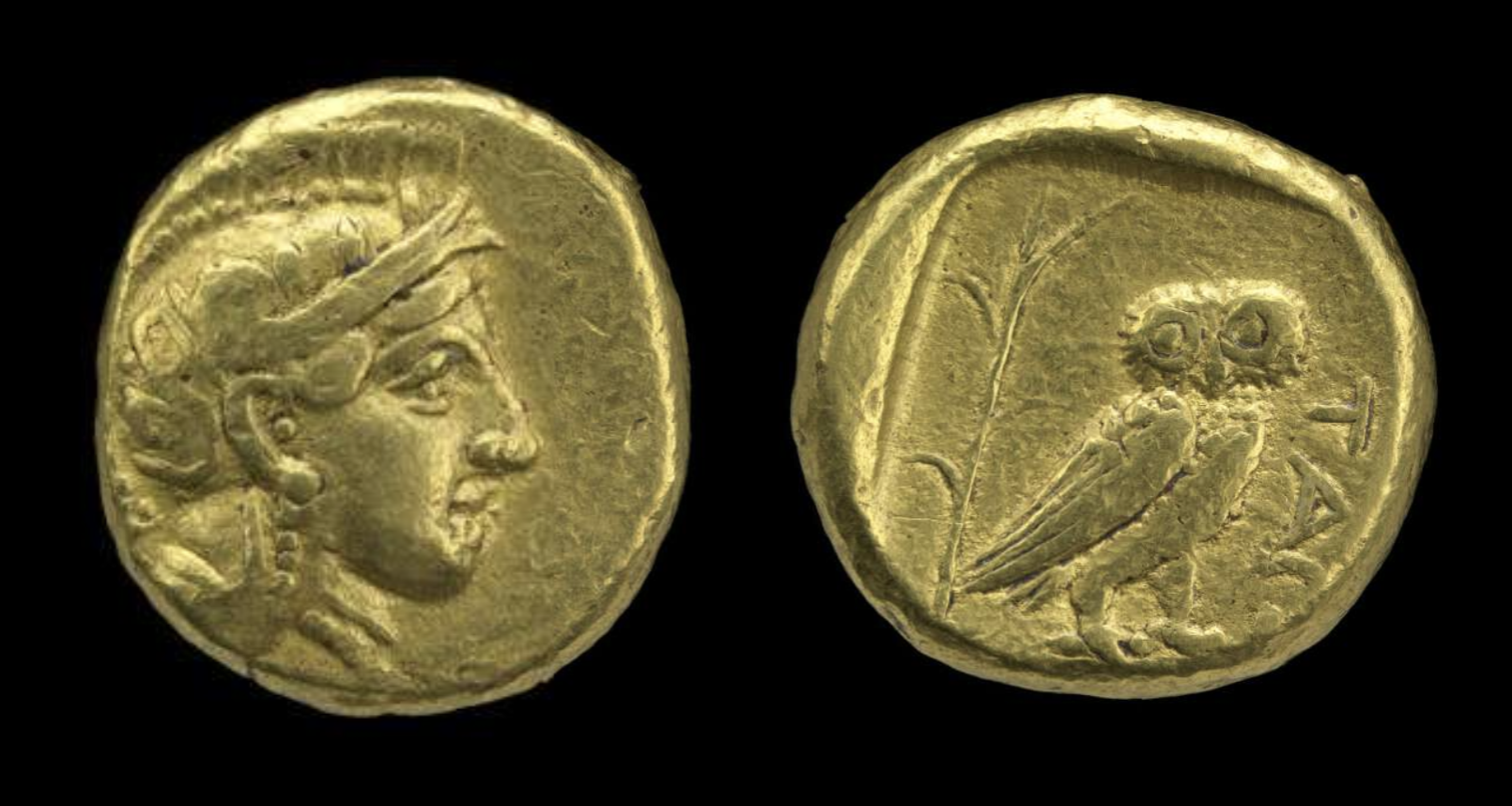
It was news to me that Tachos (Teos) struck before Nectanebo II and thus that heiroglyphic coin in fact suggests a rejection of designs that emulated outside traditions even as the striking of coinage was itself an innovation for of Pharonic Egypt. What I’ve not managed to find yet is any illustration of Tachos’ coinage.
I finally found some bad photos here:
James W. Curtis. “Coinage of Pharaonic Egypt.” The Journal of Egyptian Archaeology 43 (1957): 71–76. https://doi.org/10.2307/3855280.
The coins are supposed to be in the BM so I’m not sure why I can’t get the online catalogue to spit out a better image or just a record with not image as of yet.
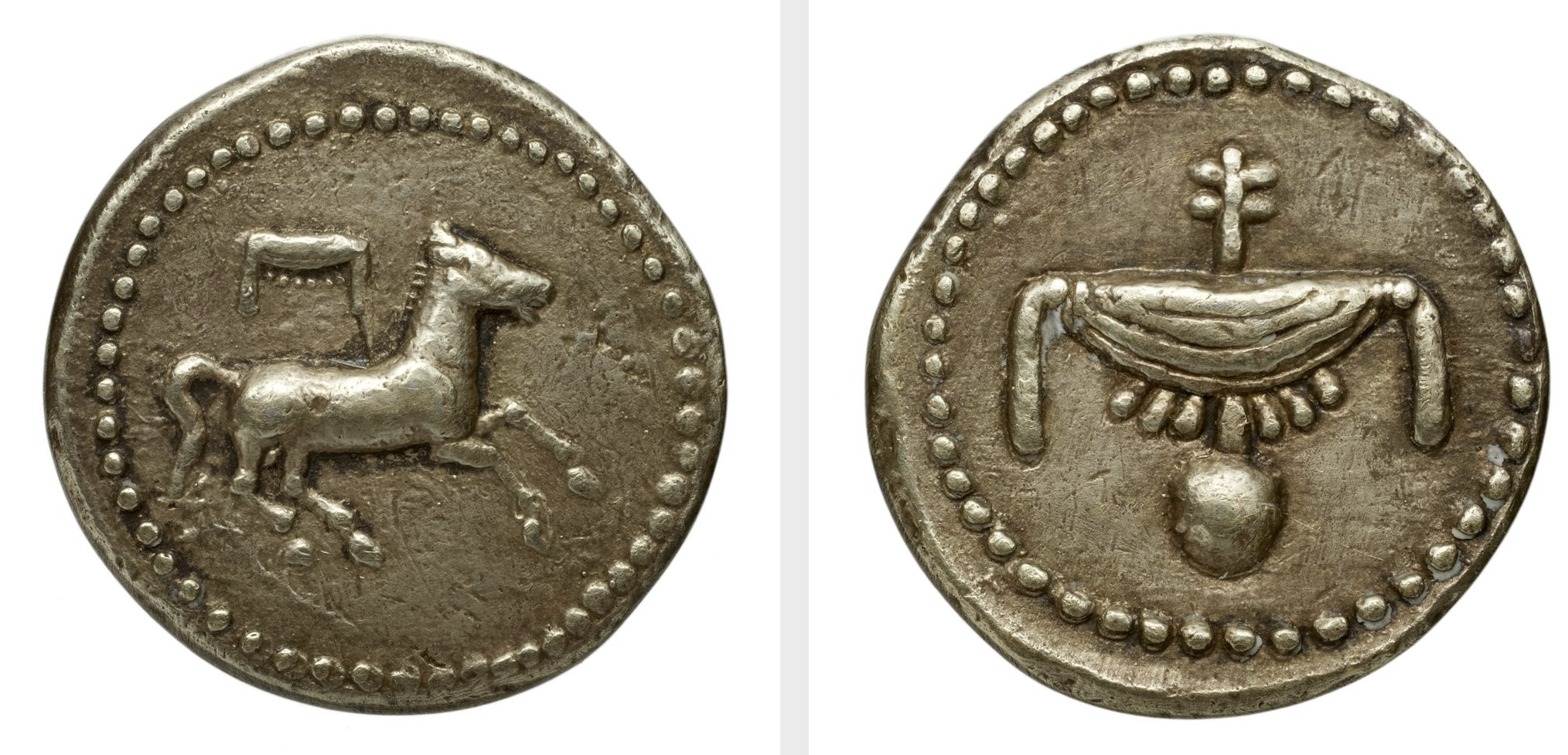
Got there, I couldn’t find it in the first instance as the BM has it under the primary name Djedher.
Interesting that the symbol for gold repeats above the horse.
The primary reason I wanted to write up a quick post was is that the Egyptians here in the 30th Dynasty are using the Persian weight standard even as it is the Persian from whom they are trying to maintain autonomy and are in active conflict.
We’re mostly comfortable with the idea that a coin must be spendable within the dominant denomination system even if that system derives from the ‘enemy’ or ‘other’, but it is still nice to have parallel examples. Think of the allies denarii of the social war, or Rome’s early didrachms. I’m sure there are other examples as well.
Ok back to the other blog post I was try to write.




 Liv Mariah Yarrow