If you’ve been following along (youtube recorded lecture on earlier research), you’ll notice straight away that this is FAR too little copper based on surface readings of specimens in museum collections, like 15-20% too little copper. I’ve excluded readings with too many light elements (suggesting oxidation and other surface interference) and those with too high of sulfur or other evidence for incrustation. So what’s going on. My preliminary hypothesis is that the conditions of deposit may have been high in sulfur/sulfuric acid resulting in the leeching away of surface copper. The same but also sort of the opposite of surface enrichment (blanching) for silver coins.
My research partner Wayne Powell also reminds me that he would have consider all the Nemi coins to have a patina that will have lowered the copper. I’m curious about the mechanisms for the formation of a patina in such a collection of such archaeological material.
That said the consistence is across issues and internally is is very satisfying. Relative standard deviations are 14 for copper, 25 for lead and 23 for tin. This is far better than for museum collection data where copper was at 21, lead at 38 and tin at 47. The sample set is very internally consistent and that is reassuring.
The next steps are to compare this data to the aes rude and figural votive deposits pXRF readings for the same site. For me this is even more exciting.
The figural votives from the same site have almost the same metallurgical profile as the aes grave:
The relative standard deviation isn’t far off either: 17 copper, 26 lead, 32 tin. Whatever soup was being cooked up to make small cast bronzes be they aes grave or votive figurines it all looks to be much the same.
This is based on 39 readings of 15 figures or figure fragments. Many of the other votive bronzes (nails, tridents, knuckle bone, shell, etc…) seem also to come from the soup but they are more distinctive form and with few similar types to compare. Here is a quick snap shot of everything we tested that wasn’t likely to be monetary object and loosely classified as bronze:
Most could be described as heavily leaded.
The discrepancy between this archaeological data set with readings collected in museums (Rutgers, Princeton, Yale) is interesting and deepens the justification for testing the composition at depth, either by drilling or better through non-invasive exploration. I guess I have some grant writing to do.
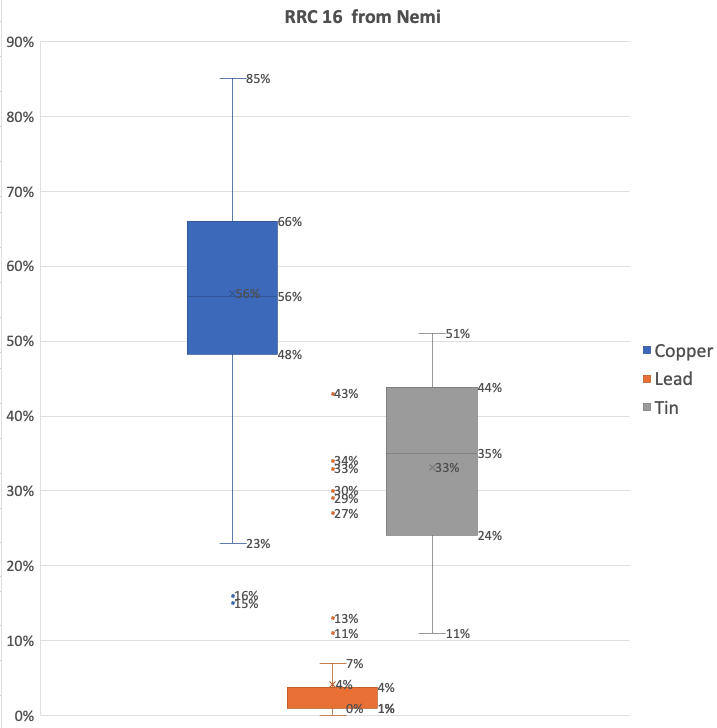
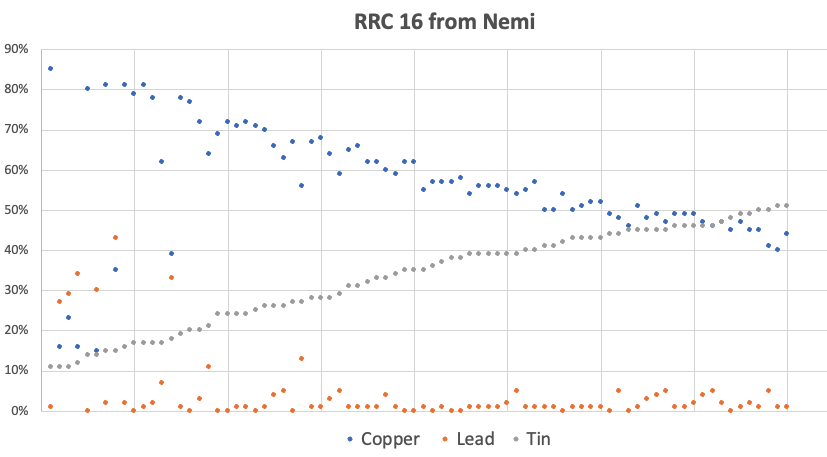
I’m cleaning up the data and my notes from my May trip to Nottingham to study the Nemi material today. And to be honest I got bored so I took a micro break to think about the data we collected from the RRC 16 specimens from this site. Generally speaking they are about 2:1 Copper:Tin, with just a smattering of lead. But you’ll notice a small subgroup have high lead.
A total of 80 readings were taken from a total of 41 coins.
In a scatter plot we can readily see that high lead correlates to low tin and usually lower copper as well.
My first thought was this might be from recycling leaded aes grave for some of the production, but this is also more likely to occur with specimens that have high light elements, i.e. a great deal of surface interference in the readings so I may very well be just bad data.
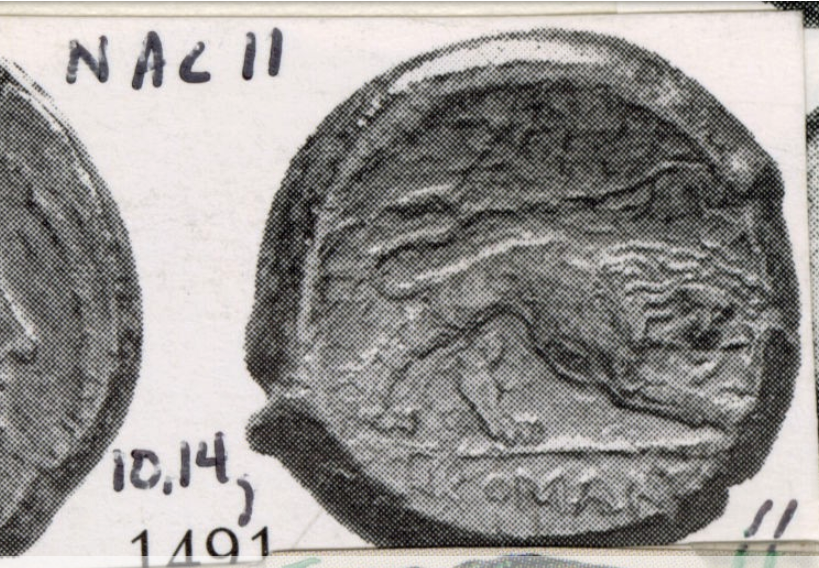
Some idea of the rapid striking and mass production of RRC 16/1 can be gathered not just from the large numbers found (1156 specimens at Vicarello!), but also the visible die breaks. Here is a die link observed by Schaefer.
The twelve tables only exist in fragmentary form. The best edition is in Crawford’s Roman Legal Statutes, but it is more accessible in the Loeb. I’ve got both but I’m reading the Loeb yesterday and today.
In Aulus Gellius’ Attic Nights (16.10) there is a long disquisition on the meaning of old words based on a line of Ennius that calls in as evidence the XII tables. The main concern is what does proletarii mean as compared to capite censi. It is a good read all on its own. But the part that is of interest is in the list of out dated legal jargon occurs the phrase: ‘twenty-five asses’ viginti quinque asses, but it is commonly said the XII give no units to their multiple fines. What is meant here then?
Festus to the rescue! (Verb. Sign. 371.1)
Viginti quinque poenae in XII significat viginti quinque asses
In the twelve [tables] a penalty of 25 refers to 25 asses.
Gellius is glossing or remembering an edition that itself supplied the word asses. The same glossing occurs in Gaius, Inst., IV, 13–14: with reference to solemn deposits of 500 or 50. And then even more explicitly in Gaius:
We get later in Gellius this amusing anecdote about inflation and the fines being out of date (20.1).
The key Latin reads: Si iniuriam alteri faxsit, viginti quinque aeris poenae sunto
Was aeris “bronze” in the original? I again expect a gloss.
The restoration of sestertiorum here is non-sense.
Numbers mentioned
500 or 50 for a surety
10,000 for freedom of an enslaved person on death of enslaver on payment to heir or to whom the heir sold him Ulpianus, Tit., II, 4
300 or 150 for a broken bone
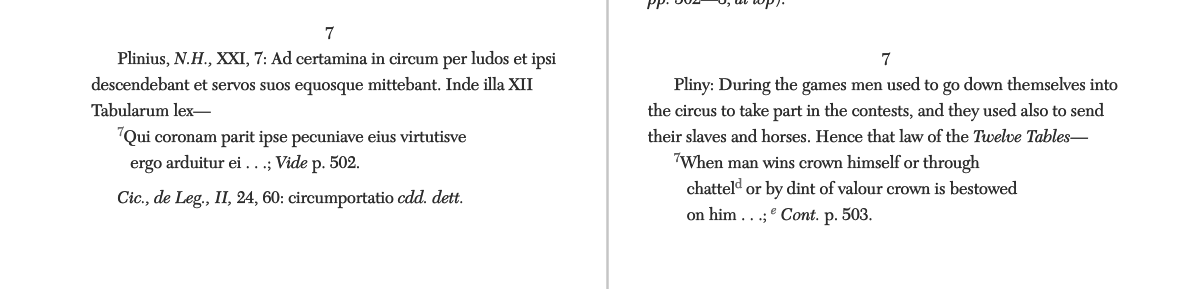
25 for a cutting down a tree (Plin NH 17.7 with aeris)
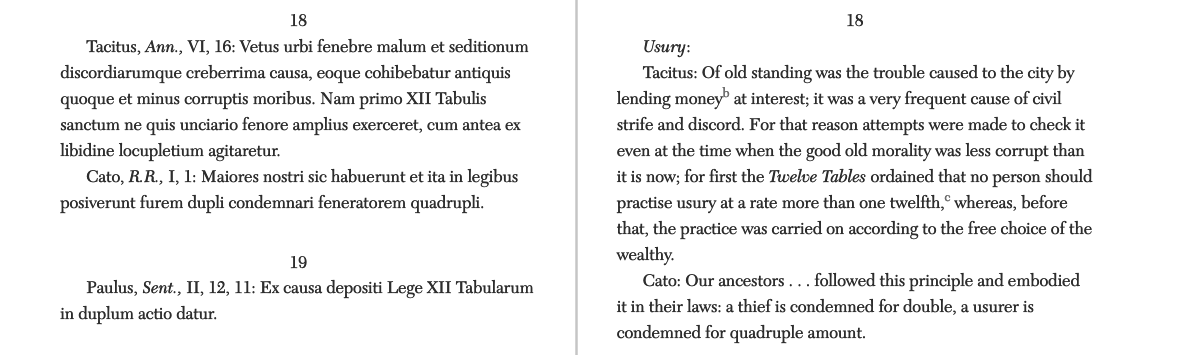
one percent per month = 12 percent per annum, legal interest:
aeris as a term for debt or money owed! Gell. 15.13.11
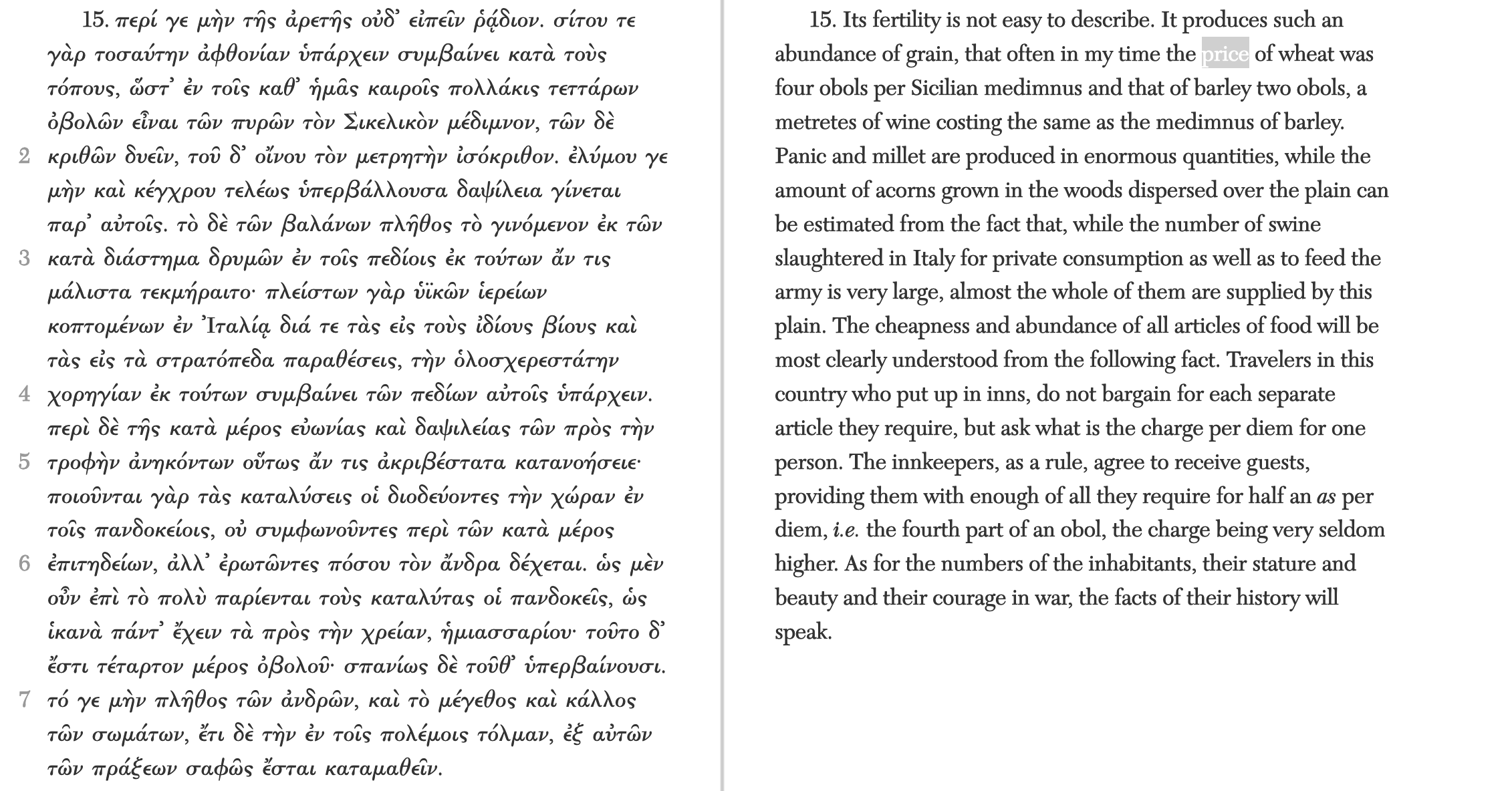
He expects you to think that the all inclusive cost of staying at an inn for a SEMIS for a day to be shockingly low.
Using his conversion 16 asses would buy some where in the ball park of 37 kilograms of wheat. I’m using round numbers here 52 liters to approximate a medimnus and assuming wheat weights 710 grams per liter. That medimnus contains about 130k calories. Or a 52 day supply of 2500 calories per day. This works out to be about QUADRANS a good days ration of grain. But again that is bulk prices and we’re supposed to think it is shockingly low. (Earlier posts on calories and Romans, post 1, post 2, post 3)
Now you’re right to question my assumption that I know an assarion is equivalent to an AS in this period or in Polybius’ mind, but it seems close enough for this sort of ball parking.
An as for modius of wheat was always considered giving it away, even 4 asses a low price. A modius is 9 days at 2500 calories. At one as that works out to be approximately and UNCIA or SEXTANS for a days nourishment as far lower than typical. With a TRIENS to a SEMIS still being a pretty low daily cost for food.
Livy 31.50.1; 200 BCE
By 70 BCE the sestertius was worth 4 asses. So Cicero in the following passage is talking about Medimnii at 60 asses or 84 asses compared to the shockingly low 16 as price of Polybius. Equally, the legal price of a modius was 14 asses and the lowest price 8 asses. So about an asplusa semis to an as a day for basic nutrition.
For you got 15 sesterces a medimnus, that being then the local price, and you kept 21 sesterces a medimnus, that being the price fixed by law to be paid for Sicilian corn. What is the difference between doing this and, instead of rejecting, passing and taking over the Sicilian corn and then keeping all the public money and never paying any of the cities anything ? For the price fixed by law was a price that at any other time ought to have satisfied the Sicilians, and while you were their governor ought to have delighted them: the legal price was 3½ sesterces a modius, and actually, while you were governor, the price got was 2 sesterces, as you yourself boasted in a number of letters written to your friends. However, let us say that the actual price was 2½ sesterces, since you exacted that amount per modius from the cities.
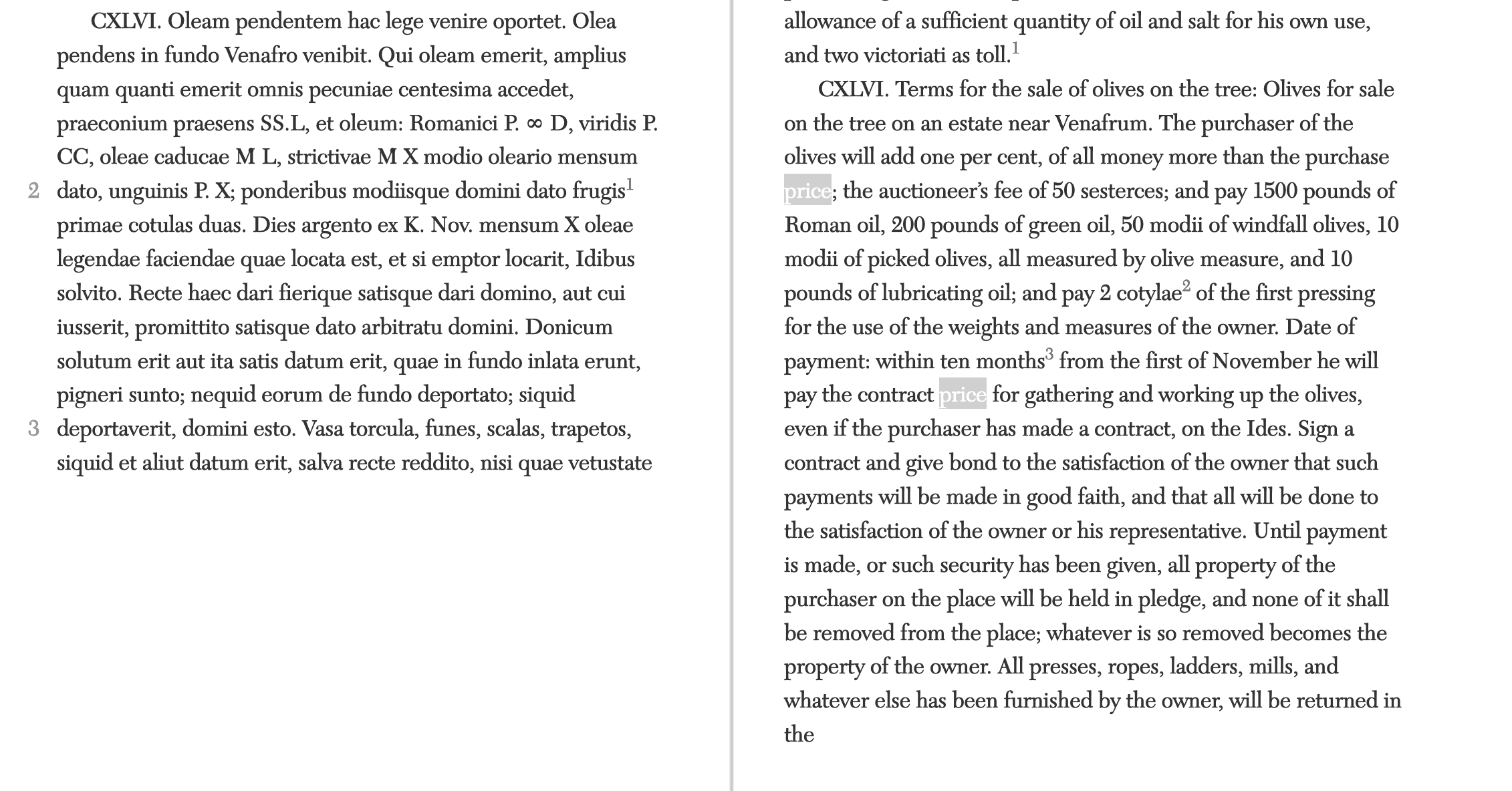
Note that the manuscript gives SS as the until for what the auctioneer will be paid 50 of. This translator renders that sestertii, but this text must be before 149 BCE. A period in which we tend to think of the unit of account being asses. The passage below is more clear using the more standard HS but in one place with SS. Something to think about another day.
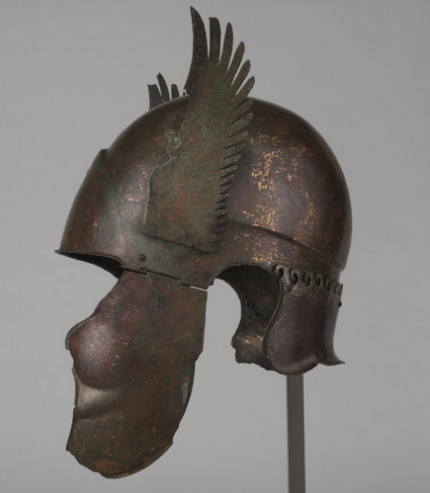
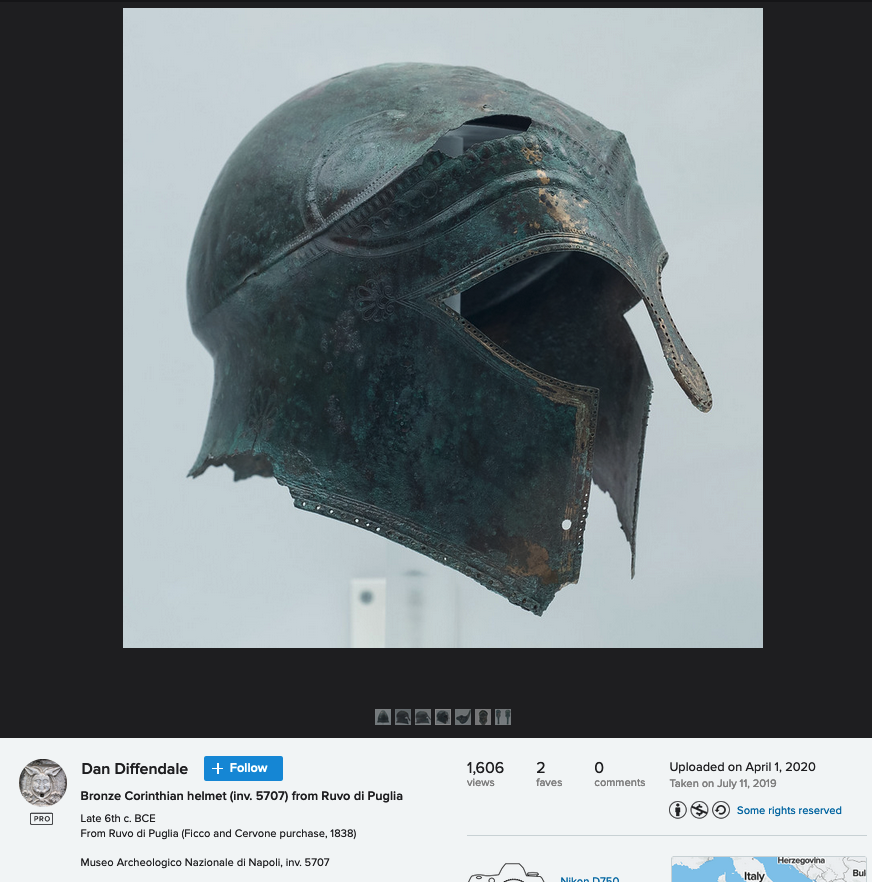
Before entering the Bnf it was owned by Honoré d’Albert de Luynes and is said to have been discovered in Ruvo. I wanted to know more about Ruvo and the helmet, but a quick search revealed MORE helmets said to be from the same place.
The BM has a great number of objects from Ruvo approximately 288 of which 217 came from Sir William Temple, but Alessandro Castellani liked to attribute objects to this find spot as well.
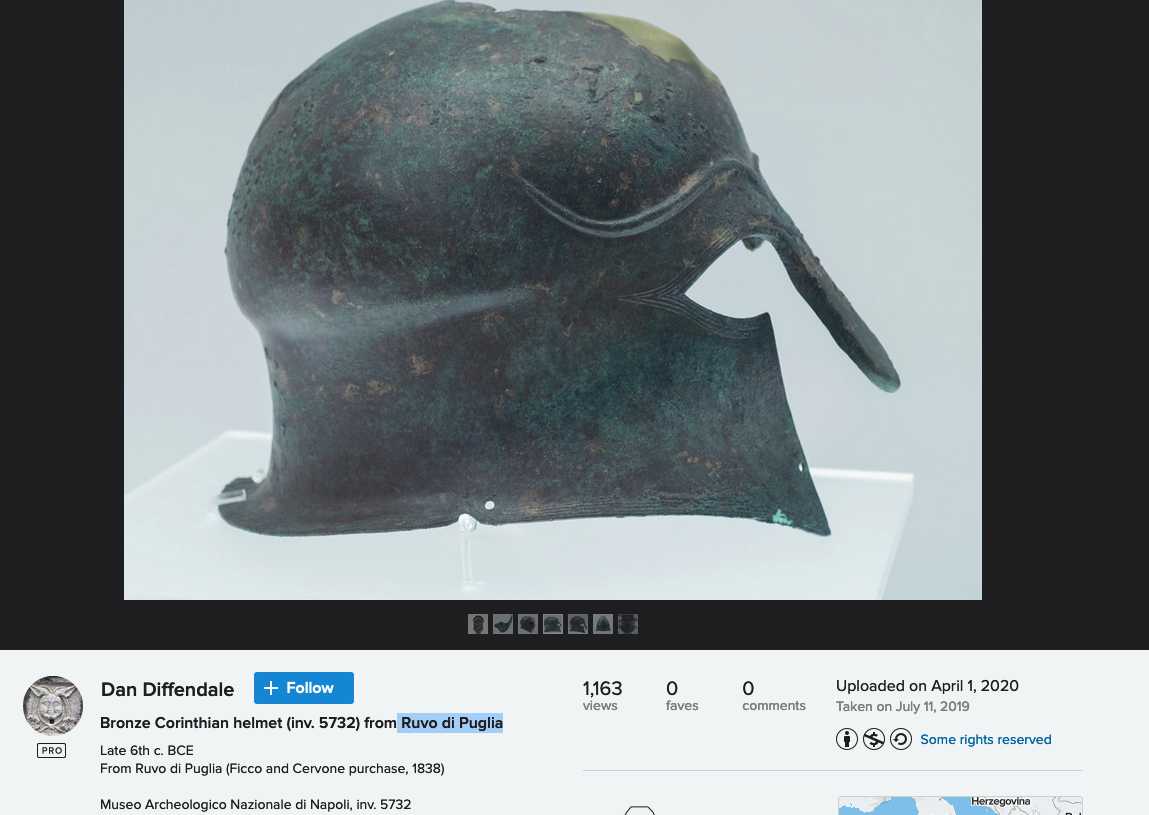
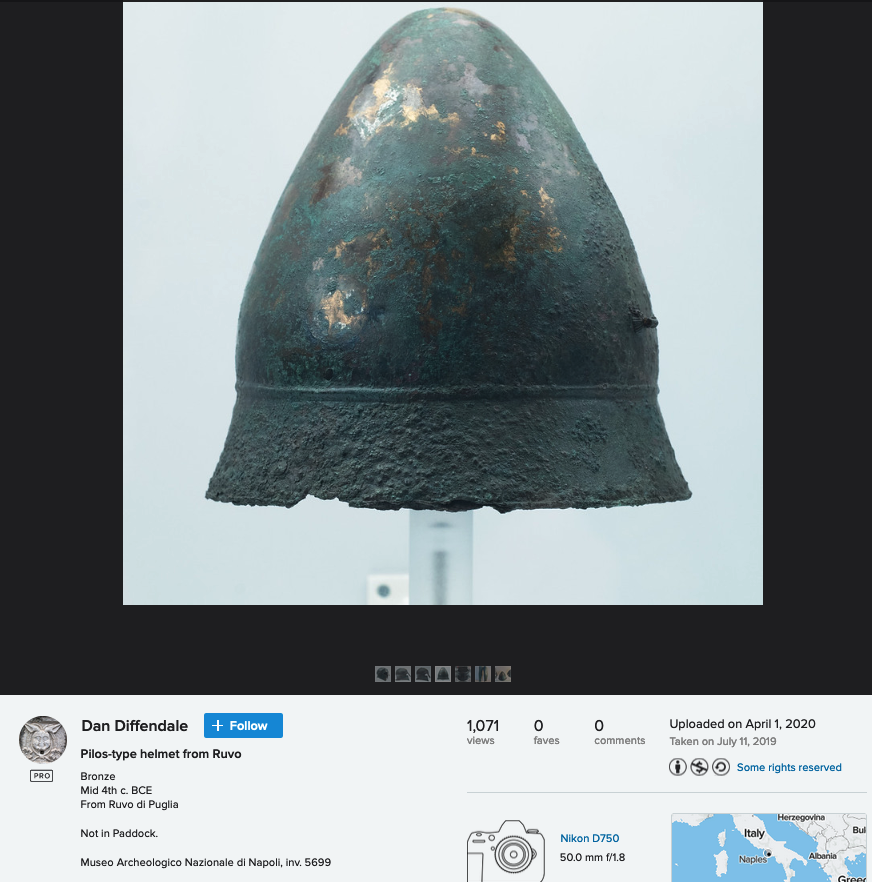
Dan Diffendale gives us images of three in Naples again purchases not excavation finds.
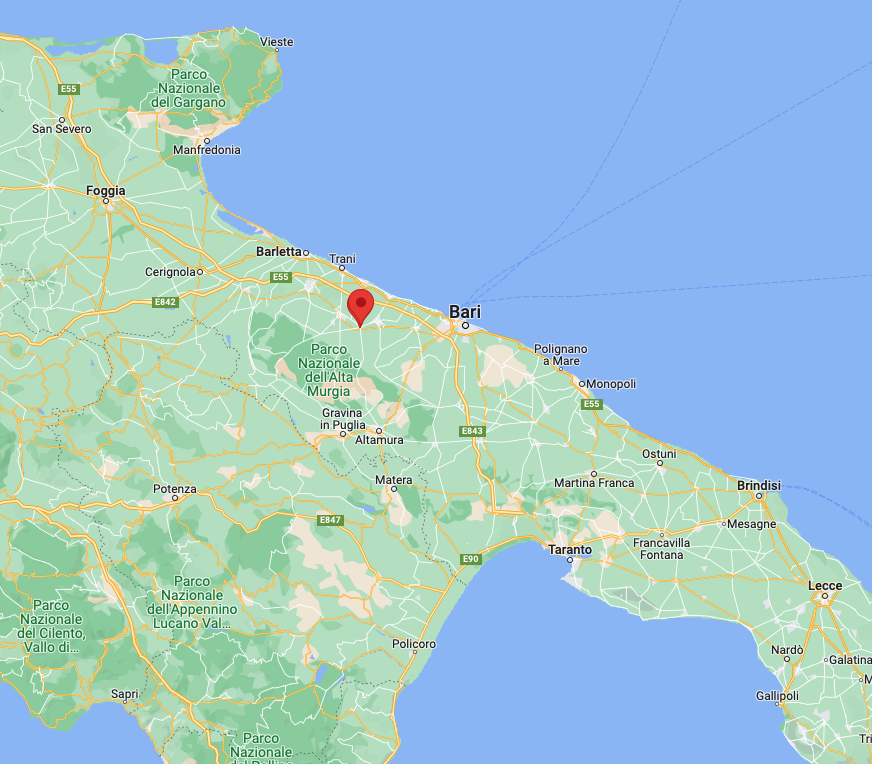
Where is Ruvo? Just a little north of Bari and south of Cannae.
Here’s an article on the attempts to ascertain what remains to be preserved at the site:
Giannotta, Maria Teresa, Lara De Giorgi, Giovanni Leucci, Raffaele Persico, Loredana Matera, and Ada Riccardi. “Preventive archaeology: the emblematic case of Ruvo di Puglia, Italy.” In 2015 8th International Workshop on Advanced Ground Penetrating Radar (IWAGPR), pp. 1-4. IEEE, 2015.
As an aside the Louvre didn’t buy any helmets from Ruvo but they did buy two cuirasses and other stuff; Berlin has 4 bronzes again no helmets.
Montanaro, Andrea. Ruvo di Puglia e il suo territorio: le necropoli. I corredi funerari tra la documentazione del XIX secolo e gli scavi moderni. Rome: L’Erma di Bretschneider, 2007. Too bad I can’t find a copy for under 600 dollars…ffffft.
Cf. Bottini, Angelo and Setari, Elisabetta. La necropoli italica di Braida di Vaglio in Basilicata: materiali dallo scavo del 1994 (Accademia Nazionale dei Lincei, Monumenti Antichi, volume 7 (issue 60)). Rome, 2003.
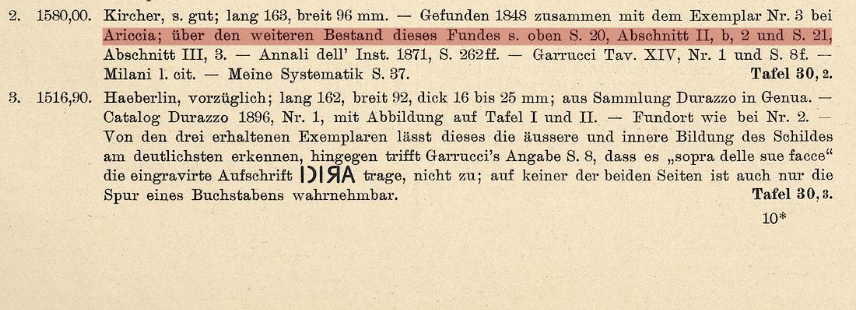
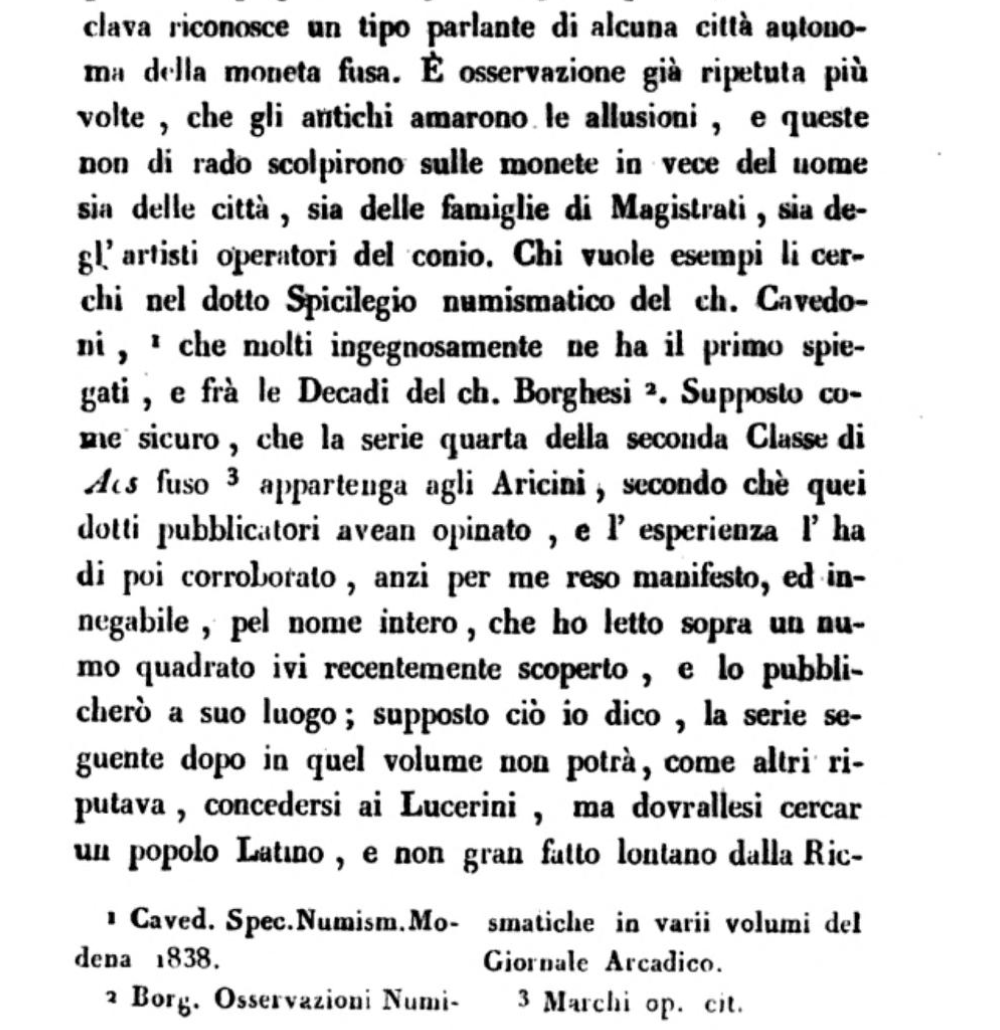
Both Crawford nor Haeberlin seem to derive their knowledge of this hoard primarily from the odd account by prof. Michele Stefano de Rossi who is obsessed with the possibility of eruption of the Alban hills in the historical period (to my knowledge this is non-sensical).
In 1848 the late P. Marchi purchased for the Kircherian Museum a hoard of primitive coins and aes rude found near Ariccia, which was then said to have been found under the peperino or inside a boulder of this rock. But since this fact was not published at the time and the news for me depended on verbal traditions nor, as far as I knew, there was any connection between the treasure and the pottery from Lazio, I had not yet hurried to ascertain the true circumstances of the find, without, however, losing sight of the fact that it could become a very important day. …
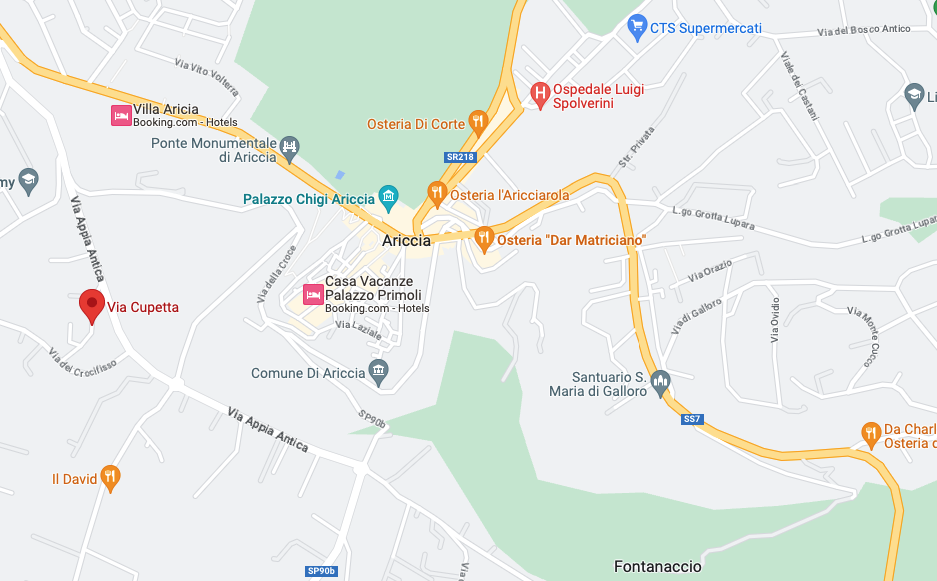
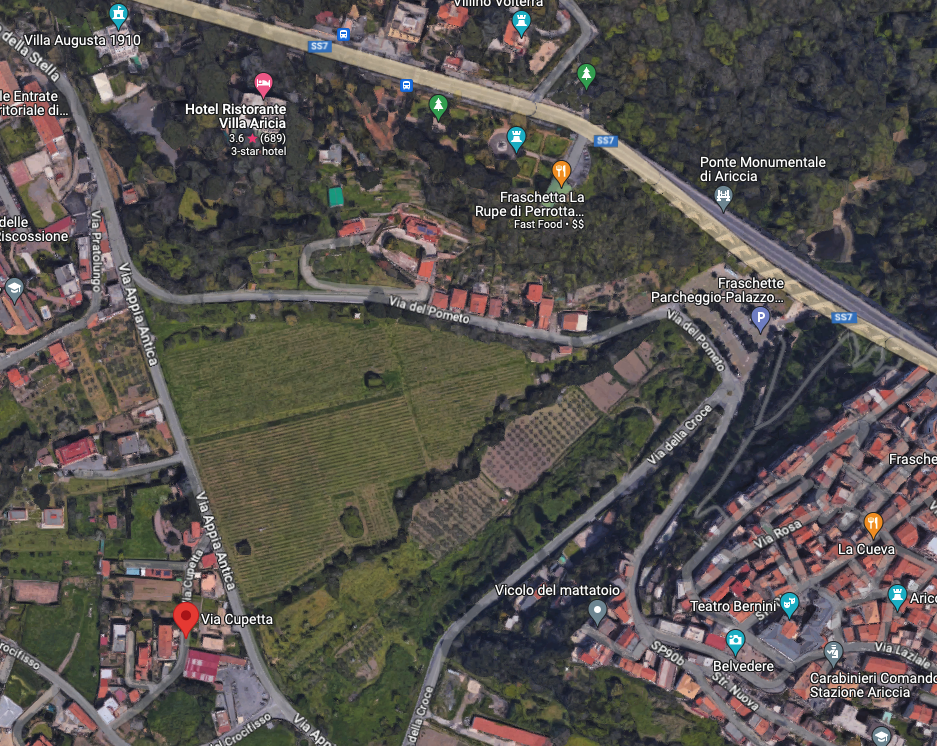
For the discovery of 1848 I found that a dispute arose between the municipality of Àriccia and the prince Chigi, the owner of the land. This led to numerous correspondence and appraisals and studies; which form a copious collection of documents in the provincial archives of the region. From these documents I learned not only the precise place and the method of the discovery — the enlargement of the via della Cupella* below Ariccia — but also the names of the workers and of the others; who intervened at work, from whom I was able to learn very precious details of the discovery. Without going into the difficult and thorny account of the investigations I made, the result of these was as follows.
To widen the said road located at the bottom of the slope of the hill towards the arid valley not far from the modern large bridge,** the rock was cut on the side of the mound and there among the earth below the layer of peperino was piled up the monetary treasure, made up of several currency bars, many semisses, some quadrantes and many aes rude. Fortunately the aes rude, less studied from the point of view of form, has not been too carefully cleared of the earth; and although 26 years have passed, being kept under crystal, it still retains the traces visible to the naked eye, but better with the lens, demonstrating that those metals were excavated among the volcanic ash of the Alban hills, not among the vegetable earth.
* – no road of this name exists today, but if it should read Cupetta, this might represent the approximate find spot. Big if.
** – Ponte Monumentale di Ariccia?
I was then able to persuade myself from the research done on the spot; that at a very small distance from the point where the treasure lay, that is about thirty paces towards the base or from the valley and within the same layer of clayey yellow ash, a few years before the discovery of which reason, a large amount of the usual coarse and blackish Latin pottery was found , the containers were broken and scattered. So I am certain that the pottery and the coins lay in the same layer. However if some scholar here does not want to rely too much on my investigations into the close relationship between the hoard and the crockery; he may suspend his judgment and await the end of the present reasoning. Having said that, here is the description of the treasure kindly communicated to me by ch. P. Tongiorgi successor of P. Marchi in the direction of the Kircherlano museum. I found another report identical to the one I am producing in the aforementioned series of documents in the archives of the province.
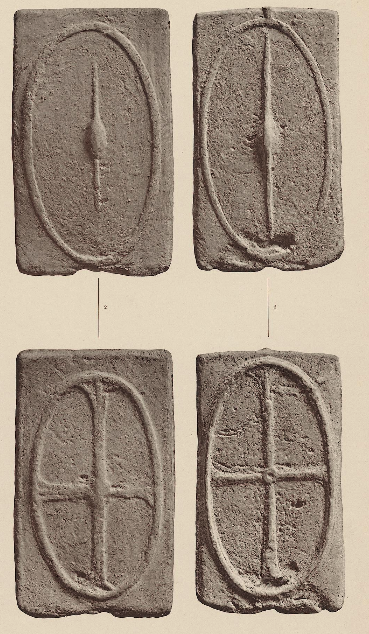
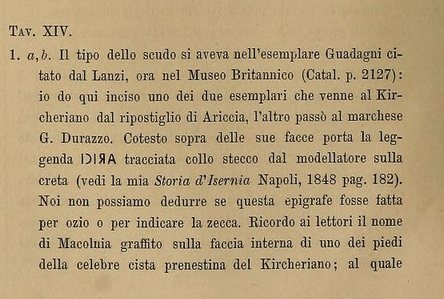
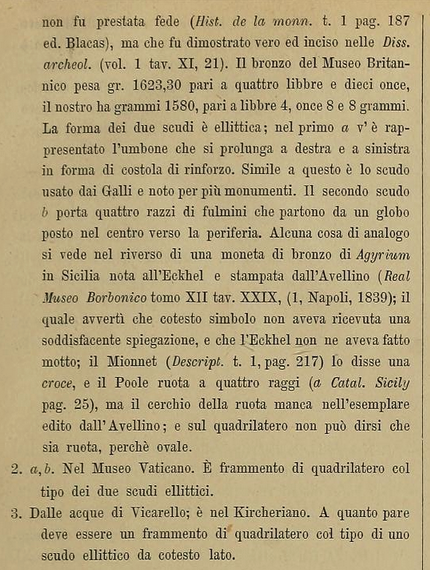
Quincussus (Five Pound Bar) with imprint of an elliptical shield, cut in one face in the greatest length and width by a kind of cross open in the center, enlarged in the four extremities in the form of a cone; cut it on the other side by a boss resembling a spindle which extends to the entire length of the shield. (This quincusse is in the cabinet of ancient medals of the MbL of Paris. [not in GALLICA. – others say it is in Kichner = Rome Coin Cabinet])
Another similar quicussus released from the casting process less perfectly than the previous one with a metal defect, so that at the top of the shield the air and the light pass from one side to the other
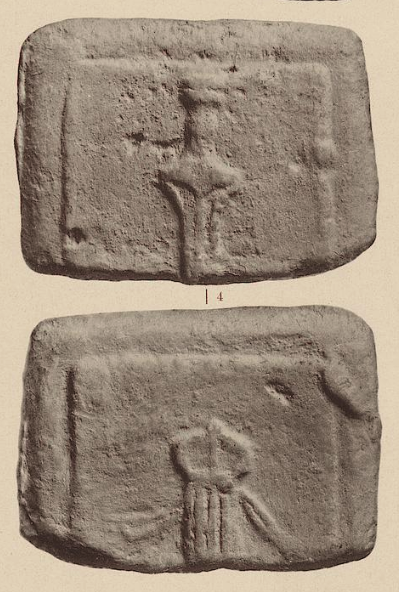
3. Fragment of quincussus with the imprint of the parazonium (short sword) on one side and the respective scabbard on the other. If one keep the grip with part of the parazonium on one face and the end of the scabbard is on the other. It is square, and represents three-fifths of the whole.
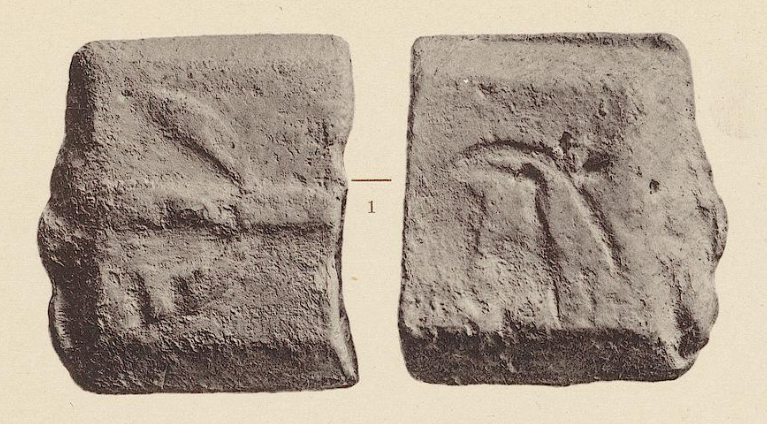
4. Another fragment of a rectangular currency bar, with two dolphins on one side and a leafless twig on the other. It is truncated at both extremities of its length, but it lacks little inside.
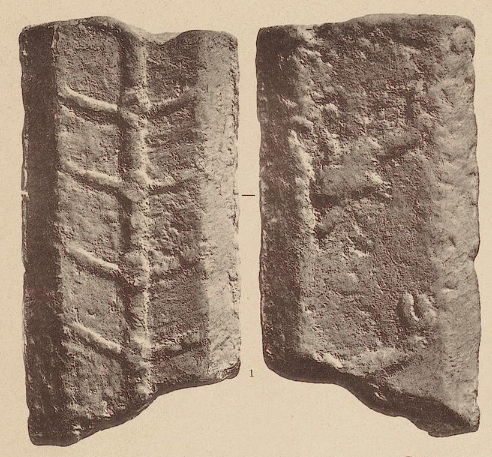
5. Another small fragment which on one side looks like the tripod of a candelabrum and on the other without imprint. The magnitude is less than the third of the whole. [RRC 6/1 or RRC 10/1?]
6. As with two-faced clean shaven obverse, head of Mercury left on the reverse. It should be noted that at the moment of the discovery the little treasure had at least three similar ones. [RRC 14/1]
7. Semis with an ox’s head to right and ship’s prow, also to the right. [Paestum type?]
8. Three similar trientes with dolphin and four globes on right, thunderbolt and four globes on right. [RRC 14/3]
9. Two similar quadrantes with open hand and three globes to the right, two shuttles or barley grains with globes [RRC 14/4]
10. Thirty-nine pieces of different proportions and unformed bronze, which it seems should be taken for aes rude as found in the deposit with the currency bars [aes signatum] (There is no doubt that these bronze pieces are true aes rude. The inferred study was compiled at the time of its discovery during the aforementioned question regarding the property.)
I will not talk about the combination in this hoard of the various kinds of money with the aes rude, nor about anything else of archaeological interest found in that coin group. Here it is enough for me to have verified the relationships of the coins with volcanic ash and of the coins with Lazio vases, and given the description of the numismatic series to which they pertain …
NOTICE nowhere in any of this is a mention of this bar which Haeberlin says is also from Ariccia (see previous post).
Haeberlin says he can see no trace of the writing on his bar which should be the same as that found at Ariccia with the hoard BUT …
Within a year of the discovery Garrucci was already claiming that it had such an inscription:
This is the first “Roman” Currency bar in Crawford’s sequence. There is no known whole bar. “B” is in Berlin according to Crawford in RRC and comes from the Ariccia 1848 Hoard according to Haeberlin, BUT but in CHRR Crawford says all bars except one shield from the Ariccia Hoard are in Rome…
“A” is from the S. Marinella 1927 Hoard. This image comes from Catalli’s 1989 re publication of the hoard (need a copy? Happy to send you a hi res pdf).
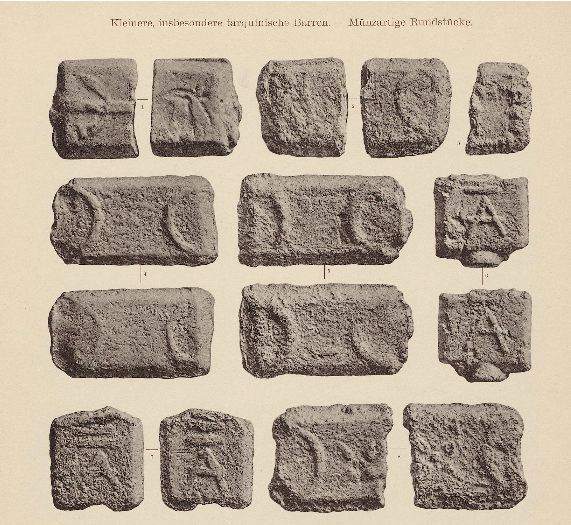
What makes RRC 3/1 different is it’s dimensions. It is far closer in proportion to the so called Tarquinia Bars than any of the other Roman ones. This is obvious by a quick glance at Haeberlin’s plate
Here’s a side by side to give you a sense of HOW DIFFERENT RRC 3/1 is from the other Roman Currency Bars
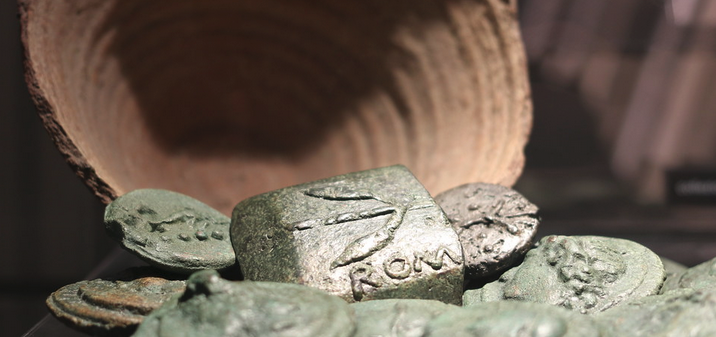
Snapshots taken from the hoard display in Rome show how massive the bevels are on the edge of the piece.
The other Roman currency bars are much flatter and wider and taller.
It has been accepted by Crawford and the Zagreb cataloguers that the Mazin Hoard contained a specimen of RRC 3/1b, i.e. the subtype without inscription:
I find myself agnostic about whether we should ascribe this bar fragment to Rome. Obviously the hoard contained other fragments of other Roman bars as well, but this looks like other ramo secco…
I wonder if the Berlin specimen could be metallurgically tested… Would it look like Roman material? The Tarquinian material? or the Ramo Secco? Each has a distinctive metallurgical profile.
All of this reminds me of:
Potts, C. (2019). Made in Etruria: Recontextualizing the Ramo Secco. American Journal of Numismatics (1989-), 31, 1–20. https://www.jstor.org/stable/27095026
Who argues that the symbol on the ramo secco is a LIVING plant. Most certainly on the S. Marinella Hoard specimen I see livng leaves on the stem…
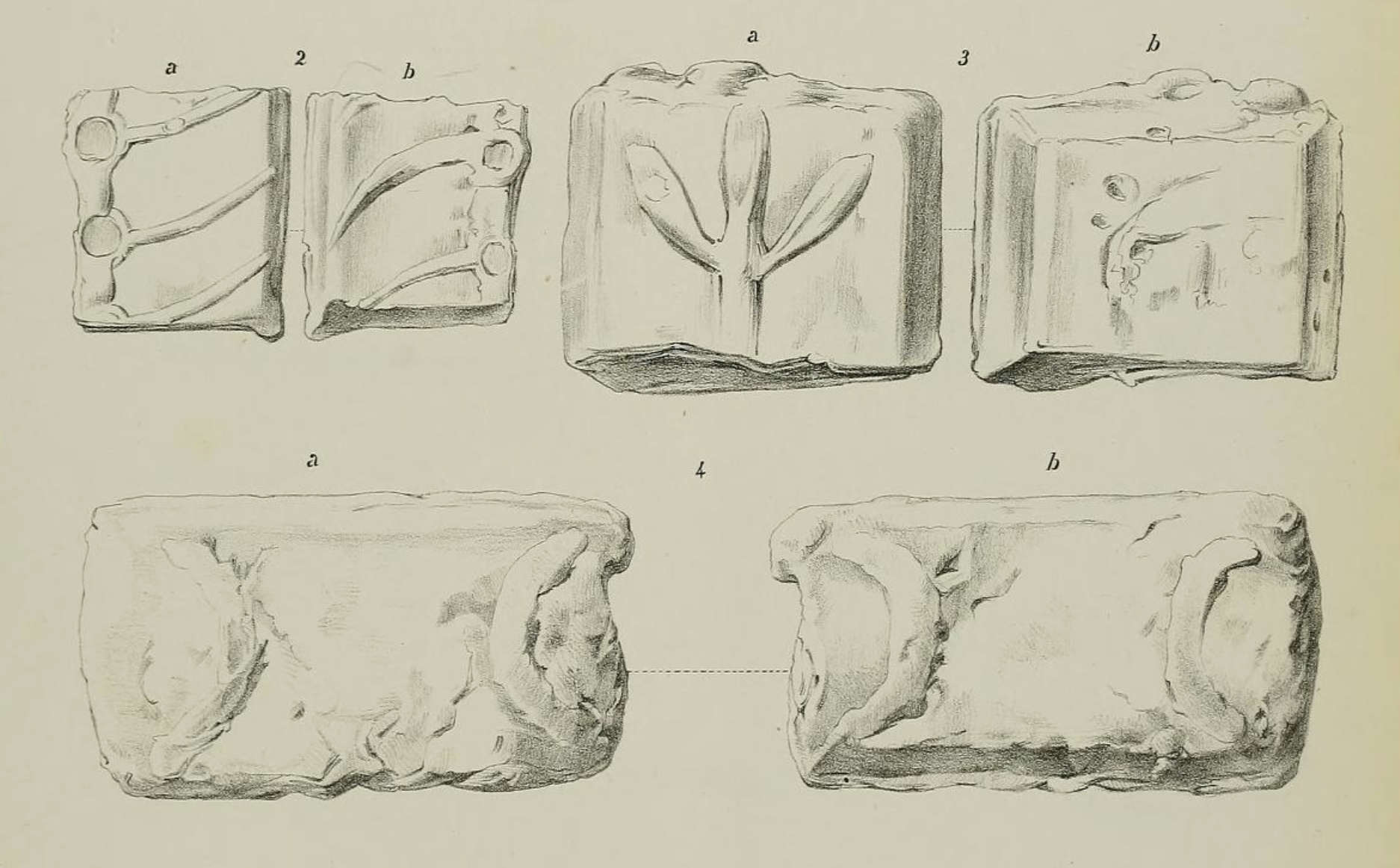
No. 3 on Plate 35 of Garrucci 1885 clearly matches the photo of the Ariccia specimen in Haeberlin, he says it is in Kircheriano in his own day so that highly suggests it is now in the Rome, and not Berlin, and I won’t get to test it any time soon. The plate is also a nice illustration of similarities to Tarquinian specimens.
The below passage reminded me of the above coin and the decoding of the legend to be about the foundation of the ludi Apollinares by public subscription:
stips collata dei thesauro
The next thing to be discussed was the gift to Apollo, to whom Camillus said that he had solemnly promised a tenth part of the spoils. The pontiffs ruled that the people must discharge this obligation, but it was not easy to devise a method for compelling them to return the booty, that out of it the due proportion might be set apart for the sacred object. They finally resorted to what seemed the least oppressive plan, namely, that whosoever wished to acquit himself and his household of obligation on the score of the vow, should appraise his own share of the spoils, and pay in a tenth part of its value to the public treasury, to the end that it might be converted into an offering of gold befitting the grandeur of the temple and the power of the god and corresponding to the majesty of the Roman People. This contribution still further alienated the affections of the commons from Camillus.
Livy 5.23; c. 396 BCE
This passage could be read as confirmation that there was really a temple of Apollo in 431 BCE at Rome, rather than crediting the physical remains to to the ‘re’ foundation in 353 BCE. OR, it could be read as Livy pushing the type of collection from the people on behalf of Apollo back into the legendary past to flesh out his account of Camillus. I lean towards the latter but obviously unknowable.
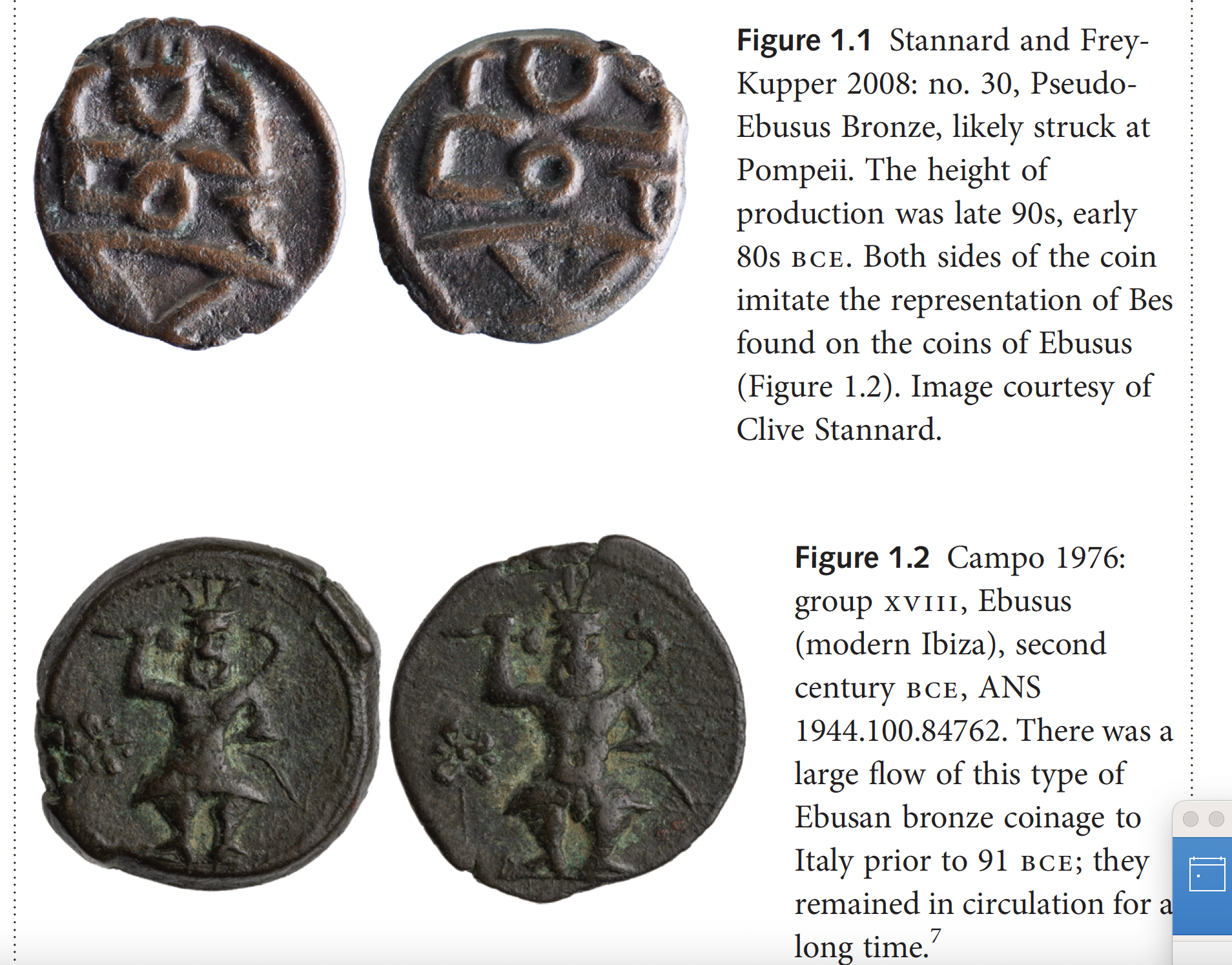
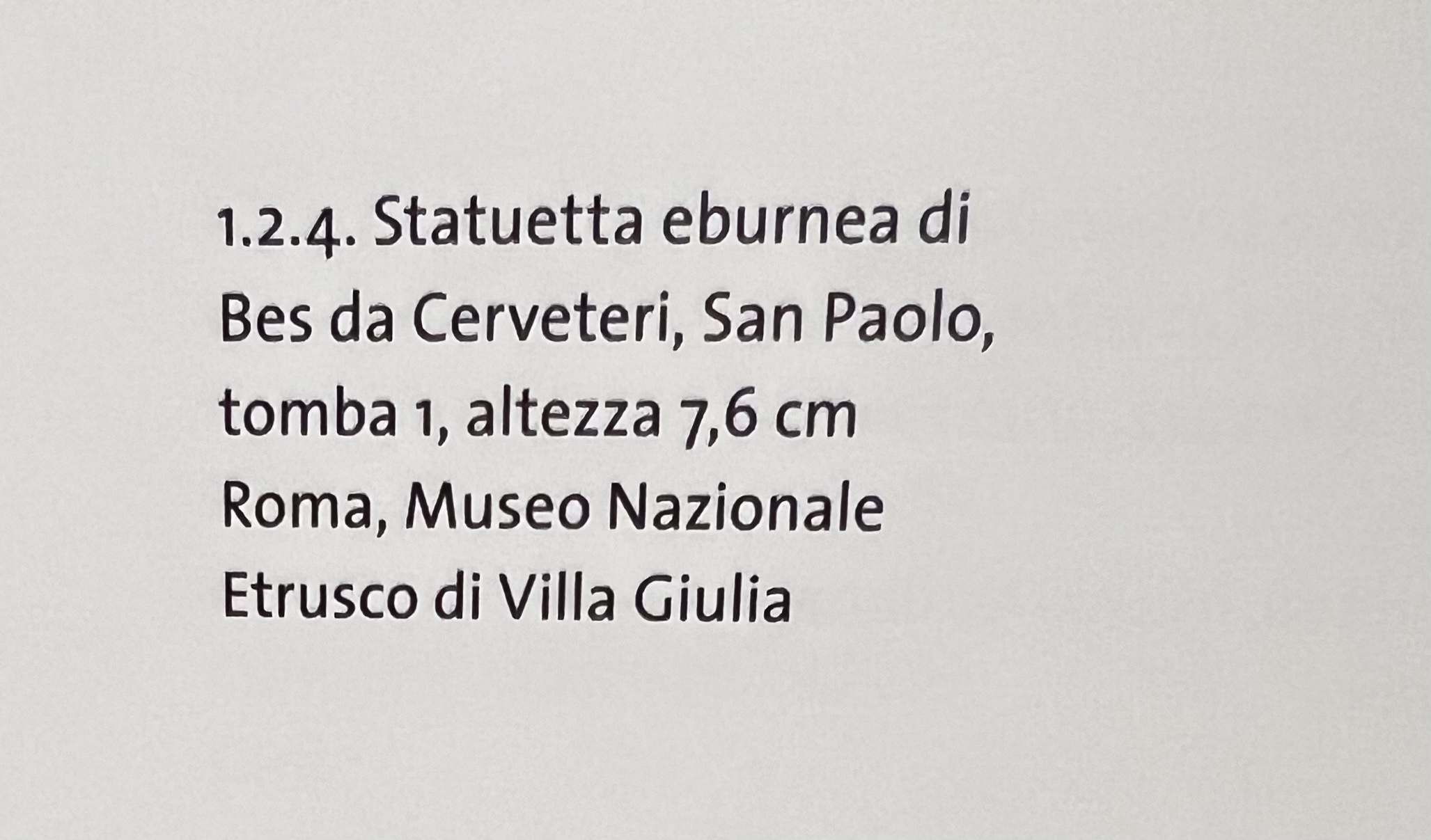
I started my coin book with images of Bes and how they came to Italy by way of Ebusus. (I also wrote a blog post over 10 years ago about these when I was just starting to think about the book project.)
But I’ve always found Bes a little odd. Why is this Egyptian god so popular in the Western Mediterranean? I’m sure someone has written on it.
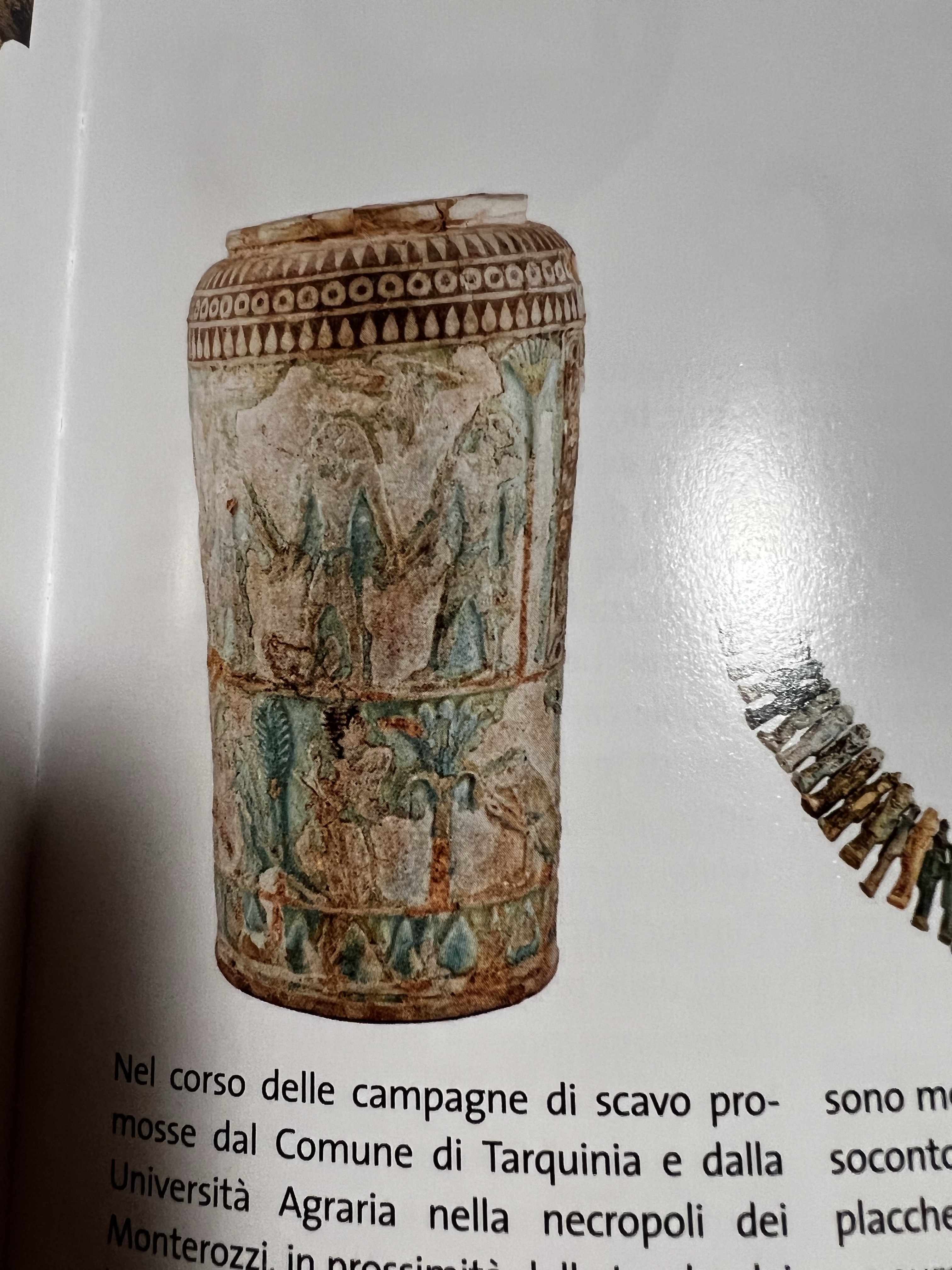
Anyway I was looking at Etruscan tomb finds from Ceveteri last night and say this image and of course realized how long Bes had been in Italy before he ever appeared on coins. There is a deep history not just with this god but with other Egyptian exports as well.
I like this passage as it shows the performance of hierarchies with emperor explicitly in the role of pater familias and the young emperor praised for acting old. I’d translated parsimonia as restrained as parsimony can have more negative connotations in English here than I think the Latin intends.
Stuff to keep in mind: domestic servants are enslaved as are huntsmen, grooms, and entertainers. Maybe some formerly enslaved but the jobs are associated with enslavement. Also Historia Augusta is as friend put it closer to fan fiction than history, which makes it extra useful for seeing tropes and moralizing expectations.
Emperor is appropriately more generous with those higher on the social ladder, his friends, the citizens of Rome (as well illustrated on the coins):
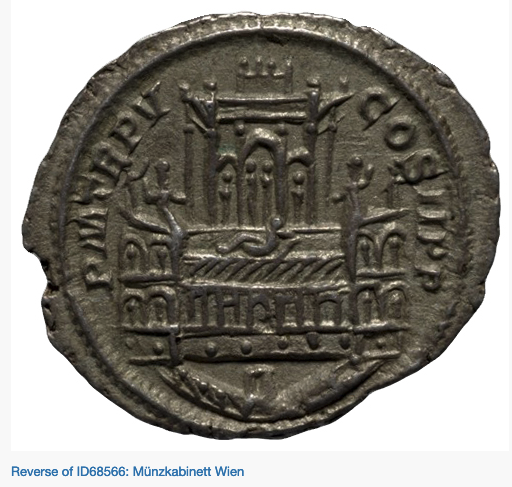
It is exactly this type of discrepancy that drives me nuts with numismatic typologies–there has to be a way our digital tools can help us correct and improve this sort of thing.
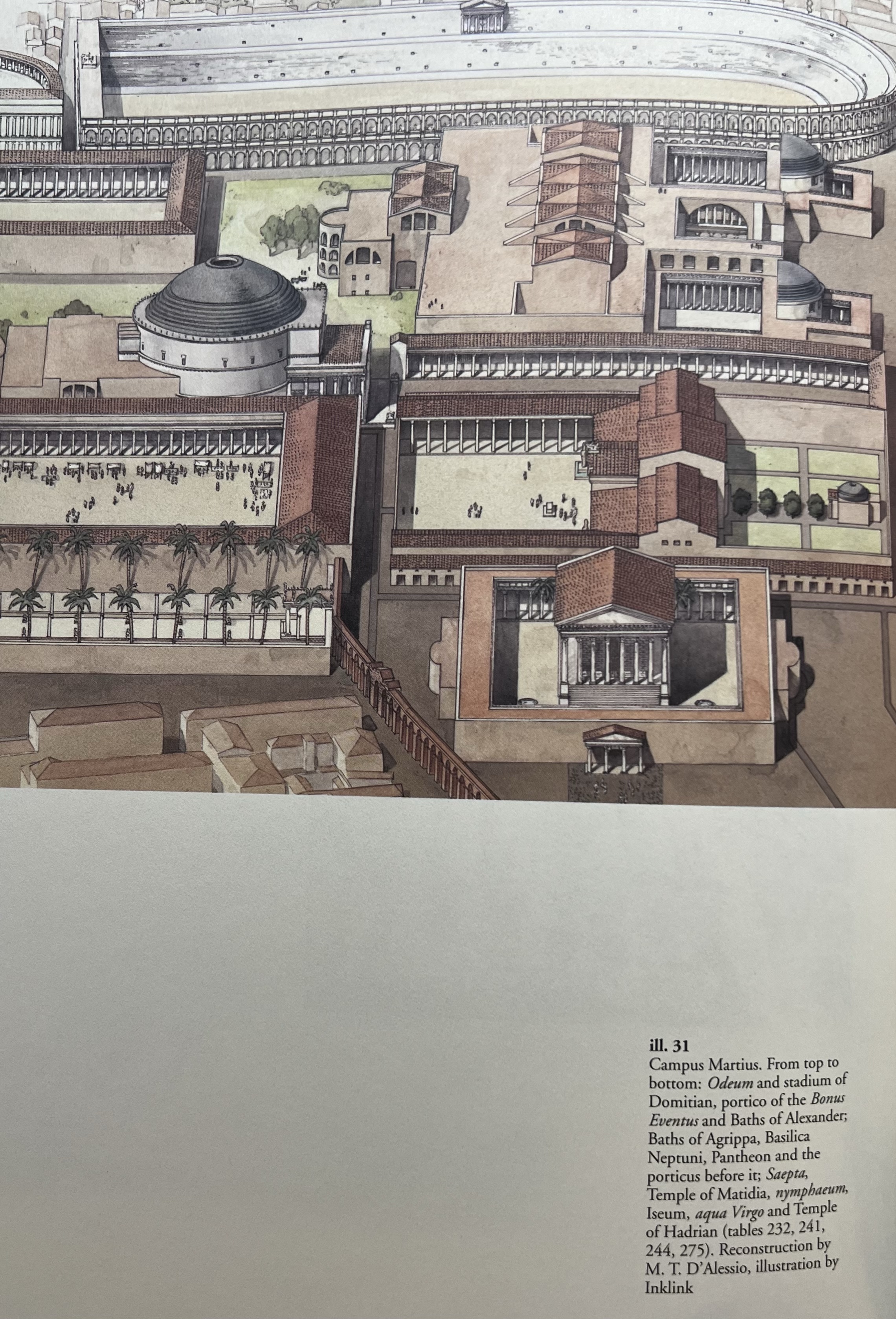
Later same day. This discrepancy on what architecture is being shown on the coin really bugged me.
Nothing about the plan or reconstruction of the baths reminds me of what we see on the coin.
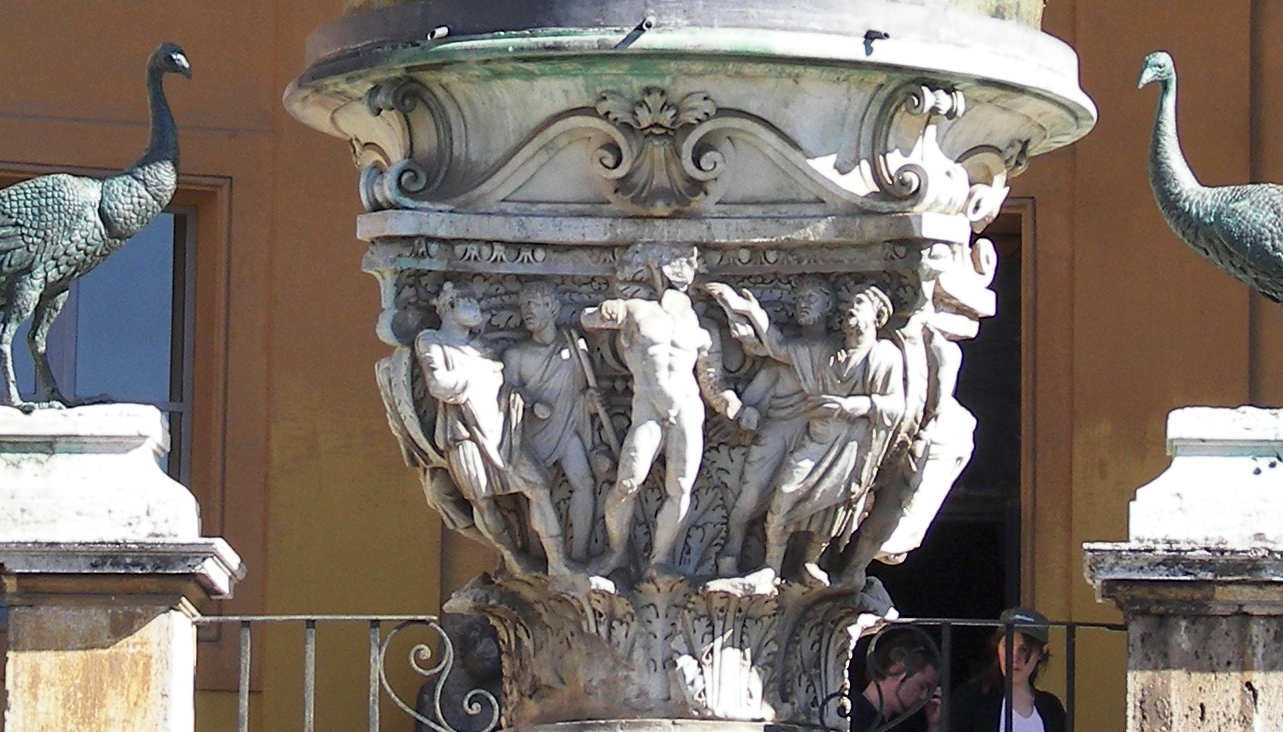
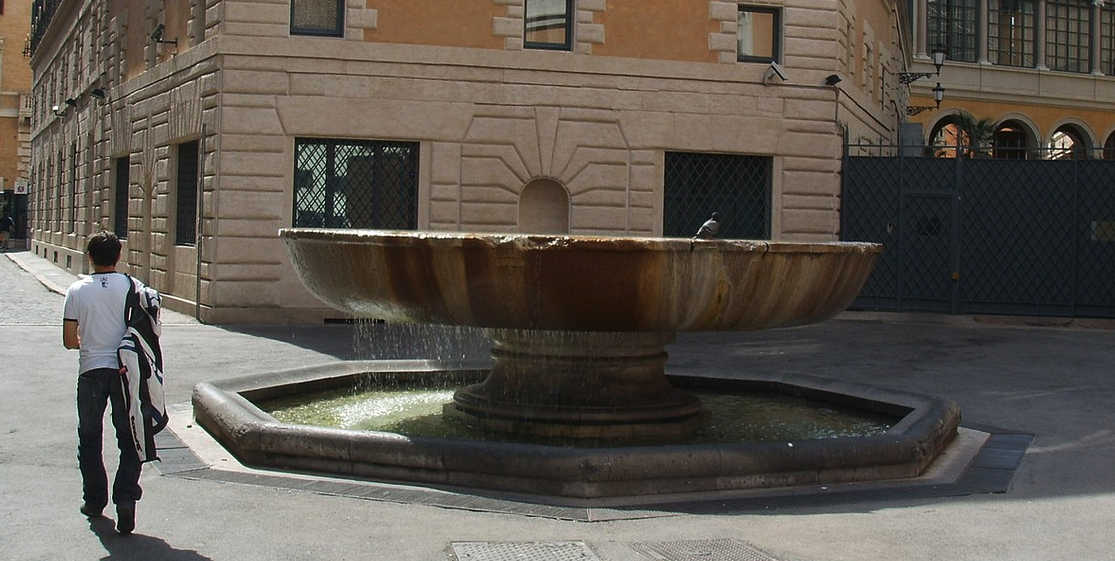
It is the big roofed building behind the Pantheon below Domitian’s stadium (= Piazza Navona), what was before Sev Alex got to it had been the baths of Nero. This causes confusion for the association of artifacts with Nero or Alex. And there are some impressive ones!
Like this giant capital now in the Vatican holding up a giant bronze pine cone.And the Giant wash basin turned Fontana del Senato
What about the Nymphaeum? Long story short. ALL The coins show the Nymphaeum and we have a pretty good idea how to match the coin image onto the surviving archaeology which is significant.
(This Elkins, of course, knew, see p. 104-105 of his 2015 book for details of numismatic introduction of this misguided Baths theory)
My favorite part?! The Coins show statues that still and if you’ve been to Rome you’ve probably seen. Look at the arches:
Historic view by Sadeler (Source; very distracting only open if you have time!!)
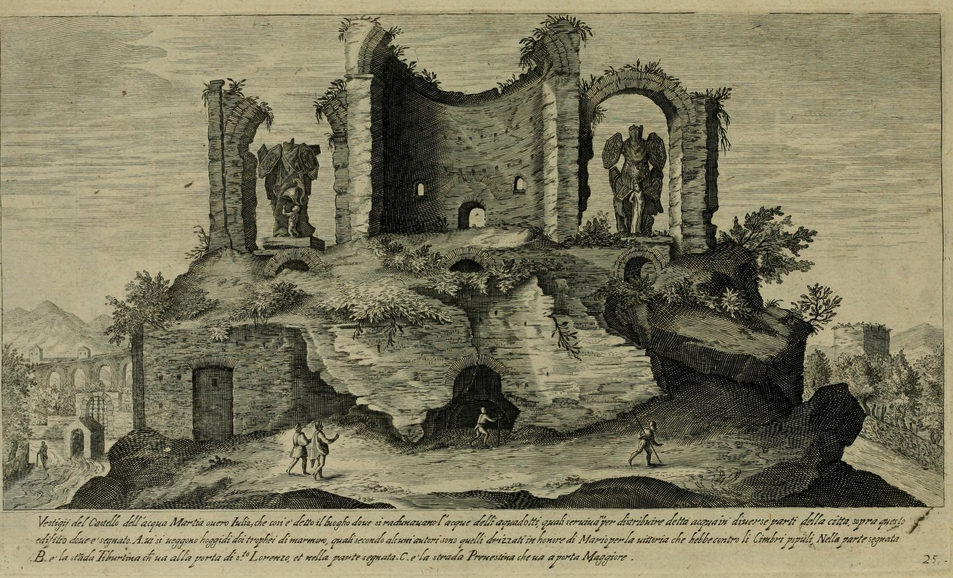
Those trophies now known to be repurposed from a Domitianic monument are still standing at the top of the ramp up to the Capitoline after being moved there!


























 Liv Mariah Yarrow