A follow up to the reverse analysis. See previous post for earlier bibliography. Again I offer two reference photos to help illustrate engraving variations but it is best to train one’s eye on numerous specimens, not just one or two.
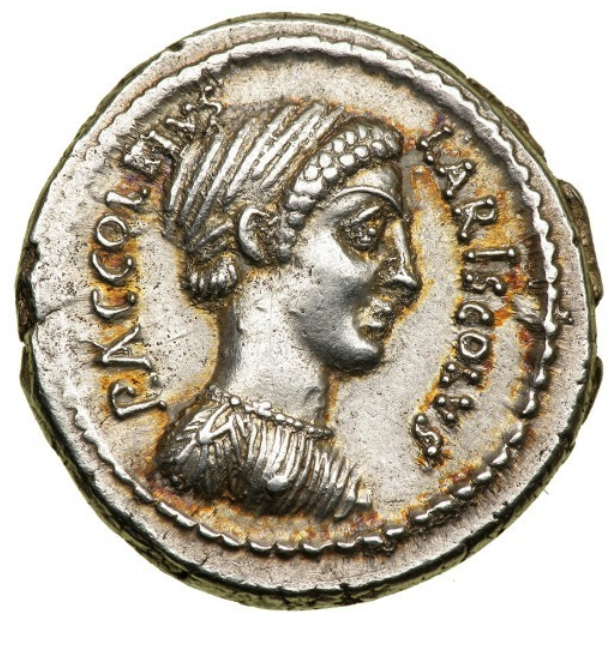
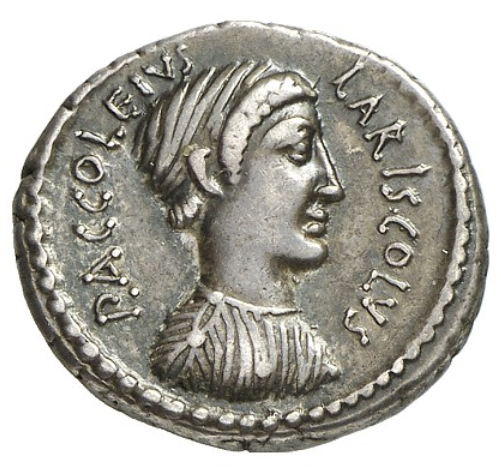
I dealt with prosopography back in 2023, so I’ll leave that alone. Suffice to say the family is well enough connected to the region and site of Nemi to make the association of types with that sanctuary plausible. Orthographically notice the deliberately tall I. Grueber noted this in 1910 as a key feature as the tall I replaced EI as a means of indicating a long-i. Isn’t that fun? Reminds me of our convos about apices. Orthography matters.
Massa-Pairault, Françoise-Hélène. “Diana Nemorensis, déesse latine, déesse hellénisée.” Mélanges d’Archéologie et d’Histoire de l’École Française de Rome LXXXI (1969): 425-471. Doi: 10.3406/mefr.1969.7581 [open access!]
Massa-Pairault aptly uses this head as a point of comparison.
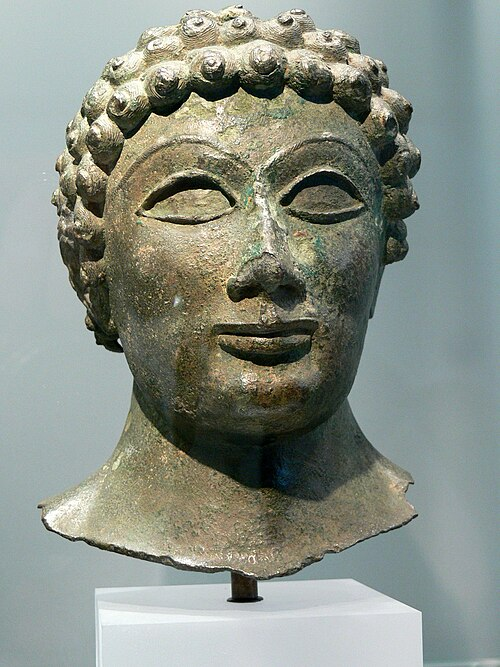
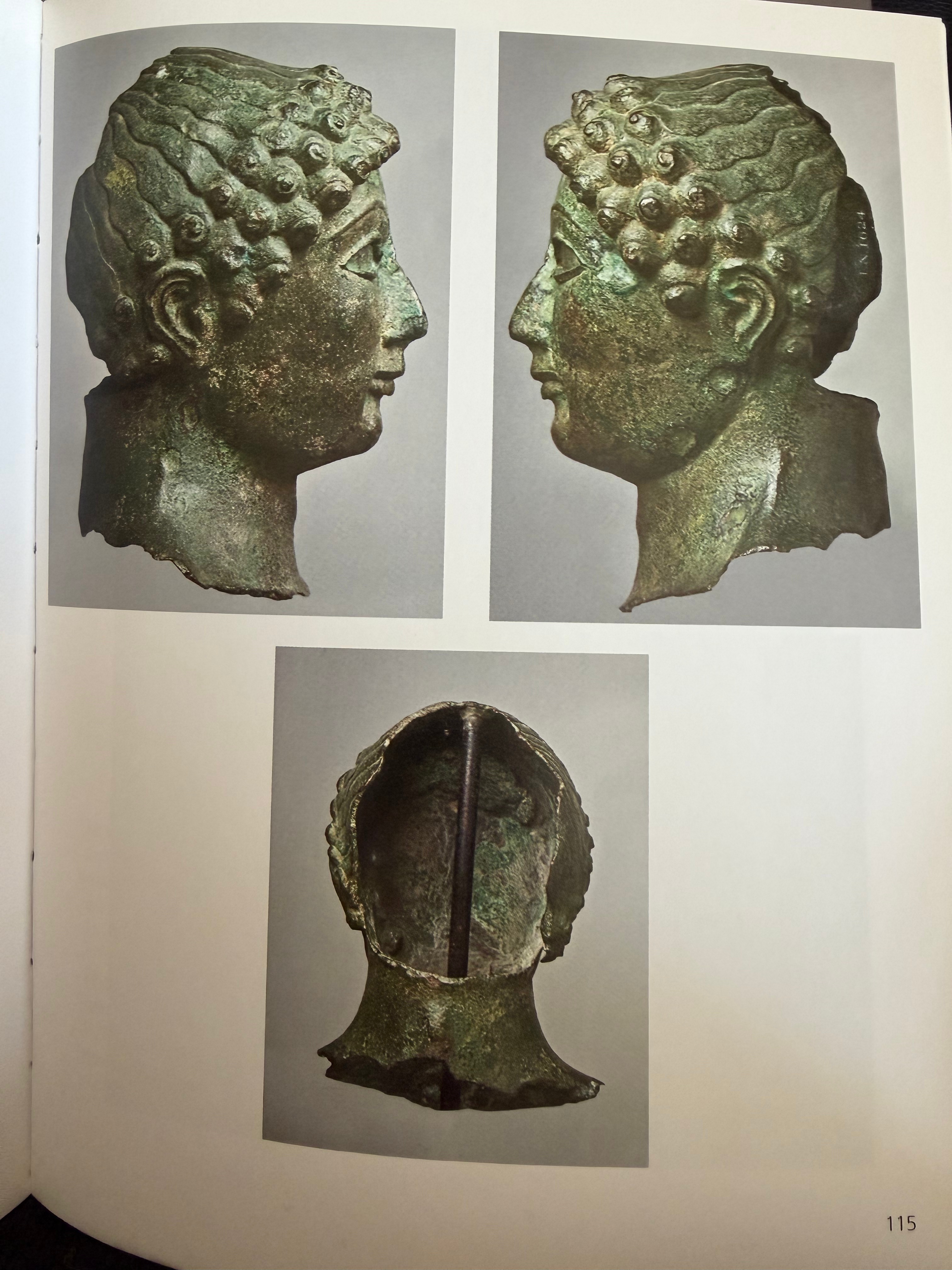
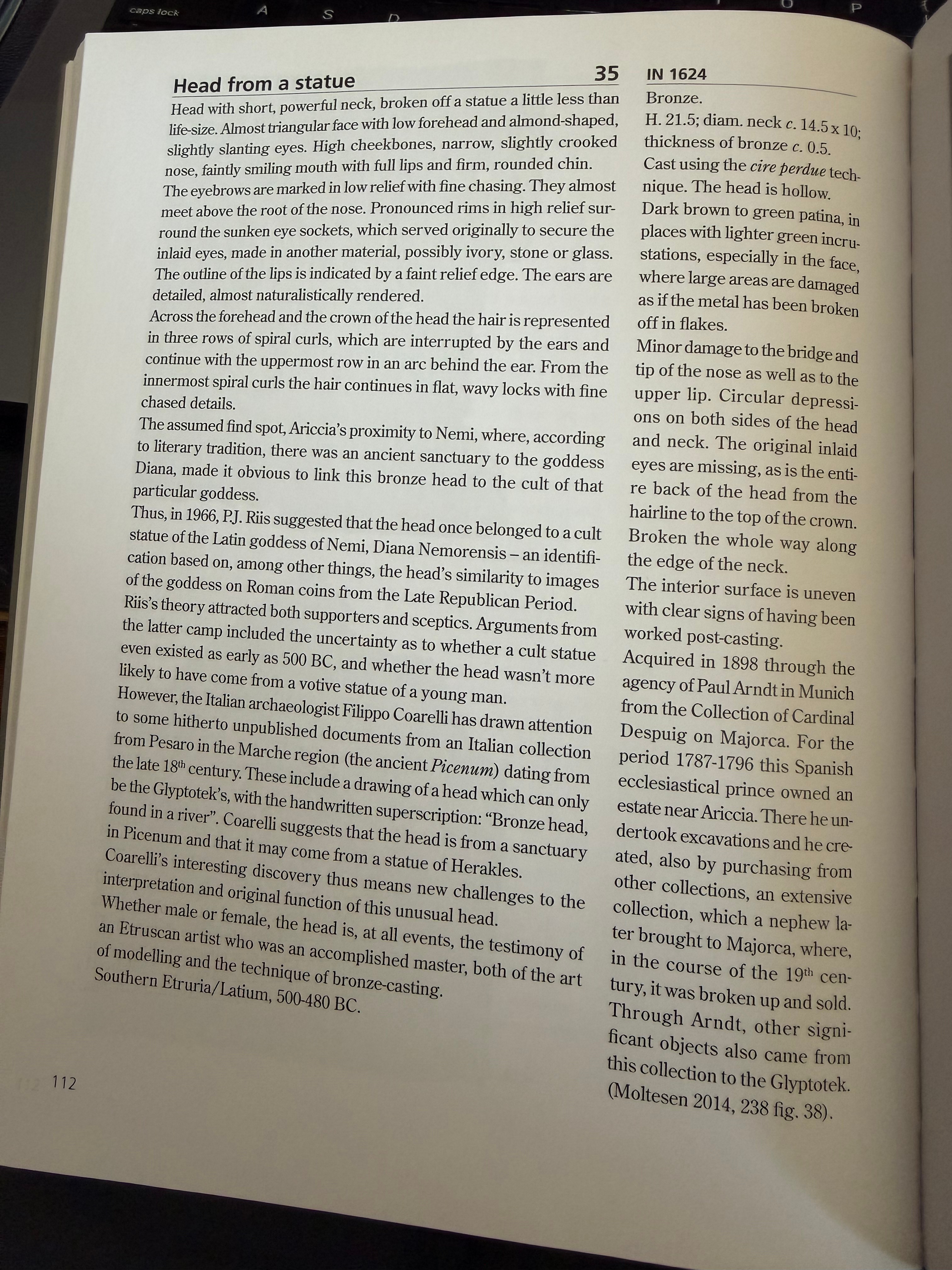
Beyond the hair the short forehead (eyes to high up the face), the large eyes and line like eyebrows all make excellent parallels.
The bronze head has short hair and suggests to me the depiction of a young man. The coin obverse image has a cloth covering one I might call a sakkos, the bust clearly wears a chiton with no over garment or jewellry visable
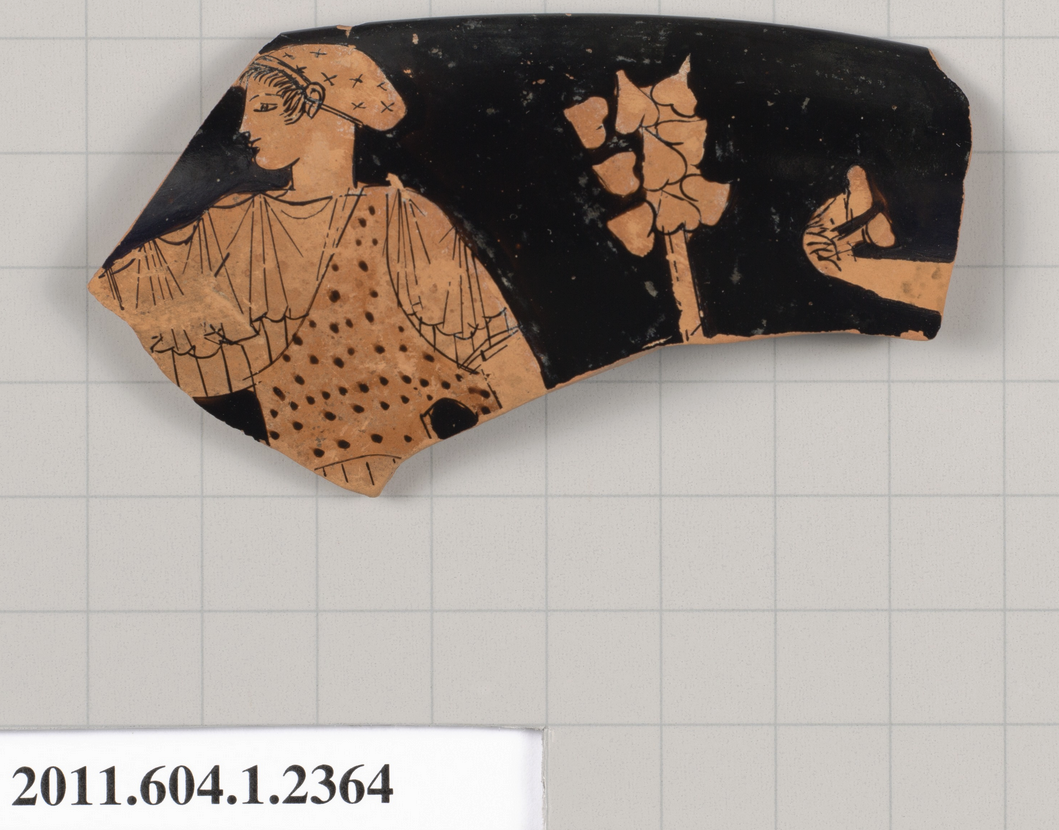
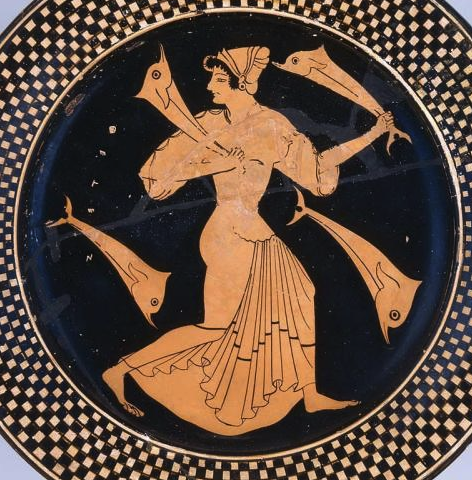
The large amount of bust shown on the obverse might itself be considered Italic (one post, another post)
Compare especially numismatic representations of Feronia and what I propose to call Aequitas. I really should publish this material properly I’m realizing.
I’d point to the following other busts on the republican coin series as particularly “Italic” in style.
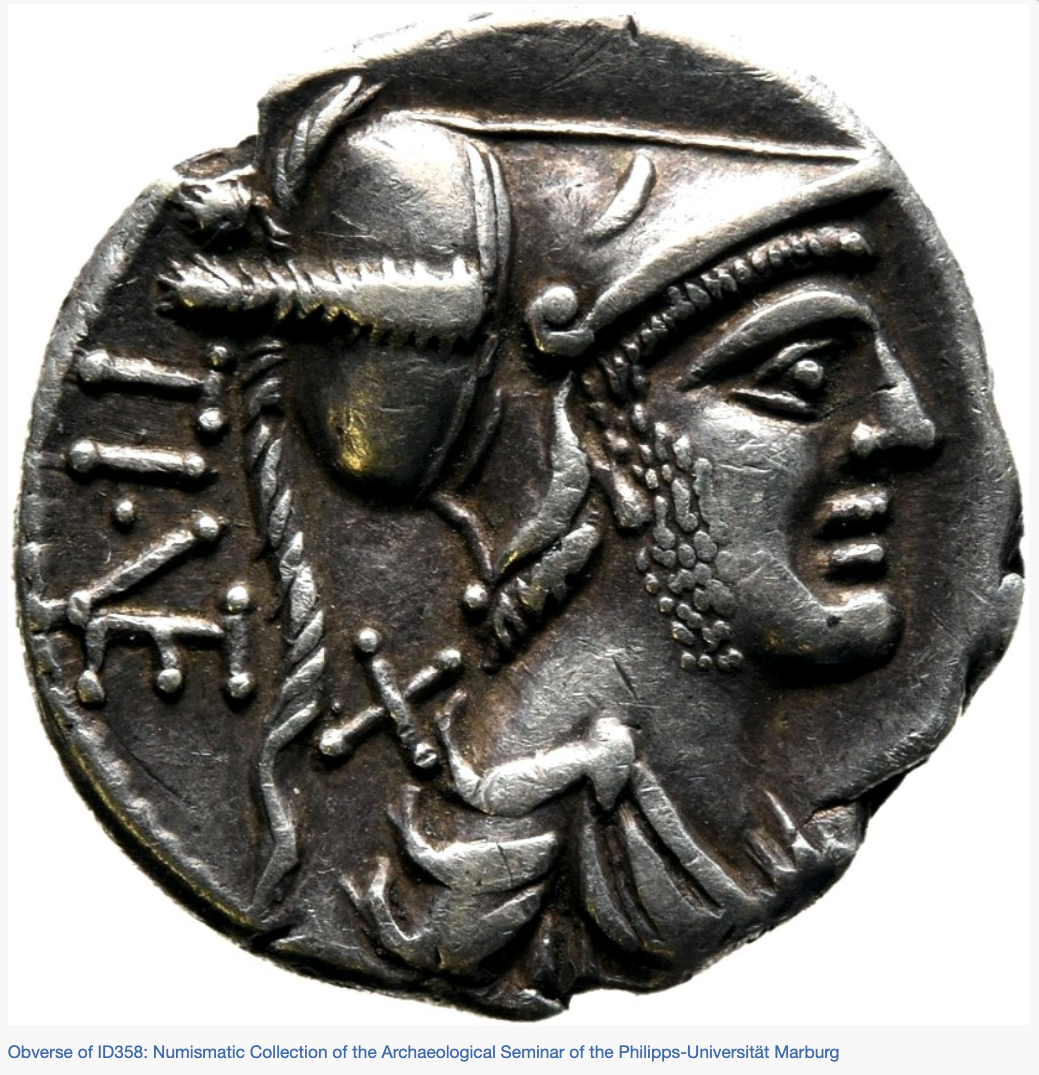
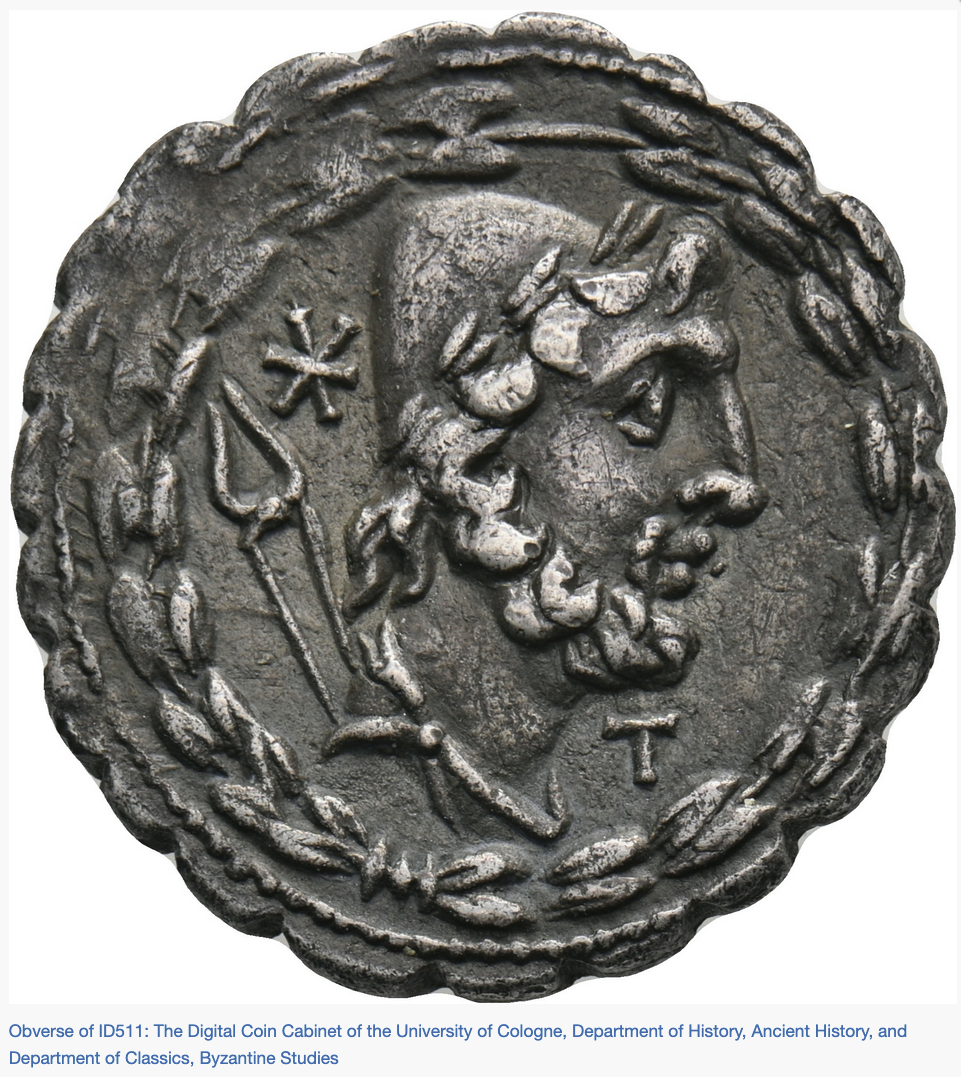
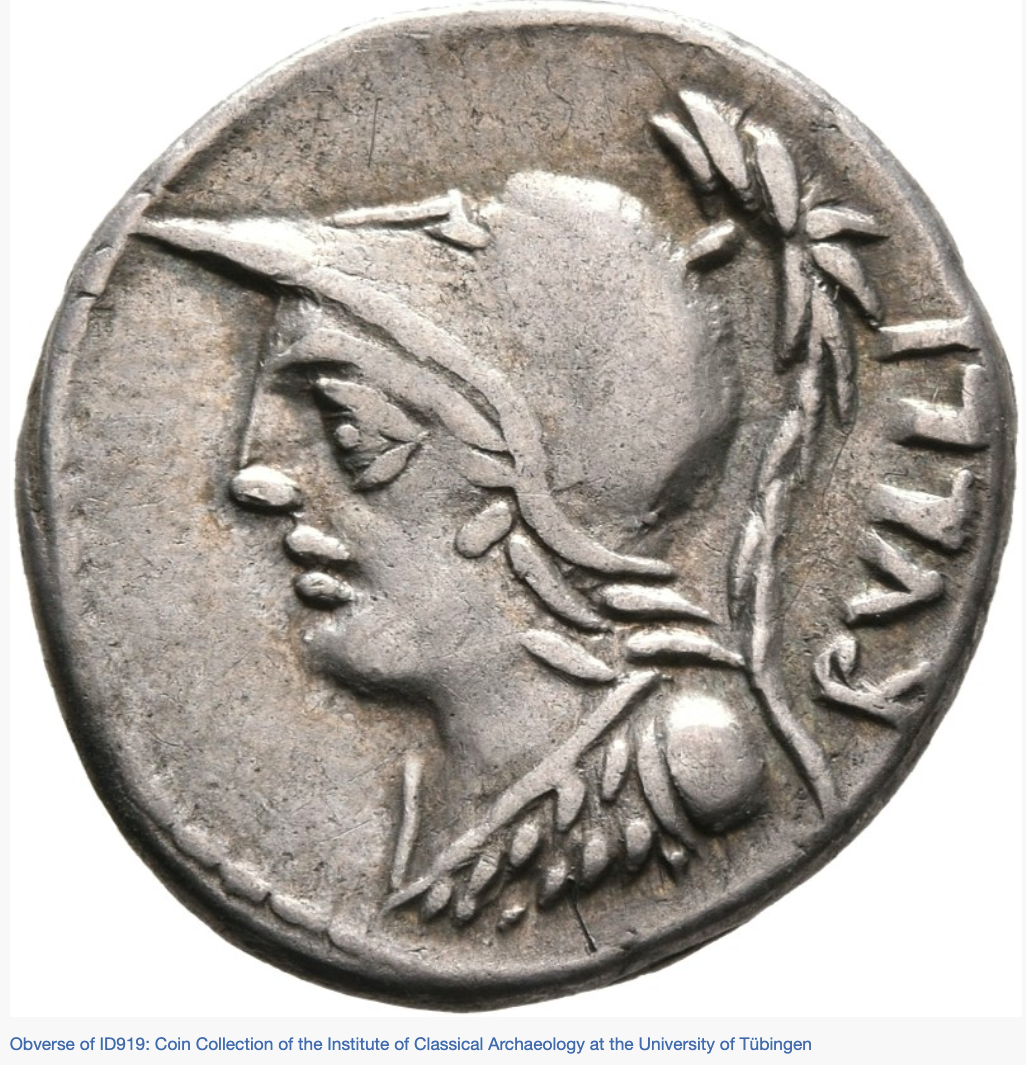
I take further comfort that such busts were perceived in antiquity as particularly ‘republican’ because of how they have a revival on the anonymous coinage of the year of the four emperors
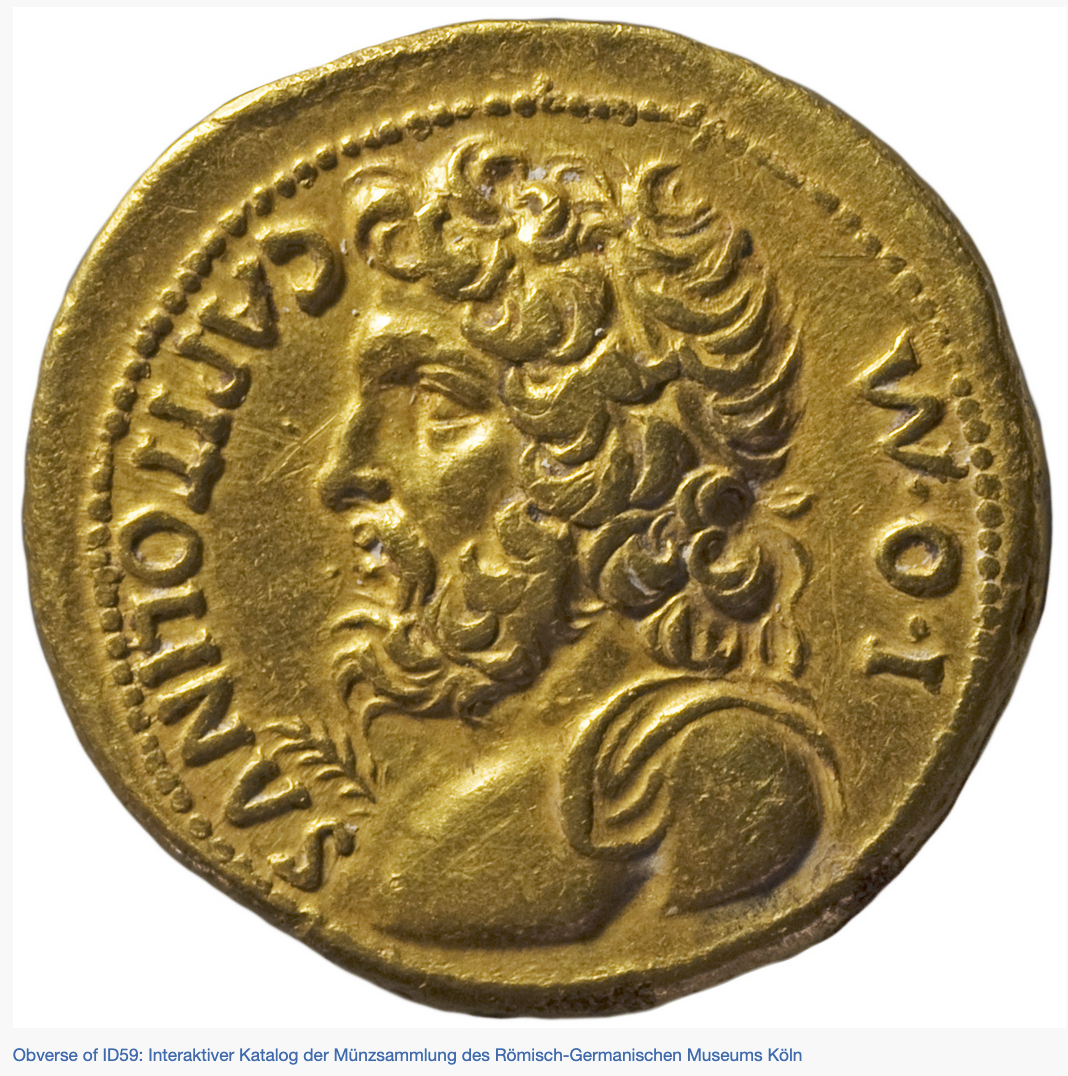
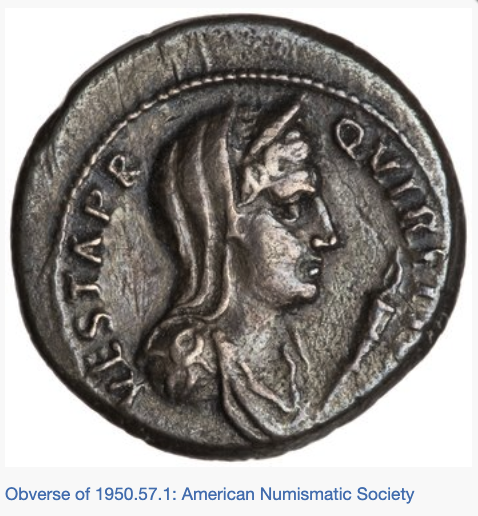
We can also see the celebration of Nemi’s specific honoring as part of a increasing tradition to honor cults in greater Latium
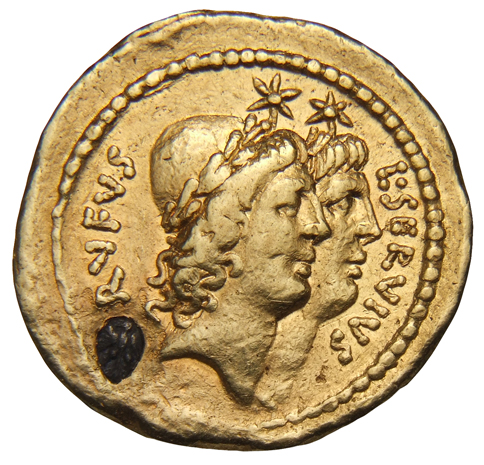
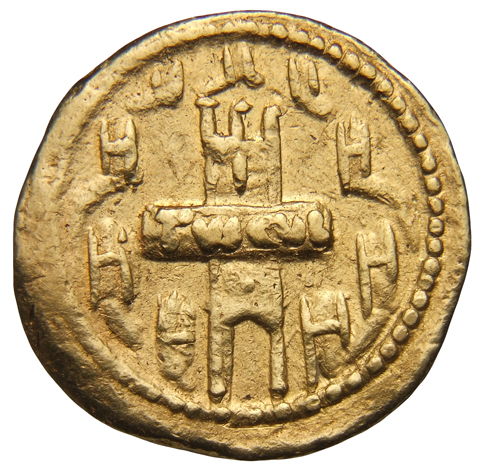
RRC 449/1 – c. 48 BCE, Jupiter A(n)xur(us) and a presumed connection between the moneyer and Terracina
I’m of course obsessed with Juno Sospita and Lanuvium

 Liv Mariah Yarrow
