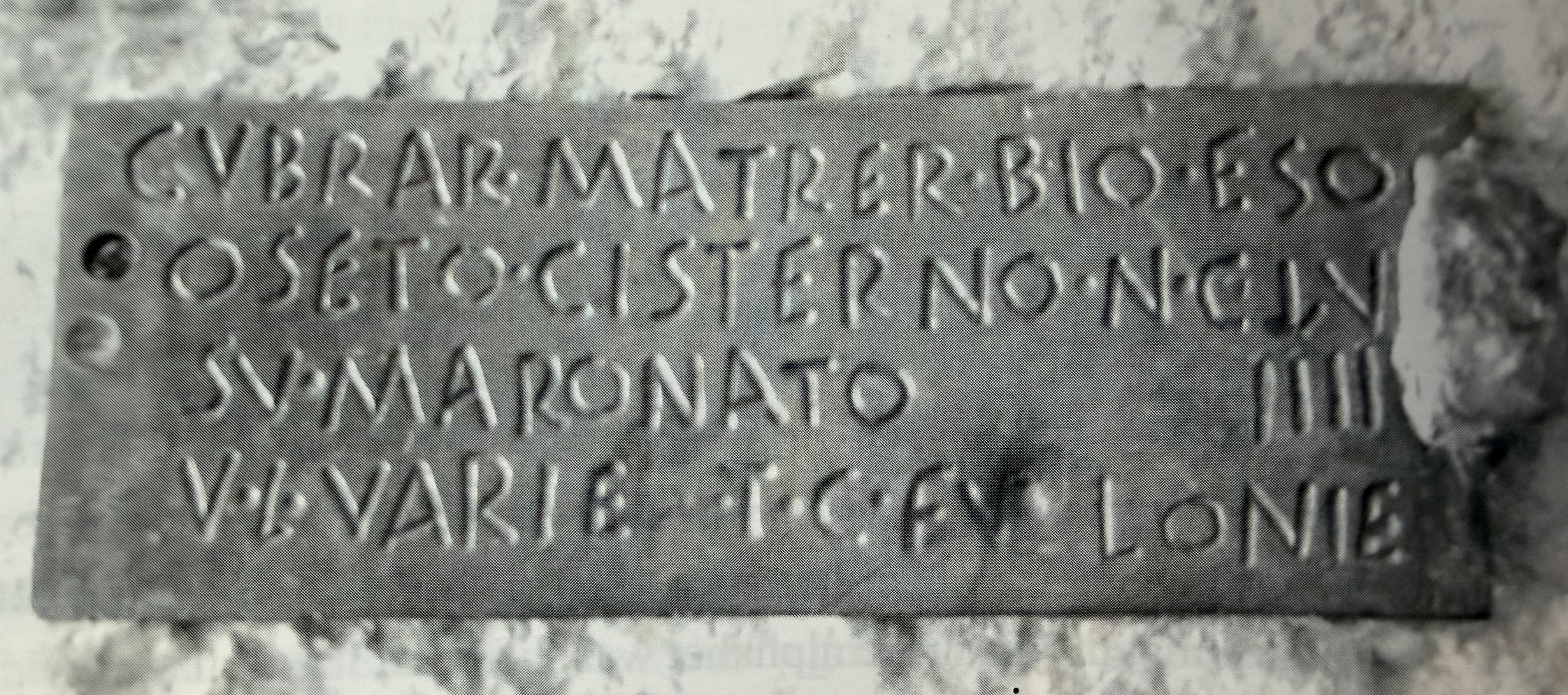
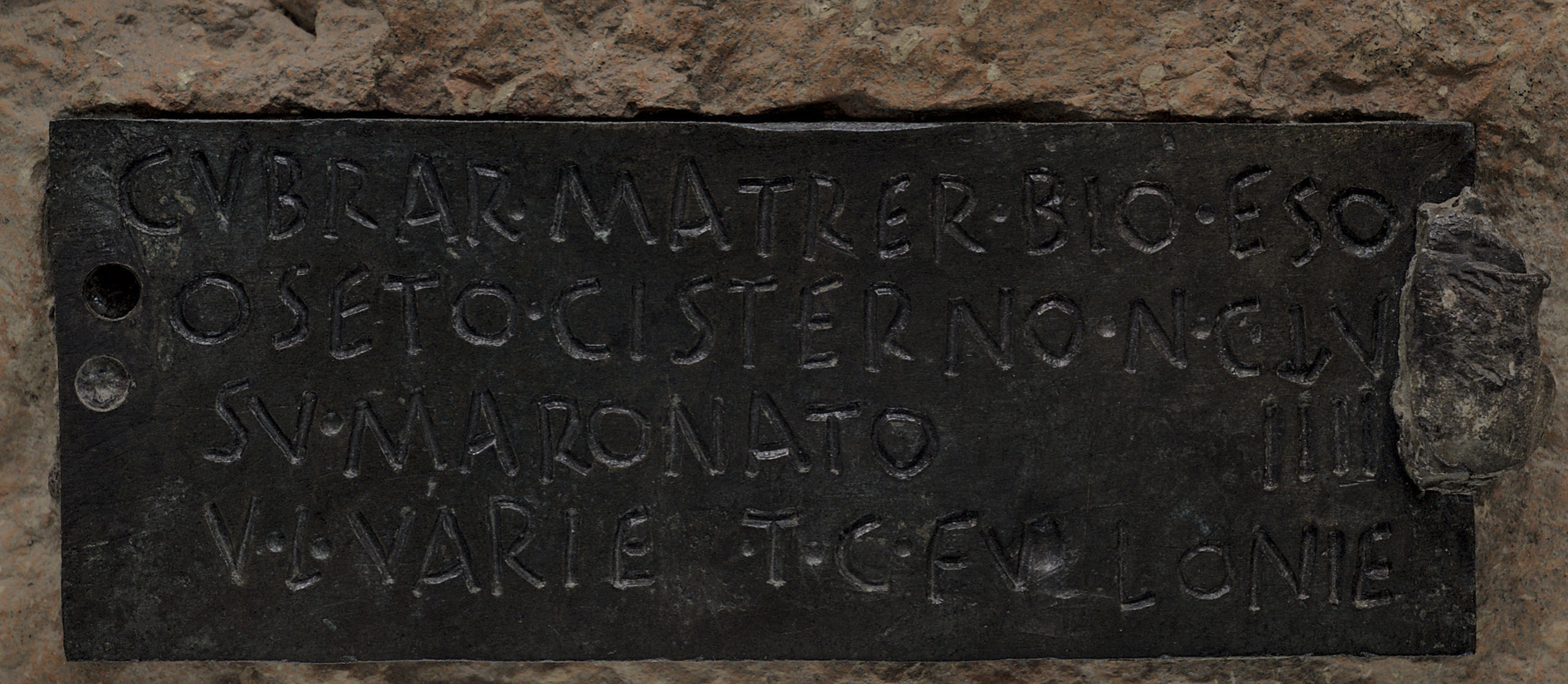
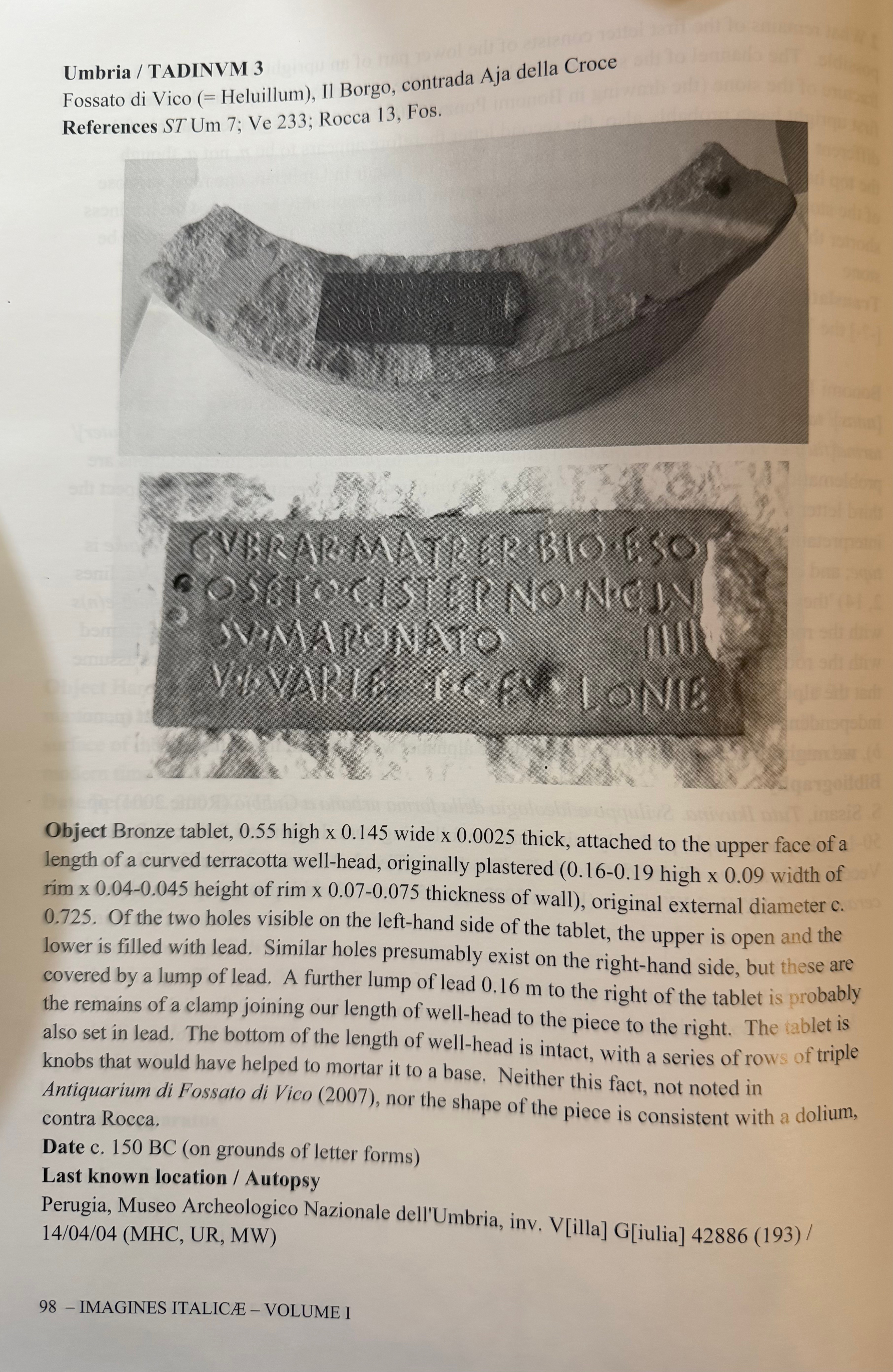
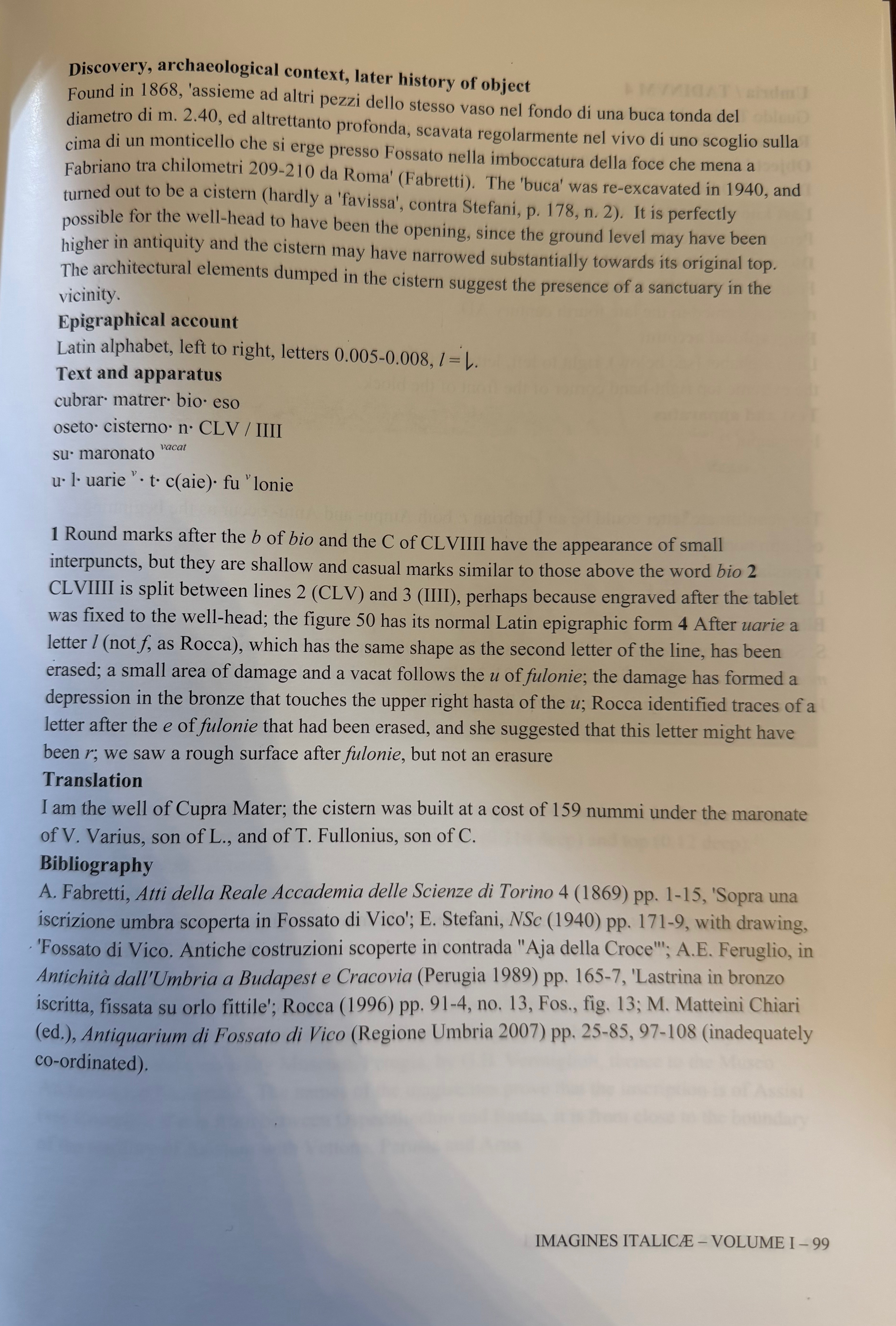
Full entry of inscription in Imagines Italicae below.
I am the
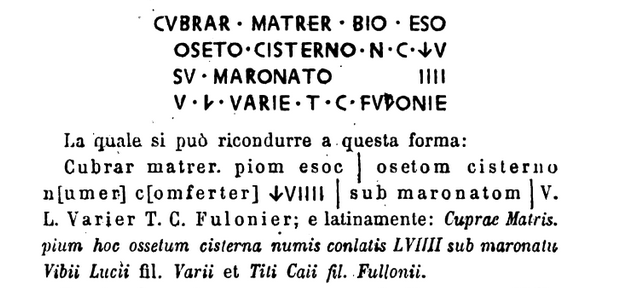
well[enclosure] of Cupra Mater; the cistern was built at a cost of 159 nummi under the maronate of V. Varius, son of L., and of T. Fullonius, son of C.
Sacred objects could not be removed from sanctuaries. This created a problem. You want to spiffy up the place and make new exciting BETTER dedications and buildings for your super cool patron god(dess), but where does the old stuff go? A pit. We’ve talked about this on the blog I’m sure, but maybe not specifically.
This inscription was the mouth to such a pit so more old dedications could be hidden a way by dropping them through the opening into the cistern. Safely out of sight but still in in the custody of the divine and on sacred land.
UPDATE: All this above is true in the abstract, but I’m going to defer to Francesco Marcattili’s interpretation of the cult site. Near the end of this post you’ll find quotes in translation from his 2017 article summarizing his interpretation.
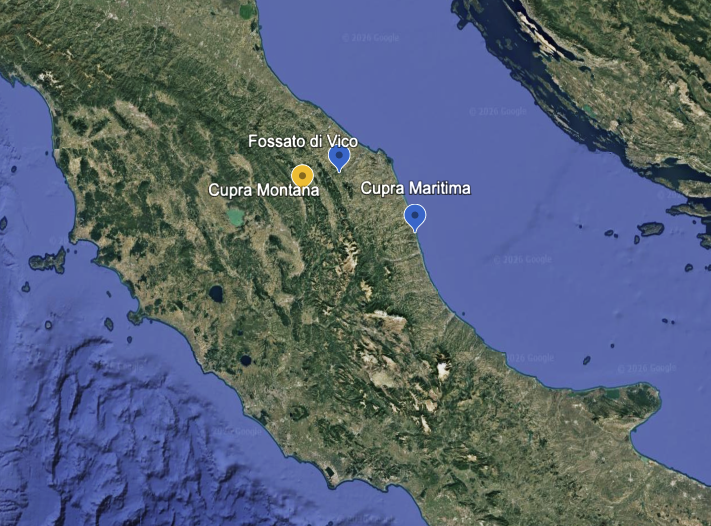
Cupra is the name of both a goddess and places dedicated to her; Strabo even tells us that this is the Etruscan named for Juno. (Topostext)
The page numbers in the citation to the original publication are incorrect but I was still able to easily find it.
In the original publication it is compared to an inscription in Assisi:
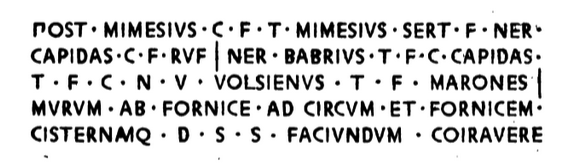
Post(umus) Mimesius C(ai) f(ilius) T(itus) Mimesius Sert(oris) f(ilius) Ner(ius) Capidas C(ai) f(ilius) Ruf(us) /
EDCS-12700059 = CIL 11, 5390 = CIL 1, 2112
Ner(ius) Babrius T(iti) f(ilius) C(aius) Capidas T(iti) f(ilius) C(ai) n(epos) V(ibius) Voisienus T(iti) f(ilius) marones /
murum ab fornice ad circum et fornicem cisternamq(ue) d(e) s(enatus) s(ententia) faciundum coiravere
This Assisi inscription is dated to 140-101 BCE while Crawford places the Fossato di Vico inscription c. 150 BCE based on letter forms. The letter forms of the two inscriptions are completely different.
The original transcription
I’m curious about what was found in the cistern itself. Crawford mentions architectural elements. I’ve ILLed the 1940 re excavation. There is a publication that tempts me but it is more a fancy not a desire. I’m not sure it is worth having it shipped via ILL, but I’ll try to consult when I’m next at ICS.
Maurizio Matteini Chiari, Antiquarium di Fossato di Vico. Materiali archeologici, iscrizioni, sculture, elementi architettonici, ceramica, monete. Electa Editori Umbri [2007], Perugia, 2007 Con 363 illustrazioni in b/n e a colori n.t. Catalogo regionale dei beni culturali dell’Umbria Numero di tavole: 363 pp.315 altezza 0 larghezza 0 Esemplare in buone condizioni.Copertina con leggero ingiallimento, alcune macchie di polvere e minimi segni di usura ai bordi e agli angoli.Pagine leggermente ingiallite ai bordi.Testo in Lingua Italiana.
The purpose of this post is to think what N(ummi) would mean to someone in this part of Italy in the mid 2nd Century BCE. Is the unit of account some form of AS. Is this suggesting 15.9 denarii? That seems to low doesnt it? Surely it cost more to have the pit dug and lined and bronze plaque attached to the well head even if that is humble terracotta.
So are they thinking in denarii did this enterprise cost 159 denarii? That seems a great deal. How big is this cistern!?
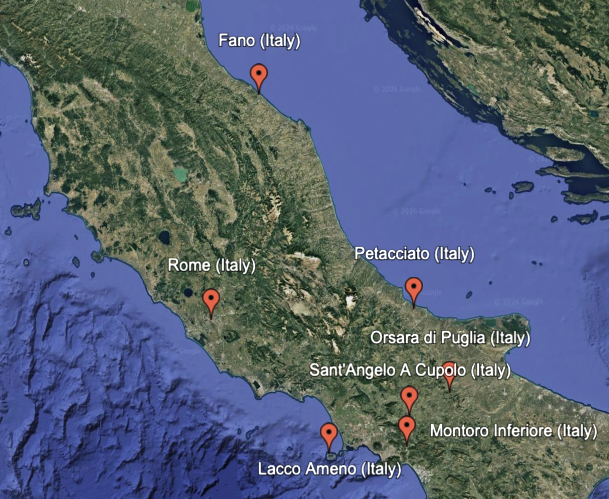
Orsara – 2 denarii
Fano – 120 victoriati
Montoro Inferiore – 337 asses
Lacco Ameno – 30 denarii
Rome – 121 denarii, 2 victoriati
Petacciato – 224 denarii, 6 victoriati
I was expecting more hoards from north central, Umbria, Etruria… Funny. I’m guessing a reporting problem.
I think I want to think more about what the heck nummi might mean in this period in this part of Italy. I find I still have a question mark in my brain. Post hannibalic war there is no more local coinage in Italy it is all Roman.
Puzzling.
Marcattili, Francesco. “Il santuario di Cupra a Fossato di Vico.” Studi Etruschi 80 (2017): 115-129.
A re-examination of the excavations at Aja della Croce reveals that the artifacts consistently point to the presence of a sanctuary at the site, featuring an area dedicated to ritual ablutions—specifically, a small shrine housing a wellhead situated above an underground cistern. These structures played a significant role in the female rituals associated with the cult of the goddess Cupra—rituals similar to those dedicated to Venus and Bona Dea—while the ancillary rooms within the sanctuary complex, though not sacred spaces themselves, reflect the domestic and feminine dimensions of the cult.
Notes:
“The sanctuary developed on a system of artificial terraces built on a hill overlooking the Via Flaminia. In Roman times it was situated within the territory of the statio of Helvillum.”
“…the rituals performed in the sanctuary, rituals that followed liturgical customs comparable to those of Bona Dea and Venus”
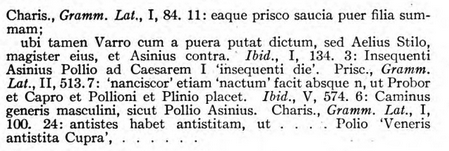
“at Fossato di Vico that we can identify clear archaeological confirmation of Varro’s famous expression cyprum Sabine bonum, a phrase rich in historical and religious implications which suggests, on a theological level, the identification of the goddess Cupra—defined by Asinius Pollio as Veneris antistita (“attendant of Venus”)—with the Roman Bona Dea.”
The Vicus Cyprius ‘Good Row,’ from cyprum, because there the Sabines who were taken in as citizens settled, and they named it from the good omen: for cyprum means ‘good’ in Sabine.
Vicus Cyprius a cypro, quod ibi Sabini cives additi consederunt, quia bono omine id appellarunt: nam cyprum Sabine bonum.
Varro LL 5.159
De Melo 2019: 784-785 affirms in his commentary that Varro is correct in his etymology here and draws a connection as well to the Umbrian goddess.
The Asinius Pollio fragment is from a late grammarian Charisius, one whose manuscripts are full of unfortunate lacunae.
“a cistern lined with cocciopesto (fig. 1, A), intended for water storage. At the time the sacred area was abandoned, the cistern was transformed into a deposit for heterogeneous architectural and ceramic materials.”
Wikipedia: “Its main advantage over opus caementicium was that it is waterproof, the reason for its widespread use in Roman baths, aqueducts, cisterns and any buildings involving water. In floors it provided damp-proofing.”
“Stefani suggested that this terracotta fragment originally belonged to the mouth of the cistern itself. Traces of mortar adhering to the external surface of the fragment support the hypothesis that it formed part of a masonry parapet marking the cistern’s opening.”
“Micheletti—the landowner who conducted the 1869 excavation—recorded that additional fragments of the terracotta structure were found. These appeared to belong to a cylindrical, slightly truncated-conical vessel, around 60 cm in diameter and approximately 50 cm tall, notably without a base. This strongly suggests that the object functioned as a terracotta puteal (puteal fittile).”
“The Doric capitals and column drums found inside the cistern at Fossato di Vico—made of travertine and belonging to two Doric columns—likely formed the architectural elements of a structure designed to frame and monumentalize the puteal and underlying cistern. Given their modest height, these columns probably belonged to a tholos or monopteros, undoubtedly roofed, as confirmed by the presence of tiles.”
“Such a structure would have visually and symbolically emphasized the sacred nature of the water contained within the cistern. Similar installations are known from the Roman Forum (marking the mundus), from Pompeii’s Doric Temple in the Forum Triangulare, and from the sanctuary of Fortuna Primigenia at Palestrina, where a tholos marked an underground oracular cavity.”
“The Umbrian term bio, present in the inscription, corresponds semantically to the Latin saeptum. Its etymology connects it to Indo‑European roots meaning “to enclose” or “to confine.” The bio of Cupra Mater, therefore, was likely a deliberately enclosed sacred structure—specifically the puteal and its protective architectural frame.”
“At Fossato di Vico itself, Stefani identified two large contiguous basins lined with cocciopesto near the cistern. Their size, waterproof construction, and associated loom weights emphasize the female, domestic, and ritual character of the cult space.”
Further bibliography to explore
Paci, Gianfranco. “Dall’umbro al latino: i frammenti ceramici a v. n. iscritti dal santuario di Cupra a Colfiorito.” Picus 42 (2022): 109-118.
An analysis of twelve graffiti dating to the 3rd–2nd centuries BC—inscribed in the Latin alphabet but featuring gentilicia bearing the Umbrian genitive singular ending “-ie(s)”—reveals a phase of Romanization that was still in its early stages. While the link to Roman colonization remains valid, black-gloss pottery—both as a consumer good and a trade commodity—could also find its way into the hands of individuals lying outside the scope of that process.

 Liv Mariah Yarrow
Marcattili: https://www.studietruschi.org/francesco-marcattili-il-santuario-di-cupra-a-fossato-di-vico-pp-115-129
A couple more photos of the puteal/wellhead:
https://www.flickr.com/photos/dandiffendale/albums/72177720330514259/