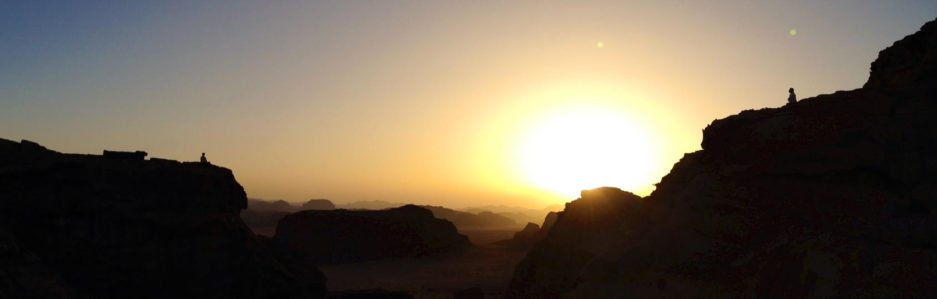
While listening to a paper on Battisti on Glabrio at Delphi, I was reminded of this Plutarch passage about an equestrian statue of Philopoemen.
After Philopoemen had routed these with great slaughter (more than four thousand of them are said to have fallen), he set out against Machanidas, who was returning with his mercenaries from the pursuit. But a broad and deep ditch stretched between them, along which the two leaders rode opposite each other, one wishing to get across and escape, the other to prevent this. 6 The spectacle was not that of two commanders fighting, but that of a powerful hunter attacking a wild beast that has been forced to turn at bay, and Philopoemen was the hunter. And now the tyrant’s horse, which was vigorous and high-spirited and felt the bloody spurs in his sides, essayed to make the leap across, and striking against edge of the ditch with his breast, was struggling with his fore-feet to extricate himself. 7 At this point Simmias and Polyaenus, who were always at Philopoemen’s side when he was fighting and protected him with their shields, rode up both at the same time and levelled their spears at the horse. But Philopoemen was before them in attacking Machanidas, and seeing that the tyrant’s horse was lifting its head up in front of its rider’s body, he gave his own horse a little swerve to one side, and then, clasping his spear firmly in the middle, pushed it home with all his weight and overturned his enemy. 8 This is the attitude in which he is represented by a bronze statue set up at Delphi by the Achaeans, who admired especially both his deed of prowess and his generalship on that day.
Plut.Phil. 10
I’ve often wondered if RRC 259/1 was an alternate depiction of the Tremulus statue (cf. my 2021 book, pages 64-69) rather than just Tremulus the man, but I have been convinced that the dynamic motion with spear would be too unusual for a statue as the other representations on later coins are so staid and calm.
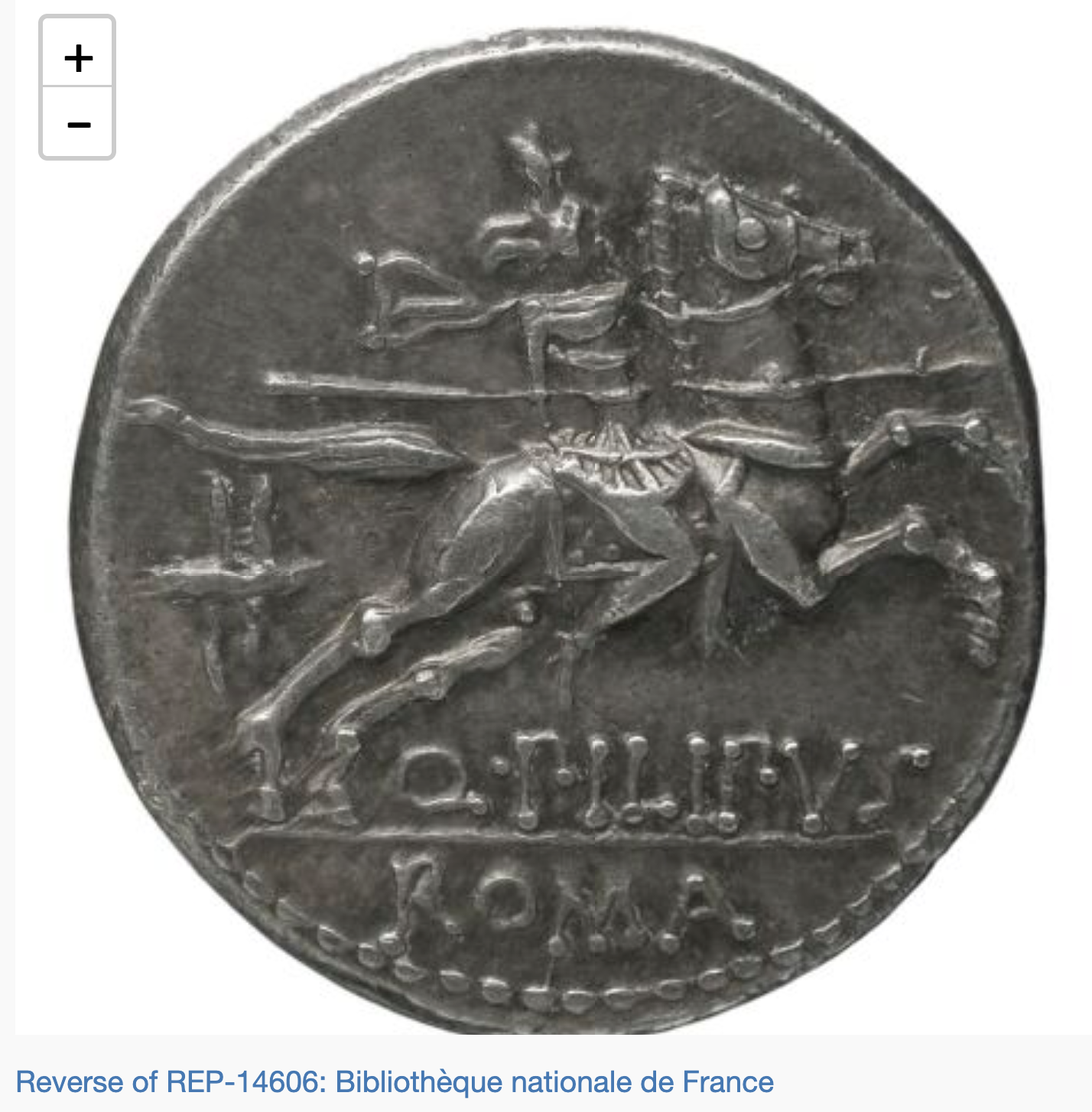
It also occurred to me that I might also think of and compare it and the Plutarch passage to the follow battle scene.
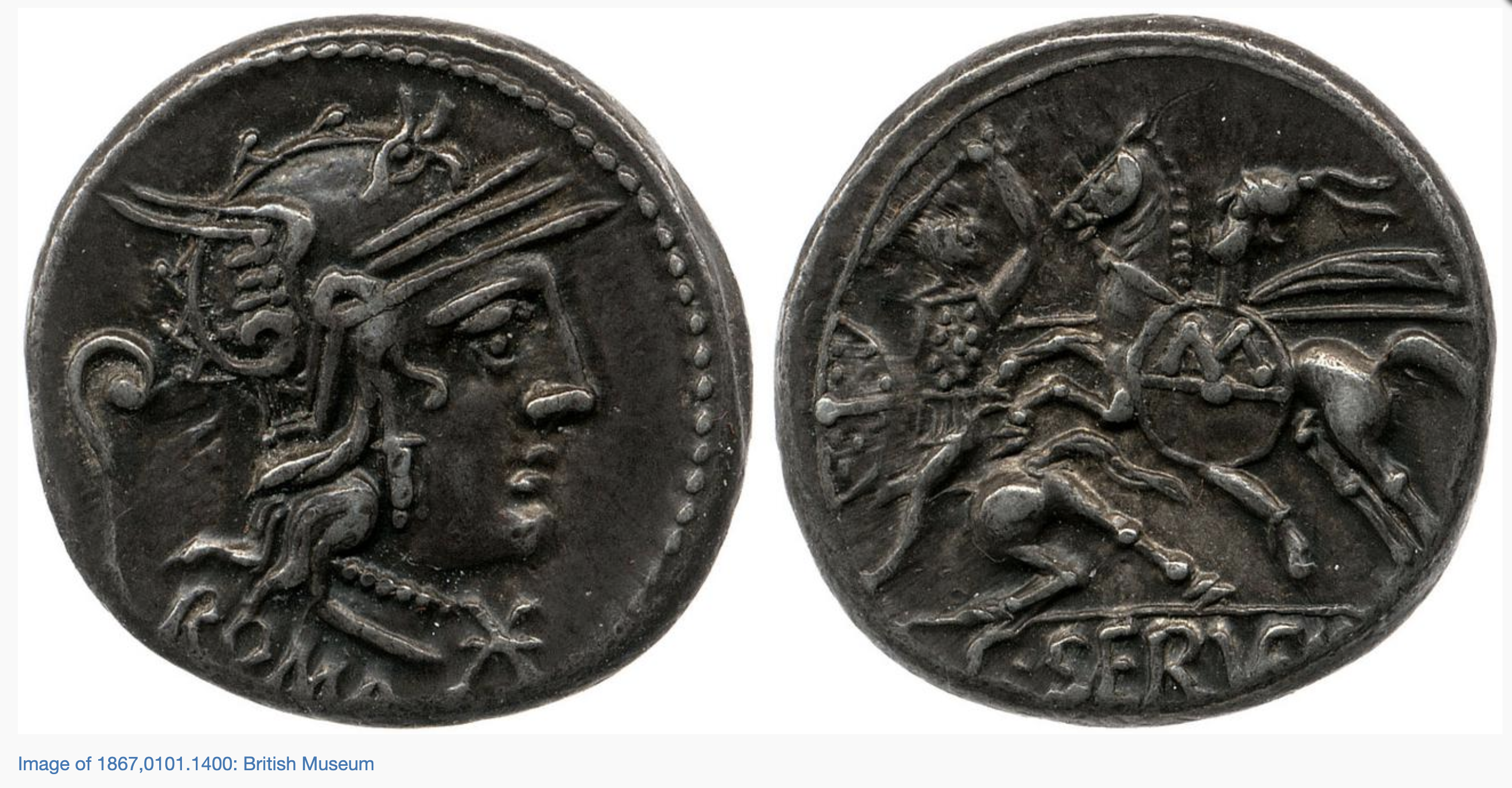
I’m not saying I believe these to certainly represent statues only that the possibility (if not the probability) seems stronger after reading the Plutarch.

 Liv Mariah Yarrow