

Right. I found it hard to walk away from my thinking about the 50s yesterday but that is a good thing. It helps the work start easier today. It is the above quote (see last post for citation) that really got me spinning.
If there is any one who could tell you about mint production in these years it should be me and my research partner Lucia Carbone on RRDP. Thanks to the Schaefer Archive we’ve got bucket loads of die data and we have Lockyear’s correspondence analysis of hoards to let us think more about dating.
Part of me wants to pivot fast from Cicero and dive into this work now. I think that is a very bad idea.
So what are my first reactions.
Crawford was hesitant to assign many moneyers to the years 53, 52, 51, and 50.
55 and 54 have pretty ample coinages just at a glance, regardless if you accept Hollstein’s modifications of dating–putting RRC 434 (Pompeius Rufus) back to 55 and moving RRC 429 (Fonteius Capito) up to 54. The last really massive issue was RRC 425 (Philippus), well over 400 dies if not 500. Hersh Walker put that in 57, Mattingly in 58, and Hollstein affirms Crawford 56 dating. When I say 55 and 54 had ample coinages we’re talking multiple moneyers with issues using over 100 dies. Generally speaking with RRDP we’ve found Crawford’s die estimate low but reasonable relative measures. You can safely use them to compare the size of one issue to another but not for absolute quantification.
Likewise, Crawford isn’t always on point (nor is anyone else yet) with absolute dates, but we need a good reason to change his relative chronology. The main reason people have rearranged the dates of these coins in the 50s is the so-called Mesagne Hoard, but I have good reason to worry about at least some aspects of the reporting of this hoard. I am not ready to get into that either.
So what am I more confident about.
RRC 435 (Messala – one of my all time favorite coins) MUST be in 53 BCE so that gives us something concrete. Why? It says PATRE COS. My father is consul. That didn’t happen until July 53 BCE and ended on Jan 1 52 BCE. Unfortunately it is a tiny issue. And in this case Crawford over estimated the number of dies he’d failed to see. Probably because the issue was over represented in collections due to its historical interest — this is speculation! Don’t quote me on it.
Schaefer’s Archive data transcribed:
| Die Pair | Binder | Clippings | Total |
| 1:A | 6 | 8 | 14 |
| 2:B | 10 | 5 | 15 |
| 3:F | 6 | 4 | 10 |
| 4:D | 2 | 0 | 2 |
| 4:G | 3 | 1 | 4 |
| 5:E | 5 | 0 | 5 |
| 6:B | 0 | 1 | 1 |
| 6:C | 4 | 4 | 8 |
| 7:H | 3 | 0 | 3 |
| OBVERSE DIE | COUNT | REVERSE DIE | COUNT |
| 1 | 14 | A | 14 |
| 2 | 15 | B | 15 |
| 3 | 10 | C | 8 |
| 4 | 6 | D | 2 |
| 5 | 5 | E | 5 |
| 6 | 9 | F | 10 |
| 7 | 3 | G | 4 |
| H | 3 |
Notice that only one reverse die is shared by two obverse ties. And that in the other case of one obverse die having two reverse dies that is the only die link for each of those reverses. This fits the general pattern of the Roman mint in the late republic to typically pair obverse and reverse dies but to occasionally replace them as needed. Also notice that we have NO singletons. Even Reverse D is known from 2 examples and No obverse is known from less than 3 specimens. Another dies or two might turn up but this is generally speaking excellent coverage. If we want to quantify we can say it is almost certainly an issue larger than 80k and well under 300k = small and of no great importance to the coin supply.

Weirdly it is an SC issue. This means, we think, that it was issued in addition to any authorization to coin money in the regular course of the year (What I think SC means and why). What does it mean to have striking authorized by SC but presumably no other senatorial authorization for the year? I’m interested in these authorizations of funding and the connection for the coinage also because in 51 BCE Cicero seems to be waiting for his own funding authorization (A.5.4: 12 May 51).

Here for once SB’s commentary is helpful, detailed, and logical:


Since the discovery of the so-called Mesagne Hoard, RRC 423, has been moved later in the relative sequence of the Roman republican series. Hollstein suggested 54, Hersh/Walker and Mattingly agree on 53. If this true it looks like a normal monetary issue that would have preceded the small Messalla issue–ball park 100 dies. Not huge but not nothing and certainly a relatively reasonable amount for an annual striking. Could the supposed coin shortage just be an illusion of our poor previous knowledge of the relative and absolute chronologies?
So RRC 435 does show up in hoards. The earliest being dated to 49 BCE and from the outskirts of Rome–CHRR BRA or 352 originally published here:
Pavini Rosati, Franco. “Rispostigli di denari repubblicani del Museo Nazionale Romano.” Annali dell’Instituto Italiano di Numismatica 4 (1957): 79-108. [ILL requested]

Because I’m a glutton for punishment I went through and recorded the types in the hoard with our updated dates post Crawford and then graphed them.

One hoard is never a perfect proxy for anything but this hoard is fairly large documents most years if not all types going back to the 140s. I thought it might be ‘good to think with’. The masses of striking during the Social Wars and unrest of the Cinnan regime and Sullan dominate are in full evidence. As more coins have been down dated from the 60s to the 50s it looks like there was a drop off in production during the late 70s and early 60s. Something like our presumed drop off in the 90s after the production bump during the rise of Marius and his military exploits. Here’s the same data graphed by year so you can better see the ebbs and flows:

Boccardi, Simone, Valentina Caffieri, and Sara Guiati. “Roma, Museo Nazionale Romano. Il ripostiglio da Rio Marina (1901), III-I sec. aC.” BOLLETTINO DI NUMISMATICA. MONOGRAFIE 60 (2021): 27-139. [Free to download via Google Scholar, I have on file] This article looks at hoards closing at c. 70 BCE and the same drop offs are visible in all the graphs. Backendorf, Dirk. Römische Münzschätze des zweiten und ersten Jahrhunderts v. Chr. vom italienischen Festland. Mann, 1998. Has similar graphs at the back of his big book.
What is new if anything is the idea that the Romans responded again from the late 60s onwards in increasing coin production and we cannot necessarily attribute a drop off in striking in 52,51, and 50 to to a monetary or cash flow crisis. Like all people the Romans has as much of an emotional relationship to economics as they did a logical one. Generalities about the state of things in literary texts must be balanced against physical evidence where ever possible.
To be continued but I’m going to stop for a bit. Get dinner cooking and then comeback to see if I have another post in me.
An after thought. The Brandosa hoard makes me question whether RRC 444 was really struck with a mint moving with Pompey as Crawford suggests.
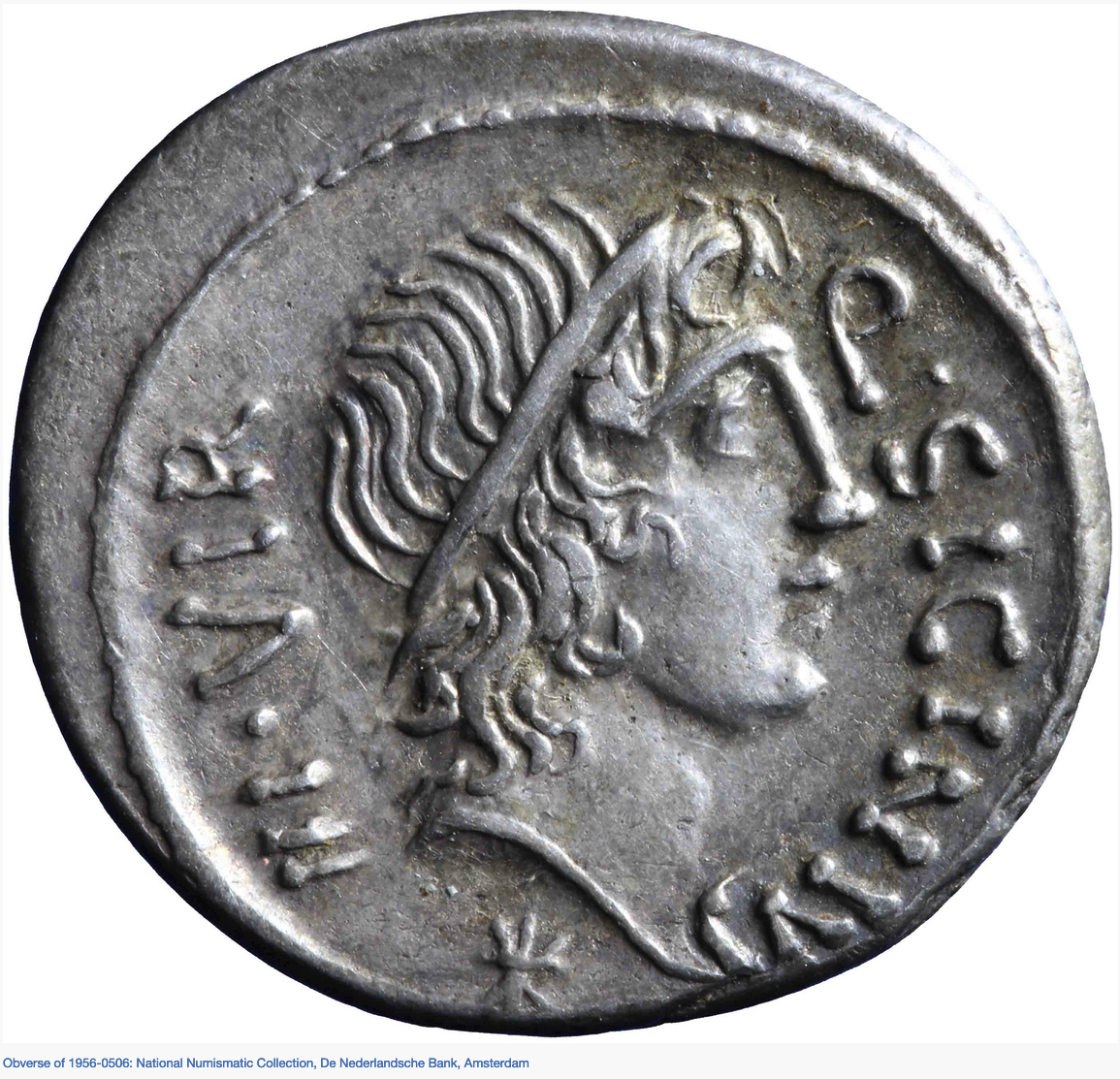
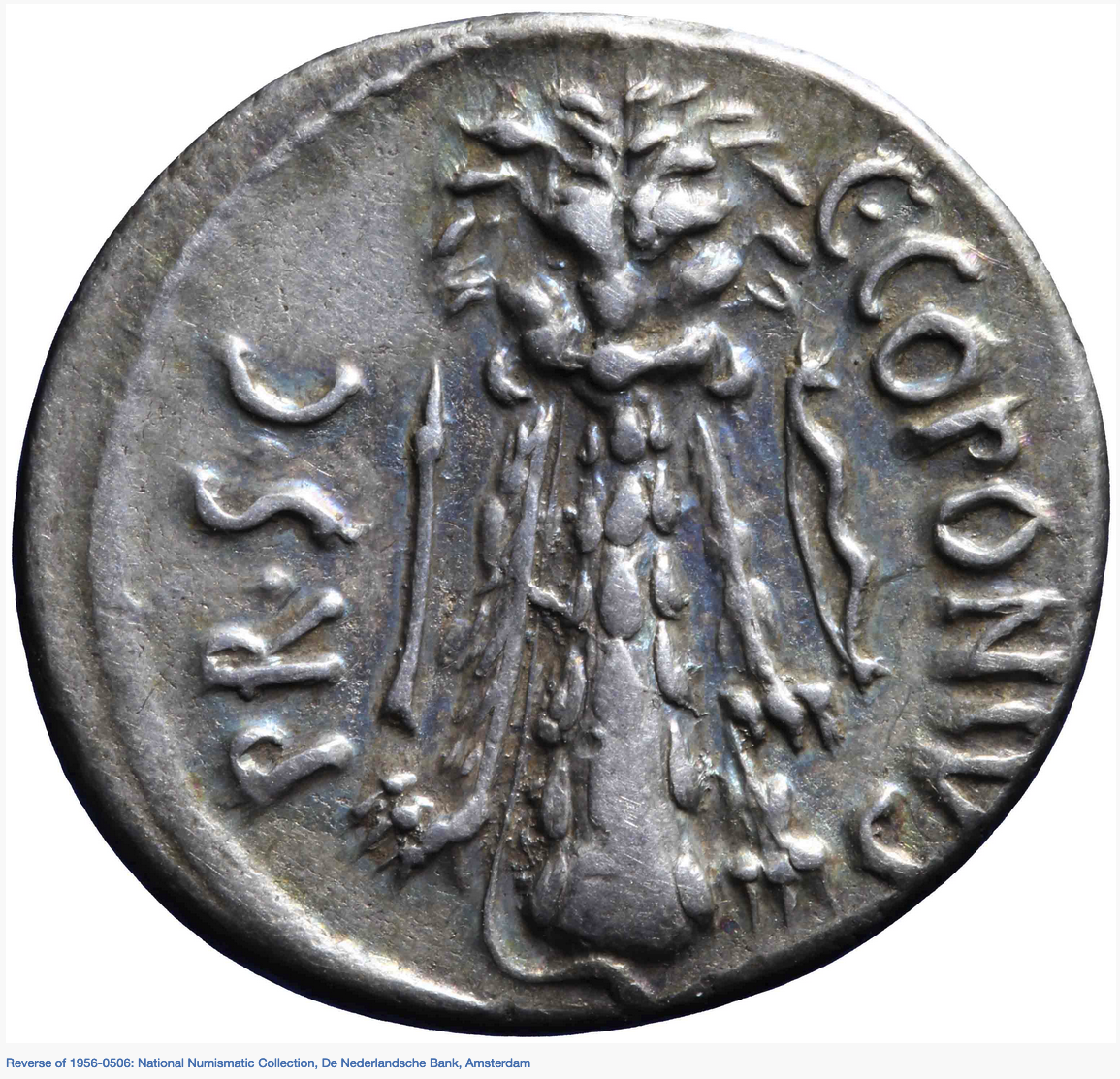
And, no surprise, Woytek in Arma et Nummi p. 94-95 came to basically the same conclusion for much the same reason. 49 BCE is the right year but RRC 444 and RRC 440 were both made at Rome BEFORE the Pompeian faction abandoned the city.

 Liv Mariah Yarrow
One thought on “Stock of Coin in the Late 50s”