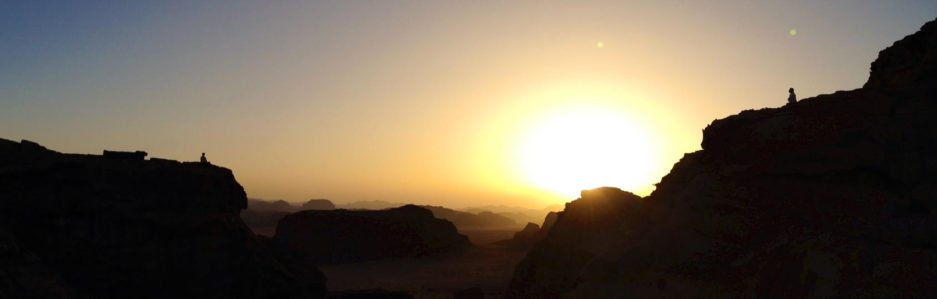

The silver coins of Kibyra (or Cibyra) are typically attributed from the establishment of Roman control of Asia Minor, c. mid 160s, to the Sullan exit from the region, c. mid 80s BCE. There is a tetradrachm and a drachm.
I’m pretty far from my expertise here, but a friend asked a question and that got me thinking. A dangerous habit that is. Thinking I mean. Very distracting. It looks like most people still use just SNG or BMC numbers to refer to the various types. I can’t find a complete study of the coinage on ANS donum. Do you know one? I’d love to know of it.
The part that gets me is how much the youthful helmeted male head on the obverse reminds me of youthful (beardless) Mars on the Roman series. This is a topic I love on the blog (RRC 27/1, Berlin Specimen shown here).
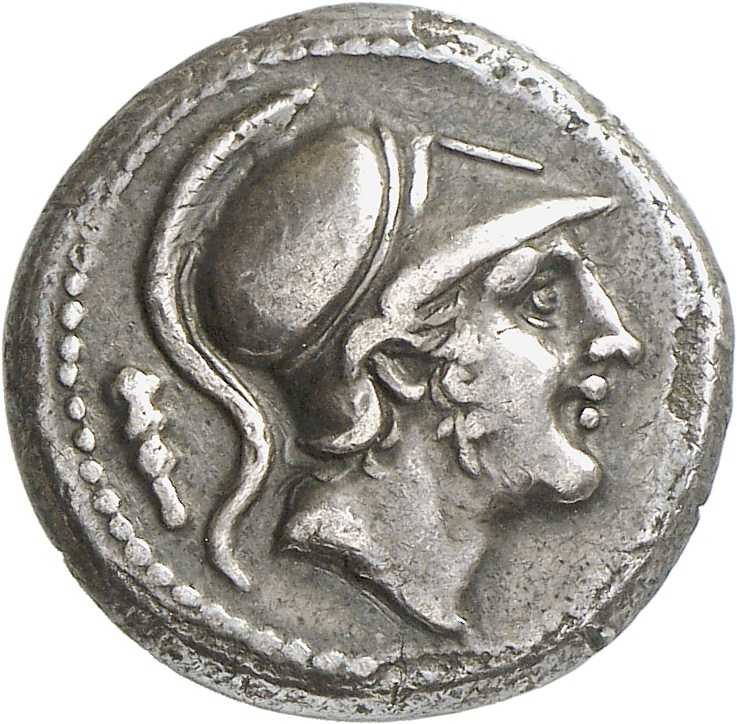
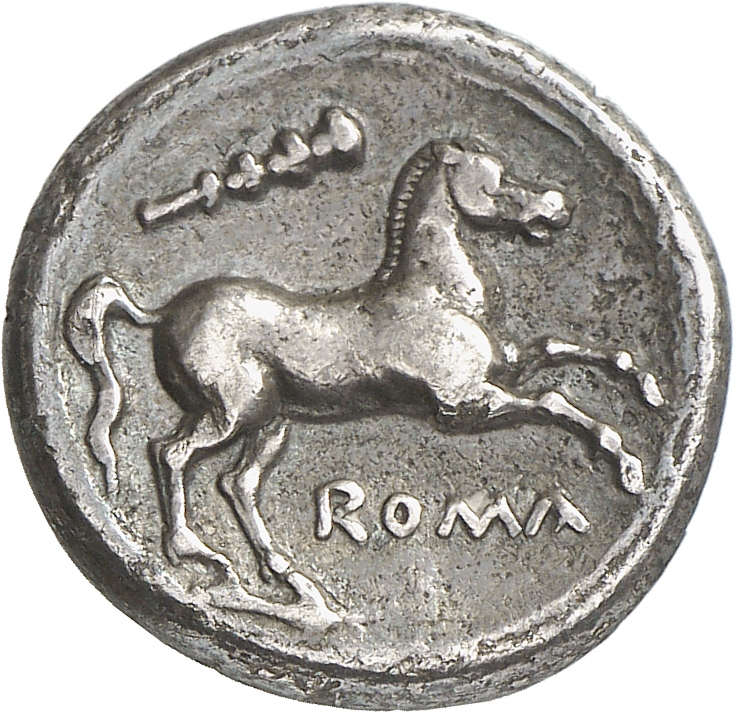
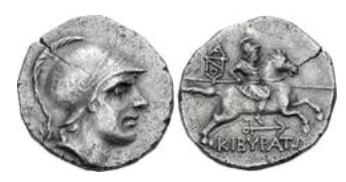
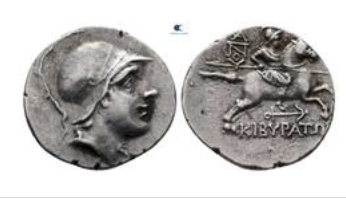
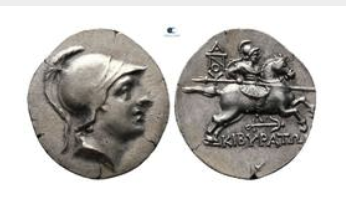
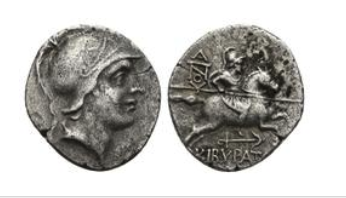
But the other thing is that like so much Hellenistic coinage the Cibyra coinag is signed with a great variety of symbols and monograms. I wasn’t going to blog this coinage until I spotted this monogram. Because Antonius is rendered Antony that was my very first though. Of course, that is not the likely resolution. The N is topped in all likelihood with a Greek “Pi”.

There is supposed to be a Kibyra coin with this monogram in the Ashmolean SNG but it is not on line yet. None of the BM coins are photographed yet. None are listed in IKMK. The ANS has not photographed any of their silver specimens of this mint. Paris has only one specimen:
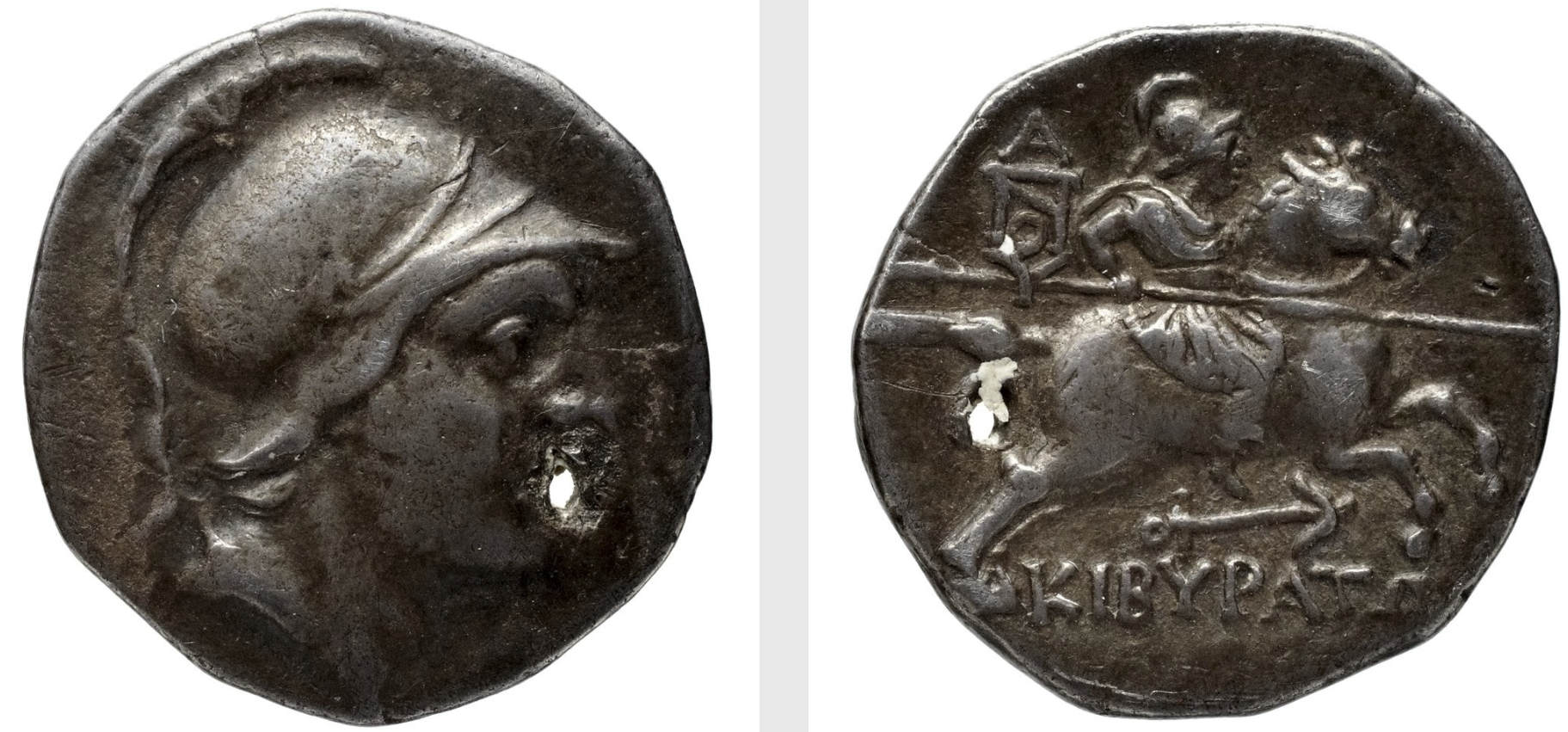
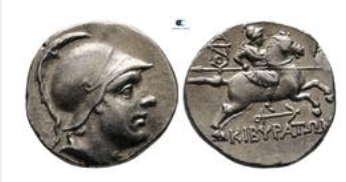
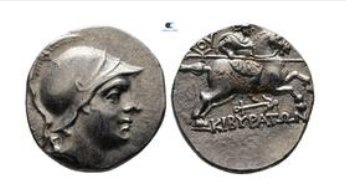
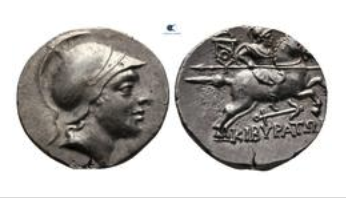
And yet 22 specimens with this anchor and monogram have appeared on the market starting in October 2022 nearly all (excepting 2) from a single auction house. Images below.
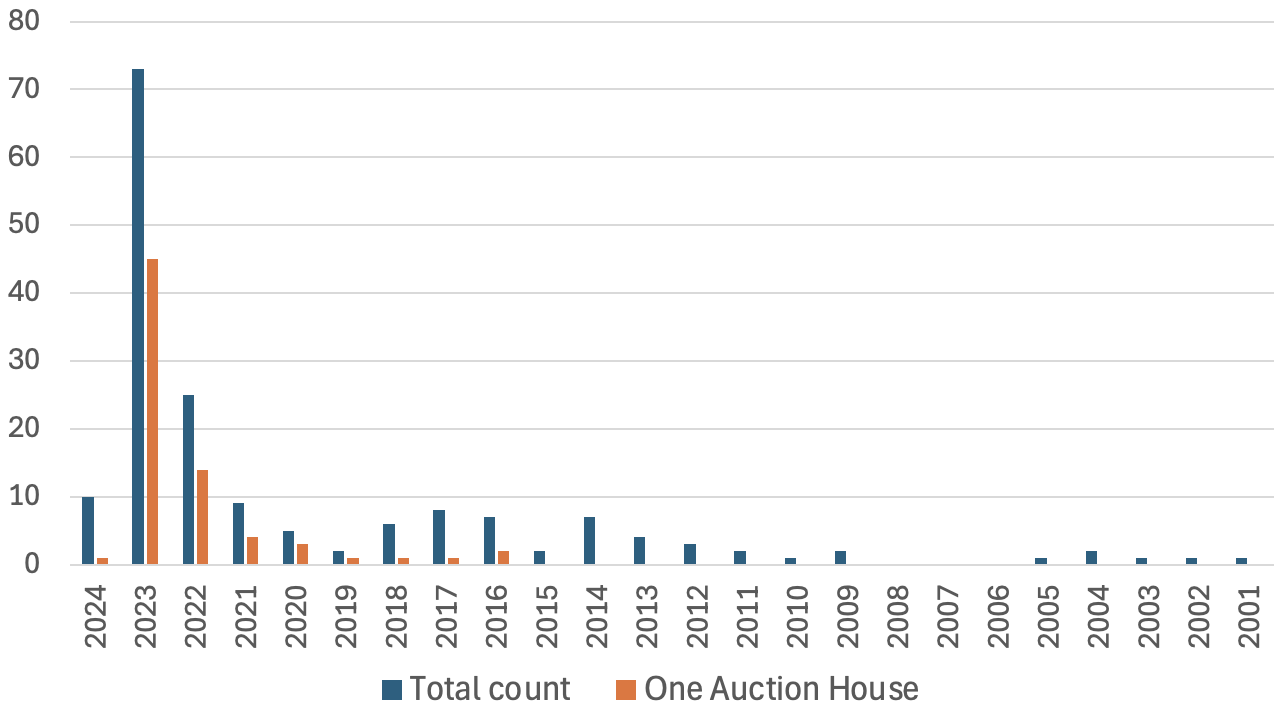
Since 2001, some 172 AR coins of Kibyra have appeared at public auction, yet before 2022, none with this monogram. There is an average of 7 coins per year over the whole time . But if we restrict the average to 2021 and before, the average is only 3 per year.
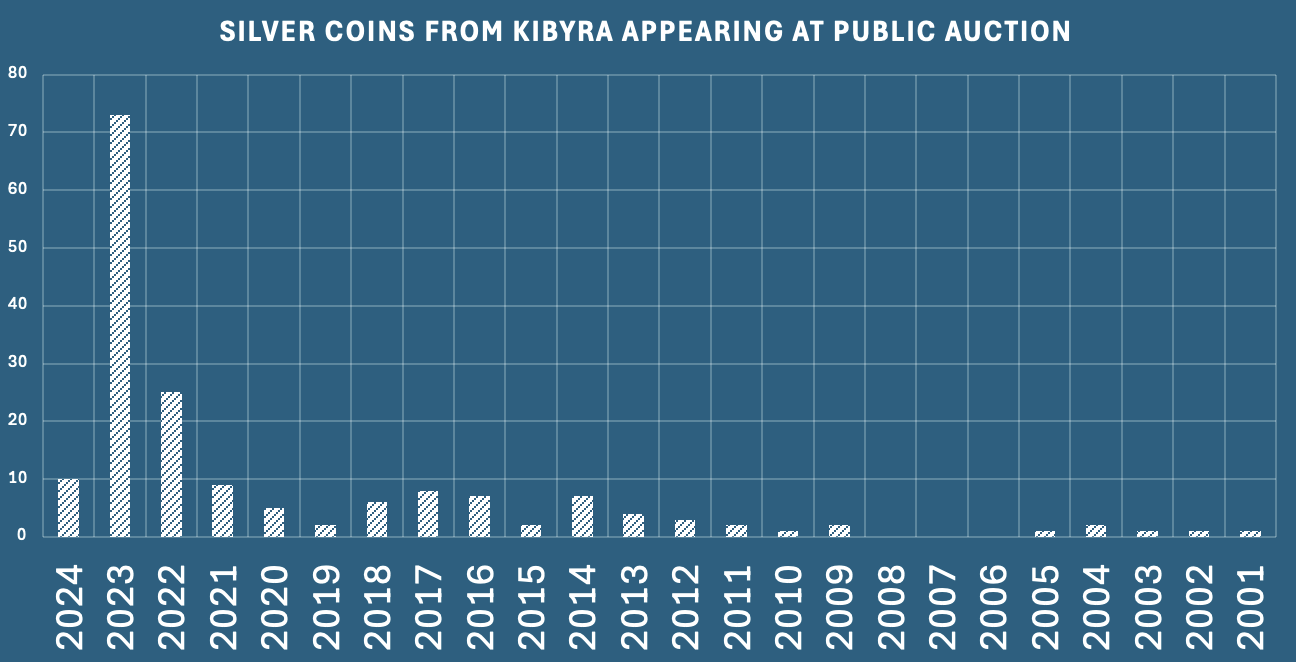
Just one auction house has sold 72 of these coins, and there sales seem to be driving the market trend.
The anchor/monogram coins are not the only types to proliferate in the recent sales there are also many with IO. However there are also specimens with very clear full names of local individuals:
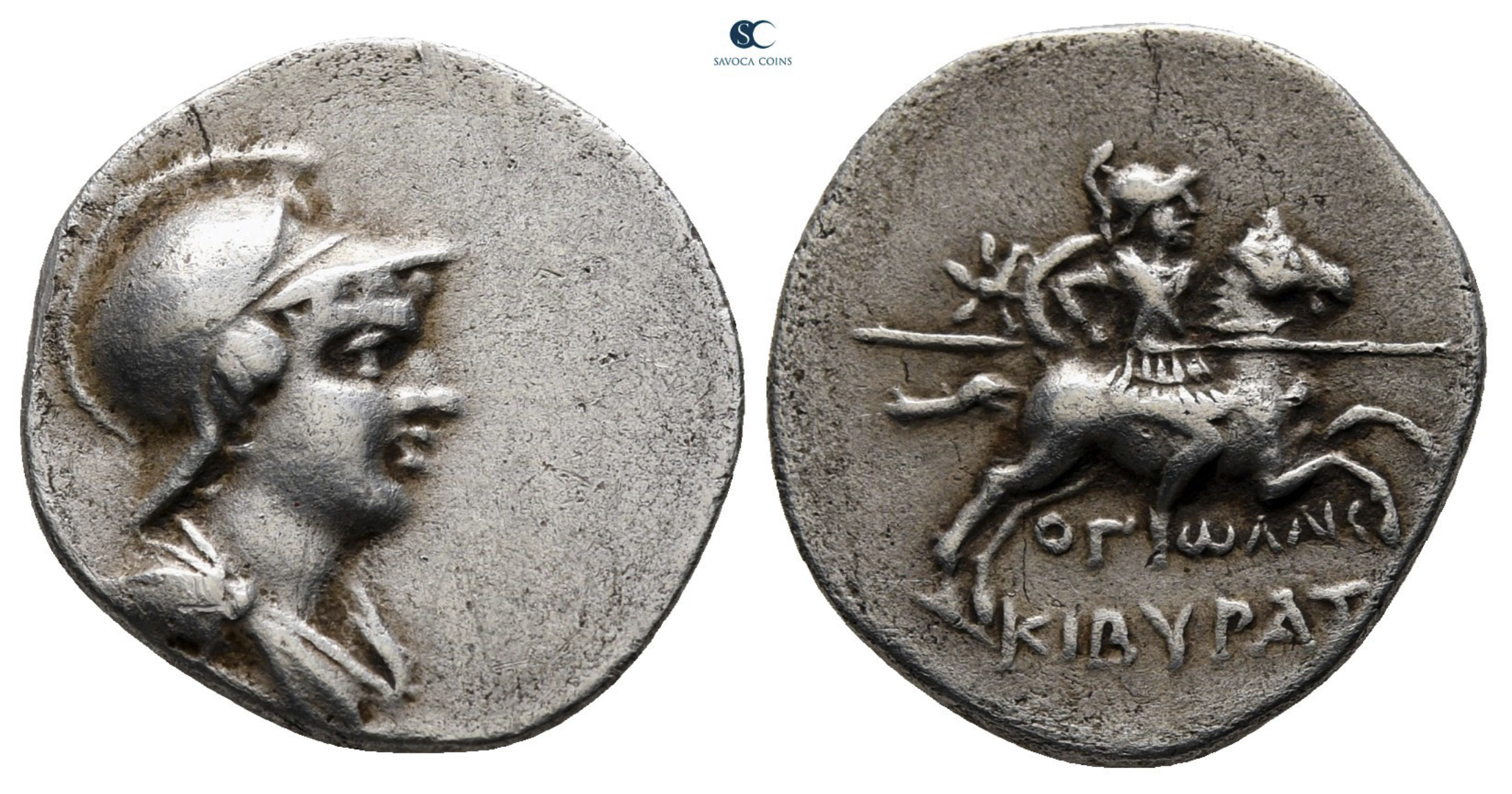
This now dispersed hoard was of immeasurable historic value for reconstructing the history this city, the region, and its relationship with Rome. That possibility is now lost. Ogollis named on the above coin is a name known to have been a father of the Dynast Moagetes. The name appears in a treaty with Rome from 188 and renewed in 174. This hoard intact and with deposition data could have provided us a full chronology of this mint and let us better understand the influence of the Romans and the economic power of this city and its dynasts.
A quick glance over these coins will show you that there are many die links:







 Liv Mariah Yarrow