
This is a portion of a chapter I wrote in my edited volume with Chris Smith, published back in 2011 (you can find a full pdf here). It talks about one of my favorite examples of Cicero conducting historical research and the problem of knowing the Roman past for the Romans themselves. This is a topic at the heart of my now stalled third book project. Stalled isn’t the right word. I’m pausing and prioritizing other forms of work…
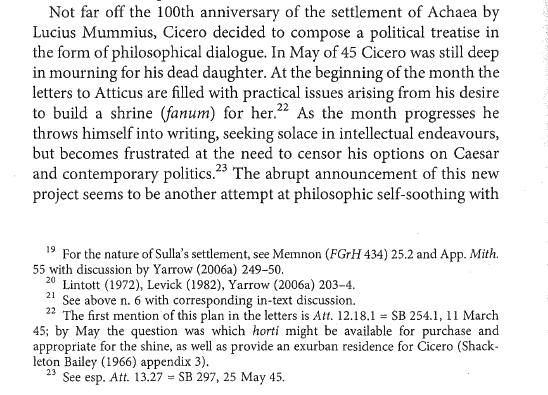
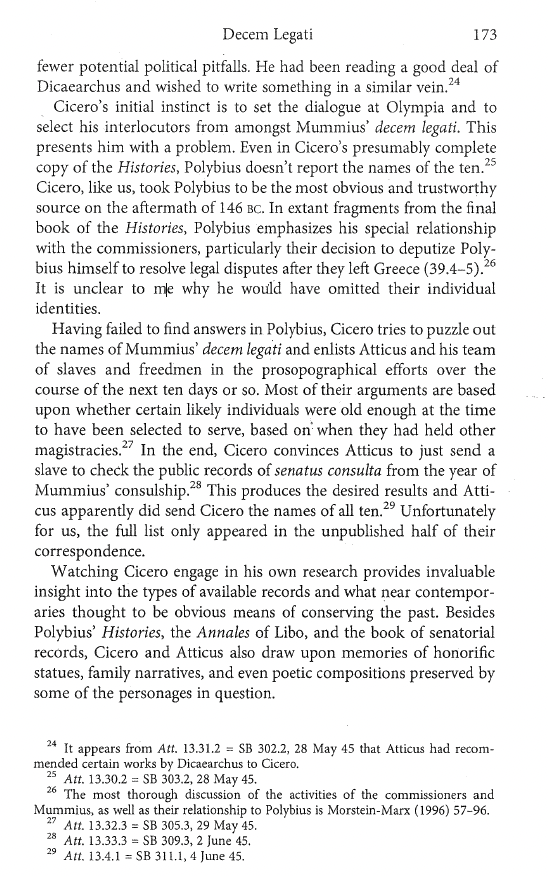

Anyway. I love this bit of my earlier writing. I think about it a great deal. In 2018 I published another deep dive in to Ciceronian knowledge making as a means to think about fragmentary texts. (Again a pdf is available here; look for Diodoros.)
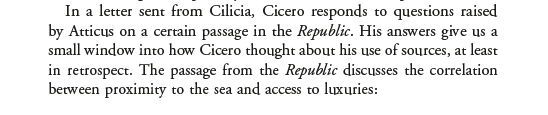
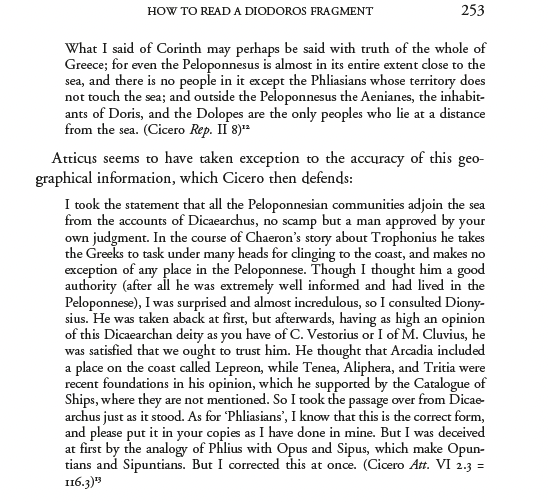
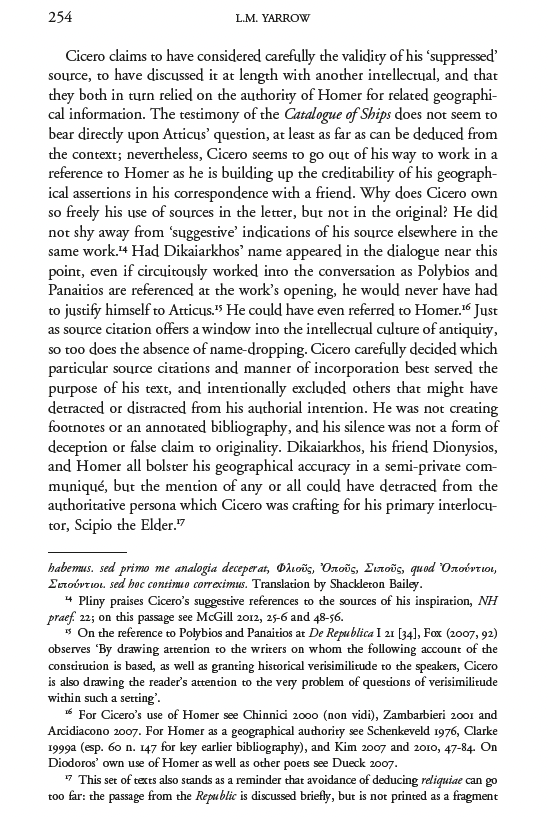
Today I found a passage I must have read many times before and yet didn’t remember when I was writing either of these two earlier publications. Brains are funny. I remember more now that I can just search my blog for key words.

The six books are his republic. The question is are their two Cn. Flavii or just one and when did he live. Cicero defends his assertation. The passsage is missing from our fragmentary copy of his Republic. Oh to have Cicero’s thoughts on the Calendar.
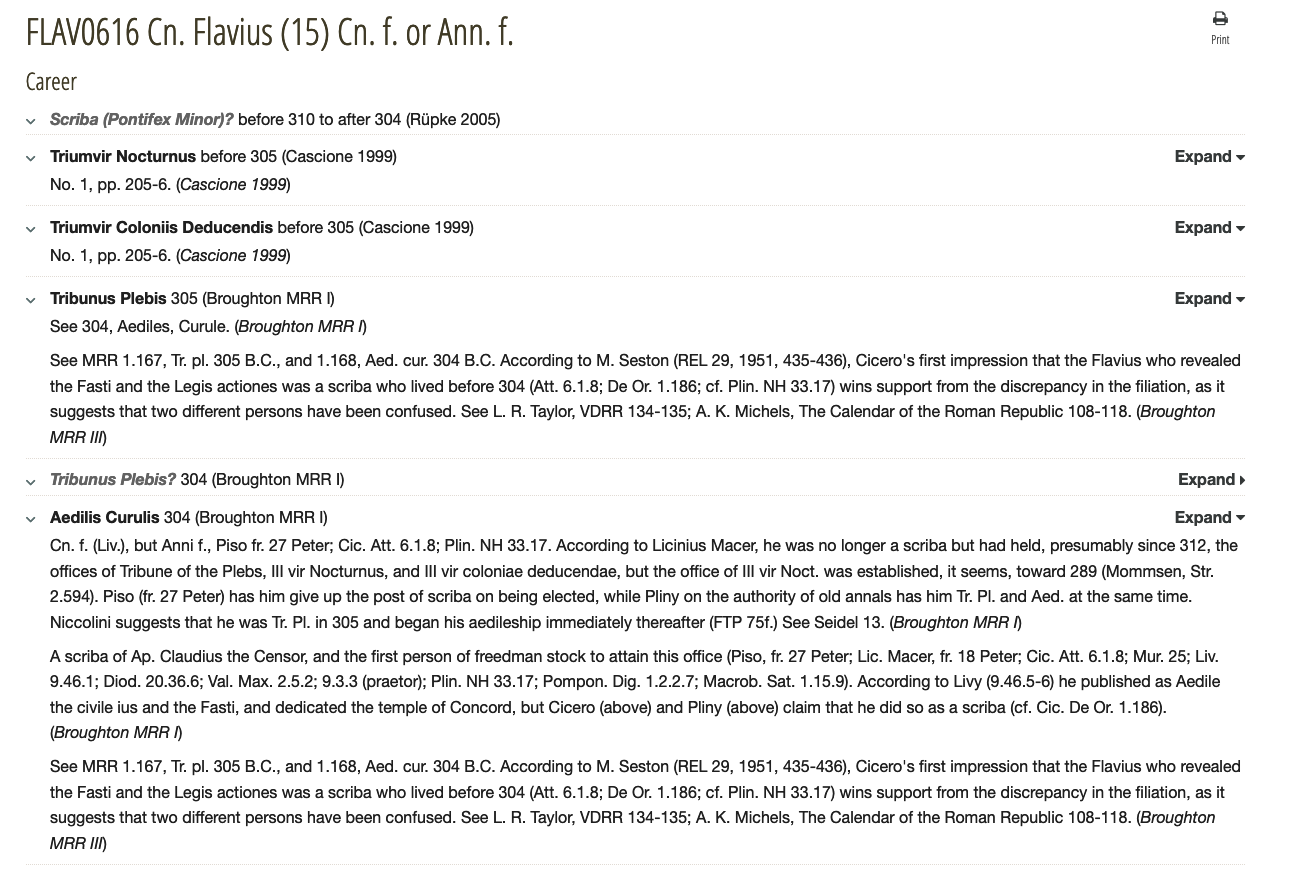
However I care far less about whether there are one or two or when they lived, what I care about is that Cicero and Atticus have a few historical nuggets and beliefs about the past and from that they make sense of the pieces and stitch them together. It is even plausible to Cicero that Africanus would not have thought he was misspeaking in any way.
Later in the same letter Cicero is still thinking about historical knowledge:


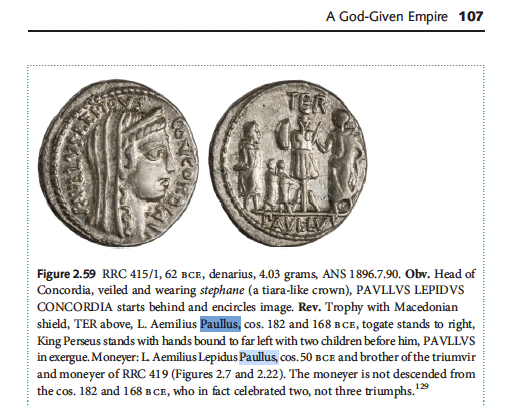
Is this truly ignorance or is it inflation of honors like we see on the coins? RRC 415/1 is always my favorite example. Again citing myself (but alas I can’t give you a free pdf of my whole 2021 coin book):
The other part of the passage that is so delicious is how the topography of Rome itself is invoked as evidence for historical arguments.
This final portion of the same letter seems to echo the earlier concerns:

S-B would have us compare Plut. Ant. 60 and Dio Crys. Rhod. Orat. 31.

 Liv Mariah Yarrow
2 thoughts on “Historical Knowledge among the Romans”