
Haeberlin says:
“One of these two pieces is probably identical to the example from the Bianchi collection in Rimini listed by Mommsen p. 250 with a weight of 157 grams (after Tonini, Storia di Rimini, P. 21 = 5 ounces, 13 den.). Furthermore, No. 2 is unmistakably the original of the illustrations at Marchi CI. IV, Tav. I, No. 3 and at Garrucci Tav. LIX, 3, which Garrucci’s weight statement on page 31 “157 gr.” is also correct. On the other hand, the indication of origin of Garrucci’s “Museo di Pesaro” is based on an error, as this museum neither owns such a Quatrunx nor, according to the available lists, has ever owned it”
(machine aided translation)
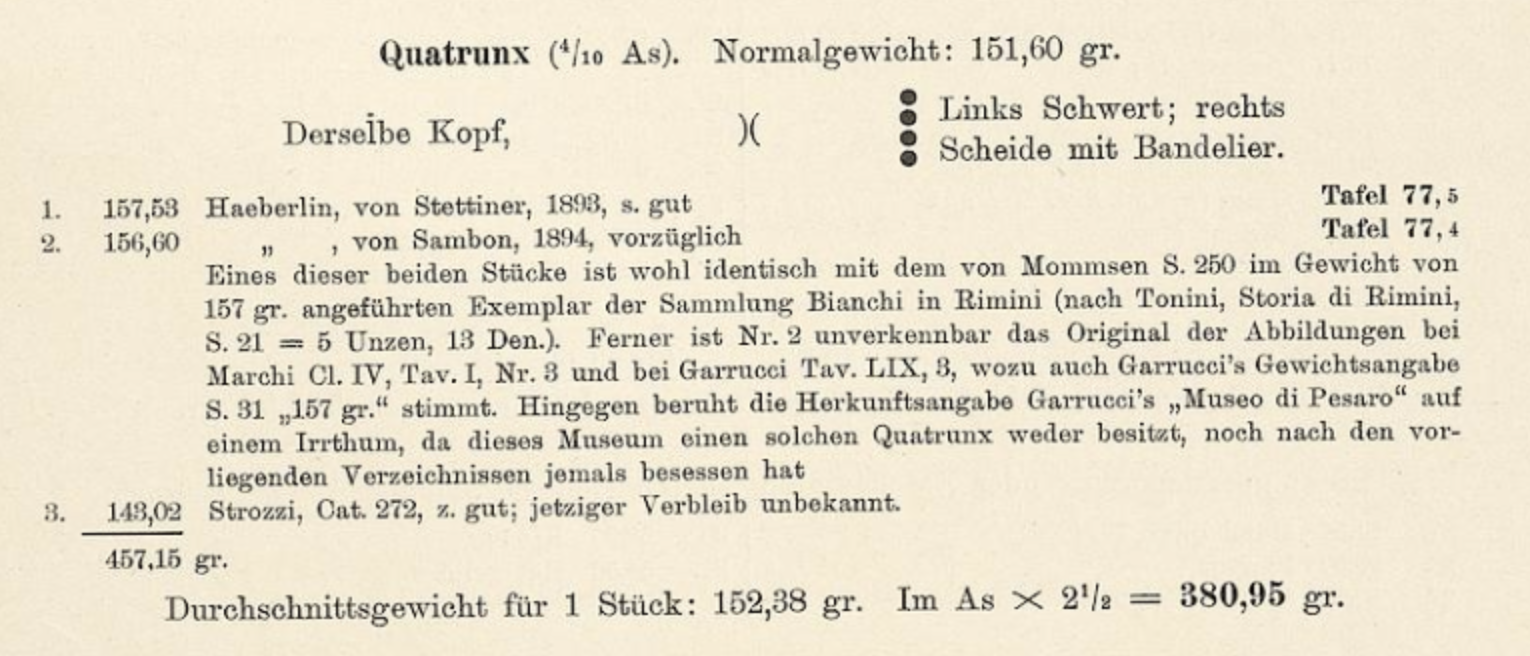
I am interested in Haeberlin’s certitude that his specimen–now Berlin 18237653, photographed, but not yet up on IKMK–is the same known to Marchi and also appearing in Garrucci.

The reason for my interest is that I had thought the Marchi/Garrucci drawing of the Kircher/Pesaro specimen looked very much like the one sold as part of Garrucci’s own collection in the Hirsch 1914 sale as lot 641. See earlier post.
Haeberlin is likely right rather than myself. His argument about weight convinces me. Garrucci’s coin is listed in the sale as weighing 132g.
BUT in another way perhaps we are both correct in noticing the similarities to the earlier drawings. I think the two coins could have been made from the same mold.
When thinking about these types of comparisons I often like to make on image transparent and try out overlapping the two images. The lighting of the two specimens in these two old photographs is very different on from another but it still helps to show the similarity of the lines and patterns in the design.
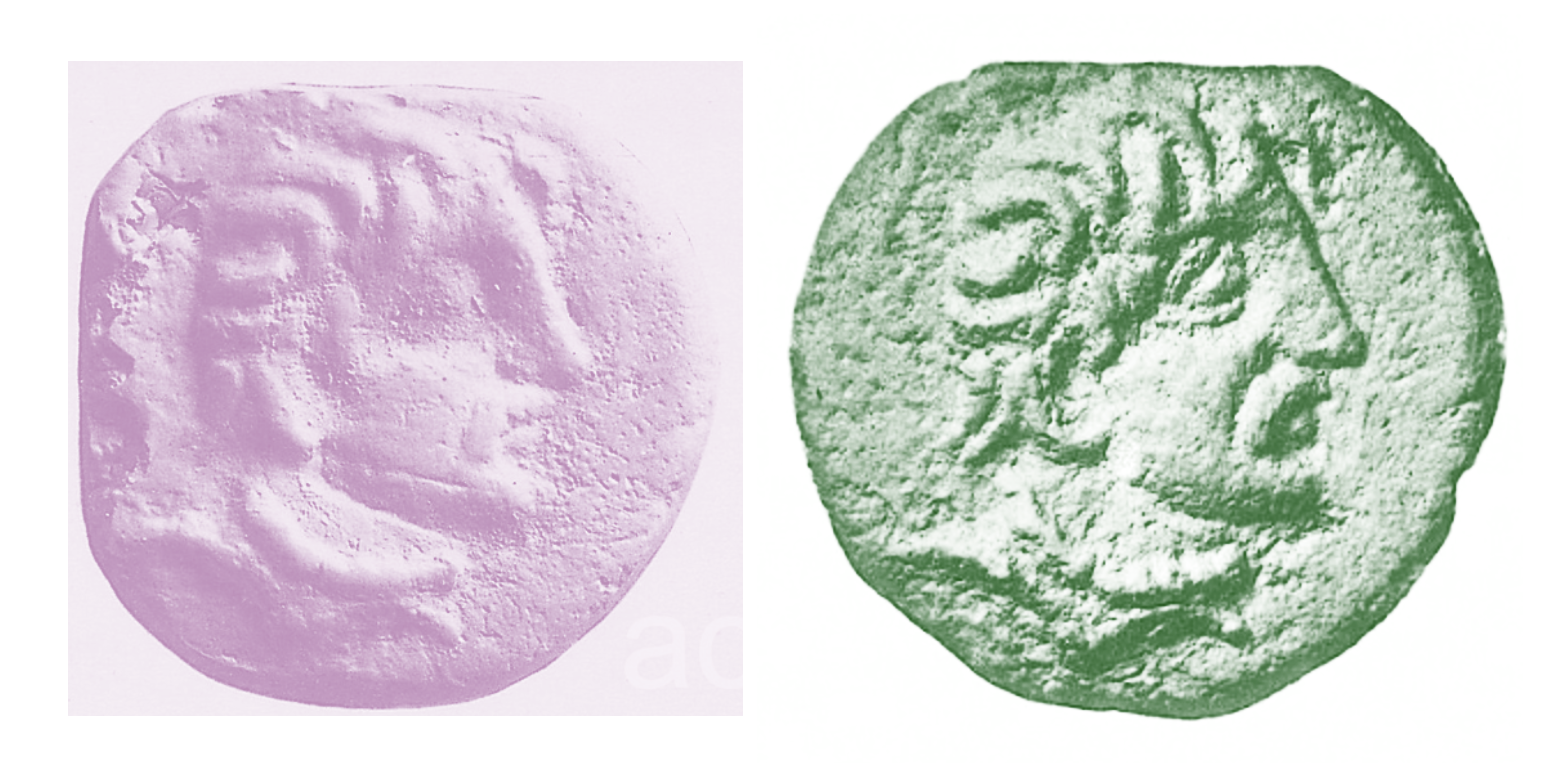
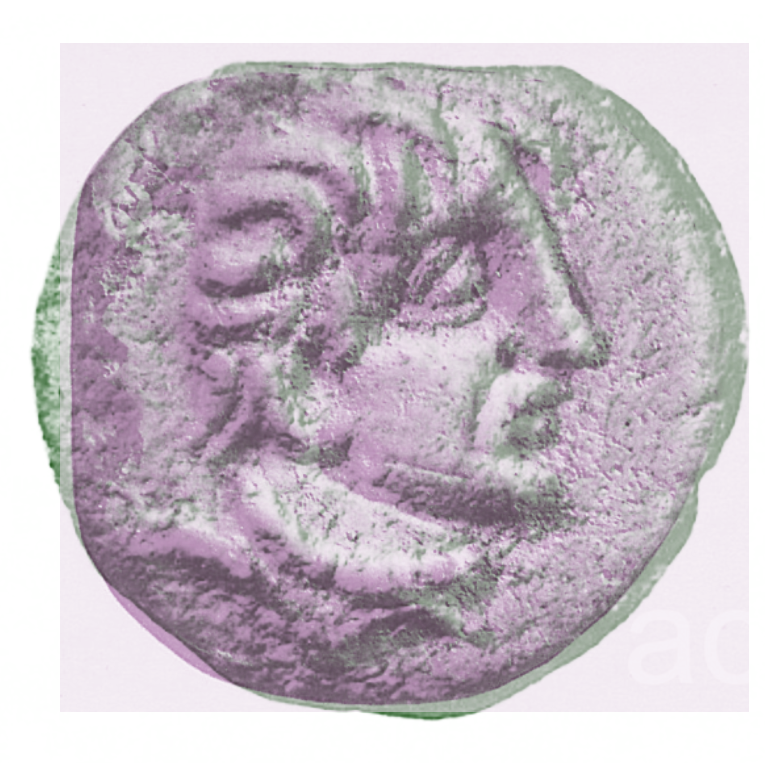
Another possibility is that Ariminum used a stamp to create the coin mold. The similarity doesn’t mean one is copied from the other in modern times but of course we have to consider that possibility too.
I’d also not the ‘similarity’ of the known objects to the earlier drawings may also result from the fact that all the quatrunx I’ve held in this series all have a very similar top sprue break on the head side that aligns with the bottom of the sword and scabbard side. So the drawing is capturing common artifact of manufacture.
And just as an aside as I worked through these coins I reweighed them and was delighted with how very cases was there anything even close to a 1% difference. Only one real outlier and I think here Haeberlin might have made a copy error.


 Liv Mariah Yarrow