
No I don’t have an amazing new resource to share with you, but because our fore-bearers made casts and now other museums are digitizing their cast collections it is getting easier to ‘see’ what in inside these old cabinets. I was feeling far too distant from my research and needed just some reminder of my passion for the material this morning, so I decided to look at what the Louvre database would spit out with the key term “Florence Musée archéologique”. Almost every gem is originally from the Medici collection. I was struck about how few looked ancient and how often I suspected that the ancient gems were adapted post antiquity.
Below are the casts that I want to remember:
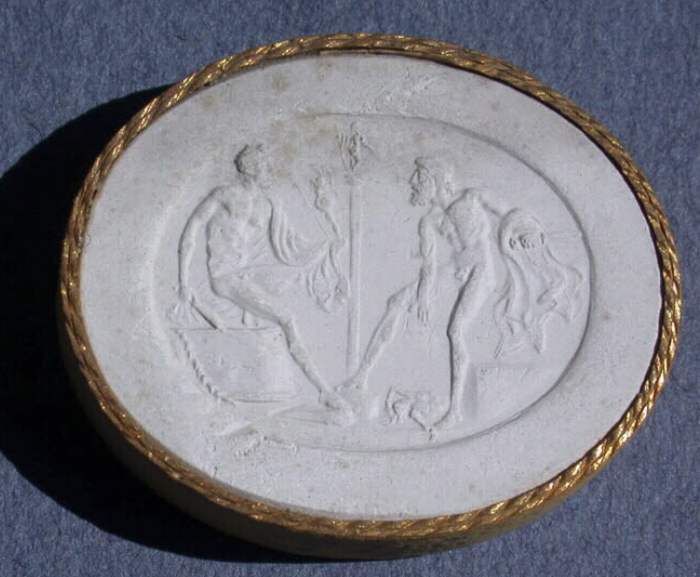
This first one is so close to the Felix Gem in the Ashmolean I stopped short, not identical but clearly both derive from the same original, or one from the other. (Odysseus, Palladium, Diomedes)
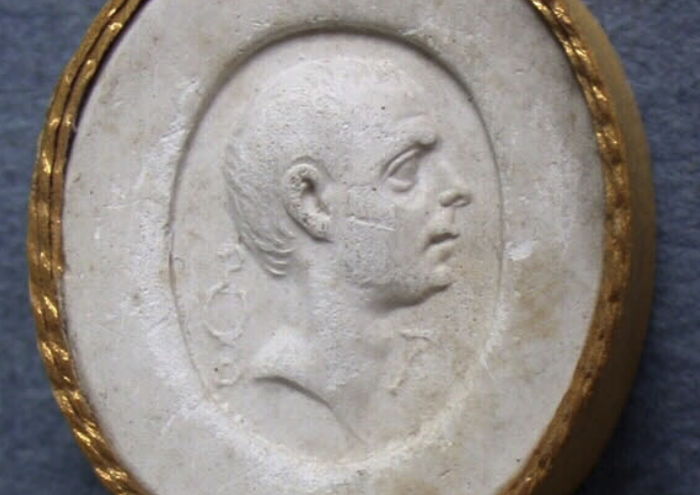
Here the eyes seem vaguely Ptolemaic and I have some feel it might be Republican portraiture, what I cannot decide is what the iconography is behind the head and in front as well. Thoughts?
This representation of Sol (Helios) is not a direct match for any coins, but I wanted to flag that the hair style is much closer to RRC 390/1 (76 BCE) and RRC 303/1 (109-108 BCE) than any of the later republican portrayals of Sol on republican coins . This may help with dating the intaglio.

Not a perfect match but this next one is clearly employing a similar prototype to the iconography of RRC 396/1. (athlete, athletics)

Intaille en améthyste
This one shares a prototype with some of the sub types of RRC 408/1 and RRC 340/1 (Piso Frugi, horse racing, circus)

[Intaille] Camée en onyx-calcédoine.

 Liv Mariah Yarrow