

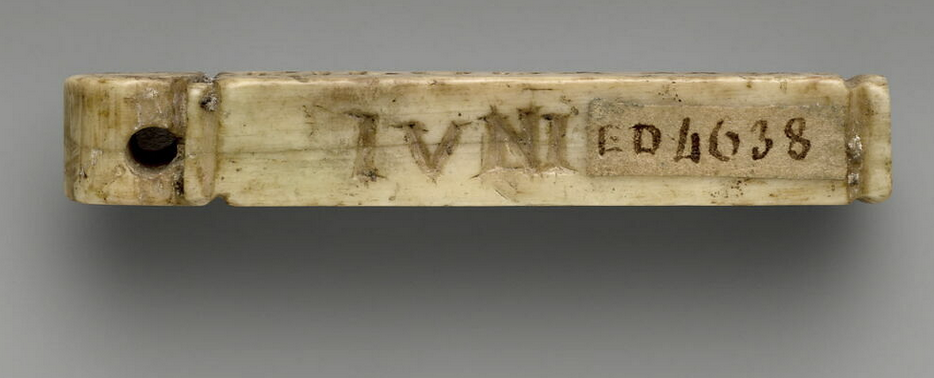


“Philodamus, enslaved by Junius, inspected [this] seven days before the Ides of April in the consulship of Publius Lentulus and Gnaeus Orestes” Louvre
earlier posts on tessera nummularia
Addendum.
61 CE
typically these tessera are dated to the republican era but they do continue later.
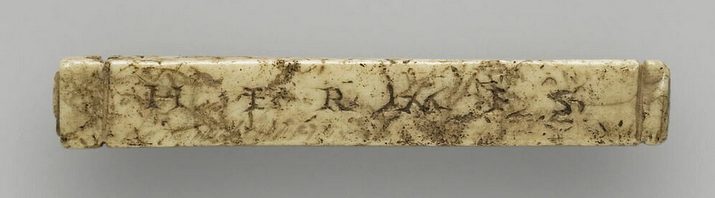

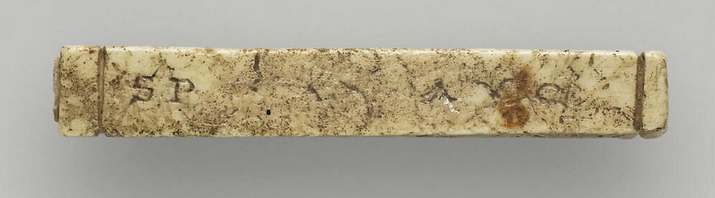

I cannot read the date but everything else is clear: “Hermes, enslaved by Vibius, inspected [this] on the ___ August, in the consulship of Paterculus and Salinator” (Louvre)
The suffect consuls:
| Cn. Pedanius Fuscus Salinator | L. Velleius Paterculus |
I think this inspection tag may have been erased and re used. Many of the scratches look like they might be underlying letters.
44 BCE
Ok. This one is extremely cool.


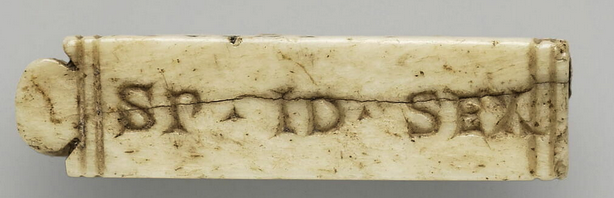
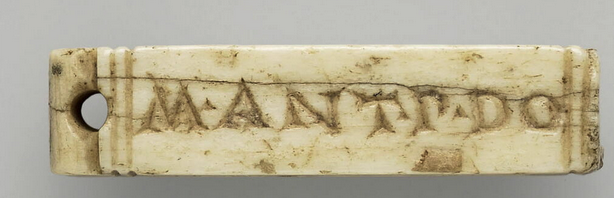
” Philogenos, enslaved by Alfius, inspected [this] on the Ides of Sextilis, in the consulship of M. Antony and P. Dolabella.” (Louvre)
This Dolabella replaced Caesar as consul after his murder! Sextilis is the earlier name for the month we now call August.
A puzzle.
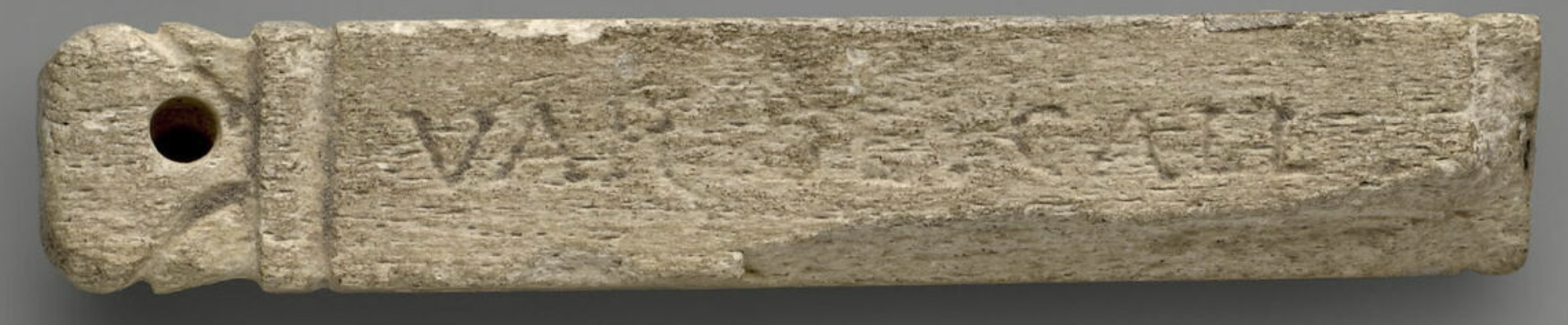
This should resolve as a pair of consuls but I just cannot make out any likely year… (Louvre)
52 BCE.
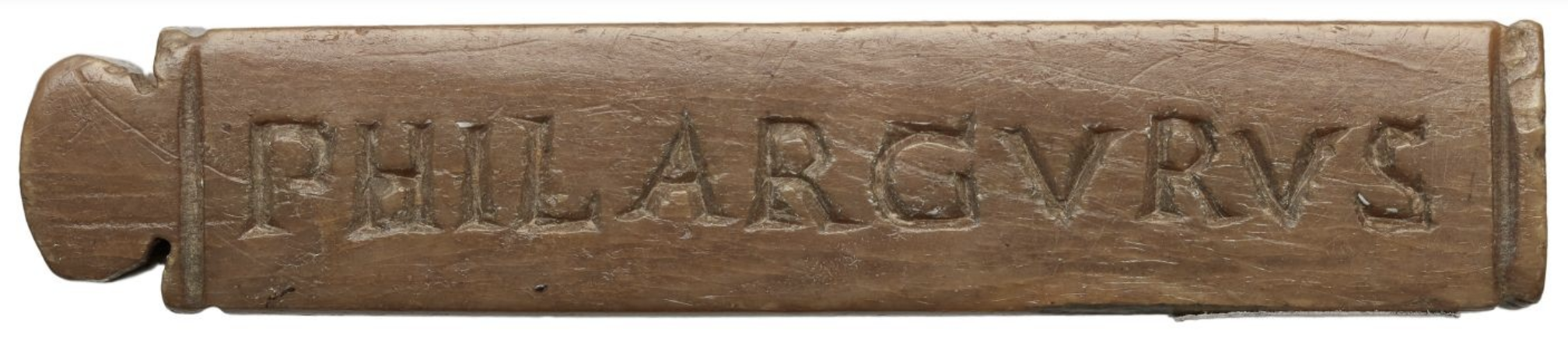



“Philargurus, enslaved by Aconius, inspected [this] one day before the Kalends of May, in the third [sole] consulship of Gnaeus Pompeius” (BnF)
The BnF has a total 94 of these lovely objects.
Epigraphik-Datenbank Clauss / Slaby records 181 examples,: search
| inscription genus / personal status: | “tesserae nummulariae” |

Besides what you see on this map, there is one more find spot in Sicily and one in N. Africa. Otherwise it is a largely Italian phenomenon, but with no evidence yet for their use in the southern regions. small: 1 find, medium: 2 finds, large: 3 or more finds.
Here’s a quick and dirty histogram by decade of the 141 specimens with secure dates in EDCS database (see above for link).

The phenomenon of these tags goes back at least to the mid 90s. None are known from the years of the social war but they are attested both under Cinna’s regime and Sulla’s dictatorship. The greatest density of known specimens date between Cicero’s consulship and Caesar’s crossing of the Rubicon. There are little to no specimens from the height of civil unrest between Julius Caesar’s murder and the being of the Augustan principate. There is steady even growing usage throughout the Augustan era and through the early Julio Claudians seeming drop off in the Age of Claudius with perhaps greater usage in the Flavian period.
Of course this picture could also be accidents of survival to some degree.
from EDCS on ILLRP 1047:
P(h)ilodamus / Iuli / sp(ectavit) a(nte) d(iem) III K(alendas) Feb(ruarias) / M(arco) Val(erio) Cn(aeo) Do(mitio)
comment It is very puzzling, because in the first several months of 53 BC there were no consuls in office, since the elections were delayed as 4 candidates competed for election: M. Valerius Messalla (Rufus), Cn. Domitius Calvinus, M. Aemilius Scaurus, and C. Memmius. During this long interregnum the tesserae nummulariae were dated by the interreges, not by the pair of consuls, whose names could not have been known until after they had been elected. See EDCS-24700159. Hence I suggest that this tessera nummularia was dated on 30 January 32 BC, at a time when C. Sosius had been deposed from the consulate and his place had been taken by M. Valerius Messalla, but Cn. Domitius Ahenobarbus was still officially a consul. Later in the year he would be succeeded by L. Cornelius. (John D. Morgan III)

 Liv Mariah Yarrow
One thought on “71 BCE”