
Again this is very very preliminary but I like to write and think and play with data before I decide exactly what I really think and what should be submitted for PR publication.
The Nemi aes rude all looks much the same. There was no way to sort it visually. Crawford didn’t distinguish different types in his catalogue back in the 1980s and neither I nor my archaeo-metallurgist colleague specializing in bronze could visually distinguish specimens. Yes they all weighed different amounts 19.23g to 211.10g, but other than that they all seemed to be of the same fabric.
NOT SO AT ALL.
We took a minimum of 2 readings from each specimen up to 5 in some cases. While we had some issues with incrustation etc… The readings still suggest two groups. To make the below graph I averaged all readings from each specimen and only focused on copper tin and bronze ratios. The only specimen that MIGHT have originally had another metal intentionally added into the mix was 1890-1356-10 (20.69g) which along with tin and lead also had high iron, c. 10%.

8 of the specimens seem to have originally been intended to be pure copper. The only other votive objects that are so copper rich and devoid of tin and bronze are two small votive nails.
The other 5 specimens are not so far off the aes grave found on the site. If aes rude contains tin with in this sample it also contains lead and v significant amounts, not less than 17%!
Here’s a leaded bronze specimen:
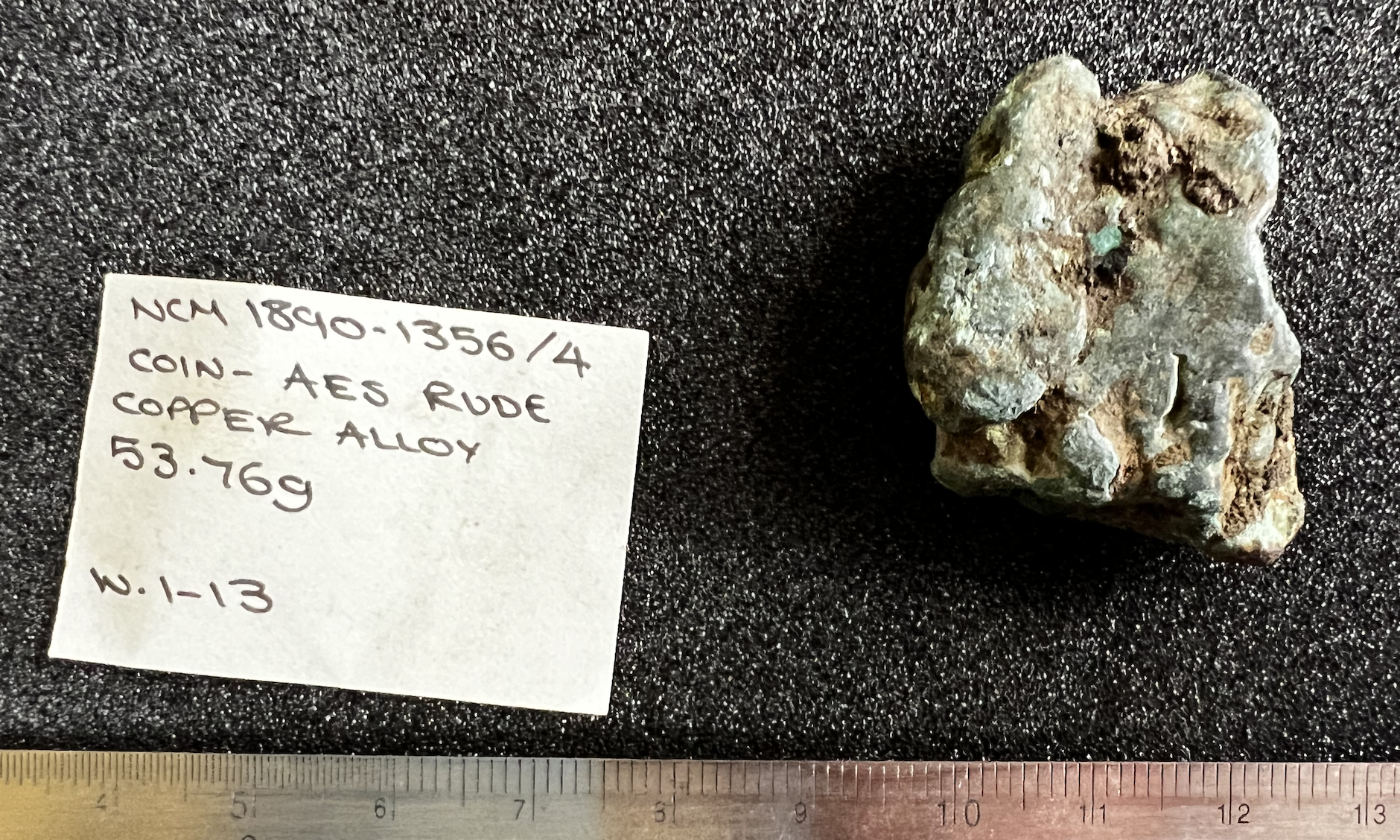
Here’s a hunk of copper without any tin or lead:


 Liv Mariah Yarrow
One thought on “Nemi Aes Rude”