Witt’s Collection

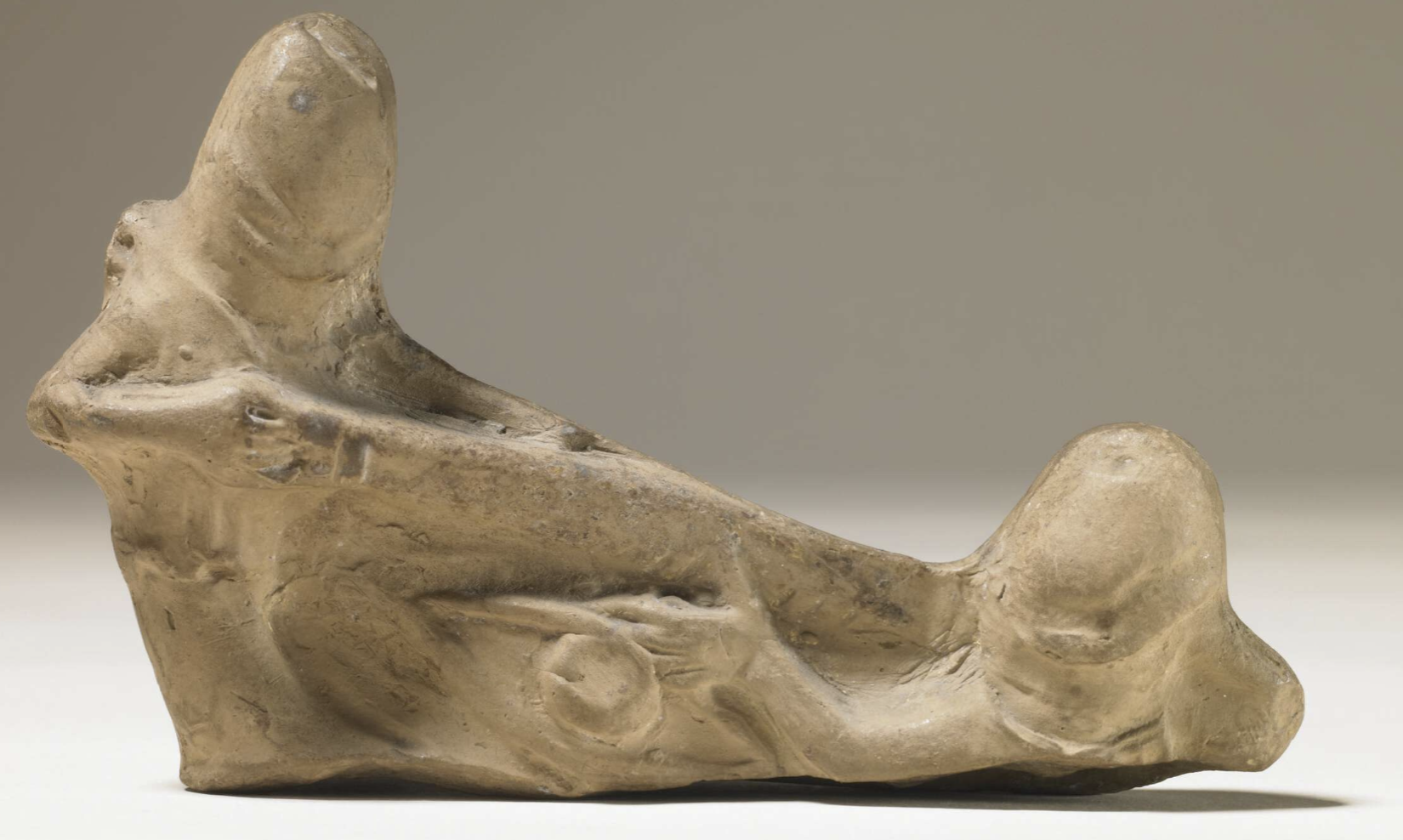
A rather famous BM piece: two phalloi saw the evil eye in half

I’m was doing teaching prep yesterday and started to spiral out on George Witt, a very peculiar gentleman, trained as a doctor, made a fortune in banking, and obsessed with ‘obscene’ objects and even created the first ‘Turkish’ bath in England (for men of course). His donations to the BM include 498 objects, of which 338 have images in the online catalogue.

The above object has appeared in many books and also my own teaching slide decks. It is a quintessential illustration of the power of the phallus over the evil eye. I also use in my class slide deck a bunch of images from Leptis Magna to make the same point. (more on this blog about the evil eye)
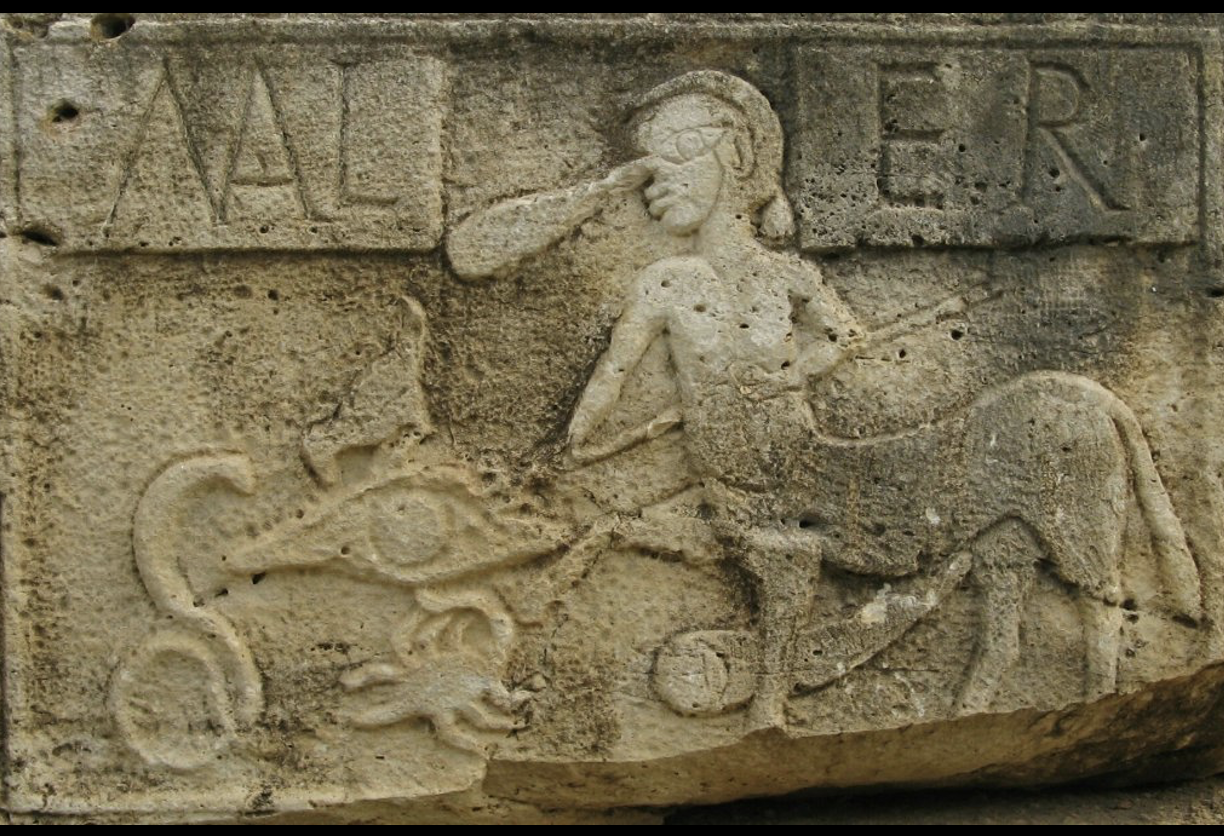
In the class lesson we’re trying to nuance out the erotic gaze, particularly the elite male gaze, from the power associated with gaze through invidia and beliefs around the evil eye and the non-erotic, protective apotropaic power of the phallus and the laughter it can engender. Here’s the unit. Here’s supplementary study images.

So why if I’ve dealt with this through my teaching am I here on my blog over bodega breakfast still writing. It’s Witt and BM catalogue of course. The entry in the online catalogue provides a place of origin for the topic image, “Tarsus”. How do we know this? How do we know it is even genuine?

When a collector is obsessed with a specific type of object the market supplies that object with whatever stories are necessary. I’ve seen this time and again. Here’s a thought experiment. If a collector wants small bronze coins often associated with a particular archaeological site, all of a sudden these previously incredibly rare yet worthless objects appear for purchase at whatever price the collector wishes to pay. The logical deduction if unprovable is that someone is feeding this habit through illegal excavation, or at least hitting up all the local collectors in the region to find specimens that have languished in drawers and boxes unloved for years, past stray finds previously considered worthless.

There is also a great desire to foist fakes similar to the collector’s desired objects onto said collector. Here is something my grandfather had in his attic! I see your interest and wouldn’t this be a nice addition to your collection. Today it is harder to fool the most experienced collectors because of the mass of images and information available and the speed of communication between individuals with expertise across a global network. And yes sometimes sellers of fakes find my blog and try to leverage my expertise to validate their objects. I don’t validate objects on the market. Period.

In the 19th century it was much easier to sell fakes, even to the very highest end of collectors. Partly because collectors feel in competition with one another. Once something rare and precious comes to market everyone wants one!

My favorite example is the Penelli Sarcophagus (BM).

This was claimed to have been excavated in Caere but is now regarded as a forgery. Inscription copied from a gold brooch at the Louvre. Several elements are unlike anything from the Etruscans: the poses of the couple, the nudity of the man, and the nineteenth century under-garments of the woman.

Curator’s Comments, BM online catalogue

While not everyone would agree with me I’m also very suspicious of the birthing scenes in the Wellcome Trust collection which also seem to me to encode 19th century fantasies about birthing and feed the collecting habits of the Victorians who purchased them.

In the above montage only the top left has a firm archaeological find spot. The others ‘appeared’ on the art market. More info.

Artifacts without provenance cannot be presumed to be authentic, ESPECIALLY if they are unique or unusual. We cannot then deduce historical information.

So where does this leave me for the top image? It means what I desperately want to see are the archival records and notes that go with the Witt collection to understand how Tarsus ended up in the notes and if there is anything that would suggest that is truly plausible and the original function of the object. I am having fantasies of research abroad.
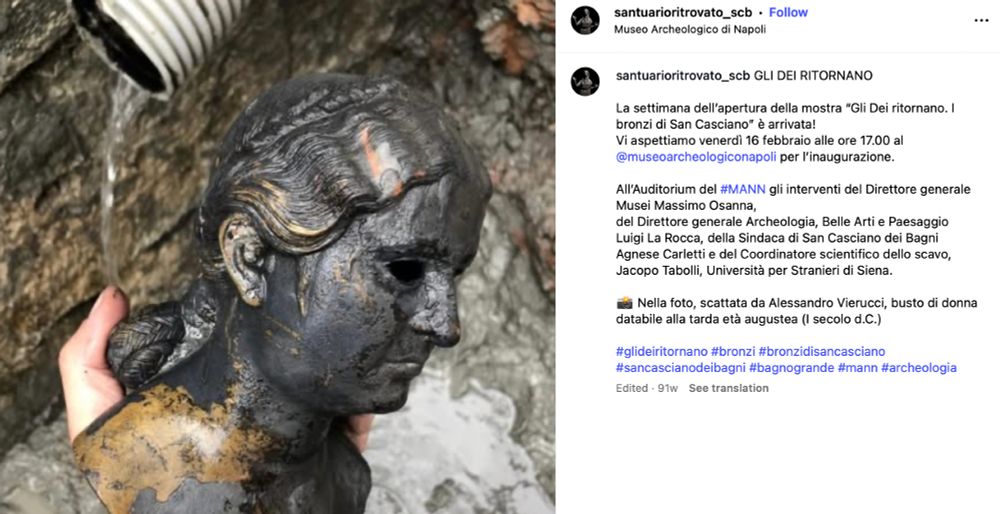
Hair

Not new news (discovered 1906) but we all have to learn something for the first time

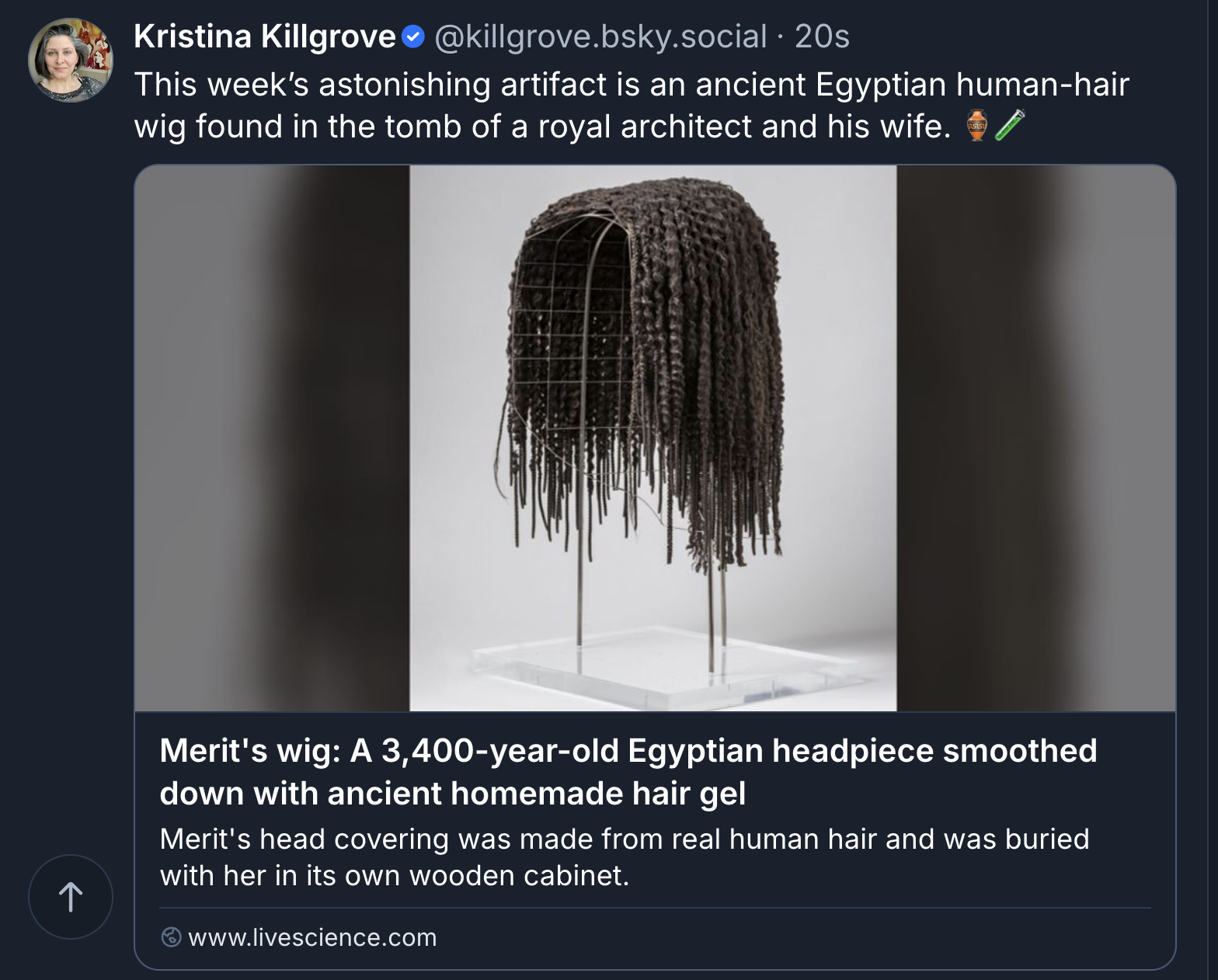
I also saw a picture on my socials this past weekend of the BACK of this head

That image is burned into my minds eye. I didn’t save it to share with you but the complexity of the braids was really epic and wonderful. I’m not up on the latest on discussions of Roman hair technologies, but it used to be everyone thought the complex designs were wigs and then one day someone woke up and realized if women with high texture hair engaged in sewing of hair to preserve styles (read, traditional Black styling) that this could have be the case in antiquity. Everyone seems pretty certain they didn’t have lots of bobby pins. I love bobby pins. If you’ve seen any pictures of me with retro hair it is all possible because of bobby pins.

When I started my post doc work everyone believed you could date coins based on the empresses’ hairstyles esp the Faustinas but then the deep variation among the provincial coinages make that very problematic at least outside Rome. That’s another conversation I’m not up on. It just hangs out in the back of my brain eager for the right moment to explore one more time.

I had a former mentee who thought she was heading to the PhD to talk about hair as a form of female communication in the Roman world, but then with a little exposure to the joys of the Hellenistic and global politics she swerved in that direction. As I got into this field because of Polybius after thinking I was going to be an art historian, I cannot blame her, but I still sometimes want to chat hair. Hair dressing. Combs. Barbers. Depiliation techniques. All of it. Just for fun.

Anyway. I’m full of grief and guilt. We had to say good bye to our very difficult cat, much beloved, a dumped stray who walked into our lives 3 years ago and felt like a gift from the universe, even an apology for other shitty things at that time. I miss my cat intensely. And no I don’t want to talk about it so I’m posting about hair. Don’t send cat pictures. I’m not ready.

Shame and Shaming

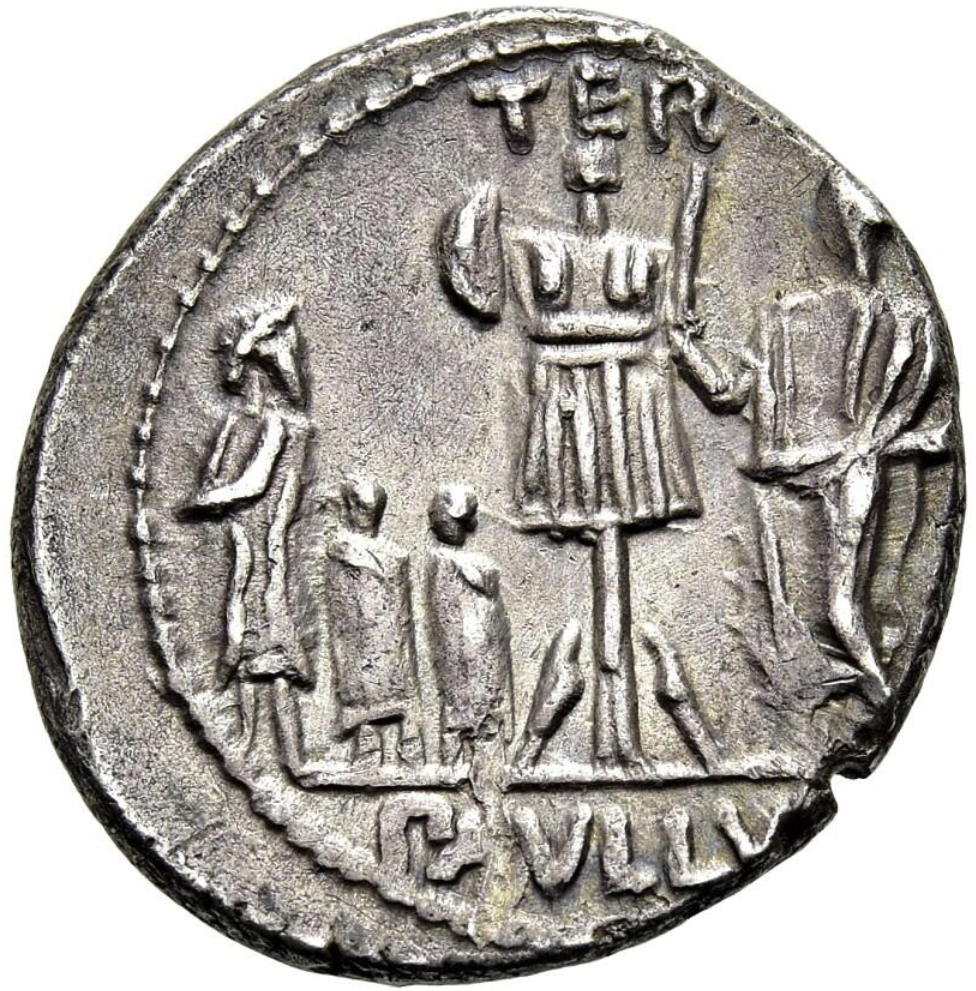
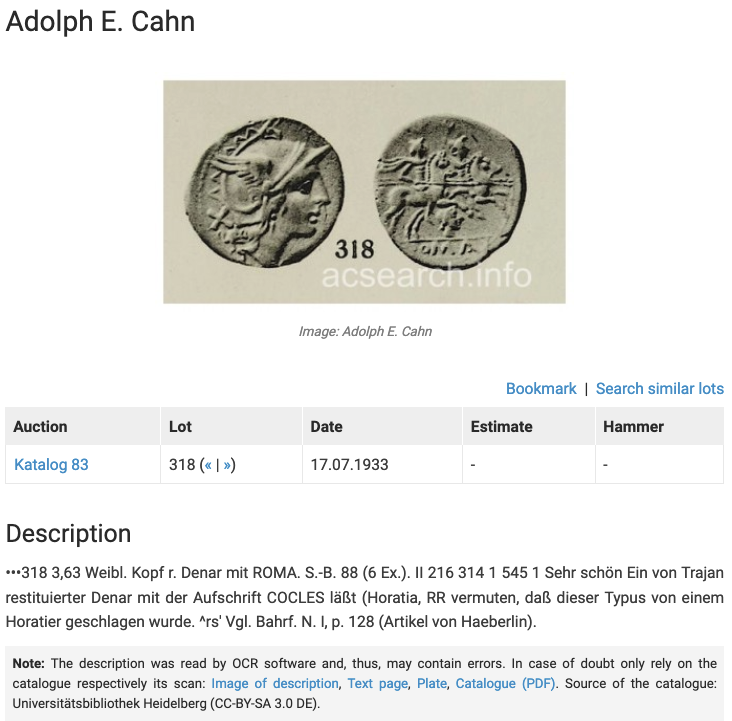
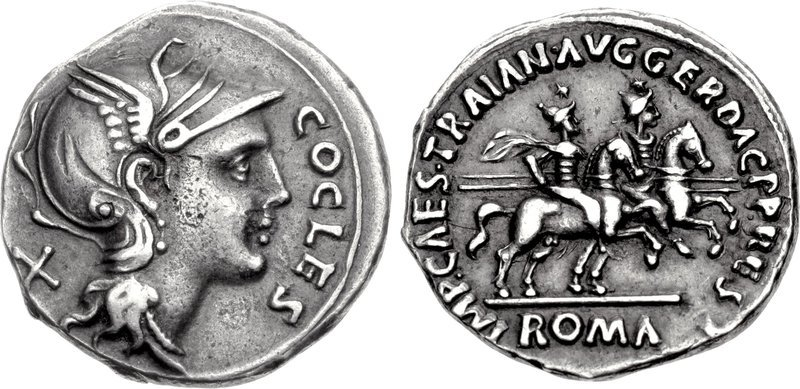
specimen of RRC 415/1

I’m procrastinating. Or rather I’m avoidant. I need to open two emails. And then respond to them. They are from individuals reminding me of things I’ve left undone.

I’ve done a great deal of things other than these tasks. I want to do the tasks. They haven’t reached the top of the priority list because of my institutional commitments and other professional commitments. I’m using this blog post to force myself to acknowledge that I’ve not fulfilled these obligations and to accept the consequences.

The thing that puzzles me is the desire to avoid. After some interrogation of my deep inner resistance, I realize at its root is shame. I wish I had been able to do these things. I feel a should have found a way to do ALL THE THINGS. I can’t. On one level I’ve made peace with my own limits and foibles–my incredibly dangerous tendency to say yes, even in the face of evidence that I’m already over-committed.

But I think this isn’t really about my internal self judgement, but that sense of being seen in my neglect of tasks. I said I would and I haven’t yet. A teeny bit of my brain thinks if I don’t read the email, I’ve not been seen, or I will not have to acknowledge that I’ve been seen, and, somehow, the shame will be less.

The Romans loved a good public shaming. And, many went to great lengths to avoid such shame. We are led to believe Cleopatra killed herself to avoid being led through Rome in such a spectacle. The Romans clearly enjoyed inflicting a good public shaming and humiliation of those they defeated. The theme is all over ancient art and who can deliver a brutal invective better than Cicero? We know our values and who we are by those we distain and disgrace. Even, if that is ourselves!

None of my colleagues are like this. I know this. Well, at least not the ones I care about. I do not need to pull the veil over my face to avoid the stares. I can just own what I’ve not done and try to better assess what I can do.

Ok. I’m going to not hit publish until these two email tasks are done.

Funny story. One of the emails wasn’t what I thought it was. It was a piece of bureaucracy that does need doing but not actually anything that feels like letting someone down. What it made me realize is that pro actively writing to one of my editors would feel good. So I did that and explained where I was at and asked for guidance and if they still want the piece.

Yes, it is loud in my head. Yes, the blog helps. Enjoy the pictures and ignore the navel-gazing. I am moving on to other critical administrative tasks.
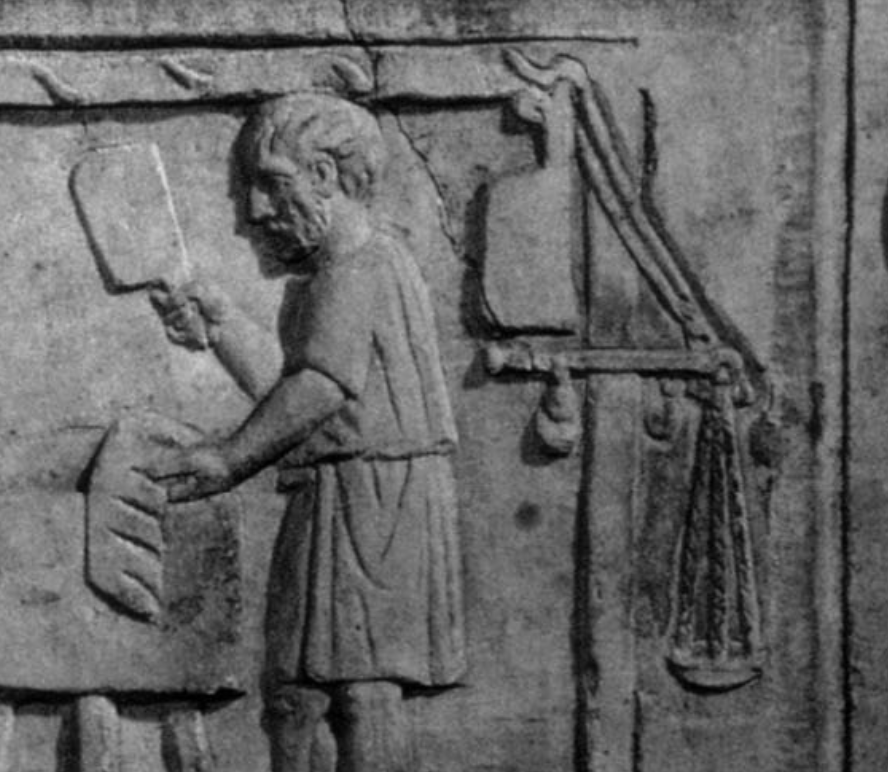
Museo Nazionale Romano (Terme Museum) Rome. RBU2015.5715. Flickr (another image of same)
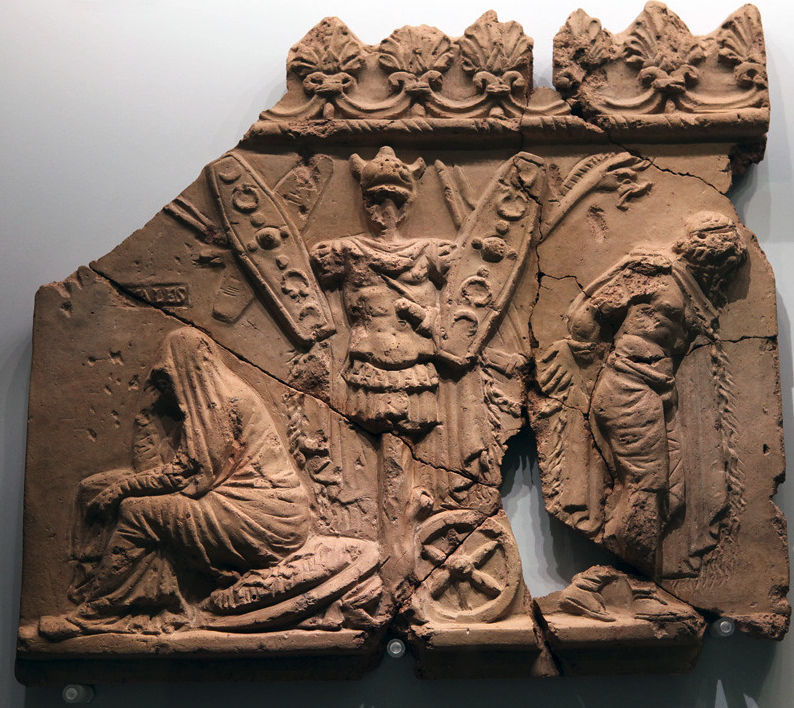
British Museum, Campana Plaque

New (to me!) Book Joy – Woytek on Trajan

So I just had a 2.5 hour commute after a very long work day on campus and I’m sitting at the kitchen table knowing that in a moment I will need to swing into the bedtime routine. I probably won’t finish this post now. It will have to be later, but I can leave myself the foot prints to get it done. On the kitchen table was a lovely big box with a book in it. I’d almost forgotten what I’d ordered, but then I recalled my earlier post and questions about Cocles. Woytek has come. It is SO good. I just need to give you a sense.
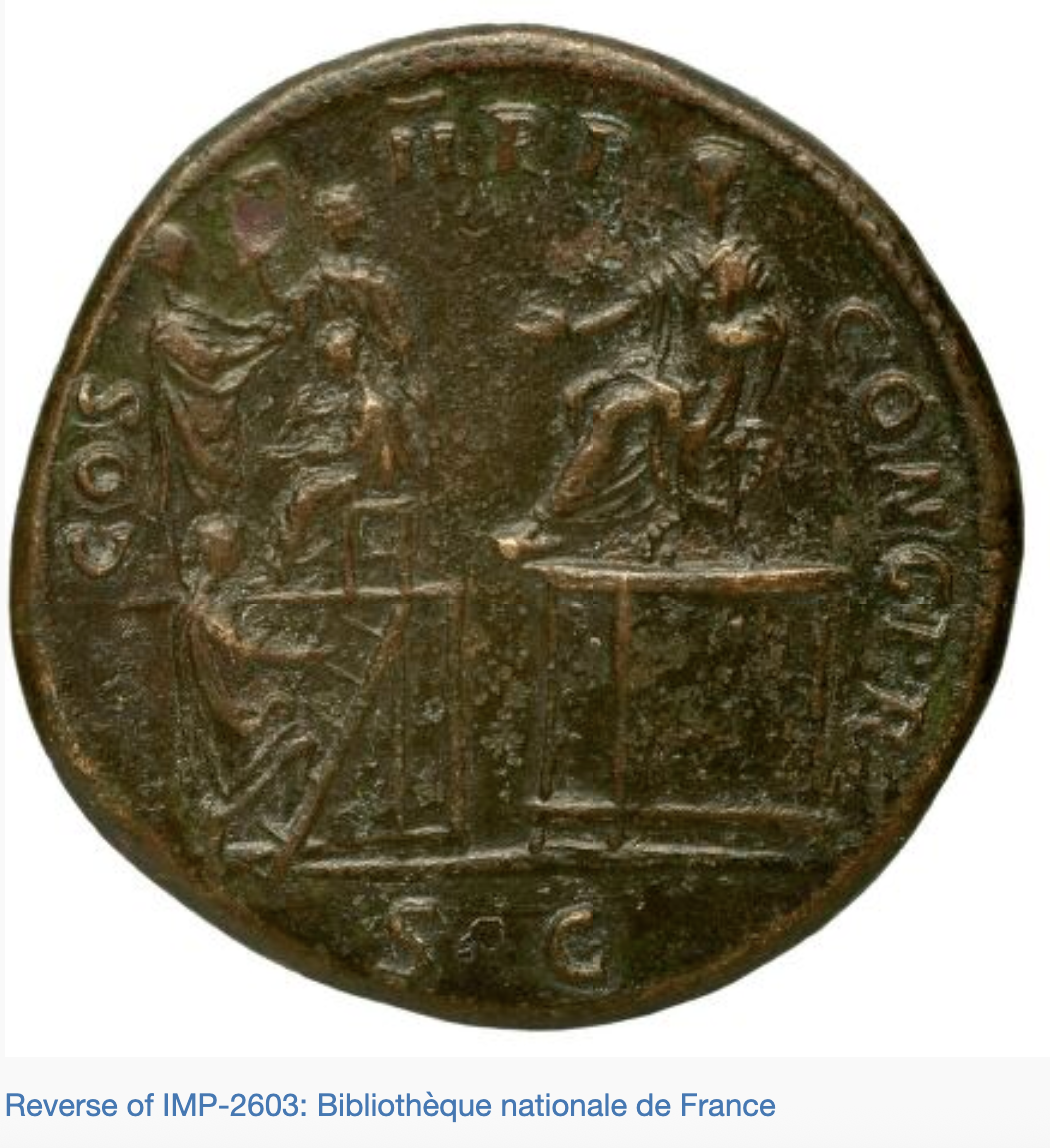
Here’s the OCRE description of the above type:

Trajan seated left on platform with steps behind approached by togate male; officer seated below; Libertas and tripod behind

Presumably this derives from RIC but I’m too lazy right now to go double check my volumes upstairs in my office. This description is not at all what I see. I hope it is a transcription error.

Now here is Woytek:

Money distribution scene: On the slightly higher, right-hand of two podiums (suggestus), Trajan sits in a toga with his right hand outstretched on a sella curulis. On the left stands a tablifer with a tessera in his raised right hand, looking towards the emperor. In front of the official sits a scribe in a toga. Opposite him stands a togatus with an open sinus. Another citizen climbs a ladder to these.

THIS, this is what I see.

Anyway. I love a good money distribution scene.

A blog post about them.

Saserna’s Sestertius?!

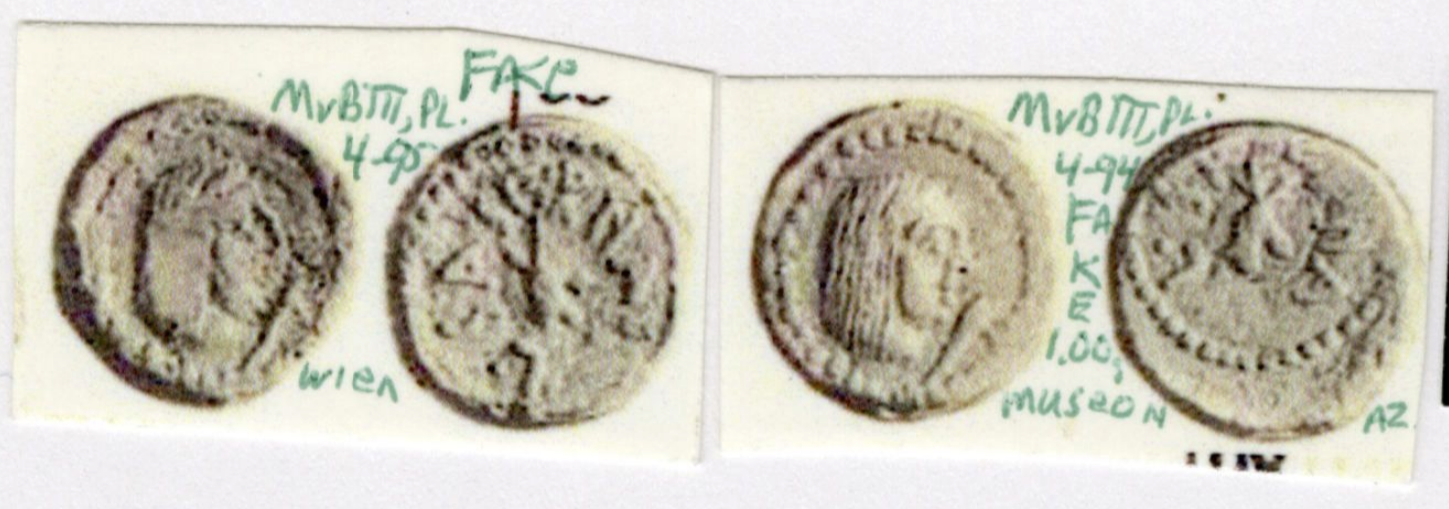
Schaefer Archive, Binder 14, page 133, exposure 168.

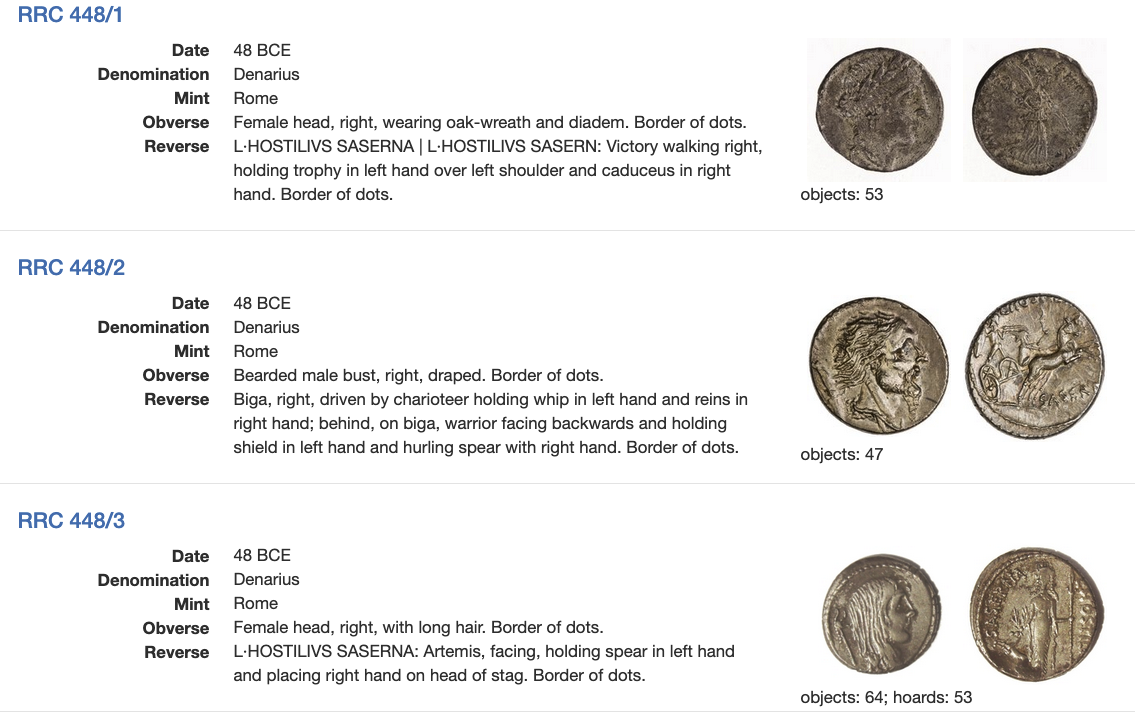
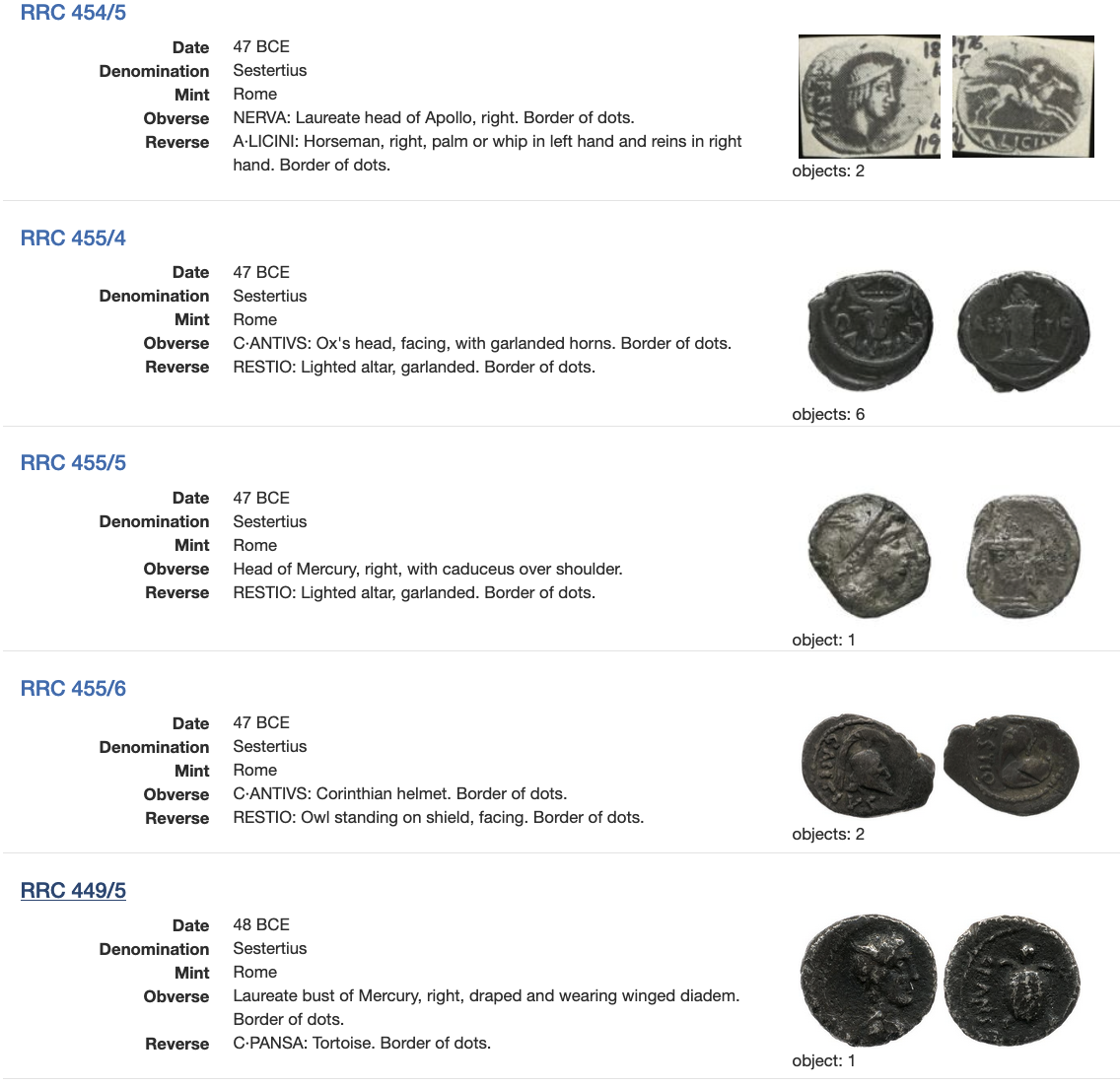
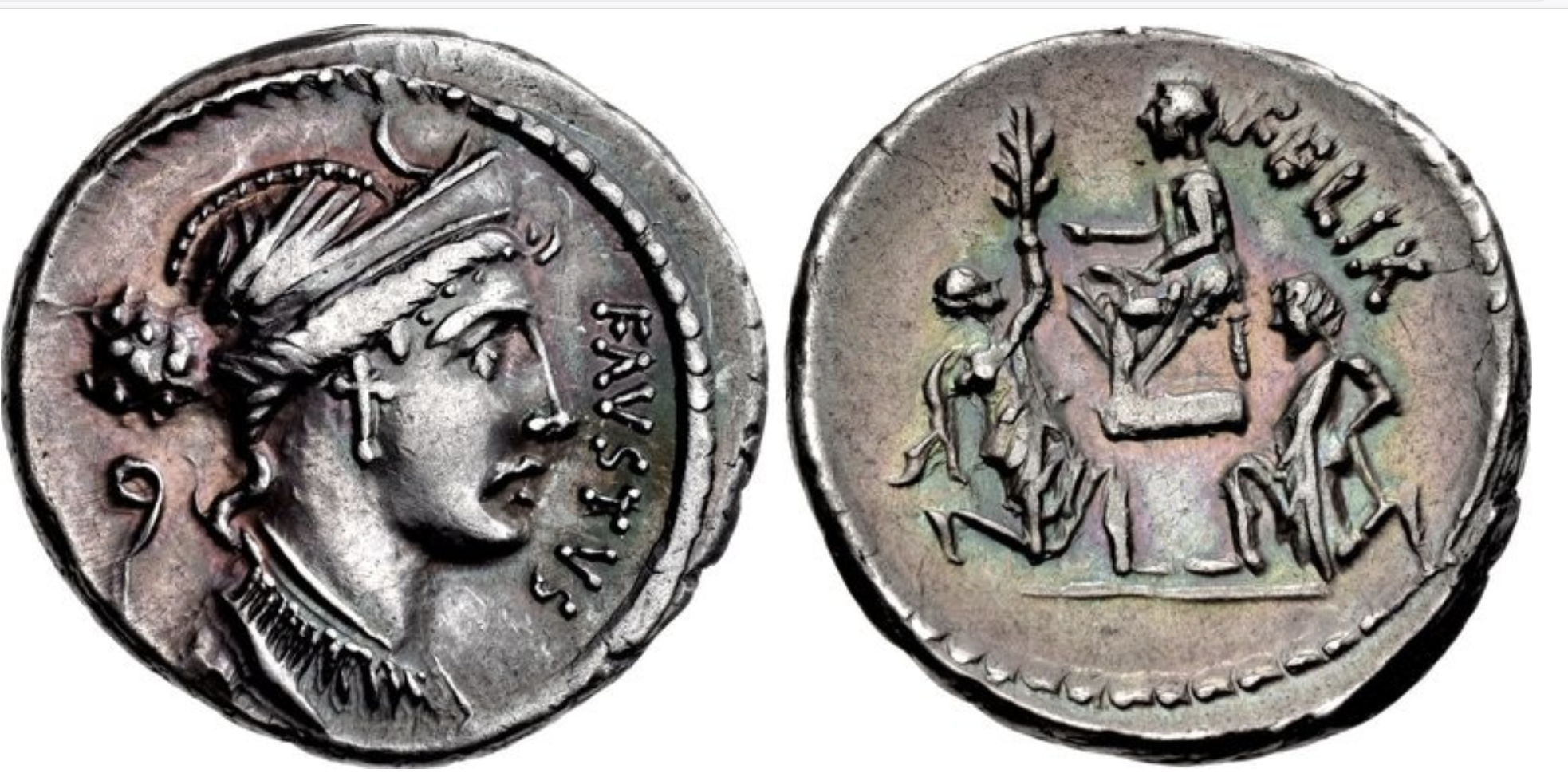
Why have these specimens been dismissed as fakes and not accepted as sestertii of what we call the RRC 448 series?

This date and weight is just right to fit into the revival of small silver denominations alongside the denarius.

Prior to these issues the sestertius seem not been produced by the Roman mint since c. 90 BCE. I say “seem” because other possible sestertii for the interim have come to light.

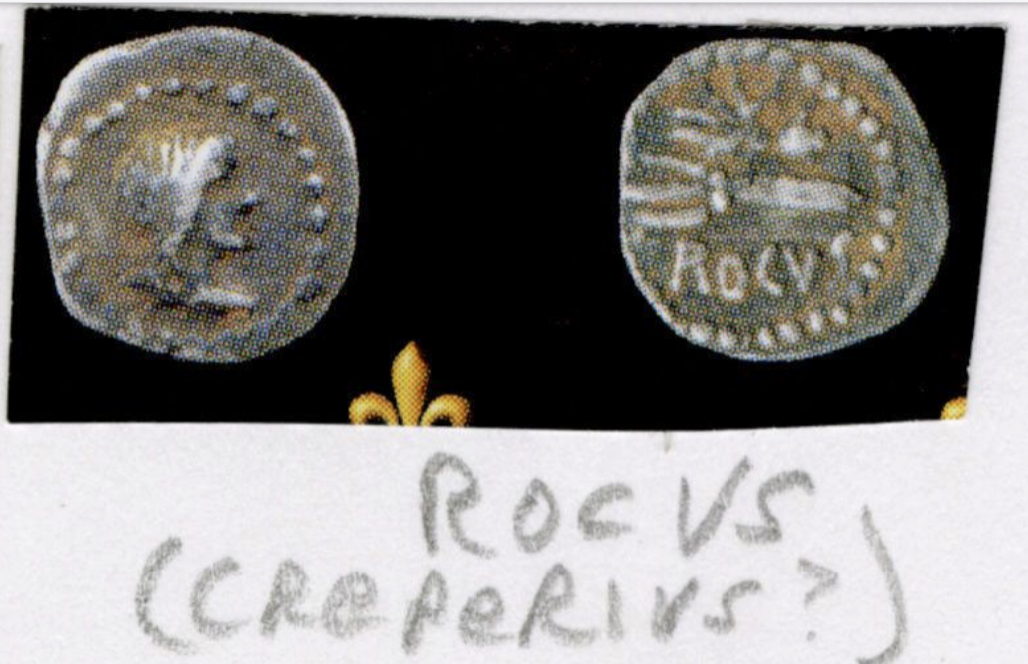
Same Schaefer, source as above. If genuine this would date to c. 72 BCE and likely be part of RRC 399.

There is also of course the much discussed Macer piece c. 84 BCE, part of RRC 354, again if genuine.

Maybe I’ll come back and answer my own questions about all this small change one day. Maybe one of you will just tell me.

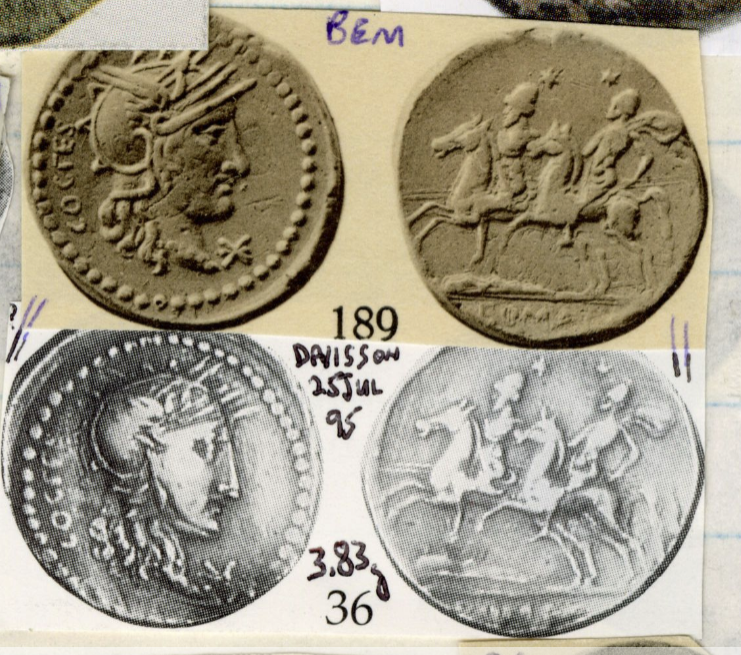
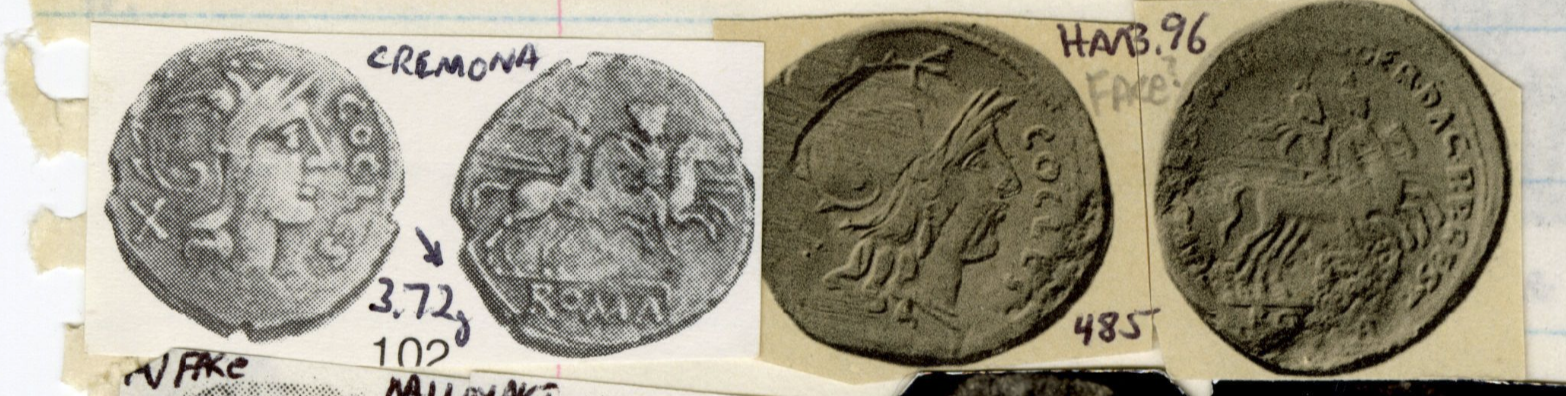
Fantasies in the Schaefer Archive (Cocles)

I finished email, closed down the program and am now trying to get my blood pressure and focus to a point where I can write for realz. I still want a relatively short post with as little navel-gazing as possible.

The above and below images are from Binder 14 (page 127 of the paper archivist’s numbering system, exposure 162 of the digital archivist’s numbering system).

The fantasy denarii is apparently inspired by the restored type attributed to Trajan’s reign but I’ve seen no examples of verified specimens of the restoration coinage either. I don’t have

Die Reichspragung Des Kaisers Traianus (98-117) by Bernhard Woytek (2010).

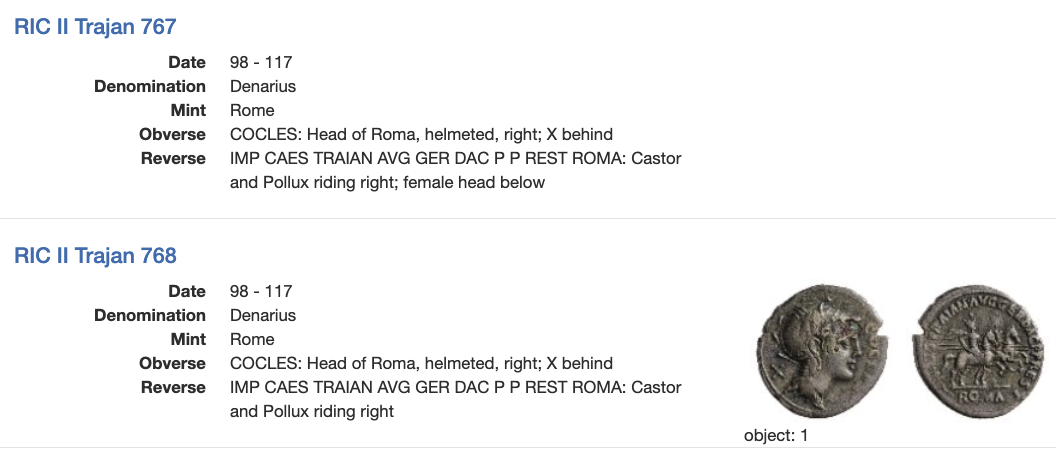
on my shelf but I just ordered it so when it arrives maybe I’ll fill out this post with whatever I read in there about Cocles. Here’s what is in OCRE:

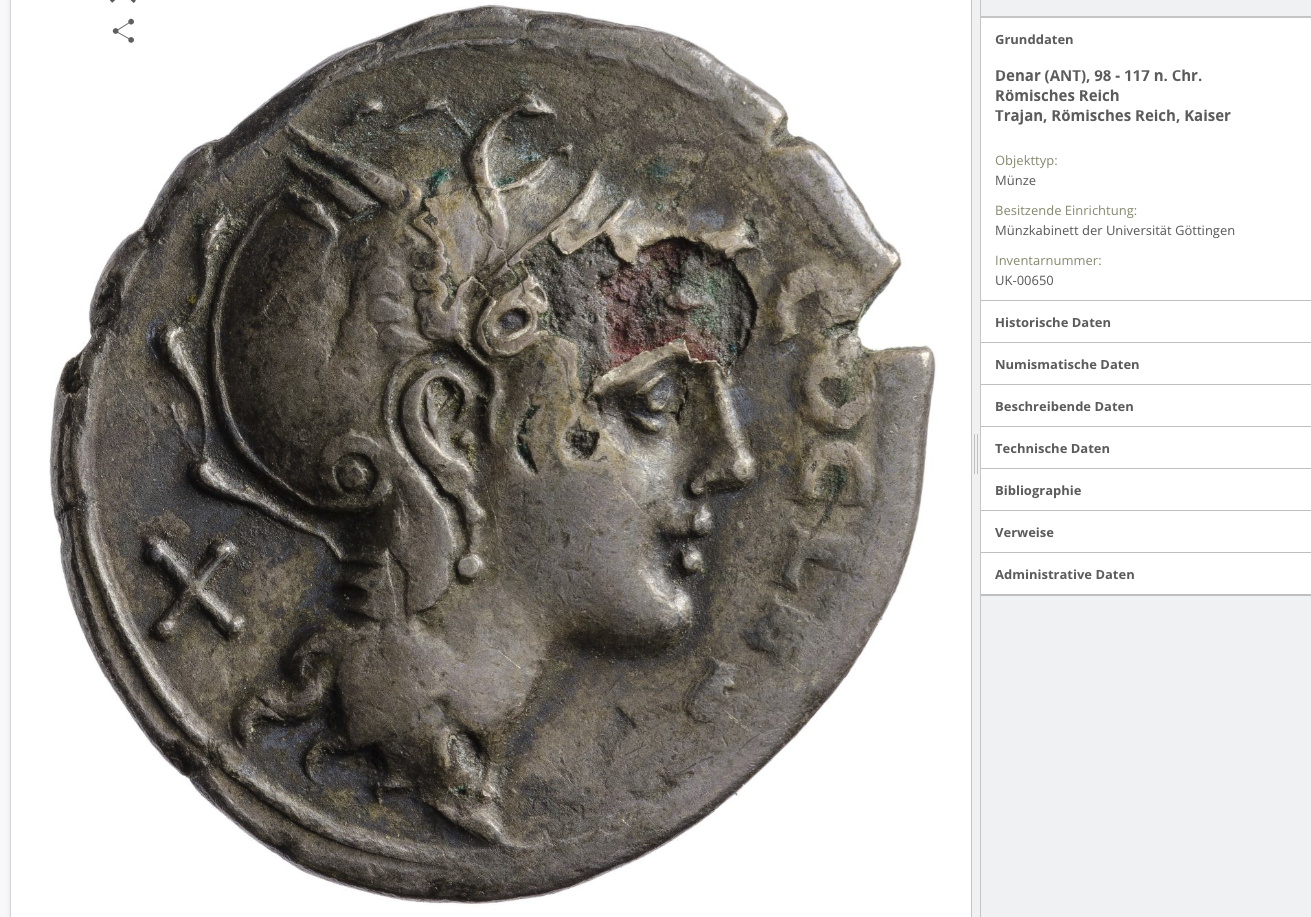
The one specimen is in Göttingen and is clearly plated.

The whole ‘female head below’ was mysterious to me until I saw this (cf. RRC 127/1)

Becker dies are known for the restoration type (Hill 164)

In trade.

I’ll withhold judgement until I read Woytek.

Update 11/7/2025:

The vast majority of circulating COCLES coins, at least all those without the female head in the field, are modern forgeries; see the compilation in Komnick TE. 23. The Becker forgery (Hill, Becker No. 164) in particular often goes undetected; see, for example, Milan, Belloni 181 or SBV 30 (September 15, 1992), 201 (3,45).

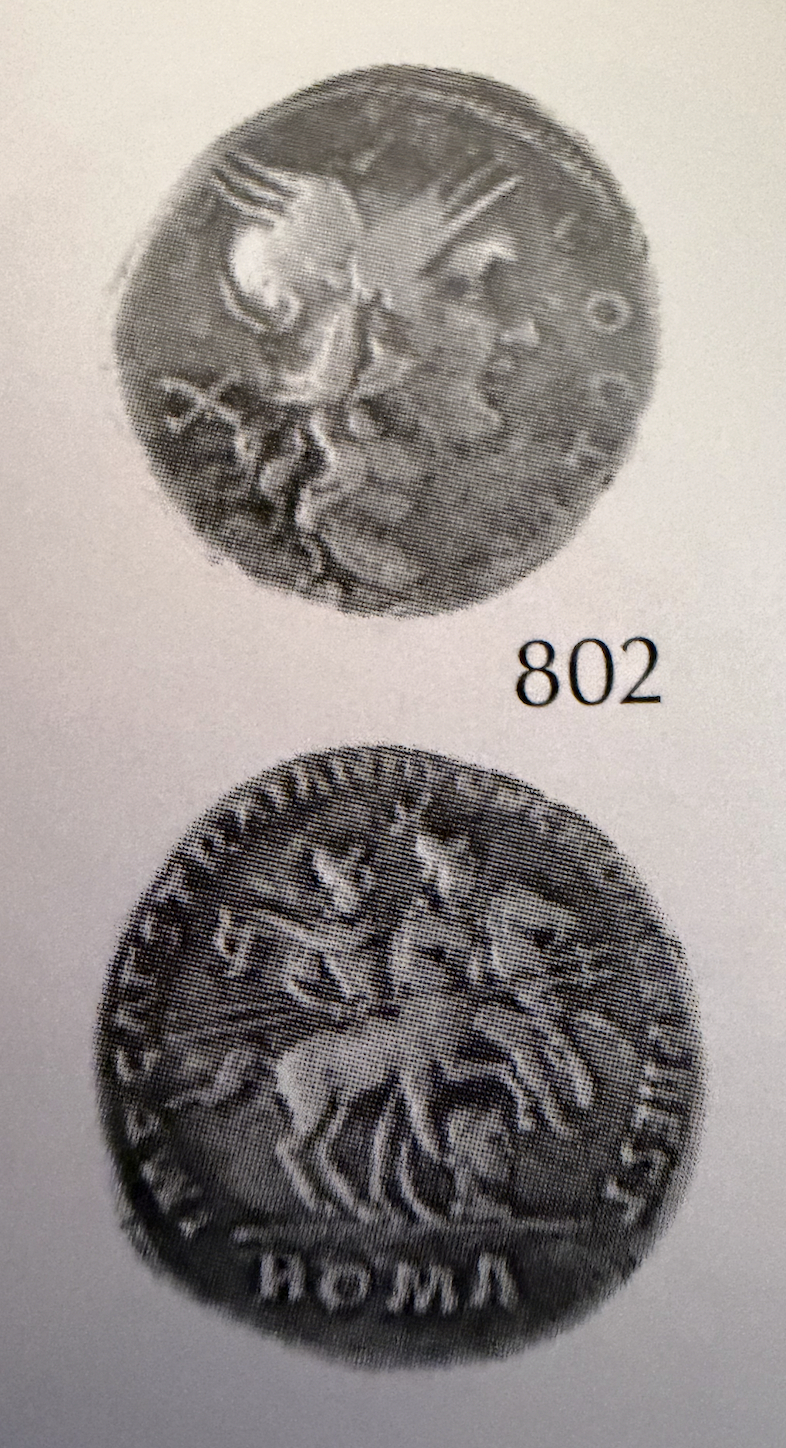
So Woytek. He does however illustrate a specimen in Naples weighing 3.19g with the head which I take him to be considering genuine, no. 802 (Plate 128).

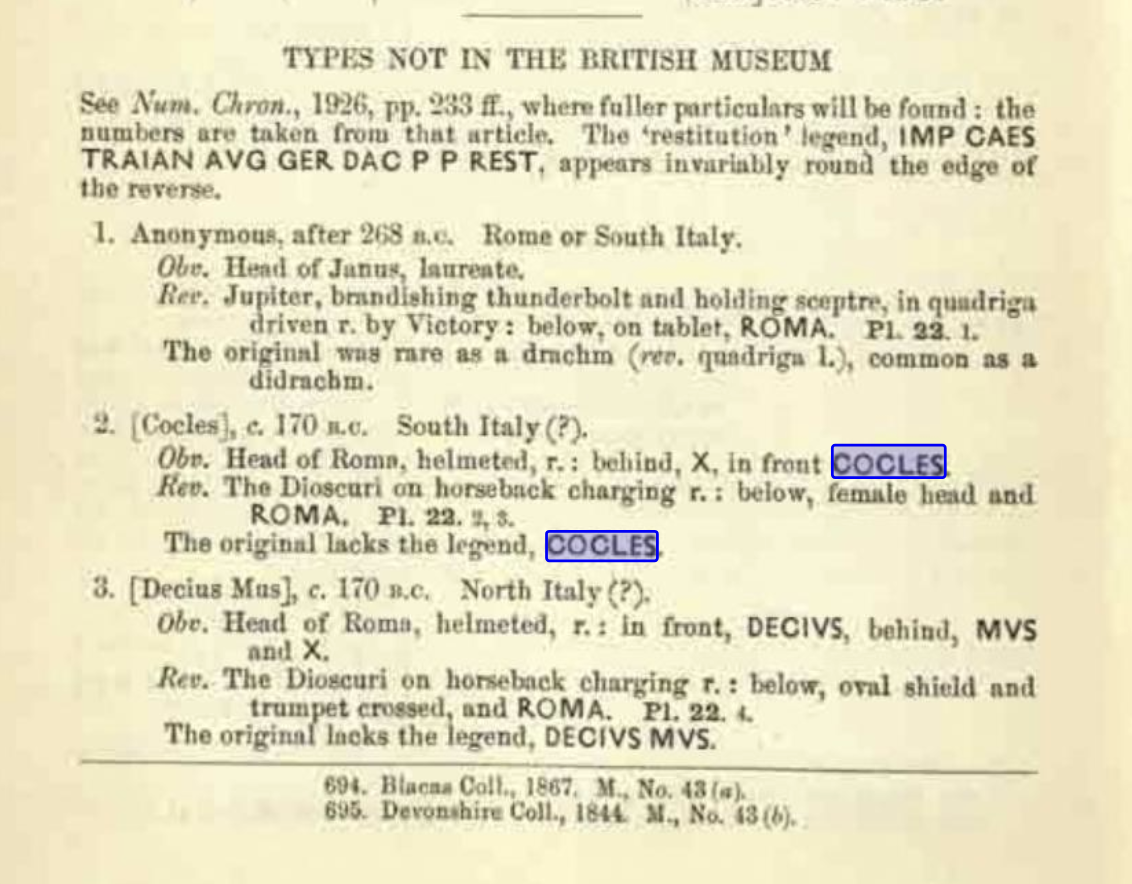
Here’s Mattingly in BMCRE p. 138. The same coin as above is illustrated on these plates.

Jugurtha again (a short pre-email Monday, no bull, post)

I just needed a minute with my discipline before I address the mess. It’s 7.45 am and I refuse to feel any guilt about a little research indulgence.

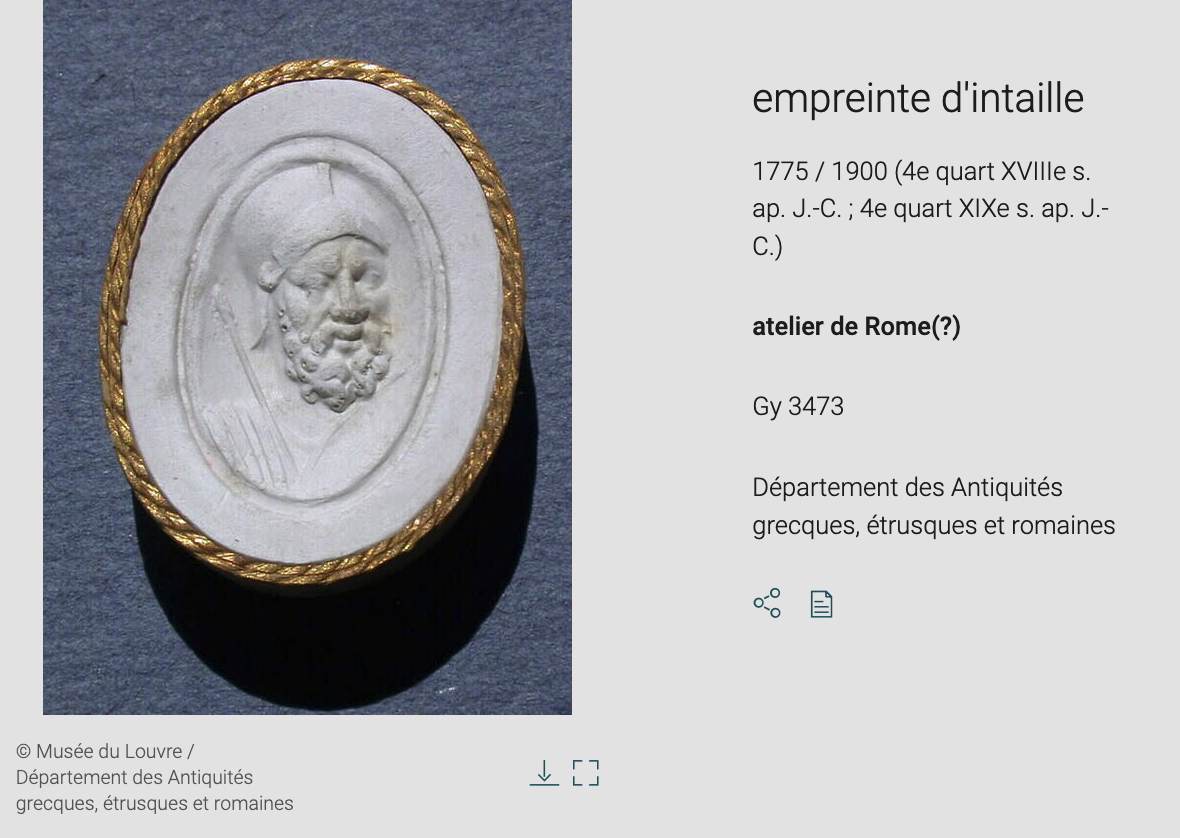
Above we have a cast of gem from the Medici collection now in Florence, of the original the Louvre catalogue says:

Italie – Florence : Musée archéologique – N° inv. 14952. Intaille en améthyste. Buste de guerrier de face, barbu, casqué, tenant une lance et un bouclier. Identifié comme Hannon, Jugurtha ou Massinissa (?). Ancienne collection Médicis.

I’m most curious about how this identification was made, by whom, and when.

Apparently there was a similarly identified gem in the Poniatowski collection, a garnet not an amethyst, or so Beazley tells me without any image.

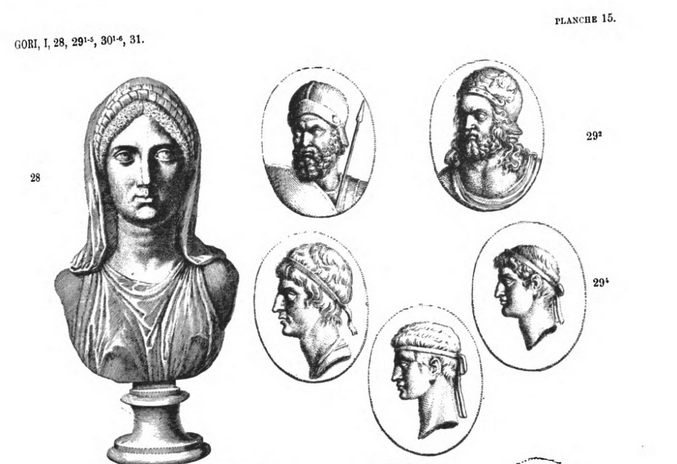
Reinarch 1895 illustrating Medici gem

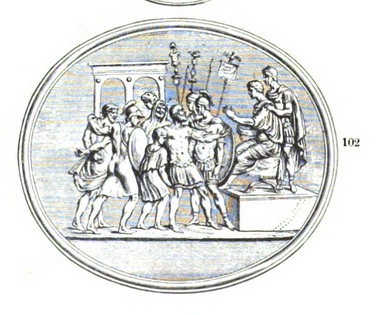
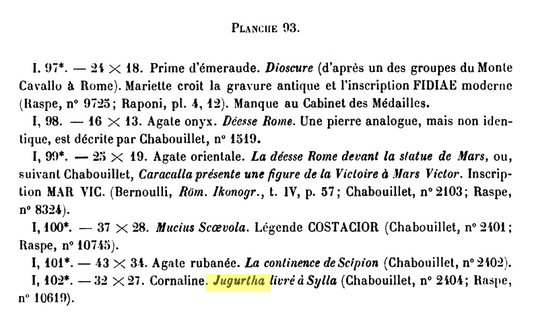
The same volume contains an illustration of a early modern gem on the theme of RRC 426, the surrender of Jurgurtha to Sulla, a gem now in the BnF.

Ok. It is 8.09 am and I should stop playing with Databases. Perhaps I’ll drop more Jugurtha and the gems here later.

More Jugurtha (a warm up exercise)

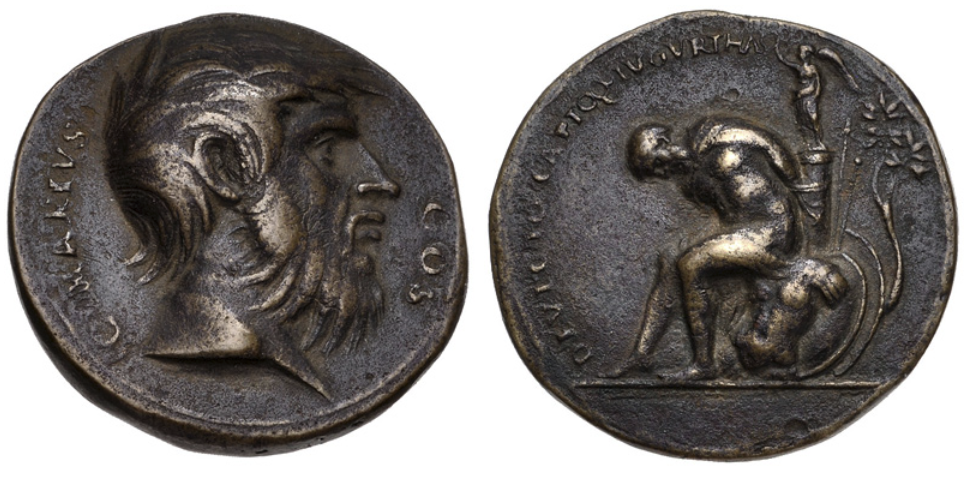
By Valerio Belli, circa 1520s-1530s, Formerly in the RBW collection
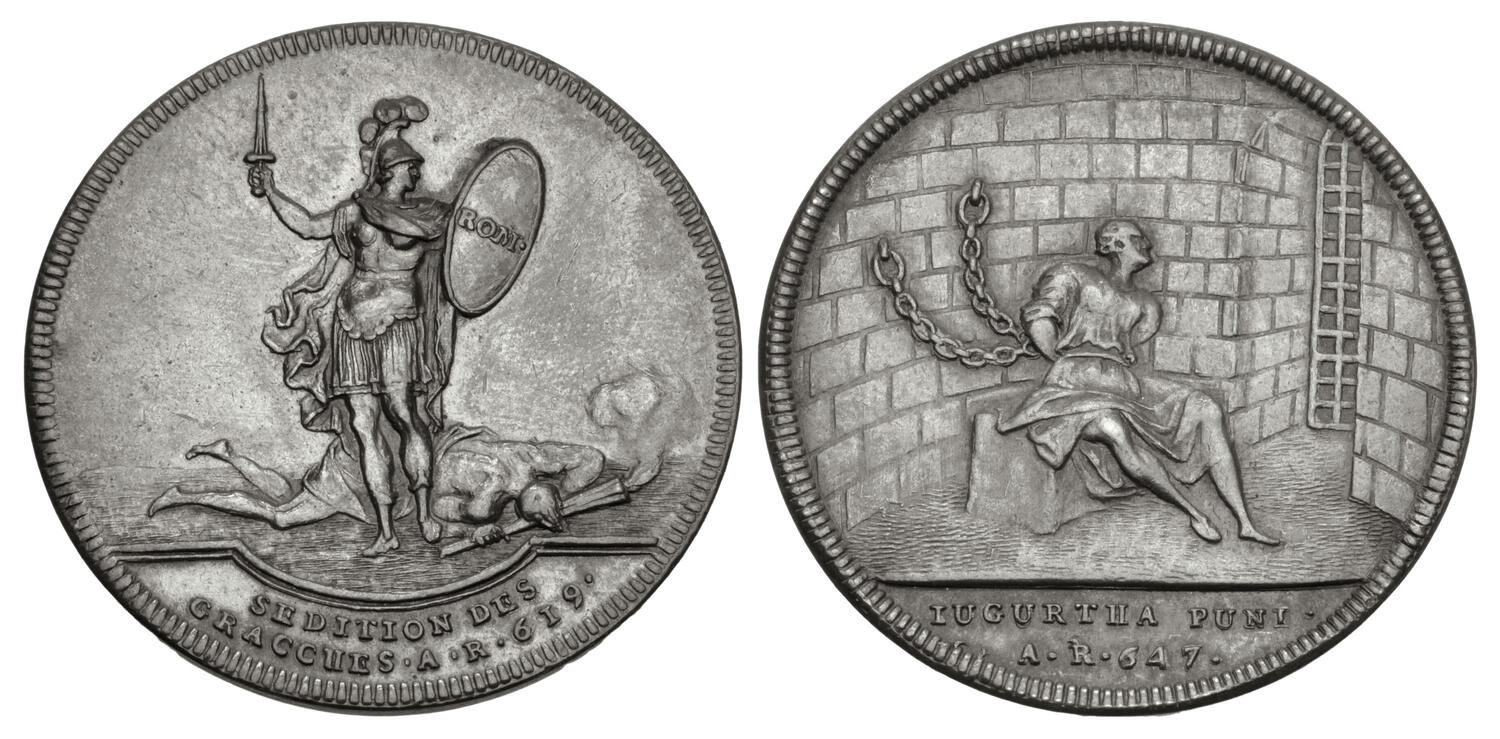
By Jean Dassier & sons, 1740-1750, Formerly in the RBW collection
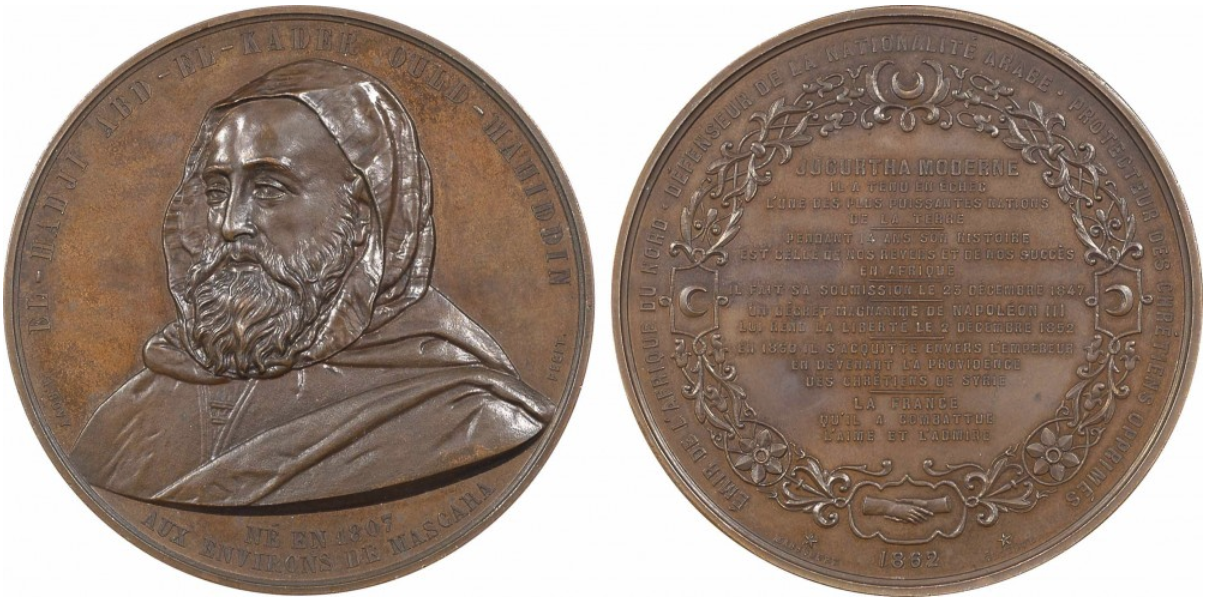
Abd-el-Kader, Jugurtha moderne, par Bovy, 1862 (Massonnet) (cf. another similar medal without Jugurtha allusion)
In trade

I dropped the above coin images into a draft post as I was writing last week’s Jugurtha post. I thought I’d use this to start my day and if you scroll down I might even actually talk about those coins. Out of the blue I’ve found myself with a day to write. I checked the inbox. I checked the calendar. It’s true. I can be deeply selfish in my work agenda today. I am calm, contented, and feeling positive about many things at least on a personal, if not on any national or global scale. Now to do the thing. I know the task I most want to do–the back half of the introduction to the RRDP volume (earlier pre-writing post). sh!t. I just remembered I have two letters of reference to revise/rewrite. This is ok. I’m allowed to tackle them them tomorrow or this afternoon. I get to be selfish.

Why, the heck, do I keep using this word? How is doing my literal job, one that involves many other researchers and writers in any way selfish? Let’s see if I can re-frame.

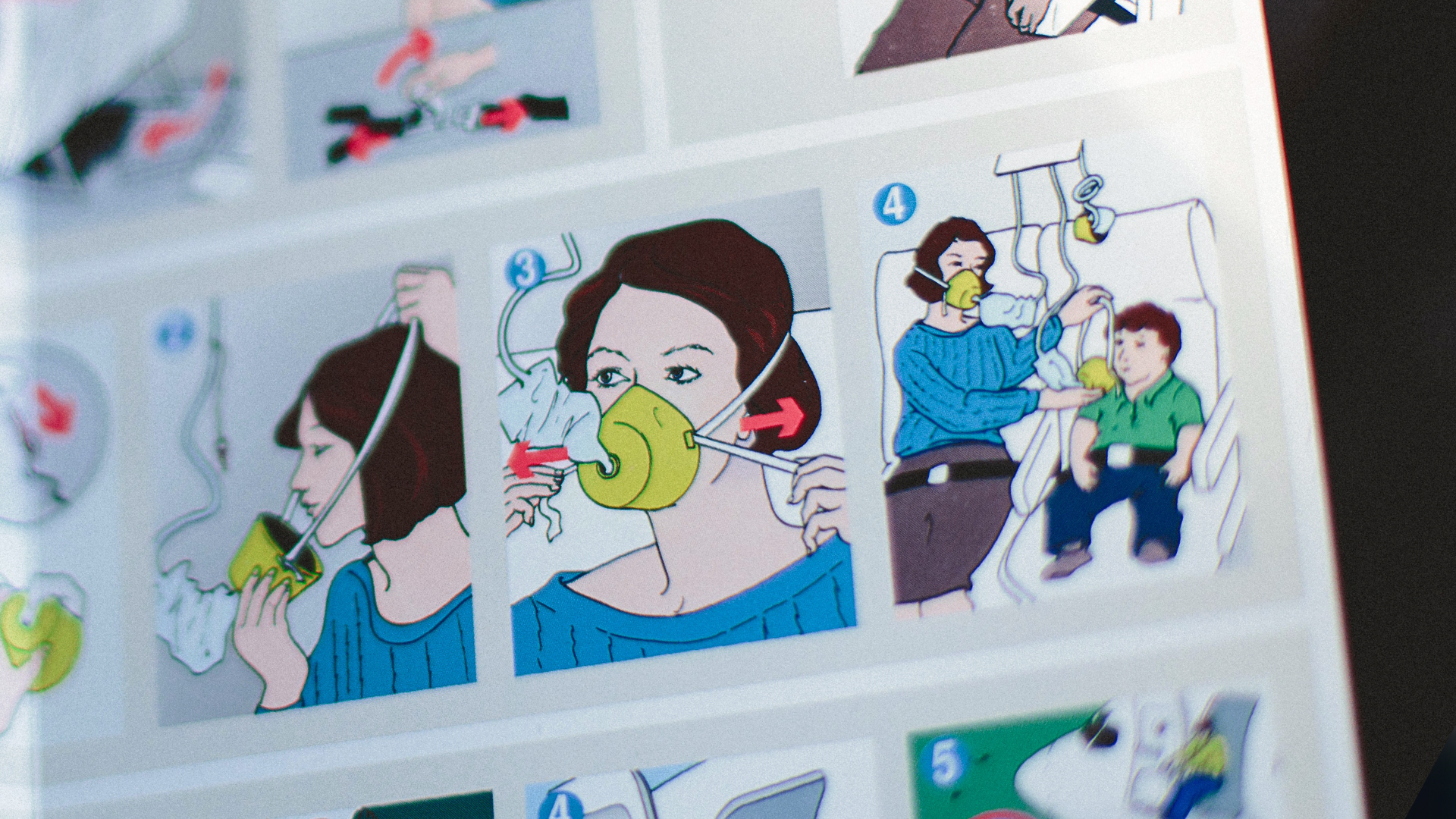
“Put on your own mask before helping others.” [I thought there would be better visuals for this modern metaphor.]

I know how I write best. I know that first just getting down a little bit about about my mental state and relationship to the work gets my fingers in the groove. I know that a little free writing about coin images then get my brain focused on the right types of things and over my omphloscopy.

Digression. I have been using and enjoying that pretentious neologism for navel gazing since my grad school days. I have a vivid memory of some don of Brasenose first used it in conversation with me at the foot of the stairs leading to the library in the passage between the old quad and the new ones.. Now I learn the more commonly accepted term is omphaloskepsis. Questioning what we think we know and our very vocabulary is the joy of the academic process. Just last night my seminar group had the most intense discussion of the rise of the term sex-work and a vocabulary consent and the limits and ambiguities of both terms. This is how we learn both individually and together.

Those coins. Let’s get a bit more serious about this warm up.

The last post discussed a single complex design from the mid 20th century. As I looked for an image of that type of course other Jugurtha coins popped up in my searches.

The Dassier medal didn’t surprise me. I’m a fan of their Roman historical medals series and own the catalogue of their medals, if not any of the medals themselves (books and plane tickets are my only true weaknesses). Jugurtha is a clean shaven prisoner chained to the wall of a stone prison with a barred metal door. That it is Jugurtha would be hard to deduce without the legend. If you’d ask me what it might represent without the text and I didn’t know the theme of the series, I’d probably have guessed Saint Paul imprisoned. I wondered if this was because I had some archetypal image in buried in mind from which this might be derived, but a quick google suggests not obviously so. I find something pathetic and sympathetic of the straining towards the door (light?) but am not at all confident the artist intended this. Overall I find the medal pro imperial. The Gracchi are described as seditious and the allegory of Rome is heroic and violent in her victory over them. The attribute of sedition seems to be a torch and the poverty evoked by the dress of the defeated man at Rome’s feet. The torch seems to be the implied threat to the city and its infrastructure through indiscriminate burning. Roma is also, of course, victorious over Jugurtha who is punished for resisting Roman authority over his kingdom. Both sides suggest a ‘resistance is futile’ message regarding the nature of Roman rule.

The earlier Belli medal was new to me and had it’s artist not been identified my first thought would have been to associate it with the tradition of Paduan Medals, associated with Giovanni dal Cavino and those working in a similar style. Essentially fantasy pieces of a sort. Marius is the rough and ready soldier and Jugurtha is much like any bound prisoner at the foot of a trophy (cf. Judaea Capta et al.) but the prisoner bound to a column with victory atop is not known on the Roman coin series to the best of my knowledge (I hate arguments from silence).

The other two numismatic images are more closely related to the previous post and the heroicization of Jugurtha as a figure of indigenous self rule in the Magreb (N. Africa). I don’t have much to say about them but dropped them in to keep them on file as it were.

I wanted to talk a bit about Jugurtha on the republican series, RRC 426/1, but I’m itching to get to that chapter and I’ve at least written about it before. Maybe I’ll come back. I also think a little on reception of Numidian coinage could be worthwhile if I want to keep going on this theme.

In trade
In trade

Just one coin… (a Jugurtha eye candy post)

Link to specimen in trade

I started this post earlier this morning while I was waiting for an important meeting and then it ran away with me.

Thus far today I’ve graded, drafted a grant report, crafted an agenda to meet program priorities and cleared the top of my inbox (don’t worry I officially still have unread messages – yes I live my life on the principles of a chaotic good).

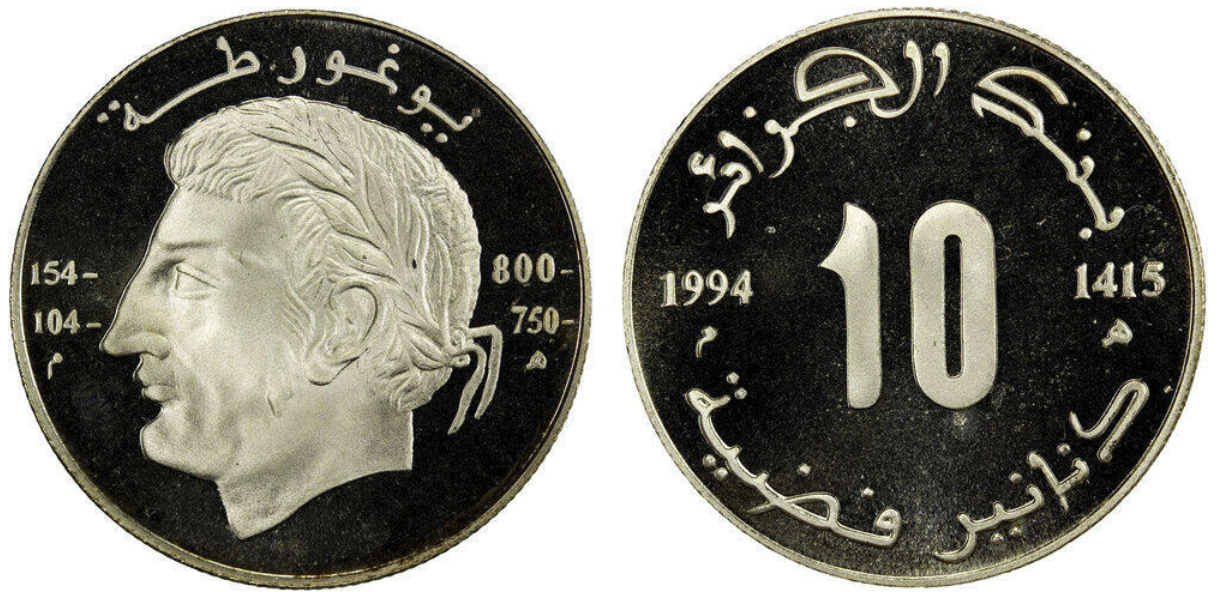
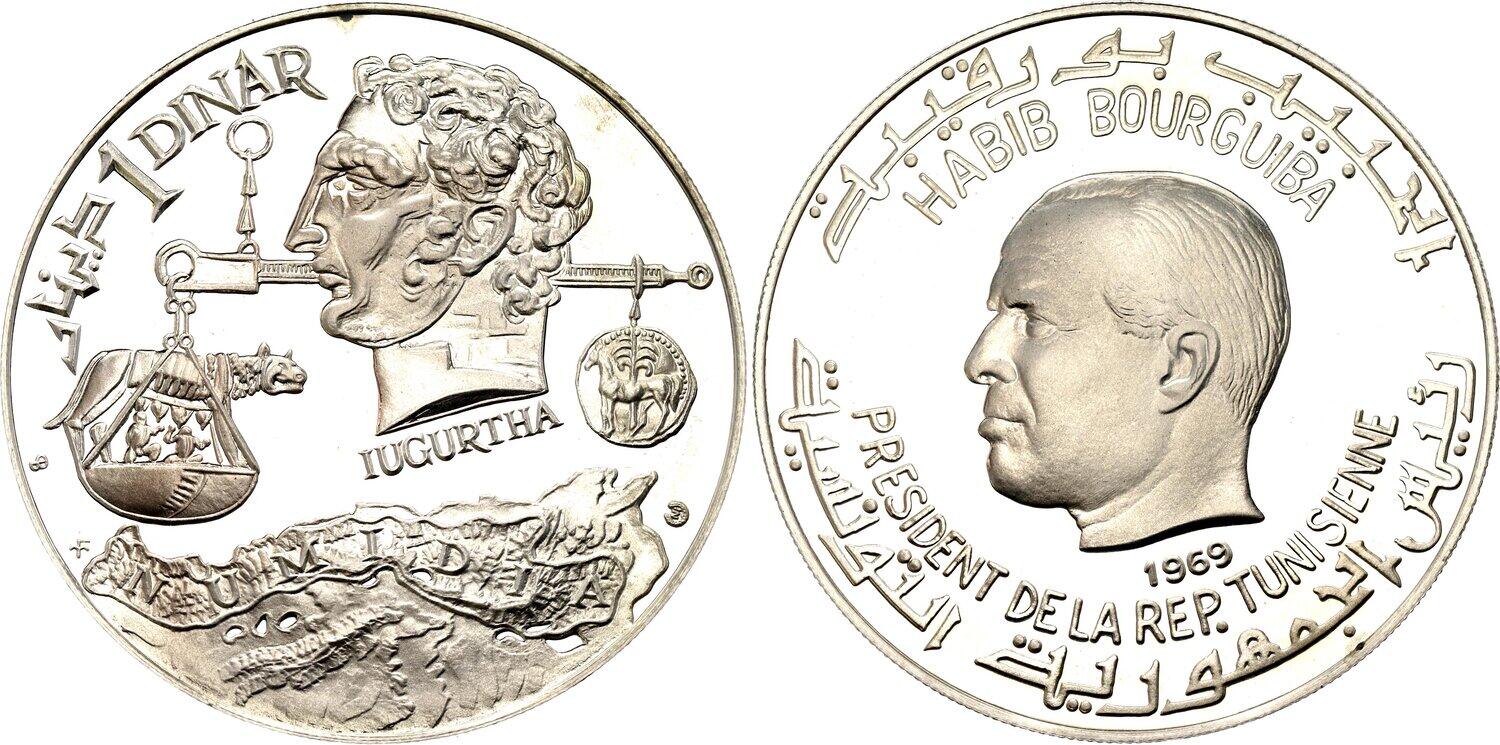
My brain is spinning and I just want to be a researcher again. I wracked my mind for a coin, just one, I might want to free write about for comfort and connection with my scholarly self. I’ve been meaning to blog about the above type for a while. It was shown to me by my colleague at UCRiverside, Kyle Khellaf, over the summer as we planned his recent speaking event. It is an incredible appropriation of antiquity to create a narrative of continuity for a modern nation-state. I will only be discussing the side–call it obverse or reverse as you will–with the name “Iugurtha” and the denomination “1 Dinar” text.

The bottom of the design has a map of a section of the north African coast. It shows the area primarily occupied by Tunisia. Instead of marking this territory, it asserts the boundaries of the primarily inland ancient kingdom of Numidia. As I always tell my students ancient kingdoms, city-states, empires, etc. rarely have clearly defined boundaries like this. The evolution of the militarized and defensible Roman limes under the high empire–forts along the Danube, Hadrian’s wall–is its own whole unique conversation and topic of scholarship. In earlier periods of Mediterranean wide cultures boundaries were often reliant on physical landmarks — the watershed on top of a mountain range, e.g. limit’s of Cicero’s provincial command, or water ways, e.g. Ebro River in the treaty between Carthage and Rome at the end of the 1st Punic War (and yes, the Rubicon, if you must mention it). Those lines on the coin’s map defining ancient Numidia read modern conceptions back into an earlier period that had very different conceptions and definitions of space and territory. The image is of course useful for the claiming of Numidian heritage and legacy by Tunisia. Numidia represents, in this numismatic context, a form of indigenous self-definition in opposition to colonial powers.

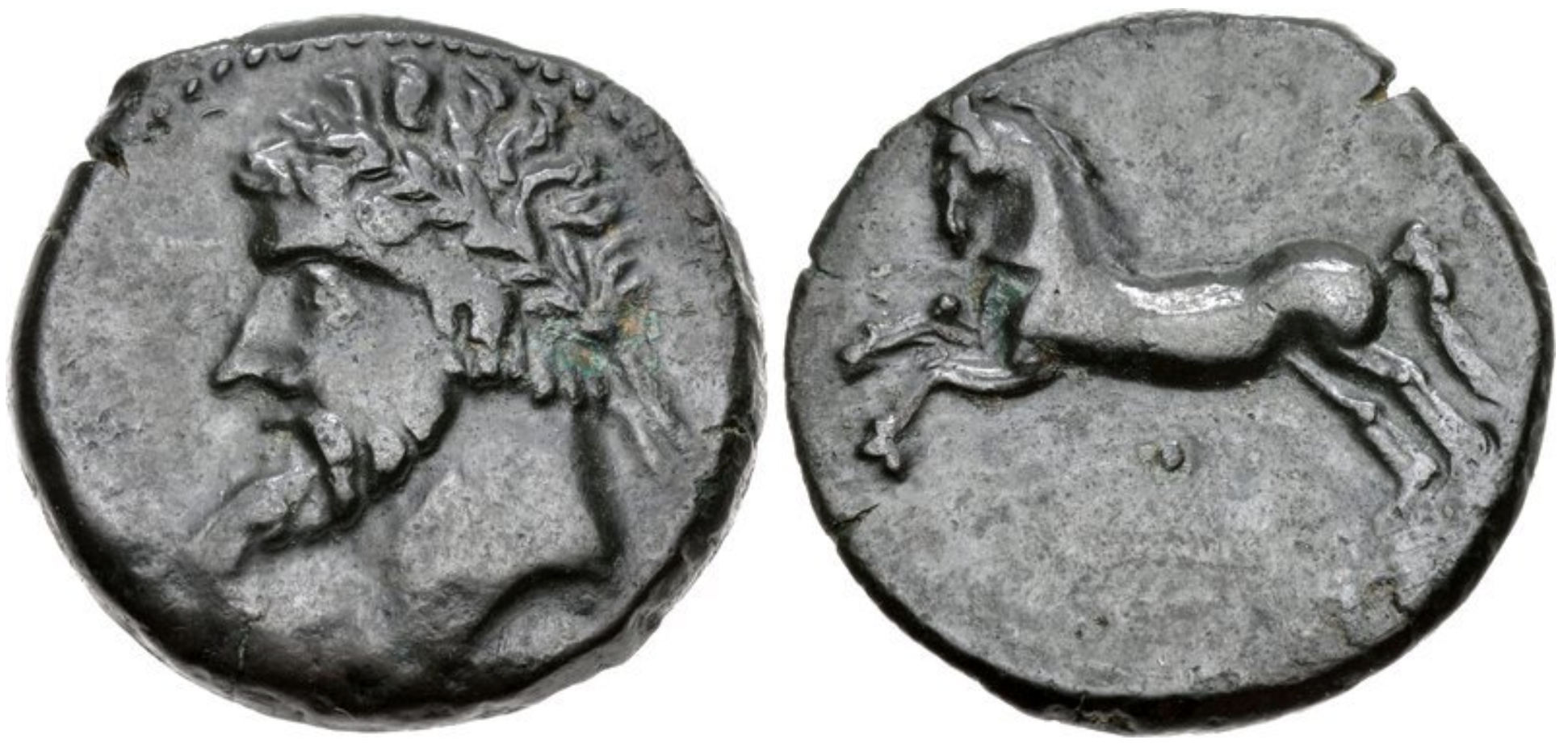
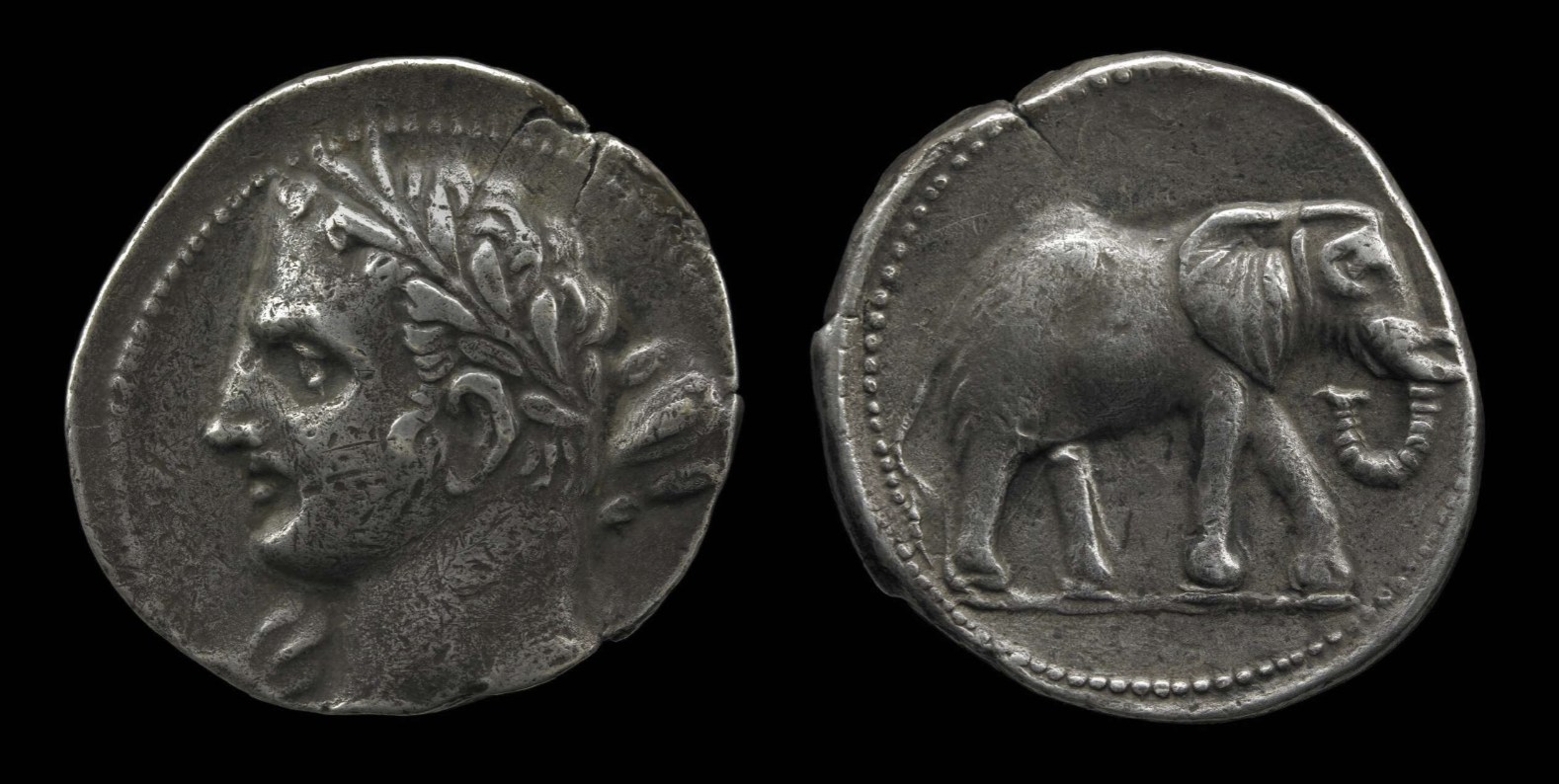
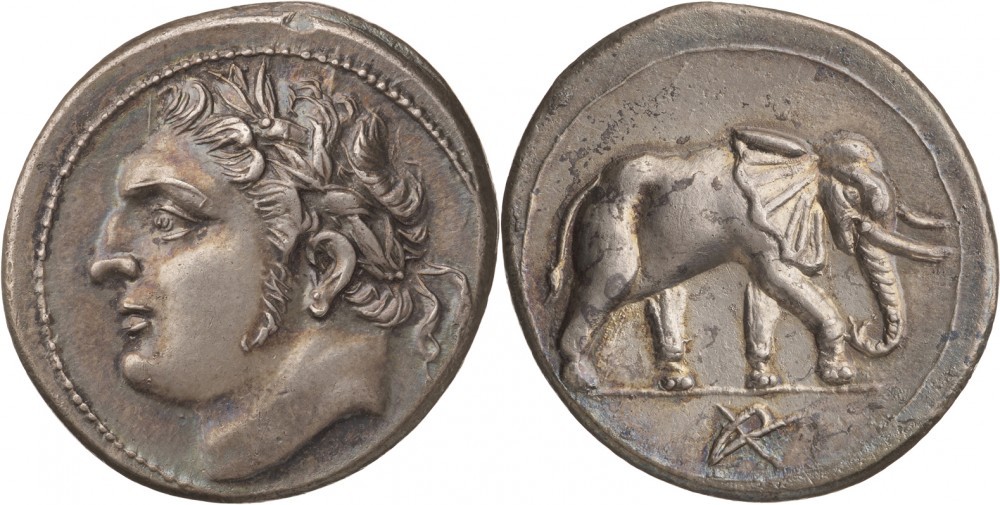
This is embodied by the ‘portraiture’ of the most famous Numidian king and opponent of Roman control, Jugurtha. I put ‘portaiture’ in quotes because the form of the head seems strongly influenced by laureate heads on Punic Silver struck in Iberia and Sicily at the time of Carthage’s Wars with Rome, long before Jugurtha came on the N. African scene. The images on these ancient coins have often been mistaken for portraiture. Something I discuss in my 2021 book (p. 119) and also in earlier blog posts. I have and continue to argue these are divinities, most likely a Herakles/Melkart figure (see my 2013 article on the syncretism of this divinity in the Western Mediterranean).

BM link
Specimen in trade

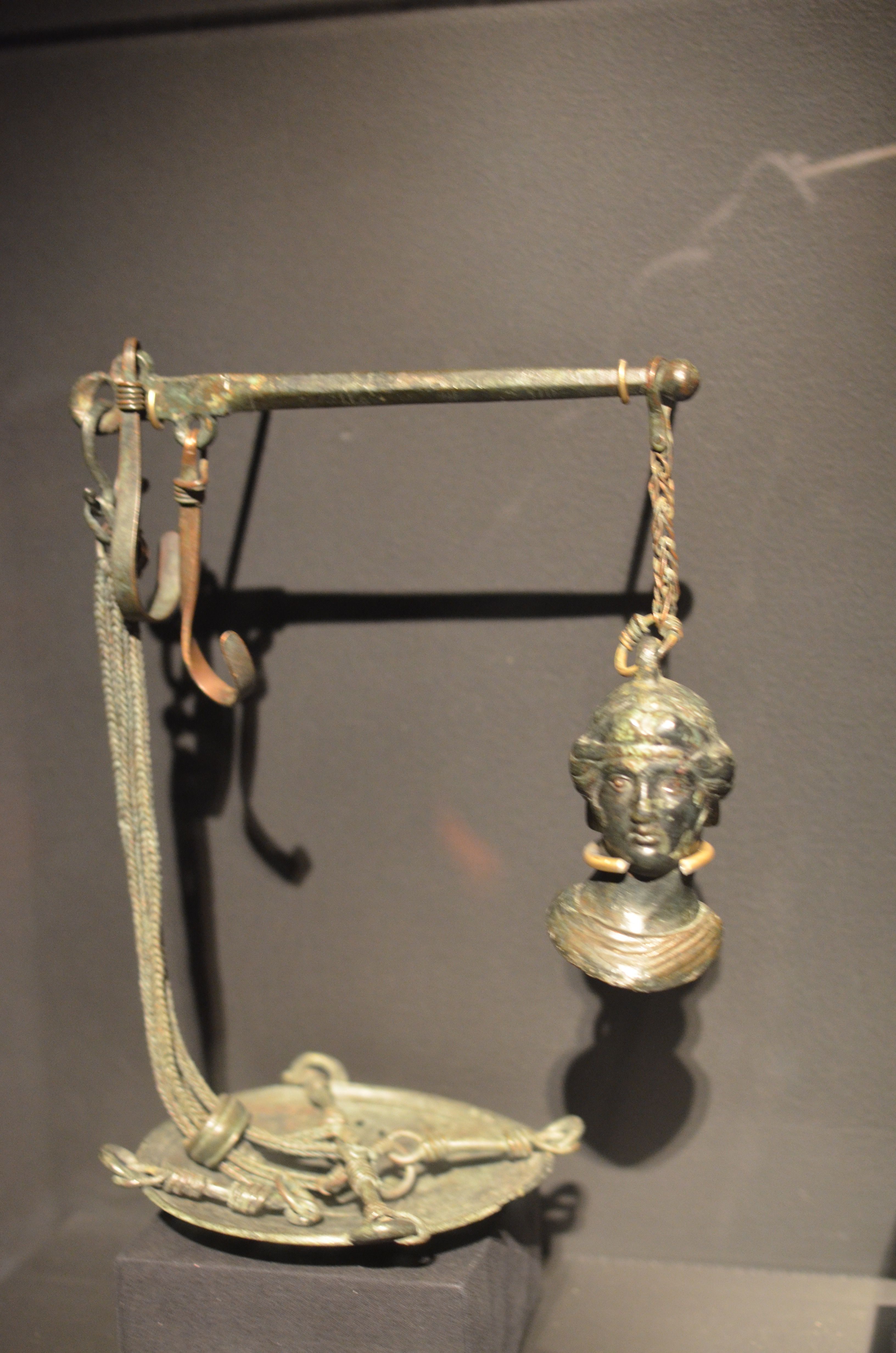
Behind the head is a steelyard-style scale. A type of scale common in ancient Rome as well as other ancient Mediterranean cultures.

Found in Pompeii, On display in the Naples Museum, Uncertain photo credit.

In the pan one places what is being weighed and the other end has a counterweight. The counterweight may be visually smaller than the thing being weighed but still be the appropriate counterweight because of leverage based on its position on the scale arm. In the pan of scale on the coin is the symbol of Rome, one promoted by Mussolini in particular, the Capitoline Wolf with latter addition of the twins beneath. This symbol is meant to evoke ancient Rome, but also perhaps modern colonial powers and their entanglement with the Magreb. The counterweight is a coin, specifically a Punic coin. Rome is weighed by its relationship to Carthage. By extension, the coin implies that more contemporary colonizing powers are measured by their relationship to the N. Africa.

Ok. That’s enough for now. i have more to say but I need to do some other things.

Morning of 10/24/25 some typos were fixed. Below image and hyperlinks added.

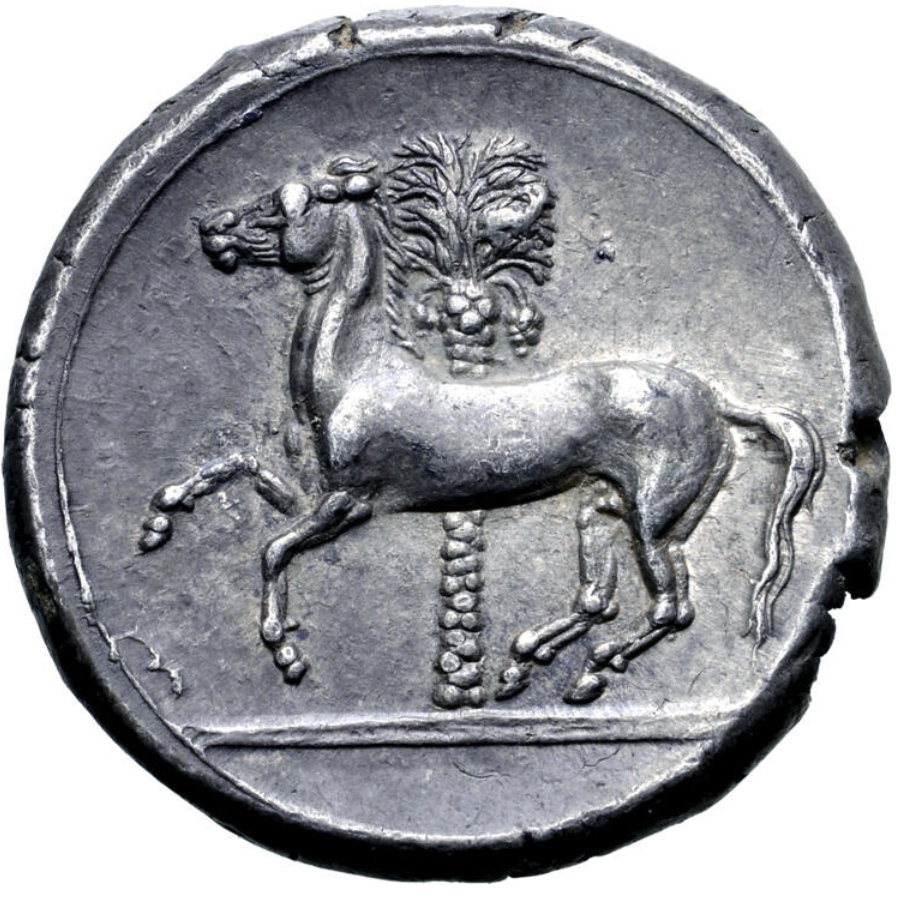
Sicilio-Punic Type in Trade.
Over a long history of striking coins in various regions the Carthagians show a strong preference for the palm tree and horse separately and together in a variety of forms. Often but not always the Palm tree is depicted as a Date Palm.

Puffy Pita

A colleague asked for my puffy pita recipe. I don’t really like recipes. They are so bossy and rigid. Where’s the story with all its beautiful digressions in that?

The amount of bread you end up with depends on how much liquid you use to begin.

Some where between 8 to 16 oz is a great place to start, so let’s say 12 oz.

Because we’re going to cook the bread v fast and v hot to hope to get a glorious puff of steam between the layers, water is our best choice, BUT if you have milk, left over breakfast cereal, stock, juice, beer, soup, or really anything, you could use it in your bread.

Time and temperature and amount of yeast all work together for final fermentation. If you start with cold water it will go slower. If you start with warm water everything goes faster from the start. Don’t go over 115 degrees F. I usually aim for 110.

Stir in a few spoonfuls of flour into your water and if you feel like adding a spoonful of honey or sugar go ahead. The liquid should look milky and smooth but still liquid, not too pasty.

If you have all day or overnight try a 1/2 to 1 teaspoon dried yeast. If you’re on a deadline of 2 hours or so go with a full tablespoon and be sure to use warm water and a little sugar boost. After you stir in the yeasty beasties you must wait for them to wake up. (or not, if you have all the time in the world and just want to mix and forget).

As they wake up they start belching their lovely gases and bubble and foam gather on the top. 15 to 30 minutes is a good estimate on how long to let it develop, but if you get stuck on a work call or lost in a good book for a few hours it will be fine, perhaps better for being ignored.

The ambient temperature matters a great deal at all the waiting stages. If you live in a hot NYC apartment just leave it on the counter. If you live in a drafty old house you can stick the bowl in the microwave (don’t turn it on!) and it will be well insulated, or, my personal favorite, is to put water in my instant pot and set it to the yogurt setting and rest the bowl on top. Your oven might even have a yogurt setting you can use.

Now we feed and exercise our yeasty beasties. I use a stand mixer with a bread hook, but this is just for ease.

I start the mixer at the lowest setting and then start adding flour rather slowly maybe a 1/2 cup at a time. When I’m at the pasty sticky stage, before it wants to come together in a ball, I add in a few glugs of olive oil — at least a tablespoon not more than a 1/3 cup. This is optional, but delicious. And, more salt than ever seems reasonable. If you started with a full two cups of water, give it a generous full tablespoon of salt. It won’t be too much. If you’re salt-phobic add at least a teaspoon even for just one cup of liquid. Salt makes the bread taste better but also inhibits the yeasty beasties growth, thus we let the beasties get a head start before we add it in. Keep adding flour and wait for the dough to form a ball and start thunking around the machine. Slowly continue adding flour until the sides are mostly clean.

Now watch as the machine keeps kneading the dough. If you like precision set a timer for 4 minutes. Turn it off. let it rest three minutes. Turn it on again for three minutes and call it done.

OR keep inspecting the character of the dough. The yeasty beasties are helping the gluten stretch into long smooth chains. The dough should not break and should become far less sticky. It will become smooth and elastic.

Now after all this work the yeasty beasties need a rest someplace warm. (or in the fridge over night or just on the counter if you want to ignore them for a long time)

Come back after an hour or two and peak. If the dough is doubled, punch it down.

If you have time, wait another hour or two and punch it down again.

Double rising really helps the dough mature and the yeastie beasties to release their gases throughout.

Did you forget your dough and let it rise too much and did it collapse? NO PROBLEM! put some flour on the counter scrape the dough mess on to it. Fold it a few times tenderly and tell it you still love it. Promise it you’ll check on it in just an hour or so. When it looks happier, you may now continue.

After the last punch down it is time to prep the oven.

You need the hottest oven possible and ideally a very hot cooking surface. My oven isn’t very good. It barely wants to hold 450 and rapidly loses heat when I open the oven. So I bought some oven bricks. When I make pita these go in the bottom of the oven to help with heat retention through the baking process. You vould also use your old cast iron pans in the bottom of the oven to help with heat retention. Add your pizza stone or iron griddle on to a middle baking shelf now. Cast iron pans will also work for the pita cooking surface, but less well than a stone or a griddle. Put your oven on its highest setting and let it all heat up.

Divide the dough into an even number of pieces each the size of a small clementine. Form the pieces into balls by pinching the loose edges together until the outside is completely smooth.

Ideally you now leave these little balls to rest a bit more. Maybe 30 to 40 minutes, but I am usually too impatient and they only get the time I spend on forming the other balls and waiting for the oven to heat.

On a lightly floured surface roll each piece as flat as you absolutely possibly can. The stretchy dough will spring back. Sometimes I roll them all out and then go back and give each piece a second roll right before it goes in the oven.

Your goal is to get that piece of flat dough onto the hot stone or griddle in the oven as fast as possible while loosing as little oven heat as possible. Having someone open and close the oven door for you can really help.

Ok now you have one or two in the oven. Turn on the oven light and watch. They should puff. It starts with a few bubbles and then all the bubbles grow together. Once you’re sure it has stopped puffing. Get your tongs and quickly open and v v gently flip the bread. (Some people just give it one more minute and no flip.)

Give it a moment longer and then pull it out and eat it straight away.

I tend to serve dinner in the kitchen on nights I make pita and get the whole family involved. The kitchen table is filled with lots of little dips (hummus, labneh etc…) and salads to eat with the pita.

Dammit I’m hungry now.

And remember even without any puff, fresh baked flat bread is still delicious.